Home Blog Page 690

Lazio want Dele-Bashiru stay

0


Lazio have turned down loan offers from Bournemouth and other Premier League clubs for Nigeria international Fisayo Dele-Bashiru as the club wants the midfielder to remain as a cover after first-team injuries, PUNCH Sports Extra reports.

Following a decent AFCON 2025 campaign in Morocco, at least three Premier League clubs, Sunderland, Nottingham Forest and Bournemouth, were interested in the services of the 24-year-old former Manchester City man.

Turkish side Trabzonspor also enquired about the midfielder, with talks heading late into the winter transfer window, but nothing materialised.

According to Lazio Channel Italy, Bournemouth were the club most keen on sealing a deal for the Nigerian. Andoni Iraola’s men submitted a loan offer with an option to buy at the end of the season, but the bid was not attractive enough for Lazio.

Football Italia reported that Lazio turned down offers for the former Hatayspor man because they had already sanctioned Matias Vecino’s move to Celta Vigo.

Another of Lazio’s midfielders, Reda Belahyane, already had a move to Hellas Verona in place, but Vecino’s departure forced Maurizio Sarri’s side to halt the deal as they would be without depth in midfield.

As such, Dele-Bashiru will have to wait until the summer to make a Premier League move after Lazio turned down Bournemouth’s loan plus €18m buy option.

The versatile midfielder has been clear about wanting to return to England, but is not desperate to force a move at this time in his career.

Since his return from the AFCON 2025 tournament in Morocco, Dele-Bashiru has played just 40 minutes for Lazio across all competitions.
Punch

Court halts NLC, TUC from strike, protest

0


The National Industrial Court has issued an interim order stopping the Nigerian Labour Congress (NLC), Trade Union Congress (TUC), and others from embarking on a strike or protest.

The order was given by Justice Emmanuel Subilim while ruling on an ex parte application filed by the Minister of the FCT, Nyesom Wike, and the FCT Administration.

Subilim granted an interim order restraining the 1st to 5th respondents and their privies or agents from embarking on strike pending the hearing of the motion on notice.

He further instructed security agencies, who are the 5th-9th defendants, to forestall any breakdown of law and order.

According to the ex parte motion filed by Wike, the Chairman of the FCT council had sent a message, mobilising members and affiliated unions for a scheduled mass protest on February 3, 2026.

Counsel to Wike and the FCTA, Ogwu Onoja, pointed out that the above violates the order of the court.

Onoja said that the order of the court was served to the defendants after the court ruling on January 27, which was the same day the NLC and TUC issued a statement to all affiliated unions to intensify and sustain the strike.

The court heard that the statement signed by both the NLC and TUC directed members to resume the strike, with Onoja adding that their counsel, Femi Falana, filed an appeal against the interlocutory ruling.

Subsequently, the court was adjourned until February 10 for hearing.
Sun

NITDA Warns of Security Vulnerabilities in New ChatGPT Versions

0


The National Information Technology Development Agency (NITDA) has cautioned Nigerian internet users and professionals who rely on artificial intelligence platforms, warning that serious security vulnerabilities have been identified in recent versions of ChatGPT.

In a statement, the agency said the flaws, found in GPT-4 and GPT-5 models, could be exploited by attackers to manipulate AI-generated outputs and potentially gain access to sensitive user data.
NITDA identified seven critical weaknesses, noting that malicious instructions can be secretly embedded in seemingly harmless web content such as social media comments, online articles, or shortened links.

According to the agency, these hidden commands may cause AI systems to execute harmful actions during routine tasks like summarising text or browsing the internet.
Other identified risks include the circumvention of safety filters, the concealment of dangerous content through markdown-related bugs, and “memory poisoning,” a technique that gradually alters an AI model’s behaviour over time. NITDA warned that such exploits could result in data leaks or unauthorised actions.

While OpenAI has reportedly addressed some of the vulnerabilities, the agency said large language models still face challenges in detecting highly disguised malicious instructions.

NITDA therefore urged users to exercise caution when using AI tools, verify outputs independently, and remain vigilant against suspicious online content.

Leicester announce Aribo signing

0

Leicester City have completed the signing of Nigerian midfielder Joe Aribo on loan from Southampton until the end of the season, PUNCH Sports Extra reports.

The 29-year-old arrives at the King Power Stadium to bolster Leicester’s injury-hit midfield, with Jordan James and Aaron Ramsey out until March, while Hamza Choudhury is due to have a scan on a potentially serious knee injury this week.

The club have also sold Boubakary Soumare, the Frenchman leaving for Qatar last week.

Out of favour with the Saints, where he has made just seven Championship appearances this season, none as a starter, Aribo is out of contract in the summer, and so if he performs well, Leicester could pick him up on a free transfer.

It is expected that Aribo will rival Louis Page in Leicester’s number eight position while James is out, but he is a midfield all-rounder and could potentially play in any of the three roles Leicester have in the centre of the pitch.

Coming through non-league, Aribo moved from Staines Town to Charlton Athletic and then got a big move to Rangers, where he had perhaps his best form.

He helped the Scottish club win the Scottish Premiership and reach the final of the Europa League, scoring 18 goals and providing 11 assists in 92 league appearances across three seasons.

The London-born midfielder joined Southampton in 2022 and featured in 32 of the Saints’ 38 Premier League matches last season, scoring three goals.

However, relegation to the Championship and a change in the technical crew have limited his involvement this term.

Former Southampton boss Russell Martin, who is linked with the Leicester job, coached Aribo during the previous two seasons and praised the midfielder’s character.

Following a 5-0 play-off win against Swansea in which Aribo opened the scoring, Martin said, “He’s been amazing. But he’s been a brilliant teammate, an amazing character, as you know. He’s humble, works hard, smiling.”

Aribo remains a fan favourite at Rangers’ Ibrox, having written his name into the club’s recent history by scoring in their Europa League final defeat to Eintracht Frankfurt in 2022.

Southampton interim coach Tonda Eckert had earlier indicated the club was open to player exits during the January transfer window.

Punch

Big money, small impact: Govs face fire over N9tn FAAC Windfall

0

Despite receiving an estimated N9tn in Federation Account Allocation Committee inflows in 2025, state governors are facing mounting criticism from labour unions, civil society groups and opposition parties over what many describe as a widening gap between soaring revenues and limited improvements in citizens’ welfare.

FAAC allocations to states surged by over N2tn in one year, according to an analysis of Federation Account disbursement data published by the National Bureau of Statistics and collated by The PUNCH, highlighting the scale of the revenue windfall that flowed to subnational governments in 2025 amid higher federation inflows.

The sharp rise has triggered criticism from organised labour and opposition political parties, with the Nigeria Labour Congress warning that higher allocations have failed to deliver meaningful improvements in citizens’ welfare due to weak governance, misplaced priorities, and corruption at the state level.

Civil society organisations have also faulted state governments, accusing them of mismanaging the inflows and failing to translate increased revenues into visible development outcomes, while calling for stronger accountability and oversight.

Economists, meanwhile, say the surge has expanded states’ fiscal space but caution that heavy dependence on federally shared revenue and poor revenue management continue to undermine sustainable development at the subnational level.

The Federation Account disbursement data show that state governments received a total of N7.315tn from the Federation Account Allocation Committee in 2025, compared with N5.186tn in 2024. The year-on-year increase of roughly N2.13tn represents a jump of about 41 per cent in direct FAAC allocations to states.

When the constitutionally mandated 13 per cent derivation revenue is added, total inflows attributable to states climbed to N8.934tn (about N9tn) in 2025, up from N6.533tn in 2024, a rise of N2.4tn or 36.74 per cent.

This surge came against the backdrop of a sharp expansion in total FAAC distributions. Aggregate allocations to the three tiers of government, including derivation, rose from N15.259tn in 2024 to N21.897tn in 2025.

States therefore captured a substantial share of the overall increase, both in absolute terms and as a proportion of total federation revenues. Without the 13 per cent derivation component, states’ N7.315tn allocation in 2025 accounted for about 33.4 per cent of the N21.897tn total FAAC disbursement for the year, compared with roughly 34.0 per cent in 2024.

When derivation revenue is included, total state-linked receipts of N8.934tn represented about 40.8 per cent of total FAAC disbursements in 2025, down from around 42.8 per cent in 2024, indicating that while inflows grew in nominal terms, their relative share declined as allocations to all tiers expanded.

A closer look at monthly disbursements shows that state allocations improved steadily throughout 2025. States received N498.50bn in January, well above the N396.69bn recorded in January 2024.

Monthly allocations continued to trend higher, peaking at N727.17bn in October before easing to N601.73bn in December. By contrast, only two months in 2024 recorded allocations above N500bn, with the highest monthly figure being N549.79bn in December.

By the end of June 2025, states had already received over N3.32tn, compared with about N2.33tn in the first half of 2024, easing short-term liquidity pressures, particularly for states with heavy wage bills and debt service obligations.

Derivation revenue also played a critical role. In 2025, derivation payments rose to N1.619tn from N1.347tn in 2024, an increase of about N272bn or just over 20 per cent. Monthly derivation inflows were especially strong in September 2025, when oil-producing states shared N183.01bn, compared with N99.47bn in September 2024.

Despite the surge, states did not disproportionately outpace other tiers. Federal Government allocations rose from N4.951tn in 2024 to N7.613tn in 2025, while local government allocations increased from N3.774tn to N5.351tn.

Nevertheless, the impact on states is particularly significant given their responsibility for delivering education, healthcare, and infrastructure. The additional N2.4tn received in 2025 alone is equivalent to nearly half of what states received from FAAC in total in 2024.

The 10th edition of the BudgIT State of States Report, titled ‘A Decade of Subnational Fiscal Analysis: Growth, Decline and Middling Performance’, revealed that over 30 states rely heavily on FAAC allocations.

An executive of BudgIT said on Channels Television’s Politics Today programme, “At least thirty states, excluding Lagos, Ogun, and Enugu, relied on FAAC for more than sixty per cent of their recurrent revenue. Lagos remains an outlier, but Ogun and Enugu also seem to be performing quite well.

“In total, 31 states depended on FAAC for at least 80 per cent of their current revenue, which shows just how challenging the fiscal situation has become for many of them.

“For example, Lagos’s FAAC allocation rose from N4.24bn to N11.38bn, a massive increase that highlights how significant federation account transfers have become within a single fiscal year. Still, credit should go to the states that recorded strong year-on-year growth, as well as those that grew consistently over the ten-year period we reviewed.”

The report added that 29 states relied on FAAC receipts for at least half of their total revenue, 28 relied on it for at least 55 per cent, and 21 relied on it for over 70 per cent.

The BudgIT executives expressed concern that rising FAAC inflows were discouraging states from expanding internally generated revenue. This is “concerning because the more FAAC money states receive, the less incentive some of them have to develop their own internal revenue sources”.

They noted that “the proportion of IGR within total recurrent revenue declined slightly from 25.27 per cent in 2023 to 20.27 per cent in 2024, indicating continued dependence on federal transfers”.

The Managing Director of Optimus by Afrinvest, Dr Ayodeji Ebo, said, “These revenues are volatile and largely outside state control, making budgets vulnerable to oil price shocks. Over time, this approach also discourages ingenuity, as states become dependent on external inflows rather than building durable local revenue sources.”

A development economist and Chief Executive Officer of CSA Advisory, Dr Aliyu Ilias, said subnational governments are creating challenges for the federation through how they manage FAAC allocations.

He suggested “counterpart funding,” where states that increase their IGR receive proportional benefits, warning that without incentives, states would continue to rely heavily on Abuja. Ilias said, “While FAAC allocations are at unprecedented levels, they are not necessarily translating into improved living standards.”

NLC speaks

The country’s biggest labour union said rising FAAC allocations have failed to deliver meaningful benefits to citizens, blaming weak governance, misplaced priorities, and persistent corruption at the state level.

“Very few states are doing well in terms of how they deploy what they receive,” Assistant Secretary-General of the NLC, Onyeka Christopher, told The PUNCH. “The idea behind federal allocations is to bring the government closer to the grassroots, but unfortunately, in many states, this has not translated into the desired results for well-known reasons.”

The NLC added that, “Once people know there are no consequences, they will continue to steal public funds,” warning that kleptocracy continues to undermine development. “For FAAC to truly benefit the people, the issue of kleptocracy must be addressed. What are the EFCC and ICPC doing?” it asked.

CSOs react

Chairman of the Centre for Accountability and Open Leadership, Debo Adeniran, described subnational governments as “meddlesome interlopers”.

“Because we have been so complacent, we in the civil society, and maybe the media, have not been following the money from the point of release to the point of expenditure,” he said.

“The increase in allocations to states has just increased the financial opportunity for the state governors, not percolating to the level of the people that are supposed to be the final recipients of government charities,” Adeniran added.

The Executive Director of CISLAC, Auwal Musa Rafsanjani, said, “There’s no physical, verifiable, tangible evidence to show that the monies the governments are receiving are touching lives in terms of healthcare, electricity, physical infrastructure, or even agriculture.”

“What you see in the states is that these monies are collected, but it is about decamping, defections, and strategising for 2027,” he said.

Opposition parties lament

As federal allocations to states continue to rise, opposition parties, civil society actors and government officials across several states have expressed sharply differing views on whether the increased revenue has translated into tangible development and improved living conditions for citizens.

In Lagos State, the Chairman of the opposition African Democratic Congress, George Ashiru, said rising federal allocations and internally generated revenue had failed to ease hardship among residents.

According to him, inflationary pressures triggered by federal policies have outweighed gains from increased funding.

“Rents have gone up between 200 and 400 per cent in many areas. Social services have not matched inflationary trends, while infrastructure development still focuses on legacy projects instead of overcrowded inner-city areas,” Ashiru said.

He added that ongoing demolitions appeared to favour high-end housing projects, while public schools, healthcare facilities, intra-city roads and the overall cost of governance continued to suffer neglect.

The Peoples Democratic Party in Sokoto State rated the current development in the state as zero when compared to the huge allocations received from the federal government.

The spokesman of the party in the state, Hassan Sahabi Sanyinnawal, while speaking with our correspondent on the telephone, said the state government, led by Governor Ahmad Aliyu of the All Progressives Congress, only concentrates on two out of the 23 local government areas in the state.

“There is nothing on the ground to show for the huge allocation. We have 23 LGs in the state, but there is absolutely nothing going on in 21 LGs. In the two LGs within the metropolis, they are busy doing roundabouts, street fencing, and beautification.

“They did not do anything that the people of the state needed. Water is no longer running in the metropolis, the health sector is not getting attention, our education is not getting the necessary attention, among many others, but they are beautifying the metropolis.

“The beautification has no economic impact on the people of the state. They need to do better when you compare it with the money being received now,” he added.

On his part, the Kano State Chairman of the Social Democratic Party, Ali Shettima, said the absence of clear information on state allocations made it difficult to carry out a fair assessment of the government’s performance.

“I don’t even know how much is allocated to the state. I can’t give an accurate assessment based on something I don’t know,” he said.

In Plateau State, the Chairman of the Alternative Democratic Party (ADP), Bitrus Boyi, questioned the visibility of development projects despite claims of increased federal allocation.

“If truly there has been an increment in federal allocations, it has not translated to development. Most of the projects we see are funded by development partners,” he said, urging the state government to ensure that increased revenue benefits residents.

Similarly, the Peoples Redemption Party (PRP) in Bauchi State accused the state government of prioritising “luxury and white elephant projects” over education and healthcare.

The party’s chairman, Abbas Abba, described the condition of schools and hospitals as “poor and alarming,” alleging that government spending focused more on propaganda than sustainable impact.

However, the ruling Peoples Democratic Party in Bauchi rejected the claims, insisting that development was evident in regular salary payments, road projects, healthcare revitalisation and school renovations across the state.

In Zamfara State, politicians Alhaji Musa Yankuzo and Mohammed Sani said the state had little to show despite higher federal allocations, accusing governors of mismanaging funds for selfish interests rather than development.

The ADC in Kebbi State also dismissed the achievements of Governor Nasir Idris, with the party’s chairman, Sufiyanu Bala, citing unemployment, dilapidated schools, out-of-school children and weak healthcare services as evidence that increased allocations had failed to improve living standards.

In Gombe State, the PDP said development remained “one-sided,” alleging that the ruling APC focused mainly on capital projects with little direct impact on citizens’ welfare.

“The essence of democracy is to improve education, health, water supply and security. That is not what we are seeing,” PDP spokesman Abdulkadir Ahmad said.

Contrasting views

In contrast, the Labour Party in Nasarawa State commended the Governor Abdullahi Sule-led APC government for infrastructure development, particularly the completion of the over N16bn Lafia flyover and ongoing projects in Akwanga, Keffi and Karu.

LP chairman Alexander Ombugu praised the administration’s prudence and commitment, urging the governor to do more. President Bola Tinubu had commissioned the Lafia flyover in June 2025 alongside other projects, including roads, a new secretariat complex and a solar mini-grid.

In Kwara State, the PDP and APC traded blame over the impact of rising federal revenue.

The PDP accused the state government of concentrating spending in limited areas of Ilorin, the capital city, and neglecting insecurity, workers’ welfare and rural communities.

“We have had huge allocations since 2019, yet the people have benefited close to nothing,” PDP spokesman Olusegun Adewara said, calling for improved security, better wages and investment in the informal sector.

The APC dismissed the claims, insisting that the AbdulRahman AbdulRazaq administration had deployed resources across infrastructure, education, healthcare and social investment programmes in all senatorial districts.

Punch

Tax Reform Is Policy Not Politics

0


By Arabinrin Aderonke

Every administration is ultimately judged by its willingness to confront difficult structural problems. For President Bola Ahmed Tinubu’s government, tax reform represents one such necessary but challenging intervention, designed not for political convenience, but for long-term national stability and economic renewal.

The recent controversy surrounding the newly enacted tax laws, particularly claims of falsification and lack of transparency, deserves to be addressed with calm, facts, and institutional respect. The leadership of the National Assembly has spoken clearly. Senate President Godswill Akpabio has affirmed that the laws signed by the President reflect what was duly passed by the legislature, while the House of Representatives has taken additional steps to reassure the public through the release of Certified True Copies and the activation of internal review mechanisms. These actions demonstrate a functioning democracy, not a failing one.

It is important to separate legitimate oversight from unhelpful alarmism. Nigeria’s constitutional system already provides structured avenues for resolving legislative concerns, and those avenues are currently being utilised. To continue to project suspicion while these processes are ongoing risks weakening public confidence in institutions at a time when unity and clarity are required.

Beyond the political exchanges lies the more important issue: the substance of the reforms. Nigeria’s economy has for decades suffered from weak revenue mobilisation, a narrow tax base, and inefficient administration. The new tax laws are intended to modernise the system, improve coordination among revenue agencies, and reduce leakages, steps that are essential if the country is to fund infrastructure, social services, and economic diversification without unsustainable borrowing.

President Tinubu has been consistent in his reform agenda, from fiscal policy to broader economic restructuring. These reforms are not without short term discomfort, but history shows that nations that shy away from reform in the face of resistance ultimately pay a higher price.

International economic assessments continue to emphasise that fiscal discipline and domestic revenue generation are key to Nigeria’s growth prospects and macroeconomic stability.

Public debate is healthy, but it must be informed. Much of the current uproar appears driven by speculation rather than careful engagement with the actual provisions of the tax laws. Constructive criticism should be anchored in evidence and proposed improvements, not in narratives that suggest institutional bad faith without proof.

The tax laws are now operational. The administration has acted within the law, the legislature has exercised its oversight responsibilities and there are no discrepancies. At this point, the national interest is best served by shifting focus from controversy to implementation, ensuring clarity, compliance, and public understanding.

Governance is not advanced by endless dispute, but by steady, responsible action. The Tinubu administration has made its intentions clear, to place Nigeria on a firmer economic footing through necessary reforms. The task before citizens and leaders alike is to engage constructively, allow institutions to do their work, and support policies that are aimed at securing a more resilient and prosperous Nigeria. The task before us now is to make them work transparently, fairly, and for the benefit of all.

Arabinrin Aderonke Atoyebi is the Technical Assistant on Broadcast Media to the Executive Chairman of the Nigeria Revenue Service

Osinbajo Aide Recounts Chopper Crash in Kogi, Marks Seventh Anniversary with Thanksgiving

0


An aide to former Vice President Yemi Osinbajo, Olaolu Akande, has recounted the dramatic helicopter crash involving the then Vice President and members of his delegation in Kabba, Kogi State, describing the incident as a moment of divine intervention as it marks its seventh anniversary.

In a reflective post on Sunday, Akande recalled that on February 2, 2019, a helicopter conveying Osinbajo and 11 others crash-landed during a campaign trip ahead of the 2019 general elections. According to him, all 12 occupants escaped unhurt.

Expressing gratitude, Akande wrote in Yoruba, “E ba mi yin Oluwa l’ogo,” translated as “Join me to praise the Lord,” declaring the occasion a testimony of God’s protection. He noted that his wife had reminded him that the day could have been marked as a tragic remembrance, but for what he described as divine preservation.

Akande explained that moments after the incident, he posted a tweet from inside a bus arranged to convey the Vice President and his team to a campaign stop in the state. Following the crash, the delegation rerouted to a hotel where they briefly rested and changed clothes after what he termed a “harrowing experience.”

Despite the incident, Akande said Osinbajo insisted on continuing with the campaign activities, rejecting suggestions that the team should suspend engagements for the day.

“Within the hour, Osinbajo led us right back to the campaigns,” he wrote. “He didn’t agree to suggestions that we should abandon the work and go and rest. Such was the courage on display and the determination in our hearts.”

Marking the seventh anniversary of the incident, Akande gave thanks to God for the preservation of their lives, repeatedly offering praises in song and prayer.

“To God Almighty we give all the glory for our lives,” he said.

Niger Speaker commends Army, DSS for dislodging bandits in Mariga

0


The Speaker of the Niger State House of Assembly, Rt. Hon. Abdulmalik Mohammed Sarkin-Daji, has praised the Nigerian Army, the Department of State Services (DSS) and other security agencies for major successes against bandits in Mariga Local Government Area and parts of the Niger North Senatorial District.

Sarkin-Daji described the security operation as a significant breakthrough in the fight against insecurity in the state, saying the professionalism and bravery of security personnel led to the killing of several bandits and the arrest of others.

The commendation was contained in a statement issued on Sunday by the Acting Head of the Assembly’s Directorate of Media and Public Relations, Mairo Adamu Mani.

According to the statement, the Speaker said the decisive action had weakened criminal activities in the affected areas and restored confidence among residents who had lived in fear for a long time.

He applauded the tireless efforts of security agencies, particularly special forces and DSS operatives, for their sacrifices in protecting lives and property across the state.

Sarkin-Daji also commended the joint intelligence-led clearance operations by the Army and the DSS, which reportedly led to the rescue of over 70 kidnapped persons.

“He acknowledged the risks involved in such operations and expressed deep appreciation to officers and men who put their lives on the line to ensure peace and stability, especially in vulnerable communities,” the statement said.

The Speaker assured the security agencies of the unwavering support and cooperation of the Niger State Government, stressing that the state would continue to provide all necessary assistance to strengthen security operations.

He said the government remains committed to working closely with all security stakeholders to bring lingering security challenges to an end.

Sarkin-Daji urged residents to remain calm, vigilant and law-abiding, assuring them that the protection of lives and property remains the government’s top priority.

He also encouraged residents to continue supporting security agencies by providing credible and timely information to aid ongoing efforts to sustain peace and stability across the state.

Guardian

Benue Killings: Court remands suspects in Kuje Prison

0


Justice Joyce Abdul-Malik of the Federal High Court, Abuja, on Monday ordered the remand of defendants alleged to be involved in the Benue killings at the Kuje Correctional Centre, pending the commencement of their trial.

The order was made during proceedings in the criminal matter marked FHC/ABJ/CR/471/2025, in which the Attorney-General of the Federation and Minister of Justice, Prince Lateef Fagbemi, SAN, personally led the prosecution on behalf of the Federal Government.

Fagbemi appeared in court alongside the Director of Public Prosecutions of the Federation (DPPF), Rotimi Oyedepo, SAN, and three other counsel.

At the sitting, the Attorney-General informed the court that the prosecution had filed a 57-count amended charge against 10 defendants.

He, however, applied for the name of the 6th defendant, Yakubu Maman, to be struck out of the charge and further requested the withdrawal of the earlier charge, leaving only the amended charge for the court’s consideration.

Counsel to the defendants raised no objection to the prosecution’s application.

In a brief ruling, Justice Abdul-Malik struck out the earlier charge and ordered that the name of the 6th defendant be removed from the case, as requested by the prosecution.

Following the ruling, the Attorney-General applied to have the pleas of the remaining defendants taken. When the amended charge was read to them, the defendants pleaded not guilty to all the counts.

The trial judge thereafter adjourned the matter to February 26 and 27, 2026, for the commencement of full trial and ordered that the defendants be remanded in the Kuje Correctional Centre pending the determination of the case.

Legal representation at the proceedings included Ibrahim Angulu, SAN, who appeared for the 1st, 8th and 9th defendants, while Adamu Abdullahi represented the 3rd, 4th, 5th and 7th defendants.

The case is expected to proceed to full trial on the adjourned dates, as the Federal Government continues its prosecution of the defendants over the alleged Benue killings.

According to the amended charge, the defendants, Ardo Lawal Mohammed Dono, Ardo Muhammadu Saidu, Alhaji Haruna Abdullahi, Yakubu Adamu, Mohammed Musa, Abubakar Adamu, Shuaibu Ibrahim, Isah Yusufa Nagogo, Sale Mohammed, and Bako Jibrin, among others, said to be still at large, allegedly met in Nasarawa State between May and June 2025 to plan and coordinate the attack.

The defendants were slammed with a 57-count terrorism charge, with Count One of the charge, marked FHC/ABJ/CR/471/2025, stating that:

“That You, Ardo Lawal Mohammed Dono ‘M’, Ardo Muhammadu Saidu ‘M’, Alhaji Haruna Abdullahi ‘M’, Yakubu Adamu ‘M’, Mohammed Musa ‘M’, Yakubu Mamah ‘M’, Abubakar Adamu ‘M’, Shuaibu Ibrahim ‘M’, Isah Yusufa Nagogo ‘M’, Sale Mohammed ‘M’, Bako Jibrin ‘M’, and others still at large, sometime between May and June 2025 in Nasarawa State within the jurisdiction of this Honourable Court, knowingly and directly participated in meetings in connection with the commission of an act of terrorism, to wit: to plan an attack on Yelwata Community in Guma Local Government Area of Benue State, the attack which was subsequently carried out on the 13th day of June 2025 and resulted in the burning of houses, grievous bodily harm, and the death of approximately one hundred and fifty (150) persons. You thereby committed an offence contrary to Section 12(a) of the Terrorism (Prevention and Prohibition) Act, 2022 and punishable under the same section.

Two reads, “That You, Ardo Lawal Mohammed Dono ‘M’, Muhammadu Saidu ‘M’, Alhaji Haruna Abdullahi ‘M’, Yakubu Adamu ‘M’, Mohammed Musa ‘M’, Yakubu Mamah ‘M’, Abubakar Adamu ‘M’, Shuaibu Ibrahim ‘M’, Isah Yusufa Nagoggo ‘M’, Sale Mohammed ‘M’, Bako Jibrin ‘M’, and others still at large, sometime between May and June 2025 in Nasarawa State within the jurisdiction of this Honourable Court, conspired among yourselves to plan an attack on Yelwata Community in Guma Local Government Area of Benue State, the attack which was subsequently carried out on the 13th day of June 2025, and resulted in the burning of houses, grievous bodily harm, and the death of approximately one hundred and fifty (150) persons in Yelwata. You thereby committed an offence contrary to Section 26(1) of the Terrorism (Prevention and Prohibition) Act 2022 and punishable under Section 12 of the same Act.”

Guardian

Obi signals intention to contest 2027 presidential election

0

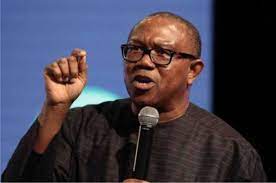
Former presidential candidate of the Labour Party (LP), Peter Obi, has again indicated his intention to contest the 2027 presidential election.

Obi remarked while campaigning for the African Democratic Congress (ADC) candidate ahead of the Abuja Municipal Area Council (AMAC) elections in the Federal Capital Territory (FCT).

Addressing supporters, Obi linked the AMAC poll to his broader political ambition, urging them to back the ADC candidate.

“This coming election, support us in AMAC; it will help me,” he said. “Your support in AMAC is critical to our journey. I am involved and contesting the coming election as number one. When I come back, you will see. I assure you.”

Since Obi joined the ADC, his supporters, including members of the Obidient Movement, have intensified calls on the party to adopt him as its presidential flagbearer for the 2027 election.

However, the party’s spokesperson, Bolaji Abdullahi, has cautioned supporters against inflammatory rhetoric, stressing the need to prioritise unity within the party.

There have also been speculations that some ADC leaders are exploring the possibility of a Peter Obi–Rabiu Kwankwaso presidential ticket. Kwankwaso’s decision not to join the ruling All Progressives Congress (APC) has further fuelled speculation of a possible alliance.

Meanwhile, supporters of former Vice-President Atiku Abubakar have renewed calls for Obi and his followers to consider accepting a vice-presidential role, similar to the arrangement in the 2019 election.

Obi, however, dismissed such suggestions, reiterating that he intends to contest the 2027 election as a presidential candidate.

Urging supporters to mobilise votes for his preferred candidate in the AMAC poll, Obi described their backing as “crucial” to his political journey.

Since declaring his intention to seek the nation’s highest office again, Obi has consistently maintained that he would not spend “a day beyond four years in office” if elected president.

Guardian