Home Blog Page 691

Illegal waste disposal: LAWMA arrests Suspect, seizes carts in Lagos

0


The Lagos Waste Management Authority (LAWMA) says it has seized waste carts and arrested one person during an early morning enforcement operation on Lagos Island, to curb illegal waste disposal.

This was disclosed in a statement signed by Director of Public Affairs of LAWMA, Mr Mukaila Sanusi on Monday in Lagos.

He said that the operation followed targeted surveillance, aimed at tackling unregulated waste movement, and preventing a return of illegal dump sites earlier cleared by the authority.

He said that LAWMA enforcement officers intercepted several waste carts at Isale-Eko during the coordinated dawn operation across key locations on Lagos Island.

According to him, an individual was arrested at about 1:31 a.m. while illegally dumping waste at Tinubu Square, Lagos Island.

He noted that early-hour monitoring remained crucial, as most illegal dumping activities were carried out during periods of low visibility.

Quoting the Managing Director of LAWMA, Dr Muyiwa Gbadegesin, Sanusi said that sustained enforcement strengthened deterrence and protected stabilised areas from renewed environmental abuse.

‘’Surveillance and enforcement operatives are strategically deployed statewide to eliminate persistent black spots and ensure environmental sustainability, ‘’ he said.

He consequently, urged residents to use approved waste disposal channels, and support efforts to keep Lagos clean.

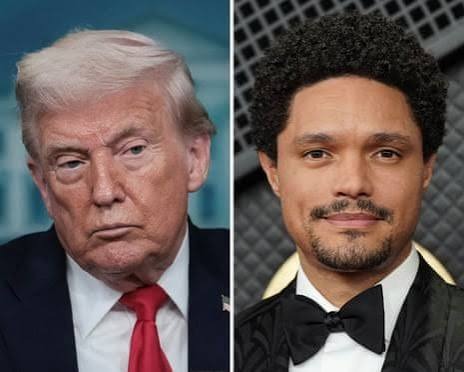
Trump threatens to sue comedian Trevor Noah over Grammys Epstein joke

0


U.S. President Donald Trump has threatened to sue Grammys host, Trevor Noah after a joke he made about disgraced financier Jeffrey Epstein on stage.
Trump blasted the comedian as a “total loser,” adding: “It looks like I’ll be sending my lawyers to sue this poor, pathetic, talentless, dope of an M.C., and suing him for plenty dollars.”

Trump criticised Noah’s joke, made after the song of the year gong was handed out at the ceremony on Sunday night.
Writing on Truth Social, in a post strewn with uppercase words, Trump said: “Noah said, INCORRECTLY about me, that Donald Trump and Bill Clinton spent time on Epstein Island. WRONG!!!
“I can’t speak for Bill, but I have never been to Epstein Island, nor anywhere close, and until tonight’s false and defamatory statement, have never been accused of being there, not even by the Fake News Media.

“Noah, a total loser, better get his facts straight, and get them straight fast.”
He added: “Get ready Noah, I’m going to have some fun with you!”
Trump also blasted the ceremony saying: “The Grammy Awards are the WORST, virtually unwatchable! CBS is lucky not to have this garbage litter their airwaves any longer.”

This was an apparent reference to Disney taking over the broadcast rights for the award ceremony starting in 2027.

Trump is famously litigious and has taken legal action against the BBC over the editing of a Panorama programme.
He has also engaged in legal action with the New York Times, Associated Press and the Wall Street Journal.

Last July, U.S. media giant Paramount, which owns CBS, agreed to pay Trump 16 million dollars to settle a lawsuit over a 2024 CBS interview with Kamala Harris, the former vice-president and 2024 Democratic presidential nominee.

Noah, 41, is a South African-born comedian and TV personality who hosted “The Daily Show” on Comedy Central in the U.S. for seven years.

Man begs court for custody of 14 -year -old son

0


A middle-aged man, Sunday Kasun on Monday prayed an upper Customary Court sitting in Kaduna State to grant him custody of his 14-year-old son.

He stated that the boy had been living with his maternal grandparents in Akwa Ibom .
On her part, the defendant Gloria Udong, the mother of the child told the court she had been the only person taking care of the teenager since he was born.

The Judge, Ms Patience Musa, had given the couple time to settle the matter out of court and report the result of the settlement.

However, the counsel to the defendant told the court that the settlement was not successful because they failed to reach an agreement.
He prayed the court to adjourn the matter for further hearing, saying the complainant’s counsel who was not in court had also agreed for the matter to be adjourned.
The Judge then adjourned the matter until Feb. 23 for further hearing.

Okafor’s suit: Court directs E-service of preliminary objection on VDM, another

0

An Ikeja High Court on Monday, granted leave to serve a notice of preliminary objection by electronic means, on a social media influencer, Martins Otse, a.k.a VeryDarkMan (VDM) and one Kelvin Emmanuel.

The court issued the directive following a suit filed by Nigerian pastor, Dr Chris Okafor, against a Nollywood actress Doris Ogala.

It was reported that in the suit marked ID/14399GCMW/2026, Okafor joined Ogala, VDM and Emmanuel, as first, second and third defendants respectively.

On Monday, Justice Akintunde Savage granted leave for the claimant to serve the second and third defendants with the processes, through their active social media handles, following their absence in court.

The court held:

“”Leave is hereby granted to the first defendant to serve the second and the third defendants on their WhatsApp, Instagram and other active social media accounts.

“”Sheriff must confirm proof of service.

“The case is hereby adjourned until Feb .25, for proof of service and hearing of preliminary objections,” he said.

It was reported that when the case was called earlier, Mr Ife Ajayi announced appearance for the claimant, while Mr Nathan Atulonah appeared for the first defendant, (Ogala).

There were no legal representatives for the second and third defendants.

Ajayi then informed the court that the claimant had complied with the order of the court by publishing the claimant’s originating process, in the Vanguard newspaper.

He told the court that all the defendants were served through the national dailies because the claimant did not know their physical addresses.

He argued that serving the defendants through their social media accounts, could lead to a denial by them.

Meanwhile, first defence counsel had in his notice of preliminary objection dated Jan. 29, sought the court’s order to serve the second and third defendants through their direct verified Instagram and WhatsApp accounts.

There was no objection from the claimant’s counsel.

Recalls that the court had on Jan.22, granted an interim order restraining the defendants from further mentioning or referring to Okafor, his church or ministry on any platform, pending determination of the substantive suit.

The interim order followed an ex-parte application brought pursuant to Order 43 Rules 1, 2 and 7 of the High Court of Lagos State (Civil Procedure) Rules 2019.

The court had issued restraining orders on the defendants, their agents or privies, from publishing or releasing any alleged private materials, including chats, conversations, texts, pictures, images or videos relating to the claimant.

The court had restrained the defendants from mentioning Okafor’s name, displaying his pictures, images or videos, as well as the name of his church, Grace Nation International (also known as Liberation City), whether orally or in writing, pending determination of the substantive suit.

The court had also restrained the defendants from releasing to the public or third parties, any material said to be used to blackmail or extort money from the claimant, pending the final determination of the suit.

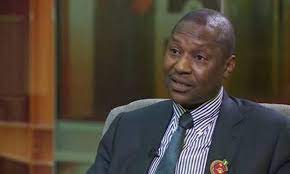
Malami challenges EFCC, asks court to set aside interim forfeiture order on property

0


Former Justice Minister Abubakar Malami, SAN, has prayed the Federal High Court in Abuja to vacate the interim order made against three of the 57 property listed by the Economic and Financial Crimes Commission (EFCC) for forfeiture to the Federal Government.

Malami, former Attorney-General of the Federation (AGF) Muhammadu Buhari administration, is challenging the EFCC on the property listed as No. 9, No. 18 and No. 48 in the ex-parte motion it brought to the court on Jan. 6.

The three property, sought to be discharged, include Plot 157, Lamido Crescent, Nasarawa, GRA, Kano, purchased in July 31, 2019 with no specific amount stated in the schedule as No. 9.

They also include a Bedroom Duplex and Boys Quarters at No.12, Yalinga Street, Off Adetokunbo Ademola Crescent, Wuse Il, Abuja, purchased in October 2018 at N150 million, and ADC Kadi Malami Foundation Building, bought at N56 million listed as No. 18 and No. 48.

It was reported that Justice Nwite, who sat as vacation judge, had, on Jan. 6, ordered the temporary forfeiture of 57 property suspected to be proceeds of unlawful activities linked to Mr Malami.

Justice Nwite had granted the order following an ex-parte motion moved by the EFCC’s lawyer, Ekele Iheanacho, SAN, to the effect.

The judge then directed the commission to publish the order in a national daily for interested person(s) to show cause, within 14 days, why all the property should not be permanently forfeited to the Federal Government.

The multi-billion naira landed property are located in Abuja, Kebbi, Kano and Kaduna States.

However, in a motion on notice filed on Malami’s behalf by a team of lawyers led by Joseph Daudu, SAN, the ex-AGF alleged that the anti-corruption agency got the interim order by suppression of material facts and misrepresentation.

Malami, who urged the court to dismiss the suit to prevent “conflicting outcomes duplicative litigation,” argued that the proceeding was an assault on his fundamental right to owned property, his presumption of innocence and his right to live in peace with his family.

In the application dated Jan. 26 but filed Jan. 27 by Daudu marked: FHC/ABJ/CS/20/2026, Malami sought two orders:

“An order of this honourable court vacating, setting aside and/or discharging the interim order(s) of this honourable court made on the 6th of January, 2026 against the respondent/applicant’s (Malami’s) properties listed as Nos. 9, 18, and 48 in the schedule of properties attached to the interim order of forfeiture of 6th January, 2026, the said properties having been duly declared in the respondent/applicant’s asset declaration forms throughout his tenure as a public officer and No. 48 is held in trust for the Estate of Late Khadi Malami Nassarawa.

“An order of this honourable court restraining the applicant/respondent (EFCC), acting by itself or through its servants, agents and proxies from interfering with the respondent/applicant’s (Malami’s) properties in issue or disturbing the respondent/applicant’s ownership, possession and control thereof in the course of purportedly giving effect to the order of this honourable court made on the 6th of January, 2026.”

In a 14-ground argument, Daudu argued that the assets Nos. 9, 18, and 48, the subject of interim forfeiture, especially those declared in the various asset declaration forms of Malami are not linked by prima facie evidence of an unlawful activity or a specific offence.

He said Malami had declared the assets listed as Nos. 9, and 18 in his asset declaration forms filed with the Code of Conduct Bureau (CCB) in 2019 and 2023 respectively.

He said property No. 48 is held in trust by the former AGF for the benefit of the estate of his late father, Late Kadi Malami.

“These assets, their value and their root of title have been clearly stated and specifically demonstrated in the various asset declaration forms spanning from 2019 to 2023.

“The declaration above is prima facie evidence of the legitimacy of the acquisition and ownership of the properties,” Daudu said.

The senior lawyer submitted that Malami copiously declared his source of income in his asset declaration filed with the CCB to include: N374, 630,900 million income from salaries, estacodes, severance allowance and others;

“Sitting allowances as a board/committee member of the Federal Judicial Service Commission, Federal Capital Territory Judicial Service Commission, Legal Practitioner Privileges Committee, and a high-powered presidential committee.

“N574, 073, 000 (Five hundred and seventy-four million, and seventy three thousand naira) as Income generated through disposed assets

“N10, 017,382,684 (Ten billion, seventeen million, three hundred and eighty-two thousand, six hundred and eighty-four thousand naira) turnover from businesses.

“N2, 522, 000, 000 (Two billion, five hundred and twenty-two million naira) being loans to businesses

“N958,000,000 (Nine hundred and fifty-eight million naira) as a traditional gift from personal friends.”

Daudu equally explained that a total sum of N509, 880, 000 (Five hundred and nine million, eight hundred and eighty thousand naira) was realised as income from the launch and public presentation of a book titled, “Contemporary Issues on Nigerian Law and Practice, Thorny Terrains in Traversing the Nigerian Justice Sector: My Travails and Triumphs” by Malami.

“These streams of income, and the continuing profits generated from the businesses over the years, sufficiently show that the properties sought to be forfeited were acquired through legitimate and lawful means as stated in the asset declaration forms,” he said.

According to the senior lawyer, the order of interim forfeiture is not based on any prima facie establishment of unlawful purpose and is liable to be set aside.

He submitted that the court wrongly granted the order of interim forfeiture against these property “which were lawfully acquired post appointment of the respondent/applicant and declared with the Code of Conduct Bureau as legitimate assets of the respondent/applicant, in compliance with the 5th Schedule to the Constitution of the Federal Republic of Nigeria, in 2019 and 2023.

“The interim order was obtained ex-parte by suppression of material facts and misrepresentation.

“The interim order for forfeiture was obtained by manifest exaggeration, malicious inflation of the value of the assets, and unreasonable and incompetent valuation deliberately manipulated to mislead the court, negatively affecting its discretion in granting an order based on manipulated facts and conclusions deliberately cooked up by the applicant/respondent (EFCC).

“That there is no prima facie evidence placed before this honourable court by the applicant/respondent (EFCC) to warrant the properties linked to the respondent/applicant (Malami) to be liable for forfeiture to the Federal Government of Nigeria.

“The proper remedy for preventing conflicting outcomes duplicative litigation is for this honourable court to dismiss or strike out this suit.

“That this proceeding is an assault on the applicant’s fundamental right to property, his presumption of innocence and his right to live in peace with his family,” the counsel submitted.

Recalls that Justice Nwite had, on Jan. 6, adjourned the matter until Jan. 27 for report of compliance on the publication of the interim order for forfeiture.

But the matter could not go on because the case was not on the cause list for the day because the matter was heard during vacation period and the judge, having concluded the vacation cases, remitted the case file back to the chief judge for re-assignment.

It was also observed that there were lawyers in the courtroom on Jan. 27, who had filed processes on behalf of their clients to stop the court from going ahead with the proceedings for final forfeiture of the assets.

Malami, who is facing a money laundering charge preferred against him by EFCC, is also presently detained at the Department of State Services (DSS)’ facility for another offence bordering on alleged terrorism financing.

Benzema in talks to join rivals Al-Hilal after contract dispute

0

Striker Karim Benzema, who is at odds with his club Al-Ittihad, has entered into negotiations to join rivals Al-Hilal, the Saudi Arabian league leaders, a source told AFP on Monday.

“Negotiations are underway between the parties: Al-Hilal would like to sign Benzema for the remaining six months of his contract with Al-Ittihad, but the player’s agent is demanding a one-and-a-half-year contract,” the source told AFP.

The French striker, the 2022 Ballon d’Or winner, has scored eight goals in 14 league games this season with Al-Ittihad, but did not play in the last two matches.

He is unhappy with a contract extension offer, according to media reports.

Both Al-Hilal, who play in Riyadh, and Al-Ittihad, in Jeddah, are owned by the Saudi Arabian Public Investment Fund (PIF).

Benzema reportedly received an offer from Michael Emenalo, sporting director of the Saudi league, which he considered “insulting” as it would amount to “playing for free”, apart from his image rights, according to his entourage.

The 38-year-old former France international moved to Saudi Arabia in 2023 after 14 seasons with Real Madrid. Last season he scored 21 goals as Al-Ittihad won the league.

This season Al-Ittihad trail leaders Al-Hilal by 12 points.

Al-Ittihad coach Sergio Conceicao declined to comment on Benzema’s absence.

“You have to ask the club’s management and officials,” he said last week adding that “Karim is a top-level professional and an extraordinary player”.

AFP

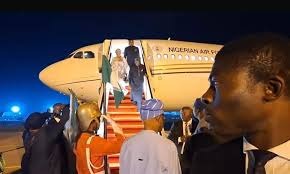
Travels: Presidency spends N34bn on forex in two years

0


The Presidency spent at least N34.39bn on foreign exchange purchases for international travel and related obligations over a two-year period, findings by The PUNCH have shown.

The figure is according to data compiled from GovSpend, a government spending tracker managed by BudgIT.

The records, which cover transactions by the State House, Presidential Air Fleet, the Office of the Chief of Staff, and operations linked to the President, Vice President, First Lady, and their aides, show a sharp swing in spending patterns between 2024 and 2025.

An analysis of the data shows that 2024 accounted for the bulk of the expenditure, with total forex purchases of N29.35bn, while 2025 recorded N5.04bn.

This represents a year-on-year decline of 82.8 per cent, aligning with broader trends in the foreign exchange market where the naira stabilised following policy reforms and improved dollar inflows.

The transactions largely relate to the purchase of foreign currencies for official trips, aviation operations, estacodes, training programmes, and logistics for international engagements involving top executive officials.

While the Presidency has maintained that such trips are necessary for diplomacy, investment promotion and bilateral relations, the scale and timing of the spending have continued to draw public scrutiny amid Nigeria’s fiscal constraints and forex shortages.

In 2024, forex purchases were heavily concentrated in the first half of the year, coinciding with a period of heightened exchange rate volatility and sustained pressure on the naira.

One of the most prominent spenders during the year was the Presidential Air Fleet, which alone accounted for several multi-billion-naira transactions described as “presidential air fleet forex transit funds.”

The Presidential Air Fleet, managed by the Nigerian Air Force, is responsible for the air transport needs of the President, Vice President, and senior government officials.

Despite its strategic role, the cost of maintaining the fleet has long been a subject of public scrutiny and criticism, particularly amid Nigeria’s fiscal pressures and rising debt service obligations.

Between March and May 2024, the Presidential Air Fleet Naira Transit Account recorded repeated purchases of about N1.27bn each on March 7, March 9, April 6, May 11 and May 25, alongside larger tranches such as N5.08bn on April 23 and N2.43bn on May 8.

These aviation-related transactions show the high cost of maintaining and deploying the presidential fleet for overseas travel.

Additional transfers of N205m in July, N34m, N1.25bn, N2.21bn, N160.4m, N1.24bn and N902.9m in August further swelled the air fleet’s forex bill.

Smaller amounts followed later in the year, including payments in September and December, bringing the air fleet’s cumulative forex-linked transactions in 2024 into several billions of naira.

Beyond aviation, the State House Headquarters also recorded extensive forex purchases throughout 2024.

In February alone, the State House spent over N2.5bn on forex linked directly to specific presidential and vice-presidential trips.

These included N426.88m for the Vice President’s trip to Switzerland, N1.04bn for the President’s trip to Ethiopia, N750m for the President’s trip to Dubai, N176.77m for the Vice President’s trip to Côte d’Ivoire, N149.79m for the First Lady’s trip to France, and N86.76m for the Vice President’s trip to Liberia.

March 2024 saw further spending tied to foreign travel by the First Lady and Vice President. Transactions included N202.39m for the First Lady’s trip to Mozambique, N144.57m for her trip to Addis Ababa, and N126.30m for a trip to London.

The Vice President’s engagements also featured, with N201.12m spent on a trip to Côte d’Ivoire and N169.54m for estacodes linked to UK and US training programmes.

From July 2024, forex purchases by the State House intensified, with multiple same-day transactions on July 17 alone.

These included N149.05m, N358.53m, N243.32m, N739.07m, and N73.07m, all tagged as forex purchases.

Additional payments were made on July 23, August 6, October 11, and October 28, with notable amounts of N569.68m, N323.14m, N246.80m, and a significant N1.36bn on October 28.

By the final quarter of 2024, spending remained elevated. In November, the State House Operations – President recorded several purchases, including N22.19m, N18.34m, N169.10m and N185.23m on November 28. December added another N736.20m on December 1, reinforcing the pattern of sustained forex demand by the Presidency throughout the year.

Cumulatively, these transactions pushed total forex purchases linked to the Presidency in 2024 to N29.35bn, making it one of the most expensive years for official foreign travel and related forex spending in recent times.

In contrast, 2025 marked a significant pullback. Total forex purchases for the year stood at N5.04bn, a steep decline from the previous year.

The reduction was broad-based, cutting across the Presidency, Vice Presidency and supporting offices.

Transactions in 2025 were also generally smaller in size and more sporadic, suggesting a deliberate effort to rein in forex outflows.

Data from April 30, 2025, show multiple forex purchases by State House Operations – President and Vice President, but most were in the tens of millions rather than billions of naira.

Amounts such as N535.82m, N57.94m, N32.51m, N57.81m and N23.67m dominated the April transactions.

Even the larger figures recorded in mid-2025, including N1.29bn, N1.28bn and N626m linked to the Presidential Air Fleet, were fewer and spread over several months.

By the second half of 2025, forex purchases had tapered further. August transactions included N7.67m and N11.14m, while November and December recorded modest payments by the Office of the Chief of Staff and the Presidential Air Fleet.

The overall pattern points to tighter controls and possibly improved planning around official travel as the naira stabilised in 2025.

The PUNCH observed that the naira ended 2025 on a firmer note, closing at N1,429/$1 on December 31.

This was a 7.4 per cent appreciation from the N1,535/$1 recorded on the final trading day of 2024, according to official exchange rate data from the Central Bank of Nigeria.

The local currency concluded 2024 with significant depreciation, recording a 40.9 per cent loss against the dollar in the official market.

The 2025 performance marks the naira’s first annual gain since 2012, when it appreciated slightly to N157.29 from N158.99 in 2011.

The currency had depreciated every year since then, marking a major turnaround after 13 years of consistent declines.

A further breakdown of the GovSpend data also shows that aviation-related expenses remain a major driver of forex demand.

The Presidential Air Fleet consistently accounted for some of the largest transactions across both years, reflecting maintenance, fuel, leasing and operational costs that are typically dollar-denominated.

This has renewed debate over the size and cost structure of the fleet, especially at a time when many countries are reviewing the sustainability of maintaining large official aircraft inventories.

The State House and Office of the Chief of Staff accounted for smaller but still significant amounts, often linked directly to specific trips by the President, Vice President or First Lady. These include forex purchases for estacodes, accommodation, logistics and protocol obligations.

The Country Director of Accountability Lab Nigeria, Odeh Friday, earlier expressed concern about the impact of such spending on taxpayers and the need for greater transparency and accountability.

“This highlights the urgent need for a shift toward greater equality and accountability in the management of public finances,” Friday said.

He emphasised that it is critical to evaluate the outcomes of these significant expenditures, questioning whether they truly serve the interests of the Nigerian people. “Some of them are clearly wasteful expenditure,” he added.

Former Presidential Candidate of the Labour Party (LP) in the 2023 general elections, Peter Obi, has criticised President Bola Tinubu for spending much of January abroad.

Obi, in a post on his X handle on Sunday morning, noted that while leaders in other countries focus on domestic governance at the start of the year, Nigeria’s president has prioritised foreign engagements over pressing national issues.

Obi also questioned the necessity of Tinubu’s frequent foreign trips, noting that the President spent 23 days abroad in January across two trips, returning only briefly to Nigeria in between.

“While leaders in other nations prioritise domestic governance in January, Nigeria’s president prioritises international engagements over pressing national issues. This month, he spent 23 days abroad across two trips—beginning the year overseas and returning on the 17th, and departing less than 10 days on the 26th to Türkiye, where he remains as of January 31. What urgent matters continuously warrant his absence from the nation? When he does return, it often appears to be merely to welcome defectors into the APC before he jets off again.”

Punch

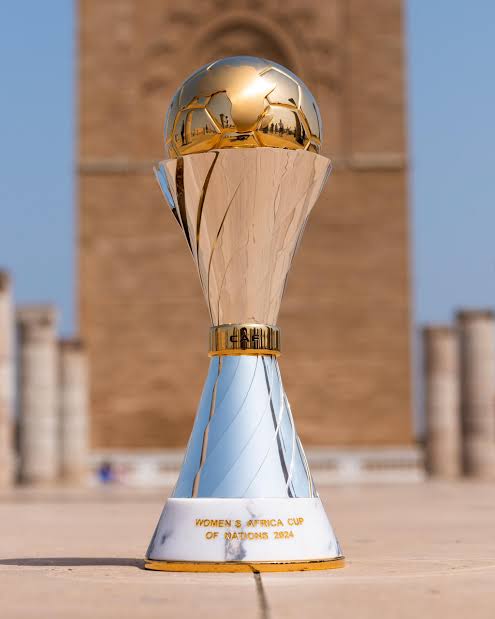
South Africa set to replace Morocco as WAFCON hosts

0


South Africa have moved to step in as hosts of the 2026 Women’s Africa Cup of Nations (WAFCON) following Morocco’s reported withdrawal from staging the tournament with just 60 days to the scheduled kick-off.

The 2026 WAFCON is billed to run from March 17 to April 3, 2026, under a compressed timetable that follows the delayed 2024 edition, which was impacted by global scheduling challenges, including the Paris Olympics.

The development was announced on Sunday night by South Africa’s Deputy Minister of Sport, Arts and Culture, Peace Mabe, who revealed that the Rainbow Nation would take over hosting duties after Morocco’s sudden decision to pull out.

Speaking at the Super League Awards ceremony in Johannesburg, Mabe confirmed that the handover had been finalised, leaving South Africa with a tight window to prepare for Africa’s flagship women’s football tournament, which also doubles as a qualification pathway for the 2027 FIFA Women’s World Cup in Brazil.

“Tonight, I would like to announce that South Africa will be hosting the 2026 WAFCON, which we all know is a qualifying tournament for the 2027 Women’s World Cup in Brazil,” Mabe said.

Morocco’s withdrawal has come as a surprise, especially after the North African nation hosted the men’s Africa Cup of Nations just weeks ago.

Although no official explanation has been issued by Moroccan authorities or the Confederation of African Football (CAF), the decision is believed to follow heightened domestic tensions after the dramatic AFCON final in Rabat, where the hosts lost to Senegal.

The 2026 WAFCON was originally scheduled for March 17 to April 3 and will feature an expanded 16-team format. However, it remains unclear whether the dates will change following the switch in hosts.

The aftermath of the AFCON final was marred by controversy, disciplinary actions and public criticism, with reports suggesting growing internal pressure on Morocco to step back from hosting further major CAF competitions in the short term.

South Africa’s late confirmation as hosts presents a significant logistical challenge, but the country is no stranger to staging top-level women’s football on the continent.

Banyana Banyana lifted the WAFCON trophy on home soil in 2022, a triumph that underlined South Africa’s status as one of Africa’s leading forces in the women’s game.

The 2026 Women’s Africa Cup of Nations carries added significance, with the expanded format allowing the four semi-finalists to qualify automatically for the 2027 Women’s World Cup. The remaining two African slots will be decided through inter-confederation play-offs involving the losing quarter-finalists.

Punch

Onitsha traders reopen shops following Soludo threats

0


Traders at the Onitsha Main Market have resumed business after a one-week shutdown, following directives from Anambra State Governor, Chukwuma Soludo.

The reopening comes amid heightened security measures and warnings against compliance with non-state actors, Indigenous People of Biafra sit-at-home orders.


The market was previously ordered closed by Soludo after reports suggested that some traders were following a Monday sit-at-home call issued by IPOB.

The governor had warned that failure to reopen could lead to further closures.

“Traders of the Onitsha Main Market have reopened their shops in compliance with a directive by the Anambra State Governor, Chukwuma Soludo,” a report by Channels Television on Monday said.

A visit to the market by Channels Television revealed that many traders were back as early as 8:45 a.m., setting up wares from Egerton to Ose Foodstuff Market and The Young Park, a major entrance to the Main Market. Observers noted that areas including Emeka Offor Plaza, Sokoto Road, Lagos Line, and Marine were active, with customers beginning to patronize shops.

“It is clear that the traders are complying with government directives to ignore the sit-at-home order,” the report added.
The proscribed IPOB had called for a lockdown across the South-East in solidarity with Onitsha traders. The group, through its spokesman Emma Powerful, urged traders, transporters, banks, schools, and civil servants to observe the strike peacefully.

However, IPOB’s lawyer, Ifeanyi Ejiofor, discredited the lockdown directive, describing it as “a fake” and “a calculated falsehood,” urging the public to ignore it. He stressed that IPOB had long denounced sit-at-home orders.

The Anambra State Police Command on Sunday also issued a strong warning to residents, highlighting the threats posed by non-state actors on social media.

“Following the security assessment of the implications, or otherwise, of full resumption of all social, commercial, and official activities in Anambra State on Monday, the Police Command has identified a deliberate, recurring pattern of coordinated social media posts by some non-state actors aimed at spreading fear, misinformation, and bigotry among the public,” the statement said.

The police noted that such narratives are intended “to cause panic, undermine public confidence, and disrupt the peace currently enjoyed in the State.”

“The resilience, cooperation, and timely sharing of credible information by residents continues to play a critical role in sustaining public order and safety,” the statement added.

The police further directed intensified intelligence-led patrols, security surveillance, and proactive operations to prevent threats to lives and property. Residents were advised to disregard unverified social media content and report any suspicious activities.

“Members of the public are advised to disregard unverified social media content being propagated by non-state actors and to report any suspicious movements or activities to the nearest Police formation or through established emergency channels,” the statement said.

The police reaffirmed their commitment to maintaining peace and public safety, while the government assured traders of full security coverage as economic activities resume.

Punch

Sachet Alcohol Wars: Jobs, Profits and Nigeria’s Battle to Protect Its Children

0

Sachet Alcohol Wars: Jobs, Profits and Nigeria’s Battle to Protect Its Children

BY TAIWO OGUNMOLA -OMILANI

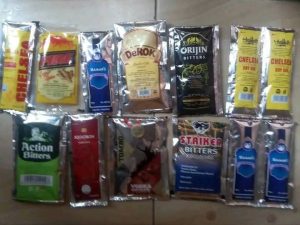
For more than two decades, a quiet but intense battle has brewed around one of Nigeria’s most ubiquitous products — sachet-packaged alcohol. Cheap, colourful and easy to conceal, these small plastic and sachets packs of strong spirits have found their way into motor parks, street corners, and increasingly, into the hands of underage children.

What began as a public health concern has now erupted into a full-blown faceoff involving regulators, labour unions, distillers and organised labour, with jobs, investments and the future of public health hanging in the balance.

At the centre of the storm is the National Agency for Food and Drug Administration and Control (NAFDAC), which has renewed its resolve to enforce a long-delayed ban on sachet alcohol and other alcoholic beverages packaged below 200 millilitres.

The move, NAFDAC insists, is driven purely by public health considerations — particularly the alarming rate of alcohol consumption among minors.

According to NAFDAC, the journey to ban sachet alcohol dates back to January 2004. However, sustained pressure from industry players and labour groups stalled implementation for years, stretching the policy battle into 2026.

Now, with fresh government backing, the agency says it is determined to see the policy through.
“The reality is painful,” NAFDAC Director-General, Prof. Mojisola Adeyeye, said during an interactive session with food sector stakeholders in Lagos. “You have alcoholic drinks sold for as low as N50, beautifully packaged, with as much as 30 per cent alcohol content — something a child can easily hide in a pocket and take to school.

Even I once mistook it for something else.”
Adeyeye lamented what she described as the normalisation of sachet alcohol consumption among motorcycle riders, artisans and, disturbingly, children as young as eight or nine years old.

“Whatever we are doing is to mitigate underage drinking,” she said. “We cannot continue breeding alcoholic children. We are destroying society from the inside out.”
Yet, NAFDAC’s stance has triggered fierce resistance from organised labour and industry unions, who argue that the ban threatens livelihoods, investments and indigenous businesses.

The Food, Beverage and Tobacco Senior Staff Association (FOBTOB) has emerged as one of the loudest voices opposing the policy.
At a press conference in 2025, FOBTOB warned that the proposed ban could wipe out nearly N2 trillion in investments and lead to massive job losses. Its National President, Comrade Jimoh Oyibo, said the beverage sector had invested heavily in machinery, raw materials and distribution networks tailored to sachet and small-pack products.

“Over 500,000 direct workers and about five million indirect workers across supply chains, logistics and distribution stand to be affected,” Oyibo cautioned. “This is not just about alcohol; it is about families, communities and survival.”

The union accused policymakers of relying solely on NAFDAC’s submissions while sidelining other critical stakeholders. Oyibo argued that Nigeria already has a validated National Alcohol Policy, which recommends stricter enforcement, licensing of liquor outlets, public enlightenment campaigns and multi-sectoral collaboration — not an outright ban.

FOBTOB also disputed claims that sachet alcohol is widely abused by minors, insisting that independent, government-backed studies had debunked such assertions. According to the union, industry players have spent over one billion naira on campaigns promoting responsible drinking and discouraging underage consumption.

“As the saying goes, it takes the mother chicken to live to raise its young ones,” Oyibo said, urging the government to protect businesses that contribute significantly to the economy rather than cripple them through sudden policy shifts.

The controversy has since drawn in the Nigeria Labour Congress (NLC), the Nigeria Employers’ Consultative Association (NECA) and other workers’ groups, all of whom have staged protests against the ban. Critics of the resistance, however, argue that economic self-interest is being placed above the wellbeing of Nigerian children.

Public health experts have consistently warned that sachet alcohol poses unique risks. Its low price and high accessibility encourage early and frequent consumption, particularly among youths and low-income groups.

Alcohol use is linked globally to more than 200 health conditions, including liver disease, cardiovascular problems, certain cancers and mental health disorders. Easy access also increases the risk of addiction, road accidents, violence and family breakdown.

These concerns, authorities say, informed Nigeria’s decision to prohibit the production and sale of sachet alcohol and very small packaged drinks in the first place.

As the debate rages on, Nigeria finds itself at a crossroads: balancing the protection of public health — especially that of vulnerable children — against the economic realities of jobs, investments and industrial survival.

Whether compromise or confrontation will ultimately define the outcome remains to be seen, but one thing is clear — the sachet alcohol saga is no longer just about drinks in plastic packs; it is about the kind of society Nigeria wants to build.