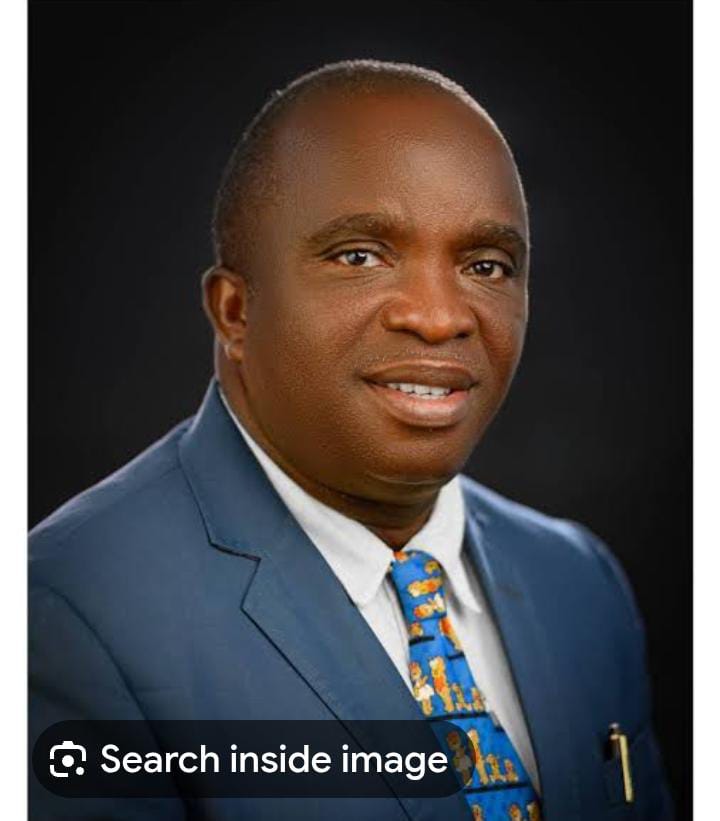
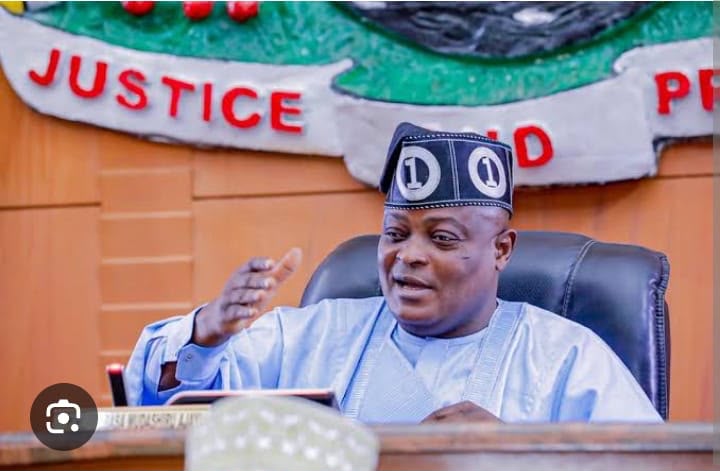
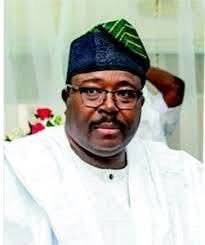
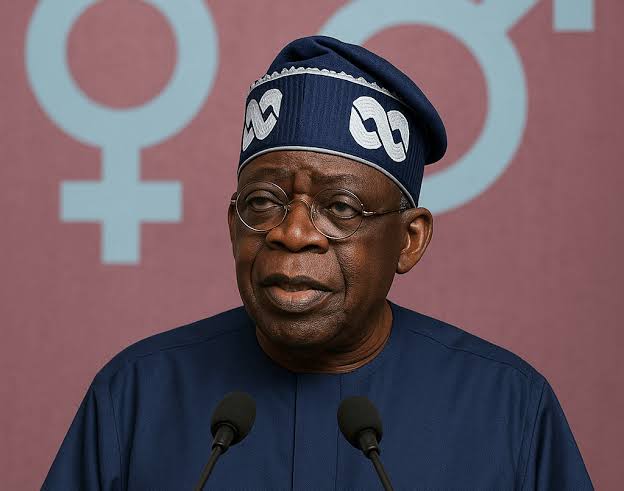
Mr Abiodun Tobun, member representing Epe Constituency I in the Lagos State House of Assembly, has described President Bola Tinubu’s administration as an opportunity to advance Nigeria’s economic development, citing its reform agenda and infrastructure initiatives.
Tobun, who is also Chairman of the House Committee on Trade, Investment and Cooperative, disclosed this in an interview with journalists in Lagos.
He highlighted the administration’s efforts to attract investment, support businesses and strengthen economic stability, saying the initiatives could contribute to job creation and national development if their benefits reached more Nigerians.
“We believe that the ongoing reforms and development projects will create more opportunities for our people.
“What is important is to sustain these efforts and ensure that Nigerians feel the impact in their daily lives,” he said.
The lawmaker also urged Lagos residents to support Dr Obafemi Hamzat, the All Progressives Congress (APC) candidate, expressing confidence in his leadership and commitment to the state’s development. “We believe in the APC and its leadership, and we are confident that our candidates will receive the support of the electorate,” he said.
Tobun called on Nigerians, Lagos residents and people of Epe to support APC candidates across the board, describing the party as a political family united by its development objectives.
“APC is a big family, and we believe Nigeria is safe under an APC-led administration,” he said. He urged party members and supporters to remain united, engage in peaceful political activities and mobilise eligible voters ahead of the forthcoming elections.
Tobun added that sustained engagement with constituents and effective representation remained important responsibilities of elected officials, irrespective of the political season.
Reaffirming his commitment to Epe Constituency I, the lawmaker pledged to continue supporting initiatives aimed at improving the welfare and living conditions of his constituents.
“I will continue to give back to the good people of Epe Constituency I and ensure that I provide effective representation and contribute to good governance,” he said.
He said he would sustain engagement with residents to identify their needs and support initiatives promoting community development, economic opportunities and improved service delivery across the constituency.
Tobun also expressed confidence in President Tinubu’s re-election bid, describing the president’s victory as “sacrosanct, non-negotiable.”
He said the APC remained committed to sustaining its political support across the country, adding that the party’s performance at the federal and state levels would be central to its appeal to voters.
…Sets December 31st Deadline, Enforcement Begins Jan 1st 2027
…21 HMOs Endorse Partnership, As Govt Targets 10million Enrollees
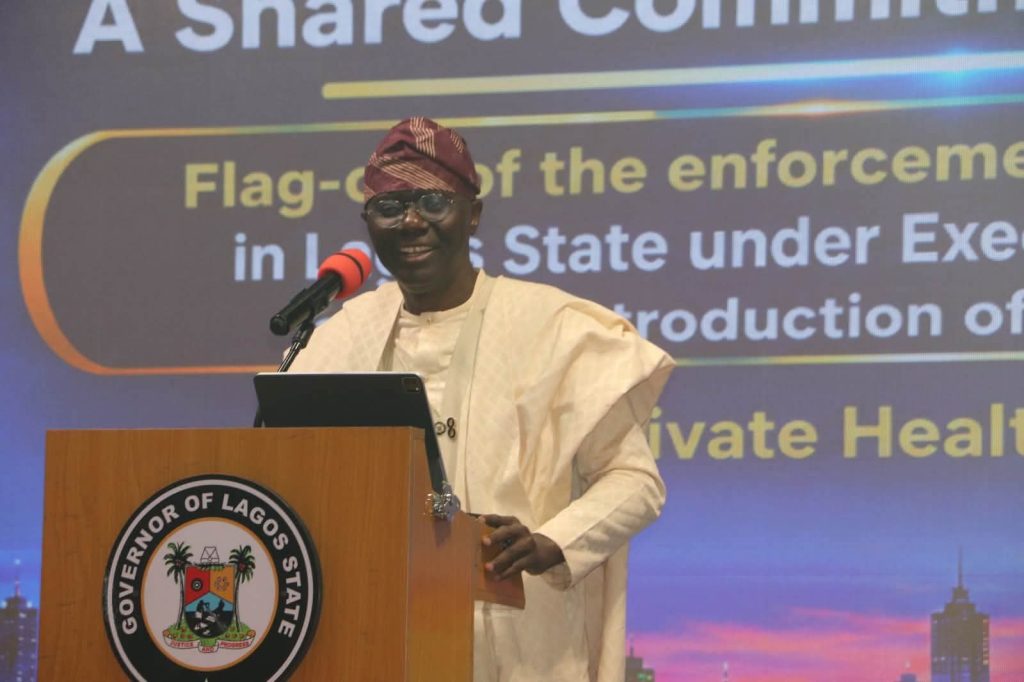
Lagos State Government on Tuesday launched the Lagos Private Health Plan (LPHP) Partnership and flagged off the enforcement of mandatory health insurance, with Governor Babajide Sanwo-Olu announcing a grace period until December 31, 2026, for employers, workers and residents to secure appropriate coverage before enforcement commences on January 1, 2027.
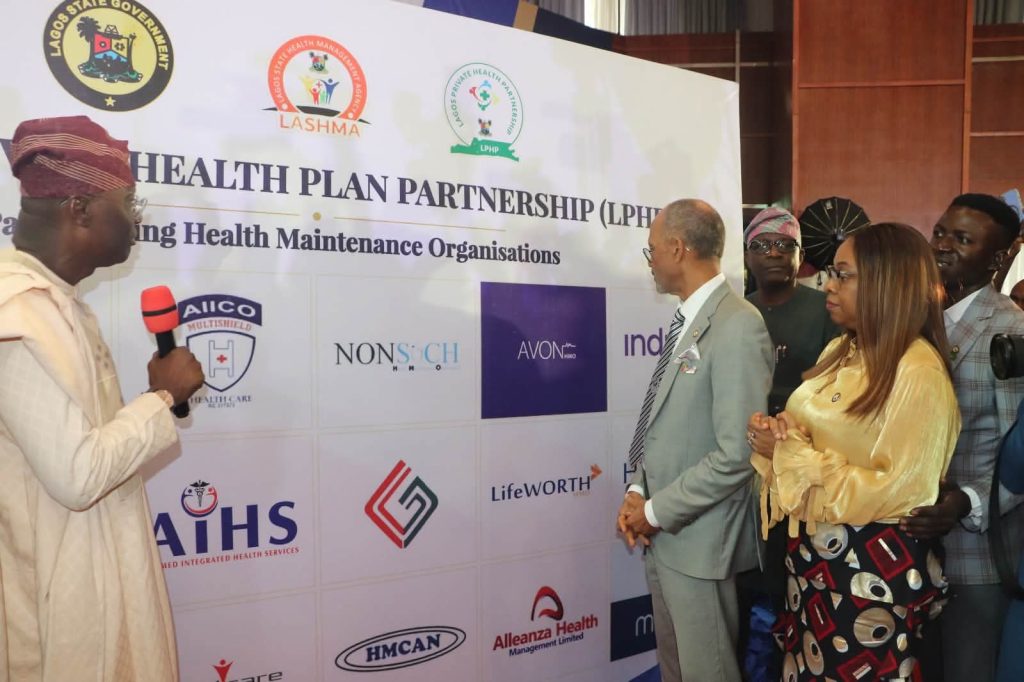
The launch, held at Lagos Continental Hotel, Victoria Island, also featured the unveiling of 21 participating Health Maintenance Organisations (HMOs), marking a major step in the state’s drive to expand health insurance coverage and protect residents from the financial burden of healthcare.
Sanwo-Olu said the initiative, anchored on Executive Order EO/BOS/01/2024 signed on July 16, 2024, was designed to ensure that access to healthcare would no longer depend solely on an individual’s ability to pay at the point of illness.
Reaffirming the state’s commitment to implementation of State Health Insurance Scheme, Ilera Eko, the Governor said the scheme would create a more inclusive healthcare financing system for formal-sector employees, informal-sector workers and vulnerable residents.
Explaining the rationale for the new plan, the Governor said the existing Ilera Eko scheme was designed primarily to support vulnerable populations and people working in the informal sector, necessitating a complementary arrangement for salaried workers and corporate organisations.
He disclosed that actuarial analysis of approximately two million claims and enrolment records informed the development of the LPHP, which offers structured health insurance options for the formal sector.
The Governor said the state had established implementation and enforcement mechanisms to ensure compliance, including a Lagos Private Health Plan Implementation Steering Committee and an Enforcement Task Force.
He directed the relevant authorities to provide operational guidelines and support for enrolment before the end of the grace period, stressing that the objective was compliance rather than confrontation.
“We want compliance, not unnecessary confrontation,” Sanwo-Olu said, urging employers and workers to use the transition period to select suitable plans and complete registration.
He added that the initiative would strengthen healthcare financing by making payments to participating providers more predictable, improving service delivery and reducing pressure on public hospitals.
The Governor also said part of the contributions would support the Lagos State Health Equity Fund and public healthcare infrastructure, helping extend coverage to residents unable to afford insurance.
He assured stakeholders that the state would monitor HMOs’ performance, particularly prompt payment to providers, claims settlement and access to appropriate care.
State Commissioner for Health, Prof. Akin Abayomi, described the launch as a defining shift in the state’s healthcare financing system, arguing that out-of-pocket payments expose households to severe financial hardship.
He explained that health insurance pools contributions from a broad population, spreading the cost of healthcare across individuals and reducing the risk of families exhausting their savings or falling into debt when illness occurs.
Abayomi said mandatory participation was necessary to build a sufficiently large and diverse insurance pool, noting that voluntary schemes often struggle because healthier people may opt out until they need medical attention.
He said the policy would promote solidarity, whereby the healthy support the sick, the young support the old, and those able to contribute help protect vulnerable residents.
Outlining the expected benefits, the Commissioner said the LPHP would provide healthcare providers with more predictable income, encourage competition in service quality, ease patient congestion in public facilities, support vulnerable residents and expand the insurance market.
He said Lagos was targeting an increase in insured residents from about two million to at least 10 million, while confirming that participating organisations were accredited by the National Health Insurance Authority.
Special Adviser to the Governor on Health, Dr (Mrs.) Kemi Ogunyemi, said the Executive Order provided the legal framework for compulsory health insurance for residents and required public and private employers to provide coverage for their workers.
She described the LPHP as an opportunity to expand choice by enabling individuals, families and employers to select from accredited health insurance plans suited to their needs.
Ogunyemi stressed that the initiative was not intended to penalise HMOs or private healthcare providers but to bring stakeholders into a coordinated and regulated system.
She said competition among participating providers could help improve affordability and service quality, adding that government, employers, insurers and healthcare facilities must work together to achieve universal health coverage.
Chairman of the Governing Board of the Lagos State Health Management Agency (LASHMA), Dr Adebayo Adedewe, said the agency had sustained public sensitisation through radio, billboard and digital campaigns, as well as engagements with traditional rulers, market associations, transport unions and community leaders.
He disclosed that funding for the Lagos State Health Equity Fund had increased from ₦1 billion to ₦3 billion to strengthen access to healthcare for vulnerable populations, with a target of enrolling 500,000 residents.
Permanent Secretary, Lagos State Ministry of Health, Dr Dayo Lajide, said the programme was critical in addressing the high financial burden of healthcare on Nigerian households. Citing the National Health Insurance Authority’s report that out-of-pocket payments accounted for 58 per cent of total health expenditure in Nigeria in 2024, she said the LPHP would build on Lagos’ existing insurance structure and help protect more families from financial hardship.
Permanent Secretary, LASHMA, Dr Emmanuella Zamba, described the launch as a transition from policy development and stakeholder engagement to implementation.
She thanked the Governor, the Ministry of Health, participating HMOs, healthcare providers and other partners, urging sustained collaboration to ensure that the new framework delivers accessible and reliable healthcare coverage.
Representing Sterling Bank’s Managing Director and Chief Executive Officer, Abubakar Suleiman, the Vice President, Government Banking, Adewale Adebowale, said the bank was supporting the initiative as a technology and financial partner.
He explained that the digital platform developed with Sterling Bank’s assistance would facilitate enrolment and enable employers to register their workers more efficiently, noting that effective partnerships were essential to translating policy into practical benefits.
National President of the Healthcare Providers Association of Nigeria, Dr Aipoh Augustine, commended the state for the consultations that preceded the launch but called for transparent implementation, timely reimbursement of healthcare providers, simplified payment procedures and fair accreditation processes.
He said the programme’s success should be measured not only by the number of people enrolled but also by their ability to access appropriate treatment without financial distress.
National President of the Guild of Medical Directors, Dr Raymond Abiodun Kuti, said building public trust through transparency and accountability would be crucial to the scheme’s success. He urged the government to maintain effective engagement with private healthcare providers and address their concerns, while immediate past President of the Health and Managed Care Association of Nigeria, Dr Leke Oshunniyi, said a well-functioning insurance system would help providers receive payment for services rendered while reducing the financial burden on patients.
The Lagos Private Health Plan Partnership complements Ilera Eko by providing additional coverage options for formal-sector employees and corporate organisations within a coordinated state framework.
The government said enrolment would be supported through a digital platform, while operational guidelines would specify applicable contributions, minimum benefit packages and the responsibilities of participating organisations.
With the grace period ending on December 31, 2026, full enforcement of mandatory health insurance is scheduled to commence on January 1, 2027
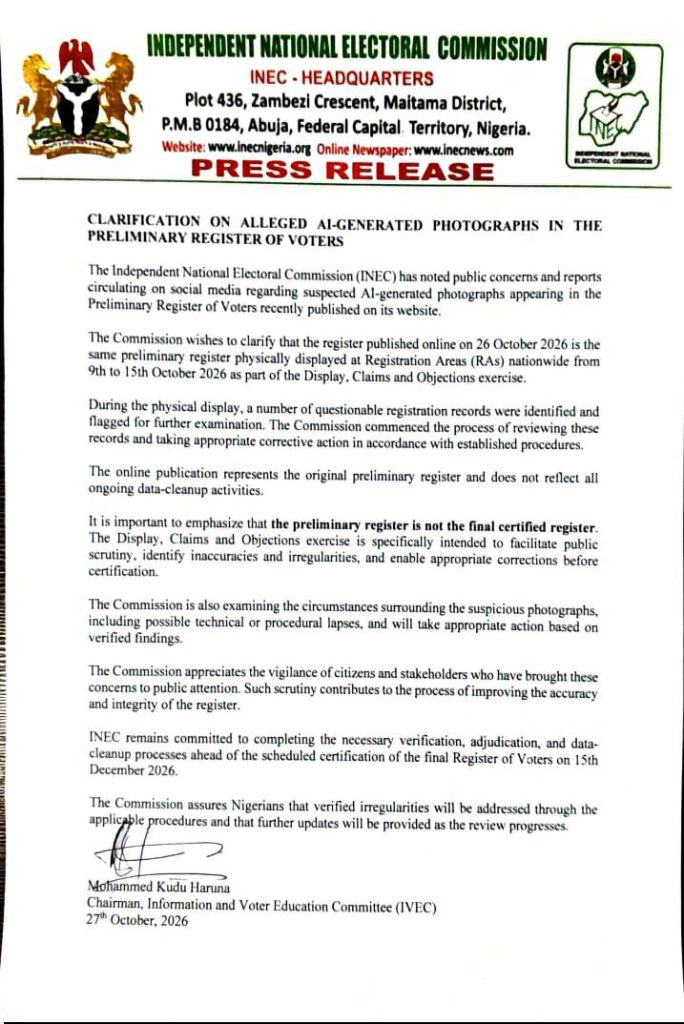
The Independent National Electoral Commission (INEC) has commenced an investigation into suspected artificial intelligence-generated photographs discovered in the Preliminary Register of Voters published on its website.
The Commission disclosed this in a statement clarifying concerns raised by members of the public on social media over the appearance of questionable photographs in the register.
INEC explained that the register published online on October 26, 2026, was the same preliminary register physically displayed at Registration Areas nationwide from October 9 to 15, 2026, as part of the Display, Claims and Objections exercise.
According to the Commission, some questionable registration records were identified and flagged for further examination during the physical display, prompting a review and corrective process in line with established procedures.
The All Progressives Congress (APC) has dismissed concerns about the substance of President Bola Tinubu’s address at its Kaduna campaign rally, arguing that the event was not intended for detailed policy discussions.
Felix Morka, the party’s National Publicity Secretary, said the president’s appearance was meant to acknowledge supporters and encourage them to sustain their backing ahead of the 2027 presidential election.
Speaking on ARISE News on Tuesday, Morka responded to questions about whether Tinubu’s remarks at the Saturday, October 24, rally were underwhelming. He maintained that the president could have fulfilled the objective of the gathering with a brief message of appreciation rather than an extensive address.
“All the president needed to do was to show up and say to the people in Kaduna, ‘Thank you for your hospitality, I appreciate your support, please do so again in 2027.’ If that’s all he said, he did the job,” Morka said.
The APC spokesman explained that campaign rallies were primarily opportunities for political mobilisation and interaction with supporters, not forums for detailed discussions on government policies.
“A campaign rally of that kind in Kaduna is not a policy dialogue where speeches should be given,” he said.
Morka added that even a simple gesture of appreciation from Tinubu would have served the purpose of the gathering. “Even if the president came there and danced and said to the people, ‘I appreciate you, thank you so much,’ and left the stage, he had done the job,” he added.
He also argued that those who planned the rally were better placed to determine whether it had achieved its intended objectives. According to him, the event brought together party leaders, members, supporters and other well-wishers to welcome the president.
At the Kaduna rally, Tinubu criticised opposition figures who had attributed the country’s hunger and poverty to his administration.
“I hear my opponents talking about hunger and poverty. Who created it? They did. They created the hunger. They created the poverty we are trying to eradicate,” the president said.
Tinubu also defended his government’s performance, pointing to salary payments and the activities of APC governors.
“We pay salaries regularly. Our governors are working. I am proud of them. They are developing,” he said.
The president appealed to Nigerians to support his bid for another term, pledging further prosperity and development if re-elected.
“To you, the children of our country, it is a promise of second-term prosperity. You will not regret going to vote,” Tinubu said.
Nigeria’s onshore oil sector suffered another major shake-up yesterday as French energy giant TotalEnergies and Italian oil major Eni completed separate deals to divest their interests in the Renaissance Joint Venture (JV), formerly known as the Shell Petroleum Development Company (SPDC) JV, deepening the retreat of international oil companies (IOCs) from the Niger Delta’s onshore assets.
While TotalEnergies sold its 10 per cent non-operated interest in the Renaissance Joint Venture (JV) stake to Vaaris for $800 million, Eni completed the sale of its subsidiary, Agip Energy and Natural Resources (Nigeria) Limited (AENR), which holds a five per cent interest in the joint venture, to Apex Global Energy Limited, a company wholly owned by Sterling Oil Exploration and Energy Production Company Limited. The transactions underscore the continuing retreat of international oil companies (IOCs) from Nigeria’s onshore and shallow-water oil operations as they reposition their portfolios towards deepwater assets and gas development.
Under the completed agreement, TotalEnergies EP Nigeria transferred its 10 per cent participating interest in 15 mainly oil-producing licences within the Renaissance JV. The divested assets accounted for approximately 16,000 barrels of oil equivalent per day of attributable production in 2025.
However, the French energy company retained its full economic interest in three gas-producing licences: OML 23, OML 28 and OML 77, which account for 50 per cent of the gas supplied to Nigeria LNG (NLNG).
The retention of the gas interests highlights the strategic importance of Nigeria’s gas resources to the company’s operations, even as it withdraws from part of its onshore oil portfolio.
Eni’s transaction involves the transfer of AENR, its wholly owned subsidiary engaged in onshore and shallow-water hydrocarbon exploration and production, to Apex Global Energy. The deal received approval from all relevant authorities and aligns with Eni’s strategy to optimise its upstream portfolio by divesting non-strategic assets.
The independent ministerial committee investigating the recent deaths of 33 persons in the custody of the Nigerian Security and Civil Defence Corps (NSCDC) in Minna, Niger State, has unravelled the cause of death of the suspects.
In the Executive Summary presented by the chairman of the committee, Jonathan Kure, on Tuesday in Abuja, while submitting the report to the Minister of Interior, Olubunmi Tunji-Ojo, the committee cited the causes of death to include “overcrowding, unsuitable detention conditions, failure of duty of care, inadequate supervision”.
The statement reads: “The committee concluded that the incident was a preventable custodial tragedy caused by severe overcrowding, unlawful and unsuitable detention conditions, failure of duty of care, disregard of repeated distress warnings, inadequate supervision, and wider systemic deficiencies.
“The evidence did not support claims that the death resulted from a disease outbreak.
“Available medical and forensic evidence instead indicated that the fatalities resulted from an environmental asphyxia, an acute respiratory failure caused by prolonged confinement in a severely overcrowded and poorly ventilated detention cell, aggravated by heat stress and dehydration.
“The investigation included interviews with NACDC leadership, operational personnel, cell guards, medical staff, survivors, bereaved families, community representatives, and graveside managers.
“It also involved examination of arrest and detention registers, communication records, duty rosters, AZB registers, hospital and mortuary records, autopsy findings, and burial records. 29 of the 41 survivors were interviewed, including nine minors.
“Evidence from multiple independent sources was analysed and cross-checked to reconstruct events and determine responsibility.
“The committee established that the tragedy stemmed from enforcement operations against suspected illegal mining activities in and around Minna”.
According to the committee, the operation which led to the arrest of the suspects was without an “operational order” or approval from the national headquarters of the NSCDC.
The Lagos State House of Assembly has unanimously supported the proposed establishment of state police following its consideration of the constitutional amendment bill transmitted by the National Assembly.
The Speaker, Rt. Hon. Mudashiru Obasa, disclosed this on Tuesday during plenary, which the lawmakers reconvened for after shortening their recess to consider the bill. Speaking after reading the relevant sections of the proposed amendment, Obasa said the establishment of state police had remained a recurring issue from the fifth to the 10th Assembly, with successive legislatures discussing ways to strengthen security and protect lives and property.
He described the development as a step forward but expressed concern that some issues raised by state legislatures, particularly those relating to control and the relationship between federal and state policing, had not been adequately addressed.
The proposed constitutional amendment, titled the Constitution of the Federal Republic of Nigeria, 1999 (Sixth Alteration) Act, 2026, seeks to provide for the establishment of the State Police Service and related matters. Obasa commended President Bola Ahmed Tinubu for his commitment to democracy and democratic institutions, as well as the National Assembly, particularly the Senate and the House of Representatives, for their contributions to the amendment process.
He also commended the various State Houses of Assembly for supporting the proposal, noting that nearly 25 states had expressed support for the constitutional alteration.
However, the Speaker raised concerns over provisions relating to the control of state police and the apparent disparity between the security arrangements for the National Assembly and state legislatures.
According to him, the functions and responsibilities of state police should be clearly defined, with appropriate constitutional provisions made for state legislatures to protect their independence. Obasa said: “Nevertheless, we are happy and pleased that, at the end of the day, the issue of state police has received attention.
“However, our interests and positions have not been adequately taken care of in this process. I am sure that if you examine the provisions, as we have cited the relevant sections and paragraphs, you will realise that some of the key issues surrounding control remain unresolved.
“Where state legislatures have powers, similar provisions should be considered at the national level. There is also a provision that, in the event of a conflict between federal and state laws, federal law may prevail in circumstances provided for by the Constitution.
“Therefore, I do not know whether the current provisions on state police adequately address these concerns or whether they give sufficient consideration to the relationship between state and federal policing. Whatever the case may be, I want to say that this is, at least, a step forward”, he said.
He expressed hope that further developments would give states greater control over their policing arrangements, while commending the President and the National Assembly for their roles in the process.
The Speaker also noted that although the constitutional amendment process had not been concluded, he remained hopeful that outstanding issues would be addressed at the appropriate time.
On the security of legislative institutions, Obasa questioned why the proposed arrangements for policing the National Assembly did not provide equivalent protection for state legislatures.
He said such an arrangement could create an advantage for one level of government over another, stressing the need for clear provisions to protect state legislatures.
Obasa disclosed that he had discussed the issue with some senators, including the Deputy Senate President and the Senate Leader, as well as other stakeholders.
He called for a clear constitutional provision for parliamentary police, similar to arrangements in the United States and other jurisdictions, to safeguard legislative institutions and preserve their independence.
The Speaker warned against a recurrence of incidents in which governors could order the demolition of legislative buildings or lock up state legislatures to serve personal interests.
He said establishing parliamentary police would help prevent such incidents, strengthen state legislatures and protect democracy.
Obasa thanked his colleagues for supporting the amendment and participating in the process, adding that the House would continue to support the National Assembly in addressing the outstanding issues.
The House subsequently adjourned plenary to November 9, 2026.
Recall that about 24 states have thrown their support behind the establishment of state police.
Political alignments ahead of the 2027 governorship election in Oyo State are beginning to take shape, with the All Progressives Congress (APC) candidate, Senator Sharafadeen Alli, receiving support from prominent party figures as he works to strengthen his position ahead of the contest.
The latest development is the decision of former Senate Leader, Senator Teslim Folarin, to publicly back Alli after disagreements over the APC governorship primary. Folarin’s declaration of support is significant for a party seeking to put its internal differences behind it before the election.
Folarin, who was the APC’s governorship candidate in 2023, made his position known in Ibadan on October 19, when Alli and other party members visited him. He raised Alli’s hand in a show of support and urged aggrieved party members to put the past behind them and work towards the party’s success in 2027.
His decision is expected to feature prominently in the APC’s efforts to unite its different political interests across the state. The party had faced disagreements following the primary that produced Alli as its candidate, making reconciliation among its leaders an important part of its preparations.
Senator Abdulfatai Buhari, who represents Oyo North Senatorial District, has also featured in discussions around efforts to consolidate support for the APC ahead of the election. The party’s broader mobilisation drive is centred on building unity among its leaders and strengthening its grassroots structures.
For Alli, the challenge is not only to secure the backing of influential politicians but also to translate that support into wider acceptance across Oyo’s 33 local government areas and 351 wards.
His campaign has also been associated with the PBAT Door-to-Door Movement, which is designed to take the APC’s message directly to voters through household and ward-level engagement.
At a gathering at the Obafemi Awolowo Stadium in Ibadan, Alli told party supporters that the APC had stayed out of government in Oyo State for too long. The remark reflected the party’s determination to return to power after losing the governorship election to Governor Seyi Makinde in 2019.
Another development being discussed in political circles is the reported movement of supporters between parties, including claims that members of the Allied Peoples Movement (APM) are leaving for the APC in significant numbers. Such reports, if sustained, could affect the calculations of the parties involved. However, the scale of the alleged defections and the number of APM members involved require confirmation.
The political movement of Sunday Oni, who was associated with the Obidient campaign for Peter Obi in the 2023 presidential election, has also drawn attention. Oni reportedly joined the APC with supporters and pledged to work for the party ahead of 2027.
However, the Obidient Movement in Oyo State subsequently disputed claims that Oni was its recognised leader and denied that the movement had collectively endorsed Alli or defected to the APC. The distinction is important, as the decision of an individual or group of supporters does not necessarily represent the position of an entire political movement.
While the APC works to consolidate its support base, the party will also face questions from its opponents over its policy proposals and record.
Bimbo Adekanmbi, the APM governorship candidate, has challenged Alli to explain his record on local government autonomy. Adekanmbi questioned what Alli had done on the issue during his time in the Senate, arguing that the promise to grant local governments greater autonomy should be examined against his legislative record.
The challenge has placed local government administration among the issues likely to feature in the campaign, particularly as candidates seek to convince voters that their proposals can be translated into practical policies.
Meanwhile, Makinde’s succession remains a major factor in the unfolding contest. The governor’s political influence, the ruling camp’s eventual strategy and the strength of the opposition parties will all shape the race as the election approaches.
With Folarin’s support, ongoing grassroots mobilisation and reported political realignments, Alli appears to be strengthening his position within the APC as the 2027 race takes shape.
But the question remains: who can stop Sarafa?
Governor Seyi Makinde’s succession plan, the eventual candidate of the ruling camp, the strength of other opposition parties and the APC’s ability to maintain unity will all play important roles in determining how the contest unfolds. Alli’s opponents will have their own plans, and the coming months will reveal how effectively they can challenge his campaign.
For now, the political calculations are far from over. The real test will be whether the support Alli is gathering can translate into votes when Oyo State goes to the polls in 2027.
President Bola Tinubu has asked the national assembly to approve a supplementary external borrowing plan of $20.52 billion and €1.04 billion for projects and programmes across several sectors.
Tinubu’s request was conveyed in a letter read by Senate President Godswill Akpabio during plenary on Tuesday.