The Labour Party has announced that its presidential campaign ahead of the 2027 general elections will begin in earnest on November 1.
The party’s National Publicity Secretary, Ken Asogwa, disclosed this during an interview on TVC News, while responding to concerns that the party had been relatively quiet ahead of the next general elections.
Asogwa rejected the suggestion that the party had been inactive, arguing that its preparations and efforts to promote its presidential candidate had continued.
“Well, we are not quiet. I am here in your studio, so people who are quiet would decline to even grant interviews like this,” he said.
He said the party had been presenting its candidate and his message to Nigerians, particularly young people, whom he described as receptive to the candidate’s ideas. According to Asogwa, the formal commencement of the presidential campaign on November 1 would give the party greater visibility ahead of the election.
“Our presidential campaigns are starting in earnest on the 1st of November. So maybe that’s part of the reason why it looks like maybe we’ve not gotten to know too much about him,” he said.
The spokesperson described the party’s presidential candidate as young and educated, noting that he holds a PhD in governance and leadership.
Asogwa expressed confidence in the candidate’s appeal, saying the party had been working to communicate his message and political platform to the electorate.
Nigeria’s Ambassador to Mexico, Guatemala, Honduras and Nicaragua, Bemigho Reno Omokri, has commended President Bola Tinubu for approving a monthly transport allowance of ₦70,000 for civil servants in addition to their regular salaries.
Omokri said the gesture demonstrated the President’s concern for the welfare of Nigerian workers amid rising transportation costs linked to the global economic situation.
In a statement, the ambassador described the allowance as a compassionate intervention aimed at easing the financial burden on civil servants.
He said the President had prioritised workers’ welfare through concrete action at a time when increased transport costs were affecting citizens.
Omokri also praised Tinubu and the Federal Government for their response to the recent Ebola threat involving the Bundibugyo virus.
He said Nigeria’s public healthcare system successfully stabilised and managed the acute phase of an infected Swiss citizen before she was safely evacuated, leaving the country with no active cases.
According to him, the response demonstrated the effectiveness of Nigeria’s healthcare system under the Tinubu administration.
Omokri added that the World Health Organisation (WHO) commended Nigeria on Monday, October 26, 2026, for its handling of the Ebola index case.
He expressed confidence in the country’s direction under Tinubu and prayed for Nigeria’s continued progress.
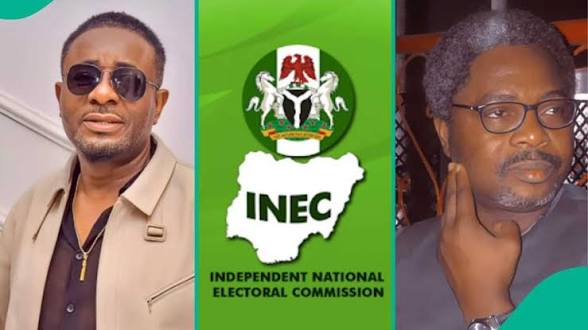
The Federal High Court in Abuja on Wednesday dismissed N10 billion rights suit filed by the Nollywood actor Emeka Ike against Lere Olayinka, Senior Special Assistant to FCT Minister Nyesom Wike, and the Independent National Electoral Commission (INEC).
Justice Salim Ibrahim, in a judgment, upheld the preliminary objections of the respondents on the grounds that the suit was incompetent and improperly constituted.
Justice Ibrahim also dismissed the main suit on the ground of lack of proof.
It was reported that Ike, who aspired to vie for the House of Representatives’ seat for AMAC/Bwari Federal Constituency, Abuja, for the 2027 general elections on the platform of the Nigerian Democratic Congress (NDC), lost the bid in a primary poll.
The FCT minister’s aide, through a post on X in May, was alleged to have mocked Ike by leaking his confidential voter registration details on social media.
The post was said to have shown details of Ike’s voter registration transfer from Imo to the nation’s capital.
Meanwhile, Ike, in the suit filed by L. T. Adeh, sued Olayinka and INEC as 1st and 2nd respondents in the suit marked FHC/ABJ/CS/1272/2026.
He asked the court to declare that Olayinka’s decision to publish his database on X without his approval “amounts to gross breach and violation of the applicant’s fundamental right to privacy and the protection of personal data”.
Ike argued that Section 37 of the 1999 Constitution, Article 12 of the universal declaration of human rights, and Sections 24 & 39 of the Nigeria Data Protection Act, 2023 guaranteed his right to privacy and protection of personal data.
The actor asked the court to declare that INEC owes him and other voters a “statutory duty of care” to protect their private data against unauthorised access.
The applicant, therefore, prayed the court to award him N10 billion against Olayinka and INEC as aggravated and general damages, to be paid jointly and severally for violating his fundamental right to privacy.
He sought a declaration that the press release by INEC dated June 2, in reaction to the viral publication and circulation of his personal voter information and private data on social media by Olayinka, amounts to a tacit admission of guilt and liability to him.
Ike, equally, sought an order directing Olayinka to immediately retract and pull down the offensive post and publication on his social media X handle, @OlayinkaLere, containing screenshots of his personal voter information and private data.
He sought an order directing him to immediately tender an unravelling apology in writing for breach and violation of his fundamental right.
But responding in a separate counter-affidavit, INEC and Olayinka prayed the court to dismiss the suit in its entirety.
INEC, in its response, said the issue complained about in the suit filed by Ike was neither classified, sensitive nor confidential information.
The commission, in the counter affidavit deposed to by Anthonia Makwe, an Assistant Director/Data Protection Officer in the Legal Drafting and Clearance Department, said that such information is displayed and published in accordance with the Electoral Act, 2026.
It stressed that the electoral body has the “statutory and constitutional power to make available information of its voters to the general public without the consent of any registered voter.”
It said its “statutory responsibility includes the compilation, maintenance, display, publication, certification and management of the register of voters in accordance with the constitution of the Federal Republic of Nigeria 1999 (as amended), the Electoral Act 2026, and the National Data Protection Act 2023.
It said what was alleged to be posted by Olayinka on his X handle did not emanate from the commission.
“The 2nd respondent, as a data controller, has never breached its statutory duty of care, custody and protection of personal voter information and data; it owes the applicant and other voters under its secured portal and restricted database.”
On his part, Olayinka, in the counter-affidavit he deposed to, said the reliefs Ike sought were in bad faith.
He said the only information contained in the document he published was Ike’s name and passport photograph and that the information was already in the public domain.
He said, contrary to Ike’s averment, the information he published was not only in the public domain but was not accessed through any unlawful means.
Olayinka stated that he did not owe the actor any duty of care and confidentiality and did not require his consent to publish his name and passport photograph that was already in the public domain.
He said Ike, who brought himself to contest election into the lower house, cannot be traumatised by the circulation of his name and passport photograph. which he personally presented to the public when seeking to contest election and as a Nollywood star.
He argued that information supplied in voters’ cards is not private data because, by the provision of Section 19(1) of the Electoral Act, 2026, INEC is mandated to publish this, no later than 90 days to a general election.
He said contrary to Ike’s deposition, the only information contained in the document published by him was his name and passport photograph.
He said the publication was done when Ike led a team of hoodlums to the INEC office to disrupt INEC’s activities immediately after he declared his intention to contest the election.
According to him, the publication was to remind him that he just transferred his voter registration area.
He said it was also to draw the public attention to the statutory provision to avoid any breach of the law.
He said contrary to Ike’s submission, the applicant who submitted his personal data and information to INEC and to general public when he decided to contest cannot feel unsafe and traumatised by the publication of his name and passport photograph.
Olayinka said contrary to Ike’s averment, INEC admitted in its press release that “there was no external breach of its CVR database, no hacking incident and no unauthorised external access to the commissions ICT infrastructure.”
He argued that the purported injury suffered by Ike was not caused by him, who is not a data controller under the Nigerian Data Protection Act, 2023, and who does not owe him any obligation to safeguard his documents.
Olayinka stated that the reliefs sought, including the N10 billion, were in bad faith and “an indication that the applicant is a gold digger who wants to reap where he did not sow.”
He insisted that he cannot pay damages for information that was already publicly accessible at the time of the publication.
He, therefore, urged the court to dismiss the suit in the interest of justice.
2027: Uba Sani declares readiness to take bullet for Tinubu
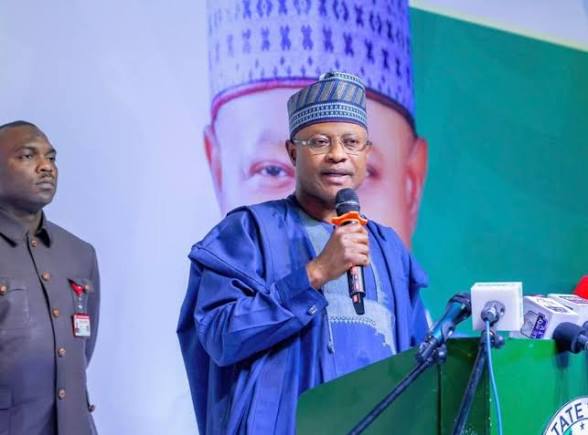
Kaduna State Governor Uba Sani has reaffirmed his support for President Bola Tinubu’s re-election bid, saying he is prepared to defend the president’s political ambition ahead of the 2027 general elections.
Sani stated this during an interview on Trust TV’s Daily Politics programme on Tuesday, insisting that his support for Tinubu was based on conviction and would not change despite public concerns over economic hardship.
“I have no apology supporting President Bola Ahmed Tinubu, and I will continue to support him till the last minute,” the governor said.
Asked whether he was ready to take a political bullet for Tinubu, Sani expressed confidence that his position would eventually be justified.
“I can tell you today, tomorrow, and next tomorrow, that I will be vindicated,” he said.
The governor traced his relationship with Tinubu to 1994, when both were involved in the struggle for the restoration of democratic rule in Nigeria.
He recalled Tinubu’s association with the National Democratic Coalition (NADECO) and his support for pro-democracy activists during the military era, when some campaigners were forced into exile.
Sani said their shared experience in the struggle for democracy and the devolution of power had influenced his assessment of Tinubu.
He also pointed to projects and federal appointments he said had benefited Kaduna State under the current administration.
Among the projects he listed were the Federal University of Applied Sciences in Southern Kaduna, the Federal University of Education in Zaria, the Federal University of Petroleum Resources in Rigachikun and the proposed conversion of Kaduna Polytechnic into a federal university of technology.
He also cited the planned reconstruction of the Kaduna-Birnin Gwari road and the appointment of Kaduna indigenes to senior federal positions.
According to Sani, these benefits were for the state rather than personal favours to him.
“The favour he has done is not to me, because he has not given me. It’s to the state,” he said.
On whether voters in northern Nigeria would support Tinubu for another term despite economic difficulties, the governor argued that opposition parties must offer a credible alternative to the president.
“When you say don’t vote for Asiwaju, you must bring an alternative,” he said.
Sani acknowledged the severity of poverty in northern Nigeria but argued that the region’s challenges predated Tinubu’s presidency and had worsened over the years.
He said northern leaders needed to examine their records and accept responsibility for the region’s problems, adding that he had previously urged them to reflect on their performance.
“The northerners are their own problem. We shouldn’t run away. The only way to help, I think, is for us to sit down and look at ourselves in the mirror, and accept that we are the problem,” he said.
The governor’s remarks come as political actors position themselves ahead of the 2027 elections, with economic hardship, insecurity and the performance of the Tinubu administration expected to feature prominently in campaigns.
On security challenges in Kaduna State, Sani acknowledged continuing concerns, particularly attacks in Millennium City.
He said he had discussed the situation with military and security officials and that plans were underway to strengthen security in the area.
‘Where has the money gone?’ Umeh challenges Tinubu over fresh loans
Senator representing Anambra Central, Victor Umeh, has questioned the Federal Government’s handling of previous loans, demanding answers over unpaid contractors as President Bola Tinubu seeks approval to borrow an additional $20.5 billion and €1.45 billion.
Umeh, who spoke on Channels Television’s Politics Today on Tuesday, expressed concern that despite repeated borrowing approvals, the government had yet to meet some of its financial obligations, particularly payments for capital projects.
He argued that successive loan requests had been justified on the grounds that the funds would help finance government budgets, yet some of those budgets remained underfunded.
“The truth is that we have approved so much funds to be borrowed in the past, and on each occasion we’ve been told that this borrowing would be able to fund the budgets and these budgets have remained unfunded up till this day,” the senator said.
Umeh also questioned why contractors handling government projects were still owed money despite the funds borrowed to support budget implementation.
“Three budgets are running concurrently and the government is not meeting its obligations to contractors on capital projects and so on and so forth,” he said.
He added: “So if you borrow to finance a budget and you are not able to finance that budget, where has the money gone to? That is the question in the lips of everybody.”
The senator further predicted that the National Assembly would eventually approve the latest borrowing request, arguing that opposition lawmakers might struggle to stop it because members of the ruling party could outvote them.
Tinubu has asked the National Assembly to approve the Federal Government’s 2026–2027 supplementary external borrowing plan, comprising $20.5 billion and €1.45 billion.
The proposed loans, according to the government, would finance critical infrastructure, agriculture, education and other priority sectors as part of its development agenda.
However, the request has renewed concerns about Nigeria’s growing debt burden and the need for greater transparency in the use of borrowed funds.
Umeh’s criticism adds to the debate over whether the government should secure additional loans before addressing questions about the implementation of previous budgets and outstanding payments to contractors.
Recommends N30m for each bereaved family, N10m for 41 survivors
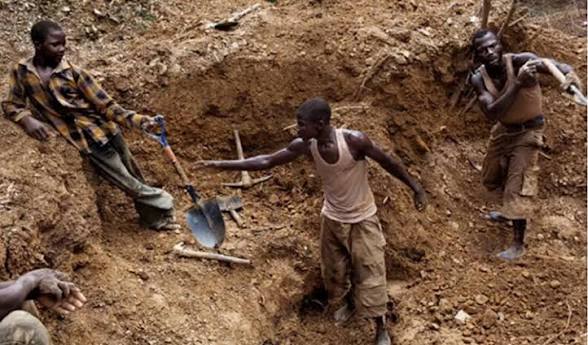
A Federal Government investigative committee has recommended the dismissal and criminal prosecution of officers of the Nigeria Security and Civil Defence Corps (NSCDC) implicated in the deaths of suspected illegal miners in Niger State, alongside N1.4 billion in compensation for bereaved families and survivors.
However, the report has raised fresh questions over the number of fatalities, as the committee recommended compensation for only 33 bereaved families, despite the Federal Government’s earlier confirmation that 37 suspected illegal miners died in the incident. The discrepancy was not explained in the findings publicly presented by the committee on Tuesday, leaving unanswered questions about the four additional deaths previously acknowledged by the authorities and whether the affected families would benefit from the proposed compensation.
The committee, chaired by Jonathan Kure, also recommended the prosecution of culpable NSCDC officers for offences including murder, criminal negligence, torture and inhuman treatment, where supported by the evidence. It established that the victims died from suffocation in a severely overcrowded and poorly ventilated detention cell.
Presenting the report to the Minister of Interior, Dr Olubunmi Tunji-Ojo, in Abuja, Kure said the proposed N1.4 billion compensation comprised N30 million for each of the 33 bereaved families and N10 million for each of the 41 survivors.
The difference in the figures is significant because the Federal Government, on September 19, 2026, announced the constitution of an independent committee to investigate the deaths of 37 suspected illegal miners in NSCDC custody.
Tunji-Ojo inaugurated the committee on September 22, mandating it to establish the identities of the deceased, investigate the circumstances of their arrest and detention, determine the causes of death and recommend appropriate sanctions and compensation.
The figure of 37 was also adopted by the Niger State Government, which announced on October 5 that it would provide N5 million to each bereaved family and N2 million to each of 32 survivors.
Governor Umaru Bago presented cheques totalling N249 million to the Emir of Minna, Alhaji Umar Faruk Bahago, for distribution to the beneficiaries, while Vice President Kashim Shettima announced a separate N250 million Federal Government donation during a condolence visit to the state.
The latest recommendation has introduced another discrepancy, this time over the number of survivors. The Federal Government panel identified 41 survivors, compared with the 32 beneficiaries recognised under the earlier state intervention.
Neither Kure nor Tunji-Ojo explained the differences in the casualty and survivor figures during the presentation. It therefore remains unclear whether the latest figures resulted from further verification, additional testimonies or findings that were not disclosed publicly.
Beyond the compensation controversy, the committee described the deaths as a preventable custodial tragedy caused by severe overcrowding, unlawful and unsuitable detention conditions, failure of duty of care, disregard for repeated distress warnings, inadequate supervision and wider institutional deficiencies.
Kure said medical and forensic evidence established that the deaths resulted from environmental asphyxia and acute respiratory failure caused by prolonged confinement in a severely overcrowded and poorly ventilated cell, aggravated by heat stress and dehydration.
The findings effectively dismissed the initial claim by the NSCDC that the detainees might have died following a disease outbreak.
According to the committee, the conditions under which the suspects were detained exposed serious failures in custodial management and a breach of the responsibility of security personnel to protect people in their custody.
The panel also found that the operation leading to the arrests was conducted without an operational order or approval from the NSCDC national headquarters, raising further questions about compliance with established procedures.
It recommended the summary dismissal of officers found principally responsible for the tragedy, alongside criminal prosecution where the evidence established individual culpability.
The committee also called for investigations by anti-corruption agencies into allegations of extortion and custodial mismanagement. It recommended administrative sanctions against officers whose negligence contributed to the deaths but who were not found to bear primary responsibility.
Other recommendations included educational support for dependants of the deceased, medical rehabilitation for survivors, psychological assistance for affected families and a formal apology by the Federal Government.
Receiving the report, Tunji-Ojo directed the NSCDC Commandant-General to suspend officers identified as having concealed information or destroyed evidence relevant to the investigation.
The directive followed concerns that some officials had allegedly interfered with material evidence connected with the tragedy, despite earlier instructions that all records and exhibits be preserved for the independent investigators.
The minister also promised to forward the report to the Office of the Attorney-General of the Federation and Minister of Justice for further legal action, where necessary.
He said the government would work closely with the NSCDC to implement institutional reforms aimed at strengthening detention procedures, professional conduct and accountability.
“And we will work very closely with the NSCDC to make sure that the institutional reforms that are needed to be put in place to ensure that a body, an agency set up to protect Nigerians does not end up hurting Nigerians. We will make sure that those reforms are well implemented,” he said.
Tunji-Ojo thanked the committee for its work, stressing that the government remained committed to securing justice for the victims and preventing similar incidents.
“Our commitment is to ensure that justice is done. The memory of those who lost their lives is honoured, and no other Nigerian has to endure such a tragedy in the future,” he said.
The minister said the findings underscored the need for far-reaching institutional changes, warning that the failure to protect suspects in custody must not be repeated.
“As a minister, I do not ever wish to sit and chair a committee of this nature again, and I would not want my successors to find themselves in a similar situation. We must learn from the lessons of this tragedy and take concrete steps to prevent its recurrence,” he said.
The tragedy occurred on September 17, 2026, after suspected illegal miners arrested during operations around the M.I. Wushishi and Lukoto areas of Minna on September 15 and 16 were detained at an NSCDC facility in the state capital.
The deaths triggered protests by residents and relatives of the victims, who demanded explanations over the circumstances surrounding the mass fatalities.
Survivors alleged that the detainees were confined in an overcrowded cell with inadequate ventilation and that their complaints about deteriorating conditions were ignored by security personnel.
The incident prompted President Bola Tinubu to order a comprehensive investigation, directing that any official found responsible through negligence, abuse or misconduct should face appropriate sanctions and prosecution.
The President maintained that the government’s determination to combat illegal mining did not diminish its obligation to protect the lives and dignity of suspects in custody.
Following the directive, Tunji-Ojo ordered the suspension of the Niger State NSCDC Commandant, Suberu Aniviye, and 20 other officers pending investigation.
The Federal Government subsequently established the 10-member independent committee, comprising security experts, legal practitioners, medical professionals and representatives of relevant institutions.
The committee was initially given two weeks to conclude its assignment but later sought an extension until October 21, citing the volume of testimonies, pending forensic and pathology reports, and the need to give implicated officers an opportunity to respond.
Meanwhile, the Niger State Government constituted a separate judicial commission of inquiry to investigate the tragedy.
During proceedings before the state commission, the suspended NSCDC commandant reportedly apologised to the families of the deceased, describing the incident as an avoidable mistake.
With the Federal Government committee now concluding its assignment and recommending criminal prosecution, disciplinary sanctions and financial restitution, the unexplained difference between the 37 deaths earlier acknowledged by the authorities and the 33 bereaved families covered by the compensation proposal remains an outstanding issue requiring clarification.
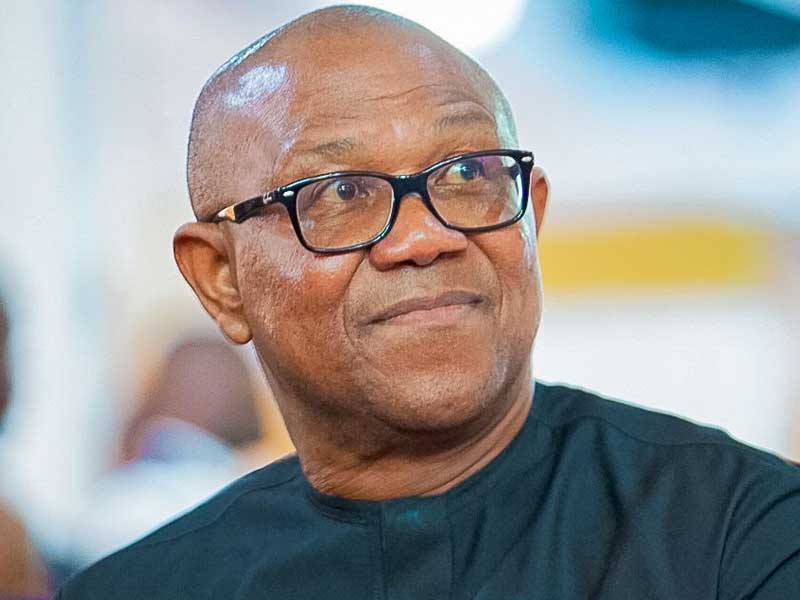
Presidential candidate of the Nigeria Democratic Congress (NDC), Peter Obi, has vowed that he and his running mate, Rabiu Musa Kwankwaso, will take immediate responsibility for Nigeria’s economic and security challenges if elected in 2027, promising measurable results from their first day in office rather than excuses or blame for the failures of previous administrations.
Obi declared that Nigerians should no longer tolerate leaders who spend their time recounting inherited problems instead of providing solutions, insisting that an NDC administration would confront insecurity, corruption, hunger, unemployment and the country’s electricity crisis with urgency.
“We don’t want you to hire us to tell you about our problem. It’s only in Nigeria that you hire people, and they start reminding you of what happened in the past. No, we don’t want you to hire us to tell you about our problem. We want you to hire us to improve from today,” he said.
Speaking at a dinner in Abuja on Monday to mark the inauguration of the party’s National Presidential Campaign Council, unveiling of its national secretariat and presentation of certificates of return to candidates, the former Anambra State governor said Nigerians deserved a government that would be judged by improvements in their living conditions rather than explanations for its inability to deliver.
“The purpose of governance is to solve problems, not to blame people. Kwankwaso and I will not blame anybody. We will create that new Nigeria that is possible,” he declared.
Obi accused President Bola Tinubu’s administration of failing to translate increased government revenue and borrowing into improved living conditions, challenging it to account for public spending and explain why Nigerians continued to face hardship despite the resources available to the government.
He alleged that capital expenditure under the 2023, 2024 and 2025 budgets remained below 20 per cent, while contractors continued to experience difficulties securing payments for government projects.
Making corruption a central issue of his campaign, Obi promised to stop the diversion of public resources and ensure that government funds were deployed for public services, infrastructure and economic development. He insisted that public officials must be held accountable for the management of public funds, warning that those found culpable of corruption would face the law.
On insecurity, Obi pledged emergency measures to confront killings, kidnappings and attacks on communities, arguing that the president must demonstrate direct leadership in responding to security emergencies rather than remain detached from the plight of affected citizens.
He said an NDC administration would prioritise security in Plateau, Benue, Zamfara, Sokoto and Borno states, among other troubled areas, while ensuring that displaced communities could return to their homes and resume productive activities.
Obi also promised to declare an emergency in agriculture, particularly in northern Nigeria, where insecurity has prevented farmers from cultivating large expanses of land.
“We have vast land in the north. When we secure the north, our farmers must go back and produce what we eat and what we use for our industries,” he said.
The presidential candidate maintained that securing agricultural communities would boost food production, reduce food prices, generate employment and strengthen industries dependent on agricultural raw materials.
He said Nigeria must move away from an economy driven by consumption and borrowing towards one anchored on production, industrial development and small businesses.
Obi promised to improve access to finance for small and medium-sized enterprises, which he said numbered more than 40 million but received less than five per cent of bank lending. He pledged to increase their share of credit to more than 20 per cent, alongside tax holidays and other incentives to stimulate investment, entrepreneurship and employment.
On electricity, he promised emergency interventions in generation, transmission and distribution, stressing that reliable power supply was essential to industrial development, business survival and economic growth.
The former governor also pledged to establish functional primary healthcare centres in every ward within two years of assuming office and introduce measures to reduce the number of out-of-school children.
He maintained that access to education, healthcare and economic opportunities should not depend on family background or political connections. Obi also warned against intimidation and harassment of opposition supporters, insisting that the 2027 elections must be contested through peaceful campaigns and decided by voters at the ballot box.
He urged political actors to embrace civility and warned against attempts to undermine the electoral process.
Meanwhile, Obi’s running mate, Kwankwaso, had earlier ruled out withdrawing the NDC presidential ticket in favour of the African Democratic Congress (ADC) or any other political party. In an October 18 statement, the former Kano State governor dismissed suggestions that the NDC was working for the ruling All Progressives Congress (APC) or might abandon the presidential contest, maintaining that he and Obi remained committed to their political programme.
He accused the ADC Presidential Campaign Council of directing attacks against the NDC ticket instead of presenting its own programme to Nigerians. Kwankwaso said the ticket would focus on national unity and solutions to insecurity, educational challenges, agricultural development, healthcare, infrastructure and economic difficulties.
Also speaking at Monday’s gathering, former Bayelsa State governor and Chairman of the NDC National Campaign Council, Senator Seriake Dickson, said the party was established to provide Nigerians with an alternative political platform and prevent the country from drifting towards a one-party system.
Dickson challenged Nigerians to examine the performance of the APC administration, particularly its record on security, corruption and economic management, before deciding whether to renew its mandate.
He argued that the government had failed to deliver the improvements expected by Nigerians and urged voters to assess political parties on their programmes, performance and commitment to democratic accountability.
The former governor also called on the Independent National Electoral Commission (INEC) to ensure a free, fair and credible election, while urging security agencies to remain neutral throughout the electoral process.
He charged NDC candidates to take the party’s message to communities across the country and avoid violence, stressing that political differences should be resolved through democratic competition and a contest of ideas.
Similarly, former Secretary to the Government of the Federation and Chairman of the NDC Campaign Advisory Council, Babachir Lawal, warned against electoral manipulation and intimidation, declaring that the party would mobilise supporters to monitor voting, counting and collation of results.
“This election will be won and lost at the polling booths, not the courts,” he said.
Lawal urged party members to prepare adequately for election day and ensure that votes were properly counted, recorded and announced, stressing that vigilance at polling units and collation centres would be critical to safeguarding the electoral process.
He said the NDC would pursue an issues-based campaign, presenting Nigerians with its programmes, implementation strategies and measurable targets rather than relying on personal attacks.
Earlier, the NDC National Chairman, Senator Moses Cleopas Zuwoghe, warned candidates against treating their nominations as automatic entitlements to political office, insisting that elected officials must be held accountable for their campaign promises.
Cleopas said Nigerians should reject public officeholders who failed to deliver essential services, stressing that political leaders must understand that electoral mandates were tied to performance.
He also cautioned members against anti-party activities, urging supporters of Obi and Kwankwaso to work equally for the success of the party’s governorship, National Assembly and state House of Assembly candidates.
According to him, an NDC administration would require sufficient legislative representation to implement its programmes, making cooperation among candidates and party members essential.
The chairman further disclosed that the leadership was working to reconcile aggrieved aspirants following the party’s primaries and resolve outstanding issues affecting some candidates.
At the party’s National Executive Committee meeting, National Treasurer, Dr Peter Onigah, disclosed that the NDC had generated approximately N8.53 billion from nomination forms, membership dues, levies and supporters’ contributions since its establishment.
He said about N2.40 billion had been spent on party activities, including primaries, publicity and administrative expenses, leaving approximately N6.13 billion.
Onigah maintained that the leadership had exercised financial discipline and would provide a detailed breakdown of the party’s transactions before the end of its first accounting year.
The party also inaugurated its National Presidential Campaign Council, with Dickson as chairman, Obi as co-chairman, Kwankwaso as co-vice-chairman and Ibrahim Hussain Abdulkarim as Director-General of the presidential campaign.
Its newly unveiled national secretariat at 393 Etang Obuli Crescent, Jabi, Abuja, will serve as the party’s administrative headquarters and campaign coordination centre ahead of the general elections.
The Labour Party has denied being part of the Rainbow Coalition promoted by the Minister of the Federal Capital Territory, Nyesom Wike, insisting that it will contest the 2027 general elections independently.
The party’s National Publicity Secretary, Ken Asogwa, stated this during an interview on TVC News while reacting to reports that six political parties, including the Labour Party, had endorsed the coalition in Rivers State.
Asogwa said the party’s national leadership had not authorised any alliance with the Rainbow Coalition or the G100 coalition reportedly being formed by opposition political parties.
“The straight answer to your question, no. We have consistently maintained that the Labour Party is not in any coalition whatsoever by whatever name called,” he said.
He maintained that the party was not a member of either coalition in Rivers State or elsewhere and would pursue its electoral ambitions independently. “So the Labour Party is going into the 2027 election as a standalone political party, and we are aiming to win both the presidential election and the governorship in various states where we’ve fielded our candidates,” Asogwa said.
The spokesperson also said any state chapter found participating in a coalition without the approval of the national leadership would be investigated.
“If it is confirmed that any state chapter of the party is going into a coalition, that is unauthorised by the leadership of the party at the centre and the party will sit down to look at it critically,” he said.
Asogwa, however, declined to disclose possible disciplinary measures, explaining that the party would first confirm whether its members were involved before determining its response.
He said the relevant organs of the party would review any confirmed case and decide on the next course of action.
A prosecution witness in the trial of former Managing Director/Chief Executive Officer of the Asset Management Corporation of Nigeria (AMCON), Ahmed Kuru, and four others over alleged N76 billion and $31.5 million fraud has told a Lagos court that Kuru approved the receivership of Arik Air without obtaining prior approval from AMCON’s Board.
The Fourth Prosecution Witness (PW4), Bawa Usman Kaltungo, gave the testimony on Monday, October 26, 2026, before Justice Mojisola Dada of the Special Offences Court sitting in Ikeja, Lagos. Kuru, alongside Kamilu Alaba Omokide, Roy Ilegbodu, Union Bank of Nigeria Plc and Super Bravo Limited, is being prosecuted by the Economic and Financial Crimes Commission (EFCC) on a six-count charge bordering on conspiracy, stealing and abuse of office.
One of the counts alleges that Union Bank of Nigeria Plc made false statements to AMCON in 2011 regarding Arik Air Limited’s performing loans, leading to the transfer of an allegedly bogus figure of N71 billion to the corporation.
Another count alleges that Kuru, Omokide, as receiver-manager of Arik Air Limited, and Ilegbodu, the airline’s Chief Executive Officer in receivership, fraudulently converted N4.9 billion belonging to Arik Air to the use of NG Eagle Limited in 2022.
During cross-examination by Uyi Giwa-Osagie, counsel to Kuru, Kaltungo, who is currently the Acting Zonal Director of the EFCC’s Lagos Zonal Directorate 2, maintained that Kuru exercised extensive powers as AMCON’s chief executive and approved the receivership arrangement without first obtaining the Board’s approval.
Kaltungo, a former Head of the AMCON Desk in Lagos when the investigation began, said the investigation revealed that the receiver-manager was appointed before the matter was presented to AMCON’s Board for approval. He added that the appointments went beyond what the Board subsequently approved.
The witness further told the court that investigators requested documents linking the appointment to a prior Board decision, but the documents were not produced during the investigation.
He explained that the EFCC investigation followed a petition written by Femi Falana, SAN, counsel to Arik Air’s directors and shareholders, and addressed the EFCC Chairman.
When presented with a copy of the petition, Kaltungo identified it as the document received by the Commission.
He told the court that the petition was dated April 27, 2023, received by the office of the EFCC Chairman on May 3, 2023, and forwarded to the Director of Operations on May 12, 2023.
According to him, the Commission directed the then Head of the AMCON Desk to investigate the allegations on May 22, 2023.
Kaltungo said he supervised the investigation alongside other investigators and conducted interviews with individuals considered relevant to the matter.
He explained that the AMCON Desk handled cases referred to it involving the corporation, among other matters, adding that other desks also investigated AMCON-related cases.
The witness said the investigation focused on individuals whose actions were relevant to the allegations rather than solely on the positions they held.
He added that the investigation report tendered in evidence contained the EFCC’s findings based on the information and evidence available to the Commission at the conclusion of the investigation.
On the circumstances surrounding the receivership, Kaltungo said investigators sought to establish how AMCON came to appoint a receiver-manager for Arik Air.
According to him, those responsible for the appointment explained that the airline had an outstanding bad loan.
He, however, said the investigation found the claim underlying the receivership arrangement to be false. “The evidence gathered by the Commission did not establish that the Nigerian government had paid money to acquire Arik Air or its debt.
“A receiver-manager is expected to take control of a company placed under receivership and protect and preserve its assets,” he said.
Kaltungo acknowledged that AMCON had the power to appoint a receiver for an indebted company but stressed that such powers had to be exercised in accordance with due process.
He said the investigation also covered other allegations contained in the petition and identified Oluseye Opasanya, SAN, and Omokide as the two individuals who had served as receiver-managers of Arik Air.
“Opasanya ceased to be the receiver-manager in 2019, while Omokide was the receiver-manager at the time of the investigation,” he said.
When shown a document relating to Omokide’s appointment, Kaltungo observed that the copy was incomplete and had emanated from the Corporate Affairs Commission rather than AMCON.
He requested the deed of an appointment issued by AMCON, which he said had been submitted to the court as an exhibit.
The witness also told the court that individuals named in the petition worked under the receiver-manager and that responsibility for their actions could arise in the circumstances of the case.
On AMCON’s role in the transaction, Kaltungo maintained that the corporation had been defrauded by Union Bank of Nigeria Plc over the alleged sale of Arik Air’s loans and bank guarantees.
He reiterated that the investigation did not establish that AMCON paid money to acquire Arik Air or its debt, adding that the Commission’s findings indicated that the corporation had been misled into taking over what was presented as bad debt.
The court also heard arguments from the prosecution and defence over documents containing resolutions of AMCON’s Board concerning the receivership.
Prosecution counsel, Wahab Shittu, SAN, argued that the central issue was whether the Board had approved the appointment of a receiver-manager before the action was taken.
Shittu referred to documents tendered by the defence, including a Board resolution dated July 18, 2019, and other documents dated between two and five years after the receivership decision.
He argued that the documents were too remote from the decision under investigation to establish that the required approval had been obtained before the appointment.
According to him, the relevant Board approval ought to have been secured before the appointment or within a reasonable time, rather than two to five years after the decision.
In response, Giwa-Osagie argued that the charges against his client related to the appointment of the receiver-manager and maintained that the decisions in question were made by AMCON’s Board.
He further argued that his client was the only Board member being prosecuted over the decisions.
Shittu clarified that the prosecution was not contending that the documents were irrelevant but that they were too remote to establish prior approval for the decision being challenged.
Counsel representing the second, third, fourth and fifth defendants subsequently informed the court that they had no objections to the seven documents tendered by counsel to the first defendant. Justice Dada admitted the documents containing AMCON Board resolutions in evidence after hearing arguments from both the prosecution and defence.
The case was adjourned until Tuesday, October 27, 2026, for continuation of the trial.
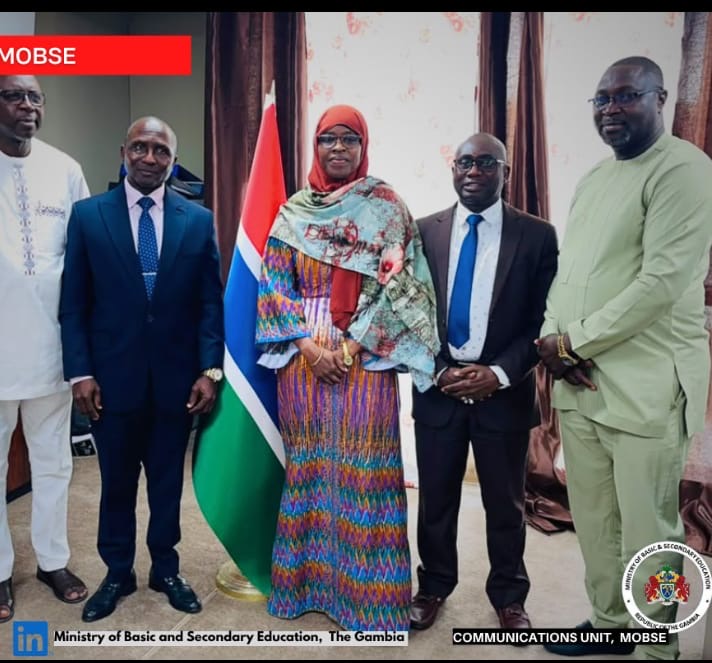
The Gambia’s Ministry of Basic and Secondary Education (MoBSE) and the West African Examinations Council (WAEC) have discussed plans to strengthen examination integrity and introduce Computer-Based Examinations (CBE) as part of efforts to modernise the country’s education system.
The discussions took place during a high-level meeting between the Minister of Basic and Secondary Education, Dr. Habibatou Drammeh, and the 14th Registrar of WAEC, Dr. Amos Josiah Dangut.
The meeting was attended by members of the WAEC Council and the Permanent Secretary of the ministry, Mr. Louis Moses Mendy.
According to a statement by the ministry’s Communications Unit, the discussions focused on improving the credibility of public examinations and accelerating reforms in teaching, learning and assessment.
A major highlight was the proposed adoption of modern technology in examination administration, including the introduction of Computer-Based Examinations.