…As regional stakeholders meet over unity, infrastructure and development
South East political, traditional, religious, and business leaders met in Owerri, the Imo State capital on how to drive sustainable unity, infrastructure and development in the region, raising a nine-point communiqué as yardstick.
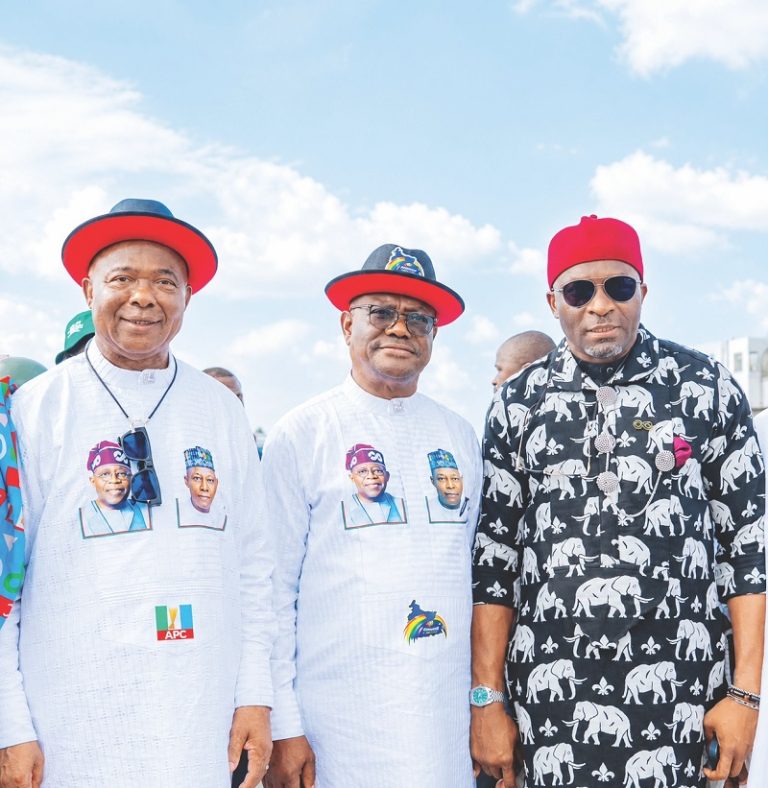
The meeting was convened by Rear Admiral Ebitu Ukiwe (rtd), Sen. Gen. Ike Nwachukwu (rtd), Admiral Alison Madueke (rtd), Chief Ozichukwu Chukwu, Chief Gary Igariwey, and Prof. Uche Azikiwe, under the auspices of South East Stakeholders Convergence and had Sen. Nwachukwu as Chairman. At the well-attended meeting of key Igbo leaders from diverse professions and vocations, held at the Banquet Hall of Government House, Imo State Governor Hope Uzodimma, the host, advised the South East leaders to negotiate their interests with the Federal government and stop the incessant recourse to lamentation on marginalization.
Uzodimma said: “Unite, rethink your political strategies and collectively negotiate the interests of the Southeast with the Federal Government.”
Uzodimma said the time had come for the region to move beyond internal divisions and adopt strategic thinking to secure its place in Nigeria.
He urged Igbo leaders to distinguish personal interests from collective development, stressing that political influence could only be achieved through constructive engagement and negotiation.
“The first thing this meeting must agree on is how to sit down with the man in power and negotiate our interest,” he said.
The governor also called for stronger collaboration among Southeast governors and stakeholders, urging them to support the South East Development Commission in delivering regional development.
He further advocated reforms in the region’s approach to politics, investment and economic development, noting that government and the private sector must work together to drive infrastructure and prosperity.
Uzodimma maintained that the South East must remain actively involved in Nigeria’s political process, warning that withdrawal and internal fragmentation would undermine the region’s common interests.
He recalled that many Igbo leaders like late Dr. Nnamdi Azikiwe sacrificed a lot alongside other founding fathers of the nation, and that the current Igbo leaders must not take such sacrifices for granted with regard to their role in contemporary Nigerian socio-political activities.
Uzodimma further advised Igbo to distinguish themselves in whatever areas of endeavour they find themselves, whether in private or public sectors.
The stakeholders resolved to present a unified regional voice, and urged the governors to end public disputes and collaborate.
The key demands include restructuring Nigeria into six geopolitical zones, securing federal approval for a private South East seaport, and conditioning support for presidential candidates on binding commitments to regional rail and gas infrastructure.
The forum declared that the region will no longer play second fiddle, requesting a presidential meeting and creating a permanent secretariat to monitor implementation.
In his remarks, former Military Governor of old Imo State and Chairman/Convener of SESC, Senator (Gen.) Ike Nwachukwu, called on leaders and stakeholders in the South East to rise above partisan differences and unite to advance the region’s political and economic interests.
Nwachukwu said “Insecurity, economic hardship, political fragmentation and mutual distrust had tested the unity of the Southeast,” stressing the need for collective action.
He advocated regional economic integration, improved infrastructure, industrial development and youth empowerment, while urging South East Governors to work together and end public disagreements.
Nwachukwu also called for the establishment of seaports in the region, improved rail and gas infrastructure, and the restructuring of Nigeria into six geopolitical zones in line with the recommendations of the 2014 National Conference.
Recalling the collective effort that led to the construction of the former Imo Airport, now Sam Mbakwe International Cargo Airport, Nwachukwu said the South East could achieve similar infrastructure projects through unity and determination.
“We are Ndigbo. We are South Easterners. We must move forward with one agenda, one voice and one commitment,” he declared, urging political leaders to prioritise regional development over Party affiliations.
Contributing, former Governor of old Anambra State, Sen. Jim Nwobodo, urged Igbo leaders to unite across Party lines and work collectively to advance the interests of the South East. He advocated regular meetings rotated among South East States to strengthen consultation and ensure inclusive participation.
He commended Governor Uzodimma for supporting the initiative, expressing optimism that collective efforts would produce positive results for the Igbo people.
Former President of the Senate, Anyim Pius Anyim, also urged Igbo leaders to unite, strengthen consultations and adopt strategic approaches to addressing the region’s challenges.
He stressed the need for strategic political engagement, saying, “we should know when to shout and when to keep silent.”
Anyim urged the stakeholders to identify common interests and agree on a collective path forward.
Former Ohanaeze Ndigbo Chairman, Chief Ozichukwu Chukwu advocated regional economic integration, improved security, youth empowerment and strategic political engagement.
He called for the release of Nnamdi Kanu, describing him as a “prisoner of conscience,” and urged Igbo leaders to negotiate collectively, declaring: “We are not beggars. We are asking for our rights.”
Others who spoke at the event such as Dame Josephine Anenih and Prof Osita Ogbu maintained that unity of purpose among Igbo leaders and stakeholders remains a critical pathway to addressing the numerous challenges confronting the region.
Mrs. Anenih made a strong case for the women to be carried along in whatever plans are afloat to better the lot of the Igbos.
Former Peoples Democratic Party presidential aspirant and entrepreneur, Mazi Sam Ohuabunwa in his submission called for a measurable implementation plan to achieve the set goals.
The nine-point communique which was read by the former Governor of Imo State, Chief Ikedi Okakim, got a nod from all the participants after a motion for its adoption was moved by the Deputy Speaker of the House of Representatives, Rt. Hon. Benjamin Kalu.
The Deputy Speaker had earlier in his remarks thanked the organisers and Governor Uzodimma for sponsoring the meeting and reiterated the need for the unity of the Igbo in the country.
He said the current leaders in the region must leave something worthy of emulation behind to the younger ones, pointing out that “unity of purpose” must be one of the things the young Igbo leaders would want to inherit from their fathers.
•Attacks, abductions, ambushes mar campaigns, as stakeholders list concerns Though election-induced violence is not entirely new in Nigeria, the recent attacks characterising the ongoing political campaigns reflect growing electoral friction ahead of the 2027 general elections.
It is no longer a question of whether violence will shape this election cycle. It already is. From Lafia to Sokoto, from Katsina to Enugu, from Lagos to Rivers, rallies have been disrupted, convoys ambushed, supporters shot, and meetings invaded. What used to peak on election day now begins months before — during primaries, ward meetings, and campaign flag-offs.
Radda
The recent attack on the convoys of the presidential candidate of the NDC and his running mate, Peter Obi and Rabiu Kwankwaso, shocked the nation, but it was not an aberration. It was a symptom. It was the latest chapter in a pattern that has been building for months, documented by parties but ignored by the state.
The national pattern
It will be the most dangerous lie in Nigerian politics to dismiss each incident as an isolated clash. When viewed together, the incidents form a national map of intimidation. Take Lafia, Nasarawa, on November 4, 2026. A presidential rally of the ruling All Progressives Congress (APC), attended by Vice President Kashim Shettima, descended into chaos. Over 40 people were injured, several went missing. The cause was not opposition attack. It was an intra-party war. Youths in APC regalia began chanting for the Social Democratic Party governorship candidate, a former Inspector-General of Police, Adamu Abubakar, sparking a clash with supporters of the APC governorship candidate, Aliyu Wadada. Tear gas filled the air, dignitaries fled, the rally was aborted.
Obi
On the same day in Sokoto, two supporters of the African Democratic Congress (ADC) were allegedly shot by the Sokoto State Community Guards along the Sokoto-Wurno Road while travelling to a rally for Atiku Abubakar. The Guards had barricaded the road. This was not a clash between rival youths. This was the alleged use of a state-created security outfit against opposition supporters.
A few days earlier in Katsina, the APC convoy heading to the Tinubu-Dikko flag-off in Funtua was attacked on the Yashi-Funtua road in Malumfashi. Stones rained on vehicles. Fourteen suspects were arrested. Days later, in Yankara, Faskari, another APC convoy heading to Governor Dikko Radda’s rally was ambushed. A campaign vehicle was set ablaze, two supporters allegedly died.
Sowore
In Enugu, the National Democratic Congress has been under siege. On September 12, its rally in Ndiuno-Obuoffia, Nkanu West, was attacked. Eight members sustained gunshot injuries, canopies were destroyed. On October 10, its governorship flag-off was disrupted twice — first at Akanu Ibiam Airport, then at its secretariat. Gunshots sent supporters fleeing. One person was shot. Police confirmed disruption. No one has been prosecuted.
In Lagos, the violence has been both intra-party and inter-party. On May 21, the APC House of Assembly primary at Ikosi Senior High School, Kosofe, was disrupted by armed hoodlums. Several people were injured. Later, hoodlums stormed the Labour Party secretariat at Idimu, Alimosho, during a defection ceremony to the ADC, destroying furniture and party flags. When attendees moved to Eco Centre Hall in Egbeda, the venue came under attack again.
In Rivers State, the ADC documented the killing of a member, Kamadioye, in Emilaghan community, Abua/Odual Local Government Area, while he was preparing for a political meeting. In Edo State, the ADC secretariat in Benin City was attacked in February, with gunshots also reported at the residence of former Governor John Odigie-Oyegun. Police confirmed the attack and promised investigation. Nothing followed.
The list goes on. In Adamawa, supporters of President Bola Tinubu clashed with the “Tinubu Must Go” movement in Jimeta, Yola. In Cross River, gunmen attacked two PDP consultation venues, leaving three injured. In Bauchi, PDP vehicles were vandalised at a governorship affirmation event. In Ebonyi, a PDP rally in Ezza South was attacked, ten injured. In Osun, an APC governorship walk in Ile-Ife degenerated into violence in Sabo, three injured. In Ekiti, AAC presidential aspirant Omoyele Sowore and his team were allegedly assaulted in Ado-Ekiti.
On September 22, the ADC at a press conference in Abuja said it had documented attacks and intimidation in at least nine states between July 2025 and September 2026: Kaduna, Kebbi, Ekiti, Cross River, Rivers, Edo, Osun, Kogi and Enugu.
This is not a series of coincidences. This is a system.
Why violence has become a strategy
One uncomfortable question stakeholders are asking is: Why does political violence persist, despite over 25 years of democracy? The answer is simple and cynical. According to analysts, it is largely because it works, and because it is free.
First, there is an alleged culture of impunity. Parties document attacks. Police promise investigations. The Inspector-General is petitioned. No arrests. No prosecutions. No convictions. When a thug knows he will not be punished, violence becomes a low-risk, high-reward career. Political godfathers have created a whole economy around it — young men hired per rally, per roadblock, per disruption. They are paid in cash, in drugs, in promises of jobs. They are the foot soldiers of a broken system.
That culture of impunity is what security analyst Jackson Olalekan-Ojo says Nigerians are now living with daily. “Nigerians are battling with the highest level of insecurity in the history of Nigeria. We haven’t gone anywhere in our effort to end it. And now that an election is coming, another one wants to rear its ugly head,” he said.
“The ruling party has taken it upon itself to terrorise the opposition in this country. Some time ago, the presidential candidate of the NDC, Peter Obi, was attacked in Edo State. Nothing came out of it. Recently, Omoyele Sowore was attacked in Ekiti State. Nothing came out of it. A couple of days ago, the ADC gubernatorial candidate of Sokoto State was attacked at the airport. He escaped by the whisker. Up till now, nothing has been done by the federal government.”
Second, there is an allegation of the use of state power as a weapon. The Sokoto case is instructive. When a state government creates a Community Guard and that guard is accused of shooting opposition supporters, the line between state security and party militia disappears. The same applies to denial of venues, refusal of permits, and the selective deployment of police to protect one party and harass another. Violence is no longer just by rival supporters. It is by incumbents using the apparatus of state.
Third, the latest trend shows there is intra-party desperation. The most dangerous fights in 2026 are not between APC and PDP. They are within the APC itself, within the PDP itself. Primaries for governorship, Senate, and House of Assembly are do-or-die because political office in Nigeria is not just service — it is access to contracts, to security, to immunity. When the stakes are that high, losing a primary is treated as a matter of life and death. The Lafia clash was APC versus APC. The Kosofe primary disruption was APC versus APC.
Fourth, there is the ethno-religious trigger. A local clash over a rally is quickly reframed online as an attack by one ethnic group against another, one region against another. This turns a manageable dispute into a national narrative of revenge. It is how violence metastasises.
The real rigging is fear
The most important data point in this election cycle is not a poll. It is a fear index. Yiaga Africa’s National Voting Intentions Survey found that 84 per cent of Nigerians are keen to vote in 2027, but 61 per cent are concerned about their safety because of election-related violence.
Six out of ten Nigerians want to vote but are afraid to do so. This is the real rigging. You do not need to steal ballot boxes if you can scare voters from polling units. You do not need to falsify results if you can ensure that opposition strongholds are too violent to vote in. Violence does not need to kill everyone. It only needs to scare enough people to stay home.
That, according to the Secretary of the Ijaw Elders Forum, Efiye Bribena, is precisely the motive behind the wave of violence. “The motive behind the wave of violence we have witnessed is to create voter apathy. It is to drive people away and make them not to vote because if people turn out in large numbers to vote for a particular candidate, it will make it difficult for them to manipulate the results. So they would rather create chaos to make people keep away on the day of the election so that they can manipulate the results,” he said.
Olalekan-Ojo agrees, warning that the consequence could go beyond apathy. “This takes Nigerians to be worried because we have a lot of insecurity on our hands. At the end of the day, voter apathy will be there. If that happens, there may be people’s revolt. There is no power in the world that can suppress people’s revolution. We should work against it happening. We should call the government to order. If the country is not peaceful, we don’t have a country,” he said.
In 2023, Kimpact Development Initiative recorded 339 incidents of election violence and 165 deaths in the election period alone. The South-West led with 99 incidents, the South-East with 77. Those numbers were not accidents. They were the product of a deliberate strategy to suppress turnout in competitive areas.
And the history is even darker. In 2011, post-election violence after Goodluck Jonathan defeated Muhammadu Buhari claimed an estimated 800 lives and displaced 65,000 people. Hundreds died in 2015 and 2019. Each cycle, stakeholders promise “never again.” Each cycle, they repeat.
What has changed in 2027 is the timing. Violence used to peak on election day. Now it starts months before, during campaigns, during primaries, during ward meetings. The campaign itself has become the battlefield.
For many observers, however, physical violence is only one half of the crisis. The other half is institutional — and potentially more dangerous. Bribena argues that the biggest threat is not on the streets, but inside INEC itself. “For me, the most critical issue is the mess the INEC has made of the voters register. That is more threatening than any other thing. How can you have AI-generated information in the voters register? They said they know the people who did it. What are they doing about it? How many people have they interrogated or prosecuted for gross violation of electoral laws?” he queried.
“This is the biggest threat to our democracy because it means that INEC itself is involved in the attempt to create a flawed voters register with AI-generated information. It means we are not prepared for this election in January. If we cannot trust the electoral umpire to give a credible election, then democracy is under threat.”
He links the two crises directly: violence to keep real voters away, and a compromised register to fill the vacuum. “If people that are supposed to vote cannot come out, they will use AI-generated voter register to fill the vacuum. You can imagine my two daughters who just came back to the country and wanted to register in this registration exercise but they could not register. Throughout the period, they made several efforts to register they couldn’t. Yet, we have AI-generated register.
“They have just gone too far. They are pushing the country to the extent where the military might be forced to intervene. That is the greatest threat to democracy,” he said.
It is a warning echoed, in even starker terms, by elder statesman Chief Chekwas Okorie.
On March 12, Okorie said he released an open letter to President Bola Ahmed Tinubu, urging him to stop what he described as brewing anarchy.
“I did that recognising him as the President and Commander-in-Chief of Nigerian Armed Forces. The signs I saw at the time pointed to the polity that would be characterised by violence. And I cited instances of extreme hate speeches made by both state and non-state actors, but the government agencies turned a blind eye to all of these provocations.
“Eighty to 90 per cent of these things came from the agents of the ruling party, indicating some kind of panic, that in spite of all the advantages of incumbency, that the APC government was afraid that it could not survive a free, fair and credible election. Therefore, the act of threats, bullying, intimidation is the way to remain in power,” he stated.
Okorie said he later issued another statement urging South East governors not to allow the South East to become another theatre of war, knowing that the North East and North West were already sectors of fratricidal war.
“I stated then that another war sector from the South East that had already experienced a 30-month fratricidal war would be too much for the country. Now nobody seems to pay any kind of attention to these early warnings, and things are beginning to degenerate,” he added.
For Okorie, the most alarming development is not just the violence, but the use of the courts to remove opponents from the ballot. “The worst that has happened is the judgment that disqualified the national leadership of ADC and their presidential candidate from participating in the election. Although they have the right of appeal, but the period for appeal up to Supreme Court is not in their favour, knowing that the election will be in January. This is another invitation to anarchy, and judiciary is being used to promote this impending anarchy,” he said.
Bribena shares that concern: “I don’t know how to quantify the recent judgment of the High Court on the ADC crisis. What they are telling Nigerians and the world is that they can use the court to achieve whatever purpose they want.”
Okorie warned that if the core people of the North, who see Atiku as a cult figure, believe they are being targeted for exclusion, they may react violently — and Nigeria would be the worse for it.
“If a critical section of the country, the section of the country that had depended almost in all their lives on political relevance to survive, believes that the ADC candidate is being deliberately excluded from participation, it could trigger violent protest.
“We have never seen anything like this in the past. I can predict that it will bring down Nigeria and it will never be the same again. Bear in mind that no country has survived two civil wars. And now somebody wants to trigger this particular one that has to do with the desire to capture power and not to win power. That will be the end of Nigeria. But may God forbid it,” he declared.
His appeal is direct: “I want to seize this opportunity to call on the President, President Bola Tinubu, to take immediate steps to allow a free and fair election, to allow for a level playing ground. He can call the courts to order. He is the Commander-in-Chief. He has immense powers under the constitution.”
“Nigeria is sitting on a keg of gunpowder. Nigeria is facing a lot of challenges from personal, family, community, and national levels. Nigeria has several flashpoints. It will only require a little ignition to trigger a conflagration of uncontrollable dimension,” Okorie warned.
What trend portends for democracy
If this pattern continues, the consequences will be profound and long-lasting. First, there could be a legitimacy crisis. If people believe elections are won by thugs, not votes, the winner — whoever he is — will start without legitimacy. A president elected in a blood-soaked process will struggle to govern a divided country.
Second is the shrinking political space. When opposition parties cannot campaign freely, multi-party democracy becomes theatre. Only incumbents can move. Only the powerful can gather. Critics say, “that is not democracy. That is authoritarianism with ballot papers.”
More worrisome is the normalisation of violence. Each cycle raises the threshold. What was shocking in 2011 is now “normal” in 2026. The next generation of politicians is learning a terrible lesson: that violence works, that it is cheaper than persuasion, that it is safer than debate.
Beyond that, there is an alleged politicisation of security forces. When Community Guards, police, and other agencies are seen as party tools, citizens lose trust in the state itself. And when citizens lose trust in the state, they turn to ethnic militias, to vigilantes, to self-help. That is how a country unravels.
More ominous is the rising risk of post-election explosion. Pre-election violence is a predictor. If campaigns are this violent in November, what will happen on January 16, when the presidential election holds, and on February 6, when governorship elections hold? The fuse is already lit.
APC fights back
Renowned constitutional lawyer, Dr Tunji Abayomi, dismissing the accusation of deliberate suppression of the opposition, queried: “Why is it that it is only bad things for which they always hold the APC responsible?
He said: “If good things happen to them, it is not the APC. But if bad things happen to them, regardless of what caused it, it is always the APC. If today the son of an opposition candidate joins a different political party, it is the APC that caused it. It is ridiculous.
“A court decided on a matter, and you are blaming the APC. Is the APC the one controlling the court? The judiciary may not be perfect, but by and large, it has to decide according to the law. Even during the military government that was intimidating, the judiciary tried as much as possible to stand up.
“Look at former Vice President Atiku Abubakar. He moves from one party to another. Do you know how many times he has moved from one party to the other? And each time he moved, he imposed vhimself on an existing political order, dismissed the people managing it, and used his money to intimidate.
“When you open up the chest of a political party without anaesthesia and impose your own heart because your heart is big, you must expect that you will have some problems.
“Regardless of how they feel, the judiciary will never be intimidated. The only thing that can intimidate the judiciary is wrongdoing by the judiciary itself. The opposition should just wake up to piety.”
Failure of institutions
It may not be appropriate to say nothing is being done. INEC has activated its early-warning mechanism. It has reminded parties of Sections 92 and 93 of the Electoral Act 2022, which prohibit abusive language, physical attacks, and threats. The National Peace Committee will, as usual, gather candidates to sign a Peace Accord.
But beyond the ritual, the Peace Accord is not seen as a deterrent. Candidates sign it with a smile and return to their bases to unleash thugs. The Electoral Act has become a book of suggestions, not law. There is no enforcement. Until a godfather is jailed for sponsoring thugs, until a governor is sanctioned for using state guards against opposition, until a party is deregistered for repeated violence, the cycle will continue.
The police must also be reformed from a tool of incumbents into a neutral protector of all. INEC must be empowered to cancel elections in areas where violence is proven to have suppressed turnout. The judiciary must fast-track election violence cases. And, as Bribena insists, INEC must account for the AI-generated entries in the voters register — who created them, who authorised them, and who has been prosecuted.
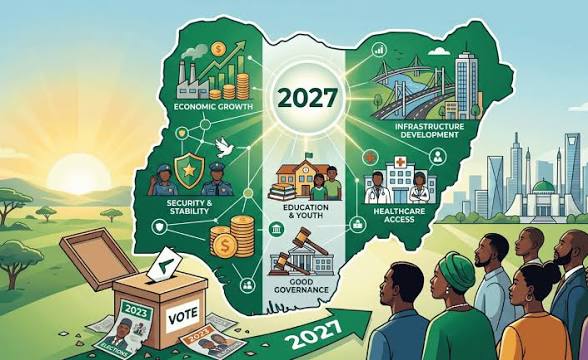
Nigeria stands at a crossroads. The 2027 election will not be judged by the world on the basis of turnout alone. It will be judged by the body count. Campaign violence has been aptly described as a direct assault on democracy itself. Democracy is not just the right to vote. It is the right to campaign without fear, to assemble without being shot, to wear a party colour without being attacked, to disagree without being killed.
What happens to accident victims brought in unconscious, worried Nigerians ask
Hospital defends N20,000 daily caregiver policy for incapacitated patient
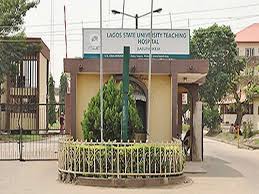
The Lagos State University Teaching Hospital, LASUTH, has become the centre of a heated public debate after announcing a new policy requiring a total upfront payment of ₦430,000 for emergency admissions.
The directive, which hospital management says is necessary to keep critical care running, came at a time when Nigerians are already battling soaring food prices, high transport costs, and stagnant wages. For many Lagosians, the question is no longer about quality of care, but about accessing medical attention when there is an emergency.
According to officials at LASUTH, the decision was driven by years of underfunding, rising operational costs, and the need to stop preventable deaths caused by lack of consumables in the emergency unit.
The hospital also cited the removal of fuel subsidy and inflation as key drivers, noting that a unit of blood has doubled in price, as well as imported medical supplies being affected by forex volatility.
LASUTH management insists the money is not a profit scheme. They say it will be reconciled against actual bills, with refunds issued if the final cost is lower. They also said discussions are on-going with the Lagos State Health Management Agency, (LASHMA), to enrol emergency patients into the state health insurance scheme retroactively.
But for residents who have watched government hospitals deteriorate over the years, government’s explanation makes no sense to them.
Patients who came to the hospital for various health reasons expressed their concerns and rage over the new plan.
Kabir Musa an okada rider, shook his head when he was informed about the policy.
“₦430,000 for emergencies? That’s more than what I make in one year. If my child collapses tonight, where do I get that money from? Government hospitals are supposed to be our last hope. Now even that one is gone. People will die on the road because they can’t afford to enter LASUTH. With this economy, fuel and food already killing us, this policy is like a death sentence for the poor.”
For daily earners, ₦430,000 is not just unaffordable, it is unimaginable.
Ronke Adebayo, a 400-level medical student who does clinical postings at LASUTH, said students and junior doctors have watched the emergency unit struggle for years.
“I understand the anger, but running an emergency unit is extremely expensive. Oxygen, drugs, staff on call 24/7, power, LASUTH spends millions daily. If the government is not funding it properly, the hospital will collapse.
“The ₦430,000 may be to ensure they have cash to treat patients immediately instead of ‘no bed, no drug’ stories. But the government must also create a waiver or insurance system for indigent patients. You can’t charge that amount and leave the poor to die.”
Ronke argued that the real failure is systemic: years of poor budgetary allocation to health, and a health insurance scheme that covers less than 10 per cent of Lagosians.
Grace Ijeoma, a public primary school teacher in Ojo, said the timing could not be worse.
“This is heart-breaking. I earn ₦80,000 a month. If there’s an emergency in my house today, I can’t raise ₦430,000 even if I sell everything. So what happens? We will pray and use herbs? Government should know that sickness is not planned. Instead of adding more burden, they should subsidise healthcare. During hardship like this, the last place government should touch is the hospital bill. It’s wicked.”
Teachers, traders, civil servants, and pensioners say they are the group most affected. Their salaries have not increased with inflation, yet they are not poor enough to qualify for charity and not rich enough to afford private hospitals.
Seyi Ajayi, a visual artist, approached the issue from a human rights perspective.
“This policy is unconstitutional and inhumane. The right to life is guaranteed in the Constitution. You cannot make emergency care conditional on ₦430,000 upfront. What happens to accident victims brought in unconscious?
“Will LASUTH ask for payment first? Government has a duty to provide basic healthcare. If there’s a funding gap, let them be transparent and involve the public. Imposing this during severe economic hardship shows a disconnect from the reality of Lagosians. Legal experts have also questioned whether an upfront payment for emergency care violates the National Health Act, which mandates that no hospital shall refuse emergency treatment. LASUTH has not yet responded to that specific legal argument.
Olumide Fasina, an Economist at WestBridge Advisory, Lagos, said the policy reflects a deeper fiscal crisis.
“The government is essentially transferring the cost of healthcare from the state budget to the individual because the state can no longer afford it. With debt servicing consuming over 40 per cent of revenue, and subsidy removal squeezing households, the state is looking for alternative revenue.
“But health is not like fuel; you cannot deregulate it without killing people. What we need is a compulsory, subsidised health insurance pool. Charge ₦430,000, but let 80 per cent of it be covered by insurance so the patient pays ₦20,000 or less. Without that, this policy will increase mortality and out-of-pocket catastrophe.”
Aisha Kadiri, Director of Research at the Centre for Public Policy and Development, added that the timing undermines trust.
“From an economic standpoint, cost recovery in tertiary hospitals makes sense if the system is working. But you cannot introduce cost recovery in the middle of the worst cost-of-living crisis in a generation and expect compliance. People are already skipping meals.
“The elasticity of demand for emergency care is zero, people will not pay. They will die at home. The government must announce immediate waivers for the bottom 40 per cent, and tie this policy to visible improvements. If patients pay ₦430,000 and still buy drugs outside, there will be riots.”
Both experts agreed that Lagos, as Nigeria’s economic hub, must lead in linking hospital funding to the state health insurance scheme, rather than cash deposits.
The Lagos State Commissioner for Health is expected to meet with hospital management and civil society groups soon on the matter. The government is considering a phased implementation and a special fund for indigent emergency cases.
Meanwhile, the Lagos State University Teaching Hospital (LASUTH) has defended its policy requiring unconscious and physically incapacitated patients to have trained caregivers throughout their hospital admission, citing patient safety, dignity and the need for comprehensive care.
The hospital said the policy was designed to provide additional support for patients who, because of their medical conditions, are unable to independently attend to their basic personal and non-clinical needs.
In a clarification issued by its management, LASUTH explained that while doctors and nurses remain responsible for patients’ clinical treatment and nursing care, trained caregivers provide complementary assistance necessary for their comfort and general well-being.
The caregivers are responsible for assisting patients with personal hygiene, feeding where appropriate, movement as permitted by the clinical team, running essential errands and other routine non-clinical needs.
According to the hospital, their presence also ensures that vulnerable patients receive adequate attention and assistance, particularly when family members are unavailable.
Explaining the financial implications of the arrangement, LASUTH said the caregiver service operates on a two-shift system, with each caregiver working for 12 hours.
Under the arrangement, patients are required to pay N10,000 for the day shift and another N10,000 for the night shift, bringing the total daily cost to N20,000.
The hospital further disclosed that a refundable deposit of N200,000 is required to cover the first 10 days of admission.
It added that patients discharged before the expiration of the 10-day period would receive a refund of the unused balance, subject to the hospital’s established refund procedures.
LASUTH said the arrangement was intended to guarantee uninterrupted supportive care for patients who cannot independently meet their basic personal needs.
However, the hospital clarified that engaging caregivers remains optional for patients who are conscious, physically mobile and sufficiently independent to attend to their personal needs.
It said such patients and their families retain the freedom to decide whether or not to engage additional caregiver services.
Acknowledging the financial and emotional burden associated with hospital admission, LASUTH said it remained conscious of the demands placed on patients and their families.
The management, however, maintained that the hospital had a responsibility to introduce measures that protect vulnerable patients and guarantee safe, dignified and comprehensive care.
It urged the public to understand the policy within the context of its commitment to patient-centred healthcare, improved service delivery and internationally recognised patient-safety standards.
The hospital reaffirmed its commitment to providing quality healthcare and ensuring that patients receive the level of attention and support required by their medical conditions.
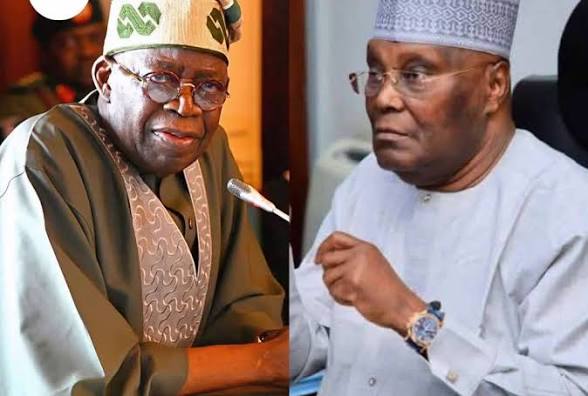
President Bola Tinubu has challenged the African Democratic Congress (ADC) presidential candidate, Atiku Abubakar, to tell Nigerians how he was able to build a private university while he was the Vice President of Nigeria.
Tinubu threw the challenge while speaking in Port Harcourt, Rivers State, during his presidential campaign rally. He insisted that Atiku used the efforts and money of Nigerians to build his university. He said: “To every salary earner, there is a dependent and somebody sharing the food at home. Those people talking of hunger are talking about the mess they created. Atiku was one of them. Ask him how he built a university while in office as Vice President in charge of our economy.
“Who built the university for him? It’s your money; it’s your effort. He is a man without moral integrity and ethics for the office.”
The president stressed that those now complaining about hunger in the country were the architects of the hardship they are lamenting.
Tinubu maintained that his administration is working to clean up the mess inherited from previous governments.
He also described the Minister of the Federal Capital Territory (FCT), Nyesom Wike, as a developmental partner of his administration.
He said: “Today, I have many of you, Rivers people, in government working so hard, particularly Wike. Wike is already a development partner of Tinubu’s administration.
“He is doing a wonderful job, committed, very hardworking, a man with vision and combines that with mission. Help thank him for me for his contribution to the infrastructural development of our country.”
The rally, which drew a massive crowd of supporters from across Rivers State, was attended by Governor Siminalayi Fubara, top APC leaders and other stakeholders.
Meanwhile, Minister of the Federal Capital Territory (FCT), Nyesom Wike, has declared that Rivers State has already concluded to vote for President Bola Tinubu in the 2027 general election.
Wike spoke yesterday at the Adokiye Amiesimaka Stadium, Igwuruta, in Ikwerre Local Government Area, during the All Progressives Congress (APC) presidential campaign rally in Port Harcourt.
Welcoming Tinubu to the stadium, Wike said the venue has a sitting capacity of “40,000, not 20,000, not 16,000, not 10,000”, and stressed that the crowd was mobilised solely from Rivers State.
“This is Rivers State rally. We did not mobilise anybody from any other state,” Wike said.
He recalled that when Tinubu came to campaign in 2022 and 2023, he used the Yakubu Gowon Stadium at Elekahia in Port Harcourt City, but today he is using the Adokiye Amiesimaka Stadium in Ikwerre Local Government Area.
“Your Excellency, you can see with your eyes that there’s nothing to say other than Rivers State has already concluded, has already agreed, come 16th of January they will vote for you,” Wike said.
The former Rivers governor took a swipe at the vice-presidential candidate of the African Democratic Congress (ADC), saying he had boasted on a television programme that he does not need to campaign because he is very popular.
“Let it be on record that the vice-presidential candidate of ADC has told the world that he does not need to campaign in Rivers State. Let it not be tomorrow now he said he campaigned and the election was rigged. He did not campaign and nobody is going to vote for him,” Wike said.
He also recalled Tinubu’s definition of brotherhood in 2023, that a brother is a man who identifies with you in your problem, and that brotherhood in politics has nothing to do with blood relationship.
“Now, who is our brother? Our brother is Bola Ahmed Tinubu, because he has identified with people of Rivers State,” Wike declared, as the crowd chorused in agreement.
According to Wike, Tinubu has completed the Port Harcourt-Bodo-Bonny Road, established a Federal University of Environment in Ogoni, and given Rivers people no fewer than 47 political appointments since the inception of democracy in 1999.
“Rivers people have never had it this way,” he said.
Wike said the APC is not relenting but campaigning every day, and challenged the ADC vice presidential candidate to come and give account of how he “fumigated” Rivers State against mosquitoes.
“Has the mosquito gone? Is the mosquito not biting you?” he asked, drawing laughter from the crowd.
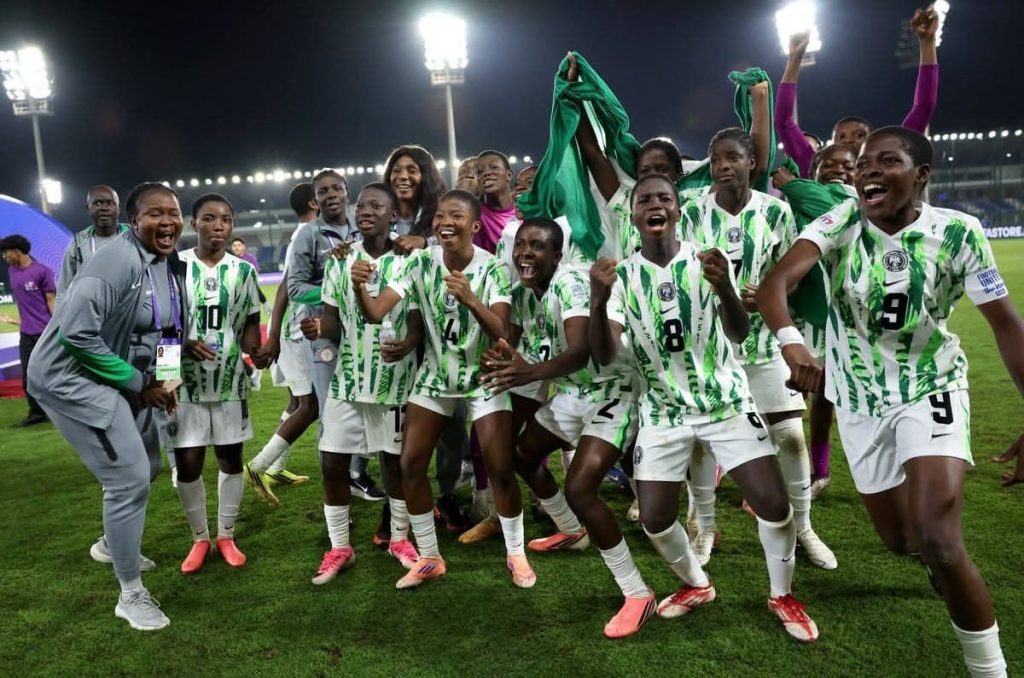
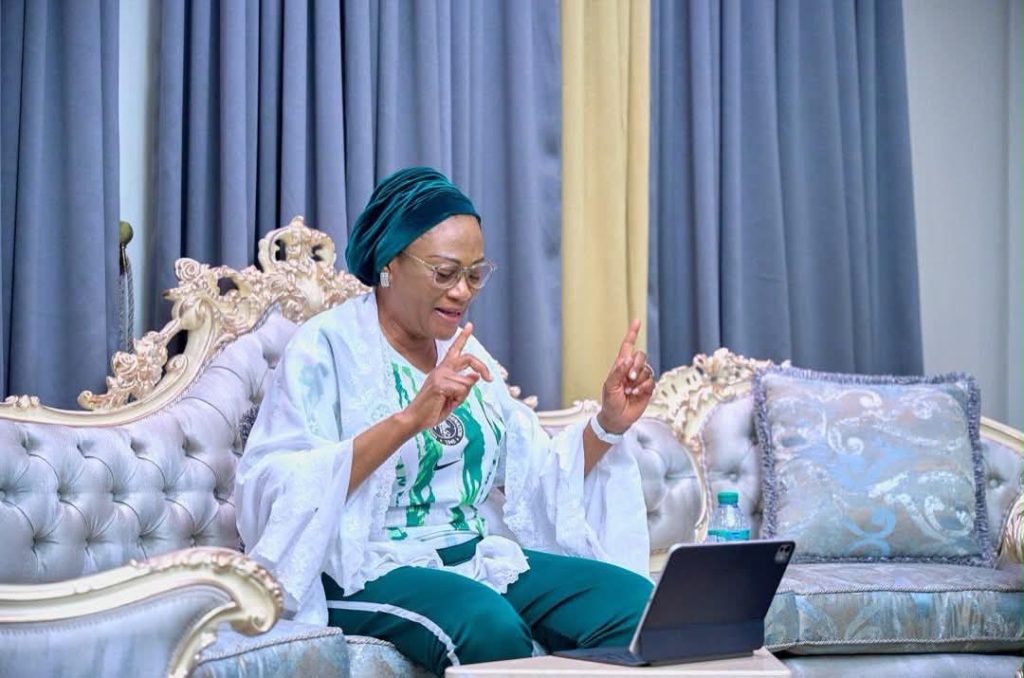
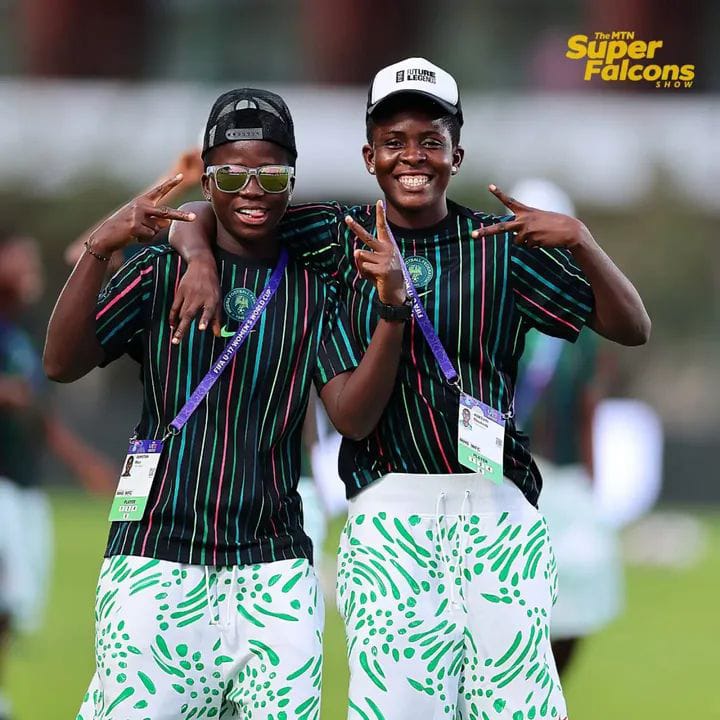
As First Lady Oluremi Senator Oluremi Tinubu and I returned from engagements in Akwa Ibom and Rivers States this evening, I saw her keenly watching the Flamingos’ World Cup final against Japan. What a joy to see our girls defeat Japan 2–1 and become the first African team to lift the FIFA U-17 Women’s World Cup trophy.
Our young girls have conquered the world, made history and brought immense honour to Nigeria and the African continent.
I followed your remarkable journey throughout the tournament in Morocco, and I remember your promise after the semi-final victory to bring the trophy home. Today, you have kept that promise with courage, discipline and unwavering belief in yourselves.
Your triumph goes far beyond football. Millions of young Nigerian girls will look at what you have achieved and know that they, too, can dream big, compete with the best and reach the pinnacle of their chosen fields.
I congratulate every member of this exceptional team, the coaching crew, the Nigeria Football Federation, the National Sports Commission and everyone who contributed to this historic achievement.
On behalf of the government and people of Nigeria, I salute our world champions. You have written a glorious new chapter in our nation’s sporting history.
Nigeria celebrates you. I celebrate you.
Bola Ahmed Tinubu, GCFR President, Federal Republic of Nigeria
Retired policemen: Dickson vows to end pension hardship under NDC
The national leader of the Nigeria Democratic Congress (NDC), Senator Henry Dickson, has pledged to end pension hardship faced by retired police officers, promising to remove the Nigeria Police Force from the contributory pension scheme if the party forms the next government.
Dickson said the policy, under an NDC government led by its presidential candidate, Peter Obi, would enable retired policemen to live decent lives after years of service to the country. The contributory pension scheme has remained a contentious issue among retired police officers, who complain that their retirement benefits are significantly lower than those received by retired personnel of other arms of the country’s security forces.
The former Bayelsa State governor gave the assurance when about 60 retired senior police officers from Bayelsa West paid him a courtesy visit at his country home in Toro-Orua, Bayelsa State.
Dickson meets Kwankwaso’s loyalists over Kano primaries’ dispute He lamented the hardship confronting retired policemen, noting that many were struggling to maintain their homes and meet basic needs, including healthcare expenses.
Dickson, who represents Bayelsa West in the 10th Senate, assured the delegation that an NDC administration would prioritise the welfare of both serving and retired police officers.
He thanked the retired officers for the visit and their show of solidarity and support for him and the NDC.
Speaking on behalf of the delegation, a retired Chief Superintendent of Police, Mr Gold Akponafa, said they visited Dickson to pay their respects to him, describing him as a hero of the Ijaw nation.
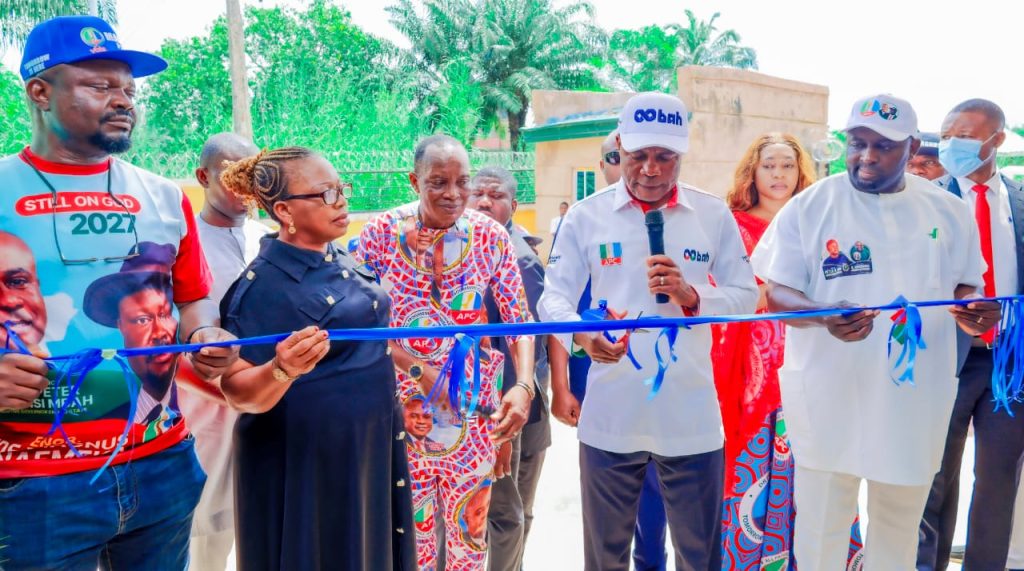
Governor Peter Mbah of Enugu State, at the weekend, began a tour of the 68 Development Centres in the state, during which he commissioned several development projects initiated by his administration in the political wards of Aninri West and Aninri North Development Centres of Aninri Local Government Area.
Mbah said his government’s inclusive development model, which ensures the distribution of projects and opportunities across wards, had ensured that no part of the state was left behind.
In Aninri West Development Centre, the governor commissioned the Amorji, Uhueze and Agbada Nenwe campuses of the Smart Green School as well as toured the Type 2 Primary Healthcare Centre, Agbada Nenwe, and commissioned the Type 2 Healthcare Facility, Amorji, Nenwe.
Mbah also held stakeholders’ engagements with the people of Aninri West and Aninri North Development Centres at Nenwe and Oduma, respectively, where he interacted with the people, polling unit by polling unit, to get feedback on government projects and policies. The people also used the opportunity to table their needs.
Speaking at the end of his interactive session with the people of Aninri West Development Centre at Nenwe, he emphasised that his administration was not coming to the people with mere promises, but with concrete results.
“Essentially, we have just commenced our engagement with our grassroots. Our aim is to go to all the development centres and have an interactive session with all our stakeholders. We are not coming to our stakeholders and various communities empty-handed. Our model of development in Enugu State is inclusive development. What that means is that there is no electoral ward in Enugu State that does not have the footprint of governance. So, we have not just come; we have also come to say to them, look at what we have delivered with the mandate you gave us to serve you,” he stated.
Mbah said the buildings were not the actual Smart Schools, but the facilities and teaching that go on in them to prepare Enugu children for the global economy. “Our children have no limits to what they can become and no boundaries as to what they can become. That is the whole idea of Smart Green Schools: to democratise quality learning. We know that if we do not invest in our children today and get them exposed to skills that will prepare them for the workplace of today and tomorrow, all we would have done building roads, conference centres, hotels, and the myriad of projects would not be sustainable, as we will not have children that will maintain them, and it would only be a matter of time before they all hit the rock.
“So, that was why we took education as the most important thing in any nation. If you want development, if you want to end poverty, you must educate your young ones and prepare them for the future,” he stressed.
On health, he said, “We have built 260 Type 2 Primary Healthcare Centres across the 260 electoral wards of Enugu State. While some have started full operation, the process of onboarding is ongoing, and you would also find out that in some instances. But the idea is that all the 260 wards of Enugu State will have a functional Type 2 healthcare centre.
“We have also approved the recruitment of 2,250 healthcare personnel because we are not just interested in the structure, but also in making sure that they are well staffed. What we measure our results on is not the blocks; it is based on the number of pregnant women we are able to ensure that they successfully deliver their babies and also based on the number of young ones that we are able to ensure do not die because they are not taking the right vaccinations they need. These are the real outcomes of the blocks that we put across our wards,” he explained.
He reiterated his administration’s commitment to delivering 10,000 km of roads to the people of Enugu State by 2031, noting that the administration had expended the bulk of its resources on the education and health sectors in his first term and had so far been able to construct or reconstruct only 1,521km of roads.
“You would have noticed that we have carried the heavy lift of schools and hospitals. The next item for us is to go aggressive on road construction.
“I want to assure you that we have built the biggest asphalt plant in the South East here in Enugu. I have told my team that we are going to get a second asphalt plant installed in Enugu West Zone and another asphalt plant installed in Enugu North Zone.
“Our objective is still to do 10,000 kilometres of roads. We are not yet there. We have only done about 1,521. I acknowledge that we still have a long way to go on that, but rest assured that we will deliver,” he stated.
He promised to support rural communities to enhance their agricultural production.
“Agriculture must be enhanced. We have to end manual ways or methods of farming. We need to migrate you to mechanised farming methods, which is why we are building the farm estates.
“I have also spoken to some of the women here. I have informed them that they need to form clusters of at least 20 or a maximum of 25, where we can now provide them with money to enhance their productivity and equipment to add value to what they produce. So, that programme is going on now,” Mbah added.
At Oduma, Aninri North Development Centre, he also assured the people of the government’s commitment to enhancing livelihoods and productivity in their rural communities.
He said, “Aninri is known for the production of food, and we will assist in making sure that we add value to what you are doing. We will give you equipment to scale up your production. Before the end of the year, the road from Nomeh to Oduma will be completed. It was delayed due to the rainy season. But now that the rain has receded, the contractors will commence the asphalt process.”
He enjoined the people to vote for President Tinubu, himself and all APC candidates to guarantee the ongoing massive development of their communities.
“We call on you to get your PVC. Let us also continue to aggressively go door-to-door, house-to-house, and make sure our neighbours come out for polling unit meetings. Prepare them for the elections on January 16 and February 6. We are going to vote for President Bola Tinubu and all APC candidates,” he concluded.
The consultations witnessed a large turnout of residents and stakeholders. Mbah also used the opportunity to interact with pupils of the Smart Green Schools.
Meanwhile, the Chairman of Aninri Local Government Area, Hon. Ugochukwu Nwanjoku, who received Governor Mbah alongside other stakeholders in the council area, expressed gratitude to the governor for ensuring that Aninri received its fair share of development projects, noting that the administration’s inclusive development model had brought tangible benefits to communities across the local government area.
He assured the governor of the overwhelming support of the people of Aninri in the 2027 general elections, pledging that the council would reciprocate the administration’s commitment to its development with massive votes for Mbah, President Tinubu, and all APC candidates.
“You have demonstrated through the projects we have seen today that you are committed to the development of every part of Enugu State. Aninri is not left behind, and we are grateful. We will mobilise our people to ensure that you receive massive votes in 2027. We will stand with you and the APC from top to bottom,” Nwanjoku said.
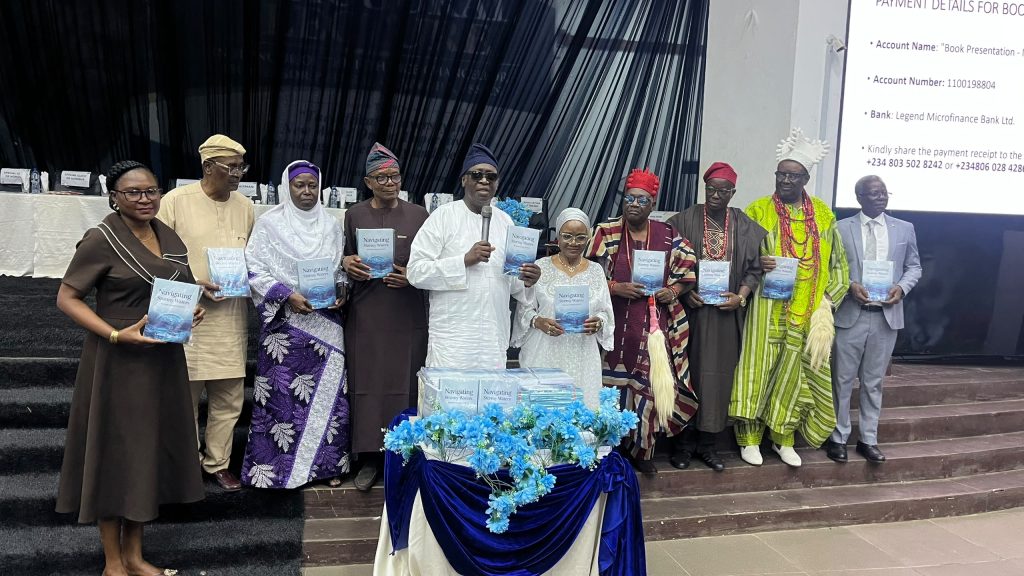
Former Vice-Chancellor of Osun State University (UNIOSUN), Prof. Labode Popoola has revealed how he confronted entrenched interests, resisted pressure and implemented difficult reforms to rescue the institution from collapse, declaring that his administration rebuilt the university into a nationally respected institution.
Popoola said his five-year tenure was characterised by battles against an entrenched system resistant to accountability, adding that his determination to restore institutional discipline required decisions that sometimes involved stepping on toes.
He spoke on Saturday at the presentation of his book, Navigating Stormy Waters: My Voyage Through UNIOSUN, held at Trenchard Hall, University of Ibadan, Oyo State.
Recounting the challenges he inherited, the former vice-chancellor said he initially attempted to resolve the problems through persuasion but resorted to tougher measures when his approach failed.
“Given the scenario that I inherited, the first tool I thought I should apply was persuasion. I did so much of that. But it did not work. When all of that failed, it became imminent for me to step on toes,” he said.
Describing his disposition towards confrontation, Popoola recalled his lawyer’s assessment of his personality, saying he was unwilling to initiate a fight but would not retreat when confronted.
“I do not start a fight, but I don’t run away from battles. I will not start, but when it starts, I’m not going to run away from such battles,” he said.
He maintained that the reforms were necessary to restore the university’s institutional integrity, stressing that he had never given or received bribes throughout his career.
“I have never ever in my life taken bribe or given it in any form. I have never,” he declared.
Assessing his administration’s impact, Popoola said the university was saved from total collapse and repositioned through reforms that strengthened accountability, transparency, ethics, professionalism, morality, stability and academic culture.
“We saved UNIOSUN from totally collapsing. Those who know the truth know it. We rebuilt that university and we left a university that had become nationally renowned and respected,” he said.
He added that his administration also established structures aimed at making the institution self-sustaining.
Popoola further attributed UNIOSUN’s emergence as Nigeria’s best state university to a sustained institutional development process rather than an overnight achievement.
“Today the university is ranked as the best state university in Nigeria. And those who know know that such a thing does not happen overnight. It takes time. For a university that is just about 20 years old to be the number one state university in the country. It was a process that led to that,” he said.
Supporting Popoola’s account of the institutional battles, a professor at King’s College London and former member of the UNIOSUN Governing Council, Prof. Abiodun Alao, said the university had previously operated an entrenched system he described as a ‘cash and carry economy’.
Alao said the governing council, under Prof. Yusuf Valli, which appointed Popoola, was determined to dismantle illegal practices, although the process generated considerable resistance.
“What actually happened was the cash and carry economy that was existing met a new determined governing council under Professor Yusuf Valli that was resolute, determined to curb all forms of illegal activities. It wasn’t easy, but we fought it. We fought them,” he said. He described Popoola’s administration as a period when UNIOSUN began showing signs of becoming an institution of global standards.
Alao also challenged university stakeholders to prioritise knowledge creation over personal enrichment, arguing that the fundamental purpose of higher education was the production of knowledge.
“People should realise that knowledge is more important than wealth. Because you look after wealth, whereas knowledge looks after you,” he said.
He urged university authorities to establish effective structures for managing institutional conflicts, noting that disagreements were inevitable in human organisations but should not derail their core responsibilities.
The Vice-Chancellor of the University of Ibadan, Prof. Peter Olapegba, said the book offered valuable insights into the complexities of university administration, particularly the difficult decisions, competing expectations and responsibilities confronting institutional leaders.
He described leadership as requiring vision, courage, wisdom, resilience and strategic thinking, expressing optimism that the publication would stimulate discussions on university governance and the future of higher education.
In his keynote address, former Vice-Chancellor of Lagos State University, Prof. Lanre Fagboun, identified inadequate funding, pressure from staff unions, indiscipline, religious and ethnic interests, employee demands and institutional politics as major challenges confronting university administrators.
Fagboun, who spoke on ‘Academic Leadership: The Realities and Challenges of University Governance’, recalled that he experienced industrial action within three months of assuming office as vice-chancellor, alongside several other major challenges.
He said university leaders were expected to deliver results regardless of prevailing circumstances, urging them to demonstrate courage, empathy, honesty, inclusiveness and vision.
He also warned against appointments based on religious affiliation, ethnicity, place of origin or personal connections, insisting that competence and character should determine appointments in academic institutions.
Chairman of the occasion, Dr. Wale Babalakin, commended Popoola’s intellectual capacity, industry and integrity, stressing the importance of documenting professional experiences and knowledge for future generations.
Babalakin said academics should not allow their knowledge and experiences to disappear with them, but should translate them into written records from which future generations could learn.
Former Executive Secretary of the National Universities Commission, Prof. Peter Okebukola, also praised Popoola’s leadership, describing him as one of the outstanding vice-chancellors produced by the Nigerian university system.
Reviewing the publication, Vice-Chancellor of Edo State University, Uzairue, Prof. Victor Adetimirin, described the 345-page book as an important contribution to conversations about university administration and institutional reforms.
He said the 12-chapter publication, which includes supporting documents, chronicles Popoola’s professional journey, international experiences, mentorship and the governance challenges surrounding UNIOSUN’s multi-campus structure.
Adetimirin noted that the book also examined the respective responsibilities of government, governing councils, university management, staff, students and parents in building sustainable institutions.
He said its lessons could encourage administrators confronted with dysfunctional institutions to remain committed to reforms, accountability and responsible leadership.
The Economic and Financial Crimes Commission has uncovered and taken custody of a sprawling illegal industrial complex in Ogere, Ogun State, arresting foreign nationals, police officers and other Nigerians during an inspection led by the EFCC Chairman.
The complex, reportedly operated by foreign nationals believed to be Chinese citizens, houses a petroleum processing plant, a lithium processing factory, a specialised wood processing facility, a power generation plant, warehouses stocked with motorcycles, satellite communication equipment and thousands of power banks. An illegal distillery where alcoholic spirits were allegedly mass-produced was also discovered.
Addressing journalists during the inspection, EFCC Chairman, Ola Olukoyede, said investigations were ongoing, but vowed that everyone found culpable would face the full weight of the law.