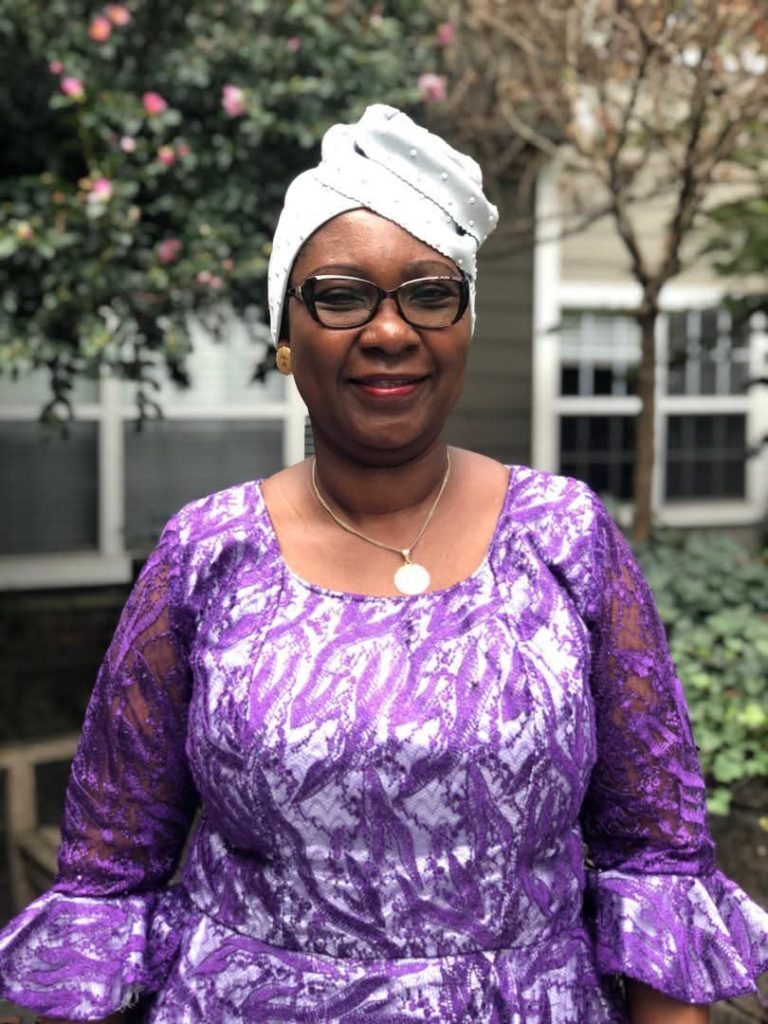
Redeemer’s University has appointed Distinguished Professor Ibiyemi Ibilola Olatunji-Bello, as its Pro-Chancellor and Chairman of Council, making her the first woman to occupy the position since the institution was established in 2005.
The appointment, which takes effect from November 1, 2026, is for an initial three-year term.
The appointment was conveyed in a letter dated November 1, 2026, by the General Overseer of the Redeemed Christian Church of God (RCCG) and Visitor to the university, Pastor Enoch Adejare Adeboye.
In the letter, Adeboye expressed confidence in Olatunji-Bello’s capacity to contribute meaningfully to the advancement of the institution, noting that her appointment reflected the trust reposed in her.
He expressed the expectation that she would justify the confidence placed in her by helping the university realise its vision, while congratulating her and assuring her of the continued love and prayers of the RCCG.
As Pro-Chancellor and Chairman of Council, Olatunji-Bello is expected to provide strategic leadership to the university’s Governing Council, strengthen institutional governance and contribute to the pursuit of academic excellence.
The appointment comes as the university continues to expand its academic programmes, strengthen research and innovation, and consolidate its position in the global higher education sector.
Reacting to the appointment, the immediate past Pro-Chancellor, Professor Oluwatoyin Ogundipe, FAS, described Olatunji-Bello as the right choice for the position. Ogundipe said her appointment would add tremendous impact and significant value to the university, citing the social capital and goodwill she brings to the office.
Similarly, the Vice-Chancellor, Professor Shadrach Olufemi Akindele, said the university was happy and excited to welcome Olatunji-Bello as it strives to attain greater heights in the global higher education landscape.
Akindele added that her emergence marked a new era in financial sustainability and infrastructure development, while sustaining the vision and legacies of Ogundipe, who has since been appointed Chairman of the National Universities Commission Board.
Olatunji-Bello, born in Lagos on April 23, 1964, is an accomplished academic and professor of Physiology with extensive experience in university administration. She obtained her BSc in Physiology from the University of Ibadan in 1985 and an MSc in Physiology from the University of Lagos in 1987. She earned her PhD in Physiology from the University of Lagos in 1998, following a six-month research fellowship at the University of Texas Health Science Centre, San Antonio, United States, in 1994.
She was appointed professor of Physiology at Lagos State University in 2007 and was conferred with the title of Distinguished Professor of Physiology by the university’s Senate in January 2026 in recognition of her contributions to the academic development of the Department of Physiology.
Olatunji-Bello began her academic career at the University of Lagos as an Assistant Lecturer in 1988, rising through the ranks before becoming the first Professor of Physiology at the Lagos State University College of Medicine on October 2, 2007.
At Lagos State University, she served in several leadership positions, including Head of the Department of Physiology, Deputy Vice-Chancellor, Deputy Vice-Chancellor (Academic), Acting Vice-Chancellor and Pioneer Director of the Directorate of Advancement.
On September 17, 2021, she was appointed the ninth substantive Vice-Chancellor and second female Vice-Chancellor of Lagos State University by Governor Babajide Sanwo-Olu.
She is also a member of the National Institute (mni), having attended Course 34 of the National Institute for Policy and Strategic Studies, Kuru, in 2012.
In May 2023, she received the National Productivity Order of Merit Award from former President Muhammadu Buhari.
Her appointment as Pro-Chancellor marks another milestone in her career in academia and university administration.
Ogun Crime Watch has called on the Nigeria Police Force to invite Nollywood actor, Kunle Afod, for questioning over what it described as the deliberate circulation of misleading information and misrepresentation of events surrounding Friday’s road accident at Saapade on the Lagos-Ibadan Expressway.
The group said the timing of the actor’s video, in which he reportedly questioned the emergency response to the accident, raised serious concerns about his intentions and suggested an attempt to mislead the public about the intervention of the Ogun State Government’s emergency response team.
In a statement signed by its President, Comrade Olumide Martin, the group disclosed that the state emergency response team arrived at the accident scene at 12:28 p.m., while Afod reportedly published his video at 12:29 p.m., barely one minute after the team’s arrival.
Ogun Crime Watch said the timeline raised questions about the actor’s claims and the circumstances surrounding the production and publication of the video, particularly when emergency responders were already at the scene attending to the victims.
It alleged that the video appeared calculated to create a negative impression about the government’s response, undermine public confidence in the emergency management system and advance a political narrative favourable to opposition interests.
The group further alleged that the actor’s intervention bore the imprint of partisan political communication, adding that public safety and the welfare of accident victims should never be exploited for political advantage or personal gain.
It therefore urged the police to investigate the circumstances surrounding the video, establish the facts and determine whether any laws were breached in the process of circulating potentially misleading information.
The group emphasised that its position was not an attempt to prevent freedom of expression or legitimate criticism of government but a demand for responsibility, accuracy and accountability, especially when public statements concern emergencies involving human lives.
The accident involved a Mazda bus conveying 18 passengers, which reportedly suffered a tyre burst before crashing into a concrete barrier around the Saapade axis of the Lagos-Ibadan Expressway.
Thirteen passengers sustained injuries and were evacuated to hospitals for medical attention.
.30,000 conversion kits expected next week ahead of Christmas
.State House facility to serve 150 vehicles daily
Federal Government is targeting 2,000 additional Compressed Natural Gas (CNG) refuelling stations nationwide as part of efforts to reduce transportation costs, expand access to cheaper fuel and accelerate the conversion of vehicles from petrol to gas.
The government has also commenced plans to extend CNG vehicle conversion to interested State House personnel, following the conversion of an abandoned petrol station at the State House, Abuja, into a functional CNG refuelling facility.
The Chairman of the Presidential Initiative on Compressed Natural Gas and Electric Vehicles (Pi-CNG & EV), Ismael Ahmed, disclosed the expansion target at the inauguration of the facility, saying President Bola Tinubu had directed the establishment of 1,500 additional stations in February and another 500 in August.
He said 106 CNG stations were currently operational nationwide, while another 170 were at various stages of development or awaiting regulatory approvals.
Ahmed said the additional facilities were expected to come on stream between this year and early 2027, stressing that the initiative had moved beyond its experimental phase and was now focused on expanding infrastructure to meet the demands of Nigeria’s estimated 220 million population and 12 million vehicles.
The development comes as the administration intensifies efforts to make CNG a viable alternative to petrol and diesel following the removal of petrol subsidy.
Ahmed said the adoption of CNG-powered buses had already resulted in transportation fare reductions of between 30 and 40 per cent on some routes in Abuja, Lagos and the Kano-Katsina corridor.
He cited the Kano-Katsina route, where commuters who previously paid between N3,000 and N4,000 could now travel for about N1,500 using CNG-powered buses.
In a related development, the Permanent Secretary, State House, Temitope Fashedemi, said the government would encourage interested personnel to convert eligible personal vehicles to CNG-hybrid systems in the coming weeks.
He said the conversion programme would begin with vehicles that meet the required technical specifications, adding that the State House was already integrating the technology into its official fleet.
According to him, about 10 recently acquired JAC vehicles are CNG-hybrid models, alongside some shuttle buses operating within the Presidential Villa.
Fashedemi spoke at the inauguration of the converted facility in Karu, Abuja, explaining that the project was designed to demonstrate the government’s commitment to leading by example in the transition to cleaner and cheaper energy.
He said the abandoned petrol station was made available for conversion through a partnership between the State House, Pi-CNG and Rollin Energy Limited, without any expenditure by the State House on its rehabilitation.
The Permanent Secretary said the arrangement was also intended to demonstrate to private investors that CNG infrastructure could provide viable business opportunities.
He urged existing filling station operators and prospective investors to partner with Pi-CNG to establish more refuelling facilities and vehicle conversion centres across the country.
“All the filling stations you see around, are they owned by government? No. They are owned by people and business operators. The earlier existing and prospective business people recognise this as an opportunity and partner with Pi-CNG to establish these facilities, the better,” he said.
Fashedemi said the limited availability of refuelling stations remained one of the challenges slowing the adoption of CNG, noting that government was seeking to address the infrastructure gap by encouraging private-sector investment rather than taking over commercial operations.
He described Nigeria’s abundant natural gas reserves as an economic opportunity that could provide motorists and transport operators with cheaper alternatives to conventional fuels.
He recalled that the removal of petrol subsidy by President Tinubu, despite the economic adjustments and initial public concerns it generated, was also intended to encourage the transition to alternative energy sources.
The new facility, he disclosed, had undergone a trial period during which motorists in the surrounding community received free CNG for more than a week before its formal inauguration and commencement of commercial operations.
The Chief Executive Officer of Rollin Energy Limited, Mubarak Umar Danbatta, said the facility had the capacity to serve approximately 150 vehicles daily, depending on cylinder sizes and operating pressure.
He described it as an integrated refuelling facility, with its compressor, dispenser and other essential equipment housed in a single system. Its double-nozzle dispensers allow vehicles to refuel from both sides.
Danbatta said the State House project was the company’s second partnership with Pi-CNG, following an earlier collaboration inaugurated on May 29, 2024.
He disclosed that Rollin Energy currently operates facilities in Ilorin and Abuja, while two additional stations in Kano were expected to be commissioned the following week, with another two planned for Kaduna.
The company, he said, was targeting nearly 15 CNG refuelling facilities nationwide by the end of 2026.
Also speaking, the Senior Special Assistant to the President on Domestic Affairs, Toyin Subair, said the Federal Government and state governments were expanding investments in CNG-powered buses, trucks, tricycles and other mass transit vehicles to ensure that cheaper fuel translated into lower transportation costs.
Subair said the National Economic Council had committed to a joint financing arrangement with the Federal Government to support the deployment of affordable transportation solutions across the states.
He said the administration was targeting a reduction of 40 per cent or more in transport fares, particularly on interstate routes and in the movement of agricultural produce.
He further disclosed that more than 30,000 additional vehicle conversion kits were expected to enter the Nigerian market from the following week to expand conversion capacity ahead of the Christmas travel season.
The Minister of Power, Joseph Tegbe, has said electricity supply is expected to improve within 48 to 72 hours as the Federal Government moves to resolve generation and transmission challenges responsible for recent outages across the country.
Tegbe attributed the worsening power situation to scheduled maintenance at Egbin Power Station in Lagos, described as Nigeria’s largest thermal power plant, which contributes about 16 per cent of electricity supplied to the national grid.
The minister disclosed this in a statement titled “Update on Power Situation,” shared on his Facebook page on Friday. “I am aware of the strain that the current outages have placed on households and businesses in four affected states, including Lagos and the Federal Capital Territory.
“Planned maintenance at Egbin Power Station and constraints in gas supply to some thermal power stations have reduced the amount of electricity available on the national grid. Grid operators have, therefore, implemented load shedding in some areas to manage the shortfall,” he said. Tegbe added that the sabotage of critical transmission lines had restricted the use of alternative routes to supply electricity to some locations, particularly Lagos.
He said his ministry was working with relevant operators to restore affected generating units in phases, improve gas supply and accelerate repairs to damaged infrastructure.
My team and I are working to return the affected generating units to service in phases, with the first units coming back online within the next 48 to 72 hours.
“We are also working with operators to improve gas supply and accelerate repairs to the damaged infrastructure,” he added.
The minister’s assurance comes amid growing complaints from electricity consumers in Lagos and Ogun states over prolonged blackouts, which residents say have made the prevailing hot weather increasingly unbearable.
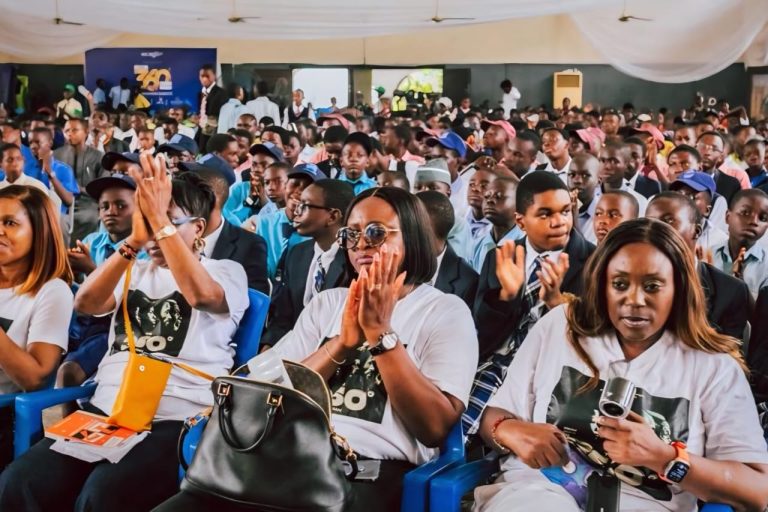
A non-governmental organisation, The 360° Man, has mentored hundreds of teenage boys from 36 secondary schools in Lagos and other parts of the country as part of efforts to prepare them for the responsibilities and challenges of adulthood.
The initiative, tagged From Boy to Role Models 3.0, focused on character development, leadership, emotional intelligence, career choices and life planning, with the aim of raising responsible, confident and purposeful men.
The programme, organised by a group of women under the Ibukun Awosika Leadership Programme, held at the weekend at St. Gregory’s College, Ikoyi, Lagos.
The keynote speaker, Fela Durotoye, was joined by other resource persons, including Emmanuel Alafiatayo, Dr Baba Femi Adenuga and Segun Somefun, who shared their experiences and offered guidance to the participants.
The participating schools included Crystal International College, St. Gregory’s College, Ikoyi, and Distinct Star International College, Lekki, among others.
Speaking on the objectives of the initiative, Durotoye said it was designed to address the need to equip boys with the values, skills and confidence required to become responsible men.
He said the programme sought to raise boys who were confident in themselves, intentional about their choices, emotionally aware and prepared to take responsibility for their actions.
According to him, the initiative provides a platform for young boys to learn character, leadership qualities, emotional intelligence and practical life skills through interaction with accomplished individuals.
He said the future of society depended partly on the values, examples and opportunities provided for boys while they were still growing.
The programme also extended beyond Lagos, with boys from underserved communities in Kaduna participating through online streaming.
Durotoye said the virtual participation was intended to ensure that geographical location and limited opportunities did not prevent young people from accessing mentorship and positive role models.
He noted that every boy deserved access to knowledge, encouragement and opportunities to realise his potential, irrespective of his background.
The initiative also provided an opportunity for participating students to identify individuals they considered role models and explain the values they hoped to emulate.
Principal and Director of Boys’ Junior Academy, Lagos Island, Sobanke Rafiu Olalekan, commended the organisers and resource persons for investing in the development of the boys.
He said the initiative addressed an important gap in programmes designed for young people, noting that teenage boys had often been neglected in similar mentorship interventions.
Olalekan, who spoke on behalf of the management and staff of the school, said the programme would help change the narrative by exposing the students to positive influences and guidance.
Another public school principal also appreciated the organisers for providing students with an opportunity to learn outside their conventional classrooms and interact with accomplished personalities.
Some of the beneficiaries said the programme had reinforced their appreciation of the roles their parents played in shaping their lives.
Adejoye Adeboye of Crystal High School, Obalende, identified his father as his role model, saying his father’s commitment to his upbringing and academic improvement had positively influenced him.
Albert Joseph of Debous International College, Lekki, said he looked up to his mother because of her commitment to preaching the gospel and her religious devotion.
Similarly, Marvellous Osinowo of Distinct Star International College, Lekki, described his father as a hardworking, disciplined and religious man whose qualities he hoped to emulate.
Another student, Moses Oghenero Agufure, also of Distinct Star International College, said his father was his role model because of his consistent support and assistance.
Abuke Oluwakorede of Devian International College, Lekki, said he admired his mother for her courage, gentleness and commitment to his welfare.
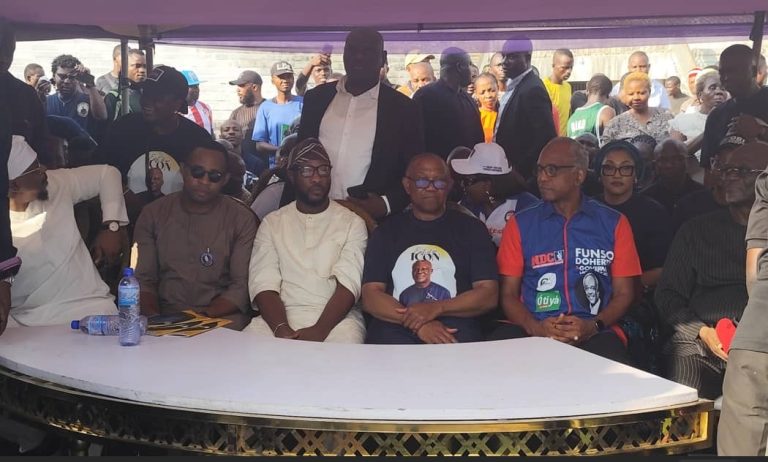
The Presidential candidate of the NDC, Mr. Peter Obi, former Vice President, Alhaji Atiku Abubakar and two leading guber candidates in Lagos State were among dignitaries at the Service of Songs held on Friday for the late founding father and chairman of BoT of Balogun Business Association (BBA/ICC), Lagos International Trade Fair complex, late Chief Sir Okey Ezeibe, MFR, KSC on Friday.
In his speech, Obi consoled the family, BBA and trade fair stakeholders for the huge loss and advised the leadership of the association to unite and continue to grow the complex, saying “it is only through unity of purpose and exhibition of brotherly love amongst themselves that they will sustain all the development legacies left behind by Sir Ezeibe”.
In his condolence message, the Chairman of Atiku Abubakar Campaign Council, Southwest, Hon. Abdul said his excellency, Atiku Abubakar planned to here in person but was attending to critical issues that rose from the recent court judgment on ADC. He advised BBA and the entire Trade Fair stakeholders to inculcate all the virtues of late Ezeibe in their leadership activities. Also the ADC Guber candidate of State in 2027 election, Hon. Rhodes Vivor who came in company of the House of Representative member for Amuwo-Odofin, called on BBA to immortalize Ezeibe and learn from his leadership style.
Speaking in the same vein, the NDC guber candidate for Lagos State, Mr. Doherty, consoled the family and BBA for the loss and admonished stakeholders to hold on to the legacies of late Ezeibe
Earlier in his welcome address, the President of BBA, Chief Oscar Odogwu said “In consideration of his unprecedented contributions to BBA, the Executive Council has passed a resolution to mold his status at the secretariat to immortalize him forever in BBA”.
In his speech, the chairman of the organizing committee and Assistant Secretary of association, Hon. Okey Akidi Ezeaku thanked God for giving BBA somebody like Ezeibe and his family, especially Lolo Ezibe and the children, for allowing BBA to honour our father this way. We thank you for sharing him with us.
In his tribute, ASPMDA President, Hon. Ngozi Emechebe recalled all the support he gave him during the murky days of his administration in ASPMDA and all his efforts in helping to secure a massive new site for ASPMDA.
Hon. Emechebe announced that ASPMDA has carved a special space for late Ezeibe in the new site and will induct his elder son into it at the right time.
Also speaking, the Chairman of Trade Fair Stakeholders Association and APT President, Chief Eric Ilechukwu said “Stakeholders has lost our Speaker in hard times; our go-getter when all hopes are lost and our adviser when issue of government matters arise”.
Several business leaders and senior officials both in BBA and stakeholders took time to give consolation to the family.
In his vote of thanks, the senior son of the late market leader, said his father remained a caring father and lover of his family at all times.
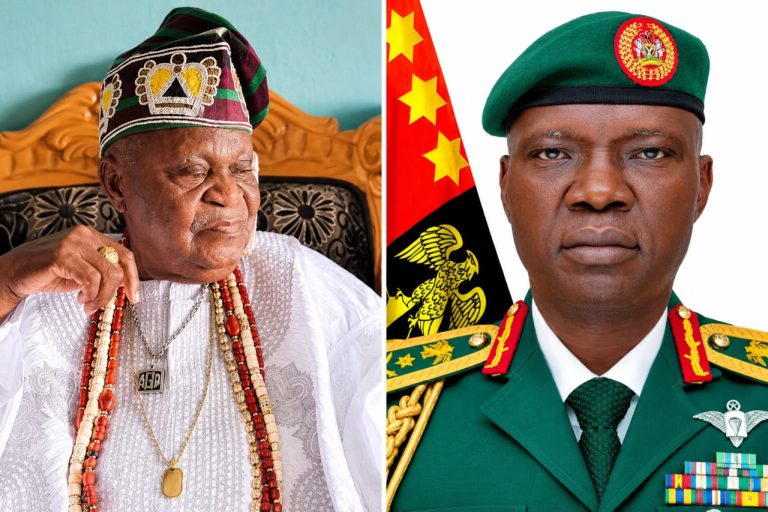
The Olobu of Ilobu, Oba Ashiru Olaniyan, has appealed to President Bola Tinubu to immortalise the late Chief of Army Staff, Lieutenant General Taoreed Lagbaja, by establishing a befitting military institution or strategic infrastructure in his hometown, Ilobu, Osun State.
In a statement issued yesterday by his Press Secretary, Abdulbasit Adewale, the monarch stated that the request is part of activities marking the second anniversary of the former army chief’s passing.
Describing General Lagbaja as an illustrious son of the soil, the monarch noted that his distinguished military career merits a lasting national monument in his ancestral homeland. Oba Olaniyan recalled that General Lagbaja’s death on November 5, 2024, was a profound loss, not only to his immediate family and the Nigerian Armed Forces, but also to the entire people of Ilobu-Asake, who continue to hold his memory in high esteem.
According to the traditional ruler, two years after his departure, the most meaningful way to honor such a distinguished patriot is to translate national appreciation into a permanent legacy that directly benefits the community and inspires future generations.
The monarch emphasized that General Lagbaja’s contributions should transcend annual remembrances and public tributes, calling instead for a permanent national recognition.
Specifically, Oba Olaniyan urged President Tinubu to approve an appropriate military establishment in Ilobu in honor of the late general.
He suggested that the legacy project could take the form of a Nigerian Army training institution, a vocational and skills acquisition center, a military medical facility, or any other strategic installation deemed suitable by the Federal Government and the Nigerian Army.
The Olobu also appealed to the Federal Ministry of Defence, the Nigerian Army, the Osun State Government, and well-meaning indigenes of Ilobu to support initiatives aimed at preserving the late general’s legacy.
Recalling his fond memories of the fallen general, Oba Olaniyan said: “Today, as we remember our illustrious son, Lieutenant General Taoreed Abiodun Lagbaja, two years after his departure, my heart is filled with both sorrow and pride.
“Sorrow, because Ilobu has lost a distinguished son whose physical presence we would have cherished for longer; and pride, because his life and professional accomplishments remain a source of honor to his family, our community, and our beloved nation, Nigeria.
“General Lagbaja was one of our own. He came from Ilobu, served Nigeria with distinction, and rose to become the Chief of Army Staff. His journey is a remarkable part of our community’s history, and we cannot allow such a legacy to fade with time.
“I therefore respectfully appeal to His Excellency, President Bola Ahmed Tinubu, GCFR, President and Commander-in-Chief of the Armed Forces of the Federal Republic of Nigeria, to immortalise this distinguished son of Ilobu by approving the establishment of a befitting military institution or strategic military infrastructure in Ilobu in his honor.
“Your Excellency, this appeal is not merely about attaching a name to a building. It is about preserving the memory of a Nigerian who dedicated his life to the service of his fatherland, ensuring that generations yet unborn will know that a son of Ilobu once rose to the highest professional echelon of the Nigerian Army.
“To the family of our departed general, we share in your pain and continue to pray that Almighty God grants you the strength to bear this irreparable loss.
“To the Nigerian Army and the Federal Government, we express our appreciation for his years of service and dedication to the defense of our country.
“And to my beloved people of Ilobu-Asake, let us continue to cherish his memory, preserve his history, and uphold the values of discipline, patriotism, courage, and excellence that his career represents.
“General Lagbaja, you are gone, but your memory will never depart from Ilobu. We owe it to ourselves and to unborn generations to ensure that your name remains permanently written in the history of our homeland,” the monarch said.
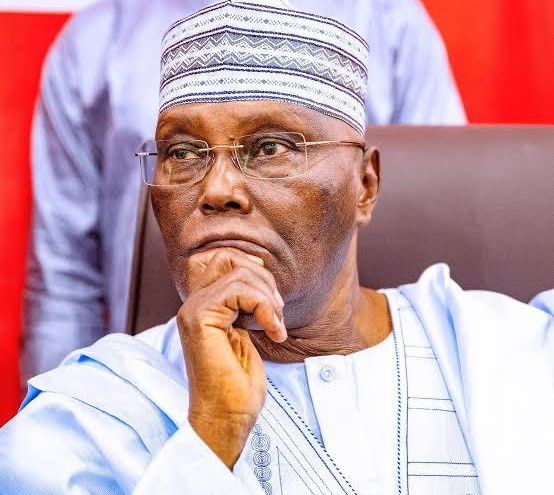
A member of President Bola Ahmed Tinubu’s Presidential Campaign Council, Abdulhakeem Adegoke Alawuje, has taken a swipe at former Vice President Atiku Abubakar, leaders of the African Democratic Congress (ADC) and their supporters over their reactions to a recent court judgment affecting the party’s political ambitions, urging them to stop what he described as unnecessary political drama and respect the rule of law.
Alawuje said Nigeria’s democracy must be guided by constitutional provisions and judicial pronouncements rather than personal interests, political sentiments or public pressure, insisting that neither political influence nor public sympathy can place anyone above the law.
Reacting to the controversy surrounding the judgment, the Tinubu campaign council member recalled previous judicial decisions that affected the All Progressives Congress (APC) in Rivers and Zamfara states, noting that such developments did not threaten the survival of Nigeria’s democracy.
He questioned why the judicial system should suddenly be portrayed as an enemy of democracy simply because its latest decision appears unfavourable to Atiku Abubakar and his political associates.
“The rule of law cannot be celebrated when it favours you and condemned when it does not. In 2019, when a court decision went in favour of the Peoples Democratic Party, Atiku and his associates celebrated the outcome. Similarly, when judicial decisions affected the APC in Zamfara State, arguments were made about the survival of democracy.
“Why should the same judicial system suddenly become an enemy of democracy because the outcome is unfavourable to the ADC?” Alawuje queried.
He urged Atiku, a former Vice President of Nigeria, to demonstrate statesmanship by calling his supporters to order, encouraging them to remain calm and respect the judicial process rather than creating unrealistic political expectations.
Alawuje also challenged the opposition to distinguish between public dissatisfaction with the current administration and genuine electoral strength, arguing that political visibility, social media activities and widespread criticism of government policies do not automatically translate into votes.
According to him, the ADC’s growing political visibility should not be mistaken for widespread national acceptance, as some of the attention surrounding the party may be driven by economic challenges, public frustrations and dissatisfaction with the present administration.
While acknowledging that Nigerians have legitimate concerns over the country’s economic situation and the temporary but necessary adjustments being implemented by the government, he cautioned opposition politicians against exploiting such difficulties for political advantage.
“Let us be sincere with ourselves. Political noise is not the same as electoral strength. Public frustration with an administration does not automatically translate into votes for the opposition.
“Nigerians deserve credible alternatives, not political propaganda, emotional manipulation or the exploitation of regional and ethnic sentiments,” he stated.
The Tinubu campaign council member further challenged Atiku and other prominent ADC figures, including former lawmaker Dino Melaye and other vocal party supporters, to exercise restraint in their public statements and avoid giving party faithful assurances that may ultimately prove unrealistic.
He maintained that responsible political leadership requires honesty, even when the truth may be uncomfortable for supporters, adding that political loyalty should never become an excuse for ignoring legal realities.
Alawuje specifically advised Atiku to carefully examine the legal circumstances surrounding the ADC’s presidential candidacy and avoid creating expectations that could eventually lead to disappointment among his supporters.
He stressed that political ambition must always operate within the boundaries of the law, insisting that personal influence, political status and public sympathy cannot override constitutional provisions or established judicial decisions.
“Atiku Abubakar is a former Vice President of the Federal Republic of Nigeria and should understand better than most people that no political ambition is greater than the law.
“The recent court judgment should not become a permanent political shelter or an excuse to avoid confronting the realities before the party. The responsible thing to do is to tell supporters the truth and allow the law to take its course,” he said.
He further declared that Nigeria’s democratic institutions would remain intact irrespective of the political fortunes of individuals or parties, stressing that the country is far bigger than the ambitions of its political actors.
Alawuje urged Atiku and other opposition politicians to reflect on their political journey, reassess their ambitions and recognise that political power is ultimately in God’s hands and must be pursued within the framework of the Nigerian Constitution and the democratic will of the people.
“No one can manipulate God to obtain political power. Power belongs ultimately to Almighty God, and no individual should behave as though political leadership is a personal entitlement.
“Atiku and his supporters should accept the realities of the moment, respect the rule of law and stop giving Nigerians false political hope. Nigeria is bigger than any individual, any political party and any ambition. No one is above the law,” Alawuje declared.
Three years after separate tickets preceded a plurality victory for the All Progressives Congress (APC), Atiku Abubakar of the African Democratic Congress (ADC) and Peter Obi of the Nigeria Democratic Congress (NDC) are again on different ballots, with the presidential election about 10 weeks away. The arrangement resembles the one seen in 2023. This analysis looks at what has changed since then, what has stayed the same, and how the figures and the parties involved describe the situation.
The 2023 presidential result is the usual reference point in discussions of the opposition’s prospects. Bola Ahmed Tinubu of the APC was declared winner with 8,794,726 votes, or 36.61 per cent. Atiku, then of the Peoples Democratic Party, polled 6,984,520, Obi, then of the Labour Party, 6,101,533, and Rabiu Kwankwaso of the New Nigeria Peoples Party 1,496,687. The three leading opposition candidates together recorded 14,582,740 votes, which is more than the winner’s tally. Opposition figures have often cited that sum. Analysts have cautioned that votes do not always transfer from one candidate to another, and a share of Obi’s 2023 supporters were first time or returning voters who might not have turned out for Atiku.
The structure of the election is also part of the record. Tinubu secured at least 25 per cent of the vote in 30 states, above the constitutional requirement, and his victory was upheld by the Supreme Court. Turnout was roughly 27 per cent, among the lowest recorded in the country’s democratic history. A low turnout, three leading challengers and a rule that requires a plurality meant that the winner needed a little over a third of the votes cast.
The principal figures were familiar with one another. Atiku and Obi ran together on the Peoples Democratic Party ticket in 2019 and lost to Muhammadu Buhari. By 2022 they were in separate parties, with Obi at Labour, Kwankwaso at the NNPP and Atiku in the PDP. Efforts to bring them together before the 2023 election did not produce an agreement. Obi and Kwankwaso explored an alliance, and the talks ended over the question of who would lead the ticket. Atiku said at the time that he was talking to both men. Kwankwaso said he was in talks with neither Obi nor Atiku.
The points of disagreement concerned leadership of a joint ticket rather than policy. Each man could point to a basis for leading. Atiku headed an established national party and had long experience. Obi led a fast growing movement among younger and urban voters. Kwankwaso had a strong base in Kano. Agreeing to serve under another candidate would have meant accepting that someone else was better placed to win, and none of the three did so. Tinubu, whose own nomination had been contested within the APC, went into the election against a field that had not consolidated.
The ADC coalition
By 2025 the opposition had moved towards a common platform. The ADC became the vehicle of a coalition that adopted it in July 2025 to challenge the APC in 2027. Participants included Atiku, Obi, former Kaduna governor Nasir El Rufai, former transport minister Rotimi Amaechi and former Senate President David Mark. The arrangement held for several months. At a leaders’ caucus in Abuja in September 2025, the presidential aspirants agreed to support whoever emerged as the party’s candidate, and members were asked to resign from other parties. Obi was absent from that meeting but sent word that he remained committed. Some observers took the caucus as a sign that the divisions of 2023 might not be repeated.
The question of who would carry the ticket had been postponed and not settled. Yusuf Datti Baba Ahmed, Obi’s running mate in 2023, said publicly that Obi should not take a vice presidential slot, given what he described as a contested 10 million votes. The coalition had a platform and a list of prominent names. It did not have an agreed procedure for choosing among them.
How the coalition divided
The break was happened in early 2026. The alliance came apart after weeks of deadlock over the presidential ticket, with Atiku’s camp seeking the nomination while Obi maintained that it was the turn of the South. Zoning, the informal rotation of the presidency between North and South, provided each side with an argument, though the disagreement also concerned who should lead. Court cases added pressure. A Supreme Court ruling that restored David Mark’s leadership of the ADC was described as a temporary reprieve, with further hurdles remaining under INEC’s tight timelines.
Events then moved quickly. Obi became the NDC’s presidential candidate on 29 May 2026, and Atiku became the ADC’s. Atiku won the ADC primary with 1,846,370 votes against Amaechi and the businessman Mohammed Hayatu Deen, and Amaechi was subsequently named his running mate. Within a year, the coalition formed to avoid a repeat of 2023 had given way to two leading opposition candidates on separate tickets.
What is different now
Several things have changed since 2023, and some of them are favourable to the opposition. The first concerns Kwankwaso, who took nearly 1.5 million votes in 2023. He is now Obi’s running mate on the NDC ticket. The pairing combines Obi’s southern and urban following with the Kwankwasiyya base in Kano. Akin Osuntokun, a former political adviser to Olusegun Obasanjo, has described it as a more realistic and compelling ticket than Labour’s in 2023.
The second concerns Atiku’s ticket. At 80, he is the oldest candidate on INEC’s final list, and his running mate, Amaechi, is 61. Amaechi is a former Rivers governor from the South South, and his selection is read by some as a response to criticism that Atiku’s 2023 campaign had limited reach outside the North. The third is a new entrant. Governor Seyi Makinde of Oyo State declared on 14 May that he would run under an alliance of the PDP and the Allied Peoples Movement. He supported Tinubu in 2023, became a critic in 2025 and has said he will not back the President’s second term bid.
His candidacy is most relevant to the South West, where Tinubu received about 2.28 million votes in 2023. Support drawn from the incumbent there would help the opposition as a whole, while support drawn from Atiku or Obi elsewhere would have the opposite effect. The fourth change is that the ruling party has had a further three years in office.
The ruling party’s position
In 2023, Tinubu led a party whose outgoing president was reported to have shown little enthusiasm for a successor, and he had recently come through a keenly contested primary. In 2027, he is leading a party that has received members from others during his term. Since July 2023, at least 38 lawmakers, eight senators and 30 members of the House of Representatives, have moved to the APC.
Governors have also crossed over. Most of the six PDP governors who moved to the APC cited their former party’s unresolved crisis, while some alleged inducements from federal actors. After the governors of Enugu and Bayelsa defected, the ADC accused the President of working towards a one party state. APC officials have rejected that description and attributed the movement to difficulties within the opposition.
Governors typically control patronage, local government machinery and much of the logistics involved in getting voters to polling units, which is why their party affiliations draw attention in presidential elections. By January 2026, of the seven governors remaining in opposition parties, only two, Makinde and Mohammed, were consistently showing resistance to Tinubu. Nyesom Wike has said publicly that he will support Tinubu in 2027. The PDP has also contracted. It held 32 governorships in 2007 and 12 after losing power in 2015. Atiku has left the party, and the organisation that supported his 6.9 million votes in 2023 is now divided among several platforms.
What the numbers show
A recent poll published this week, based on 2023 state results showed varying turnout and switching. In one scenario, Tinubu polled 11.69 million votes, or 33.67 per cent, compared with 10.62 million for Obi and Kwankwaso, 8.96 million for Atiku and 1.18 million for Makinde. The figures illustrate possibilities and are not a forecast, and the authors varied their assumptions several times. In that exercise, Atiku would need about 1.66 million converts, roughly 30 per cent of Tinubu’s 2023 northern vote, to finish first, and every southern Atiku voter who moves to Tinubu raises that requirement.
The regional distribution of the 2023 vote is relevant to these estimates. Obi’s support came mainly from the South East, the South South and the cities. He beat Tinubu in Lagos by 582,454 votes to 572,606, while Atiku carried Osun. Atiku’s strength lay in the North East and parts of the North West. He consolidated parts of both regions without building a national spread. A single opposition candidate might have combined these areas. Two candidates could draw from one another where either might have won, although two campaigns could also reach voters that one would not.
Opinion surveys have pointed to a competitive contest, with caveats. An online poll in September gave Tinubu 35.41 per cent, Obi 33.86 per cent and Atiku 26.67 per cent among 69,110 approved responses. Self selected online samples do not represent the electorate. A separate online poll run by the Tinubu Must Go movement, with nearly 110,000 respondents, gave Atiku 73.6 per cent. The difference between the two reflects how much such results depend on who chooses to take part. Both suggest that the opposition vote remains divided.
Positions of the two camps
Each camp has asked the other to step aside. The NDC has urged Atiku and the ADC to join Obi, and Kwankwaso has cautioned Atiku against disturbing the zoning arrangement, saying the presidency remains the South’s turn. The ADC has set out its own position. Atiku’s camp said he has national reach and owns the original coalition structure, and its officials are asking what the ADC would receive if he stood down.
The exchanges have become sharper. The ADC campaign’s spokesman said Kwankwaso should be focusing on the Tinubu administration and not on another opposition candidate, while Kwankwaso replied that the ADC had tried to portray the NDC as working for the ruling party, or as ready to withdraw its ticket at the last minute. Mutual suspicion of this kind is the context in which any late agreement would have to be reached, and each side has tended to describe offers of cooperation as proposals for the other to be absorbed.
Personal and political stakes also feature in the standoff. Atiku, 80, is on his 7th presidential bid. Obi finished third in 2023 and leads a movement whose supporters regard his candidacy as the outcome of their efforts. Where each side’s stated position is that the other should withdraw, neither has yet done so. Commentators generally regard a plurality system as favourable to a united incumbent facing divided challengers, though both candidates maintain that their candidacies reflect sincere commitments to the voters who back them.
The calendar and the runoff
The timetable is tight. INEC’s timetable places the presidential election on 16 January 2027, and the commission has published its final list of 18 candidates. The date was brought forward from 20 February after the Electoral Act 2026 was signed on 18 February. Campaigns are under way, ballots are largely settled and party structures are committed. A merger would face logistical difficulty at this stage, and a withdrawal could leave a candidate’s name on the ballot for voters who have not heard of the change.
Some analysts have pointed to the constitution as another route to a different outcome. A first round victory requires a plurality and at least 25 per cent of the vote in two thirds of the states. One assessment noted that the APC would need 25 per cent in at least 24 states to retain the presidency, and that the northern vote is central to its plans. If the incumbent fell short of that spread, a runoff would follow, and the vote against him might gather behind a single challenger.
The scenario depends on one opposition candidate reaching the second round with sufficient support. In 2023, Tinubu cleared the threshold in 30 states with barely a third of the national vote, and his support in the South West and among northern allies has not yet been tested in a divided field of this kind.
Discontent and organisation
The opposition’s case assumes that the incumbent is vulnerable to public dissatisfaction. Another polls has shown rising anger with Tinubu over the economy and security. Atiku and Obi have each built their campaigns around the cost of living. The government, for its part, has pointed to its record in office as grounds for a second term. Public dissatisfaction does not by itself determine results, because votes must be won at polling units, which depends on agents, legal teams, transport and organised turnout. Chekwas Okorie, a former presidential candidate, has said that opposition parties would find it difficult to unseat Tinubu without a coordinated strategy and a strong alliance.
The ruling party’s position is also subject to change. Defections can be reversed, party machinery can underperform, and turnout in a low participation election is difficult to predict. A late movement among northern voters who backed Tinubu in 2023, or an increase in participation among young urban voters, could alter the picture. The degree to which public dissatisfaction translates into organised votes is likely to be central to the remaining weeks of campaigning.
Questions
Several outcomes are possible. One of the two leading opposition candidates could withdraw in favour of the other, early enough for the endorsement to reach voters. Both could direct their campaigns mainly at the incumbent and defer their differences until after polling day. Events outside the candidates’ control, such as a security or economic shock, a change in northern support for the President, or a shift in turnout, could also alter the contest, and none can be forecast. Recent exchanges between the ADC and the NDC have not pointed towards an early agreement, although Nigerian political arrangements have changed quickly before.
Commentators have used the phrase “return ticket” to describe the possibility that a divided opposition could again benefit the incumbent. The principals dispute that characterisation. In 2023, the opposition recorded more combined votes than the winner but did not contest as a single force. In 2027, some names have changed, with Kwankwaso now on Obi’s ticket and Makinde a new entrant, while the broad pattern of one ruling party facing several challengers in a plurality contest remains.
Among the open questions are whether the opposition leaders view the contest as one to be approached jointly or separately, what each side would require in return for stepping aside, and whether the electorate will treat the election as a verdict on the incumbent or as a choice among alternatives.
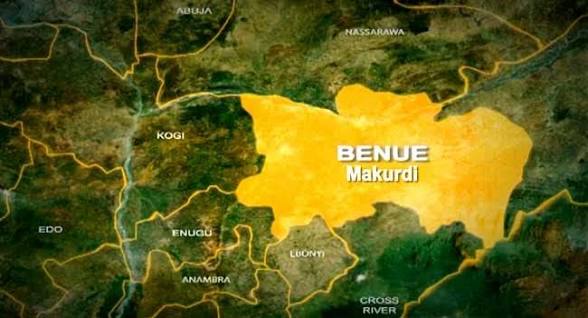
The Police in Benue State have confirmed the death of three persons while four others have been hospitalized after consuming herbal mixture sold in Oju Township, Oju Local Government Area of Benue State.
Our correspondent gathered that the incident, which started last weekend at Igede community during Ihiejwo market day, sent shivers round the communities as the victims began to die one after the other.
A local from the area who identified himself simply as Ogbu, told newsmen in Makurdi that contrary to the figures given by the police, no fewer than 14 other persons had been hospitalised with four of them in critical condition.
The local said: “Last weekend, three men identified as Alhaji Sule Mai Magani, Bello Mohamed and Musa Kala, allegedly sold herbal mixtures suspected to contain poisonous substances to residents of the Igede community during Ihiejwo market day across Oju Township.
“The situation began to raise alarm on Monday, November 2, 2026, when several residents who had purchased and consumed the herbal preparations started developing signs of ailment.
“While the first victim died on Tuesday morning, the second died in the early hours of Wednesday, November 4, 2026 while the third victim died on Thursday.
“Three suspects were apprehended by the leadership of the Igede Youth Council, in collaboration with the Oju Local Government Area Township Youth leadership, and handed over to the police in Oju,” the source added.
The Chairman of Oju LGA, Mr Jackson Ominyi, has confirmed the incident.
Ominyi, who spoke to newsmen on phone, said the hawkers had been arrested and taken to Police command headquarters in Makurdi for investigation.
The chairman said, “Yes, but up till now, I have not gotten the exact number of the dead ones yet, but the number of people so far is three as at yesterday (Thursday).
“Several others are currently receiving treatment at the General Hospital in Oju.”
Ominyi said that the council was doing everything possible to take care of the victims admitted to the hospital.
When contacted, the Police Public Relations Officer, PPRO, Benue State Police Command, DSP Peter Aondongu also confirmed the incident.
Aondongu said: “Yes, that’s true. Some people took the herbal mixture; they were taken to the hospital. Two of them have lost their loves and four are in the hospital.”