Home Blog Page 32

One killed, scores injured as political violence rocks Delta, Kebbi

0

  • Omo-Agege seeks probe, ADC threatens legal action, Delta govt, APC condemn attacks, deny involvement

Political tension has heightened in Delta and Kebbi states following violent attacks on opposition campaign activities ahead of the 2027 general election, leaving one person dead, several others injured and scores of vehicles damaged, as former Deputy Senate President Ovie Omo-Agege, the Delta State Government and the All Progressives Congress (APC) trade accusations over the incidents.

While Omo-Agege accused elements within the Delta State Government and the APC of sponsoring suspected political thugs who attacked supporters of the Nigeria Democratic Congress (NDC) during a campaign procession for Peter Obi and Rabiu Kwankwaso in Asaba on Saturday, the ruling party denied involvement, condemned the violence and demanded an impartial investigation.

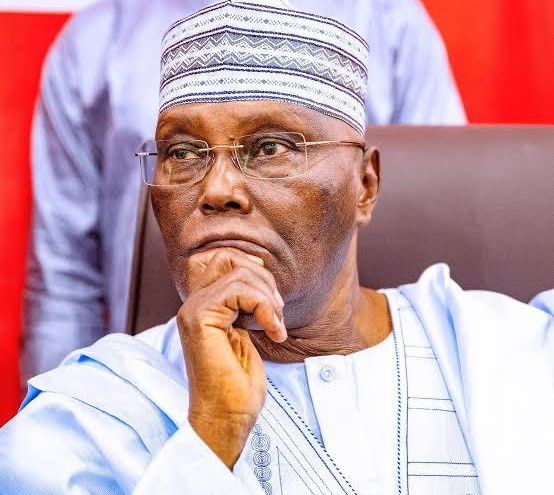
In Kebbi, the African Democratic Congress (ADC) threatened legal action against suspected attackers who allegedly assaulted its members, damaged vehicles and disrupted campaign activities during the November 5 visit of its presidential candidate, Atiku Abubakar.

The Delta State Police Command confirmed that one person died and five others sustained injuries when violence erupted along Nnebisi Road, Asaba, at about 12:15 p.m. on Saturday, although NDC officials claimed that more than 10 supporters were injured and over 30 vehicles, including campaign buses and tricycles, were damaged.

The police said the identities of the deceased and injured persons had yet to be established, while investigations were underway to determine the circumstances surrounding the attack and identify those responsible.

Omo-Agege, who is contesting the Delta Central senatorial seat on the NDC platform, alleged that the violence was orchestrated by political interests opposed to the growing popularity of the party in the state.

In a statement issued by his Special Adviser on Strategy and Communications, Godwin Anaughe, the former Deputy Senate President alleged that the procession, organised by the Obidient/OK Movement, had proceeded peacefully for about 20 minutes before armed thugs descended on participants.

“Thousands of ordinary residents of Delta on Saturday came out to walk peacefully and campaign for the NDC ahead of the 2027 general elections.

“The residents, led by the Obidient/OK Movement, filled the streets, singing and carrying the message of Mr Peter Obi and Sen. Rabiu Kwankwaso o≠≠f the NDC to the people.

“Suddenly, thugs, fully armed with dangerous weapons, descended on the unarmed campaigners. More than 30 vehicles were smashed, while over 10 of NDC members and supporters were left bleeding heavily.”

Omo-Agege specifically accused the Oshimili South Keke Task Force and Revenue Collector, Uche Ndu-Okafor, of allegedly organising the attack on behalf of elements within the Delta State Government and the APC.

The allegation has not been established by the police, and no evidence of the alleged sponsorship was presented in the statements made available.

The former Deputy Senate President identified some of the injured supporters as Favour Emerure, Delta State Coordinator of the Obidient/OK Movement; Akpovegho Noah; Ifeoma Enuagwuna; Clinton Ossai; Obiora Anaekwe; Emmanuel Ngene; and Ikechukwu Michael.

He demanded that the police establish the identity of the deceased, determine the circumstances of the death and prosecute both the perpetrators and anyone found to have sponsored the violence.

“One death is one too many. Whoever sent armed thugs into a peaceful march must answer for it.

“We demand the police to identify the deceased, tell us how he died, and prosecute everyone who organised and sponsored this attack.”

Omo-Agege alleged that the Asaba attack was the latest in a series of violent incidents targeting NDC supporters in Delta State, recalling previous disruptions of political activities in Usiefrun, Uvwie, Warri and Effurun.

According to him, six supporters were injured during an alleged attack at Usiefrun in Ughelli South Local Government Area on August 13, while more than 50 armed men reportedly invaded and destroyed a venue prepared for a campaign meeting in Uvwie on August 21.

He also claimed that over 100 supporters were injured during the September 18 One Million-Man March organised for the NDC governorship candidate, Chris Iyovwaye, in Warri and Effurun.

“On August 13, in Usiefrun, Ughelli South, armed men attacked our people who had simply gathered to receive us.

“On August 21, over 50 armed men stormed Uvwie and destroyed the venue we had prepared for a campaign meeting.

“Also, on September 18, in Warri and Effurun, our One Million-Man March for Deacon Chris Iyovwaye was ambushed at Angle Park, Uvwie junction, Ugborokoko, Jakpa Road, Urhuomarho.”

The former Deputy Senate President further alleged that a suspect identified as Collins Ogumashe, also known as Black Moses, was apprehended by residents with an AK-47 rifle during the September incident and handed over to the police but released the same day without charges.

The police have not confirmed the allegation.

Omo-Agege called on Governor Sheriff Oborevwori to ensure the protection of opposition supporters and urged President Bola Tinubu, the Inspector-General of Police and the Director-General of the Department of State Services (DSS) to intervene.

He insisted that political competition must not become an excuse for violence and intimidation.

“We will not be intimidated. We will not be silenced. We will not hand Delta over to thugs. A New Nigeria is Possible. A Reset Delta Cannot Wait,” the statement added.

The NDC Delta North senatorial candidate, Victor Ochei, also condemned the attack and demanded a thorough investigation, saying the procession was intended to demonstrate the party’s support ahead of the elections.

However, the Delta State APC Campaign Council rejected attempts to link the ruling party to the violence, maintaining that its leadership had consistently committed itself to peaceful, responsible and issue-based campaigns.

In a statement yesterday, the Chairman of the council’s Media Committee and Commissioner for Works (Rural Roads), Charles Aniagwu, condemned the incident and expressed sympathy with the victims.

“Our thoughts and sympathies are with the family of the deceased, those injured and everyone affected by this regrettable development.

“No political ambition or disagreement is worth the life of any citizen, and no political contest should ever degenerate into violence.

“As a council, we demand an impartial investigation into the unfortunate development even as we insist that political disagreements must not degenerate to any form of intimidation, violence or destruction of property.”

Aniagwu said the Oborevwori administration had zero tolerance for political violence and maintained that the organisers of the procession had disregarded security advice to conduct their activities at a designated venue rather than on public roads.

Similarly, Secretary of the Media and Publicity Committee of the Delta APC Campaign Council, Tonye Timi, cautioned against premature attribution of blame, insisting that investigations should establish the facts before individuals or political groups were held responsible.

“This is certainly not the time for speculation and the premature attribution of blame.

“The police should be allowed to conduct a thorough, transparent and impartial investigation into the incident, identify those involved and ensure that anyone found culpable is prosecuted in accordance with the law.

“Accountability must be based on evidence and no one should enjoy protection from the law on account of political affiliation, position or influence,” he said.

Providing an account of the incident, the Delta State Police Command said organisers of the procession had been warned against embarking on a road march following intelligence reports indicating the likelihood of violence.

Police Public Relations Officer, SP Bright Edafe, said the organisers were invited to a security meeting, briefed on the threats and advised to hold their activities at a designated venue where adequate security could be provided.

According to the command, the advice was disregarded and violence subsequently erupted along Nnebisi Road, leaving one person dead and five others injured.

Commissioner of Police Samuel Erale condemned the incident and urged political parties to avoid road processions and liaise with security agencies before organising public gatherings.

The command said investigations were continuing.

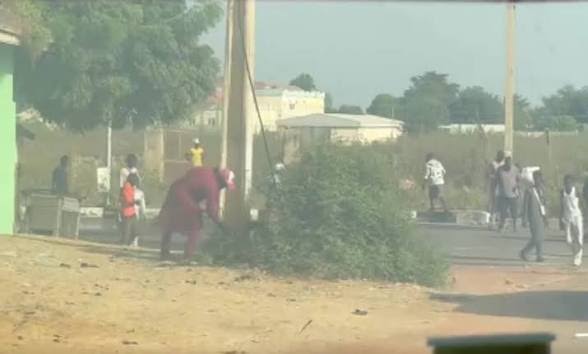
Meanwhile, in Kebbi State, the ADC Campaign Council accused suspected political thugs of attacking its supporters during Atiku’s campaign visit, alleging that the incidents involved intimidation, destruction of property, obstruction of campaign activities and interference with traditional institutions.

Director-General of the council, Sani Tadurga, who addressed a press conference in Birnin Kebbi on Sunday, said the party had gathered video footage and other evidence for submission to the appropriate authorities.

He alleged that about 20 vehicles belonging to party members and supporters were damaged, while some members sustained machete cuts and others were beaten with sticks.

Tadurga also claimed that mobile phones and bags belonging to female supporters were forcibly taken during the incidents.

“We will not respond to violence with violence. We will respond through the law, the courts and the power of the people,” he declared.

The campaign director-general said the party had identified suspected perpetrators but would allow law enforcement agencies to investigate the allegations rather than resort to reprisals.

“We seek justice, not revenge. The party will not resort to vigilante action or public naming of suspects for now.

“The party has video footage and other evidence, and those allegedly involved have been identified. The evidence would be submitted to the appropriate authorities,” he said.

Beyond the alleged physical attacks, Tadurga accused the Kebbi State Government of denying the ADC access to the Race Course and Haliru Abdu Stadium for its rally and interfering with the party’s proposed visits to traditional rulers.

He claimed that authorities directed emirs to proceed on a three-day vacation to prevent them from receiving the ADC presidential candidate.

The council also alleged that stones were thrown at vehicles and supporters at the residence of the party’s governorship candidate, Abubakar Malami, while suspected thugs were stationed around the Argungu residence of the deputy governorship candidate, Musa Zagi.

According to Tadurga, security operatives intervened during the incident at Malami’s residence to prevent further escalation.

He said the party would petition relevant authorities over the alleged denial of campaign venues, conflicting permits and interference with access to traditional institutions, while drawing the attention of national and international democratic organisations to the incidents.

The ADC campaign council also demanded an explanation of the security arrangements made for Atiku’s convoy, party supporters and journalists during the visit, urging the police and other security agencies to remain impartial.

Tadurga said the party welcomed what he described as Amnesty International’s condemnation of the attacks after reviewing video footage.

Despite the alleged disruptions, he described Atiku’s visit as successful, saying residents turned out in large numbers to receive the presidential candidate.

The incidents in Delta and Kebbi have intensified demands for stronger security arrangements for political campaigns ahead of the 2027 elections, with opposition parties insisting that those responsible for attacks on candidates and supporters must be identified and prosecuted, while the Delta APC maintains that accountability must be based on the outcome of impartial investigations.

Sun
Nigerians groan over rising costs as power crisis worsens

0


•12 power plants record zero output amid gas supply disputes
Nigeria’s worsening electricity crisis has exposed the deep rot in the country’s power sector, with key industry stakeholders trading blame over the causes of deteriorating supply.

The bickering comes as millions of households and businesses struggle with prolonged blackouts and forced to spend more on petrol, diesel and other alternatives to keep going.

In the last two weeks, electricity supply has deteriorated across Lagos, Abuja and several other parts of the country, leaving consumers increasingly frustrated by a system in which every major operator appears to have an explanation for the darkness, but none has provided a comprehensive account of how the crisis will be resolved.

The scale of the deterioration became more apparent on Sunday, November 8, (Yesterday), when electricity generation plunged to 2,945 megawatts (MW) as of 11am, further exposing the inability of the national grid to meet the country’s electricity needs.

For households, the worsening outages mean more money spent on petrol and diesel to power generators, preserve food and maintain basic domestic activities. For businesses, particularly small enterprises, manufacturers, restaurants, cold-room operators, barbershops and welding workshops, unreliable electricity has become an additional operating expense, forcing some to increase prices, cut operating hours or struggle to remain profitable.

Yet, while consumers bear the economic consequences, the explanations from stakeholders across the electricity value chain have become increasingly contradictory.

From gas supply constraints and generating plant maintenance to transmission infrastructure and distribution network failures, the arguments have exposed a sector struggling not only with inadequate electricity generation but also with accountability and transparency.

Generation plunges as 12 power plants record zero output

According to statistics monitored on the Nigerian Independent System Operator (NISO) portal, 12 power generation plants recorded zero megawatts (MW) of electricity generation, while about 16 others produced a combined 2,945.62MW as of 11am. The latest figures highlight the worsening constraints facing Nigeria’s power sector, with several generation facilities contributing nothing to the national grid amid persistent electricity supply disruptions across the country.

The affected plants include Geregu NIPP, Alaoji NIPP, GPAL, Ihovbor NIPP, Kainji, MEPP, Okpai, Rivers IPP, Sapele, Shiroro, Taopex and Trans Afam Power.

The affected facilities cut across gas-fired, steam and hydroelectric power plants, indicating that the generation shortfall is not limited to a single category of power infrastructure. While the 12 plants remained idle, about 16 other generating stations supplied a combined 2,945MW to the national grid as of the same period.

The latest generation figures further underscore the challenges confronting the electricity sector, including inadequate gas supply to thermal power plants, operational constraints and infrastructure limitations across the generation and transmission segments. The continued inability of several generating stations to contribute electricity to the national grid raises fresh concerns about the country’s capacity to improve power supply, particularly as demand from households and businesses continues to outstrip available generation.

NISO, which coordinates the operation of the national grid, initially attributed the decline in electricity generation to inadequate gas supply to thermal power stations and reduced output from hydroelectric plants because of lower water inflows into their reservoirs.

According to NISO, the constraints had reduced the electricity available on the national grid, forcing operators to implement load shedding and allocate less power to distribution companies. While the reasons for the zero output were not established individually in the available data, the figures underscore the need to determine how much of the generation shortfall is attributable to gas shortages, scheduled maintenance, technical faults or other operational difficulties.

NNPC, NISO differ over gas supply constraints

NISO’s explanation soon encountered a qualification from Nigerian National Petroleum Company Limited (NNPC), which insisted that its gas transportation infrastructure remained available to support deliveries to power stations nationwide.

In a statement issued by its Chief Corporate Communications Officer, Andy Odeh, NNPC said the gas transportation network operated by its subsidiary, NNPC Gas Infrastructure Company Limited (NGIC), was not experiencing any constraints that could explain the decline in electricity generation.

The national oil company also disclosed that gas production volumes had increased by approximately 10 per cent year-to-date in 2026, as part of efforts to advance the Federal Government’s gas development and monetisation agenda.

But NNPC’s clarification raised another important question about the distinction between gas production, transportation and actual delivery to power generating stations.

The company acknowledged that the availability of its transportation infrastructure did not necessarily establish that sufficient gas was being commercially supplied and delivered to individual power plants.

It consequently called for a comprehensive assessment of gas supply arrangements, actual deliveries, generating plant readiness, maintenance schedules and gas offtake to establish the precise causes of the generation shortfall.

This distinction is significant because the availability of pipelines does not automatically translate into sufficient gas at power stations, just as increased gas production does not necessarily guarantee that generating companies receive the quantities required to operate their plants. The disagreement has therefore exposed a critical information gap in the gas-to-power chain, particularly regarding how much gas is available, how much is contracted, how much is delivered and how much is actually consumed by power plants.

TCN, Ikeja Electric trade accusations over Lagos blackout

The blame game subsequently moved to the transmission and distribution segments, following a disagreement between the Transmission Company of Nigeria (TCN) and Ikeja Electric over the prolonged outages affecting consumers in Lagos.

The controversy began when Ikeja Electric apologised to customers after failing to meet the minimum 20 hours of daily electricity supply guaranteed to Band A customers on November 4 and 5.

In its public notice, the distribution company attributed the affected feeder outages to grid instability, effectively assigning responsibility to TCN.

However, the apology itself generated another controversy after Ikeja Electric specifically addressed Band A customers, leaving consumers on Bands B, C, D and E questioning why they were excluded despite experiencing similar disruptions.

The reaction on social media reflected the growing frustration among electricity consumers over what they perceived as unequal treatment by distribution companies.

One consumer, Jude Okeke, accused the company of neglecting customers outside Band A, questioning whether electricity distribution services were now exclusively meant for those paying for the premium category.

Another consumer, Adeola Ijaola, similarly challenged the company, asking whether customers on the lower bands were not entitled to explanations and apologies for poor supply.

The controversy provided a glimpse into the wider dissatisfaction with the service-based tariff system, particularly the expectation that consumers should receive electricity supply commensurate with the tariffs they pay.

But TCN subsequently challenged Ikeja Electric’s explanation, describing its attribution of the outages to grid instability as inaccurate and misleading.

Citing Section 67 of the Electricity Act 2023, TCN maintained that determining the root causes of disturbances, shortfalls and interruptions on the national grid fell within the statutory responsibilities of NISO, not individual distribution companies.

It argued that NISO had already established that the prevailing decline in electricity generation was caused by gas supply constraints affecting thermal power stations and reduced hydroelectric output.

TCN further maintained that the resulting reduction in available generation had reduced the electricity allocated to distribution companies, leading to fewer hours of supply and increased load shedding.

The transmission company also presented operational figures to challenge Ikeja Electric’s account.

According to TCN, 68 per cent of the interruptions recorded on feeders supplying Ikeja Electric on November 1 and 2 resulted from frequency-control load shedding arising from low generation.

Another 26 per cent, it said, resulted from Ikeja Electric’s non-compliance with load allocation instructions issued by NISO’s National Control Centre or faults and maintenance works on the distribution company’s network.

Only six per cent of the recorded interruptions were attributed to TCN’s planned maintenance, switching operations or line limitations.
TCN also disputed Ikeja Electric’s explanation regarding the specific feeders identified in its public notice.

Of the 46 interruptions recorded on the 33kV feeders mentioned by Ikeja Electric, TCN said 29 resulted from frequency-control load shedding arising from low generation.

14 were attributed to Ikeja Electric, comprising nine cases of non-compliance with load allocation and five involving faults or trips on its network.

The remaining three resulted from scheduled TCN maintenance on the Ogba-Alimosho line on November 1.

TCN also cited the Rack Centre feeder, which it said was interrupted by a cable fault on Ikeja Electric’s network and subsequently repaired by the distribution company’s crew.

The transmission company consequently accused Ikeja Electric of misleading consumers by attributing supply shortfalls caused by generation constraints to the transmission network.

It urged distribution companies to communicate with consumers using verified information from NISO rather than independently assigning responsibility for outages.

The disagreement has exposed another layer of the accountability problem confronting the electricity industry.

While TCN insists that it can only transmit the electricity generated and made available to it, distribution companies are responsible for delivering allocated energy to consumers through their respective networks.

NISO, meanwhile, coordinates the operation of the national grid and determines the allocation of available electricity.

This means that inadequate generation will inevitably constrain supply, even where transmission infrastructure is available. Similarly, increased generation cannot guarantee uninterrupted electricity if transmission limitations, distribution network faults or non-compliance with allocated load persist.

Minister blames plant maintenance, gas shortages, sabotage

The federal government has also acknowledged the severity of the situation, with the Minister of Power, Joseph Tegbe, apologising to consumers and promising improvements within 48 to 72 hours.

The minister identified planned maintenance at Egbin Power Station and gas supply constraints affecting some thermal power stations as major factors responsible for the reduced electricity available on the national grid.

He also disclosed that sabotage of key transmission lines had restricted the use of alternative routes for supplying some locations, particularly Lagos.

According to him, grid operators had resorted to load shedding in some areas to manage the generation shortfall.

Tegbe said his team was working with relevant operators to return affected generating units to service in phases, with the first units expected to come back online within 48 to 72 hours.

He also promised interventions to improve gas supply and accelerate repairs to damaged infrastructure.

The minister’s explanation introduced another dimension to the crisis, particularly the reported sabotage of transmission lines, which could limit the ability of operators to redirect electricity through alternative routes when disruptions occur.

However, the various explanations have yet to provide Nigerians with a comprehensive breakdown of the contribution of each constraint to the current crisis.

Consumers bear the cost as accountability remains elusive

The bigger problem, therefore, is not simply the shortage of electricity but the absence of a clear, coordinated and verifiable account of why the system continues to fail consumers.

NNPC says its gas transportation network is available and gas production has increased. NISO says gas availability and reduced hydroelectric output have constrained generation. TCN disputes Ikeja Electric’s claim of grid instability and attributes most of the recorded feeder interruptions to low generation and distribution network issues. The power minister, meanwhile, has identified plant maintenance, gas constraints and sabotage of transmission lines.

These explanations may not necessarily contradict one another, as they address different parts of the electricity supply chain. However, they underscore the need for a single, independently verifiable assessment of the problems affecting the sector.

For instance, Nigerians need to know the actual quantity of gas required by thermal power stations, the volume delivered to them and the extent to which generating units are available to convert the gas into electricity.

They also need information on the number of generating units undergoing maintenance, those experiencing technical faults and those unable to operate because of inadequate gas supply.

Beyond generation, there must be clear information on the quantity of electricity available on the grid, how much is allocated to each distribution company, the extent of compliance with those allocations and the proportion of supply interruptions attributable to transmission and distribution infrastructure.

Without such transparency, consumers will continue to receive competing explanations from operators without knowing where the actual failures lie or who should be held accountable.

The economic implications are already being felt across the country.

For households, the additional cost of fuelling generators is becoming an unavoidable burden, while businesses are increasingly forced to factor the cost of alternative electricity into the prices of goods and services.

Manufacturers, in particular, face the prospect of higher production costs and reduced competitiveness as unreliable grid electricity forces greater dependence on self-generation.

The situation also raises questions about the effectiveness of the service-based tariff system, under which consumers pay different rates depending on the minimum hours of electricity supply guaranteed to their respective bands.

Ikeja Electric’s Band A-only apology has further exposed the sensitivity surrounding the arrangement, with customers outside the premium category questioning whether their complaints and experiences matter to distribution companies.

While the 20-hour minimum supply requirement applies to Band A customers, consumers on other bands are also entitled to reliable service in line with the applicable supply commitments.

The immediate priority is to restore electricity generation and improve supply to affected communities. But the 48-to-72-hour assurance by the minister should not become another temporary response to a recurring national problem.

Nigeria requires a more transparent and accountable electricity supply chain in which every operator provides verifiable information about its performance, identifies constraints within its area of responsibility and demonstrates measurable progress in addressing them.

Ultimately, the responsibility for ensuring that Nigerians receive reliable electricity cannot be discharged through public statements and exchanges of blame.

Until stakeholders move beyond competing explanations to a coordinated response backed by operational data and clear accountability, households and businesses will continue to pay for a crisis they have little power to resolve.

AI crackdown may slow growth, complicate inflation fight for central banks, IMF warns

0

The International Monetary Fund (IMF) has warned any crackdown on artificial intelligence (AI) as being pushed by United States Democrats could slow investment in the fast-growing technology sector, weaken economic growth and complicate efforts by central banks to control inflation.

IMF Managing Director, Kristalina Georgieva, said any slowdown in economic growth driven by AI investment would be an important consideration for central banks as they decide how to tackle persistent inflation.

Her warning comes amid plans by Democrats, who secured control of both chambers of the US Congress in the November midterm elections, to introduce tougher legislation targeting AI companies and the development of data centres when they assume control in January.

The proposed measures are expected to focus on protecting consumers from rising electricity costs linked to data centres, requiring independent safety tests for advanced AI systems and making technology companies accountable for harm caused by their products.

The plans have raised concerns among investors that tighter regulations could slow the rapid expansion of AI infrastructure, which has become a major driver of investment and economic growth in the United States and other economies.

Speaking at the IMF headquarters in Washington at the weekend, Georgieva said concerns about heavy dependence on AI investment and high technology company valuations were already creating uncertainty in financial markets.

She noted that the AI investment boom had been supporting economic growth in some countries and helping to cushion the impact of the oil supply shock caused by the war in the Middle East.

However, she warned that the boom was also adding to inflationary pressures and creating risks to financial stability.

“Should there be a slowdown in the AI-driven growth impulse, it would need to be factored in as central banks assess the necessary steps in the fight against stubborn inflation,” she said.

Georgieva’s comments followed a sharp sell-off in technology stocks on Thursday, as investors reacted to fears that the Democrats’ election victory could lead to tighter regulation and slower construction of data centres.

The market concerns were compounded by doubts over whether huge investments in AI infrastructure would generate enough returns for technology companies.

The IMF had warned last month that a sharp decline in AI investment could trigger falling asset prices and reduce global economic output by 1.1 per cent by 2028. The United States could suffer a 1.8 per cent contraction in output under that scenario.

Although Georgieva did not repeat those projections, she acknowledged that continued volatility in technology markets would make the task of central banks more difficult.

The Democrats’ planned legislative push marks a departure from the approach of the Republican-led Congress, which largely supported AI development and resisted efforts to introduce restrictions on the technology.

The incoming lawmakers have also promised closer scrutiny of major technology companies, including OpenAI, Anthropic, Meta and Google’s parent company, Alphabet.

However, passing the proposed legislation could prove difficult while President Donald Trump remains in office, as he has repeatedly opposed calls for mandatory federal rules governing AI development.

ADC fights to save Atiku’s candidacy, appeals court judgment

0
  • Seeks stay of execution, insists candidates’ll be on ballot

The African Democratic Congress (ADC) has intensified its legal battle to save its leadership and presidential ticket ahead of the 2027 general election, as its National Secretary, Rauf Aregbesola, appealed the Federal High Court judgment that nullified the David Mark-led National Working Committee (NWC) and the party’s presidential primary that produced former Vice-President Atiku Abubakar.

Aregbesola, who is also seeking a stay of execution of the November 5 judgment, wants the Court of Appeal to overturn the decision of Justice Peter Lifu of the Federal High Court, Abuja, on the grounds that the trial court lacked jurisdiction to determine the leadership dispute arising from the party’s 99th National Executive Committee (NEC) meeting.

The legal offensive came as the Lagos State chairman of the party, George Ashiru, dismissed fears that the judgment could derail the opposition coalition’s participation in the elections, insisting that Atiku and other ADC candidates would remain on the ballot despite the controversy surrounding the party’s leadership and nomination processes.

In a notice of appeal filed on Friday through his counsel, Mohammed Sheriff, Aregbesola named Nafiu Gombe, the ADC, David Mark, the Independent National Electoral Commission (INEC) and former National Chairman, Raph Nwosu, as respondents.

He asked the appellate court to set aside the judgment invalidating his emergence as national secretary and the resolutions of the party’s 99th NEC meeting, arguing that the lower court wrongly assumed jurisdiction over what he maintained were internal party leadership matters.

Aregbesola also challenged the declaration that Gombe’s four-year tenure remained valid and that he was entitled to oversee the affairs of the ADC following Nwosu’s resignation.

His counsel, who advanced five grounds of appeal, argued that the trial judge erred in relying on Section 82(3) of the Electoral Act 2022 and Section 223(1)(a) of the 1999 Constitution, as amended, to invalidate the emergence of the Mark-led leadership without first determining whether the appointments were made under the interim vacancy-filling provisions of the ADC constitution.

According to Sheriff, Article 23(4) of the party’s constitution empowers the appropriate executive organ to appoint eligible replacements pending elections at the next convention or congress, a distinction he argued was not adequately considered by the trial court.

“The lower court applied the requirements governing an election to fill a vacancy without first resolving whether the appellant’s assumption of office fell within the interim appointment power asserted under Article 23(4),” he submitted.

In the alternative, Aregbesola asked the Court of Appeal to remit the affected claims to the Federal High Court for rehearing before another judge if it found that the lower court had jurisdiction but that a retrial was necessary.

He also filed a motion at the Federal High Court on November 7, seeking a stay of execution of the judgment pending the determination of his appeal.

The motion, filed in suit number FHC/ABJ/CS/1819/2025, specifically seeks to suspend the enforcement of the affected orders and any consequential steps arising from the judgment.

Sheriff maintained that the appeal raised substantial questions concerning the jurisdiction of the trial court, the interpretation of the ADC constitution and the application of the Electoral Act, which deserved consideration by the appellate court.

The leadership dispute originated from a suit instituted by Gombe, who claimed that following Nwosu’s resignation as national chairman, he was constitutionally entitled to assume leadership of the party.

Gombe had asked the court to invalidate the actions of the Mark-led leadership and restrain its members from presenting themselves as legitimate national officers of the ADC.

Mark, Aregbesola and other defendants opposed the suit, arguing that Gombe was no longer deputy national chairman when Nwosu resigned and therefore lacked the basis for his claim.

Ashiru, speaking in Lagos yesterday, described the ADC coalition as indestructible, maintaining that the legal setback would neither weaken its political structure nor prevent its candidates from contesting the forthcoming elections.

“Ever since the coalition started, we have been the target of so many different groups, both within the party and outside of the party.

“We’ve had challenges from those who call themselves former legislators of Nigeria, unknown to the party, who wanted to deregister the party. We overcame that.
“Justice Liman in July also gave a favourable judgment that David Mark was duly and properly elected as the interim chairman of the party in July 2025.”

Ashiru insisted that the party’s primaries complied with the Electoral Act and involved the direct participation of members, expressing confidence that the legal challenge would not ultimately affect its candidates.

“We are comfortable that we’re going to be in the ballot. Our primaries were conducted in accordance with the Electoral Act.

“And because it was decided by the members of the party, directly by the members of the party, there is nobody that can then interpret the law to mean that we can’t have our candidates on the ballot.

“So, while legal issues on leadership are continuing, our candidates are definitely going to continue to be on the ballot.”

He said the party had appealed the judgment and requested a stay of execution, expressing confidence that INEC would exercise caution in taking decisions affecting the candidates while the legal proceedings continued.

“All our candidates will be on the ballot. Specific legal cases are different from the idea that all the candidates of a party will not be on the ballot. We will be on the ballot.”

The ADC chairman also dismissed suggestions that the crisis had disrupted the party’s presidential campaign, saying consultations and grassroots mobilisation were continuing across Lagos and other states.

“Our campaign has continued, as you can see, and the presidential campaign has continued, and our consultations and grassroots mobilisation is also continuing in Lagos and other states.

“So, we are continuing in the work, and we shall, by the grace of God, be the voice of the people in 2027 through the ballot boxes,” he said.

On the party’s electoral prospects in Lagos, Ashiru expressed confidence that Atiku would secure substantial support, arguing that the state’s voting history demonstrated that its electorate was not permanently tied to any particular political party or candidate.

“In 2027, of course Lagos will vote Atiku. Nothing is different in Lagos. If you look at the history of presidential elections, Lagos voted Buhari. Buhari is not a Lagosian.

“Lagos voted Goodluck. Goodluck is not a Lagosian. Lagos voted Peter Obi. Lagos is a cosmopolitan city. So, it’s the work you do.”

He warned that prolonged political litigation and disputes over party nominations could undermine public confidence in the electoral process and discourage participation.

“This is not new in politics. It’s not unusual. It’s just unfortunate that instead of our various opposition members and the ruling party to focus on driving the interests of the people to the votes, we are creating apathy.

“Because with this sort of attitude going on, trying to legalise elections, it is going to make more people sit at home because they will lose hope, they will be depressed, and they will give up. And that’s not the democracy we fought for.”

Ashiru added that the ADC was developing a people-centred manifesto that would review policies it considered punitive, including multiple taxation and excessive government borrowing, while prioritising security, universal healthcare, education and employment generation.

He said the party would place greater emphasis on the digital economy and productive investment, arguing that infrastructure development must translate into sustainable jobs and improved living conditions.

“It is a matter of priorities. Our priorities will be different,” he said.

Lagos People Will Vote for Me, Not Agbero Network, Says NDC Governorship Candidate, Funso Doherty

0

The governorship candidate of the Nigeria Democratic Congress (NDC) in Lagos State, Funso Doherty, has declared that his political ambition is dependent on the support of Lagos residents rather than the influence of informal transport operators popularly known as agberos.

Doherty made the declaration on Friday during the Lagos governorship debate organised by the Nigeria Debate Consortium, comprising Channels Television, TVC News, The PUNCH, TheCable and Vanguard.

He criticised the state’s public transportation system, describing the continued operation of thousands of ageing commercial buses as evidence of the failure of successive administrations to modernise the sector.

The NDC candidate questioned why Lagos, despite its economic importance and population, had yet to achieve a comprehensive transformation of its public transportation system.

“Our public transportation system is not modernised. Thousands of rickety buses are moving around. We must ask ourselves: are these what our people deserve? Why has it taken so long to modernise public transportation?” he asked.

Doherty attributed the slow pace of reform to what he described as vested interests benefiting from the existing transport arrangement.

He specifically pointed to the influence of the agbero system, alleging that an entrenched network of interests had made it difficult for successive governments to implement meaningful reforms.

“In my opinion, the lack of modern transportation is not by accident. There are vested interests in operating the bus system the way it is. Many of us understand the agbero system; there is an ecosystem around it, and there is no political will to deal with that problem,” he said.

The governorship hopeful pledged to overhaul public transportation in Lagos if elected, promising to prioritise the interests of residents over those of powerful informal transport networks.

He maintained that his administration would have the political independence to implement the necessary reforms because its mandate would come from the electorate.

“We would modernise public transportation because we would be elected by the people and not by the agbero network,” Doherty added.

His comments placed transportation reform and the influence of informal operators among the key issues raised during the governorship debate.

Tompolo’s PBAT Door-to-Door Movement Targets Wider Grassroots Mobilisation

0


• Covers 20 states, distributes over 500 vehicles

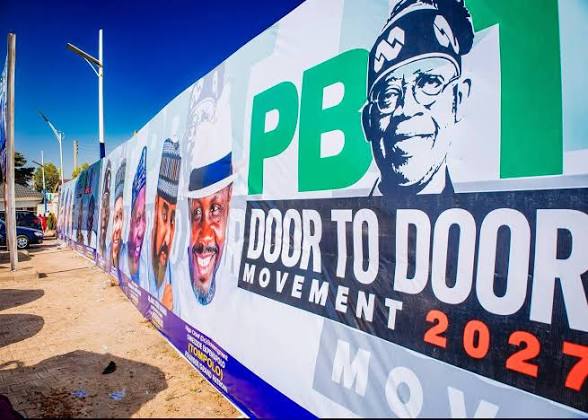
The PBAT Door-to-Door Movement, convened by High Chief Government Oweizide Ekpemupolo, popularly known as Tompolo, is set to embark on an intensive mobilisation tour of eight more states across the country between November 9 and 14, as part of efforts to strengthen grassroots support for President Bola Ahmed Tinubu ahead of the 2027 presidential election.

The latest round of engagements will take the movement to Enugu, Cross River, Bayelsa, Zamfara, Jigawa, Anambra, Kebbi and Abia states, extending its mobilisation drive across the South-East, South-South and North-West geopolitical zones.

The tour, according to the programme released by the Movement, will commence on Monday, November 9, with engagements in Enugu and Cross River states.

The Enugu exercise is scheduled for 10am at Okpara Square while the Cross River engagement will hold at 2pm at the Calabar Municipal Field.

The movement will proceed to Bayelsa State on Wednesday, November 11, for an engagement scheduled for 10am at the Siasia Stadium, Yenagoa.

On Thursday, November 12, the mobilisation train will move to Zamfara State for an 11am programme followed by an engagement in Jigawa State at 2pm.

The tour will continue on Friday, November 13, with engagements in Anambra State at 10am and Kebbi State at 2pm, before rounding off in Abia State on Saturday, November 14, at 10am. Venues for the engagements in Zamfara, Jigawa, Anambra, Kebbi and Abia are yet to be announced.

The latest tour represents another phase of the movement’s expanding nationwide mobilisation campaign which is designed to establish a strong grassroots network capable of reaching voters at the ward, local government and community levels.

The Movement disclosed that it has so far taken its mobilisation activities to approximately 20 states of the federation with over 500 vehicles distributed to facilitate grassroots operations and strengthen the activities of its coordinators across the country.

The vehicles are intended to improve mobility, coordination and the capacity of the movement’s structures to reach communities, markets, neighbourhoods and other grassroots locations as they take the Tinubu administration’s message directly to the people.

The development builds on previous mobilisation exercises that have attracted national attention.

Its approach is anchored on building a coordinated grassroots network through state, local government and ward coordinators who are expected to take the President’s message directly to Nigerians rather than depend exclusively on conventional political rallies.

The PBAT Door-to-Door Movement is also focused on communicating the policies and programmes of the Tinubu administration, particularly its economic reforms, infrastructure development, education initiatives, local government autonomy and other policy interventions.

The National Coordinator, Sunday Asuku, has in previous engagements emphasised the importance of effective grassroots coordination, feedback from communities and the need for state and local government coordinators to take the movement’s activities to every ward and polling unit.

Makinde, Dare, NUJ president urge journalists to defend truth, press freedom

0

Oyo State governor, Seyi Makinde, and Special Adviser to President Bola Tinubu on Media and Public Communications, Chief Sunday Dare, as well as the National President, Nigeria Union of Journalists (NUJ), Alhassan Yahya, have called on journalists to uphold truth, professional ethics, press freedom, and strengthen democratic accountability as the country approaches the 2027 general elections.

They warned against misinformation, political partisanship and digital manipulation ahead of the 2027 general elections.
The trio spoke at the 60th anniversary celebration of the Nigeria Union of Journalists (NUJ), Oyo State Council, in Ibadan on Saturday.

The Olubadan of Ibadanland, Oba Rashidi Ladoja was the royal father of the day, while the occasion was chaired by former President-General, Central Council of Ibadan Indigenes (CCII), Chief Bayo Oyero. They were received by the Chairman of NUJ, Oyo State Council, Akeem Abas.

Makinde, who was represented by his Special Adviser on Media, Dr. Sulaimon Olanrewaju, charged journalists to remain impartial and defend democratic accountability, Dare warned of the threats posed by artificial intelligence and deepfakes, as Abdullahi demanded better welfare and stronger protection for media practitioners.

He congratulated the union on attaining six decades of service, and said the credibility of the media must outlive every political contest. He enjoined journalists to give all stakeholders a fair hearing, verify information before publication, inform rather than inflame passions, and educate rather than manipulate the electorate.

The governor said the media’s greatest contribution to democracy in 2027 would not be support for any individual, candidate or political party but unwavering commitment to the truth.

“Elections come and go. Politicians come and go. Governments come and go. But institutions endure. The credibility of the media must outlive every political contest. Your allegiance must always be to the truth, the public interest and the ethics of your profession,” he said.

The governor described journalism as one of the noblest callings in society, noting that journalists were custodians of truth, chroniclers of history, defenders of public interest and guardians of democratic accountability.

He said he welcomed both commendations and criticisms of his administration, stressing that constructive criticism strengthened governance, scrutiny strengthened institutions, while accountability strengthened democracy.

Makinde also cited the 2025 Democracy Performance Index released by the Kimpact Development Initiative and published by StatiSense, which ranked Oyo State as the most democratic state in Nigeria, placing it first in electoral participation, institutional effectiveness, civil liberties and political inclusion.

He attributed the recognition, partly, to the contributions of a vibrant and responsible media, assuring journalists that his administration would sustain a relationship with the press based on openness, mutual respect and accountability.

In his anniversary lecture titled, “Journalism as Creation: Reforgings of Ethics, AI, and the Future of the Press in Nigeria,” Dare, former Minister of Sports Development, who was represented by former Director General, National Institute of Sports, Prof Olawale Moronkola, warned that artificial intelligence, deepfake technology, synthetic voice cloning and digital manipulation posed serious threats to journalism and democratic accountability.

He, however, urged journalists not to reject technological innovation, noting that AI offered opportunities for deeper investigative data analysis, collaborative reporting, socio-economic research and historical archiving.

According to him, while artificial intelligence possesses computational capabilities, journalism requires human conscience, moral judgment, empathy and the courage to hold powerful individuals accountable.

Dare identified truthfulness and verification, independence and objectivity, balance and context, public interest and accountability, as well as human dignity and integrity as fundamental principles that must guide the profession.

He also cautioned against brown-envelope journalism, sensationalism, partisan reporting and the publication of unverified information for social media attention, reminding journalists of their constitutional responsibility under Section 22 of the 1999 Constitution, as amended, to hold the government accountable.

Dare said: “Future generations will not judge this era by the technologies we used or the platforms we operated. They will judge us by whether we protected the truth, strengthened democracy and acted in the public interest when it mattered most.”

Meanwhile, the NUJ President, Yahya, whose address was presented by the NUJ Vice President, Zone B, Princess Ronke Afebioye-Samo, described the Diamond Jubilee as 60 years of struggle, sacrifice and service to the nation.

He paid tribute to journalism pioneers, including Ernest Sesei Ikoli, Dr Nnamdi Azikiwe, Chief Obafemi Awolowo, Alhaji Lateef Jakande and Dele Giwa, for their contributions and sacrifices in the struggle against colonialism, military rule and oppression.

The NUJ president lamented the challenges confronting the profession, including fake news, misinformation, economic hardship, insecurity, poor remuneration, harassment of journalists and the growing influence of artificial intelligence.

He urged journalists to embrace continuous training, fact-checking, investigative journalism and digital innovation, while calling on governments to guarantee their safety, improve their welfare and end impunity for crimes against media practitioners.

Yahya also disclosed that the national leadership remained committed to pursuing the Media Enhancement Bill, establishing NUJ radio and television stations, and improving members’ welfare through insurance and housing initiatives.

He insisted that press freedom was a constitutional right and not a favour from the government, adding that a free press remained essential to protecting democracy.

Housing deficit: Nigeria needs 500,000 new homes yearly – Ex-MBAN president

0

Nigeria must increase its annual housing delivery to 500,000 units if the country is to make meaningful progress in tackling its housing deficit, estimated at more than 17 million units.

To achieve this, the immediate past President of the Mortgage Banking Association of Nigeria (MBAN), Ebilate Mac-Yoroki, called for a fundamental restructuring of the country’s housing finance system, including the mobilisation of pension funds, insurance assets, and capital market investments to finance large-scale housing development.
Mac-Yoroki, who is also Chairman of CityCode Mortgage Bank Limited, said Nigeria could no longer depend on traditional government budgetary allocations and conventional bank lending to bridge its widening housing gap.

In a position paper dated November 4, 2026, and presented to stakeholders in the housing, capital markets, and real estate sectors, he proposed a market-driven framework that would transform housing from a fragmented and high-risk investment into a standardised, transparent, and investable asset class.

He identified two major structural problems undermining housing delivery in Nigeria as capital mismatch and information asymmetry, arguing that addressing both would unlock the long-term financing required to deliver 500,000 homes annually.

Mac-Yoroki proposed mobilising institutional funds from Pension Fund Administrators (PFAs), insurance companies, and foreign portfolio investors to provide the patient capital needed to finance housing projects and long-term mortgages.

He recommended the use of Mortgage-Backed Securities (MBS), covered bonds, and residential Real Estate Investment Trusts (REITs) to channel institutional investments into housing development.

Under the proposed arrangement, primary mortgage banks would pool and securitise their mortgage portfolios, enabling them to raise funds from institutional investors through the capital market, including the Nigerian Exchange (NGX). He said the Nigeria Mortgage Refinance Company (NMRC) could serve as a liquidity refinancing platform, allowing mortgage banks to recycle funds and continuously originate new housing loans.

The former MBAN president also advocated the establishment of tax-efficient residential REITs and forward-purchase funds to guarantee developers an assured market for their properties before construction begins.

“This provides developers with guaranteed exit channels before construction begins, eliminating sales risk,” he stated.

He further recommended blended financing arrangements involving green bonds, social housing bonds, and government-backed infrastructure bonds, supported by federal credit guarantees, to reduce the cost of financing.

Beyond funding, Mac-Yoroki identified the absence of a reliable, centralised property ownership and transaction database as another major obstacle to attracting investment into Nigeria’s real estate sector.

He proposed the establishment of a Central Housing Depository (CHD), modelled after the Central Securities Clearing System (CSCS), to create a unified digital platform for property ownership records, mortgages, and existing claims on properties.

He urged the Federal Ministry of Housing and Urban Development to establish an Inter-Agency Housing Data Directorate to work with the MBAN secretariat and ensure that government housing policies, land reforms, and budgetary allocations are informed by reliable market data.

Ekiti elders call for decentralisation of security, stronger community policing

0

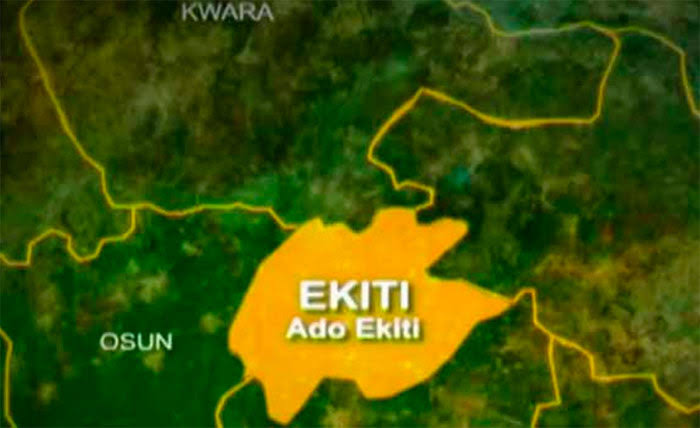
Ekiti Council of Elders has lamented the growing culture of corruption, wasteful governance, and declining public accountability in Nigeria.

The council warned that the country’s political leadership is increasingly normalising dishonesty at the expense of national development.

The Secretary of the Council’s Board of Trustees, Dr. Bayo Orire, lamented the distortion of public service values, saying Nigeria had reached a situation where integrity was often mistaken for foolishness, while politicians who resisted corruption were perceived as lacking political sophistication.

Dr Orire raised these issues in Ado-Ekiti during a press conference heralding the second edition of the Joel Babatola Annual Lecture Series themed: “The paradox of nationhood: The Struggle for reinventing Nigeria’s security architecture” organised by the council.

He regretted that public office had increasingly become synonymous with wealth accumulation rather than service delivery, arguing that the excessive cost of governance, extravagant lifestyles of political officeholders and poor execution of public projects had continued to undermine development.

On the ongoing decentralisation of security structures in the country, Orire commended President Bola Tinubu’s efforts to spread military and other security institutions across different parts of Nigeria, describing the move as strategically sound and beneficial to national security.

He said the concentration of critical security infrastructure in one location could expose the country to devastating consequences in the event of an attack, stressing the need for geographical distribution of security institutions.

According to him, decentralisation would also promote local participation, economic empowerment and broader opportunities for communities to contribute to national security.

Orire also endorsed the establishment of state police, describing it as a timely response to Nigeria’s evolving security challenges after years of growing demand for a decentralised policing structure.

He said the increasing acceptance of community vigilante groups and local security outfits had also provided an opportunity for communities to participate more actively in protecting lives and property.

Speaking on the significance of the lecture, Chairman of the Board of Trustees of the Ekiti Council of Elders, Olufemi Adewumi, said Nigeria’s security challenges and fragile national unity, fuelled by mutual distrust, religious differences and ethnic divisions, made the need for responsible leadership more urgent.

Adewumi said the council, comprising individuals of high integrity and unblemished patriotism, was committed to rescuing the country from its present challenges and defending national unity, in honour of the sacrifices of past heroes, including Chief Joel Eyinafe Babatola, a revered national figure of Ekiti extraction.

Babatola was the Minister of Home Affairs and Information in the Western Region of Nigeria under Chief Samuel Ladoke Akintola during the First Republic in 1960.

Enugu pensioners hail Mbah over payment of 26-year gratuity arrears

0

Pensioners in Enugu State have commended Governor Peter Mbah for commencing the payment of gratuity arrears owed to retired workers in the state since 2000.

The State Chairman of the Nigeria Union of Pensioners (NUP), Ikechukwu Ekere, who confirmed the development in Enugu, said the governor had broken the jinx of years of neglect of pensioners through the initiative.

Ekere described the commencement of the payments as a major relief to retired workers, stressing that any government that prioritised the welfare of its people deserved support to sustain its policies.

Also speaking, the Caretaker Chairman of the Nigeria Union of Pensioners, Local Government Staff Pensions Board Branch, Kenneth Ugwueze, said the development had brought succour to many homes and smiles to the faces of senior citizens.

The two union leaders called on pensioners and their dependents across the state to support Mbah’s re-election, saying pension administration had become less cumbersome under his administration, particularly in the payment of monthly pensions.

“We are happy with the new dimensions brought in by His Excellency, the Governor of Enugu State, Dr Peter Ndubisi Mbah, in pension administration in the local government system, and we are so glad and grateful for that.

“Before now, local government workers and primary school teachers who retired had to wait for two years before receiving their pensions. But since the conclusion of the verification exercise in July 2024, no pensioner in the local government system has been denied pension. We have been receiving our pensions as and when due.

“Now that our people have started receiving alerts for their gratuity, it is a thing of joy,” they said.

They also commended local government chairmen for commencing the contribution of 10 per cent of their councils’ monthly allocations towards the payment of gratuities to local government pensioners.

The union leaders said pensioners had never had it so good, given the improvements in pension administration and the commencement of gratuity payments.

Some beneficiaries of the ongoing payments also expressed gratitude to the governor, describing the development as a rekindling of hope after years of waiting.