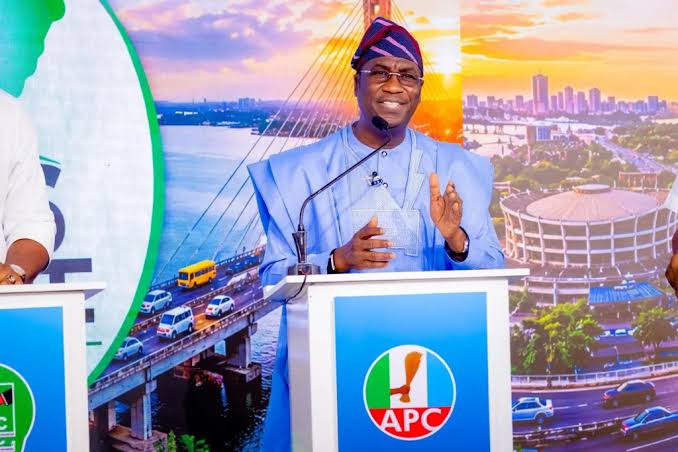
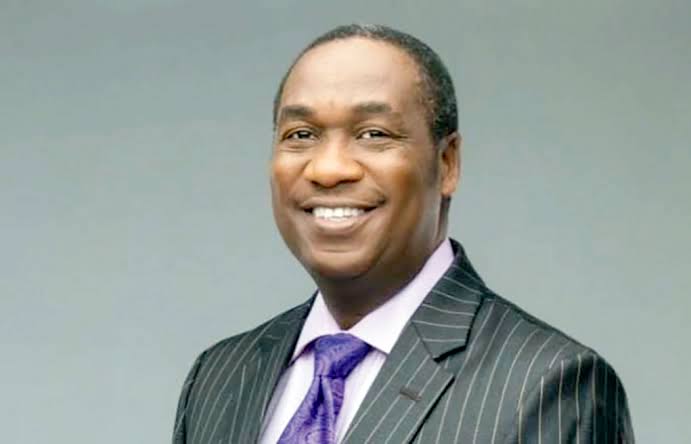
Lagos State Deputy Governor and All Progressives Congress (APC) governorship candidate, Obafemi Hamzat, has explained that his participation in Sunday’s Lagos Governorship Debate was an opportunity to present his development plans and outline how he intends to improve the lives of residents if elected governor.
Hamzat said the debate allowed him to explain his vision for the state and the practical measures he would pursue to address challenges in healthcare, housing, transportation and other critical sectors.
In a statement posted on his X handle late Sunday, the APC candidate said effective leadership required understanding residents’ needs and translating them into policies that deliver tangible results. “I took part in the Lagos State Governorship Debate and used the opportunity to share my vision for Lagos and speak about the practical steps we intend to take to improve the lives of our people,” he said.
He added, “Leadership is about understanding what matters to people and making sure our plans respond to those needs.”
On healthcare, Hamzat pledged to expand the state’s health insurance scheme, Ilera Eko, from its current 1.4 million enrollees to cover one in every three Lagos residents.
He also promised to complete the Massey Children’s Hospital, Ojo and Somolu General Hospitals, while increasing capacity across the state’s nine general hospitals. According to him, more primary healthcare centres would operate round the clock, with improved training and welfare for health workers.
On housing, Hamzat proposed a more accessible mortgage system that would allow families to spread payments over several years and make homeownership easier. He said the plan would complement the completion of ongoing housing estates across the state.
For transportation, he promised to sustain Lagos’ rail expansion projects, including extending the Blue Line to Okokomaiko and connecting the Red Line to the Wole Soyinka Centre for Culture and Creative Arts at the National Theatre.
The APC candidate also outlined seven pillars of his proposed development agenda, tagged The Lagos PROMISE. The pillars are People First, Renewal, Opportunity, Machinery of Government, Inclusion, Security and Resilience, and Everyday Dignity.
He said the framework would guide his approach to governance, infrastructure development and expanding opportunities for residents, adding that he remained committed to listening to Lagosians and building on existing projects.
Hamzat participated in the debate organised by the Nigeria Debate Consortium, a coalition comprising The PUNCH, Channels Television, TVC News, TheCable and Vanguard.
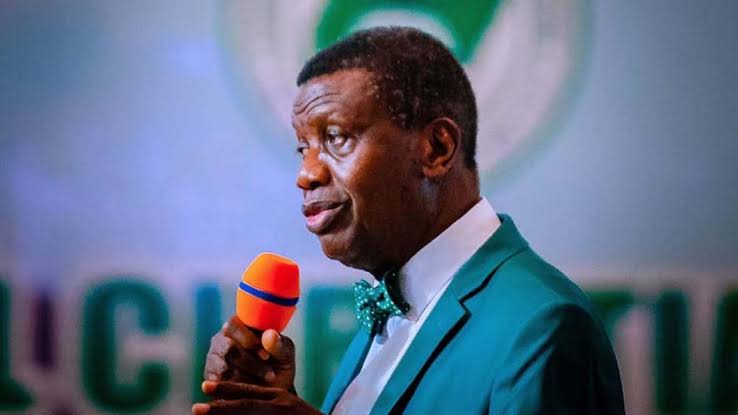
The Redeemed Christian Church of God (RCCG) has reaffirmed its zero tolerance for financial crimes, urging its pastors and workers to uphold transparency, accountability and integrity in the handling of church funds.
The church made the position known on Saturday, November 7, 2026, when the Executive Chairman of the Economic and Financial Crimes Commission (EFCC), Ola Olukoyede, addressed its workers on financial propriety ahead of the annual Holy Ghost Congress.
Olukoyede, an ordained pastor, spoke at the invitation of the General Overseer of RCCG, Pastor Enoch Adejare Adeboye.
During his address, the EFCC chairman recounted an incident in which a donation made to a church project was subsequently discovered to be proceeds of financial crime.
According to the church, upon being alerted to the development, Adeboye immediately directed that the full amount be refunded within 24 hours. Olukoyede commended the church’s swift and unconditional response, describing it as a model for other institutions.
RCCG stressed that it neither knowingly received nor retained illicit funds, noting that the money was returned immediately and the church became aware of its source.
Addressing the workers, Adeboye reiterated that the church would not shield anyone found to be involved in financial misconduct.
He charged pastors and workers to maintain clean and verifiable financial records, resist materialism and the pursuit of positions, and ascertain the source of donations before accepting them.
The church stated that its commitment to financial integrity was not a recent development or an action taken for the occasion, but a culture established by the General Overseer over several decades.
It also expressed its willingness to welcome the partnership and scrutiny of institutions such as the EFCC, stressing that transparency and accountability remained essential to institutional credibility. According to RCCG, integrity is an act of worship for believers.
The church commended the EFCC personnel for their service to the nation and pledged to continue praying for those in positions of authority, while maintaining that it does not endorse any political figure.
Troops of the Nigerian Army have arrested a suspected gunrunner, neutralised two terrorists, dismantled multiple terrorist camps and recovered arms, ammunition and logistics in coordinated intelligence-driven operations across Mangu, Kanam and Wase Local Government Areas of Plateau State.
The operations reinforce the Nigerian Army’s resolve to dismantle criminal networks, deny terrorists safe havens and restore lasting peace and public confidence across the State.
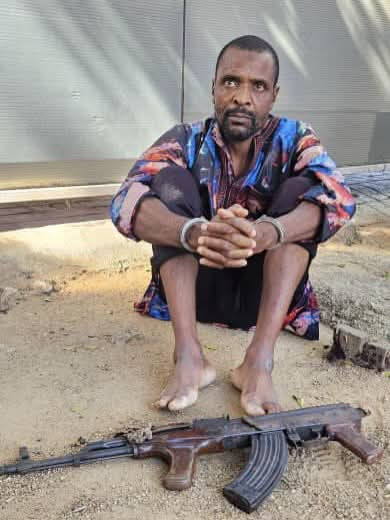
Acting on credible intelligence, troops of Operation ENDURING PEACE (OPEP) Special Tactical Team conducted a sting operation at Gindiri Market in Mangu Local Government Area, leading to the arrest of Adamu Adamu, also known as Jauro, a suspected gunrunner terrorising the area.
The suspect was apprehended with one AK-47 rifle and 15 rounds of 7.62mm Special ammunition. He is currently in custody alongside the recovered items for further investigation.
Similarly, on November 8, 2026, troops of the 33 Artillery Brigade launched coordinated offensive operations at Dajin Madam Forest, spanning Kanam and Wase Local Government Areas.
During the operations, several terrorist camps were cleared and their life-support structures destroyed, significantly degrading the terrorists’ capacity to sustain criminal activities and use the forest as a haven for attacks.
The advancing troops subsequently engaged the terrorists with superior firepower, forcing them to withdraw in disarray. Bloodstains were observed along their withdrawal routes, indicating possible casualties.
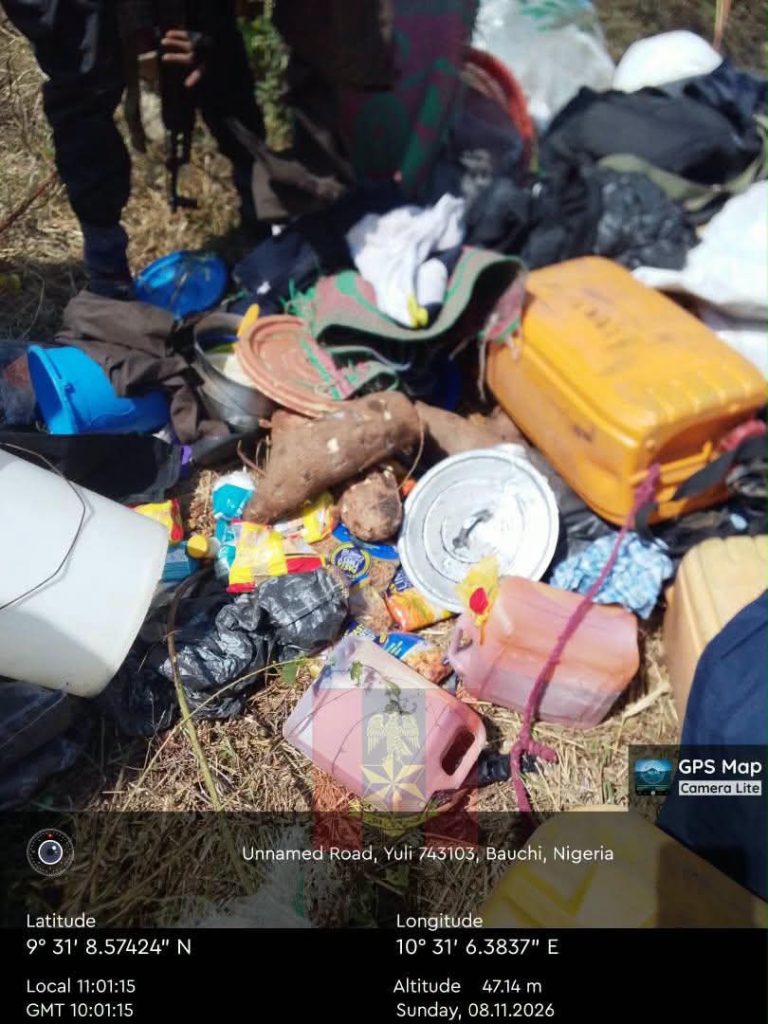
Further exploitation led to the recovery of 135 rounds of 7.62mm NATO ammunition, PKT links, four mobile phones, two radios, four motorcycles, two drums of Premium Motor Spirit (PMS), assorted camouflage uniforms and other items.
In a subsequent encounter close to Kukawa Village, troops neutralised two terrorists and recovered additional motorcycles.
The Nigerian Army said the operational successes demonstrated its intelligence-driven approach and sustained offensive posture in denying criminal elements access to weapons, logistics and safe havens.
It reaffirmed its commitment to sustaining pressure on terrorists and other criminal networks while strengthening cooperation with local communities and other security stakeholders to restore lasting peace, protect lives and property, and safeguard national security.
The Lagos State governorship candidate of the All Progressives Congress (APC), Obafemi Hamzat, has promised to deploy 4,000 compressed natural gas (CNG) buses and 77 electric ferries to improve public transportation in the state.
Hamzat said the proposed expansion would help move one million passengers daily and provide residents with more options for travelling across Lagos.
He made the disclosure on Sunday during the Lagos governorship debate organised by the Nigeria Debate Consortium, comprising Channels Television, TVC News, The PUNCH, TheCable and Vanguard Newspapers.
The incumbent Deputy Governor said the plan would involve expanding the existing bus rapid transit (BRT) system from 1,000 buses to 4,000.
He also outlined plans to establish additional BRT lanes linking Marina to Epe and Badagry.
“The idea is to move one million people a day with 4,000 CNG buses, meaning up to 5,000, create BRt lane from Marina to Epe, from Marina to Badagry and so on and so forth,” Hamzat said.
Beyond road transportation, the APC candidate said his administration would expand water transport through the deployment of 77 electric ferries.
He also emphasised the need to connect rail, road and water transportation through an integrated system that would allow commuters to use one payment method across the services.
Hamzat said the objective was to reduce the time residents spend commuting and make movement across the state more convenient.
“The plan is to give back time to the citizens to plan, to rest, to spend with their family,” he said.
The transportation proposals formed part of Hamzat’s campaign promises ahead of the 2027 Lagos governorship election.
……RECEIVES AWARD FOR OUTSTANDING PERFORMANCE IN WAEC
Grace High School, Gbagada Lagos has 6reiterated it’s commitment to high academic standards.The School says it will not rest on its oars to sustain exemplary academic performance.
The Executive Director,Grace School s Mrs Olatokunbo Edun says the school is poised to deploy all resources to deliver qualitative educational service to discerning students
Edun says the school has been synonymous with excellence and it has over the years proved its, mettle as a frontline institution of choice.
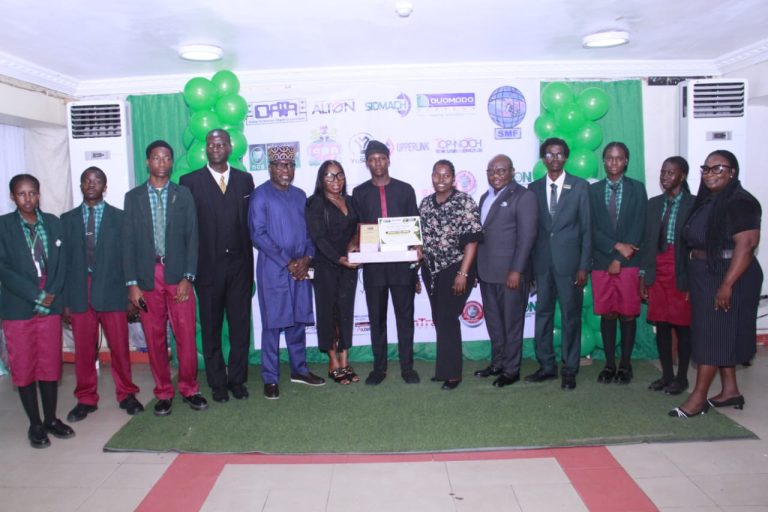
Dr Adesina Adewale ,the Chairman ,Nigerian Computer Society,Lagos state chapter commended Grace High School for its spectacular performance at the WAEC 2025 as Grace High School emerged as the first position in Lagos State.
The NCS also presented award to a student of Grace School, Mike-Nnaji Joshua Chidiebere who was rated as the overall best student at the occasion. The proud parents of Chidiebere were also part of the joyous moment.
The NCS lauded Grace High School management, teachers and parents for their dedication, hardwork and commitment.
The NCS says the award celebrates values of excellence, innovation and academic achievements among young Nigerians.
The Executive Director, Grace Schools, Mrs Olatokunbo Edun says the school is poised to raise the ladder of academic standards through its avowed commitment to qualitative learning.
It is the vision of the school to nurture globally acclaimed intellectuals who would excel in their own chosen fields of human endeavor
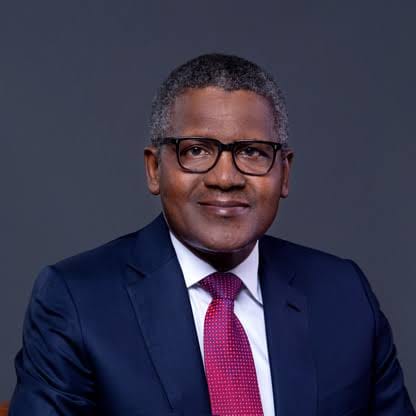
The Commerce and Industry Correspondents Association of Nigeria (CICAN) is set to honour the President and Chairman of Dangote Group, Alhaji Aliko Dangote, GCON, as its Grand Patron at the 2026 National Workshop and Awards Ceremony. The event is scheduled for Thursday, November 19, 2026, at Protea Hotel, Ikeja, Lagos, and is expected to attract key stakeholders from government, the organised private sector, commerce, industry, finance and the media.
In a letter dated August 23, 2026, and signed by its National Chairman, Taiwo Ademola Hassan, and Secretary-General, Olufemi Orioye, CICAN said the decision to nominate Dangote as its Grand Patron was based on his exceptional contributions to Nigeria’s economic growth and industrial development.
The association said Dangote’s investments in manufacturing, agriculture, infrastructure, job creation, export development and economic diversification had significantly strengthened Nigeria’s productive capacity.
According to CICAN, the Dangote Group has grown into one of Africa’s leading indigenous business conglomerates, with investments that have supported local businesses, created employment opportunities and strengthened value chains across several sectors of the Nigerian economy.
The association particularly commended Dangote’s commitment to large-scale industrialisation, noting that his investments had demonstrated the capacity of Nigerian entrepreneurs to establish globally competitive enterprises while contributing to the country’s quest for self-sufficiency and reduced dependence on imports.
CICAN said, as journalists covering commerce, industry, trade, investment and the broader business environment, it recognised the critical role of responsible private-sector investment in national development.
Consequently, the association resolved to confer on Dangote a Special Award for Outstanding Contribution to Nigeria’s Economic Growth and Industrial Development, in addition to formally recognising him as its Grand Patron. CICAN said Dangote’s acceptance of the role would further strengthen the relationship between the association and the organised private sector, while creating opportunities for greater collaboration in promoting informed public discourse on commerce, industry and Nigeria’s economic development.
The 2026 CICAN National Workshop and Awards Ceremony will bring together prominent stakeholders to discuss critical issues affecting Nigeria’s business environment, industrial development and economic growth, while also recognising individuals and organisations that have made significant contributions to the nation’s economy.
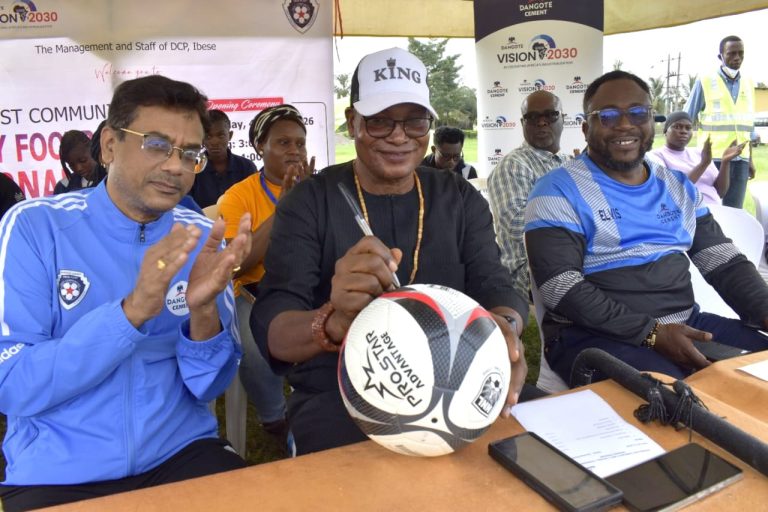
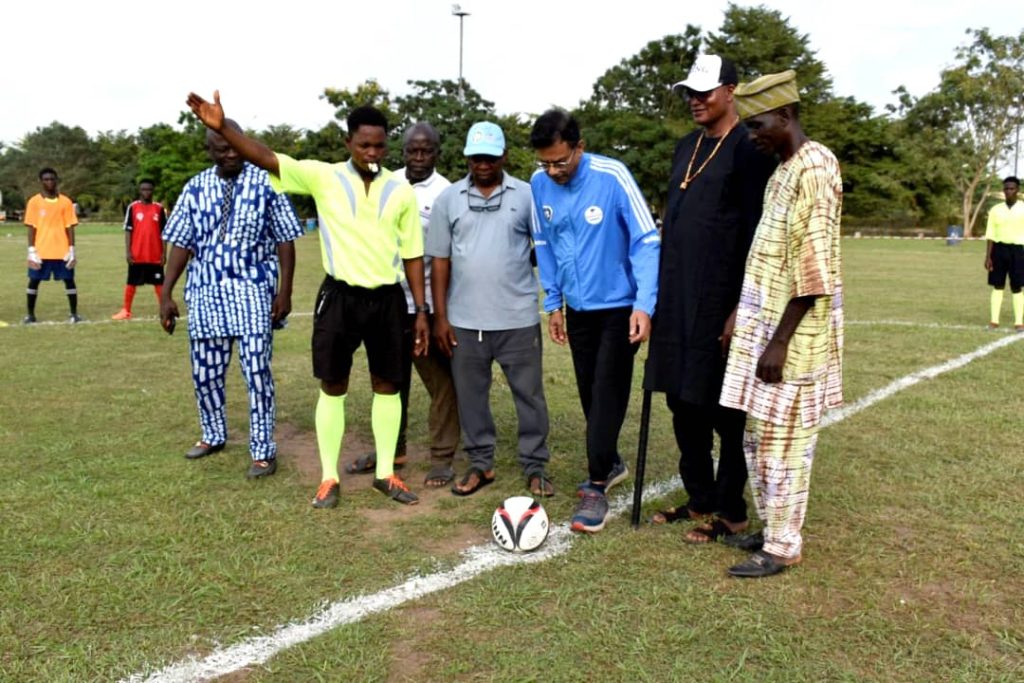
Dangote Cement Plc has launched its maiden Unity Football Tournament simultaneously at its Ibese and Okpella plants as part of efforts to promote youth development, peaceful coexistence and stronger relationships among its host communities.
The tournament, fully sponsored by Dangote Cement, brings together young people from communities around the company’s cement operations in Ibese, Okpella, Obajana and Gboko, providing a platform for them to showcase their football talents while strengthening ties across community boundaries. Speaking at the ceremonial kick-off of the Ibese edition, Plant Director, Ayyagari Subbaraidu, described the tournament as another demonstration of the company’s commitment to the socioeconomic development and wellbeing of its host communities.
He said the initiative represented a new dimension in the company’s social investment strategy, complementing its interventions in four key Corporate Social Investment thematic areas: Education, Health, Infrastructure and Empowerment. According to him, the company recognises the strategic importance of young people in its host communities and the need to provide constructive avenues for their development and engagement.
“This football tournament is a new dimension of our social investment strategy, specifically designed to promote youth development, engagement and empowerment,” Subbaraidu said. “We recognise that young people constitute a significant proportion of the population in our host communities, and we consider it imperative to create meaningful opportunities for their engagement and development.” The Plant Director explained that the competition was designed to go beyond the excitement of football by creating an inclusive platform for young people to develop their talents, build relationships and channel their energies towards productive activities.
He added that Dangote Cement was also deploying sports as a proactive instrument for strengthening peaceful coexistence and deepening its relationship with host communities.
“Beyond football, the tournament is a proactive social investment initiative aimed at promoting peace, strengthening inter-community relationships, fostering unity and deepening trust between Dangote Cement and the host communities,” he stated. “While the teams may compete for the trophy, the bigger victory lies in the unity, friendship and mutual understanding we hope to establish and build. In the spirit of this, every community is considered a winner in this tournament,” he said. At Ibese, 17 host communities have come together to form eight teams for the competition, an arrangement Subbaraidu said demonstrated the ability of sports to break down barriers and bring people together across community lines.
He said the management believed the tournament could provide opportunities for identifying promising grassroots footballers who could emerge from the participating communities and eventually develop into players capable of competing at national and international levels
“We believe that great talents can emerge from our communities and that this tournament will provide a platform for discovering and nurturing promising football talents who may eventually go on to shine on national and international stages,” he said.
Subbaraidu urged participating players and officials to embrace sportsmanship, discipline, fairness and mutual respect throughout the competition, warning against violence, confrontation and conduct capable of undermining the tournament’s objectives. Supporters and spectators were also encouraged to conduct themselves responsibly and help create a peaceful and enjoyable atmosphere. “Let competition remain healthy and friendly. Avoid unnecessary confrontations, violence and actions that could result in injuries. I urge players, officials, supporters and spectators to conduct themselves responsibly and contribute to a peaceful and enjoyable tournament,” Subbaraidu said.
The Unity Football Tournament also kicked off at Dangote Cement’s Okpella operation as part of the broader community-focused initiative, with the company seeking to leverage the universal appeal of football to promote stronger relationships with its host communities. Okpella Plant Director, Mohammed Ismaael, said football had a unique capacity to bring people together irrespective of community, background or social status.
“Through this tournament, Dangote Cement is creating a platform for our young people to interact positively, demonstrate their talents and build friendships that transcend community boundaries. For us at Okpella, this is not simply a football competition; it is an investment in our youth, peaceful coexistence and the long-term partnership we cherish with our host communities,” he said.
The Okpella tournament reinforces the company’s broader objective of using grassroots sporting activities to complement its established community development programmes and create greater opportunities for young people to participate meaningfully in community life.
The simultaneous competitions in Ibese and Okpella represent an expansion of Dangote Cement’s host community engagement approach beyond traditional interventions in education, healthcare, infrastructure and economic empowerment, with sports added as a vehicle for youth inclusion, talent discovery, peacebuilding and social cohesion.
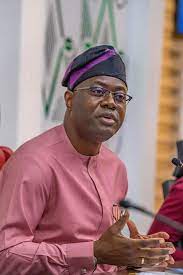
Seyi Makinde, presidential candidate of the Allied Peoples Movement (APM), says he became governor of Oyo in 2019 without a godfather and believes the scenario can be replicated in 2027.
According to a statement by Richard Ihediwa, his director of strategic communications, the governor spoke on Sunday during a church service at the Church of Christ in Nations, Jos, Plateau state.
A rejoinder to an undated, untitled message circulated by Suleman Ndanusa, with project comparisons attributed to Meta AI.
By Tanimu Yakubu
Corruption takes money from public works and leaves people to bear the loss. Nigeria cannot afford it. But a charge this serious must rest on sound evidence. The comparisons between Lagos and Ethiopia do not yet provide it. They mix the cost of a whole railway with the passengers carried on part of it. They treat different contractors as one company. They quote freight charges without the distance to which those charges apply. They then turn these weaknesses into a firm verdict. We should demand the accounts. We should also get the comparison right. Correcting a faulty argument gives no government a certificate of good spending.
What Lagos and Addis Ababa actually bought
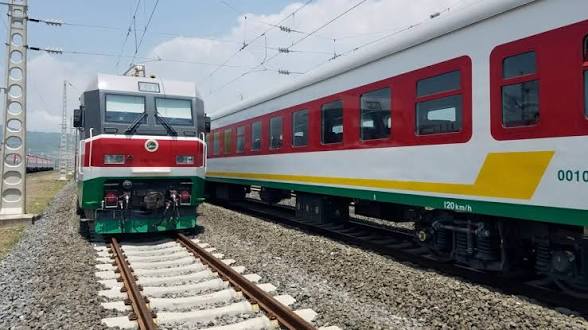
Lagos’s Blue Line was built by CCECC. Addis Ababa’s light rail was built by CREC. They are separate Chinese companies. The claim that the same contractor built both is wrong. [1, 2] LAMATA’s reported explanation puts the whole 27-kilometre Blue Line at $1.17 billion, including trains and a maintenance depot. About 13 kilometres, from Marina to Mile 2, are in service. The rest remains under development. The full project cost and the traffic on the opened section must be identified separately. The agency’s explanation also needs published accounts behind it. [3, 4] On those figures, Lagos costs about $43.3 million per route-kilometre. Ethiopia’s railway corporation gives a cost of $475 million and a length of about 34 kilometres, or roughly $14 million per kilometre. Shared track on the Addis network needs to be accounted for when measuring its length. Neither ratio adjusts for price dates or scope. [2, 3] Lagos still looks dearer. That is a reason to examine the difference closely. We need the quantities of elevated and surface track, the foundations, bridges and stations. We need to know what each total includes for land, trains, power, signalling and depots. We need the contract dates, variations, taxes and financing charges. Difficult ground may raise a price. It cannot explain any price put before us. An engineer must show the quantities. An auditor must follow the payments. Any remaining premium must be explained.
The years lost
Fourteen years against three and a half is a grave delivery gap. People paid for it in lost hours, high fares and journeys that wore them down. But calendar years alone cannot tell us how efficiently a contractor worked. Was funding available? Was the land clear? Did work stop? Did the design change? Who made the decisions, and what did they cost? These questions establish responsibility. They do not excuse delay. Corruption, poor preparation, interrupted funding and weak supervision can all damage a project. We should establish what happened and deal with it.
What the passenger numbers can tell us
There is no sound calculation that turns a cost ratio into 250,000 daily passengers. Nor does a budget of $6 billion, by itself, produce one million daily commuters. Trains need passengers who can reach the stations, afford the fare and get to their destinations. They need enough service at the hours people travel. More track and more trains help only when the service fits those needs. In September 2026, LAMATA reported more than nine million passenger journeys in three years. Daily train trips had risen from 12 to about 94. That shows service growth. It does not settle whether the investment is being used well. Nine million journeys also does not mean nine million different passengers. [5] Publish the monthly figures. Show boardings, distances travelled, occupied seats and standing space, cancellations and subsidy. Show what capacity stands idle and why. Measure the whole commute. A fast ride between two stations can still leave a long walk, an expensive bus connection or a poor journey home. Fares need the same care. A cheap ticket may be supported by subsidy. A higher ticket may reflect costs that another government pays elsewhere. The claim that Lagos fares could be cut by 50–75 per cent needs an operating account to support it.
What Ethiopia teaches
Ethiopia’s lower reported construction cost deserves serious study. So do the problems that followed. A World Bank assessment records missed ridership forecasts, inadequate power, shortages of spare parts and debt-service difficulties on the Addis light rail. It describes an earlier period, not a complete account of today’s service. Its lesson remains useful: a railway can be built and still struggle to serve its city. [6] Nigeria should learn how Ethiopia built more cheaply. It should learn how to keep the trains running after the builders leave.
A highway and a freight railway
The coastal highway and the Addis–Djibouti railway are similar in length. Their work, their designs and their costs are different. A road’s price depends on its lanes, pavement, bridges, drainage, land and ground conditions. A railway’s price depends on its tracks, gradients, structures, power, signalling, trains and terminals. There is no rule that an electrified railway must cost more than a concrete road. Even the arithmetic in the criticism needs repair. $11 billion over 750 kilometres gives about $14.7 million per kilometre. $4.5 billion over 756 kilometres gives about $6 million. These differ from the figures quoted. Recent reports attribute to the Works Minister the position that the coastal highway is being designed and costed in sections, and that its full cost remains undetermined. That does not permit us to call $11 billion a settled final cost. It does require government to publish the engineering plan, the price of each section and the commitments needed to finish the corridor. [7, 8] We can compare road and rail as choices for public spending. We should ask which combination moves people and goods best, at a cost the country can carry. A coastal road may serve coastal towns, trade and industry. Its case must be made on those benefits. It need not be the main route for northern food traffic to have value. But government must show what it will deliver and why it deserves priority over other needs.
Freight costs need a distance
Djibouti’s ports authority reports a reduction in the journey to Addis Ababa from three days by road to about 12 hours by rail. It also describes direct port-terminal connections. Those are valuable gains. They are not the full time needed to clear goods and deliver them to a customer. [9] The quoted ₦31–₦62 per tonne has no useful meaning without a distance and an exchange-rate date. The Global Infrastructure Hub records temporary charges of US$0.023 per tonne-kilometre for exports and US$0.046 for imports. The distance must be multiplied by that charge. A rate for one kilometre is not a rate for the whole journey. [10] Ethiopia has also developed refrigerated logistics. That takes more than a railway. The European Commission describes a cold-storage project at Modjo Dry Port linked to the line. Cold stores, refrigerated containers, power and dependable handling all have to work together. Nigeria will need the same practical arrangements if rail is to preserve farm produce and reduce losses. [11]
Make the railway earn its place
Nigeria is rebuilding a railway that suffered deep decay. Calling it dead conveys the damage, though it had not vanished entirely. We must renew the assets, train the workforce, protect the service and persuade customers that it can be trusted. There are assets to build on. NRC runs Lagos–Ibadan, Abuja–Kaduna and Warri–Itakpe services. Federal reports also record standard-gauge container traffic between Apapa and Moniya. These services should carry more useful traffic and account openly for their cost. [12, 13] The next gains depend on connections. Ports need working rail access. Freight yards need reliable onward delivery. Farms need collection and storage. Where gauges differ, cargo needs a transfer arrangement that does not consume the saving made on the railway. The budget should follow those needs. Complete connections with credible traffic. Keep locomotives and wagons available. Pay for maintenance, spares and security. Secure freight commitments from businesses that will use the service. Examine rehabilitation before assuming every corridor needs a new line. Compare new rail schemes with better buses, repaired roads and usable waterways. Publish what was paid, what was built and what service followed. Every additional naira should help produce a dependable journey or lower the delivered cost of goods. Track length alone cannot tell us whether that happened. The critic is right to demand better results. The comparisons offered do not prove the corruption alleged. That remains a question for evidence from procurement, engineering and payments. Government must provide that evidence. Inherited decay explains the size of the task. It does not excuse waste.
By Tanimu Yakubu Director-General, Budget Office of the Federation
Senior Special Assistant to the President on Media and Publicity, Temitope Ajayi has faulted Channels Television journalist, Seun Okinbaloye for describing Lagos State as rich during Sunday’s Lagos governorship debate.
In a Facebook post on Sunday, Ajayi said the framing showed poor understanding of the state’s finances and was part of the reason Nigeria is struggling with development.
He said, “One of the major reasons we are struggling with development is because of the wrong framing and poor understanding of our issues. It is more distressing when those you expect to know better exhibit poor knowledge. Seun Okinbaloye opened the Lagos Governorship debate with a declaration that Lagos State is rich.”
The presidential aide questioned the basis for the description, citing the state’s 2026 budget.
He stated, “For the life of me, how is Lagos a rich state. A state that is running a current 2026 budget of N4 trillion which in dollar term is less than $3 billion. New York City Police Department 2026 budget is more than $6 billion and in dollar terms twice the budget of Lagos State.
“We are talking about a city police department annual budget not that of New York State.
“A city police department is running twice the budget of Lagos State with more than 20 million people. And a journalist is on a live debate where he is supposed to ask intelligent and well-informed questions said Lagos State is rich.”
Ajayi said Nigeria must do away with what he called a simplistic and populist view of wealth if the country truly wants to develop.
“We really need to do away with this simplistic and populist view if we truly want to develop and move ahead as members of human society. And journalists who have the power of the mic should stop misinforming the people,” he added.
The debate, organised by the Nigeria Debate Consortium comprising The PUNCH, Channels Television, TVC News, TheCable and Vanguard, featured Lagos governorship candidates ahead of the 2027 election.
The candidates at the debate included Gbadebo Rhodes-Vivour of the African Democratic Congress (ADC), Obafemi Hamzat of the All Progressives Congress (APC), Funso Doherty of the Nigeria Democratic Congress (NDC), and Deji Doherty of the Peoples Democratic Party (PDP).