Home Blog Page 30

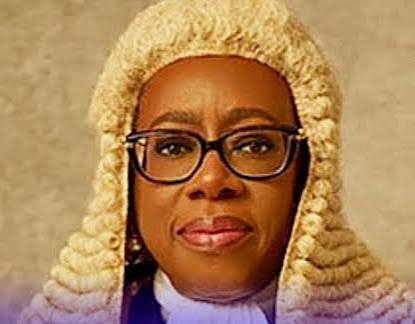
2027: CJN reads riot act to judges

0
  • Cautions against turning courts into political battlegrounds
  • INEC warns tribunal judges against deepfakes, AI-generated election fraud

The Chief Justice of Nigeria (CJN), Justice Kudirat Kekere-Ekun, yesterday read the riot act to judicial officers, politicians, lawyers and other stakeholders, warning against turning the courts into political battlegrounds through intimidation, misinformation, conflicting orders and abuse of judicial processes.
The CJN declared that election petitions must be decided strictly on the strength of evidence and applicable laws, rather than political pressure, public sentiment or the popularity of candidates, insisting that the judiciary would not tolerate attempts to undermine its independence or manipulate judicial proceedings.

Her warning came as 375 judicial officers were sworn in to serve on election petition tribunals across the country, while the Attorney-General of the Federation and Minister of Justice, Lateef Fagbemi, called for a special code of conduct for lawyers handling electoral disputes to curb professional misconduct.

At the same event, Chairman of the Independent National Electoral Commission (INEC), Prof. Joash Amupitan, raised the alarm over the growing threat of deepfake videos, artificial intelligence-generated disinformation and manipulated electronic evidence, warning that the technologies could complicate election petitions and threaten political stability. The officials spoke at the swearing-in ceremony and opening of a three-day capacity-building workshop for Justices of the Court of Appeal and election petition tribunal members, themed “Election Tribunal as a Tool for Political Stability,” at the Body of Benchers Complex, Abuja.

Addressing the newly inaugurated judicial officers, Kekere-Ekun warned politicians, political parties, public officials and social media users against attempts to influence judicial decisions through public statements, intimidation, deliberate misinformation and campaigns designed to undermine the credibility of the courts.

“The judicial process is not a continuation of the electoral campaign by other means,” she declared, stressing that the volume of public opinion or the popularity of a candidate could not substitute for credible evidence before a court of law.

The CJN maintained that election petitions must be determined on the basis of pleadings, evidence and the relevant provisions of the Constitution and electoral laws, warning influential persons against prejudging cases or making inflammatory statements capable of heightening political tension.

“Misinformation, intimidation and attempts to prejudice pending proceedings have no place in a society governed by the rule of law,” she said. Kekere-Ekun also expressed concern over the increasing use of social media to attack judicial officers and influence public perception of pending cases, urging media organisations to exercise restraint and professionalism in reporting judicial proceedings.

She condemned the filing of multiple suits and appeals on the same subject matter, the procurement of conflicting orders from courts of coordinate jurisdiction and the use of ex parte applications to secure tactical advantages in political disputes.

According to her, such practices “can bring the administration of justice into disrepute,” and legal practitioners must resist the temptation to turn the judicial process into “another instrument of political contest.”

The CJN reminded the tribunal members that their duty was not to determine the political preferences of Nigerians but to resolve disputes arising from elections in accordance with the law, irrespective of the personalities or political interests involved.

She urged them to remain “firm where firmness is required, patient where patience is necessary, and impartial in every circumstance,” stressing that public confidence in the judiciary would depend largely on their conduct and the integrity of their decisions.

In his remarks, Amupitan warned that the 2027 elections could expose tribunals to sophisticated forms of digital manipulation capable of distorting evidence, misleading voters and creating confusion over election results.

He said threats to electoral integrity had moved beyond ballot snatching and physical intimidation to the use of artificial intelligence to impersonate election officials, circulate fabricated announcements and manufacture false evidence of electoral malpractice.

The INEC chairman identified three major threats, including AI-generated messages falsely announcing the relocation or cancellation of polling units, deepfake audio and video recordings circulated during the statutory broadcast blackout before voting, and cloned videos of Returning Officers falsely declaring election results before collation had been concluded.

He warned that fabricated recordings could subsequently be presented before election tribunals as evidence of malpractice, while genuine recordings could be dismissed as artificial intelligence-generated materials.

Amupitan described the latter phenomenon as the “Liar’s Dividend,” saying it could make the authentication of electronic evidence increasingly difficult and undermine confidence in judicial decisions.

He urged tribunal members to apply rigorous evidential standards under Section 84 of the Evidence Act, including verification of digital provenance, proper forensic chains of custody and reliance on certified electoral records obtained from INEC.

The commission’s chairman cautioned that evidence generated through the Bimodal Voter Accreditation System (BVAS), the INEC Result Viewing Portal (IReV), result sheets and voters’ registers must be subjected to careful examination to establish authenticity and reliability.

Such evidence, he said, “should neither be treated as infallible nor discounted simply because the evidence is electronic.”

Amupitan also drew attention to Section 60(3) of the Electoral Act 2026, which addresses electronic transmission of polling-unit results and the legal implications of communication failures, warning that its interpretation “may feature prominently in future petitions.”

He explained that INEC’s Regulations and Guidelines for the Conduct of Elections, 2026, prescribed the use of BVAS, procedures for uploading results to IReV and safeguards for reconciling electronic records with physical result sheets during collation.

According to him, the guidelines also established mechanisms for addressing technological failures and discrepancies, providing “clearer operational standards against which allegations of non-compliance may be evaluated.”

With the presidential and National Assembly elections scheduled for January 16, 2027, and governorship and state Houses of Assembly elections fixed for February 6, Amupitan said the legitimacy of Nigeria’s democracy would depend on “impartial electoral administration and fearless judicial adjudication.”

He described election petition tribunals as “the constitutional valve that releases political pressure and prevents electoral friction from devolving into civil disruption,” warning that inconsistent, excessively technical or delayed judgments could undermine public confidence.

The INEC chairman urged judicial officers to maintain consistency in their interpretation of electoral laws, particularly on substantial compliance, burden and standard of proof, and candidate nomination disputes.

While acknowledging the need to determine election petitions within constitutional timelines, he cautioned that expedition “must never displace the fundamental right to fair hearing,” urging judges to “avoid technicalities that defeat substantive justice.”

He also advocated closer professional engagement between INEC and the judiciary to improve understanding of electoral procedures and technological innovations, but stressed that such cooperation must not compromise judicial independence.

According to him, the proposed engagement “is not an avenue to influence judicial decisions or discuss the merits of pending proceedings.”

Amupitan reminded tribunal members that they carried “the democratic aspirations of over 200 million Nigerians,” describing the courtroom as “the altar upon which public confidence in constitutional governance is preserved.”

Fagbemi, who also addressed the gathering, urged the Nigerian Bar Association (NBA) to develop a specific code of conduct for lawyers handling election petitions and pre-election matters to curb unethical practices and abuse of court processes.

He said courts must remain institutions for the “fair and dispassionate resolution” of disputes rather than “arenas for professional misconduct or unnecessary controversy.”

The Attorney-General also drew attention to changes introduced by the Electoral Act 2026, which he said had altered the legal framework governing election petitions, party primaries, campaign financing and electoral administration.

He cited Section 138(1), which confines election petitions to allegations of corrupt practices, non-compliance with the Electoral Act and failure to secure a majority of lawful votes cast, while removing candidate disqualification as an express ground for challenging an election after the polls.

Fagbemi explained that disputes over candidates’ qualifications would consequently have to be addressed largely through pre-election proceedings.

He also cited Sections 83(5) and 83(6), which restrict judicial intervention in certain internal political party disputes and provide for costs of not less than N10 million each against litigants and their counsel in specified circumstances.

According to him, the law had abolished indirect primaries, leaving direct primaries and consensus arrangements as recognised methods of selecting candidates, while raising campaign expenditure ceilings to N10 billion for presidential candidates and N3 billion for governorship candidates.

He added that the maximum individual donation to a candidate had increased from N50 million to N500 million, while political parties were required to maintain digital membership registers and submit them to INEC at least 21 days before primaries, congresses or conventions.

The Attorney-General warned that erroneous judicial decisions could have far-reaching consequences for governance and democratic stability, observing that a wrong decision “may take another four years to correct.”

He suggested the establishment of multiple tribunal panels in jurisdictions likely to record heavy volumes of election petitions and urged careful selection of court registrars to ensure efficient proceedings.

Earlier, the President of the Court of Appeal, Justice Monica Dongban-Mensem, disclosed that of the 375 judicial officers nominated for election petition tribunals, 138 had previously served on tribunals, while 237 were newly nominated.

She said the nominations followed consultations with Heads of Courts and the NBA, reminding the officers that their appointment was “a call to service, not privilege.”

Dongban-Mensem warned them to resist “every attempt at improper influence, whether through political pressure, inducement, intimidation, personal relationships or other considerations extraneous to the administration of justice.”

She also cautioned against unnecessary adjournments and procedural delays, stressing that tribunal members must balance speedy determination of petitions with fairness to litigants.

“Expedition must never undermine fairness, just as procedural indulgence must not frustrate timely adjudication,” she said.

The Court of Appeal President disclosed that a centralised Case Management System had been developed for scanning, uploading and storing judicial decisions, while an Electronic Filing Portal had been introduced to facilitate the filing and service of court processes.

She said the systems would improve efficiency, maintain auditable records and enable the monitoring of election petition proceedings across the 36 states and the Federal Capital Territory.

A major highlight of the ceremony was the unveiling of the second edition of the Judicial Electoral Manual 2026 by the CJN.

The manual brings together relevant constitutional provisions, sections of the Electoral Act, practice directions and decided cases to guide judicial officers in adjudicating electoral disputes.

Kekere-Ekun, however, cautioned that the publication was not a substitute for independent judicial reasoning, while Amupitan described it as “an indispensable compass” for consistent adjudication.

Fagbemi welcomed the publication, saying it would improve the quality of judicial decisions and promote consistency in the interpretation of electoral laws.

Abule-Taylor Residents Cry Out as Transformer Vandalisation Causes Two-Day Blackout

0

Residents of Abule-Taylor, Abule-Egba area of Lagos State, have lamented the vandalisation of their electricity transformer, which has plunged several streets into darkness for two days, amid rising discomfort caused by heat.

The affected streets include Thomas Obabunmi, Aina Street and Dada Olowu, where residents have been without electricity since the incident.

Residents said the transformer, which supplies electricity to several houses in Abule-Taylor, was vandalised, with its cables stolen by suspected vandals.

Officials of the Ikeja Electric Distribution Company (IKEDC) at its Abule-Taylor office, located on Olowu Street, reportedly confirmed the incident to residents.

Two IKEDC officials reportedly confirmed that cables had been removed from the transformer, resulting in the ongoing power outage.

The residents, who expressed concern over the prolonged blackout and the discomfort caused by the heat, called on IKEDC to intervene urgently and restore the stolen cables to enable electricity supply to the affected streets.

At Governorship Debate, Hamzat Promises 25-year Mortgages

0

…One-year Rent Enforcement, 4,000 Buses

Lagos State Deputy Governor and All Progressives Congress (APC) governorship candidate, Dr Obafemi Hamzat, has promised to introduce a 25-year mortgage scheme, enforce the one-year rent limit and increase the state’s public bus fleet from 1,000 to 4,000 if elected governor in 2027.

Hamzat made the promises on Sunday during the Lagos Governorship Debate organised by the Nigeria Debate Consortium at The Hub by IALA, Lekki, Lagos.

The debate featured three other governorship candidates: Gbadebo Rhodes-Vivour of the African Democratic Congress, Funso Doherty of the Nigeria Democratic Congress and Deji Doherty of the Peoples Democratic Party.

Describing the debate as an opportunity for voters to assess his preparedness for the job, Hamzat said he regarded the event as a job interview.

“I take tonight as a job interview. The first question you ask anybody that wants this type of responsibility is: what have you done to prepare for this job?” he said.

To support his claim of experience, the APC candidate highlighted his previous appointments as Commissioner for Science and Technology and Commissioner for Works and Infrastructure.

He said he oversaw the development of the state’s residents and structural database while serving as Commissioner for Science and Technology, and led the team that delivered the Lekki-Ikoyi Link Bridge as Commissioner for Works and Infrastructure.

Hamzat also outlined three principles that would guide his administration: respect for citizens, hard work and truthfulness.

He defended the record of the administration of Governor Babajide Sanwo-Olu, in which he has served as deputy governor for almost eight years, but admitted that there were areas requiring improvement.

“I am comfortable with a lot of things Lagos government has achieved, I also know that there are gaps, and that is the judgment I bring to the table,” he said.

Responding to questions about the hardship facing residents despite the state’s economic strength, Hamzat acknowledged that transportation, housing and food remained major concerns.

He attributed some of the economic difficulties to what he described as a corrective phase in the country’s finances, saying the state government would deliberately intervene to ease the burden on residents.

“We are going through a corrective phase financially in Nigeria. We understand that transportation, housing and food are major concerns for our people, and these are areas where government must deliberately intervene,” he said.

On housing, Hamzat said the Sanwo-Olu administration had delivered 24 housing estates comprising 18,000 housing units in the last eight years.

He promised that his administration would make homeownership easier through a mortgage scheme requiring an initial deposit of 10 per cent, with the balance spread over 25 years.

The proposal is aimed at helping residents acquire homes without having to pay the full cost at once.

His housing plan came amid a contrasting proposal by Rhodes-Vivour, who promised to deliver 100,000 housing units within four years through measures including luxury taxation, development of the eastern foreshore and decentralisation of housing projects.

Hamzat also pledged to enforce the existing one-year rent limit to prevent landlords and estate agents from demanding two or three years’ rent in advance.

He said the government would ensure that tenants were not forced to pay several years’ rent before occupying their homes.

“So the next chapter for Lagos is to enforce, to make sure. So people should not be asked two years, three years ahead because nobody gets salary three years ahead,” he said.

The one-year rent limit is already provided for under Section 4 of the Lagos State Tenancy Law 2011, which prohibits landlords and their agents from demanding more than one year’s rent in advance from a new tenant. Hamzat’s pledge therefore centres on enforcing the existing law.

On transportation, the APC candidate promised an integrated network of roads, rail and waterways to improve movement across the state.

He said his administration would increase the public bus fleet from 1,000 to 4,000, with the deployment of compressed natural gas-powered buses to improve mass transit and move more commuters.

He also promised to extend the Blue Line rail to Okokomaiko and advance the Green Line towards the Lekki Free Trade Zone.

While Rhodes-Vivour proposed connecting all the rail lines within two and a half years through a private-sector-driven approach, Hamzat said his focus would be on expanding existing infrastructure and integrating the different transport systems.

On healthcare, Hamzat promised to increase the number of flagship primary healthcare centres from 87 to 150, with the facilities expected to operate round the clock.

He also pledged to expand hospital infrastructure and improve access to medical services across the state.

On security, he outlined plans to strengthen the state’s security system, including the establishment of state police. He also identified flooding and waste management as areas requiring attention.

The APC candidate said his proposed administration would be guided by a 100-point development agenda covering transportation, healthcare, education, housing, security, employment and accountability.

The blueprint, known as The Lagos Promise or Ileri Eko, is built around seven pillars and sets out his plans for the state’s next phase of development.

The debate, the first in the Nigeria Debate Consortium’s national series ahead of the February 6, 2027 governorship election, was organised by Channels Television, TVC News, The PUNCH, TheCable and Vanguard.

The candidates were given the opportunity to present their positions on transportation, infrastructure, security, housing, education, healthcare, job creation and economic development.

LAGOS TASKFORCE NABS ANOTHER IMPOSTOR, DISMISSED EX-OPERATIVE CAUGHT EXTORTING OKADA RIDERS

0

…Agency Moves Against Impersonators Extorting Unsuspecting Residents

…..Impounds 128 Okadas

The Lagos State Taskforce has apprehended another notorious impostor, identified as 36 years old Adeyemo Olalekan, who allegedly paraded himself as a Taskforce operative to unlawfully seize commercial motorcycles and extort unsuspecting operators across the State.

Preliminary investigations revealed that the suspect was a former operative of the Agency who had been dismissed from service several years ago over theft-related misconduct.

Despite his dismissal, he allegedly continued to impersonate Taskforce personnel, conducting illegal arrests and demanding huge sums of money from victims in exchange for the release of their motorcycles.

The suspect was arrested today following a tip-off received through the Agency’s official hotlines. Operatives swiftly responded to the report and apprehended him while attempting to extort two commercial motorcycle operators whose motorcycles he had unlawfully impounded. One of the victims, who became suspicious of his activities, promptly contacted the Taskforce and subsequently discovered that the suspect had long been dismissed from the Agency. He had reportedly evaded arrest on several previous occasions before finally being apprehended.

Speaking on the arrest, the Chairman of the Lagos State Taskforce, CSP Adetayo Akerele, disclosed that the Agency had been tracking several individuals involved in similar fraudulent activities following repeated complaints from members of the public. He described the impostors as criminal elements who exploit the identity and authority of the Taskforce to illegally apprehend motorcycle operators and negotiate financial settlements for the release of their motorcycles.

According to the suspect, his targets were usually brand-new Bajaj motorcycles or motorcycles with engine capacities below 200cc, particularly those operating on highways and other restricted routes. He reportedly confessed that he would disguise himself as a genuine passenger, approach unsuspecting riders and pay their transport fares before suddenly revealing his identity as a supposed enforcement officer. He would then threaten to have their motorcycles crushed unless they parted with money.

The suspect has since been arraigned before a court on three counts bordering on impersonation, extortion and conduct likely to cause a breach of public peace. He pleaded guilty to all three charges. The case was adjourned until December 16, 2026, for facts and sentencing, while the defendant was remanded at the Kirikiri Correctional Centre.

CSP Akerele reiterated the Agency’s determination to rid Lagos of individuals exploiting its identity to perpetrate criminal activities, stressing that there would be no hiding place for impostors, dismissed personnel or anyone engaging in acts capable of bringing the Agency into disrepute.

In a related development, the suspect earlier arrested by the agency for impersonation and extortions in October -Yahaya Salami aka Adams was again mentioned in court, he pleaded not guilty to the count charges, and the case was also adjourned till 9th of December,2026. He was remanded in Kirikiri correctional centre pending the time of meeting his bail conditions.

Meanwhile, the Agency embarked on its campaign against operation of Okada on highways and other restricted areas in Festac first gate, Apple junction,Trade fair, Apapa, Coconut bus stop and Mile2 areas of the State, leading to the impoundment of 128 commercial motorcycles.

He urged members of the public to remain vigilant and promptly report suspicious conduct by anyone claiming to be a Taskforce operative through the Agency’s official feedback channels.

“There is no more room for official recklessness or criminality in Lagos. Anyone found impersonating our personnel or using the name of the Agency to extort members of the public will be tracked down and made to face the full weight of the law,” Akerele stated.

Babcock Varsity Confirms Student Alive, Receiving Medical Treatment

0

BY TAIWO OGUNMOLA -OMILANI

Babcock University has confirmed that a student involved in an unfortunate incident at one of its student residential facilities is alive and receiving medical attention at the Babcock University Teaching Hospital.

The statement was signed by the Assistant Vice President, Communication, Media and Branding, Babcock University.

The university made this known in a statement addressing reports circulating in the public space concerning the incident.

Contrary to reports suggesting that the student may have died, the university said he was responding positively to treatment and receiving the necessary medical care.

It attributed the prevention of a more tragic outcome to the prompt intervention of the student’s roommates, whose timely action brought the situation under control.

The university disclosed that the student and one of his rescuers sustained injuries in the process and were immediately taken for medical attention.

It added that the student’s parents had been contacted and were on campus to be with him as he received treatment.

The other student who sustained injuries while rescuing his roommate, according to the statement, had been treated and discharged.
Babcock University said it had commenced an investigation to establish the immediate and underlying circumstances surrounding the incident, identify contributing factors and determine appropriate measures to prevent a recurrence.

The institution urged members of the public and media organisations to refrain from circulating unverified information or attributing causes to the incident while investigations were ongoing.

It also reaffirmed its commitment to supporting the student’s full recovery and well-being, assuring that appropriate support and guidance would be provided.

The university emphasised that the safety, health and welfare of its students and employees remained a priority, adding that it was committed to providing a safe, supportive and welcoming environment for students to learn, grow and realise their full potential.

It further acknowledged and commended the courage and prompt intervention of the student’s roommates, while appealing for sensitivity and restraint in discussing the incident out of respect for the student and his family.

Lagos Assembly Confirms Tayo-Makanjuola as Auditor-General

0

BY TAIWO OGUNMOLA -OMILANI

The Lagos State House of Assembly on Monday confirmed the appointment of Dr. Olufunke Omolara Tayo-Makanjuola as Auditor-General for Lagos State following the consideration of her screening report and subsequent approval by lawmakers during plenary on Monday.

Following the confirmation, the Speaker, Rt. Hon. Mudashiru Obasa, directed the Clerk of the House, Mrs. Adenike Oshinowo, to forward the resolution of the House to the Governor of Lagos State, Mr. Babajide Olusola Sanwo-Olu, for his assent.

The lawmakers also celebrate the speaker ahead of his birthday on Wednesday 11th November 2026.

2027: Kogi Central APC holds 2 million-man march for Tinubu, predicts landslide victory

0


The All Progressives Congress (APC) in Kogi Central senatorial zone yesterday, organised a two million-man march in support of President Bola Tinubu, expressing confidence that the president would secure a resounding victory in Kogi State in the 2027 general elections.

The rally, which attracted party supporters and members from across the senatorial district, featured strong expressions of solidarity with President Tinubu, Governor Ahmed Usman Ododo and other APC candidates ahead of the forthcoming elections.

Speaking at the rally, the Kogi State Accountant-General, Hajia Habibat Onumoko, expressed confidence that Tinubu would win Kogi State by a landslide, noting that the APC remained firmly positioned to secure victory across the state.

She also affirmed that former Governor of Kogi State, Alhaji Yahaya Bello and all other APC candidates, would emerge victorious in their respective electoral contests.

Similarly, the Commissioner for Local Government and Chieftaincy Affairs, Abdullahi Bello, declared that the APC was poised for a sweeping victory in the state, expressing confidence in the party’s electoral strength and growing support across the state.

He maintained that Tinubu, Bello and all APC candidates would enjoy massive support from the electorate, translating into landslide victories at the polls.

The two speakers called on the party faithful and supporters to sustain their mobilisation efforts, remain united and work collectively towards securing victory for the party at all levels.

The march underscored the party’s commitment in Kogi Central to Tinubu’s re-election bid and the success of the party’s candidates in the 2027 general elections.

Sun

Why I rejected Tinubu’s ministerial offer – Tunde Bakare

0

The leader of Citadel Global Community Church, Pastor Tunde Bakare, has explained why he rejected President Bola Tinubu’s offer to serve as a minister in his administration.

Bakare said he declined the offer because he considered himself too old to take up the responsibility.

The cleric disclosed this while speaking at Envoy Nation in Leicester on Sunday.
He said he had assured Tinubu that he would support his administration privately rather than take up a position in the Federal Executive Council.

Bakare’s comments offer insight into his decision to stay out of Tinubu’s cabinet despite the offer to serve in the government.

He said: “I told Tinubu I’m too old to be a minister, but I will help in the background in any way I think will help my country. I have never been part of the opposition. I am a propositional platform, if I see something wrong, I will suggest a solution.

“I can’t change sides quickly by joining one party today and another tomorrow. I am a full member of APC, and I will vote when the time comes.”

Sun

How I was prevented from meeting Flamingoes at airport – Peter Obi

0

Former Anambra State Governor and presidential candidate of the Nigeria Democratic Congress (NDC), Peter Obi, has accused officials of the Nigeria Football Federation (NFF) of preventing him from meeting Nigeria’s Under-17 women’s football team, the Flamingos, at the Nnamdi Azikiwe International Airport, Abuja.

Obi said he was stopped from greeting the players, who arrived in the country in the early hours of Monday following their triumph at the FIFA Under-17 Women’s World Cup in Morocco.

In a statement on Monday, the former presidential candidate described the incident as another example of what he called “toxic politics”, alleging that NFF officials feared losing their jobs if they allowed him to meet the team.

Obi said he arrived at the airport around 7 am to board a flight to Enugu when he noticed the team preparing to leave the airport.

“I arrived at the airport at 7 a.m. this morning to board my flight to Enugu. There, I saw the Nigeria Under-17 girls’ team, which had just arrived and was preparing to board its vehicle into town,” he said.

He added: “With genuine joy and enthusiasm, I asked my Protocol Officer, Jackie Wayas, to find out whether I could greet and welcome the team.

“I was informed that officials of the Nigerian Football Federation (NFF) had refused and had requested that I not approach them because, if I did, they would all lose their jobs.”

The former Anambra governor said the incident was not the first time he had been prevented from interacting with Nigerian footballers, recalling a similar experience during the 2026 FIFA World Cup qualifier in Uyo on March 25, 2025.

“Following the match, other government officials went to greet the players, but I was again prevented from doing so. I was told by the officials that they would lose their jobs if I proceeded,” he said.

Obi described the development as a sign of worsening political intolerance in the country, alleging that Nigeria had witnessed a growing culture of hostility since 2015.

“It is deeply troubling to witness the extent of toxic politics into which our nation has descended since 2025. Each year appears to bring further deterioration. This reflects how deeply Nigeria has been affected,” he said.

He called for an end to political bitterness and discrimination, insisting that political differences should not prevent Nigerians from celebrating the country’s sporting achievements.

“The new Nigeria we aspire to build must have no room for hostility, intimidation, or discrimination, regardless of political affiliation,” he said.

“It must be a Nigeria in which unity, mutual respect, and our shared humanity take precedence over political differences.”

Sun

‘I gave Funsho Williams information on Tinubu’s academic record’ – Ex-Chicago State lecturer

0

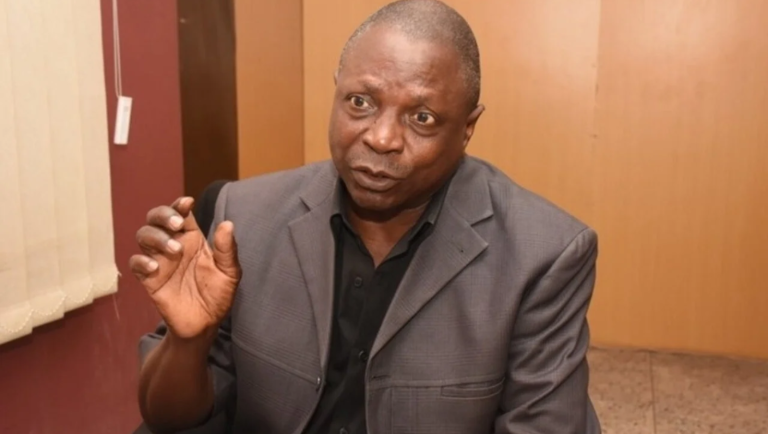
Dr Adetokunbo Pearse
A former Chicago State University lecturer, Dr Adetokunbo Pearse, has revealed that he provided information on President Bola Tinubu’s academic records to people who approached him during a search linked to late Lagos politician Funsho Williams.

Pearse disclosed this during an interview on News Central TV, where he discussed his teaching experience at the American university and repeated his claim that Tinubu never attended the institution.

According to the former lecturer, people seeking information about Tinubu’s academic record were directed to him because of his position at the university.
He said the incident happened around 1999, when Williams was reportedly looking into Tinubu’s educational background.

“I can tell you now that when Funsho Williams was looking for information on Tinubu’s record, I think it was 1999, it was to me that they sent people to come and collect the information,” Pearse said.

He added that he had access to the information and eventually handed it over to those who came to collect it.

“I had the information. All the trouble that Atiku was going around looking for information, I had it there. I gave it to them,” he said.

Pearse, who taught at Chicago State University from 1985 to 1990, also said he was the director of the programme Tinubu claimed to have attended.

He maintained that the President never studied at the institution, describing him as someone without integrity.

“But the fact of the matter is, I know that he never attended Chicago State University, and he knows that I know,” Pearse said.

His comments come amid renewed scrutiny of Tinubu’s educational background ahead of the 2027 general elections.

Chicago State University had previously confirmed that Tinubu attended the institution between 1977 and 1979 and obtained a degree in Business Administration. Pearse’s teaching period began after the period of attendance confirmed by the university.