The Federal Government has suspended all reviews and increases in broadcast licence fees until further notice, directing the National Broadcasting Commission (NBC) to ensure strict compliance with the decision as part of measures to address the rising cost of operating broadcast stations across the country.
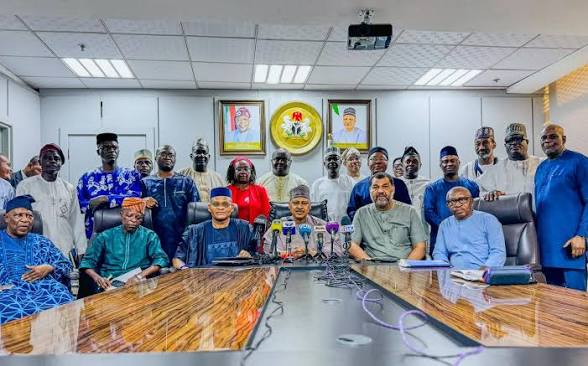
Minister of Information and National Orientation, Mohammed Idris, announced the suspension in Abuja during a meeting with a delegation of the Broadcasting Organisations of Nigeria (BON), which raised concerns over increasing operational costs, regulatory charges, access to financing and other challenges threatening the sustainability of the broadcasting industry.
The minister’s media aide, Rabiu Ibrahim, in a statement, said the decision followed representations made by BON during a courtesy visit led by its Chairman, Tony Akiotu, after the organisation’s 82nd General Assembly in Calabar, Cross River State.
“Any increase in licence fees is hereby put on hold. All reviews relating to licences are suspended until further notice. I am directing the NBC to ensure strict compliance while we review the situation,” Idris declared. The minister also directed the Director-General of the NBC to expedite the review of the National Broadcasting Code to ensure that the regulatory framework remained responsive to emerging developments and challenges confronting the industry.
He assured BON that the Federal Government would sustain engagement with broadcasting stakeholders to create a more conducive environment for the growth and sustainability of the sector.
On the Digital Switch-Over (DSO), Idris promised to convene a stakeholders’ meeting to address outstanding issues, while disclosing that he had directed the Advertising Regulatory Council of Nigeria (ARCON) to enforce the 45-day payment period for advertising services. The minister also assured the delegation that the ministry would engage relevant stakeholders on access to affordable financing and concerns over spectrum allocation.
He congratulated BON on the successful hosting of its 82nd General Assembly and reaffirmed the government’s commitment to sustained dialogue and collaboration with broadcasting organisations.
Idris stressed the critical role of broadcasting in strengthening democracy, promoting national cohesion and ensuring that citizens had access to credible and accurate information, particularly as Nigeria prepared for the 2027 general elections. “Freedom of expression must go with responsibility. You cannot simply say anything and claim to be practising journalism. Journalism has standards, procedures and ethics. I urge broadcasters to ensure that what they report is factual, responsible and promotes national unity and peaceful coexistence,” he said.
Earlier, BON Chairman, Tony Akiotu, commended the minister for his intervention during the June 2026 DSO launch, noting that the stakeholders’ meeting he convened helped address concerns about ensuring a level playing field for operators.
Akiotu identified broadcast licence fees, rising operating costs, access to financing, spectrum allocation, the National Broadcasting Code and enforcement of the 45-day advertising payment period as major concerns requiring government intervention.
“BON believes in dialogue, consultation and mediation to prevent a breakdown of industrial harmony in the broadcasting industry. We are grateful for your personal intervention during the DSO launch and seek your continued support in addressing the challenges affecting our members,” he said.
Insists Senate not rubber stamp, defends Rivers emergency rule
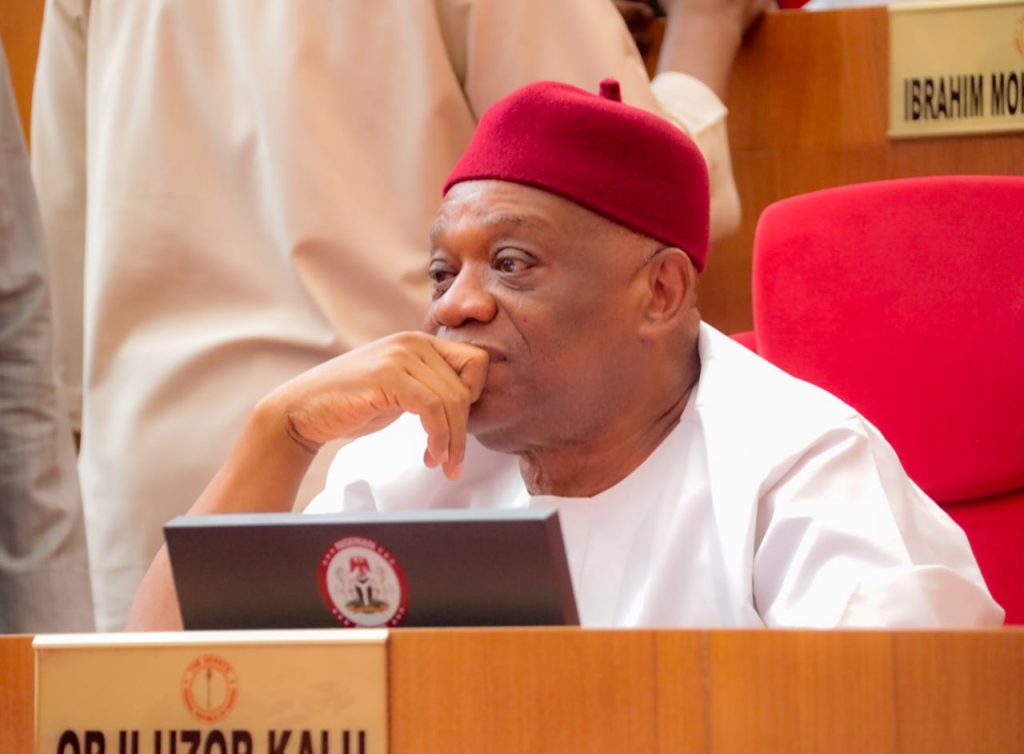
Former Abia State governor and Senator representing Abia North, Orji Uzor Kalu, has declared that President Bola Tinubu has turned Nigeria’s economy around despite the hardship occasioned by his administration’s reforms, insisting that the next major challenge before the President is to tackle insecurity across the country.
Kalu, who also dismissed suggestions that the National Assembly was a rubber stamp of the executive, said he would continue to support Tinubu’s re-election in 2027, while maintaining that his immediate political ambition was to return to the Senate, although he would not reject the position of Senate President if offered.
Speaking on ARISE Television’s ‘Prime Time’ programme last night, the former governor defended the administration’s economic policies, arguing that the reforms, though painful, had begun to yield results, particularly in the manufacturing sector.
“You know that President Bola Ahmed Tinubu has turned the economy around. I don’t talk politics, I talk economy.”
Kalu maintained that Tinubu had stabilised the economy at the micro level, insisting that the temporary difficulties associated with economic reforms should not obscure what he described as improvements already being recorded.
“There is no reform on earth without people suffering for the time being,” he said, arguing that factories were performing better than they did in 2021.
The senator, however, acknowledged that insecurity remained a major challenge requiring urgent presidential attention, saying the government must now concentrate on addressing threats to lives and property.
Kalu, a prominent supporter of Tinubu’s second-term ambition, reiterated his conviction that the President remained the All Progressives Congress (APC) candidate for the 2027 presidential election, while dismissing the opposition as too fragmented to pose a serious challenge.
The former governor had previously maintained that the South-East would support Tinubu’s re-election, arguing that the President deserved another term to consolidate his economic reforms.
On the relationship between the executive and the legislature, Kalu rejected the perception that the Senate merely endorsed decisions taken by the President, insisting that his support for the administration did not amount to unquestioning loyalty. “I’m not a rubber stamp,” he declared.
He nevertheless defended Tinubu’s intervention in the political crisis in Rivers State, maintaining that the President’s action against Governor Siminalayi Fubara was constitutional.
Turning to his political future, Kalu said he was not pursuing any particular leadership position in the National Assembly, stressing that his immediate concern was to secure another term in the Senate and contribute to national development. “I have no ambition. If anything is given to me, I will take.”
He added that his ambition was “just to sit in the Senate and contribute to issues that will make Nigeria better.”
However, when questioned about the possibility of becoming Senate President after the 2027 elections, Kalu indicated that he would not reject the position if it came his way, particularly if President Tinubu supported his emergence.
He also spoke about the importance of grooming younger political leaders and creating opportunities for others to assume positions of responsibility in the future.
Kalu has been linked to renewed interest in the Senate presidency ahead of the next political dispensation, although he insisted during the interview that he was not actively seeking the position. He had also previously indicated that any presidential ambition he might harbour would have to wait until Tinubu completed a second term.
Reflecting on his political career, Kalu revisited his relationship with former President Olusegun Obasanjo, alleging that despite the support he and his associates gave Obasanjo following his release from prison and eventual emergence as President, their political relationship subsequently deteriorated.
The former governor said he remained “very close” to Obasanjo, notwithstanding their past political differences and the disputes that arose during the former President’s administration.
According to Kalu, he and Obasanjo had discussed an arrangement under which the former President would serve for four years, but he accused him of subsequently acting contrary to constitutional expectations.
He also alleged that Obasanjo used the Economic and Financial Crimes Commission (EFCC) to pursue political figures, including former Plateau State governor, Joshua Dariye.
Kalu further accused the former President of damaging his business interests and engineering the revocation of his bank’s licence, which he attributed to political and ethnic considerations.
He alleged that Obasanjo took those actions “because of the Igbo,” suggesting that their political differences had consequences for his business interests.
The senator also expressed disappointment with the Peoples Democratic Party (PDP), accusing the party of turning against him despite the financial and material support he claimed to have provided during its formative years.
“After bringing food the PDP turned against me. When people had no money, I brought in money,” he said.
Kalu maintained that he had made substantial contributions to the party’s development at a time when resources were scarce, but subsequently became a target of political opposition within its ranks.
Despite his experience with the EFCC and the judicial process, the former governor expressed confidence in Nigeria’s judiciary, describing it as the “freest” in the world.
He said there were still principled judicial officers who remained committed to interpreting and applying the law without regard to political pressure or personal interests.
According to him, some judges continued to see “the law as the law,” a development he considered important to the administration of justice.
Reflecting on the personal consequences of his legal ordeal, Kalu said the experience had made him more humble and given him a different perspective on life, public service and the responsibilities of leadership.
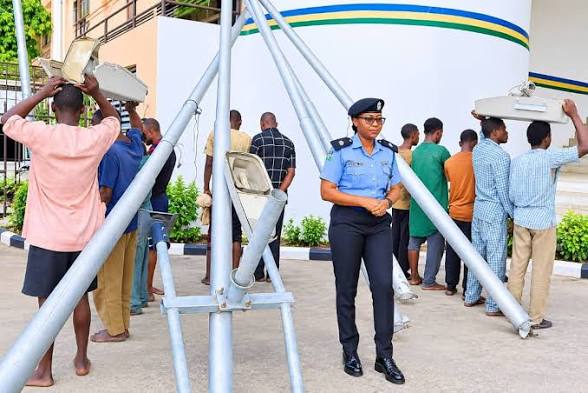
The Federal Capital Territory (FCT) Police Command has arrested eight suspected members of a vandalism gang and recovered five stolen streetlight poles from them.
The suspects, according to the Command’s Public Relations Officer, SP Josephine Adeh, were arrested by police patrol operatives attached to the Central Police Station during a routine anti-crime operation in the city centre at about 3am on October 23, 2026. Adeh, in a statement, identified the suspects as Sani Musa, Ashiru Adamu, Markus Joseph, Suleman Ibrahim, Jamilu Umar, Usman Aliyu, Uzairu Sani and Shafiu Bala.
She said preliminary investigations indicated that the suspects belonged to a criminal gang allegedly involved in the vandalism and theft of public and private infrastructure across the Central Business District, Maitama, Wuse, Garki and Asokoro districts of the FCT.
According to her, five long streetlight poles, which had been cut at their bases and were suspected to have been stolen, were recovered from the suspects following their arrest.
“The exhibits and suspects remain in police custody and will be charged to court upon the conclusion of investigations,” she said.
The police spokesperson urged residents of the FCT to remain vigilant and promptly report suspicious persons and activities to the nearest police station.
Goodwill has continued to trail the retirement of 24 police detectives from the State Criminal Investigation Department (SCID), Panti, Yaba, Lagos, with a businessman, Abayomi Awoboku, rewarding the retirees with millions of naira worth of shares in Dangote Refinery and Petroleum.
Awoboku, Chief Executive Officer of Konstrutum Construction, who was among the dignitaries at the retirement reception, also engaged a professional investment firm to manage the shares and ensure maximum returns for the beneficiaries.
The gesture, described as a remarkable show of appreciation for the officers’ decades of service, followed the historic visit of the Inspector-General of Police, IGP Olatunji Disu, to the department and his participation in the retirement ceremony. In a video, Awoboku said the gesture was aimed at appreciating the retired police veterans and encouraging serving officers and the Nigeria Police Force to remain committed to service to the fatherland.
Reacting to the donation, the Lagos State Commissioner of Police, Fatai Tijani, expressed profound gratitude to the businessman for his generosity and support for the retired officers.
Earlier, the Deputy Commissioner of Police in charge of SCID, DCP Dayo Akinbisehin, had paid glowing tributes to IGP Disu and CP Tijani for their leadership and support, which he said had helped the department and its retired veterans thrive.
In an appreciation letter to Awoboku on behalf of the commissioner and the beneficiaries, Akinbisehin wrote:
“May I, on behalf of the Commissioner of Police, Lagos State, CP Fatai Tijani, as well as the recently retired officers of this department, convey our profound appreciation for your benevolence and invaluable support towards the successful retirement reception organised in honour of our veteran officers.
“Your generous contribution constituted a remarkable demonstration of corporate responsibility, institutional solidarity and enduring goodwill towards the Nigeria Police Force.
“The occasion was further elevated by the physical presence of our Inspector-General of Police, IGP Olatunji Disu.”
The retirement ceremony, held at the SCID headquarters, Panti, Yaba, brought together senior police officers, dignitaries, colleagues and family members to celebrate 24 detectives who had completed 35 years of service to the nation.
Speaking at the event, IGP Disu commended the retirees for their sacrifices and assured them that the Nigeria Police Force would continue to support them even after their exit from active service.
Congratulating the officers, the IGP described their retirement as the completion of an important chapter in their careers, stressing that it would not end their relationship with the Force.
“Congratulations to all of you for successfully completing 35 years of service in the Nigeria Police Force. This is not the end of everything. We will continue to support you, even after service. We appreciate all you did for your fatherland,” Disu said.
Reassuring the retirees of the Force’s continued commitment to their welfare, he added:
“You are still police officers. For life, you are police officers. And we’ll continue to take care of your welfare. I wish you the best anywhere you go. Thank you so much.”
The 24 retirees were celebrated as men and women whose 35 years of service represented countless hours of commitment to public safety and the protection of lives and property.
Their careers, it was noted, were marked by night shifts, duties in heavy rain and work on public holidays, often at the expense of time with their families.
The event attracted an array of eminent personalities, including the Oba of Lagos, HRM Oba Rilwanu Osuolale Akiolu, who served as the royal father of the day, alongside his White Cap Chiefs.
Speakers at the ceremony acknowledged the retirees’ contributions to the investigation of complex and sensitive cases handled by the SCID, described as Lagos State’s foremost police investigation department.
Tributes were also paid to the spouses and families of the retired officers, some of whom accompanied the veterans to the event. They were praised for their sacrifices, particularly the long nights, missed celebrations and prolonged absences occasioned by the demands of police work.
One of the retirees, DSP Benson Emuerhi, described his 35-year career as challenging but fulfilling, saying his decision to join the Force was driven largely by his desire to serve humanity.
Emuerhi, who served in the Prosecution Department, recalled how he intervened in disputes involving minor cases that could otherwise have escalated into serious conflicts.
He said such experiences strengthened his commitment to public service but expressed concern that police officers were not sufficiently appreciated despite the enormous sacrifices their profession demanded.
Highlighting the peculiar demands of policing, he said officers were expected to remain available for duty regardless of weekends, public holidays or personal emergencies.
“Police work is different. There is no Saturday or Sunday when it comes to protecting lives and property,” he said.
Another retiree, DSP Rita Momah, who also completed about 35 years in the Force, stressed the importance of continuous training, professionalism and respect for human dignity in modern policing.
She urged serving officers to adopt a human face in their dealings with suspects, victims and members of the public, insisting that the protection of human dignity must remain central to police operations.
The ceremony was therefore not only a celebration of the retirees’ decades of service but also an opportunity to highlight the need for stronger institutional support, improved welfare and sustained investment in the well-being of police personnel.
The send-forth initiative, now in its third edition, has become an integral part of the SCID Panti tradition since Akinbisehin assumed leadership of the department.
The initiative was approved by CP Tijani in line with the Inspector-General of Police’s policy thrust, which prioritises the welfare of serving and retired personnel of the Nigeria Police Force.
With Awoboku’s gesture providing the retirees with long-term investment benefits, the recognition of the veteran detectives has taken on a new dimension.
The donation stands out as an encouraging example of private-sector support for public service veterans and a reminder that those who dedicate their lives to protecting society deserve to be celebrated and supported even after retirement.
Here is the professionally edited version in The Sun newspaper style, with improved grammar, stronger flow, sharper paragraphs and a more compelling headline. I have retained all the details and information in your original report.
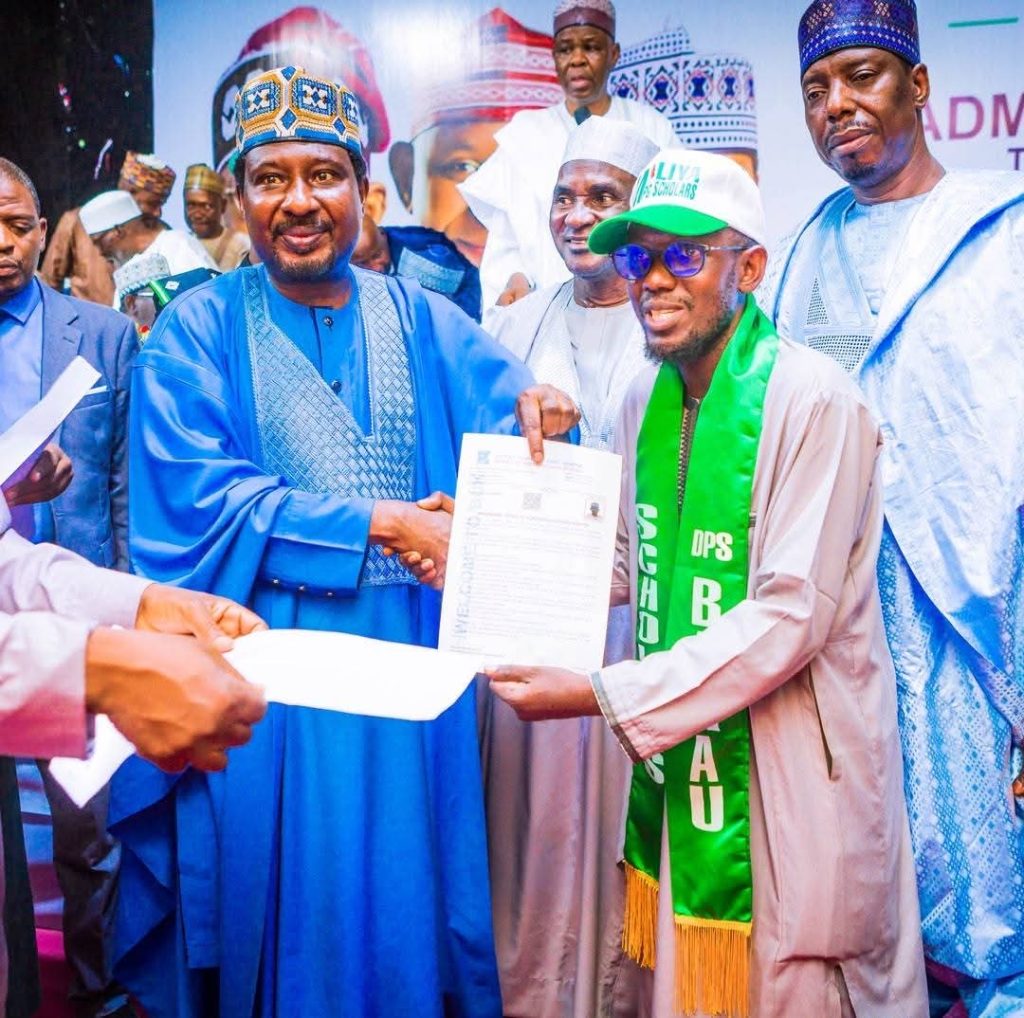
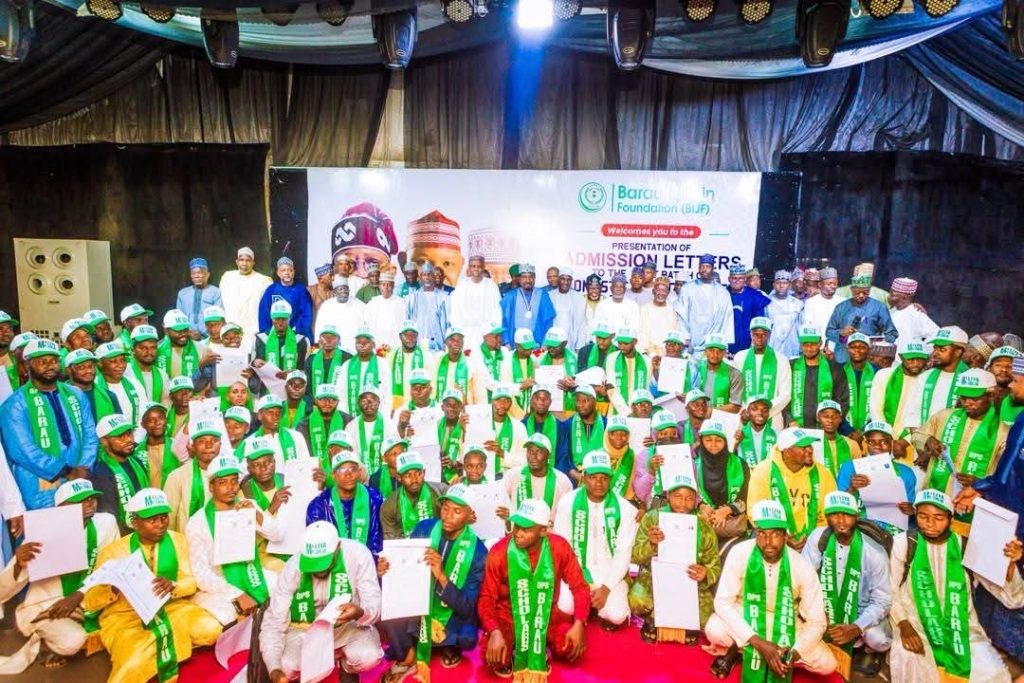
The Barau I Jibrin Foundation (BIJF) has presented admission letters to 85 beneficiaries of its first batch of domestic postgraduate scholarship programme to study at Bayero University, Kano.
The Deputy Senate President, Sen. Barau Jibrin, founder of the foundation, presented the admission letters at a ceremony in Kano on Monday.
He said the initiative was aimed at providing Nigerian students, particularly those from Kano North Senatorial District, with opportunities to acquire advanced education in specialised fields.
The senator said the beneficiaries were selected to undertake postgraduate studies in various specialised disciplines, including Engineering, Computer Science, Cybersecurity, and Climate Change, among others.
He said the foundation had previously sponsored students to study in India and other foreign countries but decided to expand the programme to include reputable universities within Nigeria.
According to Barau, the decision followed the discovery that some specialised courses offered abroad were also available in Nigerian universities, including BUK.
The deputy senate president commended the university management for embracing the initiative and providing the necessary support to ensure the successful admission of the beneficiaries.
Barau said investment in education and human capital development was a global priority that should not be left to government alone.
He said: “I will not stop this struggle until every child, every youth, in Kano becomes educated.”
The senator said the Federal University of Science and Technology, Kabo, had recorded significant progress within a short period.
He added that the provision of modern laboratory equipment and other facilities had positioned the university to introduce programmes such as Medicine and Engineering.
Barau pledged to facilitate the acquisition of additional equipment to enable the university to offer courses in Artificial Intelligence, robotics and other emerging technologies.
The lawmaker said he was committed to making the institution one of the leading universities in Northern Nigeria.
He urged the beneficiaries to take their studies seriously, acquire relevant skills and explore opportunities for self-employment and entrepreneurship rather than depending solely on government jobs after graduation.
Barau revealed that another batch of postgraduate scholarship beneficiaries would be sponsored in subsequent admission exercises.
The deputy senate president encouraged female students to take advantage of the scholarship opportunities and pursue postgraduate studies without hesitation.
The News Agency of Nigeria (NAN) reports that Barau also donated computers to each of the beneficiaries.
Earlier, Prof. Tijjani Hassan-Darma, Dean, College of Postgraduate Studies, BUK, commended the senator for supporting postgraduate education and assisting parents in providing quality education for their children.
Hassan-Darma assured the foundation of the university’s continued cooperation, adding that the institution was committed to ensuring that the beneficiaries made effective use of the opportunity.
He said the university had identified some specialised programmes proposed by the beneficiaries that were not available at the time of the initial admission process.
He assured that the university would work towards accommodating such programmes in subsequent academic sessions.
On his part, the Special Adviser to Barau on Youth and Sports Development, Kabiru Ado-Lakwaya, described the initiative as another demonstration of the senator’s commitment to youth development.
Ado-Lakwaya urged the beneficiaries to justify the confidence reposed in them by the foundation through hard work and academic excellence.
He said the scholarship programme would contribute to producing skilled graduates capable of supporting technological advancement and economic development.
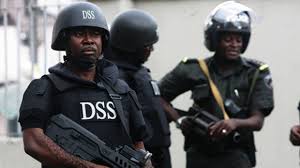
The Campaign for Democracy (CD) has commended the Department of State Services (DSS) and other security agencies for their recent operational successes against terrorism, banditry, kidnapping and organised criminal activities, urging President Bola Tinubu to substantially increase funding for intelligence operations.
The organisation specifically praised the leadership of the DSS Director-General, Oluwatosin Adeola Ajayi, saying his emphasis on intelligence gathering, modern security technology, proactive operations and inter-agency collaboration, had strengthened the country’s security architecture.
In a statement by its National Secretary, Olufemi Lawson, the group said the recent achievements reflected growing reliance on intelligence-driven operations to identify security threats, dismantle criminal networks and prevent attacks. It cited the successful rescue of 10 passengers abducted from a commercial vehicle around Orita Fufu, Awa-Ijebu, in Ijebu North-East Local Government Area of Ogun State, following a joint operations, involving the DSS, the Nigeria Police Force and the Amotekun security outfit.
The victims, including a National Youth Service Corps member, were rescued, while one suspected kidnapper was arrested and another reportedly killed during subsequent operations.
The group recalled that Ogun State Governor, Dapo Abiodun, had commended the DSS boss for providing critical intelligence and sophisticated security equipment that aided the operation.
The organisation also highlighted a November 9 operation in Ogun State, which reportedly led to the neutralisation of another suspected kidnapper, the arrest of an 18-year-old suspect and the recovery of additional AK-47 rifles.
It further cited the October arrest of five suspected members of the gang responsible for abducting 20 prospective NYSC members in Imo State. The suspects were arrested in Rivers and Abia states during intelligence-led operations, involving the DSS, the military and the police.
According to the organisation, DSS-led operations also contributed to the foiling of a planned mass kidnapping in Bakori Local Government Area of Katsina State, where security forces reportedly neutralised 18 armed bandits and rescued 45 abducted persons.
It added that the interception of arms couriers across Plateau, Nasarawa, Kaduna and Benue states, demonstrated the importance of intelligence operations in disrupting weapons supply networks.
The group also referenced figures presented at the November 5 security briefing organised by the Office of the National Security Adviser, where the Armed Forces reported that operations in September and October resulted in 435 terrorists and bandits neutralised, 809 suspects arrested and 717 kidnapped victims rescued.
The police, during the same period, reported 1,519 arrests, the rescue of 255 kidnapped victims and the recovery of 191 firearms.
While describing the figures as encouraging, the CD urged the Federal Government to provide the DSS with greater financial and technological resources to sustain its operations.
It said modern intelligence gathering required sophisticated surveillance equipment, advanced communication systems, digital forensic capabilities, data analysis infrastructure, operational mobility and continuous personnel training.
The organisation also called for improved welfare packages and specialised training for security personnel, noting that adequate investment in intelligence would strengthen Nigeria’s capacity to anticipate threats and protect lives and property.
It commended Tinubu for his administration’s commitment to national security, urging him to sustain the political will and funding needed to defeat terrorism, kidnapping and banditry.
It also appealed to Nigerians to support the security agencies by providing credible information about suspicious movements and activities in their communities.
It maintained that intelligence-driven operations, professional leadership, modern technology and sustained inter-agency cooperation remained critical to achieving lasting security across the country.
The Federal Road Safety Corps (FRSC) has said no fewer than 3,445 persons have died in road traffic crashes across Nigeria between January and September 2026.
The Corps Marshal, Malam Mohammed disclosed this at a joint press briefing with critical stakeholders in commemoration of the 2026 World Day of Remembrance for Road Traffic Victims in Abuja, yesterday.
Mohammed said the 2026 commemoration, scheduled for Monday to November 15, was designed to transform remembrance into commitment and compassion into measurable action.
He said that 7,156 crashes were recorded within the period, leaving 22,292 persons injured.
He described the figures as a reflection of the human cost of road crashes, noting that behind every statistic were lost lives, shattered families and grieving communities.
“These figures represent more than statistics; they are human lives lost, families shattered and communities thrown into grief”.
The corps marshal identified excessive speed and dangerous driving behaviours as major contributors to Road Traffic Crashes (RTCs).
He said the FRSC had continued to intensify enforcement, public enlightenment and stakeholder engagement to improve road safety nationwide.
“Excessive speed and dangerous driving behaviours remain major contributors to road traffic crashes. Every reckless decision on the road has the potential to extinguish a life and leave behind a family in perpetual sorrow.
“We must therefore recognise road safety as both a collective responsibility and a moral obligation.
“As the lead agency responsible for road safety administration and traffic management, the FRSC has continued to intensify enforcement, public enlightenment and stakeholder engagement across the country.
“Through our Road Traffic Crash Database Management System (RTCDMS), we identify high-risk corridors and deploy personnel strategically for targeted patrols, surveillance, enforcement and rescue operations,” he said.
The FRSC boss said the corps deployed personnel strategically for targeted patrols, surveillance, enforcement and rescue operations using data from its road traffic crash database management system to identify high-risk corridors.
Mohammed reaffirmed the corps’ commitment to implementing the United Nations Decade of Action for Road Safety 2021–2030, which sought to reduce road traffic deaths and injuries by at least 50 per cent by 2030.
He called on government agencies, transport unions, the media, civil society organisations and emergency response agencies to strengthen collaboration with the FRSC.
He also urged motorists to obey traffic regulations, respect speed limits, avoid distractions, use appropriate safety restraints and protect vulnerable road users, including pedestrians, cyclists and motorcyclists.
He said the greatest tribute to road traffic victims was to ensure that their memories inspired actions capable of saving other lives.
In his remarks, the Country Representative, World Health Organisation (WHO), Pavel Ursu, said the annual commemoration provided an opportunity to remember victims of road crashes and renew commitment to preventing future tragedies.
He said that the 2026 theme, “A Light That Unites Us”, called for remembrance to be transformed into action, empathy into support and awareness into lasting commitment.
He said approximately 1.2 million people die annually in road traffic crashes globally, with injuries remaining the leading cause of death among children and young people aged five to 29 years.
He added that more than 90 per cent of the deaths occurred in low- and middle-income countries.
The WHO representative said that the deaths and injuries were preventable through safer road infrastructure, stronger enforcement, improved road user behaviour, safer vehicles and effective post-crash care.
He described the entry into force of the African Road Safety Charter on March 12, 2026, as a significant milestone, noting that it provided Africa’s first legally binding framework for improving road safety.
He congratulated Nigeria for being among the first countries to ratify the Charter.
He added that sustained investment in safer roads, enforcement, trauma care and crash data systems would be critical to achieving its objectives.
“WHO and the wider UN system will continue to support Nigeria through evidence-based policies, stronger institutions, safer infrastructure, improved crash data systems and enhanced emergency services,” he said.
Also speaking, Dr Olarenwaju Olatunji, Focal person, United Nation Decade of Action on Road Safety And Traffic Injury Prevention (UNDARSTIP) said the annual commemoration was more than an occasion to remember those who had lost their lives.
Olatunji said that it was also an opportunity to acknowledge survivors living with injuries and disabilities, affected families and emergency responders.
He expressed appreciation to the FRSC, WHO, relevant ministries, departments and agencies, development partners and other stakeholders for their contributions to road safety advocacy and implementation in Nigeria.
He also expressed solidarity with families who had lost loved ones and survivors still dealing with the consequences of road traffic crashes.
The cycle of bloodletting continued in Plateau State at the weekend as suspected gunmen launched separate attacks on communities in Barkin Ladi and Riyom Local Government Areas, killing five people, including a soldier and a 15-year-old boy, while two others sustained gunshot injuries, one of them critically.
The killings, which occurred on Sunday, heightened fears among residents of the affected communities, particularly as one of the attacks took place in Barkin Ladi, where a curfew was already in force to contain recurring violence. The attacks came as troops of Operation Enduring Peace (OPEP) intensified operations against criminal elements across the state, killing two suspected terrorists, dismantling several camps, arresting a suspected gunrunner and recovering arms, ammunition and other logistics in Mangu, Kanam and Wase Local Government Areas.
In another operation in Jos North Local Government Area, troops tracking a stolen mobile phone raided a hotel, arrested five suspects and recovered 26 mobile phones and other items suspected to be linked to criminal activities.
Confirming the attacks on Berom communities, the Berom Youth Moulders-Association (BYM) said suspected bandits invaded Gwol-Hoss village in Riyom Local Government Area at about 5 p.m. on Sunday and killed a 65-year-old resident, Danladi Badung.
The association disclosed that another attack on Bel community in Sho District of Barkin Ladi Local Government Area claimed four lives, including those of three civilians and a soldier whose identity had yet to be established.
The civilian victims were identified as Emmanuel Pam Dachung, 15; Joseph Gyang, 28; and Emmanuel Yohanna, 32.
Two other residents, Bala Kefas Dachung, 26, and Vivian Christopher, 26, sustained gunshot injuries during the attack.
BYM National Publicity Secretary, Rwang Tengwong, who confirmed the incidents in a statement, said Christopher was in critical condition at the Jos University Teaching Hospital (JUTH), where surgeons reportedly removed six bullets from her body during an operation.
Tengwong expressed concern over the renewed attacks, particularly the killing of a minor and a soldier, questioning the effectiveness of existing security arrangements and the curfew imposed on Barkin Ladi.
“The killing of a minor and a soldier, alongside the injuries sustained by other victims, highlights the gravity of the security situation and raises serious questions about the effectiveness of the existing curfew in Barkin Ladi and the capacity of security agencies to protect vulnerable communities,” he said.
The association called on the Plateau State Government, the Nigeria Police Force, the Department of State Services (DSS) and the military to immediately investigate the attacks, identify those responsible and ensure their arrest and prosecution.
It also demanded increased security deployments across vulnerable communities, a review of intelligence-gathering and response mechanisms, and the establishment of effective early-warning systems to prevent further attacks.
BYM further urged the authorities to provide assistance to the injured survivors and families of those killed, insisting that the recurring violence required more decisive action from security agencies.
The Media Information Officer of the operation, Captain Chinonso Polycarp Oteh, said the coordinated, intelligence-driven operations were part of sustained military efforts to deny criminal elements safe havens and dismantle networks supporting insecurity in the state.
According to him, troops of a special tactical team, acting on credible intelligence, conducted a sting operation at Gindiri Market in Mangu Local Government Area, leading to the arrest of a suspected gunrunner identified as Adamu Adamu, also known as Jauro.
Oteh said an AK-47 rifle and 15 rounds of 7.62mm special ammunition were recovered from the suspect, who was taken into custody for further investigation.
He disclosed that troops of the 33 Artillery Brigade also launched coordinated offensive operations on November 8, 2026, in Dajin Madam Forest, spanning Kanam and Wase Local Government Areas, where several terrorist camps were cleared and their support structures destroyed.
“During the operations, several terrorist camps were cleared and their life-support structures destroyed, significantly degrading their capacity to sustain criminal activities and use the forest as a haven for attacks.
“The advancing troops subsequently made contact with the terrorists and engaged them with superior firepower, forcing them to withdraw in disarray, with bloodstains observed along their withdrawal routes indicating possible casualties,” he said.
The military spokesman added that further searches of the camps led to the recovery of 135 rounds of 7.62mm NATO ammunition, PKT links, four mobile phones, two radios, four motorcycles, two drums of Premium Motor Spirit (PMS), assorted camouflage uniforms and other items.
He said troops subsequently encountered another group of suspected terrorists near Kukawa village, where two of them were killed and additional motorcycles recovered.
In a separate operation in Jos North Local Government Area, Oteh said troops arrested five suspected criminals during a raid on Prime House Hotel along Baring Road, following intelligence obtained while tracking a stolen mobile phone.
He explained that the phone was snatched on November 6, 2026, at about 9 p.m. and subsequently tracked to the hotel, prompting troops to storm the premises.
During the raid, five suspects were arrested, while the stolen phone was recovered alongside 25 other mobile phones, bringing the total number of recovered phones to 26.
Other items recovered included 27 phone pouches, three MP devices, two earpods, an HP laptop, a knife and four power banks.
Oteh said a vehicle allegedly linked to the suspects was also taken to the military’s Sector 1 Headquarters for further examination, while the suspects and recovered items remained in military custody pending further investigation.
He maintained that the successes recorded in the operations demonstrated the military’s determination to dismantle criminal networks, disrupt their supply chains and restore peace and public confidence across Plateau State..
•May hit 97.3% if economy deteriorates Nigeria may spend nearly three-quarters of its federal government revenue on servicing debt by 2030. This raises germane concerns about the country’s ability to fund infrastructure and other essential services.
The Debt Management Office (DMO) made the projection in its 2024 Debt Sustainability Analysis report released on Monday.
According to the report, the country’s debt service-to-revenue ratio is expected to rise to 71.7 per cent by 2030 under the baseline scenario, exceeding the DMO’s recommended threshold of 50 per cent.
For clarity, the projection means that for every N100 generated by the federal government, about N72 could go towards paying interest and repaying borrowed money, leaving only N28 for other government responsibilities.
The DMO projected that the ratio, which stood at 60.6 per cent in 2024, would drop to 44.9 per cent in 2025 before rising again to 51 per cent in 2026.
It is expected to increase further to 57.1 per cent in 2027, 57.4 per cent in 2028 and 67.3 per cent in 2029 before reaching 71.7 per cent in 2030.
Under a more difficult economic scenario, the situation could be worse, with debt servicing projected to consume 97.3 per cent of government revenue by 2030.
The DMO attributed the rising pressure to debt servicing costs growing faster than government revenue.
Its worst-case scenario assumes a 30 per cent depreciation of the naira, a two per cent decline in real Gross Domestic Product (GDP) and a 2.5 per cent reduction in government revenue.
By comparison, the baseline projection assumes an exchange rate of N1,500 to the dollar, economic growth of 4.8 per cent and a primary budget surplus of 3.8 per cent.
Interestingly, the report projected that Nigeria’s public debt-to-GDP ratio would decline from 53.7 per cent in 2024 to 27.3 per cent by 2030 under the baseline scenario.
However, the expected decline in the debt-to-GDP ratio does not remove concerns about the growing amount of government revenue required to meet debt obligations.
The DMO described Nigeria’s public debt position as moderately sustainable but highly exposed to weak revenue generation, exchange rate depreciation and global economic uncertainties.
It also identified significant financing, refinancing and foreign exchange risks in the country’s debt portfolio.
The report noted that Nigeria’s average Eurobond spread stood at 975.58 basis points between October 2 and December 31, 2024, above the 600-basis-point risk threshold.
It also identified risks associated with short-term borrowing, noting that the annual increase in the share of short-term debt in total public debt stood at 1.8 per cent, above the one per cent threshold.
Foreign investors held 49 per cent of Nigeria’s public debt, also exceeding the 45 per cent threshold and exposing the country to exchange rate risks.
To address the challenges, the DMO recommended stronger revenue generation through tax reforms, a wider tax base, technology adoption and improved tax compliance.
It also called for continued implementation of the petrol subsidy removal and maintenance of a unified and flexible exchange rate system.
The agency urged the government to improve spending efficiency by directing more resources towards investments that can stimulate economic growth and expand its revenue base.
It further recommended the possible sale or privatisation of public assets and greater use of concessional loans, which generally attract lower interest rates and longer repayment periods.
The report’s projections highlight the pressure on Nigeria’s public finances, as increasing debt obligations could leave the government with fewer resources to invest in infrastructure, healthcare, education and other development priorities.
The Independent National Electoral Commission (INEC) has removed 1,608,660 invalid registrations from the voters’ register ahead of the 2027 general elections and identified 54 persons across 10 states for disciplinary action and possible prosecution over alleged manipulation of the registration process.
The commission also disclosed that 873 records belonging to verified deceased persons had been deleted, bringing the combined number of records removed to 1,609,553, following biometric screening, investigation of complaints and adjudication of irregularities uncovered during the 2025/2026 Continuous Voter Registration (CVR) exercise.
INEC Chairman, Prof. Joash Amupitan, who disclosed this at a press conference in Abuja on Monday night, said investigations revealed that some registration personnel deliberately circumvented established procedures, including the misuse of special provisions intended for exceptional registration circumstances involving persons with disabilities.
He said the commission considered the scale of the irregularities serious enough to warrant an investigation into how they occurred and the identities of those responsible, assuring Nigerians that appropriate sanctions would follow.
“54 persons cutting across ten states have been identified as complicit and necessary disciplinary action will be taken against them including possible prosecution,” Amupitan declared.
The INEC chairman explained that the commission had harvested 11,088,238 registration records from the three phases of the 2025/2026 CVR exercise, out of which its Automated Biometric Identification System (ABIS) initially flagged 1,545,052 for further examination.
He, however, clarified that records flagged by the automated system were not automatically invalid, as they were subjected to verification and adjudication before a final determination was made.
“Of these, ABIS initially flagged 1,545,052 for examination. A flagged record is not necessarily an invalid registration: automated screening identifies matters requiring review, while authorised adjudication determines the outcome,” he said.
According to him, 1,277,052 registrations were confirmed invalid and excluded before the publication of the preliminary register, while a further 268,000 cases underwent adjudication following objections, claims and complaints received during the public display of the register.
Of the 268,000 cases, he said, 217,722 were confirmed invalid and removed, while 50,278 were cleared as valid and retained.
He added that subsequent screening uncovered another 113,886 invalid registrations, which were also deleted, bringing the cumulative number of invalid registrations removed to 1,608,660.
“The cumulative total of confirmed invalid registrations removed after the objections, claims and complaints is 331,608, in addition to the 873 separately verified deceased voters’ records.
This brings the total clean-up to 1,608,660,” he said.
Clarifying the figures, Amupitan said the 1,608,660 represented confirmed invalid registrations, while the 873 deceased voters constituted a separate category, bringing the overall number of deleted records to 1,609,553.
“The Commission confirms that the current register-cleaning exercise for the 2025/2026 CVR has been concluded. All 1,608,660 confirmed invalid registrations have been removed. In addition, 873 records belonging to verified deceased persons have also been removed as a separate category.
“The combined total of records removed under these two categories is 1,609,553. Final reconciliation, quality assurance and publication checks remain to ensure that approved changes are accurately reflected in the final register, scheduled for publication on 15 December 2026. “With this, the complaints and irregularities raised by the public on the preliminary register for the 2025/2026 CVR have been addressed,” he said.
Amupitan disclosed that the technical assessment covered suspected multiple registrations, unusual registration patterns, substituted photographs and other irregularities associated with registration transactions.
He said the investigation uncovered instances in which registration personnel deliberately bypassed established procedures and misused provisions designed to accommodate exceptional circumstances.
“The commission considers the 1,609,553 as significant enough to warrant an examination of how it occurred and those responsible for this.
“The technical assessment examined suspected multiple registrations, unusual registration patterns, substituted photographs and irregularities associated with registration transactions.
“The commission found instances in which certain registration personnel deliberately circumvented established registration procedures and misused provisions intended for exceptional registration circumstances, including for persons with disabilities,” he said.
The chairman explained that the affected records had been identified and subjected to appropriate review and remedial processes, while personnel linked to the irregularities had been identified for further administrative investigation.
He said INEC was strengthening registration controls through enhanced biometric capture, authentication and verification safeguards to prevent a recurrence.
Amupitan also expressed concern that many complaints of multiple registrations originated from historical voter data captured between 2011 and 2023, when earlier generations of registration technology were in use.
“A major source of concern for the commission is that most of the current complaints of multiple registration of candidates arose from the historical data of 2011 to 2023,” he said.
He recalled that INEC had announced plans in February 2026 to conduct a nationwide voter revalidation exercise as part of broader efforts to improve the accuracy, quality and reliability of the register, particularly records captured with older registration technology.
According to him, the proposed exercise was intended to update biometric information, resolve outstanding registration inconsistencies, improve accreditation during elections and strengthen the overall quality of voter records.
He explained that the commission subsequently deferred the exercise following concerns expressed by stakeholders over its proximity to the 2027 general elections and the possibility of disenfranchising eligible voters.
“However, following concerns expressed by stakeholders about the proximity of the exercise to the 2027 general elections and its potential impact on the participation of eligible voters, and the public, the Commission decided to defer the exercise until after the elections,” he said.
The INEC chairman stressed that postponing the nationwide revalidation exercise did not mean abandoning efforts to eliminate irregularities from the register.
“Importantly, the postponement of the revalidation exercise did not suspend the commission’s existing mechanisms for maintaining the integrity of the Register. Biometric screening, adjudication, statutory claims and objections, and other established verification procedures remain integral to the preparation of the Final Register of Voters,” he said.
He assured Nigerians that the commission would complete the remaining reconciliation and quality assurance procedures before publishing the final register on December 15, 2026, ahead of the general elections.