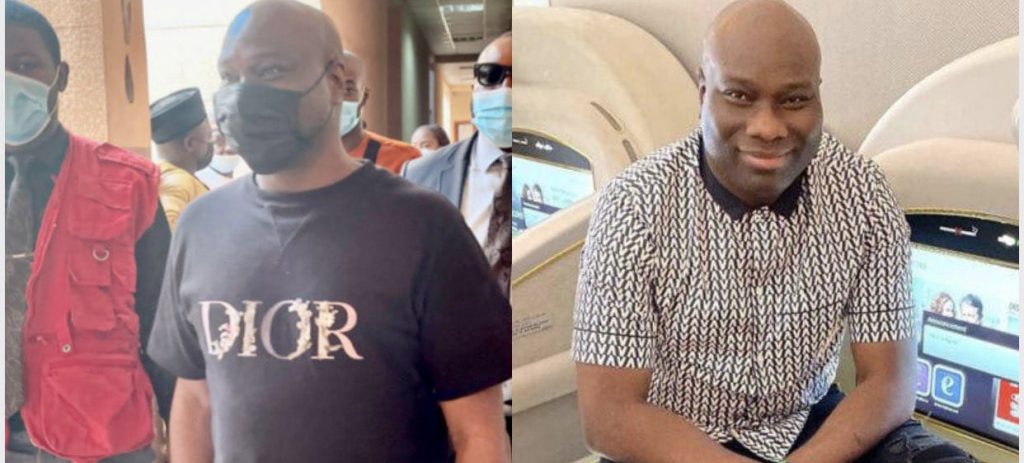
The Lagos State Special Offences Court in Ikeja, presided over by Justice Mojisola Dada, on Tuesday discharged social media influencer Ismaila Mustapha, popularly known as Mompha, from an alleged ₦6 billion money laundering charge filed against him by the Economic and Financial Crimes Commission (EFCC).
The House of Representatives has postponed the resumption of plenary from Tuesday, November 10, to Wednesday, November 11, 2026.
The Clerk of the House, Ibrahim Sidi, who conveyed the directive of the Speaker, Abbas Tajudeen, attributed the postponement to other important national matters requiring the attention of the presiding officers.
The House had, last week, adjourned plenary to Tuesday, November 10, 2026.
The leadership expressed regret over any inconvenience the sudden change in schedule might cause members, while appealing to them to resume legislative activities on Wednesday, following the one-day postponement.
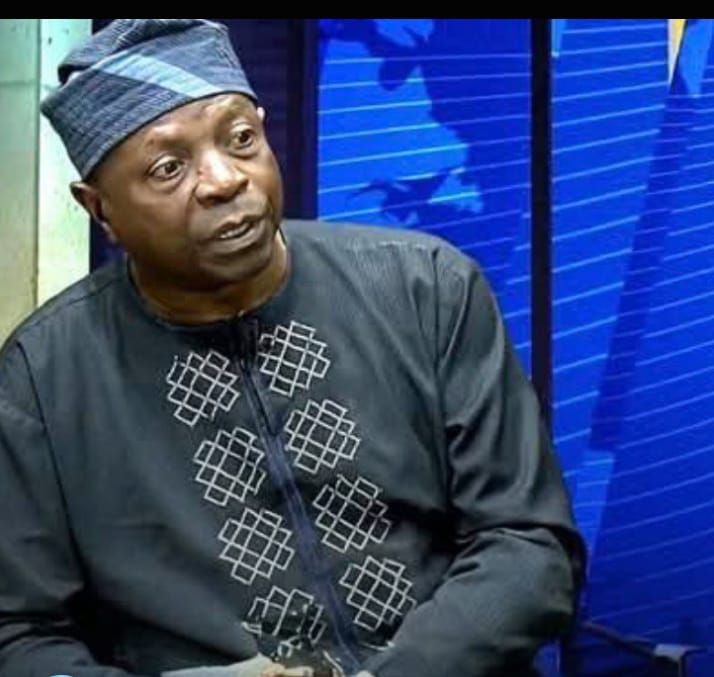
Professor Adebayo Williams has defended President Bola Tinubu over allegations surrounding his academic history at Chicago State University, insisting that the president’s reception by the institution in 2003 was that of a distinguished alumnus.
Williams, in a statement titled “Re: Tokunbo Pearce & President Bola Tinubu,” expressed disappointment with Tokunbo Pearce over what he described as persistent attacks on the president, saying he had hoped Pearce would not cross a particular line.
The professor said he was particularly pained by the development because he was the one who brought Pearce and Tinubu together and was aware of the support the president had extended to him.
He added that Tinubu had never discussed the matter with him. Williams recounted that he met Pearce while both were at the Department of English, University of Sheffield, in the United Kingdom, between February 1981 and September 1982.
According to him, he was a visiting doctoral student and honorary visiting lecturer, while Pearce was a graduate student, and the two became close friends. He said that after spending some time at the University of Buffalo, he returned to Ife to defend his doctoral thesis, while Pearce defended his in 1985 before leaving for the United States.
Williams further recalled that in 2003, he was part of Tinubu’s entourage to Chicago State University, the president’s alma mater, where the delegation received a warm welcome from university officials.
“We received a hero’s welcome and Tinubu was accorded a rousing reception by the University officials usually reserved for distinguished alumni who have brought honour to their Alma mater,” he said.
He added that the delegation took photographs and received souvenirs during the visit, arguing that the reception was inconsistent with the conduct of a student who had allegedly been involved in wrongdoing. Williams also criticised Pearce’s recent comments, attributing them to desperation, while making references to Pearce’s late father, Commander Afolabi Pearse, and his brothers, retired Navy Captain Femi Pearse and Yomi Pearse.
The professor concluded by warning Pearce against crossing further boundaries, adding that he would continue to keep other undisclosed matters private.
“In keeping with where I come from, I assure Toks that all the other secrets are safe with me until he crosses another line,” Williams stated.
Bimbo Ademoye, the Nollywood producer, has offered a N1 million reward for information leading to the whereabouts of an individual she accused of fraudulently claiming copyright ownership of the soundtrack to her latest film ‘My 30th Wedding’.
In a post she later deleted, the actress voiced her outrage, alleging that a person identified as Enemuo attempted to profit from the movie by asserting rights to its soundtrack, a song she said was created for her by Progress, a former Nigerian Idol winner.
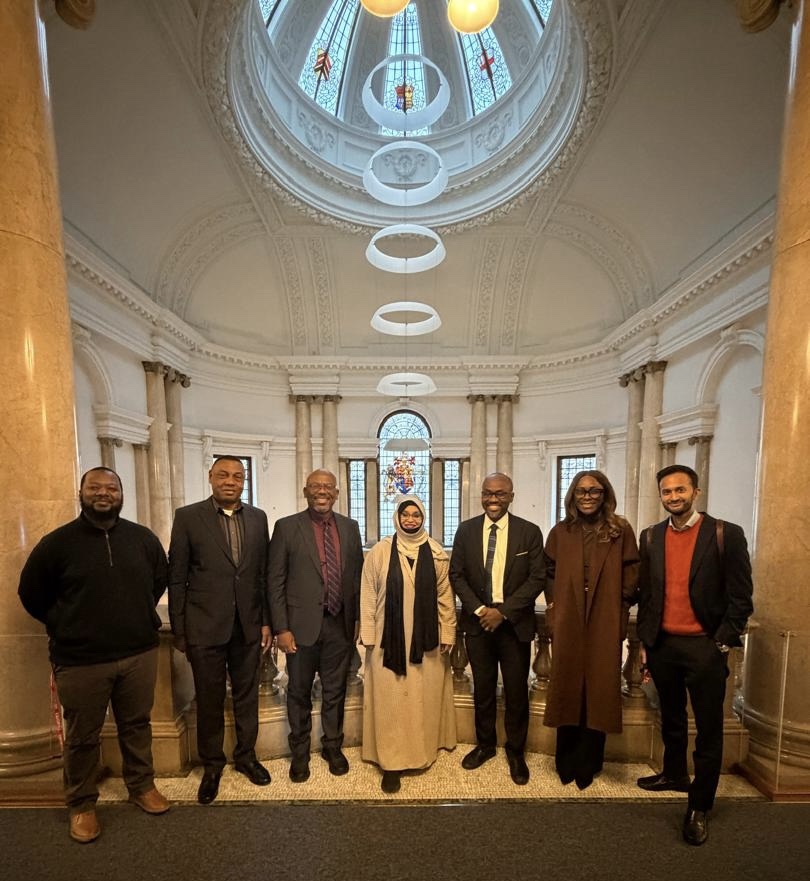
The United Kingdom and Nigeria have strengthened cooperation against illicit finance following high-level engagements in the UK focused on financial intelligence, public-private partnerships and cross-border collaboration.
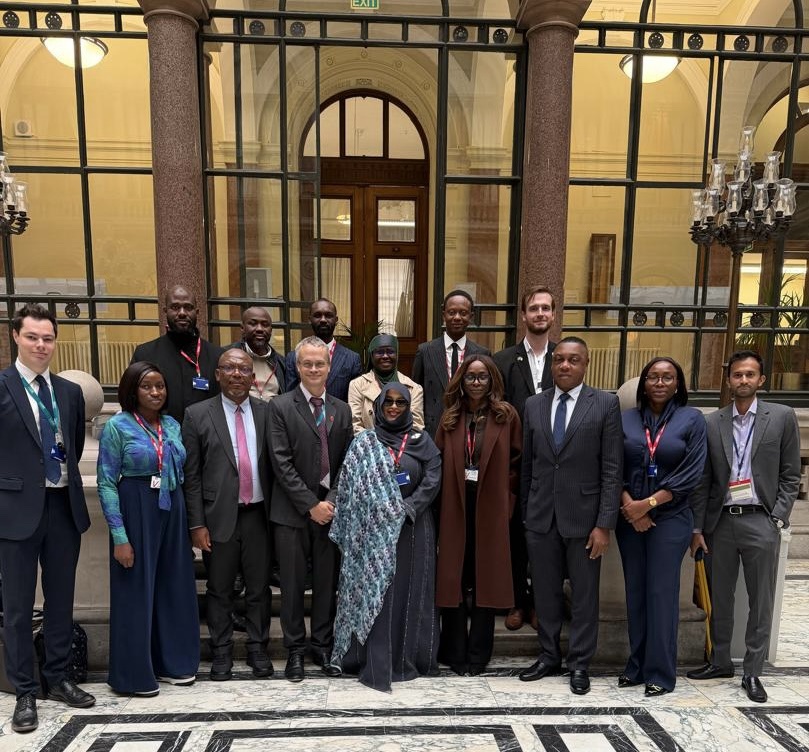
The Nigerian delegation, led by Hafsat Bakari, Chief Executive Officer of the Nigerian Financial Intelligence Unit (NFIU), comprised representatives of the Central Bank of Nigeria (CBN), Nigeria Data Protection Commission (NDPC), Nigerian Communications Commission (NCC), as well as stakeholders from the banking and telecommunications sectors.
A major highlight of the visit was an engagement with the UK’s Joint Money Laundering Intelligence Taskforce (JMLIT), an innovative public-private partnership involving law enforcement agencies, regulators and private-sector institutions in identifying and responding to illicit financial threats.
Working sessions with JMLIT and UK Finance provided opportunities for the exchange of expertise on financial intelligence, information sharing and collaborative approaches to combating illicit financial activities.
The discussions also supported Nigeria’s efforts to establish the Joint Financial Intelligence Cooperation (JFIC), a Nigerian-led public-private partnership aimed at strengthening collaboration between government institutions and private-sector stakeholders.
Anchored on trust, governance and technology-enabled cooperation, JFIC seeks to enhance the collective capacity to identify and respond to money laundering, fraud, terrorism financing and other illicit financial activities.
During the visit, the delegation also engaged senior representatives of the National Crime Agency (NCA), UK Financial Intelligence Unit (UKFIU), HM Revenue & Customs (HMRC), Foreign, Commonwealth & Development Office (FCDO) and HM Treasury. The discussions covered operational cooperation, the UK’s Financial Action Task Force (FATF) Presidency, trade-based money laundering, emerging illicit financial risks and opportunities for stronger international collaboration.
Chris Chalmers, Deputy Director of the Illicit Finance and Anti-Corruption Department at the FCDO, said Nigeria and the UK had a deep and long-standing partnership in tackling illicit financial flows. “Illicit Finance harms both of our economies and enables the work of malicious transnational actors. Engagements last week helped us consolidate our cooperation on a range of shared threats and global standards, including on public private partnerships.
The FCDO will continue to partner with Nigeria to operationalise the Joint Financial Intelligence Collaboration,” he said. Bakari said the increasing interconnectedness and transnational nature of illicit financial networks had made collaboration essential.
“Nigeria is strengthening its financial intelligence architecture through initiatives such as JFIC, which will enable public institutions and private-sector partners to work more effectively together.
“Our partnership with the United Kingdom provides valuable opportunities to exchange expertise and develop practical solutions that reflect Nigeria’s priorities, strengthen our financial system and translate intelligence into measurable impact,” she said.
Marc Brown, NECC Fraud Threat Lead at the NCA, said the partnership between the NECC and NFIU reflected their shared commitment to protecting economic prosperity through a stronger collective response to financial crime.
“As NFIU develops its public-private partnership through the Joint Financial Intelligence Cooperation initiative, we will continue to support and deepen our collaboration, enhancing intelligence sharing, operational effectiveness, and our ability to prevent and disrupt those who seek to exploit and harm our economies,” he said.
The UK and Nigeria reaffirmed their commitment to strengthening cooperation against illicit finance, improving intelligence sharing and protecting the integrity of the financial system through effective public-private partnerships.
The Federal Competition and Consumer Protection Commission (FCCPC) disclosed that its South-West zonal office received over 23,000 complaints and resolved 18,500, complaints has been resolved. The Zonal Coordinator of the Southwest zone Dr Mrs Olubunmi Otti stated this during a chat with newsmen at her office in Ikeja Lagos. She attributed the high volume of complaints to Lagos State’s position as Nigeria’s commercial nerve centre. In a further breakdown, she identified real estate transactions, online purchases, electricity distribution, digital money lending, aviation services and retail trade among the sectors generating significant consumer dissatisfaction. According to Otti, complaints involving property transactions are particularly disturbing, with some developers allegedly collecting millions of naira from prospective buyers using architectural designs and three-dimensional images that bear little resemblance to the properties eventually delivered.
She said some developers also failed to complete projects within agreed timelines but subsequently demanded additional payments from buyers, even when the delays were attributable to the developers.
The situation, she added, had left some property buyers exposed to financial losses, with Nigerians living abroad particularly vulnerable because they sometimes commit funds to transactions without conducting adequate checks on developers and properties. The complaints highlight the risks confronting investors and prospective homeowners in a property market where weak contractual accountability and misleading representations can undermine confidence in real estate transactions.
Online shopping has also become a growing source of consumer complaints, with the Commission receiving reports of customers who paid for advertised products but were subsequently blocked by vendors, making it difficult to recover their money or obtain the goods purchased.
Otti advised consumers to prioritise payment-on-delivery arrangements when shopping online and, where such options were unavailable, verify that vendors had identifiable physical addresses before transferring money.
Electricity distribution companies also featured prominently among businesses attracting complaints, particularly over arbitrary billing, failure to provide prepaid meters, non-compliance with regulatory orders, including the capping of estimated bills and net-metering provisions, as well as poor service delivery.
Other complaints involve digital money lenders and aviation service providers, reflecting the breadth of consumer protection challenges across Nigeria’s increasingly interconnected business environment.
She also noted that of particular concern to the Commission is the continued use of ‘No refund, No Return’ Notices by businesses, despite provisions of the Federal Competition and Consumer Protection Act (FCCPA) 2018 protecting consumers against defective products and misleading business practices.
Otti said consumers were entitled to seek redress where products were defective or failed to meet the specifications, quality and purposes communicated by sellers.
She explained that the law placed responsibilities on producers, manufacturers, retailers and service providers regarding defective products, adding that businesses could be required to provide refunds, replacements or compensation, depending on the circumstances.
She urged businesses to familiarise themselves with the provisions of the Act rather than impose restrictive conditions intended to deny consumers their statutory rights.
The Commission’s disclosure comes amid wider concerns about business practices, market transparency and the effectiveness of regulatory oversight in sectors where consumers often have limited bargaining power.
Otti said the FCCPC was strengthening its enforcement reach through collaboration with State Governments and other regulatory institutions, acknowledging that the scale of consumer complaints, particularly in Lagos, required a coordinated approach beyond the Commission’s physical offices.
She disclosed that the Commission had signed memoranda of understanding with several regulatory institutions, including the Lagos State Consumer Protection Agency (LASCOPA), the Standards Organisation of Nigeria (SON) and the Nigeria Data Protection Commission (NDPC), to improve enforcement and strengthen consumer protection.
As part of the collaboration, she cited a recent engagement involving LASCOPA and supermarket operators following complaints about discrepancies between prices displayed on shelves and amounts charged at checkout.
She said the Commission oftentimes remind operators that where the price displayed on a product differ from the amount demanded at the till, consumers were entitled to pay the lower displayed price.
The engagement also involved SON, which provided guidance on applicable product-labelling standards.
According to Otti, the Commission intended to address consumer violations sector by sector, stressing that partnerships with other regulatory institutions would help extend its enforcement capacity and improve compliance across different markets.
She disclosed that the FCCPC had expanded its state presence, citing the opening of offices in Ibadan and Plateau, while efforts were ongoing to establish additional offices, including in Ebonyi and Kaduna.
On electricity-related complaints, she said the Commission had recently taken its complaint-resolution activities to communities in Ikorodu, Lagos East, West abd Central following appeals from residents over persistent electricity challenges.We intend to expand our scope of stakeholders engagement to other states in Nigeria. At our recently held stakeholders engagements at Ikorodu and Lagis Island, the exercise brought together electricity distribution companies and relevant regulators to address complaints directly, enabling consumers to obtain interventions without relying exclusively on complaints submitted through the Commission’s online platform.
The zonal coordinator said the Commission was also intensifying consumer education through radio and television programmes, consumer clubs in schools, University Consumer Ambassadors and Collaborations with the National Youth Service Corps.
She added that educational materials had been developed in three major Nigerian Languages and Pidgin English to improve public understanding of consumer rights and responsibilities..
Fola Adeyemi SA Media to the Executive Vice Chairman FCCPC
…Digitalises Sub-National Survey Across States, FCT, LGAs
The Central Bank of Nigeria (CBN), through its Statistics Department, has intensified efforts to strengthen the country’s economic data architecture by digitalising the Sub-National Fiscal Survey across the 36 States, the Federal Capital Territory (FCT) and 774 Local Government Areas (LGAs) nationwide. The initiative aims to replace the largely manual reporting process and improve the timeliness, accuracy, consistency and precision of fiscal data for monetary, fiscal and broader economic policy decisions. Speaking at the Sub-national Fiscal Statistics Stakeholders’ engagement held recently in Abeokuta, Ogun State, the Director, Statistics Department, Dr Usman Moses Okpanachi, said the initiative aimed to strengthen the information chain linking fiscal transactions in Ministries, Departments and Agencies (MDAs) and Local Governments to evidence-based policy making. Dr. Okpanachi explained that reliable fiscal statistics were critical to sound economic management, enabling governments to assess revenue performance, expenditure patterns, financing needs and fiscal pressures, and providing policymakers with a clearer picture of public-sector activity and its implications for aggregate demand, liquidity, borrowing conditions and inflation. He said timely, reliable data had become increasingly important as the CBN strengthened its forward-looking, data-dependent monetary policy framework and moved towards a more explicit inflation-targeting regime, noting that the largely manual, twice-yearly Sub-National Fiscal Survey faced challenges with timeliness, logistics, validation, and processing. According to him, the digitalisation initiative would address these constraints by standardising data entry, improving validation, simplifying submissions, enabling better monitoring and traceable corrections, and supporting the transition to more frequent and sustainable quarterly rendition of returns. Dr. Okpanachi emphasised that technology would complement, rather than replace, sound record-keeping, proper reconciliation and professional judgement. He urged States and Local Governments to anchor implementation in timeliness, integrity and continuity by ensuring prompt submission, proper validation and reconciliation of data, and the appointment of designated focal officers to ensure institutional continuity. He noted that the initiative’s success would ultimately be measured by more complete and consistent returns, faster submissions, improved validation, and better fiscal information for decision-making. He assured stakeholders of the Bank’s continued technical and operational support through its Branches and the Statistics Department. The nationwide engagement, which commenced on October 26, 2026, is expected to cover the remaining States by December 4, with the FCT scheduled for December 9 and 10. The practical sessions would enable State and Local Government fiscal officers to use the digital questionnaire, understand validation requirements, and practise submission and correction procedures. As of November 6, 2026, 16 States and their Local Governments had been covered, with strong government support and attendance reaching 100 per cent in almost all the States visited. Following the exercise, trained officers are expected to cascade the knowledge within their institutions and begin submitting returns through the digital platform, while the Statistics Department consolidates implementation outcomes into a national report. The initiative, part of the CBN’s broader data architecture and transformation agenda, is expected to strengthen fiscal data for State and Local Government planning, budgeting and policy evaluation, while providing more timely and reliable information for monetary, financial and fiscal policy decisions.
Residents of Abule-Taylor, Abule-Egba area of Lagos State, on Tuesday staged a protest over the vandalisation of cables in the transformer supplying electricity to the area, demanding urgent intervention from the Ikeja Electric Distribution Company (IKEDC). The cable was reportedly stolen in the midnight of last Saturday, throwing about 100 residents into darkness.
The protesters, while chanting solidarity songs, called on IKEDC officials to restore electricity within 24 hours, threatening to return to the company’s office in full force if their demand was not met.
The residents lamented the discomfort caused by the prolonged blackout, particularly amid the rising heat, which has affected households and businesses. “We are feeling the heat, and everything we have in our freezers has spoiled. Businesses have gone down as a result of this incident,” they lamented.
The affected streets include Thomas Obabunmi, Aina Street and Dada Olowu, where residents have been without electricity since the incident.
Residents said the transformer, which supplies electricity to several houses in Abule-Taylor, was vandalised by suspected criminals who stole its cables.
Officials of IKEDC at its Abule-Taylor office, located on Olowu Street, reportedly confirmed the incident to the residents. Two IKEDC officials reportedly acknowledged that cables had been removed from the transformer, resulting in the ongoing power outage.
The residents, who expressed concern over the prolonged blackout and the discomfort caused by the heat, urged IKEDC to urgently replace the stolen cables and restore electricity supply to the affected streets.
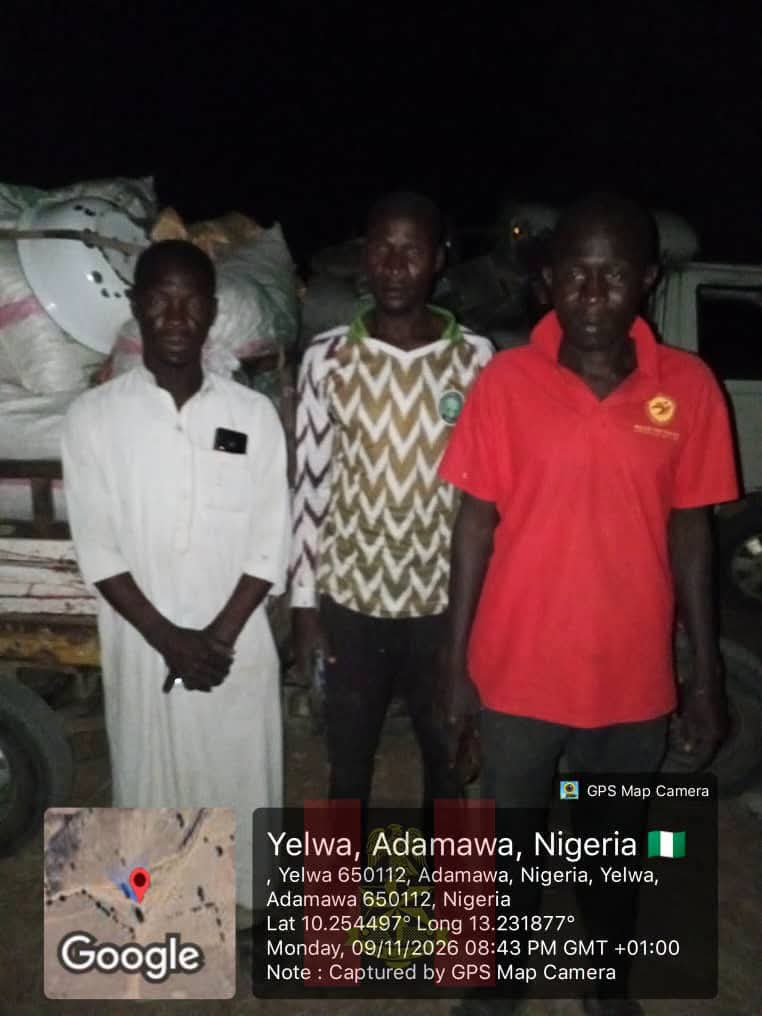
Troops of Sector 4, Joint Task Force (North East), Operation HADIN KAI (OPHK), have foiled a terrorist attack in Adamawa State, rescued three kidnapped civilians and recovered arms, ammunition and improvised explosive materials in separate operations.
On November 8, 2026, troops deployed at Zangula Kilba Junction in Gombi Local Government Area successfully repelled an attempted attack by Boko Haram/Islamic State West Africa Province (ISWAP) terrorists.
The troops neutralised two terrorists during the encounter, forcing other members of the group to flee.
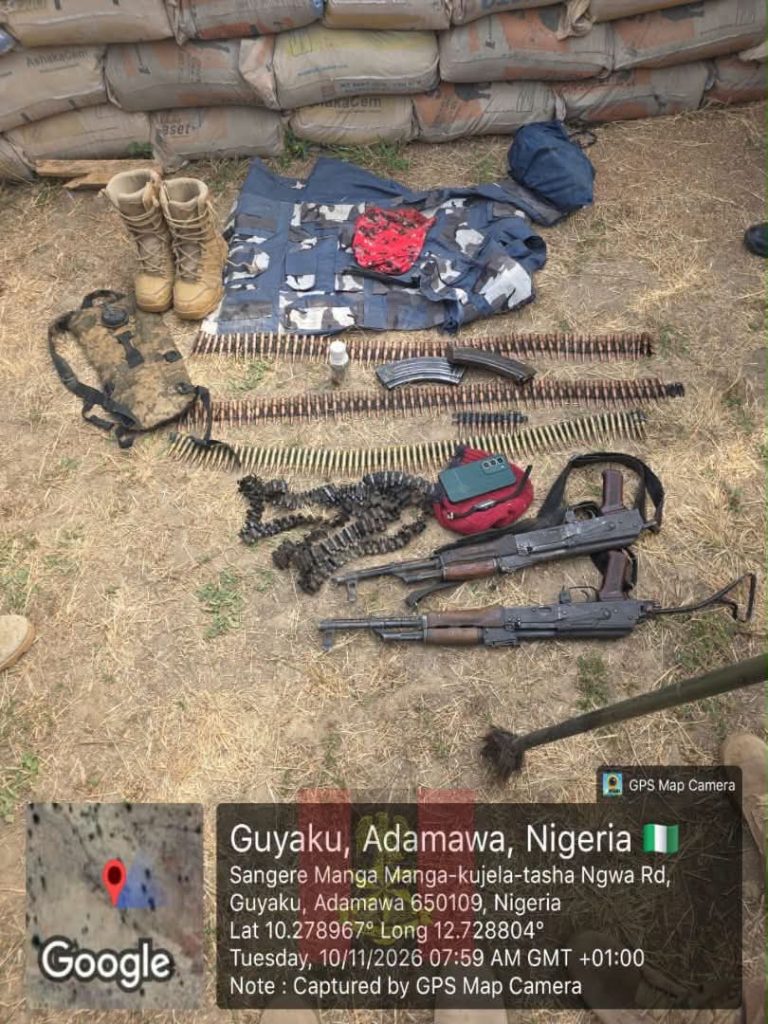
Following the engagement, the troops recovered two AK-47 rifles, four AK-47 magazines, 115 rounds of ammunition, three belts of empty ammunition links and two cases of locally fabricated explosive devices.
The Nigeria Pension Industry Leadership Council (PILC) and FSD Africa, a UK-funded specialist development agency, have signed a Memorandum of Understanding (MoU) to support the development of a proposed $750 million infrastructure investment fund.
The proposed fund is designed to mobilise capital from Nigerian pension funds and development finance institutions to finance infrastructure projects in Nigeria and selected markets across the region.
The partnership is aimed at deepening Nigeria’s capital markets, increasing domestic investment and channeling long-term capital into the real economy.
Under the agreement, FSD Africa will provide PILC with expert advice and technical support, including assistance in selecting a fund manager through a competitive process, engaging potential investors and development finance institutions, building capacity and supporting necessary regulatory reforms.
The initiative, developed by Nigerian Pension Fund Administrators (PFAs) with support from the National Pension Commission (PenCom) and FSD Africa, has already attracted interest from 19 Nigerian pension funds.
Speaking on the partnership, UK Deputy High Commissioner in Lagos, Jonny Baxter, said the UK was proud to partner with Nigeria’s pension industry and PenCom to advance the investment platform.
He said both countries were prioritising efforts to attract more domestic capital, including pension funds’ investments, into the real economy, adding that the initiative would create opportunities for investment, jobs and economic growth. Chairman of PILC and Director-General of PenCom, Omolola Oloworaran, described the proposed platform as timely, noting that the pension industry holds the largest pool of long-term savings capital in the country.
She said the industry was committed to mobilising pension assets for infrastructure development while safeguarding contributors’ retirement savings.
“This MoU is the first step we are taking as an industry, and it is just the beginning,” Oloworaran said.
Similarly, Chief Executive Officer of FSD Africa, Mark Napier, said the proposed investment structure held significant promise for Nigeria and the continent.
He noted that Africa had substantial institutional capital but continued to face major infrastructure funding deficits. Napier said FSD Africa was keen to work with PenCom and Nigeria’s pension industry to unlock the capital under their management for priority infrastructure projects.
The proposed platform is targeting an initial capital mobilisation of $350 million at its first close, expected in 2027, before scaling up to its final target of $750 million. At its full target size, the fund aims to mobilise approximately $600 million from Nigerian pension funds and at least $150 million from development finance institutions.
The initiative comes amid growing demand for infrastructure investments across Nigeria and the wider region, particularly in energy, transport and digital connectivity.
An initial assessment of Nigeria’s infrastructure pipeline identified 39 projects with potential relevance to the platform, representing about $20 billion in investment needs.
The proposed Nigeria Pension Industry Infrastructure Fund (PIIP) is expected to bridge the gap between these investment opportunities and long-term institutional capital.
The fund will invest in equity and quasi-equity capital, with at least 60 per cent of its portfolio allocated to projects in Nigeria, while the remainder will be available for selected regional investments.
The planned structure will comprise a naira-denominated core investment fund and a separate co-investment vehicle, enabling participating pension funds to invest alongside the core fund in selected projects.
A parallel foreign-currency vehicle may also be established to accommodate international investors.
The structure is expected to provide institutional investors with access to professionally managed, long-term investment opportunities while supporting the financing of infrastructure projects critical to economic growth.