Home Blog Page 241

Police Arrest 23 foreign nationals for alleged ponzi scheme, visa scam

0

The Ogun Police Command have raided a residential building and arrested 23 foreign nationals in connection with an alleged ponzi scheme and visa scam in Ota area of the State.

This is contained in a statement issued by the Command’s Spokesperson, DSP Oluseyi Babaseyi, on Monday in Abeokuta.
Babaseyi said the suspects were arrested on Aug. 4 at about 11 a.m. by operatives attached to the Atan-Ota Division of the Command.

“The raid followed credible intelligence received by the police concerning suspected fraudulent activities at the location.

“The police personnel promptly mobilised, secured the premises and arrested the suspects for further investigation.

“23 foreign nationals were arrested in connection with alleged Ponzi scheme, visa scam and others immigration -related offences.

“After preliminary investigation, 21 of the suspects were formally handed over to the Nigeria Immigration Service on Aug.5, for further immigration-related investigation and appropriate action,” he said.

The spokesperson said that two suspects were retained by the Police for prosecution in connection with Obtaining by False Pretence (OBT) and other related offences, subject to the conclusion of investigation.

Babaseyi said investigation is ongoing to establish the full circumstances surrounding the alleged fraudulent activities and identify any other persons connected with the scheme.

Jarvis opens up on Peller’s behaviour at home

0

TikTok creator, Amadou Elizabeth Aminata, popularly known as Jarvis, has revealed that her partner, Habeeb Hamzat, better known as Peller, is more serious at home than his playful personality on social media suggests.

Jarvis made this known while speaking about Peller’s personality and their relationship.

According to her, although Peller is known for his playful and energetic character online, he tends to be calm and serious when they are together at home.

She said his calm nature sometimes makes her uncomfortable, prompting her to deliberately bring out his playful and youthful side.

“I don’t like it when Peller is being so calm. He’s only playful online, but at home, he’s always serious. So, I always have to bring out his childhood side,” she said.

Jarvis and Peller have continued to attract attention on social media, where their relationship and individual activities frequently generate reactions from their followers.

Jarvis and Peller tied the knot traditionally on August 1, 2026.

The couple held their white wedding on Saturday, August 8, 2026.

Sun

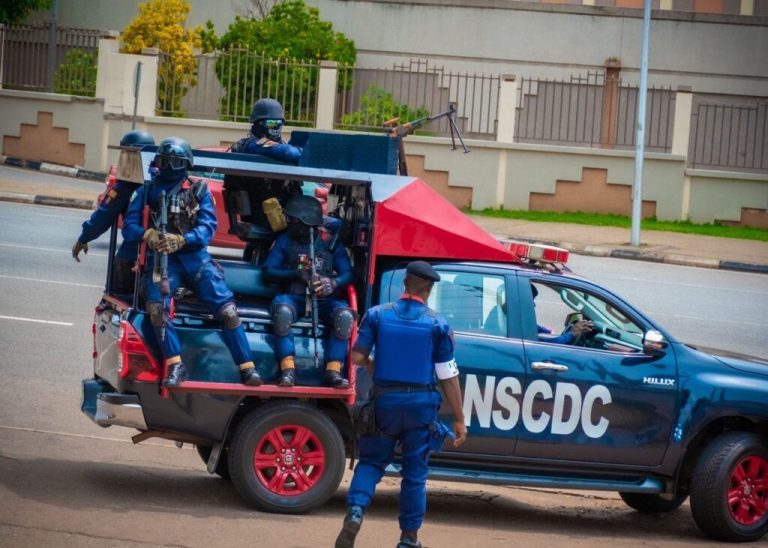
Osun 2026: NSCDC deploys 10,210 personnel for peaceful poll

0

The Commandant General of the Nigeria Security and Civil Defence Corps, Prof. Ahmed Audi, has ordered the deployment of 10,000 personnel from ten (10) State Commands, alongside specialised tactical and operational units of the Corps, to reinforce security operations across Osun State. Nigerian Energy Sector

Considering the security situation in Osun State, the NSCDC said the deployment commenced on Monday.

“It was part of the Corps’ commitment to ensure that voters, electoral officials, observers, journalists and residents are able to participate in the electoral process without fear or intimidation,” the Corps said in a statement signed by its Public Relations Officer, Babawale Afolabi.

Babawale disclosed that undercover and uniformed personnel from Oyo, Ondo, Ekiti, Ogun, Lagos, Kwara, Edo, Kogi, Delta and the Federal Capital Territory (FCT) State Commands, with about 1,000 from each Command, would be deployed to Osun to reinforce command and control in tandem with those already in the Osun State Command.

He said this would strengthen security coverage and operations across the State alongside other Security Agencies before, during and after the elections.

He noted that specialised formations with capabilities suited to the security needs of the election, including the CG’s Special Intelligence Squad (SIS); Special Weapons and Tactics (SWAT) Unit; Specialised Female Squad; Mining Marshals; Special Strike Force, Crack Squad; and K9 Unit, would participate in the exercise.

“The specialised teams would complement the regular deployment through intelligence gathering, crime prevention, detection, protection of Critical Assets, crowd control and other security responsibilities within their respective areas of competence,” the PRO said.

Babawale said that, to ensure effective coordination and supervision, the Deputy Commandant General in charge of Operations, DCG Ayuba Phillip, together with designated Assistant Commandants General (ACGs) and other senior officers, would relocate to Osun State to oversee the Corps’ operations.

The Commandant General has assured the people of Osun State that the NSCDC would remain professional, impartial and respectful of the rights of all citizens throughout the electoral process.

“As an agency saddled with the responsibility of protecting critical infrastructure and national assets, the safety and security of Election materials and Electoral officials are very critical alongside the electorate; you have the responsibility of ensuring unbiased synergy with other Security Agencies on Election duty to actualise a free, fair and credible election.

“Our personnel have been properly briefed on the need to be professional, neutral and respectful in the discharge of their duties.

“In the light of the above, the NSCDC, in collaboration with other security agencies on election duty, will not tolerate any activity intended to jeopardise the election process; criminal-minded persons and political thugs willing to disrupt the peaceful conduct of the election would face the wrath of the law as prescribed in the Electoral Act,” Prof. Audi said.

The NSCDC therefore appealed to all Political Parties, candidates, supporters and residents to conduct themselves peacefully and to allow the democratic process to take its course.


FG dispatches intervention team to UK over passport processing delays

0

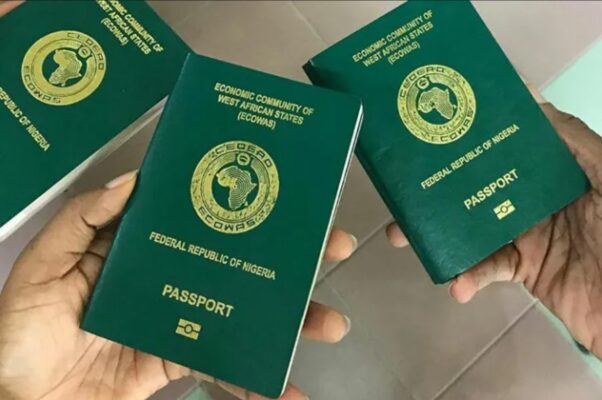
The Federal Government has deployed a dedicated passport intervention team to the United Kingdom to fast-track pending, new and renewal applications by Nigerians living in the country.

The team was dispatched by the Nigeria Immigration Service on the directive of the Minister of Interior, Olubunmi Tunji-Ojo, and is expected to arrive in the UK on Monday.

The intervention team will work with the Nigerian High Commission to facilitate passport enrolment and processing for Nigerians across designated cities in the UK.

According to a statement issued by the NIS on Sunday, the exercise will cover applicants with pending passport applications, new applicants and Nigerians whose passports have less than one year before expiry and are due for renewal.

Applicants participating in the exercise are required to present their completed application forms and proof of payment during enrolment.

The immigration service said it would release a detailed schedule for the intervention, including the cities to be visited, dates, venues, enrolment times and other arrangements.

The NIS advised applicants not to visit any location until the official schedule is released.

It also urged Nigerians in the UK to monitor the official communication channels of the Nigerian High Commission for updates on the exercise.

The intervention is expected to provide an additional avenue for Nigerians in the UK with pending passport applications or renewal needs to complete the process without waiting for the regular processing arrangements.

Sun

UNICAL chapel: Police order end to service over leadership dispute

0

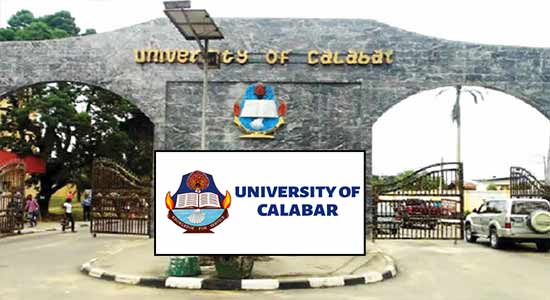
The Cross River State Police Command has halted a Sunday service at the Chapel of Redemption, University of Calabar (UNICAL), amid a leadership dispute between rival factions within the church.

The standoff reportedly began when the university’s caretaker committee and an interim chaplain appointed by the Vice-Chancellor attempted to take control of a service being conducted by the chapel’s substantive chaplain, Rev. Joseph Ushie.

The disagreement created tension among worshippers and prompted the police to intervene to prevent the situation from escalating.

Deputy Commissioner of Police Godwin Etim said he ordered the termination of the service after assessing the situation and concluding that allowing it to continue could result in violence.

“There is palpable tension, and with what I see here, if I allow the service to continue, it will lead to bloodshed in this church,” Etim said.

The police officer said he engaged the chaplain, interim chaplain and a member of the church’s Board of Trustees before the parties agreed to suspend the service.

Etim said the factions had been invited to the police command on Monday for a meeting and urged all parties to remain calm while efforts were made to resolve the dispute.

The development comes amid an ongoing legal battle over the control and activities of the chapel.

A subsisting order of the Federal High Court in Port Harcourt has restrained UNICAL Vice-Chancellor, Prof. Offiong Offiong, and persons acting through him from interfering with the chapel’s premises and activities.

Ushie had instituted the suit against the Vice-Chancellor, the university Registrar, Dr Chukwuka Icha, and three others through his counsel, Chief Mba Ukweni, SAN.

In granting an interim injunction, Justice Phoebe Ayuba restrained the respondents and anyone acting through them from interfering with the chapel’s premises and activities.

The court also directed the parties to maintain the status quo ante bellum pending the hearing and determination of the substantive application scheduled for August 20.

The police intervention was therefore aimed at preventing the leadership disagreement from escalating into a breakdown of law and order as the legal dispute continues.

Sun

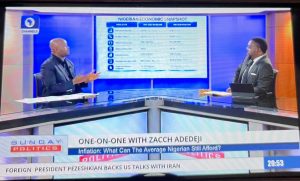
Beyond the Charts: What Zacch Adedeji’s Sunday Politics Interview Really Told Nigerians

0

By Seun Oloketuyi

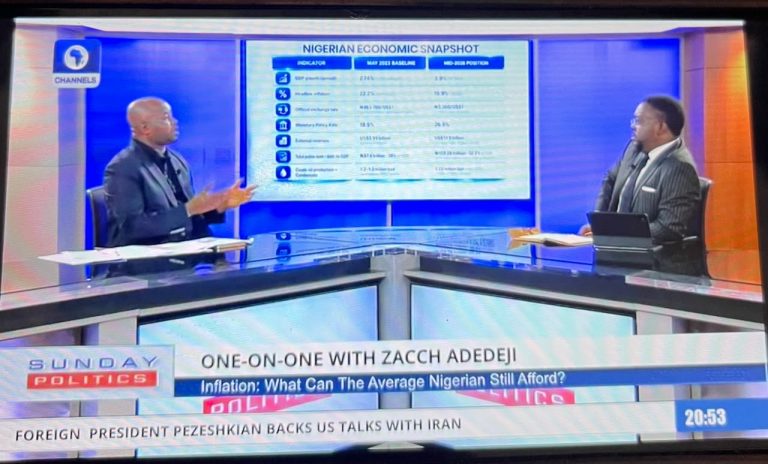
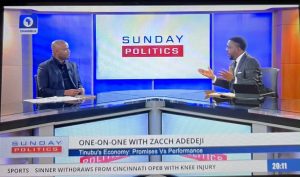
When Zacch Adedeji settled into the studio for Channels Television’s Sunday Politics on the night of August 9, most viewers probably expected the usual back-and-forth: a government official defending unpopular policies, a host pressing him on the cost of living, and the conversation moving on by the next day.
Instead, Adedeji came with charts.

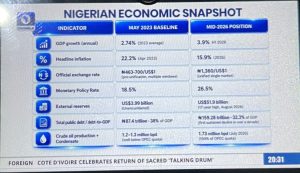
The Executive Chairman of the Nigeria Revenue Service walked viewers through figures comparing Nigeria’s economic position in 2023 with where he believes the country is today. There were numbers on GDP growth, inflation, the exchange rate, interest rates, foreign reserves, public debt and oil production. He also made a case for Nigeria’s current petrol prices.

It was, in many ways, an attempt to tell the story of the Tinubu administration through numbers.

But behind all the charts was another question: how much of the picture do those numbers really capture?

The case Adedeji was making

Adedeji’s central argument was not entirely new.

In April, he said Nigeria’s inflation could have risen to between 75 and 120 per cent without the economic reforms introduced by the Tinubu administration, particularly the removal of the petrol subsidy and the unification of the exchange rate.

On Sunday, he made much the same argument, this time with a fresh set of figures.

One of the slides shown during the interview compared Nigeria’s position in May 2023 with what it described as the country’s mid-2026 position.

GDP growth, according to the presentation, had moved from a 2023 average of 2.74 per cent to 3.9 per cent in the first half of 2026.

Headline inflation, which stood at 22.2 per cent in April 2023, was presented at 15.9 per cent in 2026.

The exchange-rate comparison showed the official rate moving from ₦463–₦700 to the dollar under the old multiple-window system to ₦1,360 under the unified market.

The Monetary Policy Rate had also risen, from 18.5 per cent to 26.5 per cent.

But the figure that probably stood out most was foreign reserves.

Adedeji’s slide showed unencumbered external reserves at $3.99 billion in the 2023 baseline and $51.9 billion in 2026, which it described as a 17-year high.

Then there was the debt picture.

Nigeria’s total public debt was put at ₦87.4 trillion, or 38 per cent of GDP, in the 2023 comparison. By 2026, the debt figure had risen to ₦159.28 trillion, even though the debt-to-GDP ratio had fallen to 32.3 per cent.

Adedeji described this as the first sustained decline in the ratio in more than a decade.

The presentation also showed crude oil production and condensate increasing from about 1.2–1.3 million barrels per day to 1.73 million barrels per day by July 2026.

Put together, the message was clear: the reforms have been painful, but they have also changed some of Nigeria’s economic numbers.

Then came the petrol price comparison

Adedeji also used the interview to make a case for Nigeria’s current petrol prices.

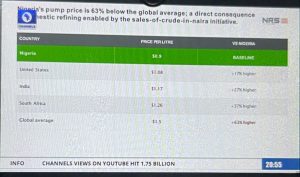
According to another slide shown during the programme, petrol in Nigeria was priced at about $0.90 per litre, compared with $1.08 in the United States, $1.17 in India and $1.26 in South Africa.

The global average was put at $1.50 per litre.

The slide therefore described Nigeria’s pump price as 63 per cent below the global average.

Adedeji attributed this partly to increased domestic refining and the government’s sale-of-crude-in-naira arrangement with local refiners.

Again, the point was to show that some of the changes introduced by the government are beginning to produce results.

Where the conversation got uncomfortable

The numbers were one thing. The reality Nigerians are living with was another.

When Adedeji was pressed on the gap between the government’s economic figures and what ordinary Nigerians are experiencing, he did not deny that people are struggling.

Instead, he tried to change the way the reforms should be judged.

His argument was basically that things could have been much worse without the reforms. In other words, the current hardship should be considered alongside the alternative that might have existed if the government had done nothing.

It is an argument governments often make when defending difficult economic decisions.

But it is not always an easy one to sell to someone trying to buy food, pay rent or get to work.

People living through the present are more concerned about what is happening now than about how much worse things might have been.

They want to know when the situation they are actually experiencing will improve.

And then the conversation moved to Tinubu

Interestingly, the part of the interview that generated some of the strongest reactions was not the GDP figures or the foreign-reserve numbers.

It was Adedeji’s comments about President Bola Tinubu’s personal habits.

When asked about government officials and the perception of extravagance in government, Adedeji said the President mostly walks from his residence to his office, eats once a day and had not travelled abroad in the preceding three months.

When the conversation turned to the size of the presidential convoy, he asked how much a Cadillac Escalade costs.

Those comments quickly became a talking point online.

For many Nigerians, however, the issue was bigger than whether the President eats once or twice a day.

At a time when food, transport and rent remain major concerns for households, the comments risked sounding disconnected from the question many people wanted answered: what is government doing to make life easier for ordinary Nigerians?

The President’s personal habits may say something about him, but they do not really answer questions about government spending or the wider cost-of-living crisis.

And that appeared to be where some of the conversation was lost.

So, do the numbers check out?

Broadly, the direction of the story is supported by available economic data, although the exact figures depend on the period and definition being used.

Foreign reserves have risen substantially from the levels seen after the 2023 reforms. Inflation has also fallen from its peak, even though the current rate remains high enough to continue putting pressure on households.

GDP growth has strengthened, while oil production has also improved.

Government revenue collections have risen sharply as well. The NRS reported ₦28.3 trillion in revenue in 2025, up from ₦21.7 trillion in 2024, and set a ₦40.7 trillion target for 2026.

That increase is important for a country that has struggled with weak domestic revenue for years.

But this is where the numbers need some context.

A lower debt-to-GDP ratio does not mean Nigeria’s actual debt has fallen. In Adedeji’s own presentation, the debt figure rose from ₦87.4 trillion to ₦159.28 trillion even as the ratio declined.

So both things can be true at the same time: the debt-to-GDP ratio can improve while the government’s actual debt burden continues to grow.

The same goes for revenue.

Collecting more money is important, particularly for a country that has struggled with weak domestic revenue for years. But higher revenue collection does not automatically mean better roads, functioning hospitals, reliable electricity or cheaper food.

Those are the things ordinary Nigerians are more likely to look at when deciding whether the economy is actually improving.

The bigger picture:
Perhaps what Sunday night’s interview really showed was the distance between the government’s economic figures and the way many Nigerians experience the economy.

The government has numbers it can point to.

Some of them are genuinely encouraging. Foreign reserves are stronger. Inflation has come down from its peak. GDP growth has improved, oil production has risen and the debt-to-GDP ratio is lower.

But macroeconomic stability is not the same thing as prosperity.

That is the difficult part of the government’s message.

For an NRS chairman whose job revolves around numbers, presenting the charts may be the easy part. The harder task is convincing Nigerians that the improvements being recorded on those charts will eventually show up in their own lives.

Because outside the studio, Nigerians have their own economic indicators.

The price of rice.

The cost of transport.

The rent.

The electricity bill.

And, perhaps most importantly, how much money is left after all of them have been paid.

Those are the numbers Nigerians are watching.
Works Minister pushes diaspora engineers’ expertise to accelerate Nigeria’s development

0

The Minister of State for Works, Bello Muhammad Goronyo, has stressed the importance of the expertise, innovations and investments of Nigerian engineers in the diaspora to accelerating infrastructure development and driving Nigeria’s economic transformation.

Goronyo said Nigeria needed to tap into the global experience and technical capacity of its professionals abroad to address its infrastructure deficit and support sustainable national development.

He made the call at the 2026 UK Engineering Conference in Glasgow, Scotland, themed “Engineering Innovation for National Impact.”

The Minister described engineering as a critical foundation for national development and economic growth, stressing that Nigeria’s large population, abundant resources and human capital could only translate into sustainable development through innovation, professionalism and deliberate investment in infrastructure.

Goronyo, in a statement by his Special Assistant on Media, Abdullahi Mohammed, said quality road infrastructure was particularly critical to economic growth because it facilitates the movement of people and goods, reduces transportation costs, creates employment and strengthens trade.

“Roads lead to prosperity. They are not just pathways of asphalt and concrete; they are the arteries of commerce, agriculture and industry, carrying the lifeblood of our economy,” he said.

He said the Federal Government, under President Bola Tinubu, had demonstrated strong commitment to infrastructure development through investments in road construction, rehabilitation and maintenance.

He urged Nigerian engineers to see themselves as custodians of public safety and national development and called on those in the diaspora and international partners to bring their expertise, innovations and investments into Nigeria.

“Nigeria is open for business. Bring your talents, innovations and investments. Join us through Public-Private Partnerships, tax credit schemes and engineering collaborations. Together, we can build roads and bridges that do more than connect cities; they can connect dreams, aspirations, opportunities and prosperity,” he said.

He highlighted the government’s flagship highway projects, including the 750-kilometre Lagos-Calabar Coastal Highway, the 1,068-kilometre Sokoto-Badagry Superhighway, the Trans-Sahara Trade Route linking Calabar to Abuja, and the 1,100-kilometre Akwanga-Jos-Maiduguri Superhighway.

According to him, the projects are strategic economic corridors designed to connect communities, facilitate trade, strengthen regional integration and unlock economic opportunities across the country.

Goronyo also emphasised the need for professional standards, regulatory compliance and accountability in the engineering sector, saying the Federal Ministry of Works was committed to ensuring that public infrastructure was delivered to the required standards.

He said the Ministry had endorsed the regulatory approach of the Council for the Regulation of Engineering in Nigeria (COREN), including stronger sanctions for professional misconduct, technical monitoring and enhanced professional development through the Engineering Residency Programme.

The Minister added that the ministry, under Works Minister David Umahi, was intensifying project audits and technical oversight to ensure that only qualified and duly registered professionals handled critical public infrastructure projects.

Goronyo commended the Nigerian Society of Engineers, Glasgow Branch, for providing a platform for Nigerian engineers and international professionals to exchange ideas on how engineering can contribute to national development.

He reaffirmed the Federal Government’s commitment to improving mobility, strengthening logistics and delivering sustainable infrastructure as part of its broader economic development agenda.


Bakare Zainab marks Allwell Ademola’s 50th posthumous birthday with charity outreach

0

Actress Bakare Zainab has honoured her late colleague, Allwell Ademola, on what would have been her 50th birthday with an outreach to the less privileged.

In a video shared on her social media page, the Yoruba actress was seen distributing food and money to people on the streets.

In the caption, Bakare reflected on the memories left behind after death.

She wrote: “When someone dies, all we are left with is the memories we shared, pictures and videos.

“Eniobanke Apeke, I go back to our chats and listen to your voice again anytime I miss you. Life continues, but the memories linger.

“Happy 50th birthday in heaven, Oremí. May your soul continue to rest in peace. May God forgive your sins IJN.

“Rotimi Salami, you are an amazing brother; thank you for doing this for her. I pray God comforts you and yours.”

To mark the milestone, actor Rotimi Salami and other friends visited Allwell’s graveside.

In a touching video from the visit, they sang worship songs and offered prayers in honour of the late thespian.

Allwell Ademola, a beloved Yoruba actress, passed away in 2025 at 49.

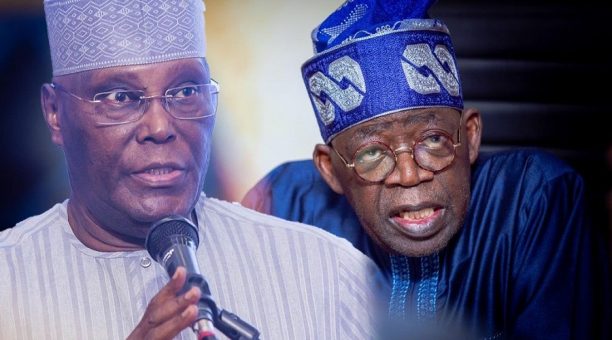
Ex-Abia Speaker slams Atiku over criticism of Tinubu’s economic reforms

0

Former Speaker of the Abia State House of Assembly and All Progressives Congress (APC) House of Representatives candidate for Ikwuano/Umuahia Federal Constituency, Rt. Hon. Chinedum Enyinnaya Orji has dismissed recent criticisms of President Bola Ahmed Tinubu’s economic reforms by former Vice President, Atiku Abubakar.

He stated that President Tinubu’s economic reforms are delivering measurable results.
In an article titled “Facts Over Fiction and Fear: Why Tinubu’s Reforms Are Working for Nigeria,” Orji argued that Tinubu administration’s economic reset has produced tangible improvements across key indicators, including GDP, debt servicing, government revenue and fiscal capacity at the sub-national level. NigerianEnergy Sector

He noted that dollar-denominated GDP, which fell to about $253 billion in the immediate aftermath of the exchange-rate reset, has since recovered to approximately $377 billion — a roughly 49 percent increase from the trough. In naira terms, he said GDP had expanded from about ₦314 trillion in 2024 to around ₦530 trillion.

“No one pretended these reforms would be painless. They were sold as necessary structural corrections to distortions that built up over decades, including the years 1999 to 2007 when warnings about subsidy and fiscal leakages were ignored. The difference now is that government finally acted instead of postponing,” Orji wrote.

On debt, the former Speaker said Nigeria’s debt-to-GDP ratio stands at about 40 percent, which he compared with South Africa at 85 percent, Egypt at 80 percent and Kenya at 75 percent. He also noted that the debt-service-to-revenue ratio had fallen from nearly 100 percent in December 2022 to below 60 percent today.

“Debt in itself is not the measure of health. What matters is the size of the economy, revenue capacity, cost of servicing, and what the money is used for,” he stated.

Orji said borrowing under the Tinubu administration is tied to productive sectors and infrastructure, including roads, rail, power, healthcare and education.

He described the removal of the petrol subsidy as one of the administration’s most significant structural reforms, arguing that the policy had become fiscally unsustainable.

According to him, the resulting increase in Federation Account allocations has given states and local governments greater fiscal space to invest in roads, schools, hospitals, salaries, pensions and other public services.

He also defended the administration’s tax reforms, saying the design protects people earning ₦1 million and below per annum and small businesses with turnover of ₦100 million and below, while expanding the contribution of higher-income individuals and profitable enterprises.

Orji highlighted progress in healthcare, education and infrastructure as evidence of increased public investment.

He said more than 3,000 Primary Healthcare Centres had been revitalised, over 78,000 frontline health workers retrained, and over 100 public facilities expanded to provide free caesarean sections for eligible indigent mothers.

He also cited three world-class cancer centres now operational in Kubwa, Enugu and Katsina, alongside additional state-level cancer facilities.

In education, he noted that the Universal Basic Education Commission had embarked on more than 11,000 projects to rehabilitate schools and expand technical and vocational training. He said the Nigerian Education Loan Fund (NELFUND) had disbursed more than ₦303 billion to over 1.64 million students across 300 institutions.

“For the first time in a long while, students are not losing a year to strikes. A four-year course is finishing in four years,” he wrote.

On infrastructure, Orji pointed to ongoing federal highways, bridges, rail modernisation, power transmission projects, airport redevelopment and digital connectivity as components of the government’s broader economic strategy.

On inflation, Orji acknowledged Nigerians continue to face pressure but said the trajectory shows improvement. He noted inflation fell to 14.4 percent in November 2025, rose to 15.91 percent amid global shocks, and is projected to decline toward 12 percent by year end.

He also challenged claims of an alleged ₦7.98 trillion oil windfall, arguing that crude oil revenue cannot be calculated simply by multiplying prices by production.

He said production levels, operating costs, government and company shares, and loan obligations must be considered.

To cushion the adjustment, Orji said the Federal Government has rolled out intervention programmes including cash transfers and community-based initiatives in healthcare, education and social protection.

While acknowledging that Nigeria is not yet where it aspires to be, Orji maintained that important structural distortions have now been confronted.

“Let us be honest. Nigeria is not yet where we aspire to be. But we are also not where we were at the height of subsidy waste, multiple exchange rates, and revenue leakage,” Orji wrote.

He said the ultimate test of the reforms should be stronger revenues, lower debt-service pressure, improved infrastructure, and better access to education and healthcare.

“A mature national conversation should examine outcomes, not slogans,” he stated.

Orji concluded that the most difficult phase of the adjustment occurred in 2023 and 2024 and that Nigeria had now entered a recovery phase.

“History will not remember us for how popular a decision was on the day it was taken. It will remember whether the decision strengthened the nation. Nigerians need facts, not fabrications.”


Police launch nationwide offensive, crush bandits, militias, robbers

0

The Nigeria Police Force (NPF) has intensified its nationwide offensive against criminal elements, foiling a bandits’ attack on a police station, disrupting an alleged armed robbery operation and arresting 31 suspects in six states.

The operations, conducted between August 8 and 10, also resulted in the recovery of firearms, ammunition, suspected illicit drugs and other exhibits, according to the State-by-State Executive Summary of the Force’s operational successes released on Monday.

The latest crackdown is coming against the backdrop of growing political and public pressure on security agencies to sustain the fight against banditry, terrorism, cultism and other violent crimes threatening communities across the country.

In Benue State, police operatives repelled an attack by armed bandits on Jootar Police Station in Ukum Local Government Area.

The attackers reportedly engaged the police in a gun battle but were overwhelmed by the superior firepower of the operatives and fled.

No casualty was recorded among the police personnel.

The incident is being investigated by the State Criminal Investigation Department (SCID), Makurdi.

In another operation in Benue, police responded to a distress call after suspected armed robbers blocked the highway at Ayati Village in Gwer East Local Government Area.

The suspects exchanged gunfire with the police before escaping into a nearby bush.

One locally fabricated revolver gun, four rounds of live cartridges and a mobile phone were recovered.

Police also dismantled the roadblock, restoring unhindered movement on the highway.

In Ekiti State, operatives arrested a 40-year-old man over an alleged attempted rape and assault of a 96-year-old woman in Emure-Ekiti.

The suspect was reportedly arrested and confessed to the offence during interrogation.

The victim was immediately taken to hospital for medical attention.

The SCID, Ado-Ekiti, is investigating the case.

Akwa Ibom also recorded major breakthroughs, with police operatives arresting eight suspects during raids on suspected criminal hideouts based on credible intelligence.

The police said various suspected illicit drugs were recovered.

In a separate operation, detectives arrested three suspected cultists allegedly gathered at Ikot Ubok Udom Village in Nsit Atai Local Government Area.

One single-barrel gun and one pump-action gun were recovered from the suspects.

The SCID, Uyo, is investigating the cases.

According to a statement issued by the Force Public Relations Officer, CSP Ani Iniedu; “In Imo State, 11 suspected militia members were arrested following a raid on a suspected militia hideout at Odumara Orodo in Mbaitoli Local Government Area.

“The operation, conducted on August 8, followed credible intelligence received by the police.

A charm-fortified bullet-proof vest made of wood was recovered.

“The suspects are being investigated by the SCID, Owerri.

Ogun State was not left out of the nationwide crackdown, as three suspects were arrested over the alleged theft of company cable wires at a quarry in Odeda.

“The suspects were identified through CCTV footage and taken into custody for interrogation.

Police said efforts were ongoing to recover the stolen cables and establish the circumstances surrounding the alleged theft.

“The case is being handled by the SCID, Eleweran.

The latest operations underscore the police authorities’ growing reliance on intelligence gathering, rapid response and targeted raids to dismantle criminal networks before they can carry out attacks.

“The Force said the successes demonstrated the commitment of its personnel to protecting lives and property and denying criminal elements the freedom to operate across the country.

“It also renewed its appeal to Nigerians to provide credible and timely information to security agencies, stressing that effective policing requires active cooperation between the police and citizens”.

The police authorities maintained that the fight against insecurity requires sustained collaboration among security agencies, government at all levels and citizens.