Home Blog Page 242

How Super Falcons can qualify for 2027 World Cup despite WAFCON quarter-final exit

0

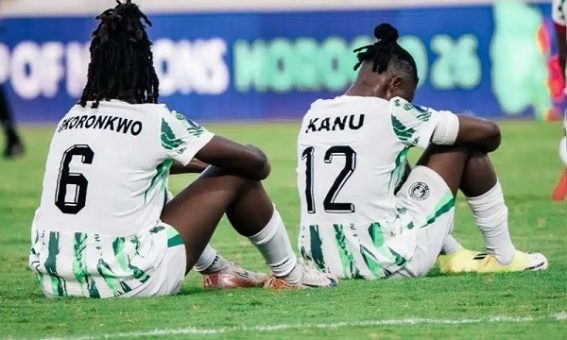
Nigeria’s Super Falcons still have a chance to qualify for the 2027 FIFA Women’s World Cup in Brazil despite their quarter-final elimination from the 2026 Women’s Africa Cup of Nations (WAFCON).

The 10-time African champions lost 1-0 to Cameroon on Sunday after conceding an early goal, missing out on one of Africa’s four automatic qualification tickets for next year’s World Cup.

However, Nigeria’s World Cup hopes remain alive through the continental play-offs, where they will be joined by fellow WAFCON quarter-final losers South Africa, Ghana and Côte d’Ivoire.

The Super Falcons will face South Africa on Thursday, with victory securing one of the two available CAF play-off tickets.

The two teams that emerge from the continental play-offs will then proceed to the global play-off tournament, where they will compete for the final World Cup places.

According to FIFA, the first phase of the global play-offs will be held in November and December 2026 at a centralised venue, involving six teams — two from the Asian Football Confederation (AFC), two from CAF, one from CONMEBOL and one from the Oceania Football Confederation (OFC).

“Using a format which will be confirmed at a later date, two teams will qualify for the final play-off phase,” FIFA said.

The final phase will take place in February 2027, with the two qualifiers from the first phase joined by two teams from CONCACAF, one from CONMEBOL and one from UEFA.

The six teams will be drawn into three paths, with a direct knockout match in each path determining the final three qualifiers for the World Cup.

Only three teams will ultimately secure tickets to the tournament in Brazil through the global play-off route.

The Super Falcons, therefore, cannot afford another defeat if they are to maintain their remarkable record of appearing at every edition of the FIFA Women’s World Cup since the tournament began in 1991.

At the 2023 World Cup in Australia and New Zealand, Nigeria reached the Round of 16 before losing to eventual finalists England on penalties.

Glovo pioneers integration of AI quick-commerce

0

Glovo, a leading multi-category tech company, has announced its integration into the generative AI ecosystem with the launch of “Shopping Assistant” for ChatGPT and Claude.

Users can now discover retail products, compare prices, and seamlessly order any item using natural conversational language with the AI systems.

The Glovo experience in such platforms introduces a conversational commerce model that shifts from a search-based web to an intent-based web.

The firm said rather than navigating traditional app menus and filters, users can express needs, such as asking for a “last-minute gift for a coffee lover under N50,000”, and the assistant handles semantic search, location validation, and product curation.

It said with both platforms connected via the ChatGPT or Claude apps, the user will be able to have a multi-turn dialogue in which the assistant remembers context and constraints, such as budget caps.

Glovo added that users receive a visual carousel of up to five highly customized product options available at local stores.

Each product displays its image, name, store details,ratings, and price.

While the search and discovery experience takes place directly on Generative AI platforms, selecting a product via the “view on Glovo” button takes the user to the Glovo mobile or web app, where payment and final purchase are completed exclusively.

A statement from Glovo’s management said the company is prioritsing the retail and grocery sectors for the initial launch, capitalising on the established habit of using AI for product research.
“Generative AI has driven a significant jump in retail traffic globally, so this first-mover advantage aims to meet customers where they are meeting Gen AI daily, and ensure it captures high-intent organic traffic as search behaviours evolve,” it stated.

Chief Technical Officer at Glovo, Shiro Theuri, explained that the initiative is aimed at satisfying customers’ aspirations by ensuring that the apps offer different choices and convenience.

“We’re always looking for ways to meet our customers where they already are. Being available on Claude and ChatGPT means people can discover what Glovo offersas part of a natural conversation, with no friction. Glovohas always been about being the everyday app that provides choice and convenience, and this is another step in that direction,” Theuri said.

She listed steps to be taken, including using ChatGPTor Claude to find products in the Glovo app, syncing ChatGPT or Claude with the Glovo app via a user-installed plug-in, and typing @glovo followed by their request.

“Secondly, the AI platform displays a carousel with 5 available options for the user. If the user wants to purchase any of the products or continue searching in the Glovo app, they must click “View on Glovo,” which will redirect them to the Glovo app or website. After the order is confirmed, the store will prepare the item(s) and the courier will head up to the pick-up location. The user will receive the order in minutes,” she added.


Osun 2026: 2,000 households benefit from AMBO food, cash palliative support

0

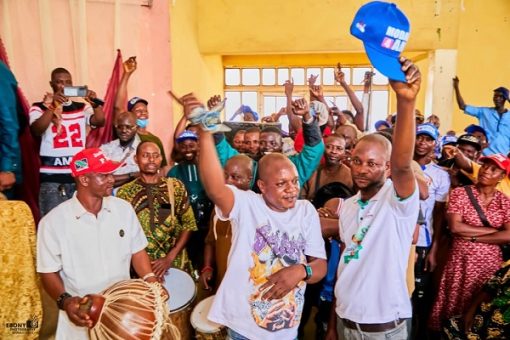
Over 2,000 households in Modakeke, Osun State have benefited from food items and cash support from the governorship candidate of All Progressives Congress(APC), Asiwaju Munirudeen Bola Oyebamiji (AMBO).

The gesture was facilitated by Otunba Bobagunwa Foundation as part of its humanitarian intervention ahead of the August 15 governorship election.

The outreach, led by the founder of the foundation, Otunba Kazeem Odeyeyiwa, covered all 87 polling units in the community and was targeted at party members and residents.

The initiative was also aimed at mobilising grassroots support for AMBO and his running mate, Engr. Benjamin Kayode Adereti.

Speaking during the exercise, Odeyeyiwa urged residents to remain united and turn out en masse on election day to vote for the APC candidates.

He said an AMBO-Adereti administration would bring greater development, inclusive governance and improved welfare to the people of Osun State.

The founder also urged beneficiaries and party supporters to translate their support for the candidates into votes during the election.

Community leaders, beneficiaries and party supporters commended the foundation for what they described as a timely intervention to support households.

Among those who attended the event were the Modakeke APC Apex Leader, Alhaji Wahab Adetunji; Alhaji Fatal Kolawole; Hon. Wale Amusan; Hon. Daud Olasupo; Hon. Kareem Ismail; APC Modakeke Chairman, Hon. Goke Adenowale; Engr. Kayode Sowade; Prof. Chief Benjamin Adekunle Eegunranti; Chief Kola Olabisi; Hon. Adeboye Adegoke; Council Chairman, Hon. Mojeed Lawal; Engr. Femi Olatoye; Alhaji Bisiriyu Kolawole and Chief Sharafadeen Ilhas, among others.


CBT, best way to curb exam malpractice – WAEC

0

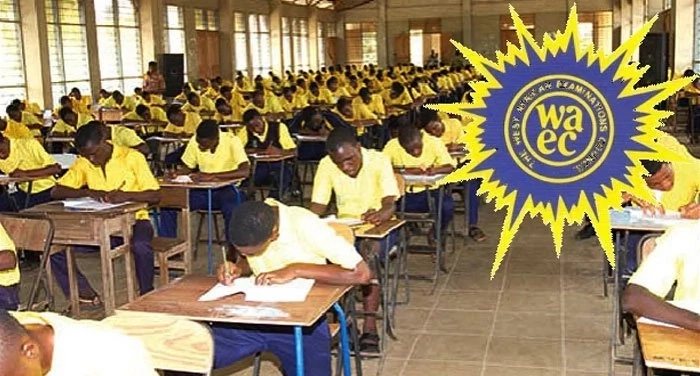
The West African Examination Council (WAEC), has called for strict computer-based testing to curb examination malpractice in some centres, popularly known as “miracle centres.”

Mr Timothy Manga an official with WAEC office in Makurdi gave the advice in an interview with the News Agency of Nigeria (NAN), on the growing concerns over examination malpractice and its impact on the credibility of public examinations and educational certificates.

Manga said allegations of the existence of “miracle” examination centres in Benue had become worrisome, though there had not been any official confirmation of the existence of such centres in the state.

He described the development as a threat to the education system, saying schools should be known for quality teaching rather than their ability to facilitate examination malpractice.

“Any system that rewards students for cheating undermines those who have worked hard to prepare for examinations.

“We need an examination system where success is determined by knowledge, preparation, and competence, not by the ability to access assistance during examinations.

” Though WAEC has not gotten any information on any school being a “miracle centre”, we would continue to put our ears to the ground in case we hear of any that we can set an example with,” he said.

Mrs Rebecca Ezekiel, a teacher with NKST Secondary School Makurd, however, said the establishment of independent examination centres could reduce the influence of schools and teachers over examinations such as WAEC and the National Examination Council (NECO).

Ezekiel said the CBT would enable examination bodies to exercise greater control over examination venues, personnel, and security arrangements.

“Candidates should be examined under conditions that are independent of the schools where they receive instructions,” she said.

The teacher also recommended the deployment of biometric verification, Closed-Circuit Television (CCTV) cameras, and other technologies to strengthen examination monitoring.

However, Mr Jude Odeh, a school proprietor in Otukpo Local Government Area (LGA), said admitting sudents in final year in secondary schools did not qualify a school to be labelled as a “miracle” examination centre.

Odeh said he had heard allegations about the existence of such centres in the state but was yet to identify any specific school operating as a miracle examination centre.

He said some parents changed their children’s schools for various reasons such as the high cost of examination registration, school fees, and others.

According to him, some schools charge examination fees arbitrarily, and when combined with school fees, the total cost becomes too high for some parents to bear.

Odeh, however, said he knew some schools in Benue that did not admit new students into SS3, insisting that only students promoted from SS2 were registered for external examinations.


Bandit Leader Ado Aleiro Loses Son, Eight Family Members, 30 Motorcycles In Katsina Clash

0

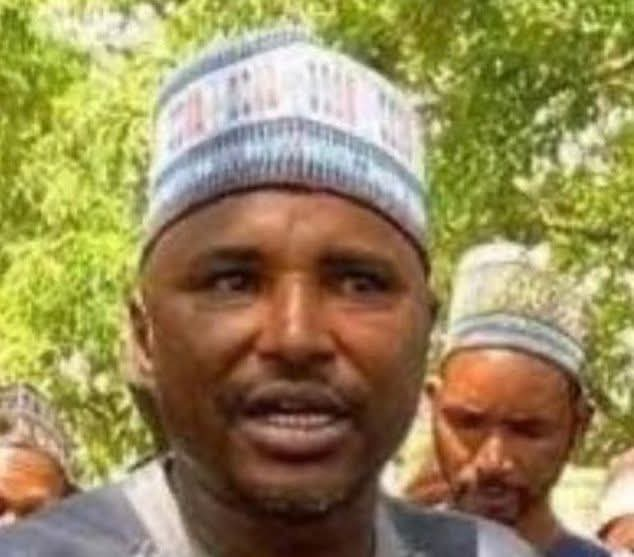
Notorious bandit leader Ado Aleiro has reportedly suffered a major setback after losing his son, eight other family members and about 30 motorcycles during a recent encounter in Doma village, Katsina State.

Intelligence obtained by counter-insurgency expert and security analyst Zagazola Makama indicated that the losses had significantly weakened the operational strength and mobility of Aleiro’s criminal network.

According to an intelligence report dated August 9, none of the estimated 30 motorcycles deployed by the syndicate during the encounter reportedly returned, with their riders said to have been neutralised.

The report also stated that Aleiro’s son and eight other members of his family were killed during the encounter.

Abiodun Mourns Death of Kemi Adeosun’s Husband at 62

0

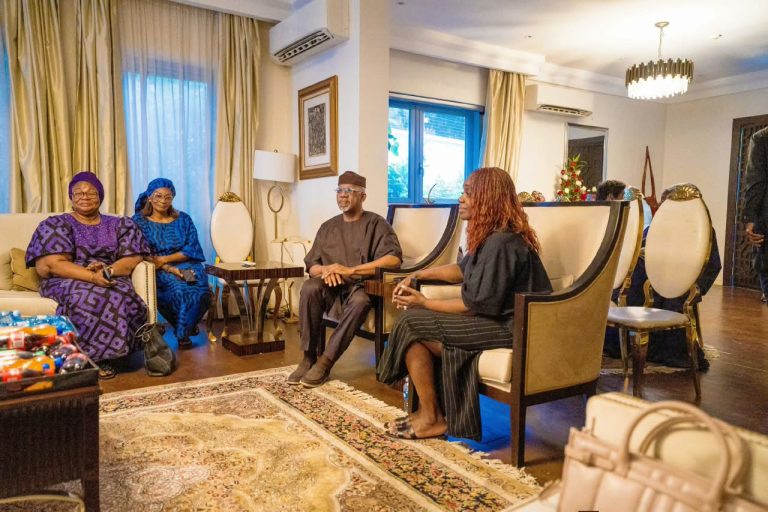
Ogun State Governor, Dapo Abiodun, has condoled with former Minister of Finance, Mrs. Kemi Adeosun, following the death of her husband, Mr. Anthony Adeniyi (Niyi) Adeosun, at the age of 62.

Adeosun died on August 5, 2026.
Abiodun, who paid a condolence visit to the former minister and her family, expressed sympathy to Mrs. Adeosun, her children and the entire Adeosun family over the loss.

The governor described the deceased as a respected businessman and devoted Christian who lived a life of faith, service and commitment to his family.

He said the death of Adeosun was a great loss to his immediate family and those whose lives he touched during his lifetime.

Abiodun prayed that God would comfort and strengthen Mrs. Adeosun and the entire family, while granting them the fortitude to bear the loss.

He also prayed for the repose of the soul of the deceased, saying, “May God grant Mr. Anthony Adeniyi Adeosun eternal rest and may his soul rest in perfect peace. Amen.”

Osun election: Adeleke accuses Oyetola of threatening to rig poll

0


Osun State Governor Ademola Adeleke has accused Minister of Marine and Blue Economy, Adegboyega Oyetola, of threatening to manipulate the August 15 governorship election in favour of the All Progressives Congress (APC).

Adeleke made the allegation in a statement issued by his spokesperson, Olawale Rasheed, on Sunday, in response to comments made by Oyetola while addressing APC stakeholders and supporters in the state.

Oyetola, a former governor of Osun who lost his re-election bid to Adeleke in 2022, had urged the incumbent to prepare for defeat, saying his endorsement of President Bola Tinubu would not save his administration.

Speaking in Yoruba, Oyetola said the APC would reclaim the governorship seat, adding that Adeleke’s endorsement of Tinubu would not determine the outcome of the election.

“They realised that they are already losing out. Then they claimed to have endorsed us. He almost cried. Endorsement cannot retain this seat for you. We are taking it over,” Oyetola said.

He added, “If you like, make 10 endorsements, we will collect this one from you.”

Reacting, Adeleke described the statement as an “open threat” to the conduct of a free and fair election and urged democracy advocates to take note of the minister’s comments.

The governor also accused the APC of planning to manipulate the poll because, according to him, the party had lost the support of Osun voters.

Adeleke said his endorsement of Tinubu for the 2027 presidential election demonstrated his political strength and ability to mobilise votes for the President in Osun.

He further accused Oyetola of undermining Tinubu’s image through his activities in the state.

“A serving minister of the Republic had made an open threat against a free and fair election,” Adeleke said.

He maintained that Osun residents would resist any attempt to undermine their right to freely choose their leaders.

“The bad news for the minister is that Osun people are determined to resist his sadistic agenda,” the governor said.

Adeleke also expressed confidence in his re-election bid, saying voters would reject the APC candidate, Bola Oyebamiji, in Saturday’s election.

The governor said his administration would respect the choice of voters and urged stakeholders to ensure the poll is conducted transparently and peacefully.

Sun

2027: EU rejects observer role

0


European Union
• Writes INEC, cites insecurity, hostile treatment of 2023 team
• Foreign Affairs keeps mum

The European Union (EU) has ruled out deploying a full election observation mission to Nigeria for the 2027 general elections, citing the deteriorating security situation and what it described as the hostile treatment of its observers and officials following the 2023 elections.

The decision ends a run of full-scale EU election observation missions to Nigeria spanning more than two decades.

The EU conveyed its decision in response to a letter from the Independent National Electoral Commission (INEC), inviting the bloc to observe the 2027 polls.

In the correspondence, the EU cited two reasons for its decision: the worsening security situation across the country and the hostile treatment of its observers and officials after the publication of its final report on the 2023 general election.

Rather than the substantial deployment mounted in previous election cycles, the EU said it would station only a small number of officials in Abuja to monitor developments and report back to Brussels.

Sources familiar with the correspondence put the number at about three.

There would be no long-term observers deployed to the states, no short-term observers on election day and no chief observer of the kind the bloc appointed for previous Nigerian elections.

INEC had written to the EU requesting observers for the 2027 exercise. The commission has issued similar invitations ahead of every general election since the return to civilian rule in 1999.

The EU observed Nigerian elections in 2003, 2007, 2011, 2015, 2019 and 2023. The 2023 deployment was described by its chief observer, Irish member of the European Parliament Barry Andrews, as the seventh such mission since 1999.

For the 2023 election, a core team of 11 experts arrived in Abuja on January 11, six weeks before the presidential poll. Forty long-term observers were subsequently deployed across the 36 states and the Federal Capital Territory.

Short-term observers joined the mission shortly before election day, bringing the total number of accredited observers to 110 from 25 EU member states, as well as Norway, Switzerland and Canada.

A delegation of the European Parliament also joined the mission for the presidential and National Assembly elections. The team remained in the country until April 11, weeks after the February 25 presidential and March 18 governorship elections.

The mission presented its final report in Abuja in June 2023.

The report was contentious, containing 25 recommendations across six priority areas. It identified what it described as enduring systemic weaknesses and said shortcomings in electoral law and administration had hindered the conduct of well-run and inclusive elections and damaged public trust in INEC.
The findings triggered protests at the EU delegation’s office in Abuja, with organisers accusing the bloc of interfering in Nigeria’s internal affairs and demanding withdrawal of the report.

Opposition figures and civil society groups alleged at the time that supporters of the ruling All Progressives Congress (APC) sponsored the protests. The allegation was denied.

The EU’s decision comes against the backdrop of sustained violence in parts of the North West and North East, the Middle Belt and the South East, where sit-at-home enforcement and attacks on electoral facilities disrupted the 2023 elections in several states.

Election observation missions require observers to travel to polling units in rural and remote areas, often with limited security support, making large-scale deployment increasingly difficult.

The decision is also expected to have implications for international scrutiny of the 2027 elections, given the scale and duration of previous EU missions.

The National Democratic Institute, International Republican Institute, Commonwealth and African Union have also observed previous Nigerian elections, but none has matched the EU’s scale and duration of presence, according to stakeholders.

The EU had committed €39 million in 2022 under the second phase of its Support to Democratic Governance in Nigeria programme, covering the 2022-2027 electoral cycle.

A further €13 million was committed specifically for technical support to INEC ahead of the 2023 elections. The EU correspondence does not state whether its decision on election observation would affect those funding arrangements.

The development could also affect perceptions of the credibility of the 2027 elections, coming amid concerns over declining public confidence and voter participation.

Voter turnout in the 2023 presidential election was about 27 per cent, the lowest recorded since the return to democracy in 1999.

Stakeholders have argued that the presence of credible international observers provides an additional layer of scrutiny at polling units and helps strengthen confidence in the electoral process.

The 2027 general election is scheduled for February, with INEC already undertaking preparations, including continuous voter registration and a review of polling unit distribution.

Chief Press Secretary to the INEC Chairman, Oketola Oriye, declined to comment when contacted by Daily Sun on the development. In a telephone interview, he said information available to him was at variance with the claims.

Similarly, spokesperson for the Ministry of Foreign Affairs, Kemiebi Ebiemfa, declined comment. Messages sent to her active phone line were delivered but unanswered.

As of the time of filing this report, the phone line was unavailable.

Sun
Nigeria’s debt hits N159.3trn as government borrows N14.6trn in 1 year

0

Debt Management office (DMO
Nigeria’s total public debt has climbed to N159.27 trillion, rising by N14.6 trillion in just one year as the federal and state governments continue to borrow to fund their operations and projects.

The latest figure released by the Debt Management Office (DMO) shows that the country’s debt rose from N144.67 trillion at the end of December 2024 to N159.27 trillion by December 31, 2025.

The increase means that Nigeria added about N14.6 trillion to its debt burden in 12 months, representing a 10.1 per cent rise.

The debt also increased by N5.98 trillion from N153.29 trillion recorded at the end of September 2025.

The latest debt stock covers the obligations of the federal government, the 36 states and the Federal Capital Territory.

Of the N159.27 trillion total, N84.84 trillion is domestic debt, while N74.42 trillion is external debt.

Domestic debt, therefore, accounts for more than half of Nigeria’s total public debt, with the balance owed to foreign lenders.

The rising debt comes as the government faces the challenge of funding infrastructure, security, social programmes and other public services while struggling to raise enough revenue.

Nigeria’s domestic debt increased by N10.47 trillion during the year, from N74.38 trillion in December 2024 to N84.84 trillion in December 2025. This represents a 14.1 per cent increase.

External debt also rose from N70.29 trillion to N74.42 trillion within the same period, an increase of N4.14 trillion.

The figures show that the government relied heavily on both local and foreign borrowing during the year.

The increase in the naira value of external debt is also influenced by exchange-rate movements because much of the foreign debt is denominated in dollars and other foreign currencies.

The 36 states and the FCT also contributed to the increase in domestic debt.

According to the DMO, their combined domestic debt rose from N3.97 trillion in December 2024 to N4.36 trillion at the end of 2025.

Lagos recorded the largest increase, followed by the FCT and Kaduna.

However, some states reduced their debt during the period, showing that the borrowing pattern varies across the country.

The growing debt stock has renewed concerns about the amount of government revenue being used to service existing loans.

Borrowing is not necessarily harmful if the money is invested in productive projects that create jobs, increase economic activity and generate enough revenue to repay the loans.

The bigger concern is when the government borrows to fund recurrent expenditure while revenue remains weak.

Nigeria has historically struggled with low government revenue compared with the size of its economy.

The World Bank’s Nigeria country director, Mathew Verghis, summed up the problem by saying: “Nigeria doesn’t have a high indebtedness problem, it has a low revenue problem.”

The argument is that stronger revenue collection would give the government more room to service its debt without squeezing spending on essential services.

The Tinubu administration has continued to defend borrowing, arguing that loans are necessary to finance infrastructure and other projects that can support economic growth.

President Bola Tinubu has also sought legislative approval for additional external borrowing to fund government programmes and infrastructure.

The key issue, however, is what the borrowed funds are used for and whether they produce enough economic benefits to justify the debt.

With the public debt now at N159.27 trillion, pressure is mounting on the government to increase revenue, reduce waste and ensure that every borrowed naira is used for projects capable of generating economic value.

For ordinary Nigerians, the debt figure matters because the government ultimately repays its loans from public revenue.

This means that as debt and debt-servicing costs rise, more government income could be committed to repaying old loans, leaving less money for roads, schools, hospitals, security and other public needs.

The challenge for Nigeria, therefore, is not only to stop reckless borrowing but to ensure that every new loan helps the economy grow enough to make repayment less difficult in the future.

Sun

Couple, 4-month-old baby, 2 others abducted in Imo

0


A couple and their four-month-old baby, along with two other unidentified youths, were abducted last Saturday evening in Umukenekpu, Ndegwu, Owerri West Local Government Area of Imo State.

A resident, who escaped from the hoodlums, told reporters that the victims were seized at about 5pm while on their way to inspect a property in the area.

The source disclosed that the attackers, numbering about five, ambushed them near a residential building. Only one of the hoodlums was armed with an AK-47 rifle. The others were said to be carrying daggers and machetes.
“I was lucky to have escaped from the people,” the source said. “They looked like Fulani people. They ambushed us as we were going to inspect a property close to our residential building. As they took us into the bush and were tying us one after the other, I took a risk before it got to my turn and ran away. They shot at me but missed the target.”

The abduction is the first reported in the area since police and other security agencies began combining ground patrols with drone surveillance in nearby forests.

Efforts to reach the Imo State Police Command for confirmation were unsuccessful at the time of filing this report.

Sun