Home Blog Page 183

FG seeks states ownership of National Water Compact to strengthen Nigeria’s water security

0


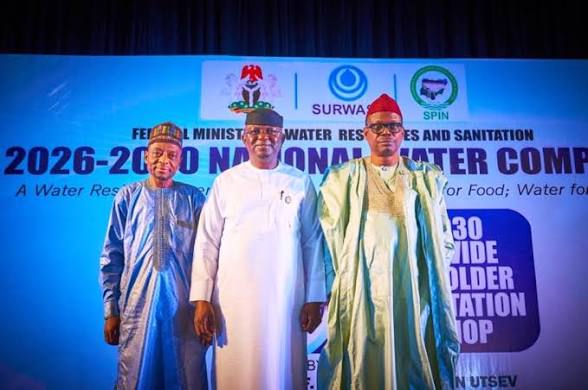
The Federal Government has called on Nigeria’s 36 states and the Federal Capital Territory (FCT) to take greater ownership of the Nigeria National Water Compact 2026–2030, describing their participation as critical to strengthening the country’s water security.

The Minister of Water Resources and Sanitation, Prof. Joseph Terlumun Utsev, FNSE, made the call in Abuja today at a nationwide stakeholders’ consultation workshop on the draft Compact.

Utsev said water remained central to public health, food security, agriculture, industrial development, environmental sustainability, economic growth and national security.

He identified rapid population growth, urbanisation, climate change, environmental degradation, inadequate infrastructure, institutional fragmentation and limited financing as major challenges confronting Nigeria’s water sector.

According to him, the Nigeria National Water Compact 2026–2030 is intended to provide a practical roadmap for addressing the challenges and advancing the Federal Government’s Renewed Hope Agenda.

He disclosed that the Compact was developed by a National Technical Working Committee comprising government institutions, state governments, development partners, academia, civil society and the private sector, and also added that it is structured around three key pillars: Water for People, Water for Food Security and Water for Planet.

Prof. Utsev stressed that the Compact should be treated as a national instrument rather than a document belonging exclusively to the Federal Ministry of Water Resources and Sanitation, and urged the states and other stakeholders to scrutinise the draft and submit practical recommendations that would make it more effective and responsive to their respective needs and capacities.

He also disclosed that President Bola Ahmed Tinubu had been briefed on the progress of the Compact, while efforts were ongoing to secure the commitment of state governors to its implementation.

In his goodwill message, the Minister of State for Health and Social Welfare, Dr Iziaq Adekunle Salako, commended the Federal Ministry of Water Resources and Sanitation for initiating the Compact.

Salako described the initiative as an integrated framework capable of strengthening collaboration among the water, health, agriculture, environment and climate sectors.

He called for clear governance structures, sustainable financing, equitable access for vulnerable populations, climate-resilient health systems, effective monitoring and measurable performance indicators.

He reaffirmed the Ministry of Health and Social Welfare’s commitment to working with stakeholders to finalise and implement an inclusive and practical Compact capable of breaking down institutional silos, strengthening water quality and biomonitoring standards, preventing disease and protecting the health of Nigerians.

The Acting Permanent Secretary in the Federal Ministry of Water Resources and Sanitation, Engr. Ali Ibrahim Dallah, described the consultation as essential to ensuring that the Compact was realistic, inclusive, implementable and sustainable.

He urged participants to critically review the draft, identify gaps and propose actions that reflect the priorities and capacities of individual states.

Representing the World Bank, its Acting Country Director, Mr Taimur Samad, said state governments would be critical drivers of Nigeria’s water agenda, particularly in investment, reforms and the prioritisation of actions.

Samad urged stakeholders to match their ambitions with firm commitments to institutional reforms, sustainable water-service delivery, operations and maintenance, as well as improved revenue generation.

He said public financing alone would not be sufficient to meet Nigeria’s water-sector investment needs, stressing the need for sustainable financing models and stronger institutions capable of managing water as an economic asset while delivering reliable services to consumers.

He reaffirmed the World Bank Group’s commitment to partnering with the Federal Government and other stakeholders throughout the implementation of the Compact.

Also speaking on behalf of the WASH Development Partner Group, Ms Emily Kilongi congratulated the ministry and the National Technical Working Committee for conducting what she described as an extensive and inclusive consultation process.

She emphasised the need for sustained political leadership, state ownership, measurable results, mutual accountability and reliable data to translate the Compact into tangible outcomes.

Kilongi said the Compact would provide a platform for aligning government priorities, development-partner support, private-sector participation and civil-society contributions around common national water-sector goals.

The Chairman of the National Working Committee of the National Water Compact/ Director Water Supply, Federal Ministry of Water Resources and Sanitation , Mr Segun Mukaila Babarinde, presented an overview of the draft document and appealed to participants to make contributions that would strengthen its implementation.

Sun
Abia at 35: Orji Kalu Put Abia Firmly in National Conversation, Made It Punch Above Its Weight, State Declined After He Left — Chidoka

0

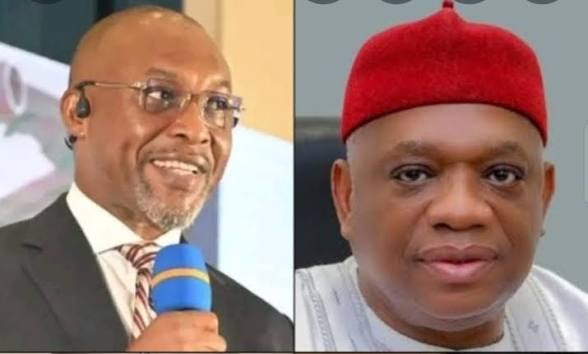
Former Minister of Aviation, Osita Chidoka, has described the administration of former Abia State Governor, Senator Orji Uzor Kalu, as a defining period in the state’s political history, saying Kalu put Abia firmly in the national conversation and made the state punch above its weight.

Chidoka also observed that the momentum recorded during the Kalu era faded after he left office, with infrastructure deteriorating and Abia’s national standing diminishing in the years that followed.

The former minister said Kalu understood the political realities that confronted Abia State and the South East at the beginning of Nigeria’s Fourth Republic and provided the assertive and visible leadership the moment demanded.

Chidoka, who was guest speaker at the Abia State 35th anniversary celebration, stated this while reflecting on critical moments in the state’s history and the role of leadership in shaping its development and national standing.

“At the beginning of the Fourth Republic, the South East was searching for voice and relevance in the new democratic order. Orji Uzor Kalu understood that moment. Young, assertive and politically visible, he put Abia firmly in the national conversation. Abia punched above its weight,” Chidoka said.

His remarks offered a positive assessment of Kalu’s eight-year tenure as governor, particularly his ability to give Abia a strong voice and considerable visibility at the national level during the formative years of the Fourth Republic.

Kalu, who assumed office in 1999, quickly became one of the most visible governors in the country and an influential voice on national issues. His political engagements extended beyond Abia, helping to draw attention to the state and the concerns of the South East at a time when, according to Chidoka, the region was searching for voice and relevance in the emerging democratic order.

Chidoka contrasted the Kalu era with what followed, noting that the momentum eventually faded after Kalu’s tenure. He said infrastructure deteriorated, the state’s national standing diminished and Aba increasingly appeared to succeed despite government rather than because of it.

“Over time, that moment faded. Infrastructure deteriorated, the state’s national standing diminished, and Aba increasingly seemed to succeed despite government rather than because of it,” Chidoka said.

The former minister’s assessment effectively placed the decline after the Kalu era against the prominence Abia enjoyed at the beginning of the Fourth Republic, when, in his words, the state “punched above its weight” and was firmly established in the national conversation.

He said the subsequent decline created another defining moment for Abia, adding that Governor Alex Otti appears to have understood the present opportunity to restore confidence in government, rebuild infrastructure and recover the state’s sense of possibility.

“Alex Otti appears to have understood this one: a moment to restore confidence in government, rebuild infrastructure and recover Abia’s sense of possibility,” he said.

Chidoka further argued that the debate over strong leaders and strong institutions should not necessarily present the two as alternatives, noting that societies at critical moments require leaders capable of building institutions that eventually become stronger than their founders.

“We often say Africa needs strong institutions, not strong men. I agree that no society should depend indefinitely on one individual. But who creates strong institutions when the institutions themselves are weak?

“Before there were the Ten Commandments, there was Moses.

“My argument is that the real choice is not between strong leaders and strong institutions. At critical moments, societies need leaders with the capacity to build institutions that eventually become stronger than their founders.

“The strongman makes himself indispensable. The strong leader builds a system that can eventually work without him,” Chidoka said.

He said the challenge before Abia was to ensure that the current opportunity for renewal goes beyond an individual administration and develops into a lasting standard for governance and development.

“Can the present Abia moment become the permanent Abia standard?” he asked.

Kalu governed Abia State from 1999 to 2007 and currently represents Abia North Senatorial District in the Senate.

Abia @35: We punched above our weight under Kalu -Chidoka

0

• Credits OUK with giving Abia, South East national voice
Former Minister of Aviation, Osita Chidoka, has described the administration of former Abia State Governor, Senator Orji Uzor Kalu, as a defining period in the state’s political history, saying Abia “punched above its weight” and commanded national attention under his leadership.

Chidoka, however, said the momentum faded after Kalu left office, with infrastructure deteriorating and the state’s national standing diminishing in subsequent years.

Speaking as guest speaker at Abia State’s 35th anniversary celebration, the former minister said Kalu understood the political realities confronting Abia and the South East at the advent of the Fourth Republic and provided the assertive leadership the period demanded.
“At the beginning of the Fourth Republic, the South East was searching for voice and relevance in the new democratic order. Orji Uzor Kalu understood that moment. Young, assertive and politically visible, he put Abia firmly in the national conversation. Abia punched above its weight,” Chidoka said.

Kalu, who governed Abia from 1999 to 2007, emerged as one of the country’s most visible governors during the early years of the Fourth Republic, frequently intervening in national political issues.

Chidoka said that visibility helped project Abia and the concerns of the South East at a time the region was struggling to establish its place in the emerging democratic order.

But he contrasted the period with what followed Kalu’s departure, saying Abia subsequently lost momentum and Aba increasingly appeared to thrive in spite of government rather than because of it.

“Over time, that moment faded. Infrastructure deteriorated, the state’s national standing diminished, and Aba increasingly seemed to succeed despite government rather than because of it,” he said.

Chidoka said the subsequent decline eventually created another defining moment for the state, arguing that Governor Alex Otti appeared to recognise the present opportunity to rebuild infrastructure, restore public confidence and revive Abia’s sense of possibility.

“Alex Otti appears to have understood this one: a moment to restore confidence in government, rebuild infrastructure and recover Abia’s sense of possibility,” he said.

The former minister used the contrasting periods to make a broader argument about leadership and institution-building, rejecting the proposition that strong leaders and strong institutions must necessarily be mutually exclusive.

“We often say Africa needs strong institutions, not strong men. I agree that no society should depend indefinitely on one individual. But who creates strong institutions when the institutions themselves are weak?

“Before there were the Ten Commandments, there was Moses.

“My argument is that the real choice is not between strong leaders and strong institutions. At critical moments, societies need leaders with the capacity to build institutions that eventually become stronger than their founders.”

Chidoka drew a distinction between what he described as a “strongman” and a “strong leader,” saying the ultimate test of leadership was the ability to create institutions capable of surviving an individual.

“The strongman makes himself indispensable. The strong leader builds a system that can eventually work without him,” he said.

According to him, the challenge confronting Abia at 35 is to ensure that the current period of renewal does not end with the administration driving it but becomes an enduring standard for governance.

“Can the present Abia moment become the permanent Abia standard?” he asked.

Kalu currently represents Abia North Senatorial District in the Senate.

Sun

US to pull 200 troops from Nigeria after major ISIS operation

0

The United States is preparing to withdraw about 200 troops deployed to Nigeria for counterterrorism operations, with the larger contingent expected to leave by late September, according to a report by The New York Times.

American and Nigerian officials told the publication that the deployment, though relatively small, produced significant results in the fight against Islamist militants. Small teams of US trainers and intelligence analysts are expected to remain in Nigeria after the withdrawal.

The report said US officials regarded the Nigerian deployment as a potential model for future American counterterrorism operations in Africa, particularly because of the results achieved through a combination of military assistance, intelligence support and training.

Last month, US Africa Command commander, Gen. Dagvin Anderson, said the US had already withdrawn many of its troops following a May operation that killed Abu-Bilal al-Minuki, identified as the second-in-command of ISIS, in the Lake Chad Basin.

Anderson said the operation had significantly weakened ISIS’ leadership structure in Nigeria and internationally. He added that Nigeria had been “very active” since the operation, working to disrupt the terrorists’ ability to sustain themselves.

Despite the troop reduction, Anderson said the US would maintain its intelligence partnership with Nigeria, indicating that Washington’s security engagement with the country will continue through intelligence-sharing and other forms of cooperation.

The development comes weeks after Nigeria and the US held their second round of talks in Washington under a joint working group established to address the protection of Christian communities in Nigeria’s Middle Belt. The group followed President Donald Trump’s designation of Nigeria as a country of particular concern over allegations of Christian genocide, a position Nigeria has rejected.

Security challenges, however, extend beyond Islamist insurgency. Nigeria continues to contend with terrorism linked to the wider Sahel, banditry in the North-West, ISWAP, ISIS and Boko Haram attacks, farmer-herder conflicts, cult violence and militia activity.

Ladd Serwat, Africa senior analyst at ACLED, described the situation as “a very complicated security situation”, while noting that Islamist militant groups “constitute only a small proportion of the overall violence” in Nigeria.

Sun

Employees Speak Out Over Alleged Harassment and Intimidation at Equipment Hall

0


For some current and former employees of Equipment Hall Limited and Wowbii Interactive, speaking about their experiences at work has reportedly come with fear of losing their jobs, intimidation and, in some cases, serious personal consequences.
About eight employees, both male and female, including current and former staff, have come forward with accounts alleging sexual harassment, physical assault, threats to life and intimidation involving Gbolahan Bolaji Olayomi, the Group Chief Executive Officer of Equipment Hall Limited and founder of Wowbii Interactive.
The accounts form part of an ongoing investigation into allegations of workplace misconduct across the companies’ offices in Lagos, Abuja and Port Harcourt.
According to people who spoke as part of the investigation, some employees who raised concerns about alleged misconduct were eventually dismissed, while others were allegedly pressured to resign.
There are also claims that employees who were not themselves victims but spoke up in support of colleagues were also removed from the organisation.
The employees say their concerns did not end with what they allegedly experienced within the workplace. Some also claim they faced intimidation after raising complaints or demanding outstanding payments owed to them.
One current female employee, whose account is among those being investigated, says she remains officially employed by Equipment Hall and Wowbii Interactive and has neither resigned nor been dismissed.
Her account directly disputes an earlier description of her status by a representative of the organisation, who said the employee was a senior staff member who had been suspended over alleged theft and diversion of company products.
The employee says she has never been suspended and that no suspension letter was issued to her, adding that there is no signed or acknowledged document placing her on suspension.
She also disputes the organisation’s suggestion that she was being pursued by the police over fraud or theft.
According to her, she was instead accosted and allegedly harassed out of the office by Olayomi, accompanied by armed police officers, after she began speaking up about what she described as harassment and while demanding payment of her outstanding dues.
She maintains that Olayomi has her residential and email addresses and that, if there were a legitimate police complaint against her, the appropriate authorities could formally invite her.
She says she has received no police invitation or letter accusing her of an offence.

Allegations of police intimidation

The investigation is also examining claims involving the alleged use of police officers during disputes with employees and former employees.
Sources allege that armed officers were deployed during some encounters with staff, describing their presence as intimidating.
One incident reportedly occurred on July 15 and 16, 2026, involving an employee whose outstanding entitlements are said to remain unpaid.
Another incident was allegedly recorded on August 25, 2026, when police officers reportedly appeared while one of the alleged victims was at the Lagos State Domestic and Sexual Violence Agency.
The employee involved in the latest account says the officers who appeared at Bariga during a session relating to her harassment complaint were not authorised to act.
According to her, the Divisional Police Officer at Bariga Police Station intervened, asked the officers to leave the station and took steps to ensure her safety. She further claims that the DPO alerted senior officials within the Lagos State Police Command, including the Gender Unit, as well as the Special Fraud Unit.
The circumstances surrounding the incident, including the identity of the officers, why they were present and the actions taken by the DPO, are subject to independent verification.
The employee also alleges that Olayomi is currently being sought or invited by several government and law enforcement agencies, including the Special Fraud Unit in Ikoyi, the Lagos State Domestic and Sexual Violence Agency and the Gender Unit of the Lagos State Police Command in Ikeja.
Those claims will require confirmation from the relevant agencies.


Disputed theft and fraud allegations

The allegations of theft and fraud have become a major point of dispute between the employee and the organisation.
The employee claims that accusations of theft and fraud have repeatedly been used against employees who speak up about alleged harassment, assault or outstanding payments.
She says there are other current and former employees willing to provide accounts of similar experiences and that some have already made official statements.
One case she has specifically raised concerns a former HR Manager who, according to the employee, spoke up on behalf of staff.
The employee alleges that Olayomi instructed the HR Manager to create or alter documents that would be used to challenge her employment contract and provide grounds for withholding her outstanding dues.
According to the employee, the HR Manager refused because she is a lawyer and would not participate in the alleged conduct.
The employee further claims that the HR Manager was subsequently accused of theft and dismissed within the same period.
The former HR Manager has been identified as a potential source for further verification of the claim.
The employee has also disputed an alleged claim by Olayomi that goods were stolen in Port Harcourt.
According to her account, the goods had already been paid for and received by the customer. She says the customer subsequently issued a cease-and-desist letter to Olayomi after becoming aware of the allegation.
A copy of the letter has reportedly been provided as part of the documents being collated for the investigation.


Questions around internal complaints

The investigation has also received allegations concerning how complaints were handled within the organisation.
Sources allege that previous HR officials raised concerns about some of the issues with Ibifuro Boma Olayomi, the wife of the CEO and a senior Employee Relations Manager at Total.
According to the sources, she was aware of some of the complaints because of her reported involvement in aspects of the companies’ business affairs.
There are also allegations that she was involved in reviewing dismissal letters concerning employees who had spoken up.
These claims have not been independently verified, and no conclusion can be drawn about her involvement without examining the relevant documentation and hearing her response.
The same applies to other individuals mentioned by sources in connection with the handling of complaints.


The organisation’s response

The organisation disputes the narrative presented by some of the complainants.
In a telephone conversation obtained as part of the investigation, a representative said the matter should not be viewed simply as a case of employees being victimised.
The representative alleged that one of the individuals involved was being sought by the police over allegations of fraud and theft and advised the person to present themselves to the authorities to answer the allegations.
The representative further alleged that the individual was a senior staff member who had been suspended over alleged theft and diversion of company products.
According to the representative, there was sufficient evidence in the organisation’s possession to support its position and a criminal investigation was ongoing.
The representative also maintained that the matter was about the organisation and not a personal dispute.
However, the employee disputes that account, saying she has never been suspended, has not received any formal police invitation and remains officially employed by the company.
She also rejects the theft and fraud allegations, maintaining that they are being used to divert attention from her complaints about alleged harassment and her demand for outstanding entitlements.
The organisation’s response did not specifically address the wider allegations of sexual harassment, physical assault, threats to life, intimidation or the claims concerning the former HR Manager.

Investigation continues

The allegations have not been established by a court, and the counter-allegations of fraud and theft made against the employee have likewise not been judicially determined.
However, the investigation has produced competing accounts that can be tested against documents, official records and statements from the relevant individuals and agencies.
The employee has offered to provide contact details for agencies she says have been involved in complaints or investigations concerning Olayomi, while additional current and former employees are also said to be willing to provide statements.
Documentation, including correspondence relating to the disputed Port Harcourt transaction and statements from individuals who say they witnessed or experienced similar incidents, is being collated.
The investigation is ongoing, with efforts being made to independently verify the claims and obtain responses from the individuals and agencies named in the allegations.
For the employees who have come forward, the accounts raise concerns about how workplace complaints are handled and what happens when employees choose to speak up or demand what they believe they are owed.

Lagos strengthens Waste Management System Ahead of Monthly Environmental Sanitation — Wahab

0


Lagos State Commissioner for the Environment, Tokunbo Wahab, has said the state is strengthening its waste management system ahead of the Monthly Environmental Sanitation exercise scheduled for Saturday, August 29, 2026.

Wahab disclosed this in a statement following an engagement with the PSP operators’ association, the Association of Waste Managers of Nigeria (AWAMN), as part of efforts to address operational challenges affecting waste management in the State.


He said the government’s focus was to ensure that Lagos has a waste management system that is efficient, sustainable and accountable.

According to him, the state is strengthening the regulation of PSP operators while working with waste managers to address challenges relating to dumpsites, access roads, drainage, operational platforms and disposal turnaround time.

Wahab said the ongoing improvements at Solous 3, Igando, would help ease pressure on other disposal sites and improve the efficiency of waste collection across several communities, particularly in the Alimosho axis.

He added that the government was also reviewing the financial sustainability of PSP operations, stressing that any adjustment must be matched by transparency, accountability and quality service delivery.

“Operational challenges cannot be an excuse for failing residents,” Wahab said.

He stated that every PSP operator must meet its contractual obligations, maintain its fleet and provide consistent service.

The commissioner also called for stronger community-level monitoring and enforcement to ensure residents patronise designated operators and desist from indiscriminate waste disposal. Wahab stressed that government, waste managers and residents must work together to build a cleaner, healthier and more sustainable Lagos.


Tinubu Orders Full Reform of Nigerian Football After Series of Setbacks

0


President Bola Tinubu has ordered a comprehensive reform of Nigerian football following years of missed tournaments and disappointing performances by the country’s national teams.

The President directed the National Sports Commission (NSC) to work with the Nigeria Football Federation (NFF) and other stakeholders to address governance, administration, youth development, domestic leagues and accountability in Nigerian football.

President Tinubu said football receives more public support and attention than any other sport in the country, yet continues to fall short due to structural challenges.

He said Nigeria has the talent and resources to succeed, but the institutions responsible for managing the game have not been strong enough.

Authorities were also directed to engage with FIFA and the Confederation of African Football (CAF) as part of the reform process, while ensuring compliance with international football regulations.

The NSC Chairman is to work with the NFF secretariat to ensure the continuity of day-to-day football administration during the transition.

The President called on football stakeholders and Nigerians to support the reforms and help build a more accountable and effective football system.

The directive came on the same day NFF President Ibrahim Gusau and members of his board resigned following the Super Eagles’ failure to qualify for the 2026 World Cup and other recent setbacks.

The First Son to President Bola Tinubu, Barrister Seyi, on Thursday paid a congratulatory visit to Senator Abdul’aziz Yari Abubakar at his residence in Maitama, Abuja.

0


He visited the former Zamfara State Governor to congratulate him on his appointment as the Director-General of the All Progressives Congress (APC) Presidential Campaign Council for the 2027 general elections.


No President in Nigeria’s History Delivers Like Tinubu, Says Kaduna Governor

0


“No president in the history of this country has practically shown that he delivers like President Tinubu.

“Kaduna State will certainly repay President Tinubu during the 2027 general elections. Under President Tinubu, states have been given wings to fly,” Kaduna State Governor, Senator Uba Sani, said.

FG vows to address 15m housing deficit, says gap is national concern

0

The federal government has vowed to close the gap of over 15 million housing units, saying that the deficit is a major national responsibility.

Speaking when he received the Administrator of the National Judicial Institute (NJI), Justice Babatunde Adeniran Adejumo, who paid him a courtesy visit, the Minister of Housing and Urban Development, Engineer Muttagha Darma, disclosed that the government was working tirelessly to address the shortfall.

According to him, although the scale of the housing challenge is enormous, it is achievable through sustained commitment, effective partnerships, strategic planning and collective efforts by government institutions and other relevant stakeholders.

Darma stated that, no matter how large the task ahead may be, it is possible to bridge the gap.

He assured the NJI that the judiciary would be part of the ministry’s ongoing housing projects across the 36 states of the federation and the Federal Capital Territory (FCT), stressing that judicial officers and court personnel would not be left out of the Federal Government’s housing interventions.

The minister further explained that the ministry’s housing initiatives are being implemented with a broad national outlook, covering different locations and levels of government, including the states and local government areas.

He noted that the ministry recognises the importance of providing decent and affordable accommodation for Nigerians and would continue to explore partnerships and institutional collaborations capable of supporting the achievement of the Renewed Hope Housing Agenda.

The minister commended the leadership of the NJI for demonstrating concern for the welfare of its personnel and for seeking opportunities that could improve their living conditions.

He particularly appreciated the institute’s interest in ensuring that its staff are carried along in the broader national development agenda, describing the initiative as a demonstration of responsible institutional leadership.
He also stressed that addressing Nigeria’s housing deficit requires a collective and co-ordinated approach, adding that no single institution can resolve the challenge in isolation.

Earlier, the Administrator of the institute, Honourable Justice Babatunde Adeniran Adejumo, commended the ministry for its efforts towards addressing the nation’s housing deficit.

He expressed the readiness of the NJI to collaborate with the Federal Ministry of Housing and Urban Development in advancing the Renewed Hope Housing Agenda, particularly in the areas of human capacity development, training and institutional support.

He explained that the NJI has conference facilities and other resources that could be utilised for relevant training programmes.

Accordingly, Adejumo stated that the proposed collaboration with the ministry is expected to strengthen institutional co-operation between the two organisations while providing opportunities for capacity building, knowledge sharing and professional development in support of the housing programmes.

“The NJI is saddled with the responsibility of providing training, capacity building and continuing education for judicial officers and court personnel,” he stated.

In a statement, the Director of Press and Public Relations, Badamasi Haiba, pointed out that any collaboration would be undertaken legitimately and in accordance with the law, without compromising the independence, integrity or constitutional responsibilities of the judiciary. He also emphasised that the partnership would be structured within the respective mandates of both institutions.

“The institute is willing to collaborate with the ministry in whatever legitimate and lawful manner that could contribute to the success of its programmes,” Adejumo added.

Sun