By Tayo Ogunbiyi
There is perhaps no more convincing public relations campaign than a good road that takes you home faster, a bridge that shortens your journey, or an infrastructure project that transforms a once-neglected community. Such achievements require neither elaborate publicity nor sophisticated image management to communicate their value. Their impact is visible, tangible and, most importantly, discussable.
My recent experience in Abuja offered an interesting illustration of this proposition.
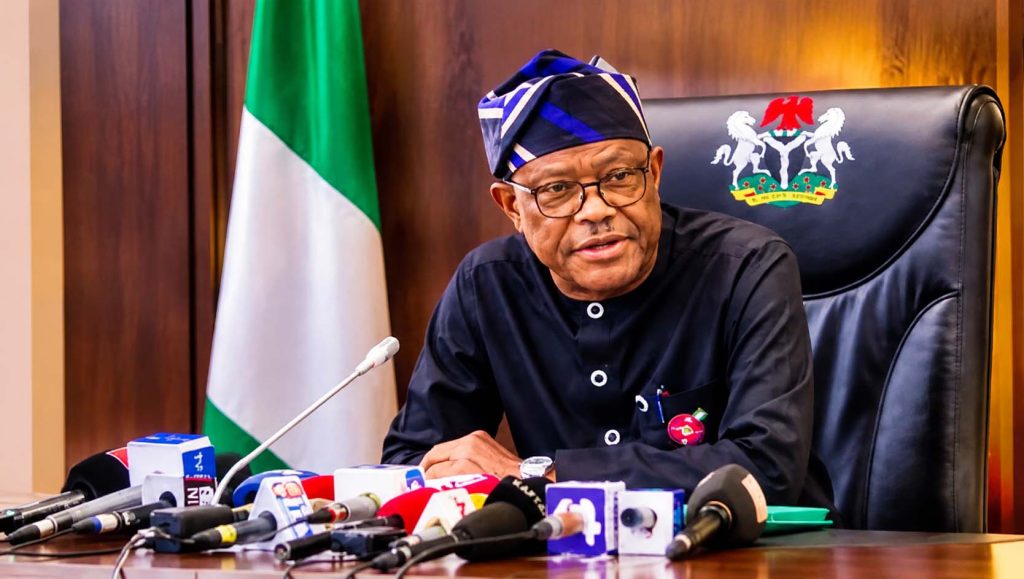
I was in the Federal Capital Territory (FCT) for the World Public Relations Forum. In my spare time, I have taken the opportunity to explore parts of the city, moving around and interacting with cab drivers and other residents. What began as casual conversations about the city gradually developed into an interesting observation: the infrastructure transformation taking place under the Minister of the FCT, Nyesom Wike, had become a recurring subject of discussion.
Interestingly, these conversations were largely unsolicited. Nobody was making a formal presentation or attempting to sell me a government-approved narrative. Yet, from one conversation to another, the subject kept resurfacing.
One particular encounter was especially revealing. A Fulani lady I spoke with remarked that, apart from Mallam Nasir El-Rufai, she could hardly remember the name of another former FCT minister whose administration had positively touched the lives of ordinary Abuja residents in the way she believed Wike’s was doing.
Her observation may not constitute a comprehensive assessment of the contributions of previous FCT administrations. It was, however, a telling expression of personal perception. And in public relations, perception, particularly when shaped by lived experiences, deserves serious attention.
It raises an important question: What happens when government performance becomes so visible that citizens begin to tell the government’s story without being prompted?
Public relations is often misunderstood as the art of managing impressions, issuing statements, organising media engagements and projecting a favourable image of an organisation or public institution.
While these activities are important, they represent only one dimension of the profession. The more enduring responsibility of public relations is to establish and sustain mutually beneficial relationships between an organisation and its publics.
For government, this relationship is ultimately tested by performance.
Citizens may listen to speeches, read press releases and watch government advertisements, but their final assessment of an administration is often influenced by what they experience in their immediate environment.
A resident who spends less time navigating traffic because of a newly constructed road does not need a government spokesperson to explain the benefits of infrastructure development. A trader whose business becomes more accessible because of improved connectivity has a personal reason to appreciate the intervention.
In such circumstances, the infrastructure itself becomes the message, while the beneficiary becomes an organic communicator of government performance.
This is arguably the most powerful form of public relations: one in which the credibility of the message is reinforced by the reality of the experience.
Since assuming office in August 2023, Wike has placed considerable emphasis on infrastructure renewal across the FCT. His administration’s development programme has focused substantially on road construction, rehabilitation, improved connectivity between districts and the extension of infrastructure to satellite communities.
Some of the projects delivered or nearing completion illustrate the scale of this intervention.
The Outer Southern Expressway, the N2 Transitway linking the Central Business District with Wuse, and the Airport-Kuje Road are among the major infrastructure projects that have featured prominently in the administration’s development programme.
The N2 Transitway, commissioned in July 2026, includes two bridges and provides an important connection between strategic parts of the capital. The Katampe Collector Roads, commissioned in June, have similarly improved connectivity within the district.
Perhaps more significant is the effort to extend infrastructure development beyond Abuja’s established city centre. For years, the development gap between the central districts and some satellite communities has remained a subject of concern. Residents of several outlying settlements have had to contend with poor road networks, difficult transportation and limited access to essential urban infrastructure.
The Apo-Karshi Road is particularly instructive. Originally awarded in 2010, the project remained incomplete for more than a decade, frustrating residents and motorists who depended on the route. Its completion under the current administration represents not merely the delivery of another road but the resolution of a longstanding infrastructure challenge.
During an inspection on November 11, Wike disclosed plans to develop the road into a tourist attraction, further extending its potential economic value.
Other projects, including the Bwari-Kubwa Road, Arterial Road N1 and the Tungan Madaki-Zuba Road, form part of the administration’s continuing infrastructure programme.
One of the most interesting dimensions of the Abuja experience is the role of ordinary residents in communicating the impact of government interventions. Citizen-driven conversations present a different communication dynamic.
When cab drivers discuss improved roads with passengers, when traders talk about easier access to their markets, or when residents spontaneously compare the state of their communities before and after an intervention, they become part of the public communication process. Unlike official publicity, such conversations often carry the credibility of personal experience.
There is a fundamental lesson here for governments at all levels and, particularly, public relations practitioners. The temptation in public-sector communication is sometimes to invest more energy in explaining government achievements than in ensuring that those achievements are sufficiently impactful to speak for themselves.
This approach can produce an imbalance between publicity and performance. No amount of media visibility can permanently compensate for poor service delivery. Equally, an administration that performs creditably but fails to communicate its achievements effectively may surrender valuable opportunities to build public understanding and confidence.
The relationship between performance and communication must therefore be complementary. Government must deliver, while public relations practitioners must ensure that citizens understand the significance, purpose and impact of what has been delivered.
For Wike and the FCT Administration, the challenge is to sustain the momentum, ensure quality delivery, maintain completed infrastructure, and address the other developmental needs of the territory.
For public relations practitioners, the challenge is to recognise that the most credible communication strategy begins long before a press release is written. It begins with the quality of the service being delivered.
My Abuja experience has reinforced an enduring principle of public relations: people are more likely to believe what they experience than what they are told.
A government may deploy considerable resources to project an impressive image, but its most effective ambassadors may well be the ordinary citizens whose lives have been positively affected by its policies and programmes.
This is not an argument for abandoning strategic communication. Rather, it is a reminder that communication must be anchored in substance. Public relations cannot sustainably manufacture a reputation that performance does not support.
Ultimately, the most successful public relations campaign is one in which the government does not have to do all the talking because its performance has given the people something worth talking about.
In the final analysis, the best public relations officer of any performing government may not be the person behind the microphone. It may be the citizens whose life has been made better by what the government has done.
· Ogunbiyi is Director, Public Enlightenment, Ministry of Information & Strategy, Alausa, Ikeja.