Home Blog Page 177

RCCG Brings Robotic Surgery to Nigeria Through Redeemer’s Health Village

0


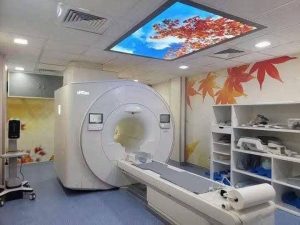
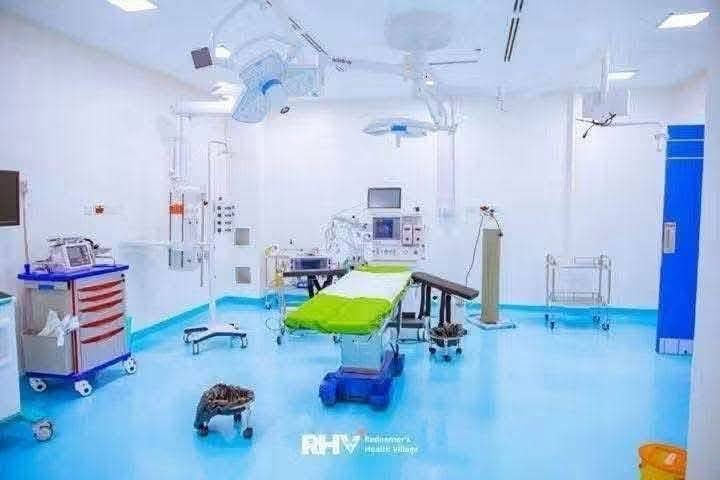
Pastor Enoch Adeboye’s Redeemed Christian Church of God (RCCG) has brought robotic surgery to Nigeria through the Redeemer’s Health Village (RHV).

The health facility has acquired two robotic surgery systems, one for clinical procedures and another for training Nigerian medical professionals.

The specialties covered include urology, general surgery, gynaecology, colorectal, thoracic and hepatobiliary surgery.
RHV is also establishing a Robotic Academy, with training expected to begin in October.


According to RHV’s CEO, some procedures could cost about five per cent of what patients may pay in the United States or Europe.

Tinubu will win second term because of his inclusive, purposeful approach to governance — Diket Plang

0


The chairman of the Senate Committee on Employment, Labour and Productivity and senator representing Plateau Central, Diket Plang, has said he has no doubt that President Bola Ahmed Tinubu will have a smooth sail in his second-term bid because of his purposeful, bold and all-inclusive approach to governance.

Diket, who spoke when he visited victims of the recent attack in Bin-Mper community of Kumbun District in Mangu Local Government Area of the state, said the hard but necessary decisions the President had so far taken had put the country on the right trajectory.

More than 24 persons were killed in the incident.

Plang portrayed Tinubu as a determined, brave, articulate and purposeful leader, capable of implementing hard but necessary policies.

He cited those bold and transformative decisions as subsidy removal, state police and regional development centres, saying that the idea of a second term could help consolidate his vision.

He said, “I think President Bola Ahmed Tinubu will win his re-election for the reasons that his policies and his vision are very inclusive.

“He seems very determined, brave, articulate, and purposeful to ensure that some very tough, critical, but also, needed policies are implemented. It takes a brave heart to remove subsidy.

“It also take another brave heart to say, let’s have state police. It takes another great heart for a country to create regional development centers. For me, such a person should be given a second time to consolidate on his dreams and visions.”

Plang, who failed to scale through the recent primary election to secure a re-election, acknowledged the anger and discontent following that exercise and the arguments over the recently released list of members of the presidential campaign council, but remained hopeful and optimistic that the party would perform well in the election.

Plang said, “I hope and believe that the party will be able to handle some of the little discontent from the party’s primary election. But regarding the presidential campaign council, I think the president has the right to drive his own re-election campaign, after all it’s his own election.”

Plang, who took a swipe at the proposition by the Presidential Candidate of the African Democratic Congress, Atiku Abubakar, to reintroduce petrol subsidy and reopen the country’s borders, described them as mere rhetoric.

He said that reopening the borders would be very catastrophic, as porous borders were the main reasons for the insecurity bedevilling the country.

Speaking earlier to the victims of the attack, Plang said that he was comforted by the strong will and desire of the people not to allow anybody to displace them from their lands.

“It is sad that in a small community like this, 24 people in one day will be killed. That’s just about 10% of the total population of the land has been wiped out within a very short, within a night.

“I’m however comforted by the strong decision of the leadership of the land, particularly the village head, the district head, the entire tribal development association to remain resolute in their lands. I’m highly encouraged with their doggedness, their strong will to withstand this very very sad episode.”

District Head of Kumbun, Gambo Tetmut, had earlier told the senator that the village is the last settlement in the vast land overseeing the hills, which made it very vulnerable.

He asked that the local vigilante be empowered to serve as the first line of defence.

He said, “If you look at this environment from the western part of this village, there are no houses there. And so these communities are vulnerable. We are asking for help, sustained help for his community, because most of the attacks are coming from these vulnerable communities.

“We want the government to assist us, especially to provide first defense. There are youths that are sacrificing their lives. Some of them don’t have anything to even defend themselves. If they had, we wouldn’t have had this number of casualties here.”

Sun

Japa Syndrome: Acquire Skills Before Travelling Abroad, Business Experts Tell Nigerians

0
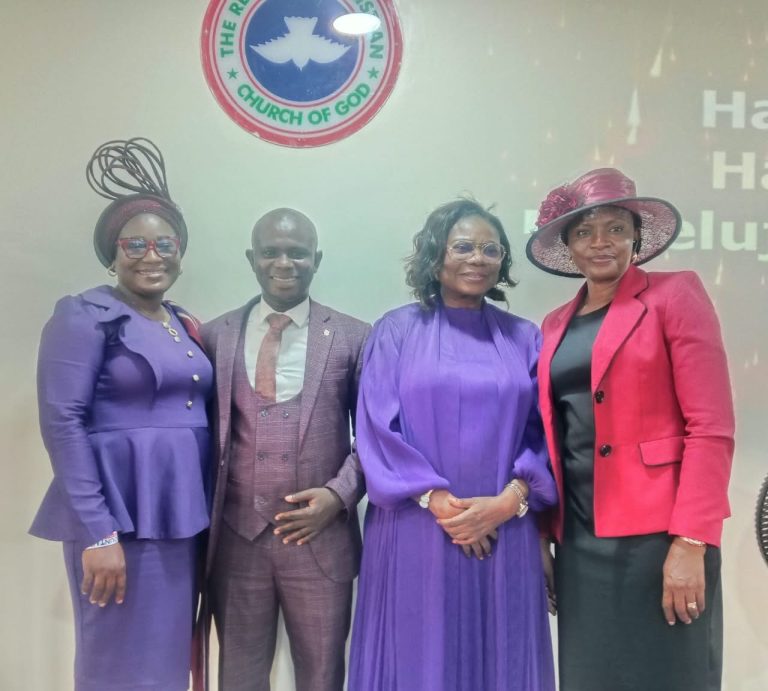
Dcn Mrs. Titilayo Farorika, Pastor incharge of RCCG His Majesty Chapel, Pst Tope Farorika, Executive Director of the Consumer Credit Corporation (CreditCorp), Mrs. Olanike Kolawole and Pastor Mrs. Rotimi Oluwabukola at a 2-day business summit held on Sunday.

Business experts have advised Nigerians planning to travel abroad in search of greener pastures to acquire relevant, marketable skills and develop sustainable sources of income before leaving the country.

The experts gave the advice at a two-day business summit organised by the Redeemed Christian Church of God (RCCG), His Majesty Chapel, Lagos Province 122, in partnership with the Lagos State Residents Registration Agency (LASRRA).

The summit, themed “Becoming Mountain Movers Entrepreneur,” was designed to empower entrepreneurs, aspiring business owners and members of the public with practical knowledge on business development and creating multiple streams of income amid the country’s challenging economic environment.

One of the lead speakers, Pastor Mrs. Rotimi Oluwabukola, who spoke on “Creating Multiple Streams of Income in a Challenging Economy,” urged Nigerians to leverage technology and social media to market their businesses, skills and services.

Oluwabukola advised aspiring entrepreneurs not to wait until they had huge capital before starting businesses, noting that several ventures could be established with limited resources.

She urged Nigerians to become problem-solvers and productive members of society rather than relying solely on white-collar employment.
“Start with the small resources that you have. Don’t wait until you have millions in your account. There are jobs that you don’t need big money to start,” she said.

She further encouraged entrepreneurs to use social media platforms to reach customers within and outside Nigeria rather than waiting for foreign patronage.

On the increasing trend of Nigerians travelling abroad, popularly known as “Japa,” Oluwabukola advised those seeking opportunities overseas to first acquire marketable skills that could enable them to earn a living and remain financially independent.

She also urged Nigerians to explore opportunities within the country, stressing that Nigeria’s large population and growing needs presented significant opportunities for businesses.
Also speaking, the Executive Director of the Nigerian Consumer Credit Corporation (CreditCorp), Mrs. Olanike Kolawole, said the summit brought together young entrepreneurs, new business owners and established entrepreneurs to equip them with the knowledge needed to take their businesses to the next level.

Kolawole urged entrepreneurs to look beyond business expansion and focus on building sustainable wealth, creating employment opportunities and establishing a lasting legacy.

According to her, business growth should translate into more jobs and additional income for individuals and the wider economy.

She also highlighted the challenges faced by women who attempt to combine entrepreneurship and career development with child-rearing.

Kolawole said the high rate of inflation and the devaluation of the naira had made it increasingly difficult for many Nigerians to depend on a single source of income.

“The reality is that inflation is high, and with the devaluation of the naira, what most people earn today may not be enough to meet their needs. So, we are preaching the importance of having multiple streams of income,” she said.

She encouraged Nigerians to identify their skills, talents and abilities and convert them into additional sources of income.

Kolawole also called for greater attention to opportunities within Nigeria, observing that foreigners were increasingly coming into the country to take advantage of available business opportunities.

Citing the activities of Chinese nationals across various sectors as an example, she said Nigeria’s population of more than 200 million people represented a huge market for entrepreneurs.

She stressed that significant opportunities remained within the Nigerian economy for people willing to identify problems, develop solutions and build sustainable businesses.

Speaking on the initiative, the Pastor in charge of RCCG His Majesty Chapel, Pastor Tope Farorika, said the programme was driven by the church’s commitment to empowering people both spiritually and economically.

Farorika said the church believed that divine blessings should be complemented with practical knowledge, opportunities and empowerment.

“We thank God that this started last year and both members and people who came from outside to attend were blessed through their testimonies. We thank God for what He will do this year,” he said.

The head of the organising team, Debo Omilani, said the summit was initiated from the pastor’s vision to empower both members of the church and non-members.

Meanwhile, a business development professional, Miss Anuoluwapo Adeleke, emphasised the importance of registering businesses with the Corporate Affairs Commission (CAC).

Adeleke said business registration was critical to building credible enterprises capable of attracting local and international opportunities.

She urged entrepreneurs to stop procrastinating on business registration, noting that formalising a business could enhance the credibility of their enterprises and provide access to various opportunities.

The Station Manager of the LASRRA office in Ojokoro, Mrs. Olaniran Silifat, also sensitised participants on the importance of residents’ registration.

Silifat said residents and people working in Lagos State were expected to register with LASRRA, describing the exercise as essential for effective government planning and service delivery.

EPL: Van Dijk begs Liverpool to keep Gakpo amid Man City interest

0


Liverpool captain Virgil van Dijk has urged the club to keep Cody Gakpo as Manchester City reportedly prepare a £75 million move for the Dutch forward before Tuesday’s transfer deadline.

Gakpo’s future has come under fresh scrutiny following Liverpool’s move for Paris Saint-Germain winger Bradley Barcola, whose transfer could rise to £123 million, potentially pushing the 27-year-old further down the pecking order at Anfield.

Despite the uncertainty, Gakpo has made a strong start to the new campaign, scoring once and providing an assist as Liverpool drew their opening two Premier League matches 2-2 against Newcastle United and Nottingham Forest.

The Netherlands international has also been an important player for Liverpool since joining the club three and a half years ago, scoring 51 goals and contributing to their 20th English top-flight title in the 2024/25 season.

Van Dijk made his preference clear when asked about Gakpo’s future as City’s interest intensified.

“He’s a quality player and I think we should keep quality players, but let’s see what the next three days bring,” Van Dijk said.

“Obviously it’s pretty clear that I want him to stay, not only because he is the quality player that he is, but also he’s a friend of mine and I think he will be very important for us.”

Liverpool are reportedly open to selling Gakpo, with City said to be willing to pay £75 million for the forward.

Van Dijk also welcomed the potential arrival of Barcola, but insisted there was little point discussing the transfer until it is completed.

“He’s (Barcola) a very good player. If he comes he’ll be welcomed with open arms but until it’s there, there’s no point speaking about it now.”

The Liverpool captain said the club remained an attractive destination for elite players despite the transition under new manager Andoni Iraola.

“I think Liverpool are still one of the biggest clubs in the world. Obviously we all know that we’re going through a transition and you either want to be part of it or you don’t. I’m part of it now,” he added.

Liverpool have endured a difficult defensive start under Iraola, conceding twice in each of their opening two league matches, although they fought back to earn draws against Newcastle and Nottingham Forest.

Van Dijk admitted there was significant room for improvement as Liverpool seek to build momentum under their new manager.

“It takes some time but obviously we all want it to work as soon as possible and for 90 minutes,” said Van Dijk.

“That’s now two games in a row we’ve had to fight back. Obviously it’s a good sign that we fight back but I think we can still do much better than what we have been showing.

“We have to score more, we have to concede less. Nottingham Forest came here three times in the last three seasons and came away unbeaten, and that shouldn’t happen.”

Sun

Why some Nollywood executives avoid mentoring Igbo talents — Zuby Michael

0


Nollywood actor Zuby Michael has alleged that fear of creating future competitors is one reason some industry executives and gatekeepers are reluctant to mentor Igbo talents.

Michael made the claim during an interview with Broadway TV, where he discussed the challenges and dynamics surrounding opportunities for emerging talents in Nigeria’s entertainment industry.

According to the actor, some industry players may hesitate to mentor Igbo creatives because they believe they can quickly acquire the skills they are taught and eventually surpass their mentors.

“People are scared because Igbo people are fast learners and they are capable of making it big with just a little,” Michael said.

He argued that an individual who has spent years acquiring knowledge in a particular area of the entertainment business could train an Igbo talent who might master the same skills within a much shorter period.

“You might decide to mentor an Igbo person and what took you 10 years to learn, he will learn it in one year and six months,” he said.

Michael further claimed that the situation could become problematic for some mentors when the person they trained leaves to establish an independent career or business.

“And if you don’t treat him well, he will leave you and start doing the same business you taught him and become your competition. So, people are scared of that,” he said.

Sun

DSS pauses Sowore’s prosecution until after 2027 presidential poll

0


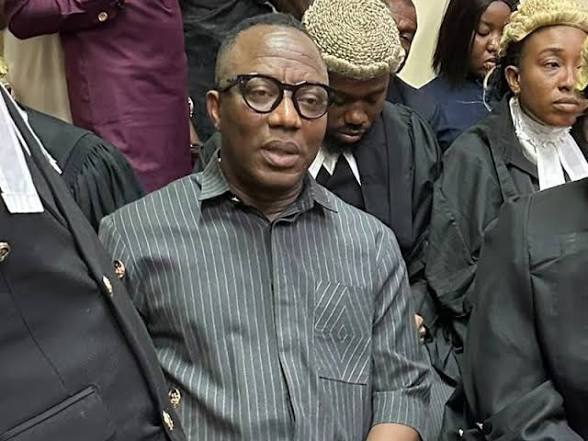
The Department of State Services (DSS) has instructed its private counsel, Akinlolu Kehinde, a Senior Advocate of Nigeria, to take steps to seek an adjournment in the case of alleged cyber-bullying it instituted against African Action Congress (AAC) presidential candidate, Omoyele Sowore, until after the next presidential election slated for January 16, 2027.

The DSS had approached the court to determine if it was proper for Sowore to allegedly cyber-bully President Bola Tinubu in August 25, 2025 posts on his “X” handle and Facebook page, referring to the President as a “criminal.” The DSS also instructed that cases of contestants for other elective positions should also be reviewed accordingly.

The secret police stated that the Sowore matter was to seek judicial interpretation on the propriety of arbitrarily calling President Bola Tinubu or any individual a criminal, in the same way it approached the court to rule on the legality of Professor Pat Utomi’s “Shadow Government.”

The DSS, in a September 6, 2025 letter to the chairman of Meta Corp, stated that, aside from protecting the President from physical threats, it is also, by law, empowered to protect him from psychological attacks.

After Sowore’s posts, the DSS gave him seven days to pull them down. After the expiration of the ultimatum, and he (Sowore) still refused to pull down the posts, the secret police, without inviting or arresting him, approached the court for adjudication on September 16, 2025.

A credible source close to the DSS lawyer disclosed that the Director-General, Mr Tosin Ajayi, met with the senior lawyer and top officers of the DSS’ legal directorate on August 20, a day after the Independent National Electoral Commission (INEC) officially lifted the ban on campaigns, to consider asking the court for an adjournment to enable Sowore fully exercise his right to contest the upcoming presidential election.

“The DSS boss reportedly told the Senior Advocate and his directorate of legal services that, with the commencement of presidential campaigns, it would only be fair to adjourn the court case in order to enable Sowore fully participate in the upcoming elections without let or hindrance,” the source disclosed.

He added: “The DSS boss told the lawyers that, since the matter had been in court for nearly a year, suspending it for another few months wouldn’t make much difference.”

The source added that the position of the DSS on adjourning the matter with Sowore is expected to be formally communicated to the Federal High Court from Monday, September 14, 2026, seeking the indulgence of the court for the adjournment, when the court is expected to resume normal sittings after returning from annual judicial vacation. Other cases involving other candidates are being reviewed, he added.

When contacted, counsel Kehinde confirmed the above position and reiterated that it is in consonance with the civilised approach of the current DGSS, who will always ensure a level playing field and opportunity for everyone. “We will seek the indulgence of the court for the adjournment.”

Sun

Capital intensive, risk heavy: Why many fish farms collapse within one year

0


•Nigerian fish farmers battle costs, floods, say feed cost killing business

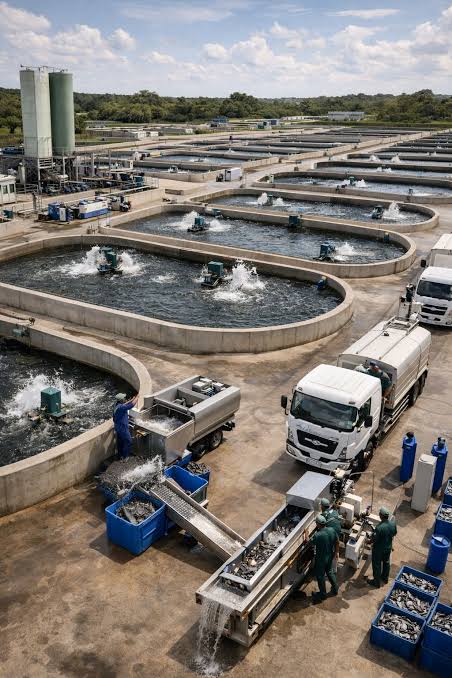
Fish farming remains one of the most lucrative agribusinesses in Nigeria. It is also one of the most capital intensive.

Fish farmers across Lagos and Ogun states said the demand for fish continues to outstrip supply.

Some of the farmers that spoke with Saturday Sun shared practical tips for turning small resources into big returns, even as they urged both the Federal and state governments to support their efforts by easing the burden through better funding, feed subsidies, and infrastructure.

The fish farmers also gave reasons why many beginners that rushed to the business collapse within the first year. They noted also that many first-time farmers underestimate costs and ignore technical details.


They admitted that the difference between profit and loss lies in mastering the nitty-gritty of the business. That is by doing more with little, and knowing when to ask government for help.

According to them, the business is profitable and it also has a clear promise of good money, steady demand and jobs.


But the challenges, it was gathered, also include rising cost of feed, poor power supply and lack of access to funds.

Lagos- based fish farmer, Pastor Gbenle Olanrewaju, with over a decade experiences in that line of agro-business, said the business is lucrative.

The Kwara State-born cleric has many ponds that can conveniently accommodate over 50,000 fishes at a time and he is into hatching, rearing and selling of fishes in large fractions.

According to him, fish farming is profitable but getting increasingly difficult.

He said the value chain of fish farming grow tremendously as it also supports hotels, eateries, pepper soup joints and smokers.

Olanrewaju highlighted the various challenges of the business, which he said included high cost of fish feed, poor access to loans, climate change, and flooding as major setbacks.

“Feed is very expensive now. By the time you finish feeding them with heavy amounts of money, market women and other buyers will still price you low. And if you go to the bank for a loan, the interest rate is nothing to write home about. It’s too much to bear,” he said.

He also blamed poor drainage for huge losses, insisting that climate change is also affecting the growth of the fishes.

He advised beginners to master water management, stocking and feeding, even as he urged them to join associations like the Lagos State Catfish and Allied Farmers Association LASCAFAN, and its Lagos State Fish Hatchers Forum, LASHAF, for more knowledge and understanding.

The cleric also urged government to intervene by supporting struggling fish farmers and ensuring that they remain in the business through subsidised feed, single-digit loans and grants, and a functional research institute.

“At the moment,this El Nino weather is affecting all of us. Fish don’t grow fast no matter how you feed them.

“Another big challenges to fish farmers here in Ikorodu is that the water coming from the canals to the swampy ponds are polluted and they sometimes find their ways into the ponds and cause alot of problems for the fishes.

“From my findings, I was told that the canals in Ikorodu, Imota, Adamo and other areas have not been dredged in four to five years, so whenever there is a heavy rain water goes back into the farms and takes the fish away. That’s total loss for many farmers.

“Many of my co- farmers have had such terrible experiences of flood even as many farmers have also quit the business because of flooding.”

He urged both the Federal and the State Government to set up fish feed factories in order to produce the feeds at subsidised rates, even as he warned that if the business suffers, it will affect so many sectors of the economy.

“We need NIMET and the School of Oceanography to give us weather data and research. Right now, there is nowhere to go and read 20 years of fish farming records in Nigeria,” he said.

Alhaji Hammed Otufowora,a fish farmer and also the Chief Executive Officer of HAMFA World Wide, a company that produces local feeds for farmers across Lagos and Ogun State said fish farming, like every other business is capital intensive that needs a considerable amount of money as capital. He pointed out also that a fish farmer must also have the strength and wherewithal to withstand the various challenges of the business.

Otufowora explained further that there are different species of fishes, which he said must be treated with care.

“Fishes like the Fries, Fingerlings and Juvenile are like babies.You handle them with care and you monitor their progress from Day one and also from one stage to another. At times you need to treat their waters for them to give you the expected results. “The way you treat fishes inside a earthen ponds is different from the way you would treat them in either a block, tank or tarpaulin.

“ A serious fish farmer must be business-minded and must also understand the fundamentals of the business.He must also know that the business of fish farming is full of risk,” he said.

The risk, he stated is manageable, provided the farmer is the type that can create enabling environment for the fishes.

Otufowora mentioned the various types of ponds farmers can use for fish farming.

According to him, farmers mainly use four types of ponds. The best one, he explained depends on the land, water source, budget, and scale

“ Earthen Ponds are usually dug directly into the soil in a swampy location. It is most common in rural areas.

“It is the cheapest to construct and fishes grow so fast because they eat natural food and they grows in it.

“For instance, earthen pond is good for Catfish and Tilapia and other species of fishes.An earthen pond loses water through seepage, and it is also very hard to harvest all fish.

“At times predators like snakes and birds can enter into earthen ponds and that is why many farmers still cover their ponds with net to keep the predators away from the fishes. “Earthen pond is good for large scale farmers with good clay soil that holds water, but it is also too dangerous for farming because of flooding. Whenever there is heavy rain, there is flood and it may take away all the fishes, except where there is proper drainage.

“Another good pond is the concrete pond.It is built with blocks in a rectangular shape. It is easy to manage and easy to drain.

“A farmer can easily harvest 100 percent of the fish stocked and there is a less predator attack on the concrete pond.

“Though, it is very expensive to build and water always gets hot fast and there is a need for constant water change”, he said.

According to him, concrete pond is also good in an urban area and also as a backyard farming and it can also be used for hatcheries.

“The Plastic/Tarpaulin ponds are also pits lined with heavy-duty tarpaulin or plastic sheets. It is above ground or dug. It is also less costly, portable and easy to set up, less seepage than earthen. It is for best for beginners and small scale farmers. A constant, running water must be available always for proper draining and flushing of water for the fishes.

“The Plastic tank is usually 1000 litre and 5000 litres.It is very easy to manage, good for urban/ backyard, uses little space and water,but it is very expensive per volume,and can only stock small numbers of fishes. Plastic tank is also good for hatchery, fingerling production, or very small scale in compounds”, he said.

However, for Mr.Solomon Oligie, the rising cost of fish feed is taking a huge toll on the business. He expressed worry that the high cost of fish feed, if not curtailed would affect the prospect of the business in the future.

According to him,the feeds are costly now as compared to about five years ago when he started the fish farm business.

He said the increasing cost of feed is a major problem that is affecting many farmers these days and many are gradually losing interest in the prospect of the business.

“Fish farming would have been one of the most lucrative businesses in Nigeria except for the high cost of feed. Many farmers that could not afford the rising cost of feed have left the business. And some of us that are still doing it are struggling to meet up with the situation.

“Prices of fish feeds are not stable, and until the government decides to help and support us,we will continue to seek support.

“For instance, prices of some of the feeds like Blue Crown and Eco Float and several others have increased terribly and some farmers that could not afford the prices go for local feeds”, he said.

Sun

As voter registration closes: Options for APC, ADC, NDC, others

0

• Battle for ballot intensifies, parties outline strategies to woo voters

As political parties gear up for the 2027 general election, today marks a critical double deadline. It is both the final day of the Independent National Electoral Commission’s (INEC) Continuous Voter Registration (CVR) and the close of the nationwide claims and objections window for scrutinising the voter register.​

The final numbers that emerge will determine far more than voter eligibility; they will shape the political narrative ahead of 2027, setting the incumbent’s reform agenda against an increasingly mobilised electorate demanding change. After historic voter apathy in 2023, where turnout dropped below 27 per cent, all eyes are on whether this cycle’s unprecedented awareness campaigns will produce a sanitised register and a level of civic participation that money cannot buy.​​


For months, a quiet mobilisation has been underway across the country. Pro-democracy groups, labour unions, and civic organisations have flooded the field to drive registration and Permanent Voter Card (PVC) collection. As a result, the battle for 2027 is shifting from who shouts the loudest to who actually turns out. For the millions of Nigerians who sat out the last election cycle, this is the moment to alter that trajectory.​ The stakes could not be higher. A larger, more accurate register paired with strong turnout reduces the influence of vote-buying and gives elected leaders a genuine mandate. Conversely, low turnout risks repeating the familiar pattern of elite selection.​​

Beyond the administrative process, this final register serves as the first real test of political strength ahead of 2027.
Ultimately, Nigeria’s political future will be written not in campaign offices, but in the final count of citizens eligible and ready to vote.​​

Electoral numbers and map dynamics​

Kano State recorded the highest figure in the newly completed voter registration exercise nationwide with 330,906 completed registrations, representing 8.55 per cent of the new national total, while Lagos State added 181,254, or 4.69 per cent. Delta State followed closely with 166,895, representing 4.31 per cent, with Edo State adding 156,150 and Ebonyi State trailing behind at 146,507.​ Despite these additions, Lagos State retains the largest single voter bloc overall at 7.06 million voters, with Kano close behind at 5.92 million.​ These figures carry significant strategic implications compared to previous general elections.

Crucially, the North-West, led by Kano, and the South-West, led by Lagos, remain Nigeria’s decisive vote banks. Section 134 of the Nigerian Constitution mandates that a presidential candidate must secure not only a plurality of votes but also at least 25 per cent of the votes cast in two-thirds of the 36 states and the Federal Capital Territory. Any party that fails to build strong, cross-regional coalitions across both the Kano-Kaduna axis and the Lagos-Oyo axis will find it nearly impossible to meet this statutory benchmark.​​

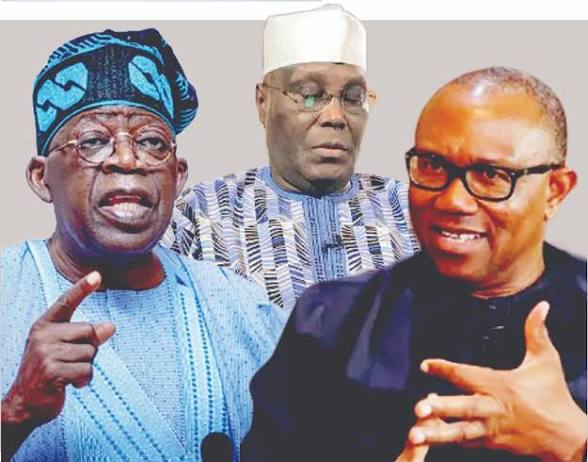
In the 2023 cycle, presidential contests were essentially a three-horse race between the All Progressives Congress (APC), the Peoples Democratic Party (PDP) and the Labour Party. However, rising political awareness and major political realignments—exemplified by new opposition coalitions and tickets like Atiku Abubakar running under the African Democratic Congress (ADC) alongside Rotimi Amaechi, and Peter Obi running under the Nigeria Democratic Congress (NDC) alongside Rabiu Kwankwaso—mean high voter bases in Kano and Lagos no longer guarantee a single party will sweep those states. High registration numbers in places like Kano, Lagos, and Delta mean very little unless political parties resolve voter apathy and convert registrations into actual PVC collection and polling unit turnout.​​

Strategic implications for major parties and candidates​

For President Bola Tinubu and the ruling APC, the registration data presents a dual challenge of defending core South-West strongholds while stemming potential erosion in the North-West. The incumbent administration’s strategy hinges on leveraging state machinery, structural reach, and economic reform messaging.
Pushing back against opposition scepticism, Chief Henry Ajomale, a close associate of President Tinubu and former Chairman of the Lagos State chapter of the APC, expressed strong confidence that voters will turn out to back the administration. He argued that the opposition enters this election cycle fractured, lacking internal cohesion, clear strategy, or viable secrets to defeat the ruling party. In 2023, he noted, opposition momentum relied heavily on temporary factors, such as weaponising religion and capitalising on the fallout from local grievances. However, Ajomale maintained that those tactics would not work again because voters recognise the fair representation under this administration and appreciate the long-term benefits of the president’s economic structural repairs. Pointing to over 31 governors standing firmly behind the president and key security gains in states like Borno, Kaduna, Yobe, and Adamawa, Ajomale shared optimism for higher voter turnout in 2027, asserting that citizens will vote to sustain progress rather than stage a protest vote.​​
“In 2023, opposition momentum relied heavily on temporary factors such as weaponising the Muslim-Muslim ticket narrative and mobilising voters to sleep in churches across Lagos to vote against us, alongside the lingering political fallout from #EndSARS.​
“However, those tactics will not work again. The Christian community can see that representation has been fair under this administration, and voters who were previously misled will not repeat that choice. With over 31 governors standing firmly behind the president, it is clear his leadership is endorsed across the country.​
“President Tinubu inherited a severe economic burden from previous administrations. Had the leadership been given to someone incapable, the nation’s hardship would be far worse today. As these deep structural repairs take full effect, Nigeria will enter a new era of growth. Voters recognise this progress, and I am confident they will vote to sustain it.”​
He expressed optimism about the prospect of a larger turnout of voters in 2027.​“This time around, I believe we will achieve much better results than in 2023 because voters are far more politically conscious, and many appreciate the long-term benefits of the president’s economic reforms. As security continues to improve, voter turnout will naturally follow.​
“Significant security gains have already been made. Key areas in states like Borno (Maiduguri), Kaduna, Yobe, and Adamawa have been liberated from insurgents and kidnappers. As security forces tackle remaining threats in places like Kwara before the election, people will feel safe enough to come out and vote without fear of attack.
“While registration figures do not automatically translate into votes, I remain optimistic. The opposition claims that high turnout will be a vote of protest against the administration, but from my perspective, citizens will turn out to support the government because of the positive outcomes of President Tinubu’s economic policies,” Ajomale enthused.​
Conversely, opposition leaders view the expanding register and economic hardship as their main path to victory. Tunji Shelle, a chieftain of the ADC in Lagos, echoed the sentiment that widespread frustration with the current administration will drive an unprecedented turnout. Shelle noted that citizens can barely afford basic meals or transportation, forcing voters to organise themselves to demand accountability at the ballot box. He emphasised that his personal surveys reveal a vast majority of voters have already made up their minds against the incumbent government, adding that aggrieved citizens struggling to survive will naturally hold the administration responsible. For opposition parties, Shelle insisted, the core task is ensuring that INEC maintains transparency while parties mobilise these aggrieved citizens to safeguard the register against manipulation.​​
“There will definitely be a greater voter turnout in the upcoming election because people are frustrated with the current administration. Citizens can barely afford basic meals or simple transportation. Everyone is complaining, so voters are organising themselves to come out in large numbers and make a real difference in the outcome.​
“​My hope is that the voters’ register won’t be manipulated. I have conducted a personal survey and found that eight out of ten people do not plan to vote for the incumbent president. While some still tell me this administration is doing well, the vast majority have already made up their minds.​

“​You cannot expect people who are struggling to survive not to feel aggrieved by the government responsible for their hardship. As long as INEC does its job transparently, political parties will do theirs by mobilising citizens to back their candidates and win this election,” Shelle posited.​
For the NDC joint ticket combining Peter Obi’s nationwide appeal with Rabiu Kwankwaso’s formidable Kwankwasiyya movement, mobilisation is the central focus. Tanko Yunusa, National Coordinator of the Obidient Movement, outlined the NDC’s ambitious strategy to target a 60 per cent turnout of registered voters. Yunusa stressed that the NDC is actively embarking on nationwide advocacy to familiarise the electorate with their new platform, logo, and party symbol. Reaching across youth, elders, and technocrats, the movement aims to reverse the voter disenfranchisement and logistical issues seen in previous cycles. However, Yunusa warned that security agencies must step up to curb voter intimidation and violence, citing lessons from recent off-season elections like Osun State, where security forces needed to show greater capacity in arresting and prosecuting those who deny citizens their right to vote.​
His word: “We are expecting something very different from the low voter turnout of previous elections.​ In this upcoming election, the Nigerian people are eager for change, which presents a major opportunity for them to come out and vote. In the last election, there were significant challenges regarding voters being denied their voter cards in certain parts of the country.​ Ultimately, the responsibility falls back on INEC.​ We are targeting a turnout of about 60 per cent of registered voters. If we can achieve that collectively, the results will far better represent the Nigerian people.​ As a party, the NDC is embarking on nationwide advocacy.​“
As a new platform, we are actively mobilising so people can recognise our logo, understand what we stand for, and clearly know the platform on which Peter Obi is running. We are reaching across the board—to the youth, elders, and technocrats alike. This remains a major task for all of us.​ Many of our young supporters are already on the ground, carrying the flag and building awareness around our party’s symbol.​
“To curb the threat of violence, security agencies need to be proactive and step up. What we witnessed in the recent Osun State election was not encouraging. Security agencies must demonstrate their capacity by arresting and prosecuting those involved in these treacherous crimes against the state—because anyone who denies citizens their right to vote is acting directly against the nation’s interest.”​

Demographics, civic advocacy, and electoral reality​

Demographic data reveals that over 70 per cent of new registrants during recent CVR cycles are youth between the ages of 18 and 34, alongside student populations. This generational shift is forcing campaign strategies to pivot toward digital platforms, economic reform messaging, and job creation policies over traditional patronage structures. Candidates are increasingly forced to engage directly on social platforms, policy town halls, and micro-targeted digital media rather than relying solely on traditional rallies and local brokers.​​
Highlighting this civic resurgence, Chekwas Okorie, Convener of the Igbo Agenda Dialogue (IAD), maintained optimism that voter participation in 2027 will far exceed the 2023 figures. Okorie argued that pro-democracy organisations, unions, and non-partisan groups have entered the arena precisely because low turnout produces poor leadership recruitment and leaves small voter pools vulnerable to vote-buying. When millions turn out, he noted, no amount of money can buy enough votes to alter the outcome. Recalling that only about 2.2 million out of 11.5 million registered voters in the South-East voted in 2023, Okorie described how the IAD stepped in to rally disillusioned youth to register, vote, and own the process. Pointing to the recent Osun off-season governorship election—where voter turnout crossed 50 per cent, Okorie suggested that extrapolating such participation nationally would give the 2027 winner an indisputable mandate.​

Yet, election day turnout ultimately depends on converting registrations into collected Permanent Voter Cards. The persistent gap in PVC collection remains a key structural hurdle.

To address this, Okorie urged INEC to publish the names of registered voters who have not yet collected their PVCs, just as it publishes the general voters’ register. Such transparency would allow civic groups and political parties to identify wards with high volumes of uncollected cards and assist frustrated citizens in retrieving them before election day.​​
Speaking with Sunday Sun in a telephone conversation, he said: “The level of political awareness being driven by pro-democracy organisations, unions and groups that ordinarily stayed out of politics has increased considerably. They have entered the arena because low turnout produces poor leadership recruitment and makes the few who vote vulnerable to vote-buying. When few people vote, your money can go around. When millions turn out, no amount of money can buy enough votes to determine the outcome.​“Even before this wave, I voluntarily disengaged from partisan politics and formed a non-partisan group, the Igbo Agenda Dialogue (IAD). My observation was that many Igbo people, especially young people, had resigned from Nigerian politics. The agitation for Biafra showed how disillusioned that demographic had become.​
“That apathy showed in the numbers. Of 11.5 million registered voters in the South-East according to INEC for the 2023 election, only about 2.2 million voted for all presidential candidates combined. That was scandalous compared to previous elections. So I stepped aside from partisan activities to push a simple message: register, vote, and own the process. Many people aligned with me, and that was how IAD began.​
“By the time we called for voter registration, we had recorded real gains in getting first-time registrants to sign up. Other groups did the same nationwide.​“We are now seeing that effort translate to turnout. In the recent Osun off-season election, about 1.1 million people voted — over 50 per cent of registered voters. Compare that to the 27 per cent national turnout in 2023. If that Osun model is extrapolated nationally, 2027 could see a significantly higher participation rate.​
“Anybody who wins with that kind of mass participation can legitimately say Nigerians have spoken.​ That is our message: if you don’t vote, you allow someone else to choose who governs you. You may end up with leaders you do not want.​
“From our field experience, we are not stopping at registration. Between now and January, the work is to get people to come out, cast their votes, and defend them.​
“INEC can also help by publishing the names of registered voters who have not collected their PVCs, just as it publishes the voters’ register. That way, citizens and parties can identify wards and polling units with large numbers of uncollected cards and help people retrieve them. Many gave up after frustration at collection centres. Publishing the list will encourage them to go back before the election.”​
Even then, INEC’s growing reliance on technology for registration and voter management faces on-going scrutiny. Persistent technical glitches during online registration have frustrated users, while the commission has had to issue public warnings regarding fake CVR registration portals circulating on social media.

As the country looks toward 2027, two key questions hang in the balance: Is technology truly making Nigerian elections more credible, or simply introducing a new class of electoral challenges? And can political parties and civic actors successfully convert this historic expansion of the voter register into actual votes on election day?​​

The mandate of the margin​
As the portal closes on Continuous Voter Registration and the final register takes shape, Nigeria stands at a pivotal electoral watershed. The expanded voter rolls are far more than a routine administrative inventory; they represent a fundamental recalculation of power dynamics across the nation’s political landscape. For the ruling APC, the challenge lies in converting economic reform narratives into tangible electoral trust, ensuring that core strongholds in the South-West and North-West withstand the undercurrents of economic dissatisfaction.​

With Lagos remaining the premier voter engine at over seven million voters, the APC cannot afford to treat its home base as secure. The influx of new registrants in urban centres requires the ruling party to convince an economically pressured electorate that current policy pain will yield long-term stability. Furthermore, with Kano leading the new CVR surge, the APC’s northern campaign must aggressively counter opposition influence across the Kano-Kaduna-Sokoto corridor to secure the vital 25 per cent spread across northern states.

For opposition alliances like the ADC and NDC, the task is equally formidable: they must translate widespread socio-economic discontent into structural ground games capable of mobilising first-time youth registrants, protecting votes, and achieving statutory compliance across at least 24 states.​ Yet, the ultimate test of the 2027 general election will not occur on paper, but at the polling units. A large register offers the promise of democratised power, but an uncollected card remains a dead ballot. If the massive registration surge among young citizens fails to bridge the gap into physical PVC collection and election-day turnout, Nigeria risks repeating the cycle of elite preservation driven by low participation.
Conversely, if civic organisations, political movements, and electoral authorities succeed in driving turnout toward historic benchmarks, the sheer volume of participation will neutralise systemic vote-buying and force candidates to govern with genuine accountability.​​

Institutional integrity remains the critical backbone of this entire architecture. INEC’s handling of technological infrastructure, card distribution transparency, and operational logistics will dictate whether public confidence expands or erodes. Likewise, the neutrality and decisive action of security agencies in preventing intimidation will determine whether voters feel safe enough to assert their democratic rights.​

In the final estimation, 2027 will be defined not by the rhetoric delivered from campaign podiums or the size of party war chests, but by the determination of millions of Nigerians to turn their registered names into active votes. The trajectory of the nation’s democratic future rests squarely on who shows up to claim the mandate.

Sun
Machete-wielding man attacks Lekki cinema, two feared dead

0


Machete-wielding man attacks Lekki cinema, two feared dead
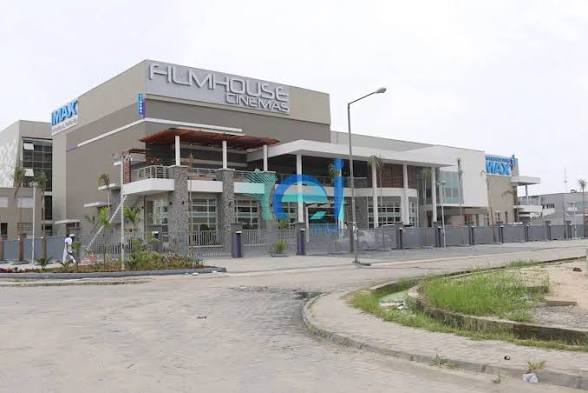
Two people are feared dead after a machete-wielding man attacked a security officer and another individual at the car park of Filmhouse Cinemas IMAX in Lekki, Lagos.

The incident reportedly occurred in the early hours of Saturday, shortly after moviegoers had left the cinema.

Filmhouse Group confirmed the attack in a statement issued later in the day, describing it as a security incident that occurred outside the cinema premises.

According to reports, the attacker, who was armed with a machete, allegedly confronted the victims at the car park. The two individuals reportedly resisted him and prevented him from gaining access to the cinema facility.

An eyewitness, sports journalist Buchi Laba, recounted the incident in a post on X, saying he was at the cinema to watch Odyssey, which began around 10 pm and ended at about 2 am.

Laba claimed that one of the victims sustained a stab wound to the chest while the other was stabbed in the back. He further alleged that one of them died while being taken to a hospital.

“I was there!! One of the worst experience of my life,” Laba wrote while recounting what happened after the movie.
The exact circumstances surrounding the attack, including the motive of the assailant and the confirmed number of casualties, remain unclear.

Filmhouse said it was cooperating with the relevant authorities, who are investigating the incident.

“Filmhouse Group is deeply saddened by a security incident that took place outside the premises, in the car park of one of our locations, in the early hours of this morning,” the company said.

The cinema operator said the incident was unrelated to its regular operations and disclosed that additional security measures had been introduced across its locations.

Filmhouse also commended the two individuals involved in the confrontation with the attacker, saying their actions helped prevent further danger and restore safety.

“Both individuals stood between danger and the people in their care, and it is through their bravery that the situation was contained and safety restored,” the company said.

The organisation added that the safety of its staff and customers remained a priority and that it would continue monitoring developments as the investigation progresses.

Sun

NYSC: Kidnappers demand ₦20m for abducted corps members

0

Kidnappers who abducted National Youth Service Corps (NYSC) members travelling from Bayelsa State to Abuja have demanded ₦20 million ransom for each victim.

The corps members were abducted three days ago along the Aloma-Egane Expressway in Ofu Local Government Area of Kogi State, after completing their three-week orientation exercise.

A family member of one of the victims told newsmen that the abductors had contacted the family and demanded ₦20 million for the release of the corps member.

“One of our daughters who was kidnapped on her way from Bayelsa State to Abuja after completing three weeks orientation camp. The kidnappers are requesting ₦20 million naira,” the source said.

The abduction was earlier confirmed by the Kogi State Police Command, which said several passengers, including NYSC members, were taken along the route.

The command subsequently reported that 11 abducted persons, including the drivers of the two vehicles involved, had been rescued through a joint operation by security agencies.

However, some of the corps members and other passengers are still believed to be in captivity, with security agencies continuing efforts to locate and rescue them.

Families of the victims have appealed to the Federal Government, the NYSC and security agencies to intensify efforts to secure the release of those still being held by the kidnappers.

Sun