Home Blog Page 132

The life of every Nigerian matters, says Tinubu as 36 miners die mysteriously in Niger State

0

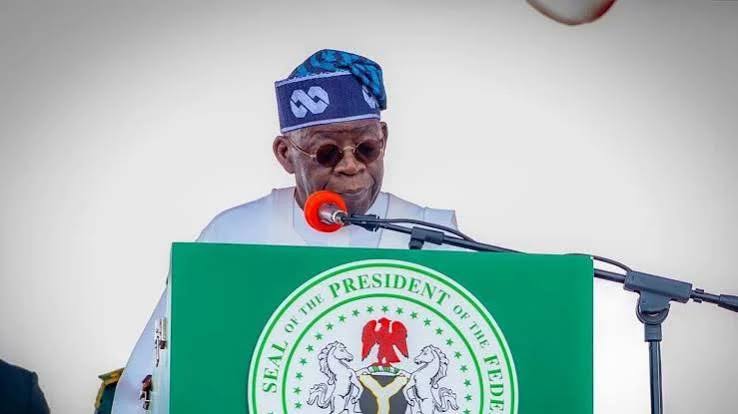
President Bola Ahmed Tinubu on Friday ordered a full and transparent investigation into the deaths of suspected illegal miners detained by the Nigeria Security and Civil Defence Corps (NSCDC) following enforcement operations around Lt.Gen. Mohammed Inuwa Wushishi Estate in Minna, Niger State.

President Tinubu said the life of every Nigerian matters and that no citizen should lose his life while in government custody as a result of negligence, abuse, inhumane treatment or dereliction of duty.

The President expressed deep concern over the reported deaths, describing the development as a grave matter that requires urgent investigation and accountability.

“While the Federal Government would continue to combat illegal mining and other criminal activities across the country, enforcement operations must be conducted strictly within the law and with full respect for the dignity and fundamental rights of every person in custody.

“The fact that these individuals were suspected of illegal mining does not in any way remove their right to life, dignity and humane treatment while in government custody. Government will not tolerate mass deaths arising from official negligence, dereliction of duty or failure by public officials to protect the lives placed under their care.

“Where the investigation establishes that any official, through action, abuse or negligence, contributed to these deaths, such an officer must be arrested and prosecuted in accordance with the law. There must be accountability,” the President said.

President Tinubu directed the relevant authorities to ensure that the investigation is comprehensive, transparent and unhindered, covering the circumstances of the arrests, the condition of the detainees when they were taken into custody, the conditions under which they were detained, the number of persons held in the facility, the medical attention provided and the events leading to their deaths.

“ The suspension of officers is only an administrative step and must not substitute for a proper determination of criminal responsibility where the evidence warrants prosecution”, the President said.

He directed the Ministry of Interior and the NSCDC leadership to cooperate fully with all relevant investigative authorities and ensure that no officer interferes with the process or attempts to frustrate the establishment of the truth.

President Tinubu extended his condolences to the families of the deceased and prayed for the repose of their souls.

He also appealed for calm among the families and communities affected by the tragedy, assuring them that the Federal Government would pursue the truth and take appropriate action based on credible evidence.

“We must never allow the pursuit of one form of illegality to create another. The government must enforce the law firmly, but it must also obey the law. The sanctity of human life is non-negotiable,” he said.

FSD Africa Launches Facility to Unlock Capital for Small, Growing Businesses

0

BY TAIWO OGUNMOLA -OMILANI

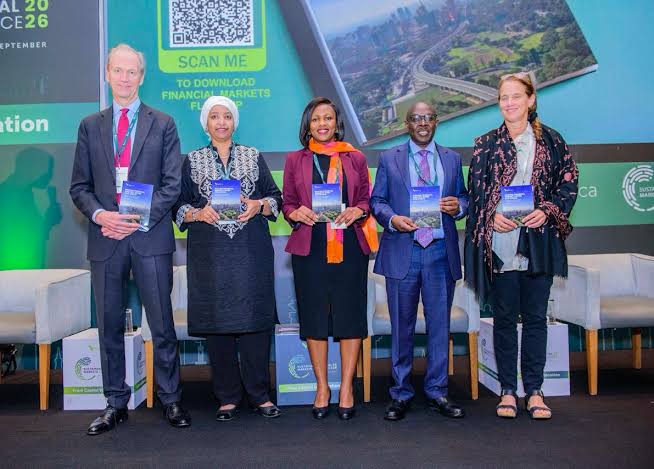
FSD Africa has launched the Manager Finance Facility (MFF), an initiative aimed at strengthening emerging alternative local capital providers and improving access to appropriate financing for small and growing businesses across Africa.

The facility was launched on Friday, September 18, 2026, in Nairobi and Lagos, with support from FMO, the Dutch entrepreneurial development bank, and the UK Government’s Foreign, Commonwealth and Development Office (FCDO) Nigeria.

FMO’s contribution is supported through the Investing in Young Businesses in Africa (IYBA) programme, a Team Europe Initiative funded by the European Commission to strengthen market creation and improve access to finance for young and early-stage businesses across key African markets.

According to FSD Africa, many small and growing businesses remain underserved by traditional financial institutions due to high transaction costs, rigid collateral requirements and perceptions of risk. At the same time, emerging Alternative Local Capital Providers (ALCPs) face financing constraints that limit their ability to support these businesses.

The MFF is designed to address the gap by providing catalytic, returnable capital to ALCPs to enable them test innovative financing models, build investment track records, strengthen their operations and become investable at scale.

The providers are developing financing approaches including revenue-based finance, flexible equity, venture debt, blended finance and local-currency structures designed to better reflect the cashflow and growth realities of African businesses.

“We need to finance the financiers,” said Juliet Munro, Early-Stage Director, FSD Africa, adding that the facility would help locally rooted capital providers move from experimentation towards scale and channel more appropriate capital to African businesses.

The MFF will provide two forms of catalytic capital: Piloting Capital, to enable ALCPs test financing models, execute early transactions and demonstrate commercial viability; and Operational Capital, to support core teams, systems, governance and compliance as the providers raise investment capital.

Beneficiaries will also have access to FSD Africa’s capacity-strengthening and peer-learning initiatives covering governance, environmental, social and governance (ESG), impact measurement, valuation and fundraising.

Andrew Shaw, Manager, Market Creation Financial Inclusion at FMO, said the facility would help locally rooted capital providers establish track records and become ready for larger pools of investment.

Temilola Akinrinade, Investment and Capital Markets Lead, FCDO Nigeria, said the UK was supporting the Nigeria window of the facility to strengthen local capital providers, mobilise private investment and support Nigeria’s sustainable economic transformation.

Applications for the MFF opened to Nigeria-based ALCPs on September 1, 2026, while applications from other eligible African markets opened on September 17. The facility is particularly interested in emerging providers developing innovative investment models, including those incorporating climate resilience and gender-smart strategies.

APC Campaign Council Accuses Atiku of Compromising National Interest Over Mambilla Power Project

0

The All Progressives Congress Presidential Campaign Council has accused the African Democratic Congress presidential candidate, Atiku Abubakar, of compromising Nigeria’s national interest for personal gain over the stalled Mambilla Hydroelectric Power Project in Taraba State.

The council made the allegation in a statement signed by its spokesman, Dele Alake, following the ruling of an International Arbitration Tribunal under the auspices of the International Chamber of Commerce in Paris concerning the dispute involving Sunrise Power and Transmission Company Limited, Leno Adesanya and the Federal Government of Nigeria.

The APC campaign council alleged that Abubakar, who was Vice-President under former President Olusegun Obasanjo, and former Minister of Power, Olu Agunloye, were involved in the signing of a Build-Operate-Transfer contract with Sunrise despite objections raised by Obasanjo and the Federal Executive Council.

According to the council, the contract subsequently became the subject of arbitration proceedings after the Nigerian government declined to proceed with the agreement.

The campaign council also linked a $500,000 payment made to Jennifer Douglas, then Abubakar’s wife, to the award of the Mambilla contract to Sunrise. It cited the tribunal’s observation that there was a “close connection in time” between the payment made on January 30, 2003, and the alleged award of the contract on May 22, 2003.

The APC council further alleged that the payment and other transfers had previously featured in a United States Senate investigation into alleged corruption involving Abubakar and others.

It said the former vice-president did not appear in Paris to give evidence in support of the arbitration claim, while former Presidents Obasanjo and Muhammadu Buhari appeared to defend Nigeria’s position.
The council also referenced allegations contained in Obasanjo’s memoir, My Watch, in which the former president criticised Abubakar over issues including alleged corruption, disloyalty, lack of transparency and prioritisation of personal interests.

Alake said the arbitration dispute had exposed what the APC campaign council described as serious concerns about Abubakar’s record and urged him to withdraw from the presidential race.

The council also appealed to residents of Taraba State to consider the economic implications of the stalled Mambilla project, which it described as potentially one of Nigeria’s largest hydro-power projects.
The statement was issued by Alake, spokesman of the APC Presidential Campaign Council, in Abuja.

FG, CBN sign MoU to align fiscal, monetary policies

0

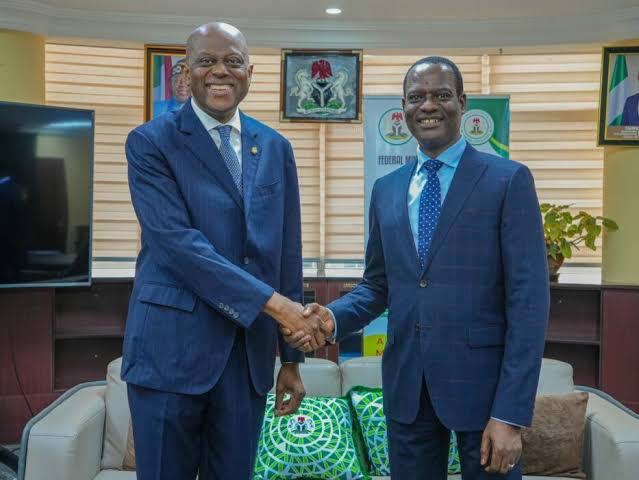
The Federal Government and the Central Bank of Nigeria (CBN) on Friday signed a Memorandum of Understanding (MoU) to institutionalise coordination between fiscal and monetary policies.

The agreement, signed by the Federal Ministry of Finance and the CBN, provides a structured framework for regular consultation, information exchange and policy coordination between the two institutions.

Speaking at the signing ceremony in Abuja, CBN Governor, Olayemi Cardoso, said the agreement represented a commitment to deepen collaboration in the interest of the Nigerian economy and its people.

Cardoso said fiscal and monetary policies were complementary instruments for managing a modern economy, noting that while fiscal policy influences economic activity through government expenditure, taxation and borrowing, monetary policy promotes price stability and financial system soundness through liquidity, interest rates and other monetary conditions.

According to him, the MoU does not create a new relationship between the CBN and the Ministry of Finance, which have worked together for decades, but to formally institutionalise the longstanding collaboration economic reforms.

Cardoso said the framework would strengthen cooperation in areas including government cash management, debt issuance planning, liquidity forecasting, macroeconomic analysis and periodic policy consultations.

He said the arrangement would transform a relationship built on practice into one anchored by clear processes and enduring institutional commitment.

The CBN governor said the timing of the agreement was particularly important as the apex bank advances its transition towards an inflation-targeting framework. He said the success of inflation targeting depended not only on effective monetary policy but also on a supportive fiscal environment.

According to him, the MoU would provide a foundation for developing the operational framework for the inflation-targeting regime, while regular dialogue, information sharing and coordinated policy assessments would help both institutions align their actions and minimise policy trade-offs.

Cardoso said the ultimate objective was to build a more stable, resilient and productive economy capable of delivering broad-based prosperity to Nigerians. He added that the agreement reflected the recognition that complex economic challenges could not be addressed by institutions acting in isolation.

“At a time when economies around the world are navigating uncertainty, geopolitical tensions, financial market volatility and evolving development challenges, cooperation among key economic institutions has become more important than ever,” he said.

Also speaking, the Minister of Finance and Coordinating Minister of the Economy, Taiwo Oyedele, reiterated that the agreement was designed to institutionalise coordination between fiscal and monetary policy, rather than make it dependent on individual personalities.

Oyedele said fiscal and monetary authorities had distinct mandates but operated within the same economy, making coordination necessary.

“Government borrowing affects liquidity and interest rates. Monetary policy affects the government’s financing costs. Tariffs and exchange rates affect prices and revenue. Spending affects demand. Agricultural productivity affects food inflation. So our mandates are distinct, but our outcomes are interconnected,” he said.

According to him, the MoU would strengthen information sharing, align macroeconomic assumptions, improve governance and provide clearer mechanisms for addressing situations where fiscal and monetary actions could work at cross purposes. He stressed that coordination would not compromise the operational independence of the CBN.

“This is independence with coordination. The operational independence of the central bank remains sacrosanct,” Oyedele said.

The minister said the government’s objective was to bring inflation sustainably into single digits, stressing that achieving the target could not be left to monetary policy alone.

He said fiscal policy would also have to contribute through discipline, disinflationary spending, sound cash and liquidity management, as well as efficient financing that would not crowd out the private sector.

Oyedele noted that some of the country’s inflationary pressures were structural, particularly those relating to food, energy and logistics, which required measures beyond monetary policy.

He said the government was working to strengthen agricultural productivity through measures including better seeds and yields, irrigation, grain reserves and improved roads for moving farm produce to markets.

On data, Oyedele said better economic management required timely, comprehensive and reliable information. He said the government was working with the National Bureau of Statistics (NBS) to provide critical data for policy decisions, including producer price information alongside the Consumer Price Index.

The minister said the two institutions would also improve the sharing of fiscal and monetary data covering cash positions, financing plans, credit growth and foreign exchange flows.

“Better coordination starts with a common evidence base,” he said.

2027: Revolt against Wike’s ‘rainbow coalition’ spreads

0

* South-East leaders, Benue stakeholders back govs •Vow to resist parallel structures, demand sanctions • Jibrin caution APC, says: ‘Don’t push Wike away, party needs his political capital’


As opposition within the All Progressives Congress (APC) to Nyesom Wike’s “Rainbow Coalition” spreads, federal lawmaker, Abdulmumin Jibrin and political stakeholder Abdulhakeem Adegoke Alawuje, have cautioned the ruling party against pushing the Federal Capital Territory (FCT) minister away, arguing that his political capital and support remain important to President Bola Tinubu’s 2027 re-election bid.
Their interventions came as APC leaders in the South-East and stakeholders in Benue State rallied behind the Progressive Governors’ Forum (PGF), rejected parallel political arrangements that could undermine the party’s candidates and, in the case of Benue, demanded sanctions against members found engaging in anti-party activities.

The competing positions have sharpened the battle within the ruling party over whether Wike’s cross-party mobilisation for Tinubu should be accommodated even where members of the coalition support opposition candidates against APC contestants in governorship and legislative elections.

Jibrin, who spoke on Channels Television’s Politics Today, urged APC governors to engage Wike through dialogue rather than public attacks, arguing that the former Rivers State governor had made significant political sacrifices for Tinubu and the ruling party despite remaining a member of the Peoples Democratic Party (PDP).

“Wike is an asset to the APC. I don’t think Wike should be embarrassed at this moment with public statements,” he said.

Jibrin maintained that Wike’s contribution should not be discounted because he had not formally joined the APC.

“I believe that Wike has sacrificed, he handed over Rivers to APC, Wike had candidates FCT election but asked them to step down for APC. Wike came into this government as government of national unity. In reality we should be fair to him, he has done far more than that,” he said.

He said his intervention was driven by concern that the escalating dispute could affect the coalition supporting Tinubu’s re-election.

“I’m not holding any brief for Wike, but I think anything that is going to touch on the stability of the journey towards delivering the President I like to make my intervention,” he said.

Jibrin argued that cross-party support for Tinubu should not automatically be treated as an attempt to undermine the APC, noting that politicians outside the ruling party were also backing the President.

“For the governors, they should take Wike as part of them.

“If there is problem at the state level, the entire coalition that he is doing is for the President, if anybody at the subnational level feels it may work against him or his interest, they should discuss with Wike, but I do not think Wike should be embarrassed with statements,” he said.

Alawuje reinforced Jibrin’s position, urging APC leaders and governors to embrace political accommodation and strategic cooperation with Wike rather than allow their differences to degenerate into confrontation.

He argued that political alliances sometimes required parties to work with influential figures outside their formal structures where they shared common objectives.

“Wike may not be a man that everybody within our political family naturally wants to embrace, but politics is not always about who we like. Sometimes, it is about understanding who we need, what role such a person can play, and how our collective interests can be protected,” Alawuje said.

According to him, APC leaders should distinguish between formal party membership and political partnership.

“We must learn to distinguish between party membership and political partnership. Not everybody working for the success of our common political objective must necessarily carry an APC membership card,” he said.

“Some people contribute their structures, influence, relationships, resources and political experience from outside the party. Such contributions should not automatically be treated as threats.”

Alawuje, however, said accommodation must work both ways, urging Wike to respect the APC’s structures, rules and internal processes whenever his political activities intersected with the party.

“Wike needs the APC, and the APC also needs every genuine political force that is willing to work toward the same objective. Nobody gains when political disagreements become permanent conflicts.

“We must learn to manage our differences without destroying our common ground,” he said.

He cautioned both camps against inflammatory rhetoric and public confrontation, arguing that the party could maintain discipline without shutting out political allies.

“The greatest mistake any political family can make is to spend all its energy fighting people who could otherwise be partners.

“We should not allow individual disagreements to consume the political capital required to pursue our collective goals,” he said.

But the South-East APC leadership took a harder line, throwing its weight behind the PGF and vowing to resist attempts to weaken the party’s structures and candidates in the zone.

In a joint statement signed by APC National Vice Chairman (South-East), Ijeomah Arodiogbu, and the party chairmen in Abia, Anambra, Ebonyi, Enugu and Imo states, the leaders backed the governors’ insistence that APC members should support the party’s candidates from the presidency down to the state Houses of Assembly.

They also condemned Wike’s recent attacks on members of the governors’ forum as “most unfortunate, reprehensible and completely unacceptable.”

Rejecting what they called a “rainbow (chameleon) coalition,” the South-East leaders warned that they would resist parallel arrangements capable of undermining the APC’s structures and candidates.

“We in the South East stand solidly with all Progressive Governors and candidates of our party at all levels in the forthcoming 2027 elections,” they declared.

They maintained that the APC was “bigger than any individual” and urged members to rally behind all candidates presented by the party.

The opposition to the coalition also spread to Benue, where the Concerned Benue APC Stakeholders and Strategic Alliance called for sanctions against party members found to be participating in arrangements detrimental to APC candidates.

Convener of the group, Dominic Alancha, urged the national and state leadership to enforce the party’s constitution without regard to the status or influence of those involved.

“Nobody should expect immunity because of his or her position, history or influence as the constitution of the party treats everyone equal. The APC constitution is not meant for ordinary members alone.

“The constitution applies to everybody: big man or small man, leader or follower, elected official or party activist. The rules must be the same. Where credible evidence establishes that a member has violated the party’s rules, the appropriate authorities must act,” he said.

The stakeholders pledged to mobilise for the re-election of both Tinubu and Governor Hyacinth Alia.

“We will defend the APC mandate, and we will mobilise across Benue State for the re-election of Governor Alia and President Tinubu,” they said.

At the heart of the widening disagreement is Wike’s insistence that his Rainbow Coalition is a cross-party platform established to mobilise for Tinubu’s re-election and not an APC structure. He has maintained that his support for Tinubu does not mean opposition parties should abandon governorship and legislative contests against APC candidates.

The PGF, however, has rejected political arrangements capable of weakening the ruling party or hurting its candidates, insisting that its members will support APC candidates at every level in 2027.
Nigeria’s 66th Independence: Tinubu to address Nigerians October 1

0

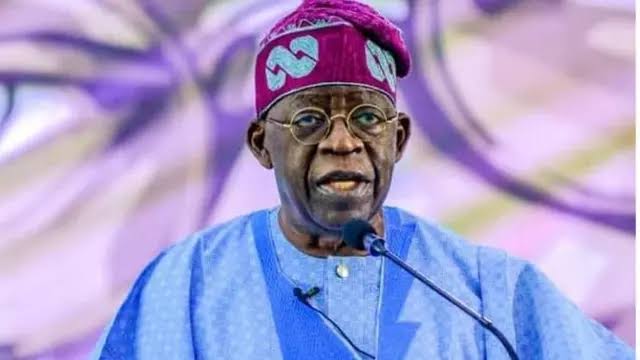
President Bola Tinubu will address Nigerians on October 1, 2026, as the Federal Government prepares a low-key programme to mark the country’s 66th Independence Anniversary.

The Federal Government has inaugurated an Inter-Ministerial Committee to coordinate the anniversary activities, with the committee chaired by the Secretary to the Government of the Federation, Senator George Akume, who was represented at its inaugural meeting by the Permanent Secretary, Political and Economic Affairs Office, Bekearedebo Augusta Warrens.

Akume said the anniversary would provide an opportunity for Nigerians to reflect on the contributions, sacrifices and legacies of the country’s founding fathers and heroines who fought for independence from colonial rule.

He also said the celebration would allow the administration to showcase its achievements and highlight its reform efforts against the socio-economic challenges facing the country.

The SGF, however, directed the committee to keep this year’s activities low-key and work with urgency because of the limited time before October 1.

The programme will begin with a World Press Conference on September 24, followed by a Juma’at Service on September 25 and a Church Service on September 27.

An Independence Day Public Lecture is scheduled for September 30, while the programme will culminate in President Tinubu’s nationwide broadcast on October 1.

The committee comprises senior government officials, including the Ministers of Finance and Coordinating Minister of the Economy, Information and National Orientation, Interior, Foreign Affairs, the Federal Capital Territory and Budget and Economic Planning, alongside the National Security Adviser and presidential advisers.

Other members include the Inspector-General of Police, Director-General of the Department of State Services, Commander of the Guards Brigade and permanent secretaries from key government ministries and offices.

The committee is mandated to plan and execute the approved Independence Day activities, co-opt relevant individuals and organisations where necessary, document the events and undertake other assignments required for the successful implementation of the October 1 programme.

PTA Chairmen Reject Allegations by Education Minister, Demand Evidence on Unity Schools

0

BY TAIWO OGUNMOLA -OMILANI

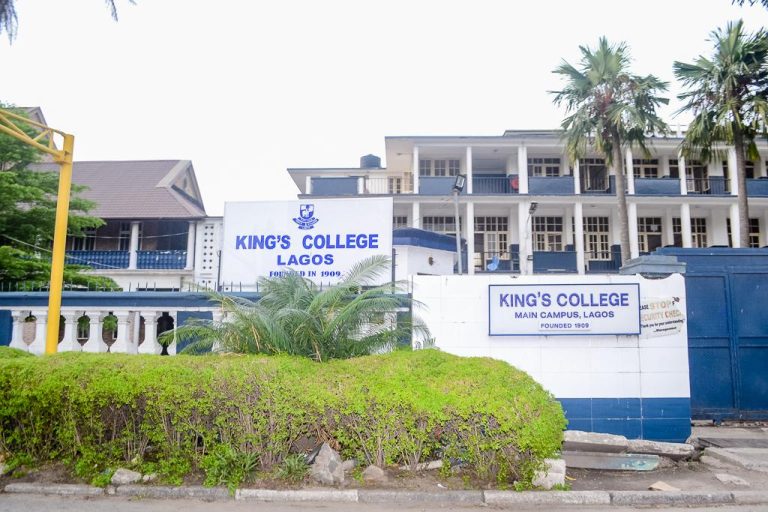
Chairmen of Parent-Teacher Associations (PTAs) of Federal Unity Schools have rejected allegations attributed to the Minister of Education, Dr. Tunji Alausa, concerning their activities and the proposed concession of King’s College, Lagos.


In a rejoinder dated September 17, 2026, the PTA chairmen said they were concerned parents and stakeholders who had invested their resources, time and energy in supporting Federal Unity Schools, insisting that they were neither criminals, admission officers nor contractors seeking to take over government schools.


The chairman challenged the minister to provide evidence for the reported allegation that some PTA interests in Unity Schools were involved in selling admissions for as much as N20 million.

They asked the Ministry of Education to identify the schools, PTA officials involved, dates of the alleged transactions, bank accounts into which the money was paid, admission documents and any investigations arising from the alleged payments.

“If there is credible evidence that any PTA Chairman, PTA executive or identified individual has collected N20 million in exchange for admission, let the evidence be made public and let the appropriate law-enforcement authorities investigate the specific individuals involved,” they said.

The PTA chairmen also questioned the reported claim that they had raised between N100 million and N150 million in legal fees in connection with the King’s College matter, asking the minister to provide the name of the case, parties, court, suit number and evidence of the alleged payment.

They said their opposition to the proposed concession of King’s College should not be interpreted as opposition to development, adding that they welcomed private-sector participation, rehabilitation, improved infrastructure and better learning environments.

According to them, their concern was with any process that could dispose of, concession, transfer or fundamentally alter the management of a national educational heritage without sufficient transparency, stakeholder consultation and compliance with the law.

The PTA chairmen maintained that King’s College was neither the property of the PTA nor the Old Boys Association, but a national institution belonging to the Nigerian public.

They therefore called for the full disclosure of the proposed concession agreement, including its duration, obligations of the parties, financial commitments, performance indicators, termination provisions and safeguards for students, staff and the public.

On the role of alumni, the chairmen said they respected the Old Boys of King’s College and acknowledged their contributions to education, but noted that philanthropy and alumni contributions did not automatically amount to ownership of a public institution.

The group also highlighted the contributions of PTAs to the running of Federal Unity Schools, saying parents had supported areas including PTA-employed teachers, security, maintenance, teaching and learning materials, sanitation, student welfare and repairs.

They welcomed the reported approval for the consideration of more than 3,000 long-serving PTA teachers for absorption into the Federal Civil Service, but urged the ministry to publish the list and implementation framework.

They also asked the government to provide details of PTA teachers in each Unity School, including their names, years of service, qualifications, remuneration, payment sources and proposed arrangements for their absorption.

The chairmen rejected suggestions that parents and workers who protested against the proposed King’s College concession were “rented protesters.”

They said parents did not need to be paid to defend the future of their children, while workers did not need to be “rented” to defend their employment.

The PTA chairmen further called for a comprehensive development plan for Nigeria’s 115 Federal Unity Schools, including details of government expenditure, infrastructure deficits, teacher requirements, PTA contributions, staffing and security needs.

On King’s College, they said they were seeking transparency, accountability, legality, public ownership and protection of Nigeria’s educational heritage rather than opposing development.

They consequently asked the Minister of Education to provide answers to questions concerning the alleged N20 million admission payments, the alleged N100 million-N150 million legal fees, the King’s College concession agreement, the 35-year arrangement and measures to protect students, teachers and parents.

The chairmen also asked the government to state how much PTAs had contributed to the operation and maintenance of Federal Unity Schools over the years and why parents who supported the system should be portrayed as participants in a criminal enterprise.

In their appeal, the PTA chairmen called for restraint in public statements, transparency in government decisions, proper stakeholder engagement and adherence to the rule of law.

They said: “We seek partnership, not confrontation. We seek accountability, not accusation. We seek development, not dispossession. We seek a better Nigeria for our children.”

The rejoinder was jointly signed by Somefun Ayopo, Southwest Zonal Coordinator, FTC Ijebu Mushin; Engineer Peter Oluwaseye, Chairman, PTA, King’s College Lagos; Engineer Odetunde Taiwo, PTA Chairman, Ijanikin Lagos; Comrade Akin Ojo, Chairman, PTA Oyo; Comrade Okunola, Chairman, PTA, FGGC Efon Alaaye; Comrade Babalola Morenikeji, Chairman, PTA, FTC Odogbolu; Comrade Adebayo Kehinde, Chairman, PTA Ikole Ekiti; Comrade Engr. Abah Matthew Ochigbo, Chairman, PTA, FGC Port Harcourt; and Mrs Lisa Nnaji, Chairman, PTA, FTCY Lagos, among others.

Niger: NSCDC probes deaths of suspected illegal miners

0

The Nigeria Security and Civil Defence Corps (NSCDC) has constituted a high-powered investigative team to unravel the circumstances surrounding the deaths of suspected illegal miners in its custody in Niger State, amid allegations by survivors that the victims died from suffocation in an overcrowded cell.

Commandant General of the NSCDC, Prof. Ahmed Abubakar Audi, ordered the investigation following the deaths of some of the suspects arrested during enforcement operations in parts of Niger State on September 15 and 16.

The Corps said the team, headed by the Deputy Commandant General in charge of Intelligence and Investigation, would investigate the condition of the suspects at the time of arrest, their period in custody, detention conditions, medical attention provided and other circumstances surrounding the deaths.

The development came as survivors disputed suggestions that disease may have been responsible for the deaths, alleging that 65 detainees were crammed into a poorly ventilated cell where some began collapsing after struggling for air.

One of the survivors, Dauda Shehu, who is receiving treatment at a government medical facility, alleged that repeated cries for help were ignored as the situation deteriorated.

“We were jam-packed in a small cell with no ventilation for us to breathe well. We could not even stretch our legs,” Shehu, an indigene of Allawa in Shiroro Local Government Area, said.

“All of a sudden, we realised that we could not breathe and we were all scampering for where to get fresh air. We appealed to them several times and banged on the cell door, but they refused to answer us.

“Even when we raised the alarm that some people were already dying because of suffocation, nobody answered us.

“They were watching us gasping for air and screaming for help, but they ignored us.”

Shehu also raised questions about the whereabouts of the other detainees, insisting that 65 miners had been arrested and held together.

“Out of the 65 of us that were in the cell, they brought only six of us to the general hospital. Where are the remaining people? We were 65 people that they arrested,” he said.

Another survivor, who declined to be named, corroborated the allegation of overcrowding, saying those who survived were fortunate to have been close to the cell entrance.

“We survived because we were close to the entrance and we were screaming for help. Some people died last night and more died this morning. Even when we were telling them that people were dying, they did not believe us,” he alleged.

The survivors’ claims have not been independently verified.

In its statement, however, the NSCDC did not attribute the deaths to any particular illness, stressing that reports linking them to a specific disease remained subject to medical and laboratory confirmation.

“The Corps will therefore refrain from speculation until the outcome of the medical examination is established,” National Public Relations Officer, Babawale Afolabi, said.

According to the Corps, the deceased were among suspected illegal miners arrested during a coordinated operation by its Niger State Command in the M.I. Wushishi/Lukoto axis as part of efforts to combat illegal mining and protect the country’s natural resources.

It said the remains had been deposited at the General Hospital, Minna, for medical examination to determine the actual cause of death.

The NSCDC said it was also working with health authorities and sister security agencies to ensure appropriate medical and public-health measures were taken.

Audi also directed that the health and welfare of all persons still in custody be given priority, while measures should be taken to protect personnel who might have had contact with the affected detainees.

Meanwhile, relatives of the deceased have demanded an independent investigation and autopsy to establish what happened to their loved ones.

Abdullahi, whose son, Salim, was among those detained, said the young man, the family’s breadwinner, had left home for a mining site three days earlier before he learnt that he had been arrested.

“For the past three days, we had been coming and appealing to the command for their release, but the officers told us they could not release them,” he said.

According to him, relatives had been taking food to the detainees and had no indication that his son was ill.

“Even yesterday, we brought food. He and the others ate and they were okay.

“It was when we came this morning, Thursday, to give them food that we saw that my son and many others were already dead,” he said.

Abdullahi demanded the release of the bodies to the families for independent autopsies.

“My son is not a thief. He does not steal or fight. He only engaged in mining to survive and support us.

“As I am talking to you, they have refused us access to the dead bodies for us to ascertain what happened.

“They should tell us what truly killed our children. Was it poison or tear gas?

“What is their reason for killing my son and the others? We need justice. They should release the corpses to us and we will seek an independent autopsy. We will not let this go like this,” he said.

The survivors said many of those arrested were displaced residents of Allawa who took to artisanal mining after bandit attacks forced them from their communities and deprived them of their traditional livelihoods.

“We were chased away from our homes in Allawa by bandits. We are just trying to earn a living. We do not carry arms or weapons,” one survivor said.

The deaths sparked protests in parts of Minna on Thursday as relatives and residents demanded explanations.

The NSCDC expressed condolences to the families of the deceased and pledged that the circumstances surrounding the deaths would be thoroughly investigated.

It said that while it remained committed to combating illegal mining and protecting critical national assets, it was equally committed to safeguarding the “dignity, safety and fundamental rights” of persons in its custody.

With survivors alleging suffocation and the NSCDC awaiting medical findings, the actual cause of the deaths remains undetermined pending the investigation and medical examination.

2027: Elections can’t resolve Nigeria’s crisis, hold referendum -IPOB

0

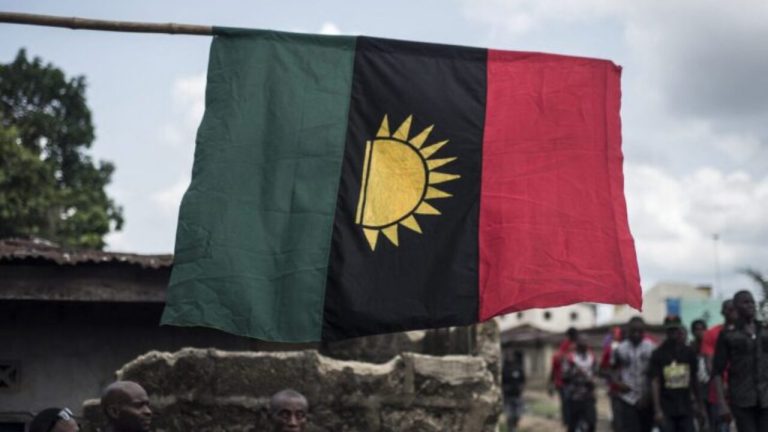
Ahead of the 2027 general election, the Indigenous People of Biafra (IPOB) has dismissed another round of balloting as incapable of resolving what it described as Nigeria’s fundamental political crisis, insisting that the country needs a referendum rather than another change of political leadership.

The separatist group said the question confronting Nigeria goes beyond who emerges president in 2027, arguing that Nigerians should first be given an opportunity to determine whether they want to continue under the existing political arrangement or negotiate a different constitutional future.

In a statement by its spokesperson, Emma Powerful, yesterday, IPOB said the debate should not be reduced to a choice among President Bola Tinubu and opposition figures, including Atiku Abubakar and Peter Obi.

It maintained that repeatedly electing different leaders without addressing what it called Nigeria’s foundational problems amounted to “doing same thing over and over again and expecting a different result.”

According to the group, its leader, Nnamdi Kanu, has consistently placed referendum and self-determination at the centre of the agitation. “The peoples trapped in this colonial construction named Nigeria should determine, peacefully and democratically, the future they want.”

IPOB argued that while an election determines who exercises political power for a specified period, a referendum could enable citizens to decide the constitutional framework under which they want to be governed.

IPOB said such a process should not predetermine Nigeria’s break-up, but should give the people an opportunity to choose among remaining together under a new constitution, adopting another federal arrangement or pursuing self-determination.

It drew comparisons with the United Kingdom, citing constitutional votes held in Scotland, Wales and Northern Ireland.
The group referred particularly to Scotland’s 2014 independence referendum, the 1997 devolution referendums in Scotland and Wales and the 1998 Northern Ireland vote on the Belfast Agreement.

It also cited the September 14, 2026 memorandum signed in Cardiff by leaders of Plaid Cymru, the Scottish National Party and Sinn Féin, in which the parties asserted the right of their respective peoples to determine their constitutional futures through democratic means. The Cardiff agreement and its self-determination language have been independently reported.

“If referendum can settle constitutional questions in Britain, why should the peoples of Nigeria be permanently denied the same opportunity?” IPOB asked.

The group also cited a recent symbolic vote in Piddington, Oxfordshire, as further evidence of the use of voting to express views on constitutional or territorial questions.

IPOB sought to reinforce its argument with recent comments by former President Olusegun Obasanjo on Africa’s democratic system.

At the Goodluck Jonathan Foundation Democracy Dialogue in Bauchi on August 11, Obasanjo criticised the Western liberal democratic model inherited by African countries, arguing that it lacked sufficient African context and content. His remarks were made at a forum themed, “Beyond Elections: Can Political Parties and the Judiciary Save African Democracy?”

The pro-Biafra group also cited former President Goodluck Jonathan’s previous comments on Nigeria’s historical struggle to achieve national integration following the 1914 amalgamation.

It maintained that the approach to the 2027 election presents another opportunity for the country to confront what it considers the more fundamental question of political consent rather than concentrate solely on the personalities seeking the presidency.

For IPOB, the group said, “the issue is not who governs Nigeria, but what political arrangement the people freely consent to live under.”

NAICOM Boss Olusegun Ayo Omosehin Must Go Immediately

0

*— Group Demands Suspension Over Explosive EFCC Petition, Warns Insurance Sector Collapse*

The Coalition for Good Governance in Nigeria (CGGN) has called for the immediate resignation of Olusegun Ayo Omosehin, Commissioner for Insurance and Chief Executive Officer of the National Insurance Commission (NAICOM), over what it described as a deepening regulatory and financial crisis that threatens to destroy public confidence in the nation’s insurance industry.

In a statement signed by Salisu Mohammed, the group said Omosehin’s continued stay in office while a formal petition against him and NAICOM sits before the Economic and Financial Crimes Commission (EFCC) constitutes a clear and present danger to the sector and an affront to accountability.

“The petition before the EFCC is not a minor administrative disagreement. It centres on alleged unlawful demands for a one per cent capital injection fee, forced transfer of entire capital funds into CBN escrow accounts contrary to Section 16(3) of the Nigerian Insurance Industry Reform Act 2025, and the collection of about ₦180 million for consultants who were reportedly never engaged,” Salisu Mohammed stated.

“These are serious questions of financial accountability involving shareholders’ funds. Reports indicate that the disputed fees across the industry may run into tens of billions of naira.

“An official facing such grave allegations cannot continue to head the regulatory body. Olusegun Ayo Omosehin must resign today so that a full and independent investigation can proceed without interference.”

The coalition noted that NICON Insurance Limited and Nigeria Reinsurance Corporation had formally petitioned the EFCC, the Federal Ministry of Finance, and the Presidency, alleging that NAICOM’s actions during the recapitalisation exercise lacked legal backing and raised questions about the ultimate destination of the collected funds.

It further observed that the Federal Ministry of Finance had earlier directed NAICOM to suspend the contested fees and full-capital escrow demands against the two companies pending the determination of their petition, a clear indication that the issues raised were not frivolous.

“Section 15 of the 1999 Constitution places a solemn duty on the state to abolish all corrupt practices and abuse of power,” the statement added.

“Keeping Omosehin in office as head of NAICOM while the EFCC examines these petitions is a direct contradiction of that constitutional obligation.

“We therefore call on the Honourable Minister of Finance and Coordinating Minister of the Economy to suspend Olusegun Ayo Omosehin with immediate effect.

“Suspension is not a verdict of guilt; it is the minimum requirement to protect the integrity of the investigation and prevent further erosion of confidence in the insurance sector.”

The group warned that the ongoing crisis, including the revocation of licences and the appointment of receivers for some operators, has already created uncertainty among policyholders and investors.

It said continued inaction risks triggering mass policy withdrawals, capital flight, and a systemic loss of trust that could take years to rebuild.

“Every day Omosehin remains as Commissioner for Insurance and CEO of NAICOM deepens the crisis and sends a dangerous signal that regulatory power can be exercised without full accountability,” the statement continued.

“The Minister must choose between protecting one man and saving an entire industry from collapse.

“We demand immediate suspension, a thorough EFCC investigation free from interference, and full public disclosure of how all recapitalisation-related fees were assessed, collected, and applied.

“History will not forgive those who stood by and watched the insurance sector slide into chaos.”

The Coalition for Good Governance in Nigeria vowed to intensify pressure on the Presidency, the National Assembly, the EFCC, and other relevant institutions until Omosehin is removed from office and the petition is fully and transparently investigated.