Home Blog Page 131

Strive for excellence – Otuaro tells 31 UK- bound PAP scholars

0

The Administrator of the Presidential Amnesty Programme, Dr Dennis Brutu Otuaro, has charged the programme’s offshore scholarship beneficiaries to be deliberate about excellence in their studies.

Otuaro said those selected for the programme have no option but to appreciate President Bola Tinubu’s administration’s goodwill by excelling academically to justify the sacrifice the government made for them.

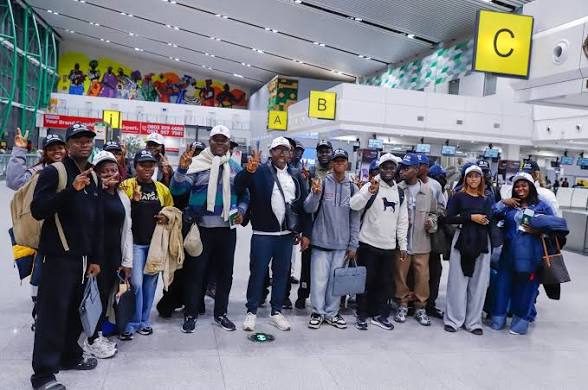
Otuaro spoke as another group of 31 offshore post-graduate scholarship beneficiaries of the PAP, on Friday, departed Nigeria for the United Kingdom for studies in various universities.

The scholars, who took off from Abuja and arrived in London, were among the 150 beneficiaries who participated in a pre-departure briefing organised in August following their deployment by Dr Otuaro.

They were preceded by a batch of 54 who left the country last week.

They will pursue programmes in forensic audit, construction engineering management, data science analytics, law, software engineering, oil and gas engineering, cyber security, global public health, fintech analytics, among others.

Dr Otuaro, who has deployed a total of 243 overseas post-graduate scholarships this year, urged the students to strive for excellence and conduct themselves responsibly.
He expressed the hope that the Niger Delta and indeed Nigeria would harvest greatly from the investment in the education of the region’s youths in the near future.

According to him, education is a crucial tool to drive sustainable peace and stability, development, and socio-economic growth in the region and the country.

“The huge benefits of the investment in the Niger Delta youths’ education will be felt in the years to come.

“Apart from closing the human capital development gap, we are building a community of intellectuals that will be the light of our region in the interest of peace, stability and development of communities in the country”, Dr Otuaro said.

He expressed gratitude to President Bola Tinubu for embracing the PAP and giving unquantifiable support to the implementation of initiatives to realize its mandate.

The PAP boss highlighted that the Niger Delta is benefiting from President Tinubu’s Renewed Hope Agenda, stressing that “he has demonstrated genuine commitment to the development of our region and the youths’ education.”

He also commended the National Security Adviser, Mallam Nuhu Ribadu, for his unwavering support and vital input at all times.

While also thanking PAP stakeholders for their cooperation and encouragement, Dr Otuaro reiterated his commitment to sustainable peace, stability and development of the Niger Delta.

Sun

Disability Not End of Life, Says Special Needs Artist, Toma Unu

0

BY TAIWO OGUNMOLA -OMILANI

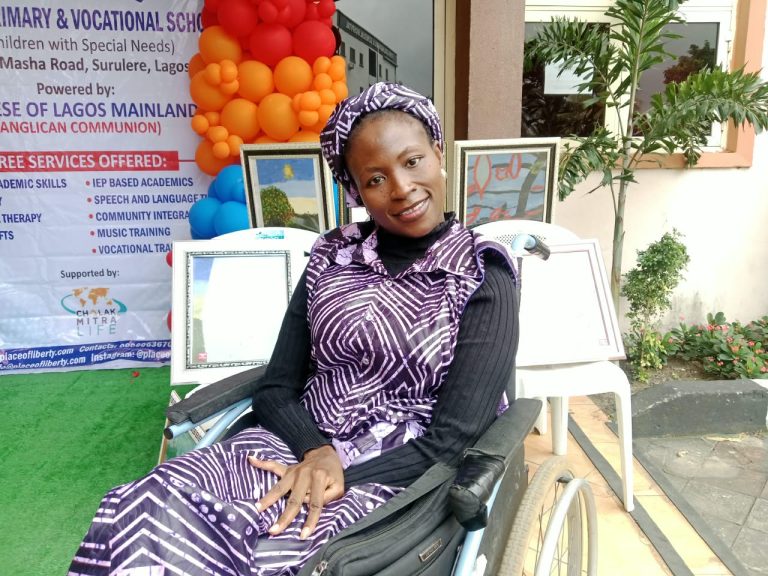
Special needs artist, Toma Unu, has urged persons living with disabilities not to give up on themselves, saying disability does not mean the end of life.

Unu, who studied Childhood Education at the National Open University of Nigeria spoke on Friday as guest speaker at the fifth anniversary celebration of Place of Liberty Nursery and Primary School for children with special needs in Surulere, Lagos.

A cerebral palsy patient, Unu explained that she discovered her ability to use her legs to feed herself before a friend, Delia, encouraged her to explore painting with her legs.

According to her, the suggestion marked the beginning of her journey into art.

She said her works are largely inspired by nature, colours and emotions, adding that she considers God the greatest artist because of the different forms in which human beings and nature are created.

Unu also encouraged people living with disabilities to focus on their abilities rather than their limitations.

She said, “There is ability in disability in several ways. Look at me. I cannot make use of the hand. People were saying that it is over. But God has a way of showing himself.”

She added that people with different forms of disabilities possess various abilities, noting that some who cannot use their hands can communicate, pray, encourage others and serve as counsellors.

On love, Unu said people living with disabilities can also find love, but stressed the importance of self-love and appreciation.

She said, “You have to love yourself first. Because if you don’t love yourself, if anybody comes to you and says something ugly to you, it will affect you emotionally.”

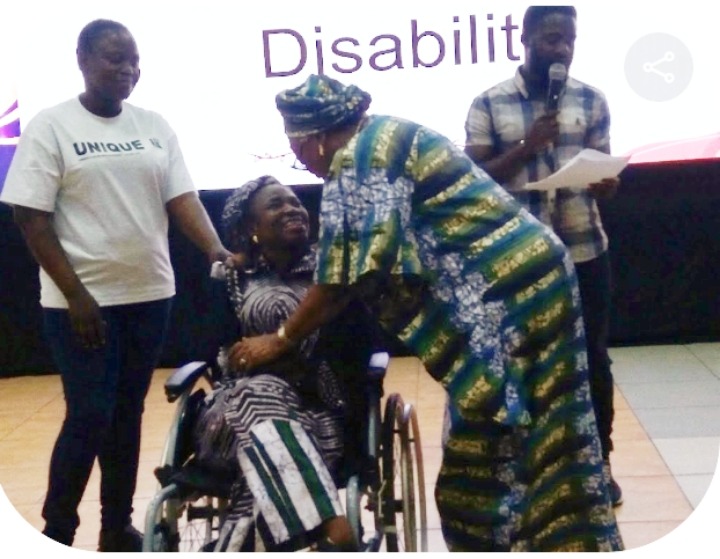
Speaking at the event, former Deputy Governor of Lagos State, Princess Sarah Sosan, described Unu as an outspoken, confident and creative woman whose progress had moved her emotionally.

Sosan said she first knew Unu years ago when she was in the office and regularly visited Modupe Memorial children to celebrate her birthday with them.

She expressed delight at seeing Unu’s progress and learning that she had completed her degree, describing it as evidence that she had refused to allow her disability to define her life.

Sosan said the motivational message delivered by Unu would inspire the children at the school, adding that children with special needs were “full of life” and needed love rather than pity.

Place of Liberty Marks 5th Anniversary, Sosan Urges Nigerians to Love Children With Special Needs, Not Pity Them

0


PHOTO CAPTION: Former deputy governor, Princess Sarah Sosan and Toma Unu, special Needs advocate at the 5th anniversary of Place of Liberty Nursery and Primary school for Special Needs Children on Friday in Lagos

BY TAIWO OGUNMOLA -OMILANI

Place of Liberty Nursery and Primary School for children with special needs has celebrated its fifth Founder’s Day Anniversary, with former Deputy Governor of Lagos State, Princess Sarah Sosan, calling for greater love and inclusion for children living with disabilities.

Sosan, who spoke at the anniversary held in Surulere, Lagos, said children with special needs required love and support rather than pity.

She described Toma Unu, a special needs advocate and guest speaker at the event, as an outspoken, confident and creative woman whose progress had moved her emotionally.

Sosan said she first met Unu years ago when she was in office and regularly visited Modupe Memorial Children to celebrate her birthday with them.

She expressed delight at seeing Unu’s progress and learning that she had completed her degree, describing it as evidence that she had refused to allow her disability to define her life.

According to her, the motivational message delivered by Unu would inspire the children at Place of Liberty, stressing that children with special needs were “full of life” and needed love rather than pity.

She urged private and public schools to accept children with disabilities and create inclusive classrooms where they could learn and interact with other children.
Sosan noted that supporting children with special needs required significant funding, urging individuals, churches, organisations and other institutions to continue supporting initiatives that cater to their needs.

She also appealed to parents not to hide children living with disabilities, saying their conditions should not prevent them from developing and contributing to society.

Sosan cited the example of Michael Showunmi, a physically challenged man who was sponsored on scholarship in the United Kingdom and later devoted himself to helping children with similar conditions.
She urged Nigerians to contribute in whatever way they could, stressing that support did not always have to be financial.
“Even if you don’t have the money, you can have the time; you can visit. They need love,” she said.

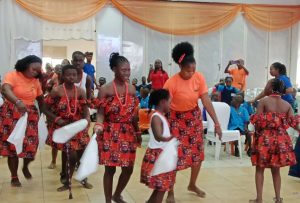
In her welcome address, the Administrator of Place of Liberty Nursery and Primary School, Mrs. Olufunke Lipede, said the anniversary also marked the second anniversary of the school’s vocational programme for children with special needs and its free education programme for indigent children.

Lipede said the school was founded on the belief that every child, regardless of their needs, possessed unlimited potential.
She said the anniversary theme, “A Journey of Hope, A Future of Possibilities,” reflected the school’s experience in working with children with special needs, adding that progress was measured by every small step, breakthrough and achievement recorded by the children.

Lipede acknowledged the contributions of staff, volunteers and donors, saying their support had provided therapy, feeding, vocational tools and a safe environment for the children.

She said the school’s vision was to continue building an institution where children with special needs were recognised for their abilities, supported through their challenges and encouraged to discover their unique strengths.

Also speaking, a former President of the Association of Senior Staff of Banks, Insurance and Financial Institutions (ASSBIFI), Olusoji Oluwole, who is a board member of the school, said the occasion marked five years since the founding of Place of Liberty and two years since the commencement of its vocational school.
Oluwole said the school had recorded significant progress among the children, noting that many of them who initially needed assistance had improved considerably.

He said the vocational programme was designed to prepare the children for independence and enable them to acquire skills with which they could earn a living.
According to him, the school has remained free because it receives donations from individuals and organisations, with the anniversary event also sponsored by an individual.

Oluwole said the school was professionally run, with speech therapists, physiotherapists, visual-aid support and teachers trained in Montessori education.
He added that periodic assessments were conducted for both children and their parents to monitor the progress of the children at school and at home.
Giving examples of the impact of the programme, he said a child named Mastura, who previously could not utter a word, had become a talkative child, while another child who was previously carried home later began walking from the school bus stop to meet her mother.

Oluwole also disclosed that some former pupils had acquired skills and were now earning income from work, including assisting in the school’s kitchen.
He expressed hope that some of the children who had acquired sufficient skills would eventually become part of the school’s workforce, saying people who had gone through similar experiences could be well positioned to teach others.

The Head of the Vocational School, Oluwatosin Adams, said working with children with special needs required passion and patience.

Adams, who has worked with children with special needs for over 20 years and spent the last five years at Place of Liberty, said the vocational programme initially operated as a morning session before it was developed into a full vocational school.
She said younger children between five and 12 years receive vocational lessons for about 40 minutes daily, while the older children, aged about 13 to 20, attend the vocational school from morning until 4pm.
According to her, the programme was created to ensure that older children would not be left without opportunities after leaving the main school.

She said the children are trained in various skills, including the production of liquid soap, toilet wash, antiseptic liquid, bleach, air freshener and germicide, as well as mop-making, belt-making, leather works and souvenirs.

Place of Liberty Nursery and Primary school for Special Needs Children was established on the 18th September 2021 with a mission to care for and educate children with down syndrome and mild to moderate cerebral palsy between the age of 5- 12 years.


EFCC arrests Usaini Ibrahim with ‘fake $212,200’ in Kano

0


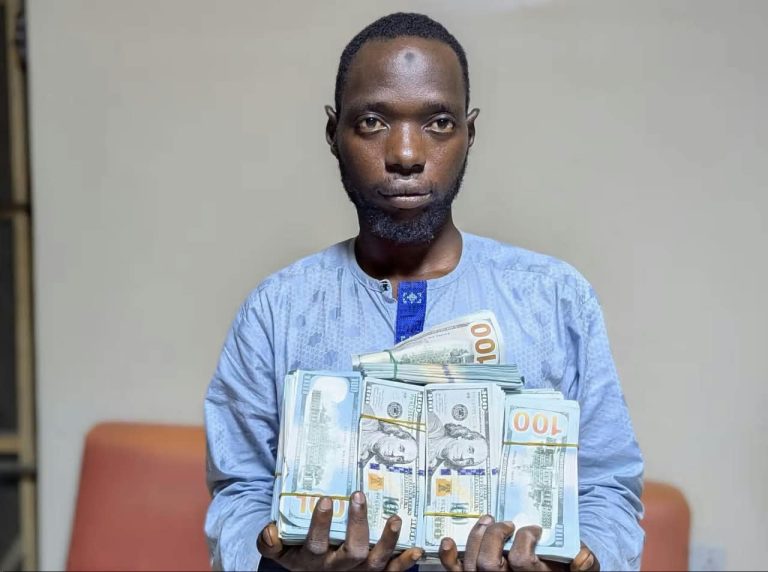
The Economic and Financial Crimes Commission (EFCC) says it has commenced an investigation into one Usaini Ibrahim, a suspect arrested with counterfeit $212,200 in Kano.

Ibrahim was arrested on September 3, 2026, by operatives of the National Drug Law Enforcement Agency (NDLEA) along Maiduguri Road in Kano.

According to a statement issued on Thursday, NDLEA said the suspect and the counterfeit notes had been handed over to the EFCC at the commission’s zonal directorate in Kano for further investigation and possible prosecution.

Friday Ebelo, acting zonal director and assistant commander of the EFCC, received the suspect and the exhibits.

Yahaya Labaran, deputy superintendent of narcotics, who represented the NDLEA, said the partnership between the two agencies was aimed at sanitising Nigeria’s financial system.

The EFCC zonal director said the commission is committed to tackling the circulation of counterfeit currencies and fraudulent schemes.

He warned members of the public to be wary of money-doubling scams, which he said often involve the use of counterfeit notes to defraud unsuspecting victims.

“Such fake currencies coming into the economy do not paint a good picture of us,” he said.

The anti-graft agency said Ibrahim is currently in its custody pending arraignment in court after the conclusion of investigations.

How 37 miners died inside NSCDC Niger custody — Survivors recount ordeal

0


Survivors of a Nigerian disaster that saw 37 suspected illegal gold miners die while in the custody of a paramilitary civil defence group recounted their panic on Friday as they struggled to breathe inside the cell.

Nigeria’s government had suspended a civil defence commander and ordered a “full investigation” over Thursday’s deaths.

“We were jam-packed in the cell, no ventilation for us to breathe well,” Dauda Shehu told journalists at a city hospital.

“All of a sudden we realised that we could not breathe and we were all scampering for where to get fresh air, we even appealed to them several times, banged the cell door but they refused to answer us.

“Several times, we raised alarm that some people are already dying because of suffocation, nobody answered us.”

Another survivor, who asked not to be named, said he made it out alive because he was near the cell entrance where he could breathe better.

“We were screaming for help,” he said, telling guards that “people are dying one after the other, they did not believe us”.

An intelligence report seen by AFP suggested the 37 died as a result of overcrowding and poor ventilation in the detention facility, though the civil defence initially blamed the deaths on disease.

Niger state Governor Mohammed Umaru Bago, announced a nighttime curfew in the city to curtail the unrest.

The interior ministry said it had suspended Suberu Siyaka Aniviye, the state commander of the Nigeria Security and Civil Defence Corps (NSCDC), while the incident is investigated.

“A full investigation will be conducted while the commandant under whose watch this happened remains suspended,” Interior Minister Olubunmi Tunji-Ojo said in a statement.

2027: Tinubu set for landslide victory with SE infrastructure projects, SEDC, Abuja renaissance – APC chieftain

0

A prominent chieftain of the All Progressives Congress (APC) and Port Harcourt-based lawyer, Princewill Dike, has declared that President Bola Tinubu will secure a landslide victory in the 2027 presidential election on the strength of his people-oriented policies and massive projects across the country, especially in the South-East.

Dike spoke in response to a question from a South-East follower on his Facebook platform, Princewill Dike Platform, who questioned his call for Tinubu to remain in office till 2031.
The APC stalwart said his position was informed by “the Federal Government’s interventions in infrastructure, education, healthcare, transportation and economic development in the South-East, and also the infrastructural renaissance in Abuja, which has transformed Abuja to one of the best city centres in the globe.”

He argued that the policies have “direct implications for the development of the South-East region” and should be allowed to run full course.

Listing his reasons, Dike cited the creation of the South-East Development Commission, SEDC, as a game-changer.

He said the Commission was established to drive investment and infrastructure across Abia, Anambra, Ebonyi, Enugu and Imo States.

He also mentioned the rehabilitation and commencement of commercial operations on the Port Harcourt–Aba railway, the proposed revival of the Port Harcourt–Enugu rail line, and the Federal Government’s wider plans for the Eastern rail corridor.

Dike further pointed to the South-East Vision 2050 – a 25-year regional development framework launched in February, 2026 – which he described as “designed to move the zone beyond short-term political cycles through coordinated economic planning, industrialisation, infrastructure development and regional integration.”

Other interventions listed include modernisation of Eastern maritime infrastructure and rehabilitation of strategic highways such as Enugu-Onitsha, Enugu-Port Harcourt, Enugu-Abakaliki and Okigwe-Owerri roads.

According to him, the Tinubu administration has also intervened in education and healthcare through establishment of tertiary institutions, upgrades of medical facilities and expansion of cancer-treatment infrastructure in the zone.

He cited the Federal Government’s approval of the South-East Investment Company, designed to mobilise long-term capital for transformational infrastructure, as well as transport projects around the Second Niger Bridge, additional access roads, airport development, and proposed security structures like forest guards.

He also listed the increase in national minimum wage, nano-business support, student loans and other empowerment programmes.

“The Federal Government has described the South-East Vision 2050 as a multi-decade framework, while the SEDC has identified infrastructure, investment and economic growth as central to its mandate,” he added.

Dike reiterated his support for Tinubu’s continuity, saying the projects form the basis of his position and his repeated call under the hashtag #TinubuMustStay.

Sun

2027: Tinubu set for landslide victory with SE infrastructure projects, SEDC, Abuja renaissance – APC chieftain

0

A prominent chieftain of the All Progressives Congress (APC) and Port Harcourt-based lawyer, Princewill Dike, has declared that President Bola Tinubu will secure a landslide victory in the 2027 presidential election on the strength of his people-oriented policies and massive projects across the country, especially in the South-East.

Dike spoke in response to a question from a South-East follower on his Facebook platform, Princewill Dike Platform, who questioned his call for Tinubu to remain in office till 2031.
The APC stalwart said his position was informed by “the Federal Government’s interventions in infrastructure, education, healthcare, transportation and economic development in the South-East, and also the infrastructural renaissance in Abuja, which has transformed Abuja to one of the best city centres in the globe.”

He argued that the policies have “direct implications for the development of the South-East region” and should be allowed to run full course.

Listing his reasons, Dike cited the creation of the South-East Development Commission, SEDC, as a game-changer.

He said the Commission was established to drive investment and infrastructure across Abia, Anambra, Ebonyi, Enugu and Imo States.

He also mentioned the rehabilitation and commencement of commercial operations on the Port Harcourt–Aba railway, the proposed revival of the Port Harcourt–Enugu rail line, and the Federal Government’s wider plans for the Eastern rail corridor.

Dike further pointed to the South-East Vision 2050 – a 25-year regional development framework launched in February, 2026 – which he described as “designed to move the zone beyond short-term political cycles through coordinated economic planning, industrialisation, infrastructure development and regional integration.”

Other interventions listed include modernisation of Eastern maritime infrastructure and rehabilitation of strategic highways such as Enugu-Onitsha, Enugu-Port Harcourt, Enugu-Abakaliki and Okigwe-Owerri roads.

According to him, the Tinubu administration has also intervened in education and healthcare through establishment of tertiary institutions, upgrades of medical facilities and expansion of cancer-treatment infrastructure in the zone.

He cited the Federal Government’s approval of the South-East Investment Company, designed to mobilise long-term capital for transformational infrastructure, as well as transport projects around the Second Niger Bridge, additional access roads, airport development, and proposed security structures like forest guards.

He also listed the increase in national minimum wage, nano-business support, student loans and other empowerment programmes.

“The Federal Government has described the South-East Vision 2050 as a multi-decade framework, while the SEDC has identified infrastructure, investment and economic growth as central to its mandate,” he added.

Dike reiterated his support for Tinubu’s continuity, saying the projects form the basis of his position and his repeated call under the hashtag #TinubuMustStay.

The digital battlefield: How online abuse is reshaping women’s leadership

0

For women who step into public leadership, the battle does not always end when the microphone is switched off. Increasingly, it follows them home into their phones, social media accounts and private lives.

A political disagreement can become a personal attack. A question about policy can quickly turn into commentary about a woman’s body, marriage or family. And an online insult, when repeated and amplified across platforms, can become something much more threatening than a passing social media quarrel.

That was one of the uncomfortable realities confronting journalists and media practitioners in Lagos as they examined the changing nature of coverage of women in public leadership.

At a three-day reflection meeting on gender-sensitive reporting and media coverage of women in public leadership, participants interrogated the growing threat of technology-facilitated gender-based violence (TFGBV), the role of the media in amplifying online abuse and what journalists can do differently as Nigeria moves towards another election cycle.

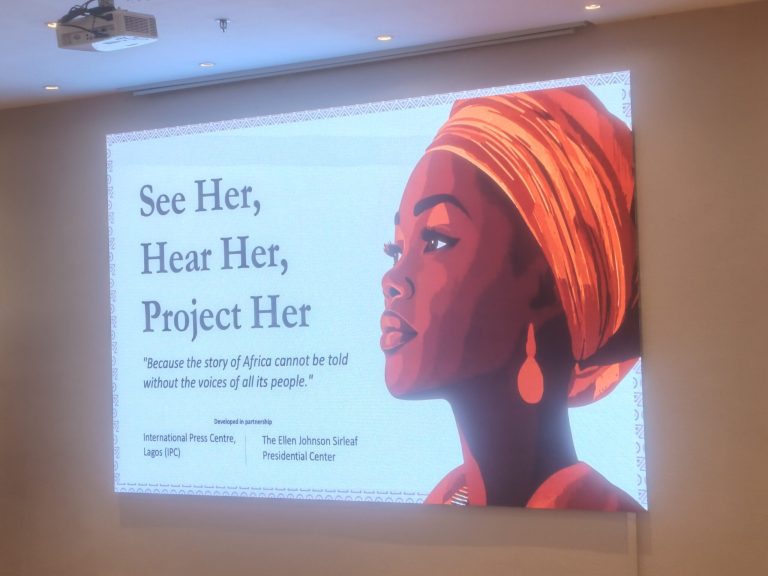
The meeting, held from September 16 to 18, 2026, was organised by the Ellen Johnson Sirleaf Presidential Center for Women and Development (EJS Center) in partnership with the International Press Centre (IPC).

Key facilitator, Kathleen Ndongmo of News Central TV, took participants through the difficult terrain of TFGBV, digital safety and media responsibility, drawing attention to the ways technology can be used to harass, intimidate, silence or discredit women.

The message was clear, not every harsh comment directed at a woman is gender-based violence.

Women in public office, like their male counterparts, must be subjected to legitimate scrutiny over their policies, decisions, performance and conduct.

But there is a difference between asking a difficult political question and using a woman’s gender as a weapon against her.

When criticism moves into sexualised insults, attacks on appearance, marriage, children or unverified sexual allegations, the conversation has shifted from accountability to gendered abuse.

Blessing Oladunjoye, Publisher of BO News Service, brought another dimension to the discussion — the responsibility of the media to ensure women are visible in public life before controversy makes them newsworthy.

Rather than waiting for a woman candidate to become embroiled in scandal before introducing her to the public, journalists, she argued, can play a more proactive role by telling the stories of women seeking leadership, examining their backgrounds and making their ideas and records accessible to voters.

That approach also addresses one of the recurring problems discussed during the meeting: the fact that many women entering politics are not sufficiently profiled before election campaigns intensify.

Biographies, photographs, interviews, manifestos and background stories can give voters information with which to assess candidates beyond the stereotypes and personal attacks that often dominate social media conversations.

For Melony Ishola, Head of Programmes at PUNCH Videos, the challenge also lies in how stories are packaged and distributed in a media environment where online platforms increasingly determine what audiences see and discuss.

The traditional newsroom is no longer the only gatekeeper. A story published by a media organisation can be clipped, reposted, quoted out of context and turned into a completely different conversation online within minutes. That places a greater responsibility on journalists to understand what happens after publication.

The panel discussion, which also featured Simbiat Bakare, Founder of Naija Feminists Media, and Jumoke Falayi-Johnson, Chairperson of NAWOJ Lagos, examined the experiences of women navigating public spaces where digital visibility can come with intense backlash.

The discussion highlighted a paradox at the heart of social media. The platforms have made it easier for women leaders and candidates to speak directly to citizens without depending entirely on traditional media.

But the same platforms can expose them to coordinated harassment, impersonation, doxxing, cyberstalking and other forms of abuse.

Doxxing, for instance, involves the unauthorised publication of private information, potentially exposing the victim to further harassment or physical danger.

Participants also examined the emerging danger posed by manipulated images, including sexualised fake content generated or altered with digital tools.

For women in politics and public leadership, such attacks can have consequences beyond reputation.

They can discourage women from speaking publicly, encourage self-censorship and potentially make political participation more costly.

The problem is not limited to politicians. Women journalists themselves can become targets because of the issues they cover, the people they interview or the positions they take in public debates.

That prompted discussions about the need for newsrooms to develop safety protocols that protect both journalists and their sources.

Participants stressed that digital safety should no longer be treated as a personal responsibility that journalists have to figure out individually.

News organisations need systems for responding to threats, preserving evidence, reporting abusive accounts and supporting journalists who come under sustained attack.

The need for such measures becomes more urgent when online harassment spills into offline spaces.

The meeting heard discussions about cases in which online attacks against women in public life were followed by threats and other forms of intimidation. Such experiences demonstrate why journalists cannot dismiss online abuse simply as “social media noise”.

But the answer, participants stressed, is not to shield women leaders from criticism.

Bakare and other speakers emphasised the importance of drawing a clear line between legitimate political disagreement and gender-based abuse.

A woman in public office should be questioned. She should be challenged. Her policies should be examined. Her decisions should be scrutinised.

But none of that requires reducing her to her body, sexuality, marital status or family.

That distinction also places a burden on journalists. When abusive claims become viral, the media can either investigate and contextualise them or inadvertently give them a larger audience.

A sensational headline may generate clicks, but it can also transform an unverified allegation into something that looks like established fact.

This is where gender-sensitive journalism becomes more than simply using politically correct language. It requires verification.

It requires context. It requires asking whether the journalist is reporting a public-interest issue or simply reproducing an attack because it is generating engagement.

The discussions also touched on the role of journalists in holding one another accountable.

Rather than allowing problematic coverage to pass unchallenged, participants discussed the value of journalists questioning headlines, framing and narratives that reinforce gender stereotypes.

They pointed to the need for stronger collaboration between newsrooms, digital rights organisations and civil society groups, particularly when journalists or their sources face online threats.

There was also a call for journalists to take their own digital security seriously..Participants encouraged media practitioners to search their names online, understand what personal information is publicly available and exercise caution when sharing sensitive information such as locations, telephone numbers and other identifying details.

For women considering political leadership, however, the challenge goes even deeper. The fear of being attacked online can become part of the cost of entering public life.

A woman may have the qualifications, experience and political ambition to seek office, but also know that her public profile could expose her to attacks that have little connection with her competence or policies.That reality makes media coverage particularly important.

Falayi-Johnson, representing the National Association of Women Journalists (NAWOJ) Lagos, was part of a conversation that placed the newsroom itself under scrutiny: if the media does not challenge gender stereotypes, social media can easily reproduce and magnify them.

The media therefore has two responsibilities at once. It must scrutinise women leaders fairly while also refusing to become a vehicle for gendered misinformation and abuse. That balance is critical.

It is not about giving women leaders easier coverage. It is about giving them fair coverage. It is about ensuring that Nigerians encounter women candidates and public officials through their ideas, policies, experience and records, not only through the controversies, insults and personal attacks that social media algorithms may reward.

The challenge is particularly significant ahead of the 2027 elections, when social media is expected to remain a major arena for political communication.

The conversation in Lagos ultimately returned to one fundamental question: what happens when women can enter leadership spaces but the environment punishes them for being visible?

The answer cannot come from women alone. Political parties, media organisations, technology platforms, civil society groups and citizens all have roles to play.

For journalists, the first step may be surprisingly simple, tell the whole story. Project the candidate before the controversy. Ask about the manifesto before the marriage.

Examine the record before the rumour. Question the policy before commenting on the body.

And when online abuse becomes part of the story, report it without becoming its amplifier.

Because women seeking public leadership do not need protection from scrutiny. They need a public conversation in which scrutiny remains about leadership and abuse is recognised for what it is.
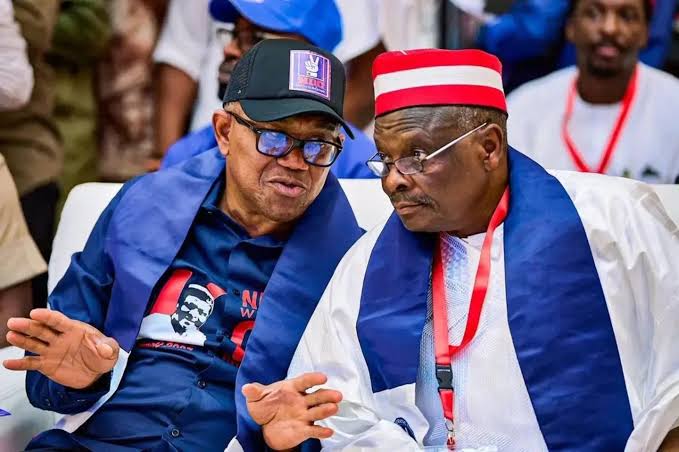
Obi-Kwankwaso Movement unveils campaign council, appoints 36 state coordinators

0

The Obi-Kwankwaso Movement has unveiled a 59-member presidential campaign council ahead of the 2027 general election, with coordinators appointed for Nigeria’s 36 states.

The movement said the new structure was designed to strengthen its nationwide organisation and coordinate activities across the six geopolitical zones, the Federal Capital Territory and the states.

John Ughulu was named Director-General of the campaign council, while National Secretary Saadatu Sani is part of the leadership structure.
The council also includes officials responsible for mobilisation, women’s affairs, strategy, security, legal affairs, administration, procurement, information technology and other areas.

The movement appointed Suleiman Abubakar as North-Central Coordinator, Hashimu Dungurawa as North-West Coordinator and Amadu Gwambe as North-East Coordinator.

For the southern zones, Dr Adebayo Adefolaseye was appointed South-West Coordinator, Christopher Ighodaro will coordinate the South-South, while El-Shaddai Ikeh was named South-East Coordinator.

Other appointments include Sabo Gashua as Director of Grassroots, Glory Adayi as Director of Women Affairs, Kabir Yahaya as Director of Contact and Abdumumini Tijjani as Director of Mobilisation.
Yusuf Mani was appointed Director of Special Duties, while Peace Daful will oversee Procurement. Prof Charles Nwekeaku was named Director of South Eastern Town Hall, with Sunmisola Adebayo appointed Director of Information Technology.

Kingdom Okere will oversee Legal Affairs, Abiodun Dabiri will head Strategy, while retired CSP Richard Enemona was appointed Director of Security. Aisha Abdulrahaman will serve as Director of Administration.

Congratulating the newly appointed members, Sani described their selection as a responsibility to serve the country and urged them to take the movement’s message to communities across Nigeria.

“Your selection is not merely an appointment; it is a call to duty, sacrifice, leadership and service to Nigeria,” Sani said.

She said the campaign council would be expected to communicate the movement’s vision at the state, local government, ward and community levels.

Sani added that the movement was built around a national vision rather than the personal interests of individual politicians.

“The OK Movement is not built around individuals seeking personal recognition. It is a movement driven by a larger national vision: to mobilise Nigerians around the possibility of a better, more prosperous, united and functional Nigeria,” she said.

𝗖𝗵𝗮𝗿𝗹𝘆 𝗕𝗼𝘆 𝗰𝗲𝗹𝗲𝗯𝗿𝗮𝘁𝗲𝘀 𝗱𝗮𝘂𝗴𝗵𝘁𝗲𝗿’𝘀 𝗲𝗻𝗴𝗮𝗴𝗲𝗺𝗲𝗻𝘁 𝘁𝗼 𝗳𝗲𝗺𝗮𝗹𝗲 𝗽𝗮𝗿𝘁𝗻𝗲𝗿

0

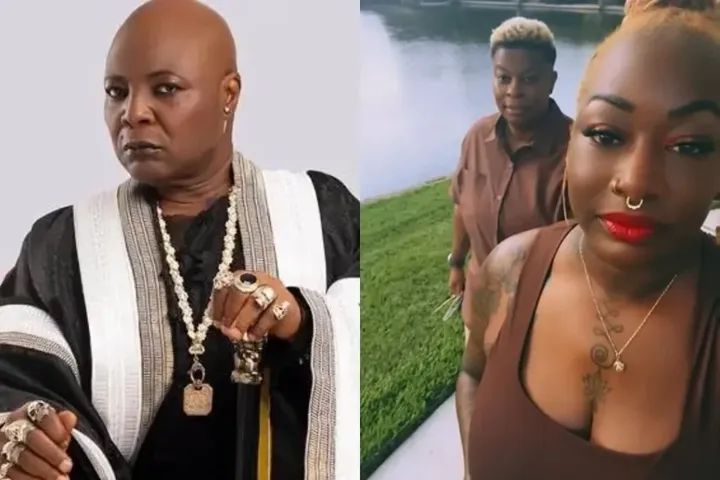
Nigerian entertainer Charly Boy has celebrated the engagement of his daughter, Adaeze Oputa, to her female partner, sharing a video on his Instagram page.

credit Punch