Home Blog Page 128

FG owes Nigerians explanation over death of 37 miners – Atiku

0


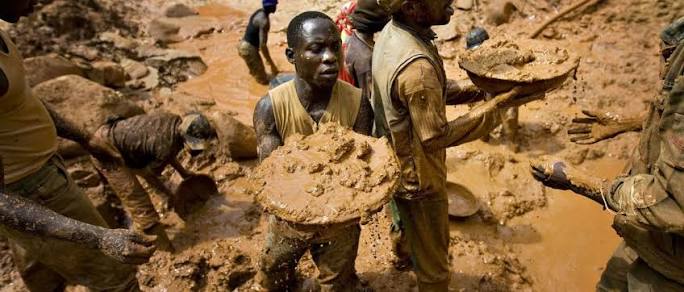
African Democratic Congress (ADC) Presidential Candidate, Atiku Abubakar, has said the Federal Government, especially the Ministers of Solid Mineral Development and Interior, Dele Alake and Olubunmi Tunji-Ojo, respectively, owe Nigerians explanation over the death of 37 miners in government custody.

Atiku, in a statement by his Senior Special Assistant, Phrank Shaibu, said the victims were arrested alive by agents of the government, detained under state authority and never returned alive to their families.

The 37 miners reportedly died in the custody of the Nigerian Security and Civil Defence Corps (NSCDC), following their arrest.

The Federal Government in reaction suspended some officials of the NSCDC and constituted a panel to probe the incident.

Nonetheless, the former Vice President said Alake and Tunji-Ojo, who supervise the Ministry of Solid Mineral Development and Ministry of Interior, which is in charge of the NSCDC, respectively, have direct questions to answer over the incident.

The statement read in part: “Thirty-seven Nigerians, many of them teenagers, entered government custody alive. Thirty-seven of them died there. The Tinubu administration cannot explain away 37 bodies with press releases, suspensions and bureaucratic excuses.

“These were not casualties of Boko Haram. They were not murdered by bandits. They did not die on a battlefield. They died after agents of the Nigerian government arrested, transported and detained them inside a government facility.

“The government seized their freedom and assumed responsibility for their safety. It must now account for every life lost. President Tinubu, Dele Alake and Olubunmi Tunji-Ojo cannot hide behind propaganda while 37 Nigerian families bury their children.”

Atiku recalled that “in 2014, at least 16 young Nigerians died during the Nigeria Immigration Service recruitment tragedy. The supervising minister, Abba Moro, was investigated and subsequently prosecuted over matters arising from that exercise. Why should the standard be different today? Are these lives worth less because the victims were poor, unemployed and accused of illegal mining?

“These Nigerians were arrested during an operation against alleged illegal mining and detained by the Nigeria Security and Civil Defence Corps, an agency supervised by the Ministry of Interior. Survivors have alleged that they were crammed into an overcrowded, poorly ventilated cell where they struggled to breathe.

“That allegation demands an immediate and independent criminal investigation. It cannot be resolved through an internal inquiry in which government officials investigate government agents and present government-approved conclusions to Nigerians.

“Olubunmi Tunji-Ojo has direct and unavoidable questions to answer. He supervises the agency in whose custody these Nigerians allegedly died. He cannot claim credit for the NSCDC’s achievements and then outsource responsibility when 37 people die in its custody.

“Dele Alake must equally account for the enforcement operations surrounding the sector he supervises. Instead of confronting this catastrophe with the gravity it demands, he remained conspicuously silent while occupying himself with political propaganda. When 37 Nigerians die following an operation connected to your sector, silence is not neutrality; it is an abdication of responsibility.”

Furthermore, Atiku stated that President Bola Tinubu “bears ultimate responsibility” for the conduct of his government, noting that the President “cannot behave like a spectator whenever his administration is confronted by tragedy, scandal or failure. The buck stops at his desk, and 37 unexplained deaths cannot be delegated away.”

The ADC candidate, who noted that suspending some officers is not justice, also stated that junior officers must not become sacrificial lambs while those who superintend over the affairs of their operations are not subjected to scrutiny.

He said: “The administration is attempting to bury the central question beneath suspensions and carefully managed explanations. But Nigerians will continue to ask: how did 37 citizens enter government custody alive and emerged dead?”

Sun

CNG: Tinubu sets October 1 deadline for nationwide transport fare cuts

0

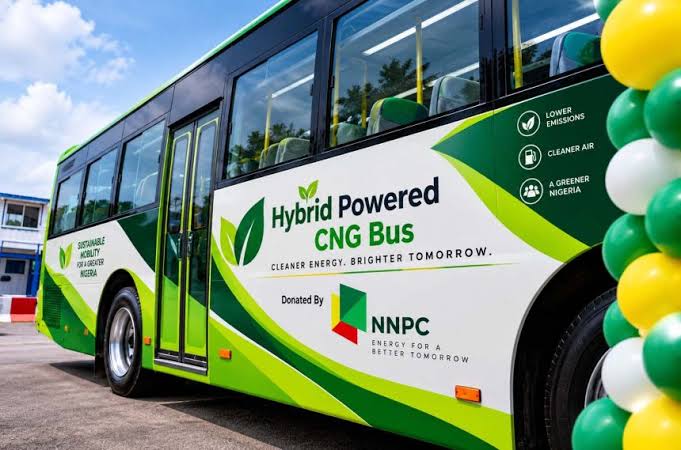
President Bola Tinubu has set October 1 as the target date for the nationwide implementation of measures aimed at reducing transportation fares through the expanded use of compressed natural gas (CNG) and electric-powered vehicles.

The President urged the 36 state governments to accelerate ongoing CNG and alternative-energy transport programmes, insisting that the savings from cheaper energy must translate into lower fares for commuters.

Tinubu disclosed this in a statement yesterday, saying the October 1 target followed his August 27 meeting with the 36 governors, during which they agreed that more Nigerians should begin to see measurable reductions in transportation costs from October.

Following the meeting, he said, an implementation committee for the National Affordable CNG Transit Programme was established under the auspices of the Nigeria Governors’ Forum, chaired by Kwara State Governor AbdulRahman AbdulRazaq.

The President said the committee, PI-CNG & EV, state governments and other stakeholders had commenced work to identify priority transport corridors, determine appropriate interventions and put the necessary arrangements in place.

He, however, urged the states to move faster, particularly against the backdrop of renewed disruptions to global energy supplies that are putting pressure on petrol and diesel prices and driving up transportation costs.

Tinubu said Nigeria could not control developments in global energy markets but could reduce its vulnerability to them by exploiting its abundant gas resources.

“We already have evidence from across Nigeria of what is possible when cheaper energy translates into cheaper transportation,” he said.

The President cited several states where CNG and electric-powered transport services have already resulted in substantial fare reductions.

In Borno, he said, CNG-powered and electric public transport services carry passengers for between ₦50 and ₦100 on routes where commercial operators charge between ₦300 and ₦600.

In Kaduna, 100 CNG-powered buses provide free transportation on major routes, with the buses carrying about 3.2 million passengers in their first year and saving commuters more than ₦3.5 billion in transport costs.

In Oyo, the deployment of CNG buses to Pacesetter Transport reduced the Lagos-Ibadan fare from about ₦8,000 to ₦3,200 during the initial deployment.

Similarly, alternative-energy transit services in Adamawa have reduced fares by as much as 50 per cent, from ₦8,000 to ₦4,000, while 100 CNG buses deployed in Enugu have brought the Enugu-Nsukka fare down from ₦2,500 to ₦1,500.

Tinubu also said government-supported buses in Plateau carry about 13,000 commuters daily at ₦200, compared with more than ₦500 charged by commercial operators.

In the Federal Capital Territory, the President said the Federal Government’s partnership with the National Union of Road Transport Workers (NURTW) had resulted in fare reductions of up to 40 per cent for passengers using CNG-converted commercial vehicles on several commuter routes.

He listed Area 1-Gwagwalada, where fares have dropped from ₦1,500 to ₦900; Nyanya, from ₦700 to ₦420; and Wuse, from ₦400 to ₦240.

In Niger State, passengers on the Suleja-Abuja route are paying ₦550 instead of about ₦800, while Abia has deployed 40 electric buses with fares subsidised by 50 per cent.

“These are not projections. Nigerians are already experiencing these savings,” Tinubu said.

The President said the developments demonstrated that the CNG transition could provide relief to commuters without a return to the petrol subsidy regime.

He said the Federal Government had, over the past three years, invested in building a CNG transportation ecosystem across the country.

According to him, more than 120,000 vehicles have now been converted to CNG, while Nigeria has over 400 certified conversion centres and more than 90 CNG refuelling stations.

Tinubu said the figures were increasing daily.

He also rejected calls for a return to the petrol subsidy regime, saying the policy had consumed trillions of naira and left the Nigerian economy exposed to fluctuations in international oil prices.

“At a time like this, our answer cannot be to return to the ruinous petrol subsidy regime that consumed trillions of naira and left our economy exposed to every movement in international oil prices, as some have suggested.

“We must accelerate the cheaper alternatives we have been building at home,” he said.

The President listed Edo, Kano, Delta, Kwara, Lagos and Akwa Ibom among states expanding their CNG transport programmes.

He said Edo already had 50 CNG buses in active service, while Kano had converted more than 1,000 commercial vehicles and was expanding its conversion and refuelling network.

Delta, Kwara and Lagos, he said, were expanding CNG-supported transport services, while Akwa Ibom had taken delivery of 50 CNG buses ahead of commercial operations.

Tinubu urged all state governments to sustain the momentum towards October 1, directing them to work with transport unions and commercial operators, support vehicle conversions and fleet deployment, and facilitate the infrastructure needed to expand affordable transport services.

“Above all, ensure that savings from cheaper energy reach Nigerian citizens through lower fares,” he said.

He assured that the Federal Government would continue to support the expansion of CNG infrastructure and access, increase conversion capacity and create an enabling environment for states, transport operators, manufacturers and private investors.

“Now we must move faster and scale this so that more Nigerians feel those savings in the fares they pay every day,” the President said.

Niger: Witness alleges ₦50,000 fee to see bodies of dead miners

0

A witness has alleged that families of miners who died in Nigeria Security and Civil Defence Corps (NSCDC) custody were asked to pay ₦50,000 before they could gain access to the bodies of their relatives.

The witness made the allegation in a video circulating online during an interview with News Central at a mining site in Niger State, where he also called for justice and a full investigation into the deaths.

The development follows the death of 37 suspected illegal miners who were arrested during operations in the M.I. Wushishi and Lukoto areas of Niger State and later died while in NSCDC custody.
The circumstances surrounding the deaths remain under investigation. Authorities have said the actual cause has yet to be established, with medical examinations, forensic investigations and autopsies being conducted.

Recounting what happened after the arrests, the witness said relatives went to look for those detained but were later informed that they had died.

“When we go, we saw them on Thursday. They tell us they are all dead. They are in the general hospital,” he said.

The witness then alleged that the families were denied access to the bodies until they paid ₦50,000.

“We don’t have access to them until we give ₦50,000,” he said.

He also disputed the suggestion that heat was responsible for the deaths, arguing that the number of people allegedly held in a confined space raised questions about the conditions in which they were detained.

“They say some of us died in this incident of heat. It’s not heat. That’s not what I believe,” the witness said.

“Heat cannot kill a gold miner.”

He questioned why several people would allegedly be kept in one cell when, according to him, the detention facility had multiple cells.
“Why will they say they will put people inside one cell? This is not heat,” he said.

The witness further claimed that some of those arrested were below the age of 18 and questioned why they would have been detained.

“And we are under 18. We are not supposed to be taken inside cell, under pressure,” he alleged.

He also disputed the classification of the miners as illegal miners, saying they were working at a site with the permission of its owner.

“We are not doing illegal mining here,” he said. “We are mining legally, we are not illegal.”

The witness alleged that security personnel had previously pursued miners at the site and called for changes in the way mining activities were handled in the state.

“In Niger State, civil defence, I don’t have the right to be shooting gold miners,” he said.

He called on the Niger State Government to conduct a thorough investigation into the incident and ensure justice for the deceased and their families.

“Niger State Government should make a big investigation about this, what is happening,” he said.

“And there should be justice in this case.”

The witness’s account could not independently establish the circumstances of the deaths or the allegation concerning the ₦50,000 payment.

Authorities have continued investigations into the incident. The Niger State Government has constituted an inquiry, while the police have secured the scene to preserve evidence. The Federal Government has also ordered an investigation into the deaths.

Salah fires hat-trick as Trabzonspor crush Galatasaray 4-0

0

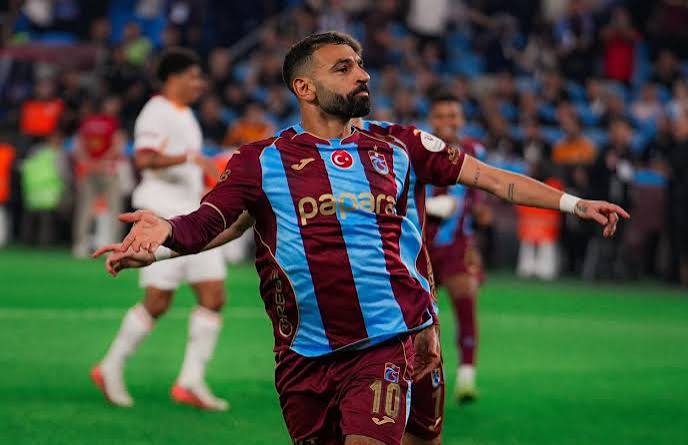
Mohamed Salah produced a sensational display on Saturday, scoring a hat-trick and providing an assist as Trabzonspor stunned Turkish Super Lig leaders Galatasaray 4-0.

The Egyptian forward opened the scoring after just four minutes before setting up Noah Saviolo to double Trabzonspor’s advantage in the 39th minute.

Salah then struck again in the 44th minute to send the hosts into half-time with a commanding 3-0 lead. He completed his hat-trick in the 80th minute, finishing calmly after breaking through the Galatasaray defence.

The victory gave new Trabzonspor manager Thomas Reis a dream start in his first game in charge following the departure of Fatih Tekke.

Salah’s fourth-minute opener came after he raced through from midfield before keeping his composure to beat Galatasaray goalkeeper Ugurcan Cakir.

The former Liverpool star then turned provider when he supplied Saviolo for Trabzonspor’s second goal before restoring his side’s three-goal advantage with a clinical finish just before half-time.

His third goal came in the 80th minute after Ozan Tufan released him into space. Salah drove towards goal before calmly placing the ball beyond Cakir to complete his treble.

Galatasaray’s difficult evening worsened when Lesley Ugochukwu was initially shown a yellow card before VAR review resulted in the midfielder being sent off in the 87th minute. Coach Okan Buruk had also been dismissed earlier for protesting a decision.

The emphatic victory handed Galatasaray their first defeat of the Turkish Super Lig season, although they remained top of the table after six matches, while Trabzonspor moved to 10 points.

For Salah, the performance further underlined his immediate impact in Turkey following his move from Liverpool. He now has seven goals in six Super Lig appearances for Trabzonspor.

NNPCL: LEADERSHIP HONOUR AND OJULARI’S OUTSTANDING REFORMS

0

‎By Thomas Agagu
‎
‎In the life of any institution, recognition means little when it is detached from results. But when an honour follows measurable achievements, it becomes a useful reminder that hard work is being noticed and that a new direction is beginning to make an impact.
‎
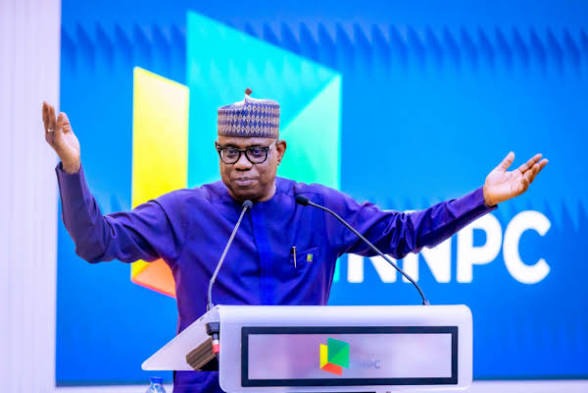
‎This is the context in which Bashir Bayo Ojulari’s emergence as the 2026 Leadership Newspapers CEO of the Year (Public Sector) should be viewed.
‎
‎The recognition comes at a particularly important moment for the Nigerian National Petroleum Company Limited, as the national oil company records stronger financial performance, attracts fresh investment, advances critical oil and gas projects and pursues reforms aimed at making the organisation more efficient, transparent and commercially competitive.
‎
‎The figures behind the recognition make the story even more compelling. In the first six months of 2026, NNPCL recorded N19.04 trillion in revenue and N2.28 trillion in profit after tax. Between January and July, the company remitted N7.913 trillion in statutory payments to the Federation Account, including N1.627 trillion in July alone. For an institution whose fortunes have a direct bearing on Nigeria’s public finances, these figures are significant. They suggest that the reform conversation at NNPCL is increasingly being accompanied by measurable financial outcomes.
‎
‎Ojulari assumed leadership of NNPCL at a difficult period for Nigeria’s petroleum industry. Production challenges, infrastructure deficiencies, investor uncertainty and years of accumulated institutional problems had combined to weaken confidence in one of the country’s most important economic institutions.
‎
‎His extensive experience in the oil and gas industry, including his years at Shell and subsequent involvement in energy investment and management, gave him the technical and commercial background required for the task ahead. What has followed is an effort to move NNPCL from simply being a national oil company to becoming a more disciplined, competitive and commercially minded energy enterprise.
‎
‎At the heart of this transformation is a renewed emphasis on commercial discipline. Under Ojulari, NNPCL has strengthened performance reporting, restored regular remittances to the Federation Account and expanded its engagement with investors and the market. The company has also maintained compliance with its joint venture cash call obligations and reinstated practices that enhance transparency and accountability. These changes may appear administrative, but they are fundamental to building an institution whose financial and operational performance can be properly assessed.
‎
‎The upstream sector offers another important measure of the reforms. Ojulari has outlined a three pronged strategy built around protecting existing production, accelerating projects capable of delivering additional barrels in the near term and restructuring the company’s portfolio to create opportunities for new investors. The philosophy is both practical and necessary. Nigeria cannot sustainably increase production if existing assets are allowed to deteriorate while attention is concentrated only on future projects. Asset integrity, therefore, has become an important part of the new thinking, with greater emphasis on maintenance, efficiency and getting the maximum value from existing infrastructure.
‎
‎Perhaps even more significant is the investment response. Ojulari recently disclosed that reforms in the sector had unlocked more than $24 billion in fresh investments from two projects, with another $10 billion currently in the pipeline. That places the potential investment pipeline at about $34 billion. In an industry where capital is extremely sensitive to uncertainty, such developments represent a meaningful shift in investor sentiment. Capital naturally moves towards environments where rules are clearer, risks are manageable and projects have a credible path to profitability. Nigeria’s challenge is now to sustain that confidence.
‎
‎The Petroleum Industry Act has provided an important foundation for this emerging investment climate. Improved regulatory clarity has helped address some of the bottlenecks that previously slowed projects and complicated investment decisions. Long-delayed Final Investment Decisions are beginning to move, while previously troubled assets are receiving renewed attention. The lesson is clear: when policy stability, regulatory efficiency and political commitment work together, projects that once appeared difficult can begin to move. The responsibility now is to ensure that this consistency is maintained because investors making long-term commitments need confidence that the rules will remain predictable.
‎
‎Ojulari’s reform agenda also recognises that Nigeria’s energy future cannot depend on crude oil alone. His strong emphasis on natural gas and gas infrastructure reflects a broader understanding of the role energy must play in industrial development. Progress on the Obiafu-Obrikom-Oben and Ajaokuta-Kaduna-Kano pipelines, among other projects, could strengthen domestic gas supply and support power generation, fertiliser production, manufacturing and other industries. Gas is therefore being positioned not merely as another commodity but as an important foundation for economic expansion and energy security.
‎
‎Technology is another defining feature of the new approach. Nigeria has accumulated decades of geological, seismic and operational information since commercial oil production began in 1956, yet much of this data remains underutilised. Ojulari’s advocacy for digitalisation, artificial intelligence and the systematic mining of historical data reflects the reality of a modern petroleum industry in which information is itself an asset. Properly deployed, technology can improve exploration, reduce downtime, cut costs, strengthen safety and make production more efficient. For Nigeria, turning old data into new intelligence could become one of the less visible but most consequential aspects of the reform programme.
‎
‎The company has also reported substantial savings through contract restructuring and optimisation, alongside increases in crude and gas production. NNPCL’s exploration and production arm has recorded significantly higher output, while improvements in crude recovery at export terminals point to greater operational efficiency. These developments matter because production figures alone do not tell the whole story. The real measure of performance is the ability to increase output while controlling costs, reducing waste and ensuring that a greater proportion of the value created reaches the Nigerian state.
‎
‎The recognition of Ojulari extends beyond the Leadership Newspapers award. Earlier in 2026, he was conferred with the Fellowship of the Energy Institute in the United Kingdom, an honour associated with senior figures who have made significant contributions to the energy sector. Such international recognition, coming alongside the domestic award, indicates that the changes taking place at NNPCL are attracting attention beyond Nigeria’s borders.
‎
‎There is still a considerable distance to cover. Nigeria’s oil and gas sector remains exposed to security challenges, infrastructure constraints, changing global energy markets and the constant need for fresh capital. The ambition to reach three million barrels per day will not be achieved through declarations or awards. It will require sustained investment, efficient project execution, reliable infrastructure, regulatory consistency and technological innovation. Ojulari’s three-stage strategy acknowledges this reality by combining the protection of existing production with accelerated growth and portfolio restructuring.
‎
‎This is why the reforms at NNPCL deserve continuity rather than unnecessary disruption. Significant reforms will inevitably challenge established practices and interests, particularly in a sector where inefficiency has historically created room for waste and rent seeking. But the answer should be to strengthen accountability and improve the reforms, not to abandon the direction of change.
‎
‎Ultimately, the Leadership Newspapers CEO of the Year award should be viewed as more than a personal achievement for Bayo Ojulari. It is an acknowledgement of a period in which NNPCL has begun to demonstrate stronger financial performance, renewed investor appeal, greater attention to operational efficiency and a clearer commercial direction.
‎
‎The journey is far from complete, but the evidence suggests that the company has gained momentum. If that momentum is sustained, Ojulari’s most important recognition may not be the award on his shelf, but the emergence of an NNPCL that consistently delivers greater value to Nigeria.
‎

Agagu writes this piece from Idiroko, Ogun State.

Fraud: EFCC Expands Insurance Recapitalisation Investigations To Industry

0

***Stakeholders, CSOs Call For Sack Of NAICOM Commissioner

The Economic and Financial Crimes Commission (EFCC) has widened its probe into the controversial insurance industry recapitalisation exercise, with invitation letters now being issued to other operators beyond the initial petitioners.

A letter dated 3rd September 2026 and addressed to the Managing Director of Linkage Assurance Plc, Mr Daniel Braie, at the company’s Abuja office, 29 Aswan Street, Wuse Zone 3, confirms the expansion.

Titled “Investigation activities letter of invitation – Re: capitalisation exercise in the insurance sector,” the correspondence from the EFCC’s Capital Market and Insurance Fraud Section requires Braie to report for an interview on Thursday, 24th September 2026.

The development comes amid growing pressure on Olusegun Ayo Omosehin, Commissioner for Insurance and Chief Executive Officer of the National Insurance Commission (NAICOM), to step aside.

Industry stakeholders and civil society organisations have intensified calls for his immediate suspension or sack, arguing that his continued presence in office while the investigation deepens compromises the integrity of the process.

“The EFCC’s decision to invite other industry players shows this is no longer limited to one or two companies,” a senior insurance executive who preferred anonymity said.

“When the anti-graft agency starts calling in Managing Directors across the sector for clarification on the same capitalisation exercise, it means the net is widening.

“The man at the helm of NAICOM cannot continue to sit pretty as if nothing is happening.”

Another stakeholder, a former senior official in the industry, stated: “The allegations of unlawful one per cent capital injection fees, forced full-capital escrow demands contrary to the law, and questionable consultant payments are serious.

“Expanding the investigation to other operators only strengthens the case for Omosehin to step aside immediately so that the probe can proceed without any perception of interference.”

Civil society groups have been more direct, demanding Omosehin’s removal to sanitise the regulatory agency.

“Keeping the NAICOM Commissioner in office while the EFCC expands its investigation into the recapitalisation exercise is unacceptable,” Salisu Mohammed of the Coalition for Good Governance in Nigeria said.

“We call for his immediate suspension by the Minister of Finance. The regulatory house must be cleaned for public confidence to return.”

Another CSO activist added: “This is about accountability. The moment the EFCC begins inviting Managing Directors of other insurance companies for interviews on the capitalisation process, the Commissioner who superintended that process should no longer remain in charge.

%Suspension is the minimum requirement to sanitise NAICOM and protect the integrity of the investigation.”

As the September 24 interview date approaches, pressure continues to mount on the Presidency and the Ministry of Finance to act decisively.

Stakeholders insist that only the temporary removal of Omosehin will allow a thorough, credible investigation capable of restoring trust in the insurance regulatory framework.

2027: States plot to silence opposition with N7.4 billion billboard levies

0


Controversy is raging over an alleged strategic move by parties controlling states to limit the visibility of the opposition as campaigns commence in full swing, through the imposition of exorbitant billboard levies on candidates and their political parties.


Such levies, stakeholders argue, constitute a clear violation of equal opportunity and fair play in a democratic election. Abia, Enugu, Kogi, Anambra and Imo states are among those toeing this path, a development that has sparked widespread outrage among opposition parties.
In Abia State, for instance, the State Structure for Signage and Advertisement Agency (ABSSAA) in late July announced that campaign advertisement for the 2027 general election would cost presidential candidates N200 million to display materials in approved advertising spaces across the state. Governorship candidates are to pay N150 million, senatorial candidates N100 million, House of Representatives candidates N50 million, and House of Assembly candidates N20 million. Beyond Abia, several other states controlled by various ruling parties have adopted similar regulatory structures that drastically raise the cost of political entry.


Stakeholders have described the fee regime as not only outrageous but as a calculated attempt to commercialise the democratic process and erect an uneven playing field long before the first ballot is cast.

Concerns raised by stakeholders
Opposition parties argue that incumbents are leveraging state signage agencies to financially squeeze rivals out of public spaces while using state resources to absorb their own costs. They contend that the levies conflict with Electoral Act spending caps.

Section 92 of the Electoral Act 2026 pegs campaign expenditure at N10 billion for a presidential candidate, while a governorship candidate is limited to N3bn. For the National Assembly, the ceiling is N500m for a senatorial candidate and N250m for a House of Representatives candidate.

What this means is that if all 36 states and the FCT replicated Abia’s N200 million charge, a presidential candidate would need N7.4 billion for billboard permits alone in state capitals, leaving only N2.6 billion of a N10bn hypothetical ceiling for logistics and other expenses. Paying N50 million to N200 million in a single state consumes a massive chunk of the total nationwide limit before factoring in rallies, logistics or media buys.
In states like Kogi, where regulations extend to branded T-shirts, caps and private vehicles, critics say the policies cross from regulating commercial outdoor media into infringing on individual freedom of expression.

While state governments maintain that these fees are non-discriminatory revenue measures designed to maintain urban aesthetics and curb political clutter, legal challenges and political pushback continue to grow. States argue that signage permits are administrative fees, not direct election expenses, and fall under municipal revenue generation.

Opponents, however, contend that prohibitive pricing violates Sections 39 (Freedom of Expression) and 40 (Freedom of Association) of the 1999 Constitution (as amended). Denying outdoor advertising on financial grounds, they argue, creates a discriminatory advantage for incumbent parties.

Opposition cries foul
In Enugu State, opposition parties and their candidates sharply rejected the N150 million signage and advertising fee imposed by the Enugu State Structure for Signage and Advertisement Agency (ENSSAA) ahead of the 2027 general elections. While the ruling All Progressives Congress (APC) defended the fee, insisting that all political parties were being treated equally, opposition parties described it as excessive and capable of restricting political participation.
The controversy followed the announcement by ENSSAA that political parties and candidates would be required to obtain a N150 million advertising permit before deploying outdoor campaign materials, including banners, branded vehicles, handbills, T-shirts, rallies and street campaigns.

The Secretary of the Nigerian Democratic Congress (NDC) in Enugu, Dr. Chukwuebuka Okafor, said the controversy should be viewed beyond party politics. According to him, the Inter-Party Advisory Council (IPAC) should intervene if it was serious about protecting the political space. “This issue is a national issue that should be looked into and resolved by IPAC if they are serious. It is not specifically for Enugu, and it is not a party thing,” Okafor said.

The PDP governorship candidate in Enugu, Chief Uche Nnaji, rejected the policy, describing it as “very heinous and anti-democratic”. Speaking through his campaign spokesman, Chief Chukwunweike Okeke, he alleged that the policy was designed to make it difficult for opposition parties to market their candidates. “It is a very heinous and anti-democratic stance for a democratic government in Enugu State to take. Trying to bring in oppression is very appalling, very reprehensible,” Okeke said.”
“For him to have used Enugu State Signage Agency to slam a fee of N150 million, which was not even clarified whether it was for the party or for candidates is anti-democratic. They did not say if the money is to be paid by the party or by the candidate. But our party has gone ahead to challenge that at the Federal High Court, Abuja. We are not allowing it to stay because freedom of expression and freedom of opinion is a critical tenet of a democratic government,” he stated.

However, the APC Publicity Secretary in Enugu, Chief Uchenna Obute, said there was nothing wrong with political parties paying the prescribed fee, stressing that the ruling party was also complying. “The political parties should pay the signage fee. We as APC are paying already. It is not wrong. The allegation that the intention of government is to shrink the political space is not true. That allegation is baseless.

What the government is saying is that if you want to do it, you have to pay. I don’t see anything wrong about it,” Obute said.

Although the Imo State off-season governorship poll holds in November, candidates for the State Assembly, House of Representatives and Senate who want visibility must obtain permit and approval from the Imo State Signage and Advertisement Agency (IMSAA), the sole approving authority. According to Sunday Sun findings, the IMSAA has different approval rates for elective positions. For senatorial candidates, a mandatory fee of N5 million is payable into the state’s TSA account. The candidate will also pay an application fee of N250,000 and site inspection fee of N500,000 directly to the agency before erecting billboards.

Similarly, House of Representatives candidates will pay N3 million to the TSA, plus N250,000 application fee and inspection fees to IMSAA. For State House of Assembly candidates, they must pay N1.5 million into the TSA and N200,000 to IMSAA as application and inspection charges.

Mr. Charles Okafor Nkenna, Media Coordinator of Action People’s Party (APP) for Ideato Federal Constituency, said: “We have to comply with the charges even though it is on the high side. The charges were contained in the letter written to the party and we have to comply so that we can legally erect our campaign billboards.

“The State Publicity Secretary of the African Democratic Congress (ADC), Chief MacDonald Amadi, said the rates are extremely high. “You see, Africans don’t know the essence of democracy and they see politics as a do-or-die affair. With the exorbitant rates which the Imo State Government through IMSAA imposed, which ordinarily should be the cheapest means for candidates to pass their messages to the electorate, is to make democracy more expensive,” he said.

In Abia, the opposition rejected outright the new billboard permit fees announced by ABSSAA, describing it as a draconian assault on political participation.

The acting State Chairman of the African Democratic Congress (ADC), Kalu Kalu Agu, said the new fees contravened the Electoral Act, especially campaign fund limits and fair play provisions. The Peoples Democratic Party (PDP) described the policy as an outrageous commercialisation of the democratic space. A statement by its Publicity Secretary, Jude Udeachara, said: “What ABSSAA did was not regulation, but political extortion dressed in administrative language aimed at silencing political opponents.”

“The imposition of these prohibitive charges raises grave questions about the Otti administration’s understanding of the campaign finance framework established by the Electoral Act.”
The All Progressives Congress (APC) described the policy as oppressive and unlawful. Its Publicity Secretary, Uche Aguoru, said: “This oppressive policy is unlawful, unconscionable and represents one of the most brazen attacks on democracy in the history of our state. It is a desperate, fear-driven attempt by the Labour Party administration to erect financial hurdles against political opponents. “The party called on INEC to take notice and demanded immediate withdrawal of the charges.

However, justifying the new regime fees, the Director in charge of ABSSAA, Okpara Chinedum John, said the agency’s activities go beyond revenue generation to promotion of the good image of Abia State in collaboration with relevant MDAs. He vowed that the agency would dismantle or revoke any campaign billboard that fails to comply.

Implications for 2027
Beyond the immediate outrage, the resort to exorbitant signage fees portends a dangerous monetisation of the democratic space that could fundamentally distort the 2027 general elections if left unchecked. When the cost of visibility becomes prohibitive, elections risk being decided not by the quality of ideas but by the financial muscle to purchase public space. This inevitably shrinks the political arena to a contest of the highest bidders, alienates grassroots movements, and discourages credible but less-endowed candidates from participating.

States rely on their constitutional powers over land administration under the Land Use Act and physical planning under the Residual Legislative List. They argue that state agencies have the authority to control visual pollution and regulate outdoor advertising.

Critics counter this with Section 95 of the Electoral Act, which mandates that state apparatuses, including public media and state-owned infrastructure, must not be used to the advantage or disadvantage of any political party or candidate. They argue that state signage agencies are being used as proxies to circumvent this provision.

Though they admit that state agencies have the authority to control visual pollution, the stakeholders maintain that the outrageous levies constitute a violation of equal opportunity and fair play.
However, legal experts warn that allowing states to hide under municipal revenue generation to impose campaign levies creates a loophole that could be exploited to circumvent national electoral safeguards. If signage agencies can charge N200 million today, nothing stops other state-controlled institutions – markets, motor parks, and town halls – from imposing similar fees tomorrow for access to voters.

To avert this, stakeholders are calling for urgent intervention. The Independent National Electoral Commission (INEC) has been urged to issue clear guidelines delineating administrative fees from campaign expenses, while the National Assembly should amend the Electoral Act to explicitly cap state levies on political advertising. The courts must also decisively interpret the intersection between Section 95 of the Electoral Act and states’ residual powers over outdoor advertising.

Ultimately, democracy thrives on equal opportunity for all contestants to be seen and heard. Regulating billboards to preserve aesthetics is legitimate; weaponising them to price opponents out of sight is not. As campaigns gather momentum, how this controversy is resolved will determine whether the 2027 elections are remembered for fair competition or for the highest billboard bidder.

Sun
37 miners death: Niger residents count losses as 12-hour curfew takes effect

0


Atiku: FG owes Nigerians explanation over death of 37 miners
• IBB denies ownership of mining site

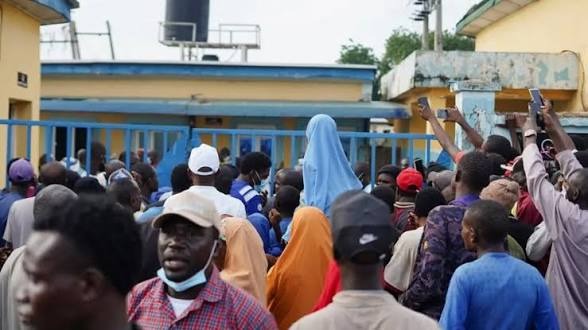
As normalcy gradually returns to Minna, the Niger State capital, after the violent protests that greeted the death of 37 miners in the custody of the Nigerian Security and Civil Defence Corps (NSCDC) on Thursday, residents are counting their losses following the destruction of properties by the rampaging youths.

Minna and its suburbs were engulfed in coordinated violent protests by youths after news of the death of the artisanal miners spread to town like wildfire.


Although shops, markets, banks, filling stations and other businesses were hurriedly shut down, the youths who were in their hundreds and scattered across the town caused some damages to both government and private properties.

For instance, the state owned transport authority (NSTA) had no fewer than six of its vehicles damaged. Also affected are vehicles of other state-owned transport companies, who also used the facilities of the Niger State Transport Authority.

A casual staff of the transport authority, Mallam Abdullahi, told Sunday Sun: “You can see, six of the state-owned vehicles were destroyed with their windscreens shattered. They also destroyed four vehicles belonging to other states’ transport companies.

“They came as early as 7:00am in their numbers and with all kinds of dangerous weapons. The passengers in the park, including us, the staff had to run for our lives.

“From here, they moved towards the banks (names withheld) but they were overpowered by the security people in the banks. Our operation was suspended yesterday as the vehicles were seriously vandalised.”

However, the transport authority was not the only place attacked by the irate youths. The All Progressive Congress (APC) campaign office along the popular Bosso road in Minna was not speared by the youths. All the windows in the building were shattered, including some campaign vehicles parked in the premises.

Although nobody was ready to speak to the Sunday Sun reporter who visited the damaged party office, the impact of the invasion by the youths was very visible. All the campaign vehicles had their windscreens shattered.

Also some individuals who ran into the protesters had bitter stories to tell as they had their car windscreens damaged.

Augustine Chukwu, a businessman who was heading to his shop located around Tunga area of Minna after dropping his children in school ran into the protesters and had his windscreen damaged.

Augustine told our correspondent that he was not aware of the protests, but suddenly came face to face with them and had to abandon his car and run to safety.

“Initially when I saw them, I thought it was the usual street fight between groups but I discovered that they were all moving towards one direction, and facing me.

“I didn’t know what to do so I quickly came down from the car and ran into a nearby house for safety but they succeeded in vandalising my car. They smashed both the front and the back windscreens.

Other News
NSCDC nabs 14 vandals in FCT
According to him, he has taken his car for repair because he knows nobody will compensate him for the damage, adding, “I thank God that I was not harmed.”

Although Governor Umaru Mohammed Bago announced a 12-hour curfew (6:00pm – 6:00am) when the protests escalated and became violent, substantial damages had already been done.

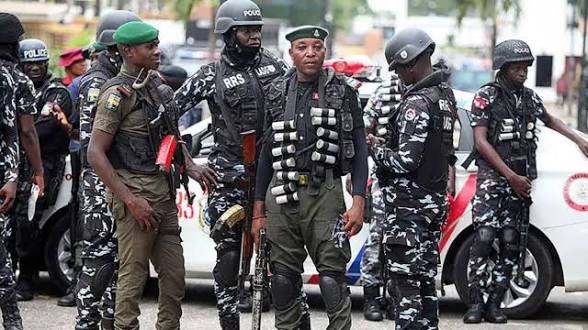
The curfew was followed by heavy deployment of both military and police personnel who took over control over parts of the state capital and patrolled its nooks and crannies.

Meanwhile, a new commandant of the Nigerian Security and Civil Defense Corp (NSCDC), Abdulhamid Salisu Kabara, has been redeployed to the state.

The newly redeployed State Commandant is to take over the leadership of the Command from Commandant Suberu Siyaka Aniviye, who has been placed on suspension.

A statement from the Command Public Relation Officer, DSC Abubakar M.R. Muti said the new commandant has since resumed office.

The statement read in part: “The assumption of office comes at a particularly sensitive period for the Command, following the unfortunate deaths of some persons arrested in connection with suspected illegal mining activities in the State.”

The statement further said the new Commandant had expressed deep sadness over the loss of lives and extended his heartfelt sympathy to the families of the deceased and everyone affected by the unfortunate incident.

He also emphasised that the responsibility of protecting society and enforcing the law must go hand in hand with the responsibility to uphold the dignity, safety and welfare of persons in custody.

In another development, former Military president, General Ibrahim Badamosi Babangida (rtd) has denied ownership of the mining site where the deceased miners were arrested before their unfortunate death in NSCDC custody.

General Babangida in a statement by his media department and signed by Dr. Danladi Umar Abdulhameed and available to newsmen in Minna yesterday, described the allegation as false, baseless and completely without foundation.

General Babangida said the clarification became necessary following reports and online publications, alleging that the mining site where illegal miners were arrested belonged to him.

The statement read in part: “It is particularly troubling that the author admitted in the same publication that the allegation was unverifiable, yet proceeded to publish it. An allegation that cannot be verified should not be published as though it were an established fact.

“I categorically reject the publication and demand that the false impression created by it be corrected. General Babangida has no connection whatsoever with the mining operation in question.

“I urge members of the public to disregard the report and the unfounded allegation contained in it.”


Obi, Atiku and I have different political ideologies – Olawepo-Hashim

0

Accord Party chieftain, Gbenga Olawepo-Hashim, has said he does not share the same political ideology as former Anambra State Governor Peter Obi and former Vice-President Atiku Abubakar ahead of the 2027 presidential election.

Olawepo-Hashim made the distinction during an interview on the Mic On Podcast, where he discussed the ideological positions of opposition politicians preparing for the election.

He described Obi and Atiku as belonging to what he called the “extreme conservative political wing”, while identifying himself with African Action Congress presidential candidate Omoyele Sowore and Social Democratic Party candidate Adewole Adebayo as politicians of a left-centre orientation.

“Peter is very clear. He doesn’t have any problem with high petrol price. The only problem he has is how the proceeds are managed. He made himself very clear, so he does not belong. So don’t lump all of us together. We are not the same,” he said.

Olawepo-Hashim was referring to differences among opposition politicians over petrol subsidy and how savings from its removal should be managed.

He further said the ideological differences went beyond the political alliances being discussed ahead of the 2027 election.

“There are opposition members who are from the extreme conservative political wing. Peter and Atiku belong to that,” he said.

“There are opposition candidates who share the left-centre ideology, more welfarists, more sympathetic, more compassionate to the common people. Sowore, Adebayo and I belong to that. So we shouldn’t be lumped together.”

The Accord chieftain was subsequently asked whether he had entered into an alliance with Sowore and Adebayo.

He confirmed that the three politicians had reached an agreement, saying the pact was signed in Port Harcourt and made public.

“We already did. We signed it in Port Harcourt, and it was in the public space,” Olawepo-Hashim said.

Olawepo-Hashim has previously advocated a targeted subsidy system, arguing that subsidies should protect citizens and productive sectors while remaining transparent and accountable.

The politician has also criticised Atiku over his position on petrol subsidy, highlighting the policy differences he says separate him from other opposition figures ahead of the 2027 presidential contest.

Sun

2027: NDC rejects 59-member Obi-Kwankwaso campaign council

0

The Nigeria Democratic Congress (NDC) has rejected a 59-member Presidential Campaign Council announced by the Obi-Kwankwaso (OK) Movement, saying the structure was not authorised by the party.

The party’s National Chairman, Senator Cleopas Moses, made the position known in a statement on Saturday, directing the public and the media to disregard the campaign council.

The development followed the unveiling of the 59-member council by the OK Movement on Thursday to mobilise support for NDC presidential candidate Peter Obi and his running mate, Rabiu Musa Kwankwaso, ahead of the 2027 election.


The structure included zonal and state coordinators, as well as directors responsible for mobilisation, women’s affairs, strategy, security, legal affairs and other areas.

John Ughulu, the movement’s Director-General, was named Director-General of the campaign council, while Saadatu Sani, the movement’s National Secretary, was named secretary. The council also included representatives from the six geopolitical zones, the Federal Capital Territory and the 36 states.

However, Moses said the campaign council did not originate from the NDC and insisted that only the party leadership could constitute and announce its Presidential Campaign Council.

“The party hereby dissociates itself in totality from the said OK Movement PCC announcement. It did not emanate from the party and should be disregarded by the public and the media,” he said.

The NDC chairman said candidates contesting on the party’s platform were subject to the authority and discipline of the party and could not operate as independent candidates.

“All candidates of the party must appreciate that they are not running as independent candidates,” Moses said.

“They are products of the party and remain subject to the authority and discipline of the party.

“Therefore, only the party’s leadership can constitute and announce a Presidential Campaign Council.”

Moses further warned members, candidates and support groups against establishing campaign structures in the name of the party without approval from the National Working Committee (NWC).

“Henceforth, no individual or group is authorised to announce, constitute, or publish any campaign council, structure, or organ in the name of the party without prior approval from the National Working Committee (NWC),” he said.

The party acknowledged the role of support groups in its political activities but cautioned them against presenting themselves as alternative or parallel structures.

“While the party will continue to work collaboratively with all support groups, such groups should not see themselves as alternative party structures or parallel organs of the party,” Moses said.

He also urged members and support groups with grievances to use the party’s internal mechanisms rather than making public statements or attacks.

The NDC chairman said Ughulu would be referred to the appropriate disciplinary organ over what he described as his “excesses during the primary election in Lagos State” and “repeated disregard for party authority.”

The OK Movement had presented the 59-member structure as a nationwide mobilisation platform for the Obi-Kwankwaso ticket. Its National Secretary, Saadatu Sani, said the movement was focused on mobilising Nigerians around the possibility of a “better, more prosperous, united and functional Nigeria.”

The latest development has brought into focus the distinction between the support group’s campaign structure and the formal campaign machinery that the NDC says can only be constituted by its leadership.

Sun