Home Blog Page 129

Farouq Aliyu alleges rejection of ₦650m offer to back Obasanjo’s third term bid

0


Former Minority Leader of the House of Representatives, Farouq Aliyu, has alleged that he and former Speaker Aminu Masari rejected a combined ₦650 million offered to secure their support for former President Olusegun Obasanjo’s third-term bid.

Aliyu made the allegation during an interview on the ‘Naija Unfiltered’ podcast published on YouTube on Friday, insisting that the controversial third-term agenda was real despite Obasanjo’s repeated denial that he sought to remain in office beyond 2007.

According to Aliyu, the then Chairman of the Economic and Financial Crimes Commission, Nuhu Ribadu, contacted him during discussions over the proposed constitutional amendment and asked him to come to Abuja for a meeting with Obasanjo.

He said he initially rejected Ribadu’s request but later agreed to meet the former president, where he discussed the proposed third term and maintained that the plan would not succeed.

Aliyu said he was subsequently directed by Ribadu to meet an unnamed person who offered him ₦250 million to support the agenda, but he rejected the money.

“Third term agenda was real. In fact, 250 million was given to me. I did not take it,” he said.

The former lawmaker further alleged that Masari, who was Speaker of the House at the time, was offered ₦400 million to support the bid and also rejected the money. He claimed that then Majority Leader Abdul Ningi was offered another ₦400 million.

“Masari, who was the Speaker then, 400 million was offered. He did not take it. Abdul Ningi, the majority leader, 400 million naira was offered to him. He did not take it.

“N50 million was dashed to small fries. They paid a minimum of N50 million.”

Aliyu did not disclose the identity of the person who allegedly offered him the ₦250 million.

He also alleged that other lawmakers were offered a minimum of ₦50 million to support the proposed constitutional amendment.

The third-term controversy was one of the major political disputes of Obasanjo’s administration, which lasted from 1999 to 2007.

In May 2006, the National Assembly rejected proposed constitutional amendments that would have enabled Obasanjo to seek a third consecutive term. Obasanjo has repeatedly denied pursuing such an extension.

Aliyu further credited the late former military Head of State Muhammadu Buhari, former Vice-President Atiku Abubakar and former Secretary to the Government of the Federation George Akume with playing prominent roles in frustrating the proposed constitutional amendment.

The National Assembly’s rejection of the amendment in 2006 ultimately meant Obasanjo left office in 2007 after completing the two presidential terms permitted under the Constitution.

Sun

AU, AFRIMA Unveil Global Calendar for Landmark 10th Edition in Los Angeles

0


From Africa’s music capitals to the global entertainment centre of Los Angeles, California in United States of America (USA),the All Africa Music Awards (AFRIMA) is taking another major step in its journey to the landmark 10th edition, as the International Executive Committee, in partnership with the African Union (AU), is set to unveil the official global calendar for the 10th AFRIMA in the United States.


The unveiling, which is expected to attract creative industry leaders, artistes, actors, investors, policymakers, media executives and members of the African diaspora, will take place on Sunday, September 20, 2026, at at Beverly Hills, Los Angeles,California,USA with the global calendar announcement serving as the main highlight of the engagement.


The event will also feature the AFRIMA Creative Industry Roundtable and Stakeholders Conference, under the theme, “Catalyst for Collaboration & Investment in the Global Creative Industry.” The conference will focus on the need for stronger partnerships, increased investment and greater international support for Africa’s growing creative economy.


The Los Angeles engagement marks another important stage in AFRIMA’s efforts to connect African music and talent with global audiences. As Africa’s biggest, most prestigious and longest-running global music awards platform, AFRIMA is broadcast in more than 84 countries, reaching millions of viewers across the world.


The build-up to the 10th edition has already taken AFRIMA to key African creative and cultural centres. Earlier in the year, the build-up engagements tagged RoadTo10thAFRIMA were held in Dar es Salaam, Tanzania; Abidjan, Cote d’Ivoire; and Rabat and Casablanca, Morocco, bringing together stakeholders and creating momentum for the landmark edition. The Los Angeles event will therefore not be an isolated ceremony but part of a wider continental and global journey that has seen AFRIMA engage different regions, music markets and creative communities in preparation for its 10th edition.


The tradition of unveiling AFRIMA’s global calendar in different African cities has become an important part of the awards platform’s growth. Previous calendar unveilings have been held in The Gambia, Ghana, South Africa, Dakar, Senegal, Lagos, Nigeria, and the African Union Headquarters, Addis Ababa, Ethiopia.


These engagements have provided opportunities for AFRIMA to announce its plans, meet government representatives, engage music industry stakeholders and deepen relationships with the creative communities across the continent.


The main AFRIMA Awards ceremonies have also been hosted in leading African cities, including Lagos, Nigeria; Accra, Ghana; and Dakar, Senegal, among others, further reflecting the platform’s pan-African character and its commitment to taking African music to different parts of the world.


The movement to Los Angeles is particularly significant because of the city’s position as one of the world’s leading entertainment and creative centres, as well as its large and influential African diaspora community.


Speaking ahead of the event, Associate Co-Producer, AFRIMA and Member, International Jury of AFRIMA representing North America, Ms. Hadja Kobele, said the Los Angeles engagement would help strengthen the relationship between African music and the diaspora.


“The 10th AFRIMA Global Calendar Unveiling in Los Angeles is an important moment for the African creative ecosystem and the African diaspora. Los Angeles is a global centre for entertainment, and bringing AFRIMA here creates an opportunity to build stronger bridges between African creatives, industry professionals, investors and the diaspora community.


“The African diaspora in North America has an important role to play in promoting African music, opening new markets and creating opportunities for collaboration. This engagement will help deepen that relationship and give African creativity greater visibility on the global stage.”


Speaking on the stakeholders’ conference, Associate Producer, AFRIMA, Ms. Victoria Nkong, said the engagement would go beyond the unveiling of the calendar by creating room for practical discussions and partnerships that can support the creative industry.


“The creative industry is one of Africa’s strongest assets, but its full potential can only be achieved when we create the right platforms for collaboration, investment and shared knowledge. The Los Angeles conference is designed to bring together the right people and institutions to discuss practical ways of building stronger connections between Africa and the global creative economy.


“As we unveil the calendar for the 10th AFRIMA, we are also opening conversations about the future of the industry, the opportunities available to investors and the partnerships needed to create sustainable growth for artistes, businesses and creative professionals.”


The official global calendar unveiling will also provide stakeholders, artistes, nominees, partners and fans with a clearer picture of the activities and milestones leading to the 10th AFRIMA Main Awards ceremonies

The Broom and The Rainbow: Two Platforms, One President

0


By Tunde Rahman

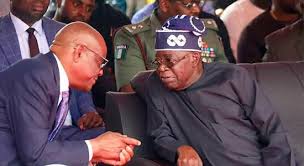
To some, especially in the opposition camp, it may seem like a brewing political storm, but the brouhaha in Abuja over Nyesom Wike’s Rainbow Coalition and the Progressive Governors Forum’s pushback is not a crisis. It is a sign that President Bola Ahmed Tinubu’s political architecture for 2027 is active and working.

To fully grasp this, you must understand the President and why many see him as a master strategist.
The Minister of the Federal Capital Territory, Nyesom Wike, has been unambiguous. He has not asked to join the All Progressives Congress. He has not asked the APC Governors for an alliance. As a People’s Democratic Party leader serving in an APC government, he is building a Rainbow Coalition- a platform of PDP, APC, and other party members whose sole mandate is to deliver votes for President Tinubu’s re-election.

In Rivers State, the APC itself has endorsed this model, perhaps because Wike controls both APC and PDP structures in the state. The APC in the state has laid bare a convincing premise for its embrace: all politics is local, and the coalition is needed to protect President Tinubu’s votes.

Many may dislike him for his guts, style and the controversies he seems to cultivate, but in my view, the FCT Minister is not weakening the APC. He is broadening Tinubu’s base beyond the APC, into places the APC cannot ordinarily reach the way he will do.

As former Deputy Speaker of the House of Representatives, Hon. Chibudom Nwuche, rightly called it, it is a “political masterstroke that is broadening the President’s support base”.

Conversely, the APC governors led by their Chairman, Senator Hope Uzodimma, have also declared that their commitment is “exclusively to all APC candidates”. They emphasised that they would not support any arrangement that undermines President Tinubu’s re-election.

They are right. As party leaders in their states, their job is to protect the APC ticket from Governor to House of Assembly. But they are worried that a coalition that helps President Tinubu at the top but fields PDP candidates against APC candidates at the bottom could confuse voters and put APC candidates in jeopardy.

That is a legitimate organisational concern. It is not anti-Tinubu. It is pro-party discipline. Both are right to want to protect their turfs and galvanise their respective interests. This is where President Tinubu’s genius comes in.

This situation can be aptly described as two legs of one body. The APC Governors are the first leg, the official party structure, delivering the party vote in 31 states. Wike’s Rainbow Coalition is the second leg, the extra-party structure, delivering votes from PDP strongholds, from Rivers to Oyo to parts of the North.

Does it imply the president shouldn’t care less about what fate befalls candidates of the APC at various levels? By no means! As the APC national leader, he should.

But President Tinubu does not need to choose between the APC Governors and Rainbow Coalition. He needs both. In 2023, he won in Rivers without Wike’s coalition structure fully formed as it is at present. In 2027, he will have both the Progressive Governors Forum and the Rainbow Coalition mobilising for him in different territories.

As Bolaji Adebiyi argued in an article in Thisday on Friday, Wike has demonstrated organisational capacity by fielding PDP candidates in 26 of the 28 states where elections will be held in January, even in several states where opposition parties like the African Democratic Congress and Nigeria Democratic Congress cannot field candidates. The essay noted that such an individual cannot be shoved aside. His support is as important and strategic as it was in 2023.

This rift will not hurt President Tinubu as the opposition may expect, because what matters is whether the coalition will deliver votes for the President. In my view, it can. Those hoping the disagreement will cause a political rift in the Villa should perish the thought.

The President is on vacation in France and is expected to broker a truce himself when he returns, because he is the only leader both sides listen to.
This is not a house divided. It is a big tent that allows mutual accommodation.

The APC Governors will run the official campaign. Wike will run the coalition campaign for non-APC voters who love the President and want him re-elected. Both tendencies report to the same Commander-in-Chief.

In the end, the Rainbow Coalition and the Progressive Governors Forum have one overriding mission: the election of President Tinubu for a second term. Both will have one communique and it will be titled “For Tinubu’s Reelection.” This is not brouhaha. It is a winning strategy.

*Rahman is Senior Special Assistant to President Tinubu on Media and Special Duties.*

Olatunji-Bello Bows Out as LASU VC, Says ‘I Gave My Best to Make Varsity Stronger’

0


BY TAIWO OGUNMOLA -OMILANI

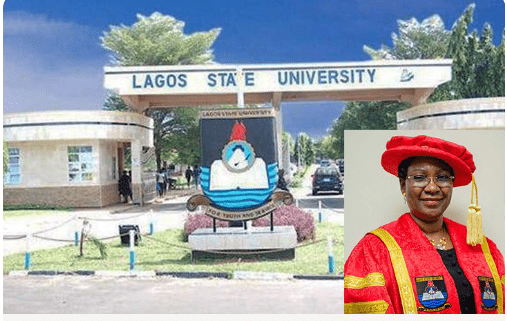
Prof. Ibiyemi Olatunji-Bello has bowed out as the 9th substantive Vice-Chancellor of Lagos State University (LASU), saying she leaves the institution satisfied that she gave her best to make it stronger, greater and better prepared for the future.

Olatunji-Bello, who is also the second female Vice-Chancellor of the university, stated this in her farewell message at the end of her single five-year tenure.
She recalled that she was appointed Vice-Chancellor on September 16, 2021, and assumed office four days later with a clear vision and the conviction that the LASU community could achieve great things by working together.

According to her, the university experienced significant transformation during her tenure, including the accreditation of programmes, establishment of new faculties and schools, expansion of academic offerings, digital transformation, infrastructure development and improved financial capacity.

She added that LASU students excelled in academics and sports, researchers secured grants, new partnerships were established, while the university gained greater visibility globally.
Olatunji-Bello also noted that LASU emerged as the most preferred university in Nigeria for two consecutive years during her tenure.

She, however, attributed the achievements to the collective efforts of the university community, saying they were made possible because thousands of people believed LASU could become better and contributed to achieving that objective.

The outgoing Vice-Chancellor acknowledged that her tenure was not without disruptions, disappointments, difficult decisions and difficult conversations, but maintained that the university was in a better position than it was five years ago.

She expressed appreciation to the Lagos State Government under Governor Babajide Sanwo-Olu for its confidence and support, as well as the Governing Council, Senate, Management, staff, student unions, alumni, development partners and other stakeholders.

Olatunji-Bello said she leaves with confidence in LASU’s future, stressing that the work of building the institution would continue as the baton passes to another set of hands.

Tinubu Directs States to Cut Transport Fares With CNG, EVs From October 1

0


President Bola Tinubu has directed State governments to intensify efforts to reduce transportation costs for Nigerians through the deployment of Compressed Natural Gas (CNG) and electric vehicles (EVs), with measurable reductions expected from October 1.
Tinubu disclosed this in a statement on Saturday, saying he reached an agreement with the governors of the 36 states on August 27 on the need to achieve lower transportation costs for Nigerians.


He said an implementation committee for the National Affordable CNG Transit Programme was subsequently established under the auspices of the Nigeria Governors’ Forum, chaired by Governor AbdulRahman AbdulRazaq of Kwara State.

The President said the committee, PI-CNG and EV, state governments and other stakeholders were working to identify priority transport corridors, determine interventions and put the necessary arrangements in place.

According to him, existing initiatives across the country have demonstrated that cheaper energy can translate into lower transportation fares.
Tinubu cited Borno, where CNG-powered and electric public transport services move commuters for between ₦50 and ₦100 on routes where commercial operators charge between ₦300 and ₦600.

He said 100 CNG-powered buses in Kaduna provide free transportation on major routes, carrying about 3.2 million passengers in their first year and saving commuters more than ₦3.5 billion.

The President also said CNG buses deployed to Pacesetter Transport in Oyo State reduced the Lagos-Ibadan fare from about ₦8,000 to ₦3,200 during the initial deployment.

He listed other examples, including Adamawa, where alternative-energy transit services have reduced fares by up to 50 per cent; Enugu, where the Enugu-Nsukka fare fell from ₦2,500 to ₦1,500; and Plateau, where government-supported buses carry about 13,000 commuters daily for ₦200 compared with more than ₦500 charged commercially.

Tinubu said CNG-converted commercial vehicles operating on some Abuja routes through a partnership with the National Union of Road Transport Workers (NURTW) had also reduced fares by 40 per cent.

He said the Area 1-Gwagwalada fare dropped from ₦1,500 to ₦900, Nyanya from ₦700 to ₦420, and Wuse from ₦400 to ₦240.

The President added that passengers on the Suleja-Abuja route in Niger State were paying ₦550 compared with about ₦800, while Abia State had deployed 40 electric buses with fares subsidised by 50 per cent.

“These are not projections. Nigerians are already experiencing these savings,” Tinubu said.
He commended states that had moved quickly, but urged all states to accelerate their efforts ahead of October 1.
Tinubu said global disruptions to energy supplies were putting pressure on petrol and diesel prices and increasing transportation costs, adding that Nigeria, as a gas-rich country, could reduce its exposure to global energy shocks by accelerating the use of alternative energy.

He said his administration had, over the last three years, invested in building a CNG transportation ecosystem, with more than 120,000 vehicles converted, over 400 certified conversion centres and more than 90 CNG refuelling stations across the country.

The President urged states to work with transport unions and commercial operators, support vehicle conversion and fleet deployment, and facilitate the infrastructure required to ensure that savings from cheaper energy translated into lower fares for Nigerians.

He said the Federal Government would continue to support the expansion of CNG infrastructure and access, increase conversion capacity and create an enabling environment for states, transport operators, manufacturers and private investors.

“Now we must move faster and scale this so more Nigerians feel those savings in the fares they pay every day,” Tinubu said.

IBB condemns deaths of 37 miners in NSCDC custody

0


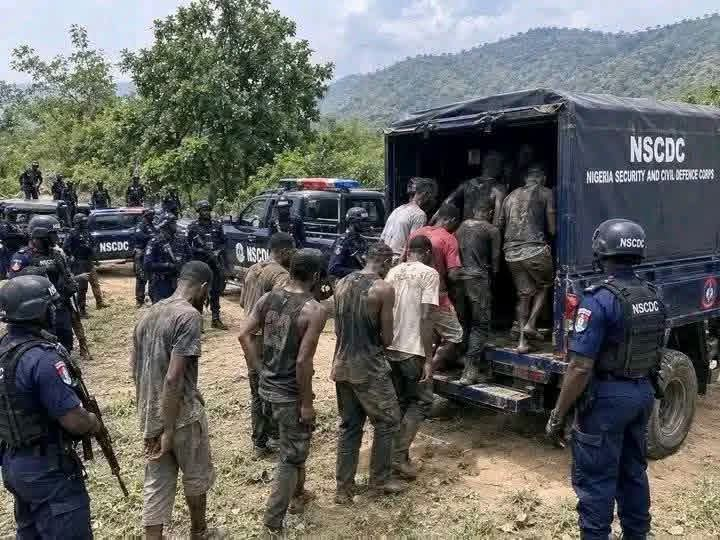
Former Military President, General Ibrahim Babangida, has condemned the deaths of 37 illegal miners, who died while in the custody of the Nigeria Security and Civil Defence Corps (NSCDC) in Minna, Niger State.

Babangida described the incident as tragic and deeply disturbing, and expressed his condolences to the parents and families of the deceased, as well as the people and government of Niger State.

Babangida, in a statesman in Minna, signed by Dr. Danladi Umar Abdulhameed, commiserated with the bereaved families and prayed for the repose of the souls of the deceased and for God to grant their relatives the strength to bear the loss.

Babangida also commended the Niger State government for its immediate response to the incident, particularly the decision to constitute a committee of inquiry and initiate medical and forensic examinations to establish the circumstances and actual cause of the deaths.

The former military leader called for calm as investigations continue to unravel the circumstances surrounding the death of the young miners.

He pointed out that the steps being taken by the authorities are necessary to establish the facts surrounding the deaths and ensure that appropriate action is taken based on the findings.

He therefore appealed to the people of Niger State, particularly the youths and families of the deceased, to remain calm and allow the ongoing investigations to run their course.

The former military president urged all parties to avoid actions capable of escalating tensions or disrupting peace and security in the state, stressing the importance of allowing the relevant authorities to establish the truth surrounding the unfortunate incident.

Babangida equally expressed hope that the investigations would be conducted transparently and that the outcome would help provide answers to the families, and the law abiding people of Niger State.

Sun

CAPPA kicks against privatisation of public services

0


Human Rights advocate group under the aiges of Corporate Accountability and Public Participation Africa (CAPPA) has urged the Federal Government of Nigeria to stop the ongoing Privatisation of Basic services across Nigeria.

This call was on the sidelines ofFederal Government’s approved concession of King’s College, Lagos, to the King’s College Old Boys’ Association (KCOBA), describing the arrangement as an abdication of the government’s responsibility to fund and manage public education.

The organisation further urged the government to use the two-week suspension of the arrangement to cancel it entirely, rather than amend the signed Memorandum of Understanding and proceed with its implementation.

The Federal Government approved the concession in July, while KCOBA announced a N100 billion endowment fund to finance infrastructure renewal, teacher development, digital technology, scholarships and students’ welfare. Following protests by workers and parents, implementation was suspended and a seven-member committee constituted to review the agreement.

CAPPA said the temporary suspension did not resolve the fundamental problem of transferring the management and governance of a publicly owned national institution to a private association. It dismissed the government’s argument that the arrangement did not amount to privatisation because legal ownership of the school would remain with the state.

According to the rights group, public ownership becomes increasingly hollow when the government transfers operational control, institutional governance and decision-making powers to a private body.

Established in 1909, King’s College is one of Nigeria’s oldest secondary schools and an important part of the Federal Unity College system. CAPPA said Unity Schools were intended to bring children from different regions, ethnic groups, religions and social backgrounds into shared institutions while expanding access to quality public education.

Despite deteriorating infrastructure and rising school-related charges, King’s College and other Unity Schools remain comparatively accessible to working-class and low-income families. This distinguishes them from many private schools that have proliferated as public education has been systematically underfunded and commercialised.

CAPPA’s Assistant Executive Director, Zikora Ibeh, said the deterioration of public schools should spur increased public investment rather than provide an excuse for transferring their management.

’’Government cannot neglect public schools until their infrastructure and learning environments deteriorate, only to present concession as the sole means of rescuing them. The condition of King’s College reflects inadequate public investment and weak administration,” Ibeh said.

CAPPA noted that the Federal Government’s 2026 executive budget proposal allocated about N3.52 trillion to education, representing approximately 6.1 per cent of the proposed national budget. It said this remained inadequate for a country contending with dilapidated schools, overcrowded classrooms, shortages of teachers, weak sanitation systems and millions of children without access to quality education.

At a time when federally collected revenues and tax receipts have risen substantially, CAPPA argued that increased public income should translate into greater investment in education and other essential services.

The organisation stressed that King’s College is a federal institution and a national public asset whose infrastructural and administrative challenges should be addressed through adequate budgetary allocations, transparent expenditure and accountable public management. These challenges must not be exploited to justify the government’s gradual withdrawal from public education.

It warned that concession cannot become a substitute for public funding or an escape route from the Federal Government’s responsibility to provide accessible and quality education.

CAPPA linked the arrangement to a broader pattern in which governments weaken public institutions and subsequently present private participation as the remedy. It cited the increasing commercialisation of essential services and infrastructure, including water systems in Lagos, where concession plans and public-private partnerships threaten to place services that sustain everyday life under commercial control.

The organisation said Nigerians already provide their own water, electricity, security, healthcare and education while continuing to pay taxes. A government that collects more revenue, it argued, cannot continue transferring its basic responsibilities to private bodies.

“If King’s College is concessioned today, which Unity School will follow tomorrow? If schools, water systems, hospitals and other essential services are steadily transferred to private managers, what precisely will remain of the government’s social responsibility?” Ibeh said.

CAPPA acknowledged that KCOBA could play an important role in restoring the school without assuming managerial control. It said the association could renovate classrooms and hostels, equip laboratories and libraries, provide scholarships, support teachers and contribute to an independently administered endowment fund.

Such support, the organisation insisted, must supplement public funding rather than replace it or confer governance rights over the school. It urged KCOBA to also use its influence to demand adequate education funding and accountability from the government.

As immediate measures, CAPPA called on the Federal Government to cancel the signed MoU and commission an independent assessment of the school’s infrastructure, staffing and learning needs. The findings should form the basis of a costed rehabilitation plan funded through the federal budget, with clear deadlines and publicly reported expenditure.

The organisation also proposed a public oversight mechanism comprising representatives of the Ministry of Education, teachers, workers, parents, students, alumni and independent education experts. It said all rehabilitation contracts, allocations and project reports should be published, while progress should be independently audited.

Beyond King’s College, CAPPA demanded a properly funded national renewal programme for all Unity Schools to prevent government intervention from being determined by the wealth or political influence of individual alumni associations.

The organisation commended the Association of Senior Civil Servants of Nigeria, the Nigeria Union of Teachers and the Trade Union Congress for opposing the concession. It urged them, alongside the Nigeria Labour Congress, Parent-Teacher Associations, students, alumni and members of the public, to remain firm until the arrangement is cancelled.

CAPPA maintained that public education is a public good and a fundamental responsibility of government, which must fund, protect and administer it in the interest of all Nigerians.

Sun
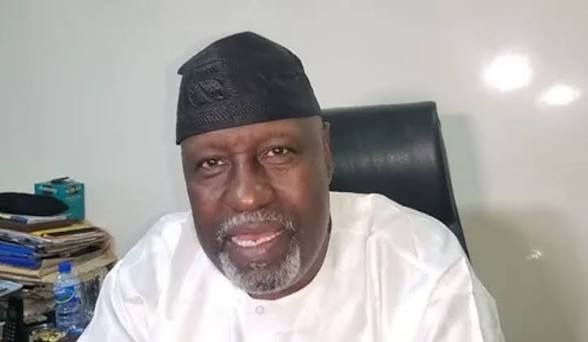
Osun Election Violence: Panel wraps up probe, recommends healthcare, scholarships for victims

0


The Election Violence Victims Relief Committee, set up by Governor Ademola Adeleke to verify claims following the August 15 governorship election in Osun State, has recommended free medical care for gunshot victims and educational scholarships for the children of deceased victims.

During a visit to the Osun State University Teaching Hospital (UNIOSUNTH) in Osogbo, yesterday, committee members met with several injured individuals to assure them of full state support.

Among those affected was Adebayo Sakirat, who recounted losing her pregnancy when hoodlums invaded her neighborhood prior to the election, causing her to fall while fleeing gunfire.

Other survivors, including Salawudeen Kehinde and Kamorudeen Sodiq, shared harrowing accounts of narrow escapes from post-election gun violence.

UNIOSUNTH Chief Medical Director, Dr. Babatunde Afolabi, confirmed that a hospital panel had identified 15 gunshot victims so far.

“Four of them are currently receiving treatment, and we are expecting the others. Those present are already receiving care, and we will ensure they are fully treated,” Afolabi said.

Speaking on behalf of the committee chairman and Assembly Speaker, Hon. Wale Egbedun, Hon. Adewumi Adeyemi revealed that the panel reviewed cases involving more than 40 families who lost relatives.

He disclosed that the committee prioritized medical aid for victims facing ongoing complications or financial hardship.

Adeyemi noted that the committee is finalizing its work and expects to submit its report within a week.

“We are in the concluding stage. We have reviewed over 400 cases, ranging from victims requiring leg amputations and treatment for gunshot wounds to individuals whose properties were destroyed,” Adeyemi said.

He added that over 90 percent of the claims reviewed were verified as genuine instances of electoral violence, with only a few unverified cases stemming from unreachable applicants.

Hon. Adeyemi said the Speaker will soon issue a full public brief once the official report is submitted, saying that the committee intends to conclude in the next one week.

Sun

51-Year-Old Nigerian Lecturer Dies In South Africa

0

A Nigerian academic at the University of Fort Hare, South Africa, Dr Ayodele Temidayo Odularu, has died at the age of 51.

Full list Of 20 NSCDC Officers Suspended Over Death Of 37 Miners In Minna Alongside Their Commander

0

1. O/C Station Guard, SC Usman Isah Ndamaka

2. Station Guard, ASCI Hassan Mohammed

3. Station Guard, CCA Bala Mohammed

4. Arresting Officer/O/C Investigation, CSC Oluwadare Sunday

5. Arresting Officer, DCC Obafemi Elvis

6. Arresting Officer, CSC Annas Shitto Lamino

7. HOD INT/INV, DCC Philip Ajayi

8. O/C Legal, ACC Barr. Stephen Tsado

9. Day/Night Duty Officer, ASCI Alhassan Mohammed

10. Guard Duty, IC Abdullahi Sale

11. Guard Duty, IC Mohammed Sonfada

12. Guard Duty, CAI Liman Abubakar

13. Guard Duty, CAI Bala Usman

14. Guard Duty, IC Mohammed Jiya

15. Guard Duty, DSC Isah Suleiman

16. Guard Duty, CAI Ahmed Wushishi

17. Guard Duty, IC Sale Adamu

18. Guard Duty, IC Haruna Mohammed

19. Guard Duty, ASCI Aliyu Sallah

20. Guard Duty, CAI Isah Sanusi