Home Blog Page 113

How bandits chased cleric, over 100 residents from Kwara church camp

0

The founder of Word Assembly Ministries, Ilorin, Rev. Isaac Omolehin, has recounted how a threat by bandits forced him, his family and more than 100 residents to flee his church camp in Idofian village, Ifelodun Local Government Area of Kwara State.

Omolehin said the incident occurred after police officers arrived at the camp around midnight between May 30 and 31 and ordered everyone to evacuate following intelligence about an impending attack by bandits.

The cleric disclosed this in a statement made available to journalists on Saturday by his spokesperson, Grace Edema.

According to him, the sudden evacuation left the camp deserted, with residents, including children and staff of various facilities, forced to seek safety in different locations.

“The police came to my camp in the middle of the night and asked everybody to run because kidnappers were coming to attack me. The whole camp was deserted, and it has remained deserted,” Omolehin said.

He said the bandits eventually arrived at the facility but found no one there.

“They came, the bandits, but they didn’t meet anybody,” he added.

Omolehin said he was not at the camp when the evacuation order was issued but has since been forced to move from one location to another with his wife and children because of the security threat.

“I have a house I can’t enter. I have a car I can’t ride. I have to hide myself from the public. If I sleep here today, I’ll sleep somewhere else tomorrow. I’m homeless with my wife and children,” he said.

The cleric said the camp was home to more than 100 people and provided several social services, including a primary school, secondary school, hospital, old people’s home and a rehabilitation centre for women rescued from the streets and their children.

He said the security situation had brought activities at the facility to a halt.

“Bandits chased us out of that place. The school cannot open, the hospital is not functioning, and the patients and nurses all ran for their lives,” he said.

Omolehin said the displaced residents remained scattered because authorities had yet to confirm that the area was safe for them to return.

He said the camp management had written to the police, seeking clarification on whether it was safe to return, particularly because schools had resumed and more than 100 children needed to return to school.

“We wrote to the police because they were the ones who asked us to leave. We asked if it was safe for us to return because schools had resumed and we have over a hundred children that need to go to school. There has been no response,” he said.

According to him, reports were also submitted to the Department of State Services and the Kwara State Ministry of Social Welfare, which supervises orphanages and rehabilitation centres.

Omolehin further alleged that the security crisis extended beyond the Kwara camp, claiming that his village in Kogi State was attacked three days after the incident at the camp, with some members of the community killed.

He said the bandits did not damage the buildings at the Kwara facility but warned that criminals later broke into the deserted camp and stole property.

“The kidnappers did not destroy our buildings; the structures in the camp are still intact. However, a few days after we evacuated, thieves began breaking into the camp and carting away our belongings,” he said.

He stressed that the people who looted the facility were different from the bandits who allegedly threatened to abduct residents.

“The kidnappers did not come to steal refrigerators, fans or mattresses. They came for human beings. The people who looted our property are not the same as the kidnappers,” he added.

The cleric, who is known for his criticism of denominational divisions within the Nigerian Church, said the security concerns had not stopped him from his religious advocacy despite what he described as opposition to his ministry.

“The attacks are still going on, but they don’t affect me. Jesus already told us that our preaching may be resisted,” he said.

Omolehin also disclosed that he was recently barred from preaching in Baptist churches, saying the restriction was imposed about a month before his latest disclosure.

He appealed to the Federal Government and the Kwara State Government to improve security around the camp to enable him, his family and the displaced residents to return.

The cleric said the appeal was particularly urgent because some of the orphaned children at the facility had been referred there by government authorities.

“I want to appeal to the government to improve security so that I can return to the camp with my family and all the people I look after. Some of the children in the orphanage were brought to us by the government. Even if they say they don’t care about the rest of us, what about the children they entrusted to us?” he said.

Efforts to obtain the reaction of the Kwara State Police Command were unsuccessful, as the Police Public Relations Officer, Adetoun Ejire-Adeyemi, did not respond to calls or messages as of the time of filing the report.

2027: Why Atiku can’t be president – Presidential adviser

0

Says Masari, as Jigawa academics endorse Tinubu, Namadi for second term

The Presidential Adviser on Political Matters, Alhaji Ibrahim Kabiru Masari, has declared that former Vice President and presidential candidate of the African Democratic Congress (ADC), Atiku Abubakar, can never become the president of Nigeria due to what he called his desperation for power.

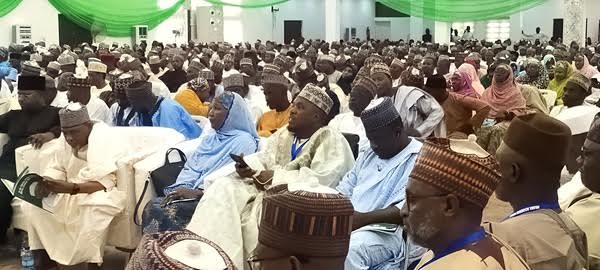
The presidential aide made the declaration in Dutse, Jigawa State on Saturday just as over 2,000 academics of Jigawa origin from various tertiary institutions from within and outside the state unanimously passed a vote of confidence on both President Bola Ahmed Tinubu and Governor Umar Namadi of the state and have vowed to actively push for their re-election in the 2027 elections.

Rising from their annual meeting, the lecturers under the aegis of the Jigawa Academics Forum (JAF) attributed their unanimous decision to what they described as the superlative performances of both the President and the state governor.

The declaration was preceded by sectoral presentations by heads of various ministries, departments and agencies (MDAs) highlighting the achievements recorded by the Namadi administration in the last three years, including education, health, agriculture and rural development, works and transport, power and energy, amongst others.

Presenting the forum’s stance after about five hours of deliberation and review of the performances of both the president and the governor, the forum’s Chairman, Prof. Haruna Abdullahi Birniwa, said the members were satisfied with

Besides Masari, the forum attracted the participation of the Deputy Governor of the state, Engr Aminu Usman Gumel, the Minister of Housing and Urban Development, Engr Hamza Rabe Dharma and his counterpart, the Minister of State for Education, Prof. Suwaiba Sa’ad Ahmad, the Speaker of the Jigawa State House of Assembly, Haruna Aliyu Dangyatin, among other dignitaries.

Prof. Birniwa, who summarised the opinions of the academics, noted that they believed that there was no need for any change of government.

According to him, “Given the preponderance of opinions expressed by my colleagues and which were expressed, we believe that the present government needs an additional four years to enable it to complete the good work that it is doing.”

Masari, while reacting to the decision of the lecturers, described it as not only a welcome development, but also as an acknowledgement of the efforts of both the president and Governor Namadi of the state.

He hoped that the vote of confidence on the two leaders would spur them to put in greater efforts and raise the bar of governance beyond where it is at the moment. “We will advise them not only to continue but to do more than what they have been doing in the last three years.”

The presidential aide, who was reacting to the former vice president’s criticism of Tinubu’s economic policies and his resolve to dislodge the president in the 2027 general elections, downplayed the impact of Atiku’s campaign, noting that he would go nowhere.

His words, ” Atiku is a joker, don’t waste your time listening to him. You know desperation will not give you what you want. Atiku is desperate and he will not become the president of this country, inshallah.”

Also reacting, the governor welcomed the endorsement of his administration, noting that the development would spur them to do more for the people.

“The better part of it is that they are able to appreciate what Mr President has done for Nigeria and what he has done for Jigawa State and at the same time they have appreciated the modest things we have done for Jigawa State.”

“They are very happy with what we have done leading to this endorsement of us and that is the climax of this meeting and we are really appreciative of what they have been doing in the state in particular and the country at large.”

“What they have seen that made them endorse us, definitely we will continue to work to provide infrastructure, advance agriculture, healthcare, education and social security services to our people.”

The governor had earlier reviewed progress in power, investment, employment, environmental protection, and social protection, including the state’s renewable energy initiatives, investment facilitation efforts, youth and women empowerment programmes, waterway rehabilitation, and social protection interventions.

He further disclosed that the state’s internally generated revenue had recorded significant growth, with average monthly IGR rising from about ₦1.1 billion in 2023 to over ₦5.2 billion in 2025, while annual collections increased from about ₦27.5 billion to over ₦66 billion.

The governor said the next phase of the administration would be guided by three priorities: completing ongoing programmes, establishing through evidence what works, and institutionalising successful reforms.

He said the state’s 12-Point Agenda complemented President Bola Ahmed Tinubu’s Renewed Hope Agenda, particularly in food security, economic diversification, livelihoods, infrastructure renewal, and human capital development, as he highlighted federal interventions in agriculture, education, water supply, roads, SME financing, skills development, and social protection that were supporting development efforts in Jigawa.

Nollywood film ‘Black Market’ sets Guinness World Record with 51,000 viewers during screening

0

Nollywood has recorded another global milestone after Black Market, a crime thriller, set a Guinness World Record for the largest attendance at a film screening in a single location.

A total of 51,000 people watched the film during a screening held on Saturday at Tafawa Balewa Square, Lagos.

Thousands of movie lovers began arriving at the venue from about 2 pm, with long queues forming around TBS ahead of the screening, which started at about 7 pm.
We’re officially Amazing!!!!

51,000+ people. One screen. One moment that just made history.

We’ve officially set a WORLD RECORD for the Largest Audience Gathering Ever for a Movie Screening.

51,000+ people came together for the love of film, and what started as a screening… pic.twitter.com/Y1QsJuNkEH

— FilmOne Entertainment (@FilmOneng) September 26, 2026

Guinness World Records confirmed the 51,000 attendance after the event, clarifying that only viewers who remained from the beginning to the end of the film were counted.

The confirmation followed an earlier announcement by Lagos State Deputy Governor, Obafemi Hamzat, that 64,000 people had attended the event.

The official confirmation triggered celebrations, cheers and fireworks at the venue.


NEW GUINESS WORLD RECORD

Congratulations to the Black Market on breaking the world record for largest audience gathered for a film screening

51,000! pic.twitter.com/R7qPO6dZlf

— (@AlbumTalksHQ) September 26, 2026

The organisers had set a target of 50,000 simultaneous viewers in a bid to break the previous record of 43,624 people, set by Iglesia Ni Cristo during a screening of Felix Manalo at The Philippine Arena in Ciudad de Victoria, Philippines, on October 4, 2015.

The Lagos event was attended by Commissioner for Tourism, Arts and Culture, Toke Benson, alongside Nollywood stars including Lateef Adedimeji, Kunle Remi, Stan Nze, Linda Ejiofor, Gabriel Afolayan and Kunle Afolayan.

Black Market was produced in collaboration with FilmOne Studios, Signet Ring Studios and Switch Visuals Production.

Directed by Fatimah Binta Gimsay and co-written by Gimsay and Abdul Tijani-Ahmed, the film tells the story of five women involved in a cross-border smuggling operation whose lives are thrown into turmoil after the daughter of one of them is kidnapped.

The cast includes Linda Ejiofor-Suleiman, Lateef Adedimeji, Omowunmi Dada, Scarlet Gomez, Teniola Aladese, Susan Pwajok, Itele D Icon and Uzor Arukwe.

Gimsay had previously disclosed that breaking the world record was the goal she and her team had set for the project.

Sun

Peter Obi is not godfather to Soludo’s children – Anambra First Lady

0


Anambra State First Lady, Nonye Soludo, has clarified that former Anambra State governor and presidential candidate of the Nigeria Democratic Congress (NDC), Peter Obi, is not the godfather of any of her children.

The clarification was made on Saturday by Daniel Ezeigwe, her media aide, following comments by Obi suggesting that he and his wife, Margaret, are godparents to the children of Governor Chukwuma Soludo.

Obi had made the remarks on Friday while speaking at the 22nd Conference of the Nigerian Guild of Editors in Enugu.


“People may not know, my wife and I are godparents to Soludo’s children. Yes, we are that close. So we are not quarrelling, and we will never quarrel. If I see him any day, he and I will hug and everything. If they say anything, I’ll answer them,” Obi said.

The statement was widely circulated on social media, prompting questions about the nature of the relationship between the Obi and Soludo families.

Ezeigwe said the clarification was necessary to correct what he described as a wrong impression created by Obi’s remarks.

“We hereby state clearly that the claim, as presented, is false,” the statement said.

He explained that Nonye Soludo is the confirmation godmother of Obi’s daughter, while Margaret Obi is the baptismal godmother of one of Soludo’s daughters.

“For the avoidance of doubt. Mr Peter Obi is not a godfather to any of the children of Professor Chukwuma and Dr Nonye Soludo.

“The facts concerning the godparent relationship between the two families are as follows: Dr Nonye Soludo, First Lady of Anambra State, is the confirmation ‘godmother’ to Peter Obi’s daughter.

“Mrs Margaret Obi, wife of Mr Peter Obi, is the baptismal godmother to one of Prof Chukwuma Soludo’s daughters.

“Neither Mr Obi nor Professor Soludo has served as a godparent to the other’s children.”

Ezeigwe suggested that Obi may have simply misspoken during the event but said the widespread circulation of the video made it necessary to clarify the matter.

“It is possible that Mr Peter Obi simply misspoke in the course of making his remarks. However, given the widespread circulation of the video and the enquiries it has generated, it is important that the record be set straight,” he said.

He added that the relationship between both families remains cordial and urged the public and media to disregard any impression that Obi is the godfather of any of Soludo’s children.

The clarification comes amid recent public disagreements involving Obi and Soludo over financial matters linked to Obi’s tenure as Anambra governor, which have generated speculation about their relationship.

However, Anambra State Commissioner for Information and Value Reorientation, Law Mefor, said on Thursday that there was no personal rift between the two politicians.

Sun

LG autonomy: States’ defiance puts FG under pressure

0

•Critics say president not committed to enforcing Supreme Court judgment
•‘How financial autonomy is being undermined by governors

President Bola Ahmed Tinubu on Tuesday issued a stern directive to the chairmen of Nigeria’s 774 Local Government Areas to translate the historic financial autonomy affirmed by the Supreme Court into tangible improvements at the grassroots.

Represented by the Secretary to the Government of the Federation, Senator George Akume, at the inaugural Annual National Conference of Council Chairmen in Abuja, the President declared that “local government autonomy is not an end in itself, but an instrument for service.”


He tasked councils with delivering verifiable results in six sectors: primary healthcare, basic education infrastructure, rural feeder roads, potable water, food security, and grassroots livelihoods.


The charge rings with noble intent. But more than two years after the landmark July 11, 2024 judgment ordering direct disbursement of federal allocations to local governments, most councils still do not receive their funds directly. That bottleneck renders the demand for performance aspirational.

Critical voices dismissed the charge as mere rhetoric. Chief Chekwas Okorie noted: “The directive given by the President to local government chairmen to ensure service delivery at the grassroots, four months to the election, is mere political posturing. Nobody will take him seriously because he had the opportunity to enforce the judgment of the Supreme Court on the autonomy of local governments but refused to do so. He has not impressed anybody at all with that statement.”

States remain defiant

Sunday Sun investigations across Osun, Benue, Abia and other states show state governments still exert firm control over FAAC revenues meant for councils, using joint project schemes and regulatory loopholes to preserve financial dominion.

In Osun State, council autonomy remains trapped in court battles. Service delivery is still largely ineffective due to legal and political supremacy battles. The opposition APC is in court seeking tenure elongation, claiming its chairmen were illegally ousted. Prof. Tunji Ogunyemi, lawyer and public affairs analyst told Sunday Sun autonomy will remain unachievable until Sections 162 (5), (6) and (7) of the Constitution are amended. “The Joint State and Local Government Account (JAAC) is completely unnecessary. In fact, it undermines the Supreme Court’s landmark judgment mandating direct allocation to local governments,” Ogunyemi said. He explained that existing provisions still grant states control over local finance, structure and tenure. “Nobody can open a separate local government account contrary to a governor’s directive without committing an illegality. Local government finances are managed by the Director of Finance, who is a gubernatorial appointee,” he added.

Ogunyemi urged amendment of the INEC Act to allow the National Judicial Council, not the President, to appoint a retired Justice to oversee local polls.

Meanwhile, Osun ALGON Chairman Hon. Abiodun Idowu maintained autonomy is operational though funding is constrained by litigation. Conversely, Commissioner for Local Government and Chieftaincy Affairs Hon. Dosu Babatunde described distribution of motorcycles and patrol vehicles by former chairmen as political manipulation and financial illegality.

ADC chieftain in Lagos, Tunji Shelle, asked: “There is a Supreme Court ruling that local governments should receive their allocations directly from the Federation Account. Are local governments receiving their allocations directly? Even in Osun, where the court ruled that local government allocations should be returned to the party in power, did they return the money? Where do we go from here if everybody is breaking the law?”

In Benue, Katsina-Ala LGA Chairman and state ALGON Chairman, Hon. Justin Shaku, said autonomy was working under Governor Hyacinth Alia. “If you come to my local government, Katsina-Ala, you will be shocked by the level of activity, including the construction of the 21km Yooyo Road and the renovation of the council secretariat,” Shaku said.

He, however, called for a review of the sharing formula: “My proposal is that local governments should receive 40 per cent, states, 35 per cent, and the Federal Government 25 per cent. About 80 per cent of people from Katsina-Ala may never visit Abuja, and 70 per cent may not visit Makurdi. That is why more resources should go directly to local councils.”

He noted insecurity and inadequate funding as hurdles and urged cooperation with security agencies.

Chairmen in Ado, Guma, and Ohimini council areas, Sunday Oche, Maurice Orwough, and Gabriel Adole respectively, confirmed infrastructure drive. In Guma, ₦4 billion was earmarked for the Gbajimba secretariat road and security vehicles. In Ado, ₦2.8 billion for roads plus ₦1.2 billion RAAMP counterpart for solar lighting. Otukpo Chairman Maxwell Ogiri also cited projects in Otukpo town as proof of direct utilization.

In Abia, reports show that financial autonomy is not fully in place as allocations still pass through JAAC.
Under JAAC, states statutorily add 10 per cent of IGR before disbursing to councils. But officials anonymously said councils were far from direct allocation despite Supreme Court ruling. They revealed state government controls council finances, including salary payments, while projects are mostly executed jointly, leaving councils without independent control.

“If councils were allowed to manage their own funds directly, staff leave allowances and gratuities owed over the years would have been cleared,” an anonymous council official noted.

Sources further added that the state had usurped key local revenues, including market and signage fees, preventing councils from performing their statutory duties.

Former President of Kano Chamber of Commerce, AbdulKarim Daiyabu, queried the disparity: “I wonder why people keep talking about direct or indirect allocations to local governments. If the federal and state governments are receiving direct allocations, why not local governments? “What kind of country are we if the Supreme Court passes a judgment and that judgment is not implemented? What kind of country is that? What form of justice system are we running in this country? If the Supreme Court cannot be respected, is that not an invitation to anarchy? It also means that our lawmakers are part of the criminality. We should rather recall them if they cannot hold the President and the governors accountable.

“Okorie stressed the finality of apex court pronouncements.

“The pronouncement of the Supreme Court as the highest court of the land is final. It overrides the Constitution. President Bola Ahmed Tinubu became President by virtue of the Supreme Court ruling on the 2023 general election. Despite the fact that he did not secure majority votes, all presidential candidates complied as soon as the Supreme Court made its final pronouncement and immediately started preparing for another election, for those who still want to contest.”

“In the case of Peter Obi in Anambra State, it was the Supreme Court that introduced off-cycle elections when he won his governorship petition. Despite the fact that the Constitution stipulates a four-year tenure, the Supreme Court ruled that his tenure must start to run from the day he took the oath of office. That was how we came about off-season elections. It is this same Supreme Court that everybody is treating with disregard. This is the unfortunate situation Nigeria has found itself in.”

The Jigawa exception

In this landscape, Jigawa stands as a beacon of compliance. Long before the 2024 verdict, it institutionalised direct funding. According to Jigawa ALGON Chairman, Sibu Abdullahi, all 27 LGAs receive monthly FAAC directly into independent council accounts, bypassing SJLGA. Multiple reports confirm Jigawa as the sole state with verifiable end-to-end direct disbursement, while Sunday Sun findings show councils in 35 other states remain entangled in state-controlled arrangements.

Governors view autonomy as erosion of patronage.

For decades, council allocations have been used to reward loyalists and fund state expenditures at the expense of rural development. By withholding direct access, authorities reduce chairmen to subordinates dependent on hand-outs. Okorie questioned the lack of will despite ruling party dominance.

“This is the first time a party in power is in control of 31 out of 36 states of the federation and has the majority in the National Assembly. Why can’t the President and the ruling party enforce local government autonomy as directed by the Supreme Court so that there will be service delivery at the grassroots? Why are state governors refusing to obey the judgment of the Supreme Court and continuing to deny governance to the people at the grassroots,” he queried.

This scenario creates an administrative paradox. Council chairmen are expected to fix security, renovate schools, stock clinics, clear drainages and boost agriculture with tied hands. Shelle echoed concerns on opacity: “I learnt that a reasonable amount is being allocated to local governments, but we cannot see any evidence of it. Clearing drainages, ensuring that everywhere is clean, and ensuring that there is primary healthcare service delivery at the grassroots are part of the responsibilities of local governments. I cannot see anything commendable they have done so far. It is possible the governors are holding them back, sitting on their allocations, or that they are misapplying the allocations. We do not know who to hold accountable. There is no accountability in the country generally. Everything is being done with impunity.”

When councils are denied fiscal autonomy, rural infrastructure decays, healthcare collapses, education fails and local economies stagnate, accelerating rural-urban migration and insecurity. Beyond structure, some blame civic morality. Daiyabu said: “The problem is that we do not vote for the right people who are God-fearing and empathetic towards the masses they are meant to serve. We vote and give a licence to those we elect to loot.

“It is high time we looked inward and voted for honest people to whom we can entrust our future in the coming elections. Otherwise, they will continue to loot our money.

“For me, it is not a matter of direct or indirect allocations to local governments. Rather, there should be a judicial committee that will be given all the powers required to investigate and recover all the monies that have been looted, and thereafter the looters should be publicly punished.

Stakeholders insist if government intends real grassroots change, it must move from speeches to enforcement. The CBN, Accountant General and anti-corruption agencies must sanction states that intercept or co-manage LG funds. The true test of policy, they say, is not what is announced in Abuja, but what changes in our wards, villages, towns, and communities. Until roadblocks are dismantled, grassroots governance remains empty narrative.

As Okorie noted: “Campaigns have started. This will form part of the issues political parties will put before Nigerians when they begin their rallies in a month’s time.”

How financial autonomy is undermined

Financial autonomy should make chairmen accountable to citizens. Normally, accountability relies on being voted out. But under SIEC structure, performance is irrelevant; loyalty to the governor is sole requirement. Without credible elections, autonomy cannot improve service delivery. Shelle framed the monopoly: “Part of the problem is that all local government chairmen come from the ruling party in a state. How can there be discipline or the rule of law? If you are an APC governor, all your local government chairmen must be APC. If you are a PDP governor, all your local government chairmen must be PDP. How do you have checks and balances?”

Some argue transferring oversight from SIECs to INEC or a new National Independent Local Government Electoral Commission (NILGEC) is critical. Financial autonomy guarantees money flow, democratic oversight determines who controls it. Without electoral reform, they insist, direct allocation goes to proxies.

Under current system, SIECs are appointed, funded and controlled by governors, yielding 100 per cent wins for ruling parties. Chairmen who owe nomination to governors readily sign off on joint projects and deductions. Governors also delay elections, using Caretaker Committees to retain total control. An independent body ensures predictable cycles. But reform advocates are divided on INEC. Shelle said: “INEC itself is a problem on its own. Everybody has reservations about INEC. I would not recommend INEC conducting local government elections. It is not a trusted body.”

Okorie proposed reforming SIECs with technology: “Part of the reason for the lack of governance at the local government level is the way elections are conducted by the state electoral bodies. I do not subscribe to the idea of INEC conducting local government elections because of its unimpressive performance. What I would suggest is amending how state electoral bodies are constituted to make them truly independent. I also do not support a situation where local governments rely on the INEC voters’ register. We should allow electronic technology like BVAS to be deployed to local governments so that we can have credible elections.”

Sun
Anger, frustration over 78 kidnapped schoolchildren

0


• 10 toddlers, 68 other pupils languish in captivity 135 days after abduction
• We sent them to school, but Boko Haram took them away –Distraught parent

Parents and families of the 78 students and children abducted from two public schools in separate attacks by suspected Boko Haram insurgents in Borno State, have been agonising over the fate of their children still languishing in the captivity of terrorists 135 days after their abduction.

They said it has been over four traumatising days since their children went to school and never returned.


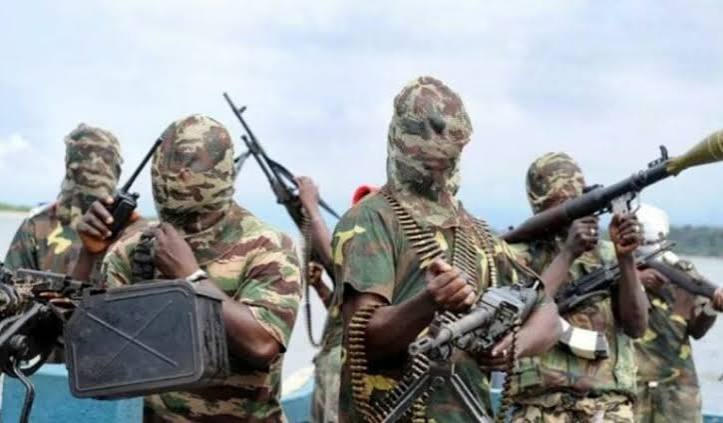
Boko Haram


On the morning of Friday !5th May, terrorists on motorcycles invaded Mussa Primary and Junior Secondary School of Askira-Uba Local Government Area in the southern part of Borno, where they abducted dozens of pupils.

Bormo State government and Senator Mohammed Ali Ndume who represents the Southern Borno in the Senate, put the total number of abductees at 42. These included 28 pupils taken from the primary School, four from the Junior Secondary School and 10 toddlers, aged 20 months to three years, kidnapped on playgrounds in nearby houses.


A month later, terrorists’ broke the serenity of Lassa, a small town some kilometres to the scene of the first incident in same Askira-Uba Local Government. They whisked away 36 students and a teacher from the Government Secondary School in the town, leaving the community members in sorrowful mood, parents and relations in agony, trauma and uncertainty of the fate of their children.

“We sent them to school hoping that one day, they will become better persons in the society, make their contributions and support their parents at old age but it appears all these dreams are gone. Boko Haram has carried them away,” Yohanna Musa Lassa, uncle to one of the kidnapped students, told Sunday Sun.

He revealed that his brother, whose son was among the 36 abducted by the terrorists on June 29 at Lassa Secondary School, has been experiencing depression since the incident occurred.

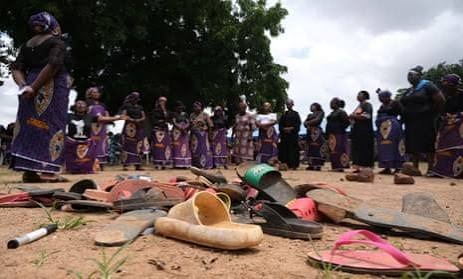
Under heavy rainfall that drenched their clothes and their faces, mothers, fathers and relatives gathered in Mussa recently, clutching photographs of their little ones, weeping openly, and chanting “Save our children.” It was an emotional moment for the community members as they gathered recently.

It was an event to pray and remember the sad incident of 15th May when Boko Haram struck and forcefully took away 42 pupils from Mussa Primary and Junior Secondary School.

Residents said the terrorists had fired several shots into the air to scare people before breaking into the school premises, classrooms and playgrounds of homes near the school. They eventually took away children even as young as two years, put them on their motorcycles and rode back to the Sambisa Forest. Mussa sits on the edge of the forest which is Boko Haram former operational base.

“It was a sad day for us in Mussq,” Musa Chinda, whose four-year old daughter was also a victim of the mass abduction, disclosed in an interview with Saturday Sun.

He said the abduction and inability of the authorities to rescue the children four months after has dampened his hope on the survival of the abductees

He expressed concern over what he described as the silence of the Federal Government over the rescue of the children, lamenting that the government should have applied the tactics they applied in freeing the Oriire School abduction which occurred same day.

“The Federal Government has been silent about the rescue of our children and this worries us as parents directly affected,” he said. He appealed to President Tinubu to activate similar presidential order to rescue the children and save them from Boko Haram’s mission to cut down their destinies and life.

Chinda said the parents of the abducted children have been making passionate appeals to the government since the incident occurred. He begged the government to act before it is too late.

He said the younger ones among the abducted children may be at risk of diseases, including malnutrition and the absence of mothers’ care.

“About four of these children are still around two years. Some are just about three years. These children are too young and will need the card of their mothers,” he noted.

Mrs Saratu Buba, a relation to one of the Mussa parents believes divine intervention with military action will free the 78 abductees She urged Nigerians to join the community in prayers.

Borno Commissioner of Education, Science, Technology and Innovations, Lawan Abba Wakilbe had at a recent stakeholders’ forum on education decried attacks on schools and education institutions by terrorists and armed groups as inimical to the growth of education in the state.

Wakilbe, however, said the Borno State government is collaborating with the military and other security forces to ensure the rescue of the school children in terrorists’ bondage and also secure the school environment.

He informed that the state government, under the Safe Schools Initiative, closed and relocated the Mussa and Lassa schools after the May 15 and June 29 abductions,. However, it is uncertain if the government plans to reopen the effected schools soon as the Commissioner could not be reached on his mobile phone for comments.

Sun

Fury vows to knock out Joshua in seven rounds

0

Tyson Fury has vowed to stop Anthony Joshua within seven rounds when the two British heavyweights clash at Cardiff’s Principality Stadium on December 11.

Fury, speaking publicly for the first time since the long-awaited bout was confirmed, said he expects a one-sided victory over the former two-time world champion.

The former heavyweight champion said he intends to use Joshua as preparation for a potential third fight against Oleksandr Usyk, who defeated him twice on points in 2024.


“I’m just going to knock him out, one hundred per cent,” Fury said on the Furocity YouTube channel.

“I’m going to box the head off him and stop him inside six or seven rounds.

“I’m only using Joshua as a stepping stone, a warm-up to Usyk.”

Fury also questioned Joshua’s speed and stamina, claiming his opponent would struggle to cope with his fighting style.

“Joshua, for me, is an old bum. A weightlifter. Too many weights, not enough speed. Too many weights, no cardio. So I will cut through him like a hot knife through butter,” he said.

Sun

CBN Rate Cut ‘Resets’ Monetary Policy to Market Reality — Coleman CEO

0


The Managing Director/Chief Executive Officer of Coleman Technical Industries Limited, George Onafowokan, has described the recent adjustment in the Central Bank of Nigeria’s (CBN) monetary policy rate as a “reset” aimed at aligning monetary policy with prevailing market realities.

Onafowokan said the market had already moved away from the previous 26.5 per cent rate, with commercial lenders offering loans at about 22 to 23 per cent.

According to him, the gap between the CBN’s policy rate and actual lending rates had become misaligned, making the latest adjustment a realignment with the prevailing conditions in the financial market.

He attributed the shift partly to the recapitalisation of Nigerian banks, which significantly increased the equity and lending capacity of financial institutions.

Onafowokan explained that banks that previously had capital bases of about N50 billion were required to increase them to N200 billion, while institutions with N200 billion were required to scale up to N500 billion.

He said the additional capital eventually increased liquidity in the financial system, prompting banks to compete for lending opportunities and pushing market lending rates below the CBN’s previous policy rate.

“The market found its own level based on the amount of liquidity and the new money in equity in the market. And so it repositioned itself and started lending lower than the CBN was,” he said.

Onafowokan said the impact of the rate adjustment would not be immediate but expressed confidence that it would begin to reflect across the economy within the next two to three months.

He said lower interest rates could also affect treasury bill yields and influence the decisions of foreign portfolio investors, while noting that Nigeria remained attractive to international investors because of the returns available in the country.

The Coleman CEO also called for a reduction in the lending rate of the Bank of Industry (BOI), saying the institution’s current rate was becoming too close to commercial banking rates.

He urged the CBN, Ministry of Finance and the Federal Government to support the BOI in returning to a lower lending rate, which he said would better reflect its development-finance mandate.

Onafowokan further said the Nigerian economy was showing positive signs, citing economic growth of more than four per cent, declining inflation and relative stability in the naira.

He maintained that the naira had remained resilient and advised Nigerians to have confidence in the currency, saying those who retained their naira holdings had benefited from its recent performance.

“The economy is in the right direction,” he said.

Matawalle donates bulletproof SUV to APC chairman in Zamfara

0


The Minister of State for Defence, Dr. Bello Mohammed Matawalle has donated a brand new Lexus SUV to the Chairman of Zamfara State Chapter of the All Progressives Congress (APC), Hon. Kabiru Moyi Birnin Magaji.

In a statement by Comrade Yusuf Idris Gusau, publicity secretary, Matawalle Political Standing Committee (MPSC), the donation was made at the minister’s private residence in Abuja, and was witnessed by the party’s executive members, APC supporters and well wishers.


Presenting the vehicle to the beneficiary, the minister who was represented by the Chief Executive Officer of the Nigeria Agricultural Insurance Corporation (NAIC), Hon Yazid Shehu Danfulani, said the gift is aimed to facilitate the logistics of the party chairman.

He observed that with the existence of some difficult terrains in the state, such mobility was necessary to convey leaders to all parts of the state.

He stated that the vehicle would enable the chairman to move around the state to mobilise support for President Bola Ahmed Tinubu’s reelection and Governor Dauda Lawal and all other party candidates

Matawalle also commended the current APC leadership in the state under the Kabiru Moyi efforts in mobilising support at all levels with a view to ensure the party and its candidates emerge victorious in the forthcoming elections.

He assured his continued support to the party at all levels and time.

The minister further informed the beneficiary that the SUV, which is fully built on bulletproof facility, could also penetrate all major roads across the nation

He congratulated the chairman on the gift and always prayed for a smooth drive.

Receiving the vehicle, the Hon. Moyi thanked the minister for the gesture promising to fully utilise it especially for the ongoing presidential and governorship campaigns in the state and beyond.

Sun

UNGA 81: Mahmoud says safety, dignity, not power, should define good governance

0


Nigeria’s Minister of State for the Federal Capital Territory (FCT), Mariya Mahmoud, has said the effectiveness of any government should be judged by the safety, dignity and opportunities it provides for citizens, rather than the authority it wields.

Mahmoud made the declaration at the Resilience in Leadership and Governance Roundtable held on the margins of the 2026 United Nations General Assembly, where she delivered a keynote address on “Catalysing Effective Governance and Human Security.”


The minister said governance must ultimately be measured by its impact on people’s daily lives, including their access to healthcare, education, safe transportation, efficient public services, economic opportunities and participation in decision-making.

She said leadership resilience should not merely be about surviving crises but about ensuring that essential services continue to reach citizens despite disruptions.

“Resilient leadership is more than the ability to endure a crisis; it is the capacity to learn, adjust, and continue delivering essential services without losing sight of the people affected by public decisions,” Mahmoud said.


On human security, the minister argued that the concept should extend beyond protection from armed conflict, noting that millions of people could remain insecure even in the absence of war.

“A person may be free from armed conflict and still remain deeply insecure because of hunger, illness, unemployment, displacement or the absence of basic services,” she said.

Mahmoud therefore called for sustained investment in infrastructure, healthcare, education, livelihoods and food security, alongside stronger institutions capable of reducing citizens’ vulnerability.

She said governments must focus on addressing the conditions that expose citizens to insecurity, rather than limiting security policy to conventional responses to conflict and crime.

The minister cited developments in the FCT as part of efforts to translate governance into improved living conditions, saying the administration under FCT Minister Nyesom Wike was pursuing infrastructure renewal, transportation, healthcare, water supply, urban development, investment promotion and social interventions.

Sun