Home Blog Page 114

Cyril Ndifon: Appeal court upholds ex-UNICAL dean’s jail term, orders fresh trial on second count

0


The Abuja Division of the Court of Appeal has affirmed the conviction of Professor Cyril Ndifon, the former Dean of the Faculty of Law, University of Calabar, for soliciting pornographic, indecent and obscene photographs from a female student.

In a judgment delivered on Thursday in Appeal No. CA/ABJ/CR/1798/2025, the appellate court upheld the judgment of the Federal High Court, Abuja, which convicted Ndifon on Count One of the charge and sentenced him to two years’ imprisonment without an option of fine.

The conviction arose from evidence before the trial court that Ndifon, while serving as Dean of the Faculty of Law, University of Calabar, solicited pornographic, indecent and obscene photographs from a female student through electronic communication.

The offence in Count One was prosecuted under Section 24 of the Cybercrime (Prohibition, Prevention, etc.) Act, 2015.

Spokesperson for the Independent Corrupt Practices and Other Related Offences Commission (ICPC), Okor Odey, confirmed the Court of Appeal’s verdict in a Friday statement.

The second count alleged that Ndifon conferred an undue advantage on himself, contrary to Section 19 of the Corrupt Practices and Other Related Offences Act, 2000.

Following a protracted trial, the FHC presided over by Justice James Omotosho had found the prosecution established the defendant’s guilt beyond reasonable doubt.

The trial court subsequently convicted him on November 17, 2025, and sentenced him to two years’ imprisonment on Count One and five years on Count Two, without the option of a fine.

The sentences were ordered to run concurrently.

Dissatisfied with the judgment, Ndifon appealed to the Court of Appeal, challenging his conviction and sentence.

The appellate court, having considered the grounds of appeal, affirmed the conviction and sentence in respect of Count One.

With respect to Count Two, the Court of Appeal took a different position on jurisdiction.

The appellate court held that the Federal High Court lacked jurisdiction to entertain the offence under the ICPC Act and consequently ordered the respondent to commence prosecution of Ndifon on the count before the High Court of Cross River State.

The ICPC spokesman said the commission is currently taking steps to challenge this aspect of the judgment before the appropriate superior court.

The statement reads, “The Commission considers the jurisdictional question arising from Count Two to be a matter requiring further judicial determination.

“The Commission wishes to emphasise that the appellate court’s decision on Count Two does not affect its affirmation of the conviction on Count One. The conviction for soliciting pornographic, indecent and obscene photographs from a student remains affirmed by the Court of Appeal.

“The Commission reiterates its commitment to the prosecution of corruption, abuse of office and other related offences, particularly where public or institutional authority is allegedly used to exploit persons under the authority or influence of an accused person.

“The ICPC also reaffirms its commitment to conducting its investigations and prosecutions strictly within the provisions of the law and in accordance with due process.

“The Commission respects the decisions of the courts and will continue to utilise the available legal avenues where it considers further judicial clarification necessary.”

The ICPC vowed to provide further updates on the matter as they emerge.

Sun

Enugu LG Poll: Residents blame voter apathy to lack of awareness

0

Some residents in Enugu State have blamed lack of awareness and previous experiences to the voter apathy witnessed at the Enugu State Local Government Election held on Saturday.

The election recorded low voter turnout and late arrival of materials in several polling units across the State.

The News Agency reports that many eligible voters appeared reluctant to come out to vote, while in some polling units a handful of voters and security agents waited for materials.

The election, conducted by the Enugu State Independent Electoral Commission, (ENSIEC), took place in the 17 Local Government Areas of the State.

In some polling units visited in Trans-Ekulu and some parts of New Haven areas, only few voters were seen casting their ballots.

Also, in Achara layout and Awkunanaw areas of Enugu metropolis, several polling units witnessed late arrival of materials.

At the Igbariam Primary School polling unit, security personnel and few voters were observed waiting for materials, while youths in the area used the opportunity to play football.

The low turnout comes in spite of campaigns by political parties and appeals from ENSIEC and the state government to eligible voters to participate in the exercise.

Some voters, who spoke attributed the low turnout to declining interest in LG elections in the State.

Mr Raphael Nnamani told news agency that he deliberately did not want to vote because his vote would not count.
“Everybody know the situation; whether you vote or not, the results have been written; so, why should I waste my time, ” he said.

In the same vein, Mrs Margaret Ozioko, said she was not aware of any election, adding that she had since forgotten anything about the election in Nigeria.

“I don’t have anything to do with the election in Nigeria because after voting the vote will not count,” she said.

Mr Peter Eze, a civil servant, cited inadequate awareness, previous election experiences and concerns about the impact of local government elections on the people’s daily lives.

“Of what essence is the election when we know that the ruling party will win everything; for me, it is completely a waste of time and energy, ” Eze said.

A resident, Mr Fabian Ugwu, described the election as “affirmation of selected candidates.
The voters however, urged political leaders and electoral authorities to do more to encourage citizens to participate in future local government elections.

The results of the election is expected to be announced later today as collations continue across the 260 electoral wards.

Rugby: Nigeria’s Stallions thrash Ghana 28-5 in Africa men’s sevens opener

0

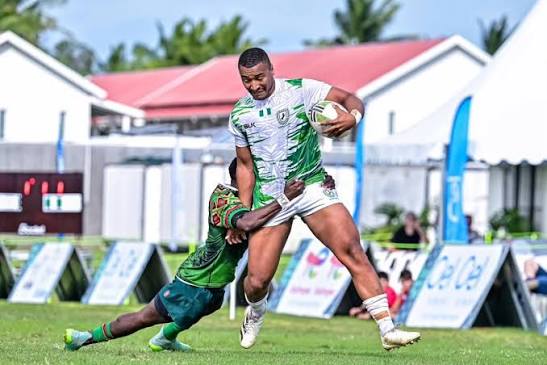
Nigeria’s Stallions opened their Africa Men’s Sevens Series campaign with a convincing 28-5 victory over Ghana’s Black Eagles in Kampala, Uganda.

The Stallions dominated from the opening whistle, combining intensity, pace and sustained pressure to prevent Ghana from settling into the contest.

Nigeria consistently denied the Black Eagles space to build attacking momentum, forcing them onto the defensive as the match progressed.

The Stallions eventually converted their dominance into points to secure a comfortable victory and make a strong start to their campaign.

Nigeria will next face Morocco, who will be seeking to recover from a 19-12 defeat by Zimbabwe in their opening fixture.

The North Africans will aim to revive their campaign, while Nigeria will seek another victory before their final group match against Zimbabwe.

In other matches played on Saturday, Zambia edged Tunisia 10-7, while hosts Uganda recorded a dominant 38-0 victory over Senegal.

With the victory over Ghana, Nigeria have made a positive start and will seek to build momentum against Morocco in their next outing.

2027: You can’t support APC candidates, other parties — Lawal tells Wike to clarify allegiance

0

Zamfara State Governor Dauda Lawal has asked Nyesom Wike, Minister of the Federal Capital Territory (FCT), to clarify his political allegiance amid his involvement with the Rainbow Coalition.

Lawal spoke in an interview with Channels Television’s Inside Sources on the sidelines of the 81st United Nations General Assembly in New York, where he said Wike should make his political position clear.

The governor said Wike had insisted that he could not simultaneously support the All Progressives Congress (APC) and other political parties.


“Our message is very very clear: be on one side, you can’t be on two sides,” he said.

“If you are in APC, please come out and support the APC, not you are supporting APC here and you are supporting some other political parties somewhere else.
“We maintain our stand and the message is very clear. He can speak, he can say whatever he wants to say, but our position has been very clear, APC all the way from head to toe.”

Lawal also said he would discuss Wike’s political position with President Bola Tinubu when the president returns from his working vacation abroad.

He noted the governors were asking Wike to join the APC.

“It’s something I will discuss with the President when he comes back,” he said.

“Let there be a clear line where this guy belongs to. It’s either he is in APC or he is out, simple. So I go with my brothers, the governors.”

Troops arrest terrorist logistics couriers, rescue 14 kidnapped victims in Katsina

0

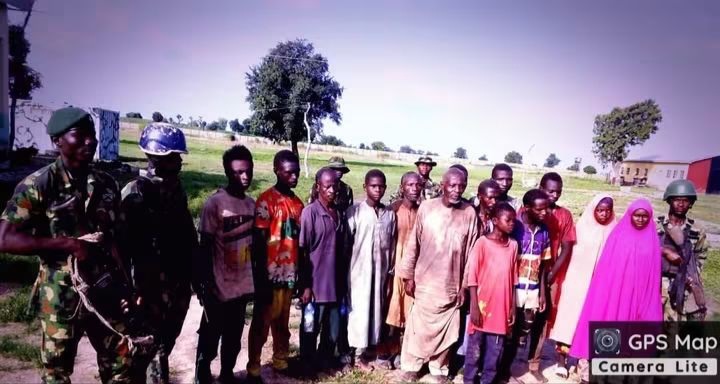
Troops of Joint Task Force North West, Operation Fansan Yamma have arrested three terrorist logistics couriers and rescued 14 kidnapped victims during separate operations in Faskari Local Government Area of Katsina State.

Media Information Officer, Operation Yamma, Lieutenant Colonel Aliyu Danja disclosed this in a statement obtained on Saturday.

Danja said that on Thursday, September 24, troops of Sector 2 intercepted three suspects travelling on a motorcycle in Faskari Local Government Area.
He added that preliminary interrogation revealed that the suspects were conveying the sum of ₦2.7 million, suspected to be ransom money, alongside three mobile phones, for onward transfer to a terrorist kingpin through intermediaries within the area.


“The suspects and the recovered items are in military custody for further investigation,” the JTF spokesman said.

Similarly, on Friday, September 25, troops of Sector 2, acting on credible intelligence about the movement of terrorists in Faskari Local Government Area, reportedly established an ambush position and engaged the terrorists, forcing them to flee in disarray.

“Exploitation of the area subsequently led to the recovery of one AK-47 rifle, 30 rounds of ammunition and one motorcycle,” the statement reads in part.

In a related development on the same day, troops conducting a routine patrol were said to have intercepted and rescued 14 kidnapped victims comprising 12 males and 2 females.

“Preliminary investigation revealed that the victims had earlier been abducted from Anguwan Miko and Tafoki villages in Faskari Local Government Area.

“The victims were reportedly abandoned by the terrorists upon sighting the advancing troops. They were subsequently rescued and handed over to the Faskari Local Government authorities for further necessary action,” the statement further reads.

Danja said the successes underscore the commitment of Operation Fansan Yamma to protecting the lives and property of citizens, rescuing persons held in terrorist captivity and denying terrorists and other criminal elements freedom of action across the Joint Operations Area.

The Theatre Command commended the troops for their vigilance, courage and prompt response, and urges members of the public to continue providing timely and credible information to security agencies on suspicious movements and activities within their communities.

2027: NDC tells Otti to back Obi, not Tinubu

0

The Nigeria Democratic Congress (NDC) Director of New Media and Strategic Communications, Theo Abu Agada, on Saturday said Abia State Governor Alex Otti should be at the forefront of campaigning for the party’s presidential candidate, Peter Obi.

Agada said Otti was the biggest beneficiary of the political support for Obi during the 2023 general election.

Obi and Otti were members of the Labour Party (LP) in 2023. While Obi contested the presidential election and lost, Otti won the Abia State governorship election.

Agada said Otti is supporting President Bola Tinubu by backing his anti-people reforms.

Posting on X, Agada wrote: “If we are being honest, Alex Otti should be at the forefront campaigning for and supporting the 2027 ambition of His Excellency, Mr Peter Obi under the NDC.

“He was the biggest beneficiary of Obi’s wave in 2023. If for nothing else, he owes him.

“By supporting Tinubu’s anti-people reforms, he is endorsing Tinubu for a second term. He is an enemy of the Nigerian people.”

N600bn cash transfer: Shockwaves, outrage over minister’s claim

0

Shock and disbelief trailed a recent claim by the Minister of Humanitarian Affairs and Poverty Reduction, Dr. Bernard Doro, that the Federal Government had in the last three years of President Bola Tinubu’s administration, spent over N600 billion in cash transfers to about 10 million households.

Minister of Humanitarian Affairs and Poverty Reduction, Bernard Doro

The cash transfers, the minister also claimed, reached about 40 million Nigerians as the government tried to cushion the excruciating economic pains of fuel subsidy removal.

In some states, some residents confirmed that they have benefited from the cash transfer. However, a survey around the country could not quite validate the claim made by the minister as many Nigerians across states who have not benefited from the programme expressed surprise at the method by which beneficiaries are chosen.

Niger

No trace of beneficiaries of cash transfer

There is no identifiable beneficiary in Niger State as both ministry officials and party executives claim ignorance of the disbursement.

The cash transfer was said to have been handled by consultants from the Federal Ministry of Humanitarian Affairs without any input from the state Ministry of Humanitarian Affairs, hence the state could not lay its hands on any documents regarding the disbursement.

Although a staff of the Ministry of Humanitarian Affairs and Disaster Management in the state who spoke to our correspondent on condition of anonymity said they were invited sometimes this year for the flag off of the cash disbursement, the story, however, ended there.

He disclosed that the ministry did not know the number of beneficiaries, the criteria used for selecting the beneficiaries and the amount given to each beneficiary.

The Commissioner for Humanitarian Affairs and Disaster Management, Dr. Ibrahim Inga told our correspondent that the Minister of Humanitarian Affairs had agreed to meet with state commissioners following complaints arising from the cash transfer.

At the All Progressive Congress (APC) secretariat, the story is the same as no party official was ready to comment on the matter, all claiming not to be aware of the cash transfer programme.

A member of the state working committee of the party who did not want his name in print said he was hearing about the N600 billion cash transfer for the first time when our correspondent approached him.

Benue

We’ve been getting cash transfer since 2016 – Official

The Benue State Programme Manager for Cash Transfer, Dr. Emmanuel Waghbo, said that Benue has been on the Conditional Cash Transfer Programme since 2016/ 2017.

“At that time, about 58,000 beneficiaries were receiving a steady cash transfer of N5,000 monthly.” He said the contracted payment service providers would come to Makurdi periodically to make the payments, “Sometimes, they come after one, two or three months and pay beneficiaries for the accumulated months.

“They were initially referred to as Conditional Cash Transfer beneficiaries. So, at that time, we had approximately 58,000 beneficiaries on the programme.

“When Tinubu came into office, the nomenclature changed. “The Household Uplifting Programme was considered slow, and the Federal Government wanted to streamline the process so it could reach about 15 million Nigerians. At that time, fewer than 2 million Nigerians had benefited from the programme.

“The government believed the existing processes were slow and introduced a new system called the Rapid Response Register.”

He said the beneficiaries are captured through the National Social Register and the state has no a hand in who is selected or who receives what at the local government level.

So under the scale up, beneficiaries started receiving N25,000 in three tranches which is N75,000 and it was a one off. Once you collect, you are off any form of payment.

Kaduna

No evidence of cash transfer

The Federal Government’s cash-transfer programme in Kaduna operates through a system that was designed to identify eligible poor and vulnerable households, enroll them through government social-protection structures and ultimately pay the money through formal financial channels.

According to a reliable source, the process involves both federal and Kaduna State institutions, but the actual transfer of funds to beneficiaries was designed to take place electronically through banks, wallets and other authorised payment points rather than through political party offices. The source said that at the state level, Kaduna’s social-protection structure relied on the State Cash Transfer Unit (SCTU) to coordinate the Conditional Cash Transfer programme.

The source added that the SCTU used information from the State Social Register for the intervention and worked with relevant ministries, departments, agencies and local governments on implementation, beneficiary information and grievances.

It was further gathered that the state’s Social Protection Policy identified the National Cash Transfer Office at the federal level and the state Social Investment structure as the responsible institutions for the National Cash Transfer Programme.

The first stage of the process is therefore the beneficiary register, rather than the physical distribution of cash.

“Kaduna’s social-register system uses community-based targeting to identify poor and vulnerable households. The state’s records show that information from the social register is subsequently used by the cash-transfer programme. This means that the household must first appear in the programme’s approved beneficiary data before a payment can be made.”

Akwa Ibom

286, 000 receive cash transfers

No fewer than 286,000 people across the 31 Local Government Areas of Akwa Ibom State have received cash transfer disbursed by the Federal Ministry of Humanitarian Affairs, the state government has said.

The Commissioner for Humanitarian Affairs, Mrs. Emem Ibanga said the cash transfer was done through the supervision of her ministry to ensure that vulnerable people received the cash as envisioned in the Renewed Hope Agenda of President Bola Tinubu to reduce poverty among the people.

According to Ibanga, each beneficiary received an instant cash transfer of N75,000.

She explained that the beneficiaries were selected from vulnerable households while others were captured from the national social register.

She said all the beneficiaries were selected from Local Government Areas to ensure that rural households were captured.

“A breakdown of the cash disbursement to households across Local Government Areas is as follows: Ini -1,383, Ikono – 2,513, Nsit Ibom – 2,145, Oruk Anam – 3,456, Abak – 3,152 and Mkpat Enin – 3,348, among others.

“Beneficiaries received the cash transfers with jubilation, appreciating President Bola Tinubu for his benevolence.”

Ibanga said it was another significant milestone in the Federal Government’s social protection drive as 2,145 beneficiaries in Nsit Ibom Local Government Area received Renewed Hope Conditional Cash Transfer debit cards, each preloaded with ₦75,000, bringing the total value of the intervention to ₦160,900,000

“I was represented at the flag-off ceremony by the Permanent Secretary of the Ministry of Humanitarian Affairs, Deaconess Eno Ime Akpan, who reaffirmed the Ministry’s commitment to ensuring that eligible vulnerable households continue to benefit from government social intervention programmes.

One of the beneficiaries, Aniefiok Udofa told our reporter that he got the cash transfer without passing through anyone.

“I’m from Iwukem in Etim Ekpo LGA local of Akwa Ibom state. I received the cash transfer of N75,000 when the team visited Etim Ekpo. I’m now in a chair battling with stroke. I am not a member of any political party but I received the cash from the government. God bless those who brought this initiative.”

Borno

Residents unaware of cash transfer programme Many people in Borno State claim they are unaware of the cash transfer to households which was said to have been carried out by the Federal Government through the Minister of Humanitarian Affairs.

They maintained they were neither contacted by any government official or agency to submit any information regarding cash transfer. Alhaji Ali Saleh, a retired civil servant and resident of Maiduguri, maintained he and his community members were yet to receive any cash transfer from the government as support to households.

“We’re not aware. We have no such record. I’ve also checked from my neighbour and our community leader. We have no such information,” he told Saturday Sun.

For 42-year-old Bala Yusuf, a security guard, the cash transfer to households may be a plan still in the cooler.

“Maybe the government is still planning to extend the gesture to us in Borno otherwise we haven’t seen any of such support,” he declared.

He said he was only aware of support to schools and educational institutions through the school feeding aid of the government.

Some other residents told Saturday Sun that some government officials and politicians once asked them to submit their names and telephone number of family members to designated desk officers early in the year but said they were yet to receive any cash transfer.

“I recall someone once asked us to submit our names; number of wives and children in our ward with bank account details and we did. It has been almost a year now but we didn’t hear anything since,” he said.

Kebbi

Over 98,000 benefit from cash transfer

Authorities in Kebbi State say no fewer than 98, 000 people have benefited from the Federal Government’s cash transfer initiative.

Kebbi State Commissioner for Humanitarian Affairs, Alhaji Muhammad Hamidun Jarkuka made the disclosure in an interview with our correspondent in Maiduguri.

The commissioner explained that numbers were allocated on a local government basis from Abuja and that the ministry only assisted and supervised the disbursement.

Jarkuka disclosed that beneficiaries received different sums of money ranging from N20,000 to N75,000. The disbursement was said to have been carried out with data generated by SUKUK in the 21 Local Government Areas of the state.

Our Correspondent also learnt that the beneficiaries cut across political divides.

Some of the beneficiaries were selected by the agent of the Federal Government from Abuja while the Ministry for Humanitarian Affairs in the state assisted the agents in the disbursement.

Cross River

Over N12bn spent on 161,247 beneficiaries

The Cross River State Commissioner for Humanitarian Affairs, Dr. Helen Isamoh had disclosed that over N12, 093, 525 was disbursed to over 161,247 beneficiaries across the state.

Dr. said the beneficiaries were drawn from across the 18 Local Governments Areas and were largely those already captured in the National Social Register.

The highest number of beneficiaries in the state came from Calabar Municipal, where 16, 302 beneficiaries received over N1billion while Bakassi Local Government Area had the least number of people with 3,087 who received over N231 million.
Dr. Isamoh added that the spread covers the rural poor, urban poor within villages, communities and wards.

“The payments covered three months where each beneficiary received a debit card of N25,000 per month amounting to N75,000.

“Payment Service Providers comprises Forties, Tagpay and TeasyPay. However, some residents have expressed frustration with the process saying many people registered and were not selected for the exercise.

Mercy Anwan, a resident of Calabar South said communities were mobilised, they registered and in some cases had to pay N100, 000 per person, yet many were not captured.

She also called for a full publication of the beneficiaries to ascertain the number of people per unit and ward who were captured across the local government.

Another resident, Bassey Etim also alleged lack of transparency in the selection process, saying most people within his area who received the transfer were members of a political party.

Rivers

Rivers residents demand share of the N600bn

With urban poverty in Diobu, Borokiri and Trans-Amadi waterfronts, and deep rural poverty in Ahoada, Emuoha, Andoni, Ogoni and the Kalabari creeks, many residents of Rivers State say they were yet to receive cash transfers from the Federal Government.

Investigation revealed that under the old safety net programme from 2016 to 2020, Rivers had only 9,313 households paid, one of the lowest figures in the country.

The Ministry has not published a new state-by-state breakdown under the current Renewed Hope Cash Transfer that ran from November, 2023 to February, 2026.

Selection, according to the National Cash Transfer Office, is done only from the National Social Register. The process involves poverty mapping of the poorest Local Government Areas, community-based targeting where community leaders help identify the poorest families, and proxy means testing where officials visit homes to verify living conditions. The list is then mined and validated by the National Social Safety Net Coordinating Office, NASSCO, and NIMC.

A chieftain of the All Progressives Congress in the state, Chief Morris Chuku said the disbursement structure has no link to any political party secretariat.

According to him, disbursement flows from the Ministry to NASSCO, to the National Cash Transfer Office, to the State Cash Transfer Unit in Rivers, to Local Government Desk Officers and Community Facilitators.

He reiterated that Party offices are not in that chain. Some petty traders interviewed at the Creek Road Market, New Market Layout, Mile 1 and Mile 3 Markets all in Port Harcourt, said they have not heard about the FG’s cash transfer.

One of the traders popularly called Mama Ejima, at Creek Road Market, who sells tomatoes and peppers, said: “I’m sure no trader here knows about this money. If anyone knew about it, the news would have spread and many of us would have gone for it. Please, if you know where they are sharing it, tell me. Is the money for politicians or for everyone?” she asked.

Kogi

Only few households benefit from cash transfers Although there is much talk about the Federal Government’s cash transfers in Kogi State to vulnerable citizens especially in the rural areas, only very few people have benefitted from the scheme.

Investigations revealed that the disbursements of these cash transfers were often manipulated and politicised such that the beneficiaries were not evenly spread across the three senatorial districts.

The state government claimed it has its own database of vulnerable citizens who are qualified to receive the cash transfers. However, it is not clear whether those who were in charge of the disbursements followed due process or did not allow external influences like party affiliations, tribes, and other considerations to determine who finally benefited from the transfer.

It was gathered that Kogi State has multiple offices in charge of poverty reduction and cash transfers, but it is not clear which of the agencies is responsible for the disbursement of the Federal Government’s cash transfers.

Sources said the Federal Government’s social interventions in the state have been moving from office to office. At a time it was said to be coordinated by Youth Employment and Social Support Operation (YESSO) which is a joint initiative by the Federal Government of Nigeria and the World Bank designed to reduce poverty and increase employment opportunities for the vulnerable.

According to an official source, Conditional Cash Transfer is also Partnering with the World Bank via the Adolescent Girls Initiative for Learning and Empowerment (AGILE) project, the state provides ₦40,000 to targeted schoolgirls in primary and secondary schools to keep them in classrooms and reduce out-of-school rates.

The source further said HOPE and NG-CARES Programmes is managed via the Kogi State Social Investment Programme Agency (KOSSIPA) where vulnerable households receive financial grants structured as one-off payments of ₦75,000 or distributed in multiple instalments to cushion against economic hardships.

For example, a group of women captured in Kabba Bunu local government in 2024 who were expected to be paid N30,000 for at least one year were only paid N20,000 twice and nothing more was forthcoming.

Mrs. Roseline Dada said even though they have their debit card, they have gone several times to the local government secretariat where they asked them to register without any reasonable explanation or further payments.

In Lokoja, a fish seller who identified herself as Mama Yakubu said she only received N45,000 once and nothing has been given again.

For Mama Seri, she complained bitterly that certain ethnic groups in the state were largely favoured in any empowerment programme, adding that bags of rice brought by the wife of the president, Mrs. Remi Tinubu were only shared among an ethnic group who are in government.

Mrs. Ajuma Ojoheneme said: “Oga, I can tell you with all sincerity that these cash transfers and poverty reduction schemes are one-sided in Kogi. Most of the time, we will go to the township stadium or Government House, but people from a certain ethnic group are given preference over others. You can wait for hours, but they will not give you anything. Sometimes, they will say you must present your membership card of their party, and even if you produce the card, if you don’t belong, you don’t belong,” she added.

Ogun

50, 000 benefit from cash transfers

Although the actual numbers of beneficiaries of the cash transfers in Ogun State cannot be made available, an official hinted that between January 2026 and September, no fewer than 50,000 people have benefitted from the poverty alleviation programme across Ogun State. However, it could not be established whether this figure is linked to the N600 billion cash transfers, which the Ministry of Humanitarian Affairs claims to have disbursed to vulnerable Nigerians.

Mrs. Maria Ayede, an orange seller at Omida Market, in Abeokuta South LGA, said she was one of the beneficiaries when the exercise took place in July, 2026.

Ayede said she collected her ATM Card at the LG and immediately activated the card, using a POS machine operator within the premises of the LG.

Another beneficiary, Tunde Akinde, a cobbler, disclosed that he initially missed the opportunity to get his ATM card at his Ewekoro Local Government Area, but was able to get it during a mop up exercise organised by the agency in the Ogun Central Senatorial District.

On her part, Mrs Jumoke Adeyanju, told Sunday Sun that she was part of beneficiaries who got their ATM Cards recently in Ogun Waterside Local Government Area of the state.

In Ogun State, the cash transfer/grant programme of the Federal Government is administered through the Ministry of Special Duties. The registration of vulnerable people is coordinated by the State Operation Coordinating Unit (SOCU).

The unit collaborates with Community Development Associations (CDAs) across the state to capture the vulnerable members who will benefit from the scheme.

The Abuja national office supervises the states. They clean up the data sent to them by SOCU and select the beneficiaries and send the list to the Cash Transfer Office at the Ogun State Ministry of Special Duties.

“ATM cards preloaded with N75,000, N50,000 and N25,000 respectively, are sent to the state for onward distribution to successful beneficiaries. Some beneficiaries get their cash transfer at a single tranche of N75,000, while others get in two or three tranches, depending on their vulnerability status,” an official said. On whether beneficiaries are selected based on their political affiliations, he said the process of mobilising the people and registering them has nothing to do with politics or political parties, pointing out that the programme is designed for vulnerable Nigerians irrespective of their political leaning.

Abia

No trace of cash transfers beneficiaries

In Abia State, the claim by the Minister of Humanitarian Affairs and Poverty Reduction, Bernard Doro, that the Federal Government has disbursed over N600bn in cash transfer to more than 10 million households, may have been done discreetly.

The exercise was so enveloped in secrecy in Abia that none of the respondents interviewed admitted receiving the transfer.

A business man in Umuahia, Emma Uwah said he never heard about the poverty alleviation programme.

“I have not travelled out of Umuahia since the beginning of this year and I never heard about the exercise not to talk of receiving any money from the Federal Government,” he lamented. Ndubueze Agu, a commercial bus driver, speaking in the same vein, said nobody told him about the exercise and that he did not receive any money from any government agency.

“Maybe, they share the money among their party members because I never received any money and none of my colleagues and friends has ever told me he received such money from the Ministry of Humanitarian Affairs and Poverty Reduction.

“They may have given the money secretly to their party members and cronies, otherwise, otherwise, I would have heard of a colleague or friend who benefitted.”

An Insurance broker, Boniface Ugwu equally said he was not aware of such disbursement and never got any.

“As I speak with you, nothing came my way in terms of getting an alert from the Ministry of Humanitarian Affairs and Poverty Reduction, I didn’t even know about the exercise. So, if such money was disbursed, it could be to their party members,” Ugwu said.

There were strong indications that the money for the state may have been disbursed to members of the All Progressives Congress (APC) in the state, using the party secretariat as the distribution point. However, an official of the party in the state who didn’t want his name in print, denied the disbursement of money to only party members, using the state secretariat.

Bauchi

Beneficiaries receive cash transfer

Beneficiaries of the Federal Government’s cash transfer programme in Bauchi State have received a total of N75,000 each in three payment cycles, at N25,000 per cycle.

Findings by Saturday Sun indicate that beneficiaries are drawn from the National Social Register (NSR) and the Rapid Response Register (RRR), with eligibility determined in line with the criteria of the cash transfer programme. The disbursement is carried out at the local government level through Payment Service Providers (PSPs), while the Bauchi State Cash Transfer Unit under the Ministry of Humanitarian Affairs and Poverty Reduction monitors the process.

Each beneficiary receives N25,000 for a payment cycle. In the latest round, beneficiaries received three cycles, bringing the total amount paid to each beneficiary to N75,000.

The programme covers beneficiaries across LGAs, including those in communities outside the major urban centres. However, details of the total number of beneficiaries in the state and the precise urban-rural distribution are still being verified.

There were also questions over whether the disbursement was being conducted through the All Progressives Congress (APC) office in the state and whether party membership was a condition for receiving the funds. However, information obtained by our correspondent indicates that the payment is handled through the government cash-transfer structure and designated PSPs rather than directly through a political party office.

Further clarification is being sought from the Bauchi State Cash Transfer Unit on the number of beneficiaries, their geographical distribution and whether any payment exercise has taken place at an APC office.

Imo

278,727 receive cash transfers

In Imo 278,727 households across the 27 LGAs of the state have benefited from the Federal Government’s cash transfers.

The total amount disbursed under the HOPE-CT programme is N6.635billion as each household got N75,000 in three tranches of N25,000.

The Ministry of Humanitarian Affairs in the State led Chief Kenneth Okafor denies the money is distributed according to political affiliation. The ministry says the programme is entirely free and beneficiaries should report extortion via Grievance Redress channels.

He added that households are drawn from the National Social Register managed by NASSCO/NASSCO state office. The register is built with World Bank support using poverty indicators. Only beneficiaries with validated NIN and BVN are paid.

“The funds go directly to verified beneficiaries drawn from the National Social Register and linked to their National Identification Numbers. Payments are made directly into verified accounts linked to beneficiaries’ National Identification Numbers (NIN) and Bank Verification Numbers BVN,” the state programme manager, Odoemenam Onyemaechi explained. In addition, direct digital transfers are made from the CBN to bank accounts or mobile wallets via the National Cash Transfer Office (NCTO). One of the beneficiaries, Mrs. Esther Onyebuchi, said she used the money to engage labourers in her farm and expressed hopes of improved harvest in the coming months.

Oyo

150, 000 households receive cash transfer

The Oyo State government said over 150,000 households in the state have benefited from the Federal Government’s cash transfer programme as at August 2025, with payments linked to NIN and BVN, officials have said.

The National Cash Transfer Office (NCTO) said recently that beneficiary payments are electronic through verified NIN and BVN records, and the body does not pay cash by hand. It has Payment Service Providers (PSPs), which are like commercial banks, microfinance banks, and mobile money operators.

A source said: “For the current Renewed Hope programme, NCTO distributed NCTO ATM/Debit cards linked to verified NIN and BVN to facilitate digital direct transfers.

“The Federal Government introduced a digital payment system, which entails creation of bank accounts for beneficiaries with their own personal NUBAN account.

“So in Oyo State, if you are selected, you will be given a bank account and ATM card from one of their partner banks. Then, the N25,000 per month is credited directly to that account. The beneficiaries would withdraw with their card at any bank ATM.

“When NCTO says you will get a NUBAN account, it means they will open a regular 10-digit bank account for you in your name, linked to your NIN and BVN, where your N25,000 will be paid. It is not a special type of account. It is just your normal bank account number.”
Abused but ignored: Kaduna’s untold story of sexual violence against boys

0

* How fear, poor legal awareness, families, clerics frustrate justice for abused boys ν Women, child’s rights advocates, lawyers want justice for victims

For years, sexual violence against children in Kaduna has largely been discussed through the experiences of girls, while boys usually play behind-the-scenes roles in the same societal issue that affects their female counterparts.

In Kaduna, rights officials, lawyers, women’s rights advocates and child protection practitioners say cases involving the sexual abuse of boys are being underreported.

Another rights awareness session

At the same time, many more cases remain hidden because of stigma, fear, poor legal awareness and interventions by families, religious leaders and community figures.

For one mother (name, address withheld), the discovery began with a seemingly ordinary request.

She had asked her older daughter to bathe her younger brother when the girl noticed that faeces were leaking from the child’s anus.

She said: “I then told her to clean him up properly. I became worried. So at night, while the child was sleeping, I removed his trousers to check his anus because I once heard of a case of sexual assault against boys on the radio.”

Gov Uba Sani

The mother said she was shocked by what she saw and alerted the child’s father.

She said the boy initially denied being abused but later told his father that a well-known man in the neighbourhood had allegedly sexually assaulted him and threatened to kill him if he disclosed the abuse.

According to her, the boy said the man would pick him and other boys up in his car and take them to the premises of the Kaduna Electricity Distribution Company in the area. The family subsequently consulted a lawyer and was advised to take the boy to SARC for medical examination.

“We consulted a barrister in our neighbourhood who advised that the boy should be taken to SARC for medical examination, the outcome of which could be used as evidence if there is an abuse.”

The mother said the examination at Yusuf Dantsoho General Hospital indicated that the child had been abused over a prolonged period.

She said the matter was subsequently reported to the police and that the suspect was detained.

“Honestly, I need justice for my children. These children are ill and need medical care and social support. We don’t have resources to take care of them.”

Another mother (name, address withheld), whose identity is being withheld to protect her children, alleged that the same suspect had been giving her two male children soft drinks before sexually abusing them.

“He usually threatened the children that if they tell anyone about his act, he would slaughter them. We have been to the police, and there was a medical investigation that confirmed that the children are being abused.

“We understand that the suspect has been freed from police custody. We, however, are seeking justice and support for our children,” she said.

The Centre Manager of Salama Sexual Assault Referral Centre (SARC), Tudun Wada, Kaduna, Barrister Sidikat Bello Adegboye, confirmed that the facility received one of the boys in May 2026.

“After medical examination, it was ascertained that there had been penetration of the boy,” Adegboye said. She added that three other boys from the same family were brought for examination in August.

“Subsequently, in August, three other boys from the same family were also brought forward for examination for sexual assault, but only one of them was confirmed to have been sexually assaulted.”

According to Adegboye, the Ministry of Women Affairs was handling the first case, which had already been mentioned at the Magistrate’s Court for cognisance. But, the man accused by the two mothers denied the allegations.

“My God! These people are telling lies against me. It is a great lie,” he said.

According to him, his contact with one of the boys was limited to helping at a worship centre and occasionally giving the boy small amounts of money.

“I am used to buying water for the mosque for washing before prayers whenever the centre runs out of water and if I’m around and have money.

“Sometimes, I ask the boy to go and bring water for the mosque. That is all I know. That is the only thing that connects me with the boy.

“Whenever the boy sees me, I sometimes give him N50 to buy ‘askam’. I have never given him a large amount of money.

“Sometimes, I’d give him my car key to clean it if he insisted on helping out. They just come and create these allegations,” he said.

The International Federation of Women Lawyers (FIDA), Kaduna Branch, is also receiving complaints involving sexual violence against boys, including the one denied by an accused adult above, according to its chairperson, Barrister Olufunke Bamikole.

Bamikole recalled the same case of a boy allegedly abused over an extended period by a neighbour.

“There is a case before us now where I had to invite the mother of the boy and the survivor to the office. When they came, we interviewed them and asked questions to substantiate their claim.

“Both of them, especially the mother, narrated that the abuse had been going on for over one year and that the alleged perpetrator was their neighbour.”

According to the mother, Bamikole said, the alleged perpetrator would take the boy in his car and return him home under the guise of helping him.

“She said he would carry the boy in his car and bring him home as if he had found the boy on the road and was simply giving him a lift. The family would even thank him, not knowing that he was allegedly ruining the life of the boy.”

Bamikole said the boy was taken to a Sexual Assault Referral Centre (SARC) for examination and the matter was reported to the police.

She said FIDA became concerned after learning that the suspect had been released.

“That made me say, okay, there is still something we can do, because we cannot stay in a society where children’s lives are jeopardised. These are children whose future we do not know; we do not know what they will become tomorrow.”

She said information received by FIDA suggested that several boys could have been affected.

“Initially, we were hearing that it was only about six or seven boys the suspect was doing it to. But we later heard that there were about 40, including his own son.

“And the son, because he had allegedly been exposed to the behaviour, was also doing it to other small boys. We cannot fold our arms,” she said.

Bamikole also recalled the severity of the injuries allegedly observed in one of the children.

“When he was taken to the hospital, it was reported that worms were coming out of his anus, meaning that something was wrong inside that we could not even see,” she said.

But, the Kaduna State Police Command, however, disputed the suggestion that the suspect was simply released from police custody.

The Officer in Charge of the Gender Section, Dominic David Aku, said the suspect had been remanded in custody for several months before the Ministry of Justice issued legal advice on the case.

“Sometimes, when people see a suspect outside, they assume that the police released him. That is not necessarily the case.

“The person we remanded was taken into prison custody. He spent approximately three or four months there.”

Aku explained that once police investigations are concluded, the case diary is duplicated and forwarded to the Ministry of Justice for legal advice.

“That is the standard procedure for offences against the state.

“The Ministry of Justice reviews the facts and provides legal advice. If the ministry establishes that there is a case to answer, it can request the original case diary and take over the prosecution because the police do not prosecute such cases at that stage.”

According to him, the legal advice received in this particular case concluded that there was insufficient evidence to prosecute the suspect.

“So the Ministry of Justice advises whether the suspect has a case to answer or should be discharged. In this case, the advice we received from the Ministry stated that there was insufficient evidence to prosecute him and that he should be discharged.
“It was not the police who released him,” he said.

To the National Human Rights Commission (NHRC), Kaduna State Office, some of the complaints it received involve sexual violence and other violations against children including boys.

Dr Tengu Gwar, the commission’s coordinator in the state, said the problem was particularly difficult to measure because many victims and their families never report what happened.

“In the city centre, we receive some reports, but you can imagine what is happening in places where literacy levels are very low, particularly legal literacy. People do not know their rights or the available channels for seeking redress.

“As a result, some of these issues are buried. They are underreported. The culture of silence is very strong, particularly where religion and culture play a significant role,” he stated.

To Gwar, one of the disturbing patterns noticed by the commission was that alleged perpetrators are frequently people known to the victims and their families.

“At the commission here, we receive some of these complaints from members of the public, particularly issues around violence against children and several other matters relating to child rights violations.

“We are also worried about the upsurge we are seeing. One of the things we have noticed is that some of the perpetrators are people who are well known within the family or neighbourhood circle – individuals known to the family, including people who are family members of the victims,” he stressed.

He recalled a recent case involving two boys from the same family.

“Another case we heard of recently involved siblings, children of the same father but different mothers. I think the eldest was about 15 years old, while the victim was about nine. They were from the same family, and this happened between them,” he said.

Gwar said the development was particularly troubling because protecting children from abuse is central to the commission’s mandate.

“We are very bothered about this trend that we are seeing repeatedly. It means something, somewhere, is wrong, and for us, child rights protection is fundamental to our mandate.

“It is something we have been working on over the years to try to address, including within the Commission itself.”

He said the NHRC sometimes mediates or facilitates reconciliation in appropriate matters, while other cases are referred to the police for investigation and prosecution.

The greatest obstacle, he said, is often what happens after a family discovers that one of its own members or someone close to it is allegedly involved.

“As I said, many of these incidents happen within the family circle. People tend to downplay them because their family members are involved. Because of stigma and discrimination, they may decide not to report the matter at all.

“Even when matters are reported, somewhere along the line, family members, religious leaders or community leaders sometimes intervene to prevent the victim from getting justice.”

He said some families are told to keep the matter within the family.

“They may say, ‘This is our own; we don’t want this matter to escalate,’ or argue that if the child grows up, he or she may have difficulty getting married,” he said.

Gwar recalled a case from Zaria in which a mother, who wanted to pursue justice after her child was sexually violated, faced stigma and ultimately lost the support of her husband.

“All of a sudden, the mother faced a lot of stigma and discrimination. Even the husband, who was supposed to support her in seeking justice, did not support her. They eventually sent the mother away because she wanted to pursue the matter.

“She left, and unfortunately, the matter got worse because she wanted to take action.”

When contacted, a senior state counsel, gender-based violence specialist and child protection specialist at the Kaduna State Ministry of Justice, Sarah Gajere Peter, said cases involving the molestation, abuse and sexual violence of boys are being reported.

She said the Department of Citizens’ Rights in the Ministry of Justice handles human rights complaints, including cases involving children.

“The department is open to the public. Anyone can bring a complaint, whether it has to do with tenancy, land, rent, communal clashes, religious issues, adoption, child marriage or any other matter.

“Even cases of rape and other forms of sexual violence can be reported through the Ministry of Justice.”

Depending on the circumstances, she said, cases may be referred to the police, Legal Aid Council, International Federation of Women Lawyers (FIDA) or the Multi-Door Courthouse.

“Where necessary, the police conduct the investigation and forward the case to us for legal advice before a charge is filed in court,” she explained.

Peter confirmed that violence against boys was among the cases being brought before the ministry.

“Cases involving violence against boys are indeed being reported to the ministry.

“As a stakeholder in this area, people sometimes call me directly to report such cases, and I refer them to the appropriate authorities or take whatever action is within my mandate as a prosecutor.

“We do our best to ensure that justice is served, perpetrators are brought to book and that anyone found wanting faces the appropriate legal process.”

Peter said she is currently prosecuting cases involving violations against young boys and had concluded one such case in 2026.

She recalled a case involving a two-year-old boy who was sexually assaulted through the anus by an adult.

“The perpetrator was about 30 years old. The man also taught a 12-year-old boy to do the same thing.

“The 12-year-old boy was the one who took the younger child to an unfinished building. The 30-year-old man forced the 12-year-old to sexually assault the child, after which the adult also assaulted the child.”

Peter said the 12-year-old was subsequently treated as a victim rather than a perpetrator because investigations indicated that he had himself been sexually abused.

“When they returned the child, he was almost unconscious. That was how they were able to arrest both the 12-year-old boy and the 30-year-old man.

“However, we had to treat the 12-year-old as a victim because, from the investigation, he did not have the requisite intent.

“He himself had been sexually violated, and the perpetrator had apparently subjected him to similar abuse before making him participate in the assault of the younger child.”

She said the 12-year-old subsequently testified as a witness, alongside the younger child’s parents.

“At a point, our evidence was not sufficiently strong, so we had to review the case. Eventually, the defendant was convicted and sentenced to five years’ imprisonment. There was also an order for compensation of N500,000 to the family of the survivor,” she said.

Another case involving three boys, all about six years old, is presently before the court, Peter said.

She said she prepared the boys to testify but was unable to produce them in court on the scheduled day because their parents could not be reached.

“I had to inform the court about the situation, and unfortunately, we had to adjourn the matter.

“After the case was over, I called again. That was when the parents switched on their phones and told me that the community had asked them to forgive and forget the matter and discontinue the case. That can frustrate the prosecution,” she said.

The experience illustrated one of the central problems identified by rights practitioners; a case can reach the formal justice system and still be derailed by pressure outside the courtroom.

Meanwhile, laws exist, but enforcement remains crucial

Kaduna State has several legal instruments dealing with violence against children and sexual offences.

These include the Kaduna State Violence Against Persons (Prohibition) Law 2018, which covers sexual and other forms of violence and provides for protection and remedies for victims.

The state also has the Child Welfare and Protection Law 2018, which provides for the welfare and protection of children and establishes a framework for child justice and the care and supervision of children.

Another important instrument is the Kaduna State Penal Code Law 2017, as amended by the Penal Code (Amendment) Law 2020.

The 2020 amendment substituted Section 258 and expressly addressed sexual intercourse with a male child below 14 years. The law provides severe penalties upon conviction and also provides for the listing of convicted child-sex offenders in the Sex Offenders Register.

The amendment is particularly significant in cases involving boys because it expressly recognises sexual intercourse with a male child below 14 as an offence under Section 258(2).

The legal framework therefore exists. But the accounts from the NHRC, Ministry of Justice, FIDA, SARC and the police point to a different challenge – institutional gaps, getting victims to disclose abuse, protecting them and their families from pressure, gathering admissible evidence and sustaining cases through the justice process.

EPL: Rodri speaks on Man City’s 115 charges verdict

0

Barcelona midfielder, Rodri, has said Manchester City’s titles and achievements cannot be taken away.

Rodri made the comment while reacting to reports that City had been found guilty of all but one of the 115 charges brought against the club by an independent panel.

The reported verdict could lead to sanctions, including points deductions, financial penalties and possible relegation, depending on the outcome of the proceedings.
But Rodri, whose seven-year spell with City ended this summer, has insisted that he believes in the Premier League club.

Rodri said: “When you live daily in that club and all the people that worked hard all these years to have all the success we have had, not only Pep [Guardiola] and the players, but from the owners to the guys that work daily, what we did they cannot take it out of us.

“It is not something that is paid by money, it is paid with effort and partnership, being shoulder to shoulder every day.

“We had a lot of success over the years and I can tell you that everything was deserved and I am glad I could live one of the best eras in English football.”

Presidency, Obi clash over 2027 campaign focus

0

•NDC candidate urges editors to press politicians on records, spending, basic services •President’s aide defends Tinubu’s reforms, seeks four more years

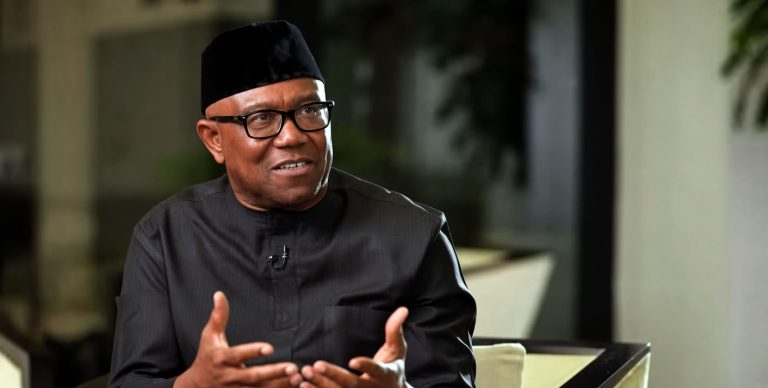
The Presidency and the presidential candidate of the Nigerian Democratic Congress (NDC), Mr. Peter Obi yesterday agreed that the 2027 campaigns should focus on governance and accountability but differed over the emphasis of the political debate.

While Obi demanded tougher scrutiny of leaders, Senior Special Assistant to the President on Media and Special Duties, Chief Tunde Rahman, defended President Bola Tinubu’s reforms and seeking another term for him.

Obi urged Nigerian editors to reject name-calling, propaganda and personality attacks, ask politicians hard questions and demand explanations for poor public services and expenditure, while Rahman argued that the government must also be given space to present its record and make the case for Tinubu’s re-election.

The two spoke at the ongoing 22nd All Nigeria Editors Conference (ANEC) of the Nigerian Guild of Editors (NGE) in Enugu, where they also stressed the importance of an independent media and an electoral process in which votes would count.

Obi said the media must hold politicians accountable and call them out whenever they abandon substantive questions or cross the line in their public engagements.

“If anybody steps out of bounds, we want you to name it,” the former Anambra State governor told the editors.

He said politicians seeking power should be compelled to explain how they intend to tackle the problems confronting Nigerians rather than divert public attention with insults and personality attacks.

“Come and explain because we are not voting for your wife. We are not voting for your children. We are not voting for your uncle or people representing you. We are voting for you,” he said.

He added that he was prepared to personally answer questions about allegations concerning his own past rather than send others to speak for him.

“If there’s anything about me, please feel free. Call me and say, ‘Peter, people said you were a thief, or you stole when you were in secondary school, or you did not do this.’ I will explain it to you, and if it’s true, I will apologise,” he said.

“Our discussion, our campaign, everything we do is strictly based on issues that will bring good governance, harmony, unity, security and prosperity for everyone,” he said.

Rahman, who spoke for the Presidency, agreed on the need for fair media scrutiny but insisted that the government must also be given the opportunity to put its record before Nigerians.

“If you allow the opposition to speak, as you have done with the NDC presidential candidate, Mr Peter Obi, the government too must speak,” he said.

Rahman said the media occupied a critical position in safeguarding democracy, declaring that with the military back in the barracks, the ballot and the newsroom had become crucial to sustaining democratic rule.

“Democracy lives in three places: the ballot, the barracks and the newsroom. The soldiers have returned to the barracks. What is left is the ballot and the newsroom. If either fails, democracy fails,” he said.

According to him, the power of the ballot lies in making every voter equal on election day irrespective of social or economic status.

“The ballot is the only thing that makes a market woman equal to a billionaire. For four hours on election day, they have the same power,” Rahman said.

He said political actors and government had a responsibility to protect that power by ensuring that votes count and electoral institutions function effectively.

But he maintained that elections required citizens to be properly informed.

“That is where editors come in. You are not just reporting politics; you are keeping democracy alive.

“When you verify a fact, you keep democracy alive. When you give opposition and government equal space to be interrogated, you keep democracy alive,” he said.

Rahman also warned editors about the growing challenge posed by artificial intelligence, fake news and deepfakes.

“Anyone can sit on WhatsApp and announce a fake election result. Only you can debunk it with credibility,” he said.

He criticised politicians who, according to him, prepared for elections largely on social media instead of taking their campaigns to the people and building the political structures required for a national contest.

Obi also demanded an electoral process in which the votes of Nigerians would count.

“We should ensure that we have free, fair and credible elections,” he said.
Rahman said the media occupied a critical position in safeguarding democracy, declaring that with the military back in the barracks, the ballot and the newsroom had become crucial to sustaining democratic rule.

“Democracy lives in three places: the ballot, the barracks and the newsroom. The soldiers have returned to the barracks. What is left is the ballot and the newsroom. If either fails, democracy fails,” he said.

According to him, the power of the ballot lies in making every voter equal on election day irrespective of social or economic status.

“The ballot is the only thing that makes a market woman equal to a billionaire. For four hours on election day, they have the same power,” Rahman said.

He said political actors and government had a responsibility to protect that power by ensuring that votes count and electoral institutions function effectively.

But he maintained that elections required citizens to be properly informed.

“That is where editors come in. You are not just reporting politics; you are keeping democracy alive.

“When you verify a fact, you keep democracy alive. When you give opposition and government equal space to be interrogated, you keep democracy alive.

“Let us punish lies with facts. Let us punish propaganda with professionalism. Let us not let clicks kill credibility,” he said.

Rahman added that the media should not become an appendage of any political party.

“The media should not be pro-APC or pro-LP or pro-PDP. It should be pro-Nigeria, pro-ballot, pro-people.

“If the ballot is free and the media is fair, democracy will not just survive in Nigeria, it will thrive.”

Obi, on his part, challenged editors to interrogate Nigeria’s performance against developments in other countries and ask why basic services and institutions that function elsewhere continue to pose major problems in the country.

“It is important that we also follow what other countries are doing. Ask questions about it,” he said.

Responding to questions from editors, Obi turned to healthcare and public expenditure to illustrate the kind of scrutiny he said political leaders and their promises should face.

He argued that public expenditure should not be judged merely by the amount of money announced as spent but by what the same resources could actually deliver for Nigerians.

Using healthcare facilities as an example, Obi asked the editors to consider what it would cost to build and equip a functional health centre and then relate that to the hundreds or thousands of facilities needed to expand access to healthcare.

His argument was that every major government expenditure represented a choice and should therefore be weighed against alternative uses of the same resources in healthcare, education and other essential services.

He also turned to education, using humour to highlight what he described as the contradiction of Nigerians pursuing advanced degrees in institutions still struggling with basic infrastructure such as electricity.

Obi spoke of students studying for higher degrees but having to resort to prayer when basic services failed, arguing that prayer should not become a substitute for functioning institutions and responsible governance.

Obi maintained that journalists should constantly ask why services taken for granted elsewhere remained difficult to provide in Nigeria and demand answers from those seeking or exercising political power.

He said the political conversation ahead of 2027 should therefore move away from personalities and insults to governance, security, education, healthcare, public expenditure and the living conditions of Nigerians.

The former Anambra State governor said the choices being made today would ultimately determine the country inherited by younger Nigerians, reinforcing his call on editors to scrutinise political promises, interrogate public spending and insist that those seeking power remain focused on governance.

Rahman, however, said the Tinubu administration had already taken difficult decisions to stabilise the economy and that the gains of the reforms were beginning to emerge.

“The President has done the hard part,” he said.

He cited the performance of the naira, economic growth, foreign reserves and inflation figures as evidence of progress, arguing that macroeconomic stability was necessary before improvements could be felt more broadly by citizens.

“You will say these are macroeconomics. But they matter. Without macroeconomic stability, you cannot even think of any impactful micro. Without a stable foundation, you cannot build the house,” he said.

Rahman said the administration was now moving into what he described as the “micro” phase, where the effects of the reforms should increasingly reach businesses and households.

He cited the Central Bank of Nigeria’s recent reduction in its benchmark interest rate as one indication of the direction of policy.