2027: ADC files 17-ground appeal over Atiku’s candidacy
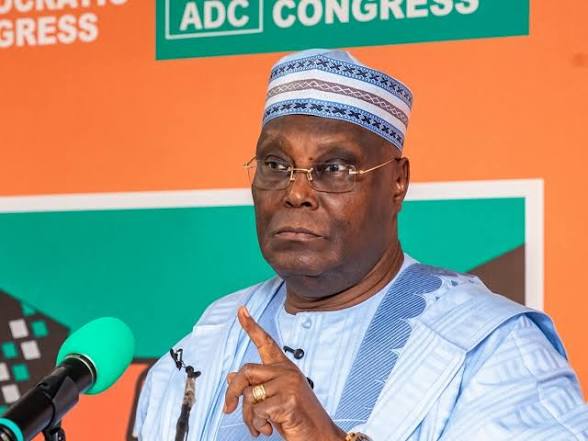
The African Democratic Congress (ADC) has filed a 17-ground appeal against the Federal High Court judgment on its leadership dispute, asking the Court of Appeal to restrain the Independent National Electoral Commission (INEC) from altering its leadership records and the nomination particulars of its presidential and governorship candidates pending determination of the appeal.
The party is challenging the November 5, 2026 judgment of Justice Peter Lifu, describing it as fundamentally flawed and arguing that the trial court lacked jurisdiction to entertain the suit.
In a statement on Tuesday by the Director of Strategic Communication of the ADC Campaign Council, Phrank Shaibu, the party said it was also challenging an earlier ruling granting Bala Gombe leave to amend his originating summons while its objection to the court’s jurisdiction remained unresolved. The ADC argued that allowing INEC to implement the judgment before the appeal is determined could undermine the legal challenge and create uncertainty for its candidates ahead of the 2027 general elections.
It urged the appellate court to preserve its existing leadership structure and candidate records pending the resolution of the dispute.
Shaibu said the 17 grounds of appeal challenged the jurisdiction of the Federal High Court, Gombe’s standing to institute the suit, the assessment of disputed evidence and the orders made against the party.
“The 17 grounds challenge the foundation, findings and orders of Justice Lifu’s judgment.
“The ADC has asked the Court of Appeal to examine whether the trial court had jurisdiction, whether the claimant had standing, whether disputed evidence was properly assessed, and whether the sweeping orders made against the party can stand in law,” he said.
The party is also appealing the July 24, 2026 ruling in a separate case, arguing that the trial court allowed Gombe to amend his originating summons while deferring its decision on the ADC’s preliminary objection challenging jurisdiction.
According to the statement, the party contends that the amendment altered the description of parties and the capacity in which a defendant was sued without prior leave of court.
The appellant’s brief challenging the ruling was prepared by Chief J.S. Okutepa (SAN), who leads the party’s legal team in the appeal.
The ADC is asking the Court of Appeal to set aside the amendment order and determine the outstanding objection to the trial court’s jurisdiction.
It further argued that Justice Lifu proceeded to deliver judgment on a court process whose validity was already being challenged before the appellate court.
The party expressed concern that INEC could implement the judgment before the appeal is decided, potentially creating a situation that could be difficult to reverse should the appellate court rule in its favour.
“INEC must not make changes that could preempt the court’s decision or put the party’s candidates in jeopardy while our applications are pending.
“We are asking the court to protect the subject of the appeal so that its eventual decision has practical effect,” Shaibu said.
The ADC said it made the legal challenge public to clarify the issues before the appellate court and reassure its members and supporters that it would pursue the dispute through lawful judicial processes.
The dispute centres on the party’s leadership and the validity of the processes through which its leadership records and related affairs are being contested.
Justice Lifu’s November 5 judgment in the suit filed by Gombe has thrown the party’s leadership structure and preparations for the 2027 general elections into fresh legal uncertainty.
The ADC maintained that earlier court decisions recognising its leadership transition remained valid and had not been set aside, insisting that no administrative changes should be made on the basis of a contested judgment while its appeals were pending.
The party’s appeals and applications are before the Court of Appeal for determination.
Diplomatic row looms as South Africa summons Fani-Kayode
Protests Nigerian envoy’s social media remarks, invokes Vienna Convention
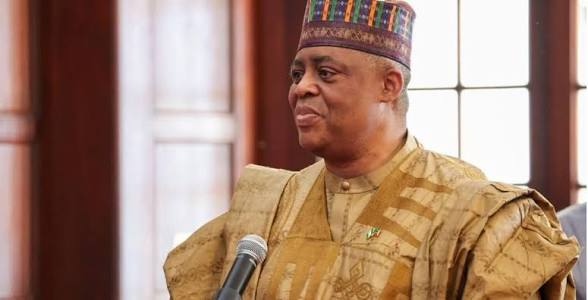
The diplomatic row involving Nigeria’s High Commissioner to South Africa, Femi Fani-Kayode, and the South African authorities has deepened, with Pretoria summoning the Nigerian envoy over his allegations that his presentation of letters of credence to President Cyril Ramaphosa was deliberately excluded from a live broadcast.
South Africa also expressed concern over Fani-Kayode’s subsequent remarks on social media, invoking the 1961 Vienna Convention on Diplomatic Relations and insisting that official communication with the host government must be conducted through established diplomatic channels.
Director-General of South Africa’s Department of International Relations and Cooperation (DIRCO), Zane Dangor, conveyed the government’s position during a meeting with Fani-Kayode yesterday, following the controversy that erupted after the Nigerian envoy presented his credentials alongside 14 other foreign diplomats last Friday.
In a statement made available to Daily Sun, DIRCO said Dangor expressed South Africa’s concern over developments following the ceremony and the Nigerian diplomat’s public comments, stressing the need to preserve the longstanding relationship between the two countries.
“The Director-General reaffirmed the importance of preserving the longstanding and historic bilateral relationship between South Africa and Nigeria, which is founded on mutual respect, friendship and cooperation,” the statement said.
The department disclosed that Dangor specifically drew Fani-Kayode’s attention to Article er of the Vienna Convention on Diplomatic Relations, which governs the conduct of diplomats in their host countries.
“Mr Dangor further recalled the provisions of Article 41 of the Vienna Convention on Diplomatic Relations (1961), which require diplomatic agents to conduct official business with the receiving State through the Ministry of Foreign Affairs.
“In this regard, it was emphasised that all official communication should be conducted through established diplomatic channels, including DIRCO,” the South African government stated.
The latest development followed a series of exchanges between Fani-Kayode, the South African Presidency and the South African Broadcasting Corporation (SABC) over the handling of the November 13 ceremony at the Sefako Makgatho Presidential Guest House in Pretoria.
Fani-Kayode, who presented his credentials alongside 14 other foreign envoys, alleged that his introduction and speech were deliberately excluded from the Presidency’s livestream, although the presentations of other diplomats were broadcast.
He claimed that the transmission was interrupted before his address and resumed after he had concluded his presentation to Ramaphosa.
The Nigerian envoy said he subsequently raised the matter with the South African President, who, according to him, intervened and directed officials to address the complaint.
However, Ramaphosa’s spokesperson, Vincent Magwenya, disputed aspects of Fani-Kayode’s account, explaining that the President had directed him to Sophie Mokoena, the SABC’s acting political and foreign editor, to resolve the broadcasting complaint. Magwenya maintained that the President did not interfere with the broadcaster’s editorial operations.
The controversy took another turn when the Nigerian High Commission rejected Magwenya’s explanation and criticised his handling of the matter, widening what began as a disagreement over television coverage into a public exchange between the diplomatic mission and the South African Presidency.
The SABC subsequently defended its coverage, insisting that it operated as an independent public service broadcaster and that its editorial decisions were separate from the South African Presidency’s livestream arrangements.
In a statement issued on Sunday, the broadcaster said it covered the ceremony through its SABC News LIVE channel on SABC+ and also showed Fani-Kayode’s arrival on its television platform.
It disclosed that footage of the Nigerian envoy interacting with Ramaphosa had been published on its official social media account.
The broadcaster also expressed regret that Fani-Kayode declined an interview invitation following the ceremony, saying it remained willing to engage with him and the Nigerian High Commission.
However, the SABC’s explanation did not directly resolve the envoy’s complaint about the omission of his speech from the Presidency’s livestream.
The South African Presidency later released a recording containing Fani-Kayode’s address, although the development did not immediately end the disagreement.
Reports of the original broadcast indicated that the transmission appeared to develop a technical problem during the presentation by the French ambassador, Antoine Michon, who spoke immediately before Fani-Kayode. The available reports did not establish that the interruption was deliberate.
The diplomatic disagreement comes against the background of longstanding relations between Nigeria and South Africa, two major African economies whose ties have periodically been strained by attacks on foreign nationals, immigration-related tensions and disagreements over the treatment of Nigerian citizens.
Concerns over the safety of Nigerians in South Africa have remained a recurring issue in bilateral relations, with Nigerian authorities and lawmakers previously raising objections to attacks and harassment involving their citizens.
The latest dispute has therefore placed renewed attention on the conduct of diplomatic engagement between Abuja and Pretoria, particularly the procedures governing communication between foreign envoys and their host governments.
Despite the controversy, DIRCO maintained that South Africa remained committed to strengthening its strategic partnership with Nigeria and sustaining constructive diplomatic engagement in the spirit of African solidarity and mutual respect.
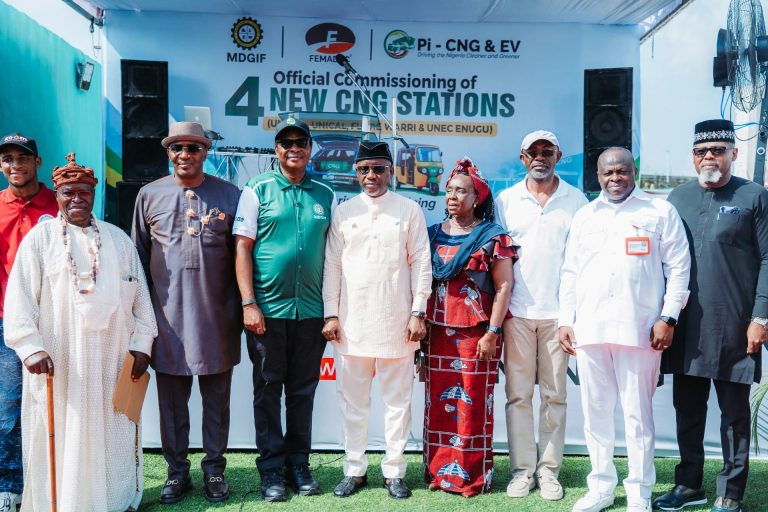
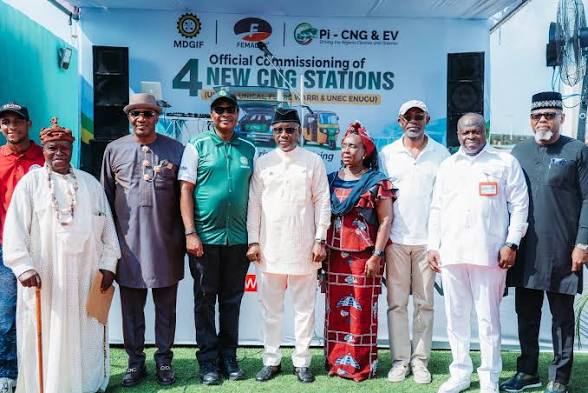
The Federal Government has commissioned Compressed Natural Gas stations in four universities to ease transportation burden of students, staff and other members of the host communities.
The instutions include University of Uyo, Akwa Ibom state, University of Calabar, Cross River state , University of Nigeria, Enugu campus and Federal University of Petroleum Resources, Efurun in Delta state respectively.
Speaking during the commissioning ceremony at the University of Uyo , Minister of State, Petroleum Resources (Gas), Hon Ekperikpe Ekpo, said the initiative was a source of special pride to him as a project in his home state. Ekpo who commissioned other 3 CNG stations virtually , said the stations will give students, staff and surrounding communities access to cleaner and more economical mobility, while offering the institutions opportunity to build research, technical skills and local expertise in CNG technologies. “The benefits of adopting CNG for mobility are practical and immediate. CNG is generally cheaper than petrol and diesel, so vehicle owners, commercial drivers and transport operators spend less on fuel “For students, young people who earn a living from commercial transport, and vulnerable members of society who depend on public transport, these savings mean lower transport costs and more money kept in their pockets for education, enterprise, food and other household needs.” He commended president Bola Tinubu, whose Renewed Hope Agenda has placed natural gas at the heart of Nigeria’s economic renewal. “Under his watch, gas is no longer a resource we merely flare or export; it is a resource we are using to power our vehicles, create jobs and put money back in the pockets of our people,” he said. He said the President also approved the Special Palliative Relief on University Transportation Programme, in line with the 20 Universities CNG Ecosystem Initiative, to cushion the effect of petroleum subsidy reform on students and staff. He also commended the governors of Akwa Ibom, Cross River, Enugu and Delta states for deepening the penetration of natural gas in their states, and acknowledged the Minister of Education for supporting initiatives that connect educational institutions with national energy priorities. He appreciated the vice-chancellors and councils of the four universities, as well as host states and communities, for providing the enabling environment for the projects The Executive Director of Midstream and Downstream Gas Infrastructure Fund, Oluwole Adama, said the four newly commissioned Compressed Natural Gas stations in Uyo, Calabar, Enugu and Warri can fill about 540 vehicles every day. He said the figures are not just technical, but mean cheaper rides for students, lower costs for transport operators and a living classroom for young engineers. “For students, affordable and dependable transport means more than a cheaper ride. It can mean getting to lectures on time, spending less on daily travel and having more time and energy for learning,” he said. He added that more facilities will be executed, stressing that the facilities can also become living classrooms, offering young Nigerians practical exposure to gas operations, engineering, safety and maintenance. ”About 50 more projects will be nearing commissioning by the end of this year. I urge transport operators and businesses to use the facilities judiciously. Our young Nigerians should embrace this opportunities in technical services, safety and maintenance”, he stated. On his part, the Chief Executive Officer of FEMADEC Energy Limited; Fola Akinnola, said the four newly commissioned Compressed Natural Gas daughter stations in universities will drastically cut daily fuel expenditure and bring clean, affordable fuel directly into the heart of tertiary institutions. Akinnola said establishing the daughter station within the University of Uyo alongside the three sister campuses going live across the South-South and South-East, was directly addressing the commuting challenges faced by students, lecturers, campus shuttle operators and surrounding host communities. He described the commissioning of four strategic university stations in a single day as a milestone made possible through deliberate, and high-impact collaboration. ”On behalf of the board and management of FEMADEC Energy Limited, he thanked the Midstream and Downstream Gas Infrastructure Fund and the Presidential Initiative on Compressed Natural Gas and Electric Vehicles for their vision, catalytic funding and commitment to President Bola Tinubu’s Decade of Gas and clean mobility agenda”, Akinnola said.
Dismisses opposition coalition, says Tinubu has no formidable challenger • Denies supplying arms to IPOB, disowns allegations against Abia deputy gov
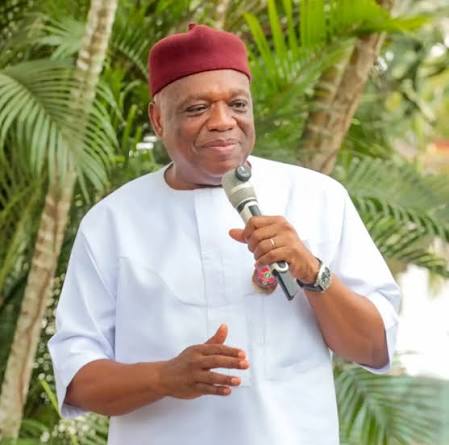
Former Abia State governor and Senator representing Abia North, Orji Uzor Kalu, has warned politicians and their supporters against turning the 2027 general elections into a battlefield, declaring that no political ambition or electoral victory is worth the loss of human lives.
Kalu, who condemned the growing wave of attacks on political leaders and their supporters, said political contests should be fought on the strength of candidates’ achievements, leadership records and capacity to deliver good governance rather than through intimidation, thuggery and violence.
He also dismissed the emerging opposition coalition as belated and divided, declaring that President Bola Tinubu had no formidable challenger in the forthcoming presidential election and describing the contest as a battle of “Tinubu versus Tinubu.”
Speaking with journalists shortly after receiving the Best Impactful Representation Award from the Senate Press Corps at the National Assembly, Abuja, on Tuesday, Kalu expressed concern that political violence, which had troubled Nigeria since independence, was again threatening to overshadow democratic competition.
“Nobody has asked anybody to go and fight or engage in violence. Campaigns should be fought based on what candidates have done for the country. No life is worth wasting because of politics.”
He urged political leaders to restrain their supporters and discourage inflammatory rhetoric, stressing that political disagreements should never be allowed to destroy relationships or threaten national unity.
According to him, leading politicians across party lines maintained cordial personal relationships despite their political differences, a lesson he said their supporters should learn rather than resort to violence in defence of individual political ambitions.
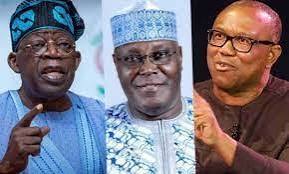
“Tinubu, Atiku, Obi, Makinde and others are all friends who eat at the same table. Nigeria needs unity. We don’t need fighting,” he said.
His warning came against the backdrop of mounting concerns over political attacks and intimidation ahead of the 2027 elections, with the Senate also debating incidents involving President Tinubu and opposition political leaders.
Turning to the emerging opposition coalition, Kalu argued that the parties seeking to challenge the ruling All Progressives Congress (APC) had wasted valuable time and remained divided over leadership and the choice of a presidential candidate.
He said a genuinely united opposition could have presented a more difficult contest for the APC but maintained that the ongoing consultations had come too late to substantially alter the political calculations ahead of the election.
“If they had sincerely come together, it would have given APC a headache, but not a win. The game is already too late for them because they cannot even agree on who will be their presidential candidate.”
Kalu dismissed the possibility that consultations involving the African Democratic Congress (ADC), Nigeria Democratic Congress (NDC) and other opposition platforms would produce a coalition capable of defeating the ruling party.
“We are not afraid of any party. APC is the ruling party, and we have massive grassroots support,” he declared. The senator, however, cautioned against making unsubstantiated allegations of sponsorship of political violence, particularly against public office holders.
Reacting to claims by the Abia State Tinubu Support Group that the state’s deputy governor was sponsoring thugs to attack supporters of the President, Kalu said anyone found culpable of recruiting, financing or training political thugs should face the consequences of the law.
He stressed that such conduct should not be associated with persons entrusted with public responsibilities but maintained that he had no verified evidence linking the deputy governor to the allegation.
Kalu said he did not personally believe the claims, describing the deputy governor as a well-trained engineer with whom he had maintained a longstanding relationship.
He nevertheless appealed to Governor Alex Otti to engage his deputy and encourage actions that would promote political stability and peaceful coexistence in the state.
The senator said security agencies, including the Department of State Services (DSS), could investigate the allegations and invite anyone considered necessary for questioning, stressing that accusations of political violence should be established through credible investigations rather than public speculation.
On the controversy generated by his earlier remarks about international arms transactions, Kalu denied ever supplying weapons to the proscribed Indigenous People of Biafra (IPOB), insisting that he was neither a defence contractor nor involved in illegal arms dealings.
He explained that international arms transactions could constitute legitimate commercial activities when undertaken by licensed and authorised entities in accordance with applicable regulations, but stressed that his comments should not be interpreted as support for supplying weapons to terrorists, bandits or private individuals.
“I have never supplied arms to IPOB. I have never seen arms in my life,” he maintained.
Responding to speculation about his possible presidential ambition following a prophecy by Prophet Ebuka Obi of the Zion Prayer Movement that he would become Nigeria’s president before the age of 70, Kalu said the fulfilment of divine will could not be determined by human calculations.
He recalled contesting the presidential election in 2007 but said he had no immediate intention of seeking the office again, preferring to concentrate on his legislative responsibilities.
“The will of God is always the will of God, and nobody can stop it. I am capable, and I ran for president when I was much younger, but for now, I have no ambition. I want to sit quietly in the Senate,” he said.
Earlier, Kalu dedicated the Senate Press Corps’ Best Impactful Representation Award to the people of Abia North, describing the recognition as an acknowledgment of the development efforts undertaken across the senatorial district since his election to the National Assembly in 2019.
The award citation highlighted projects and interventions across the five local government areas of Bende, Ohafia, Isuikwuato, Umunneochi and Arochukwu, particularly in road construction, education, healthcare, agriculture and economic empowerment.
According to the organisers, Kalu had facilitated the construction and rehabilitation of more than 160 rural and agricultural access roads, alongside over 200 school structures and classroom blocks across the district.
Other interventions cited included scholarships, payment of Joint Admissions and Matriculation Board (JAMB) examination fees, provision of educational materials, rehabilitation of community health centres, installation of solar-powered streetlights and provision of boreholes in more than 150 communities.
The citation also recognised the distribution of agricultural inputs and more than 1,000 cassava processing machines, as well as the facilitation of cashew processing factories and tricycle assembly plants.
Under his constituency empowerment programmes, Kalu was credited with distributing motorcycles, sewing machines, generators, refrigerators, tricycles, laptops and financial grants to beneficiaries across Abia North.
In his acceptance speech, the senator disclosed that more than 49 additional roads were under construction across the district, with progress dependent on the release of relevant budgetary funds.
“If the budget has been released, there are more than 49 new roads currently being constructed in the district,” he said.
Kalu explained that his approach to representation prioritised infrastructure and human capital development over the routine distribution of material items, arguing that investments in roads, education and skills acquisition would deliver more enduring economic benefits.
“What is meant for the public is for the public. My duty is to serve the people.
“I don’t mostly do empowerment because empowerment is not the way to save the economy. We have to go back to providing roads, sending children to school and sending people to study so they can be useful to their communities.”
He reaffirmed his commitment to extending development projects across the five local government areas of Abia North, saying his legislative responsibilities remained focused on improving infrastructure, expanding educational opportunities and supporting economic activities in the district.
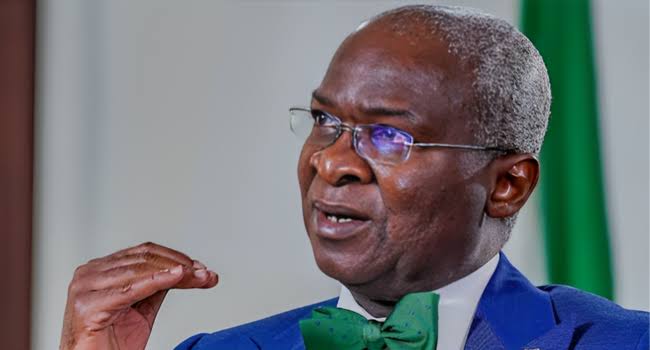
Former Lagos State Governor, Babatunde Fashola, has criticised former Vice-President Atiku Abubakar’s proposal on production subsidy, questioning its sustainability and the source of funding.
Fashola asked what would be different about the proposed policy and where the government would find the resources to sustain it, warning against a return to a subsidy regime that leaves states financially constrained.
He said his experience in a government that paid subsidies showed how the policy affected revenue available to states, forcing some to borrow to meet salary obligations. Fashola said:
“What are you going to do differently? Where are you going to find the money to sustain what you are offering? It is not sustainable. I was in a government that was paying subsidies, and the states were not getting money.
“So are we going to go back to partial near-zero returns, with states borrowing money to pay salaries? Is that where you want us to go?”
He questioned whether Atiku’s proposed production subsidy would avoid the financial challenges associated with the previous subsidy regime or recreate a situation in which state governments struggle to meet their obligations.
Alarmed by the wave of attacks on political leaders and their supporters ahead of the 2027 general elections, the Senate, yesterday, ordered an investigation into reported assaults on President Bola Tinubu and opposition presidential candidates, Peter Obi and Atiku Abubakar, as lawmakers raised concerns that politicians themselves were sponsoring the violence threatening the electoral process.
The Senate also warned that candidates found culpable in electoral violence through the activities of their agents could face disqualification, with Senate President Godswill Akpabio drawing attention to provisions of the Electoral Act 2026 prescribing sanctions for political thuggery and intimidation.
The resolutions followed a motion of urgent public importance sponsored by Senator Abdul Ningi, which highlighted attacks on political leaders, campaign convoys and supporters across the country, including the reported stoning of Tinubu’s motorcade in Abuja on November 13, attacks involving Nigerian Democratic Congress (NDC) presidential candidate Peter Obi and African Democratic Congress (ADC) presidential candidate Atiku Abubakar, and violence at political gatherings.
In a particularly troubling contribution, Senator Samaila Kawu accused politicians of being behind much of the violence, alleging that some supplied weapons and drugs to young people to attack opponents and disrupt political activities.
“We are the sponsors of all what is going on,” he declared, urging security agencies to move beyond arresting perpetrators to identifying and prosecuting those financing and encouraging political thuggery.
The Senate consequently directed its Committees on National Security and Intelligence, Public Affairs and Independent National Electoral Commission (INEC) to engage relevant security and electoral institutions and report back within one week on measures to prevent further attacks and safeguard the elections.
It also urged the Federal Government to direct the Inspector-General of Police and other security agencies to strengthen protection for political leaders, candidates, supporters and campaign gatherings nationwide, while establishing effective early-warning and rapid-response mechanisms to contain electoral violence.
Moving the motion, Ningi expressed concern over what he described as an alarming escalation of political intolerance, intimidation and violence, warning that the trend could undermine public confidence in the electoral process and discourage citizens from exercising their democratic rights.
He specifically drew attention to the reported attack on Tinubu’s motorcade shortly after the President observed Jumat prayers at the Shehu Shagari Central Mosque, Garki, Abuja, on November 13.
According to the motion, the convoy was attacked with stones and other dangerous objects as it departed the mosque, resulting in damage to vehicles and injuries to security operatives.
The Senate also recalled the reported attack on Obi and other political stakeholders in Benue State, the disruption of a procession involving supporters of the NDC and Obidient Movement in Asaba, Delta State, on November 7, which reportedly left one person dead and five others injured, and the attack on Atiku’s convoy in Sokoto State.
Contributing to the debate, Senator Mohammed Ndume warned that the National Assembly must take a firm stand against political violence, irrespective of the party affiliation or political standing of those targeted. “What we need to do as a Senate is to stand up solely against any form of violence.”
Ndume described the reported attack on Tinubu as a national embarrassment, arguing that an assault on the President diminished the country’s democratic institutions.
“What happened last Friday to Mr President is not an embarrassment to Mr President, it is an embarrassment to Nigerians,” he declared.
Questioning the justification for attacking political leaders because of their positions, he asked: “What are the youths saying, that who God chose as president is wrong?”
He commended Tinubu’s response to the incident, contrasting it with what he suggested might have happened under military rule.
“The President is a democrat. If it were military, those 88 people that were arrested that day would have been dead,” he said.
Ndume urged the police to prohibit the carrying of knives, sticks and other objects capable of being used as weapons at political rallies, while advocating mobile courts for the speedy trial of suspects implicated in electoral violence.
He also warned against political slogans calling for the removal of leaders, arguing that inflammatory rhetoric could encourage intolerance and confrontation among supporters.
“Tinubu must go, Atiku must go, Obi must go. So if everybody goes, who will remain?” he asked.
Kawu, while condemning the attack on the President, said the problem of political violence could not be effectively addressed without confronting the politicians who allegedly recruited, armed and financed those responsible. He alleged that some political actors supplied weapons and drugs to youths to unleash violence on opponents, citing an incident involving a National Assembly candidate who was allegedly seen carrying weapons without facing any known consequences.
Kawu, however, cautioned security agencies against excessive force, referring to an alleged incident during an All Progressives Congress (APC) rally in Sokoto State, where security operatives reportedly shot at supporters wearing party insignia as they entered the venue.
He stressed that the responsibility to prevent electoral violence must extend to both political actors and security personnel, whose conduct could either strengthen or undermine confidence in the electoral process.
Senate Minority Leader Abba Moro warned that persistent attacks on candidates and supporters could ultimately disenfranchise voters and weaken democratic participation.
He urged security agencies to rise to their responsibilities by ensuring that political campaigns and other electoral activities were conducted peacefully, without intimidation or harassment.
Senator Babangida Hussaini, in his contribution, recalled recommendations of the Justice Mohammed Uwais-led Electoral Reform Committee, particularly proposals for the establishment of an electoral offences commission and specialised courts to deal with electoral violence.
He lamented that the failure to implement far-reaching measures against electoral offences had allowed political thuggery and intimidation to persist.
“We have begun to see the results of what we have not done,” he said.
Hussaini also alleged that an ADC candidate in his state openly brandished a pistol without any known action being taken against him.
“We have paid lip service with this matter and we have to be serious about it,” he declared.
Senator Sampson Ekong called for a level playing field for candidates across political parties, stressing that the right to campaign freely and peacefully must be protected regardless of political affiliation.
He urged the Federal Ministry of Information and the National Orientation Agency to embark on intensive public enlightenment campaigns to discourage electoral violence and promote political tolerance.
In his closing remarks, Akpabio warned that the consequences of political violence could extend beyond the arrest and prosecution of thugs to the disqualification of candidates implicated in such activities.
He called for the full implementation of the Electoral Act 2026, particularly Sections 121 to 128, which he said contained provisions prescribing sanctions for electoral violence and misconduct.
According to him, candidates whose agents incited violence could face disqualification where INEC established a prima facie case against them.
He added that candidates who carried weapons or encouraged armed thugs to surround them could also face disqualification under the law.
Akpabio warned parents and guardians to caution their children against participating in attacks on political leaders, saying some actions could attract serious criminal charges.
“We must warn our children because there are certain things you can do and it will turn out to be treasonable felony,” he said.
Referring to the reported attack on Tinubu’s motorcade, the Senate President said those involved could have faced charges of treasonable felony, warning that a confrontation with security operatives could have resulted in fatalities.
“If the security agents had attacked, such a child may not get back home,” he said.
The Senate subsequently mandated its three committees to engage relevant security and electoral institutions and submit their findings and recommendations within one week, as concerns mount over the safety of political leaders, their supporters and the integrity of the electoral process ahead of the 2027 elections.
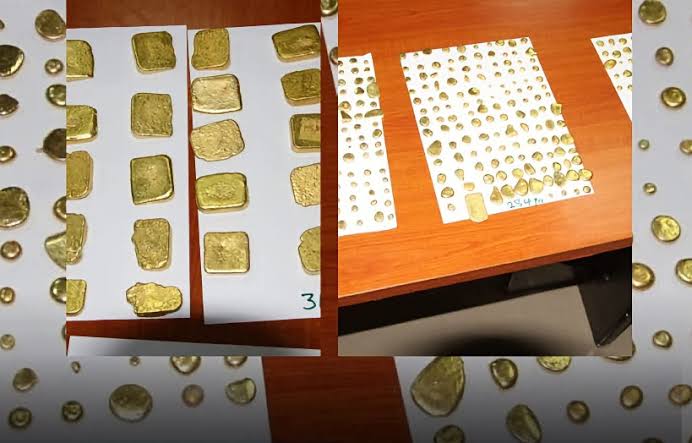
The EFCC, Kano Zonal Directorate has secured the conviction of one Ali Baffa for attempting to illegally export unprocessed gold valued at over N4.4 Billion out of Nigeria.
Justice Sale Musa Shuaibu of the Federal High Court, sitting in Kano, who found the defendant guilty, convicted and sentenced him to forfeit the seized 22.2 kilograms of unprocessed gold to the Federal Government of Nigeria.
Baffa’s prosecution followed his arrest on June 11, 2026, by operatives of the EFCC’s Kano Zonal Directorate at the International Wing of Malam Aminu Kano International Airport, Kano. He was found to have concealed 22.2 kilograms of unprocessed gold bars, estimated at over N4,400,000,000 (Four Billion, Four Hundred Million Naira), in his body.
The concealment, according to investigation, was an attempt to bypass security checks and hand over the precious minerals to other passengers for illegal export out of Nigeria to Dubai, United Arab Emirates (UAE).
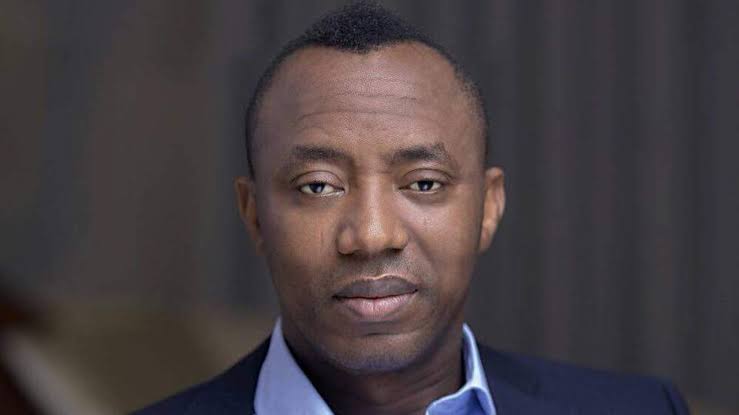
Omoyele Sowore, presidential candidate of the African Action Congress (AAC), has asked the federal government to legalise and regulate cannabis.
In a post on X on Tuesday, Sowore, a proponent of cannabis legalisation, said Nigeria could generate up to $2.2bn in annual revenue from the market.
He said Nigeria is losing potential revenue by criminalising cannabis while countries and jurisdictions that have legalised and regulated its production and sale are generating substantial tax revenue.
The Federal Government has commissioned Compressed Natural Gas stations in four universities to ease transportation burden of students, staff and other members of the host communities.
The instutions include University of Uyo, Akwa Ibom state, University of Calabar, Cross River state , University of Nigeria, Enugu campus and Federal University of Petroleum Resources, Efurun in Delta state respectively.
Speaking during the commissioning ceremony at the University of Uyo , Minister of State, Petroleum Resources (Gas), Hon Ekperikpe Ekpo, said the initiative was a source of special pride to him as a project in his home state. Ekpo who commissioned other 3 CNG stations virtually , said the stations will give students, staff and surrounding communities access to cleaner and more economical mobility, while offering the institutions opportunity to build research, technical skills and local expertise in CNG technologies. “The benefits of adopting CNG for mobility are practical and immediate. CNG is generally cheaper than petrol and diesel, so vehicle owners, commercial drivers and transport operators spend less on fuel “For students, young people who earn a living from commercial transport, and vulnerable members of society who depend on public transport, these savings mean lower transport costs and more money kept in their pockets for education, enterprise, food and other household needs.” He commended president Bola Tinubu, whose Renewed Hope Agenda has placed natural gas at the heart of Nigeria’s economic renewal. “Under his watch, gas is no longer a resource we merely flare or export; it is a resource we are using to power our vehicles, create jobs and put money back in the pockets of our people,” he said. He said the President also approved the Special Palliative Relief on University Transportation Programme, in line with the 20 Universities CNG Ecosystem Initiative, to cushion the effect of petroleum subsidy reform on students and staff. He also commended the governors of Akwa Ibom, Cross River, Enugu and Delta states for deepening the penetration of natural gas in their states, and acknowledged the Minister of Education for supporting initiatives that connect educational institutions with national energy priorities. He appreciated the vice-chancellors and councils of the four universities, as well as host states and communities, for providing the enabling environment for the projects The Executive Director of Midstream and Downstream Gas Infrastructure Fund, Oluwole Adama, said the four newly commissioned Compressed Natural Gas stations in Uyo, Calabar, Enugu and Warri can fill about 540 vehicles every day. He said the figures are not just technical, but mean cheaper rides for students, lower costs for transport operators and a living classroom for young engineers. “For students, affordable and dependable transport means more than a cheaper ride. It can mean getting to lectures on time, spending less on daily travel and having more time and energy for learning,” he said. He added that more facilities will be executed, stressing that the facilities can also become living classrooms, offering young Nigerians practical exposure to gas operations, engineering, safety and maintenance. ”About 50 more projects will be nearing commissioning by the end of this year. I urge transport operators and businesses to use the facilities judiciously. Our young Nigerians should embrace this opportunities in technical services, safety and maintenance”, he stated. On his part, the Chief Executive Officer of FEMADEC Energy Limited; Fola Akinnola, said the four newly commissioned Compressed Natural Gas daughter stations in universities will drastically cut daily fuel expenditure and bring clean, affordable fuel directly into the heart of tertiary institutions. Akinnola said establishing the daughter station within the University of Uyo alongside the three sister campuses going live across the South-South and South-East, was directly addressing the commuting challenges faced by students, lecturers, campus shuttle operators and surrounding host communities. He described the commissioning of four strategic university stations in a single day as a milestone made possible through deliberate, and high-impact collaboration. ”On behalf of the board and management of FEMADEC Energy Limited, he thanked the Midstream and Downstream Gas Infrastructure Fund and the Presidential Initiative on Compressed Natural Gas and Electric Vehicles for their vision, catalytic funding and commitment to President Bola Tinubu’s Decade of Gas and clean mobility agenda”, Akinnola said.