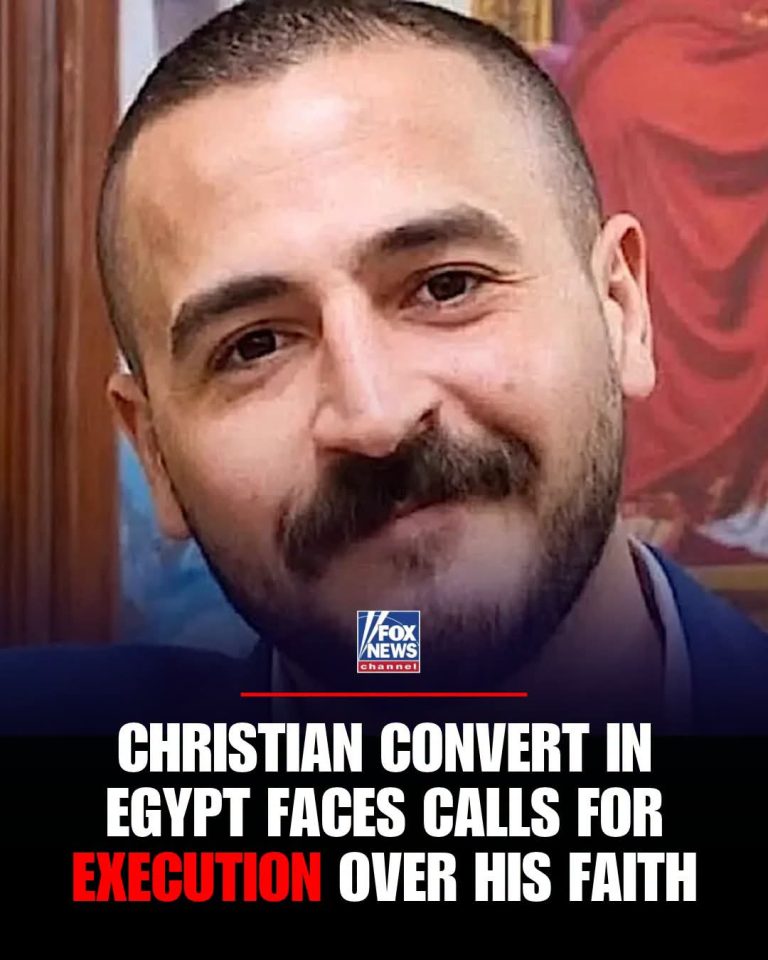
A man who converted from Islam to Christianity in Egypt is facing the death penalty or up to 25 years in prison over his religious faith.
The case of Said Mansour Rezk Abdelrazek has drawn international attention, with the United States Department of State intensifying efforts to pressure Egypt to uphold religious freedom and protect the rights of religious converts.
A State Department spokesperson told Fox News Digital that the US government is closely monitoring the case.
“We are monitoring his trial closely,” the spokesperson said. The development has renewed concerns over religious freedom and the treatment of religious minorities and individuals who convert from Islam to Christianity in Egypt, an overwhelmingly Muslim-majority country.
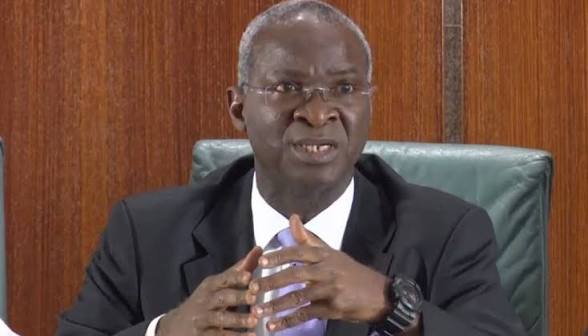
Former Lagos State Governor, Babatunde Fashola, has criticised former Vice-President Atiku Abubakar’s proposal on production subsidy, questioning its sustainability and the source of funding.
Fashola asked what would be different about the proposed policy and where the government would find the resources to sustain it, warning against a return to a subsidy regime that leaves states financially constrained.
He said his experience in a government that paid subsidies showed how the policy affected revenue available to states, forcing some to borrow to meet salary obligations. Fashola said:
“What are you going to do differently? Where are you going to find the money to sustain what you are offering? It is not sustainable. I was in a government that was paying subsidies, and the states were not getting money.
“So are we going to go back to partial near-zero returns, with states borrowing money to pay salaries? Is that where you want us to go?”
He questioned whether Atiku’s proposed production subsidy would avoid the financial challenges associated with the previous subsidy regime or recreate a situation in which state governments struggle to meet their obligations.
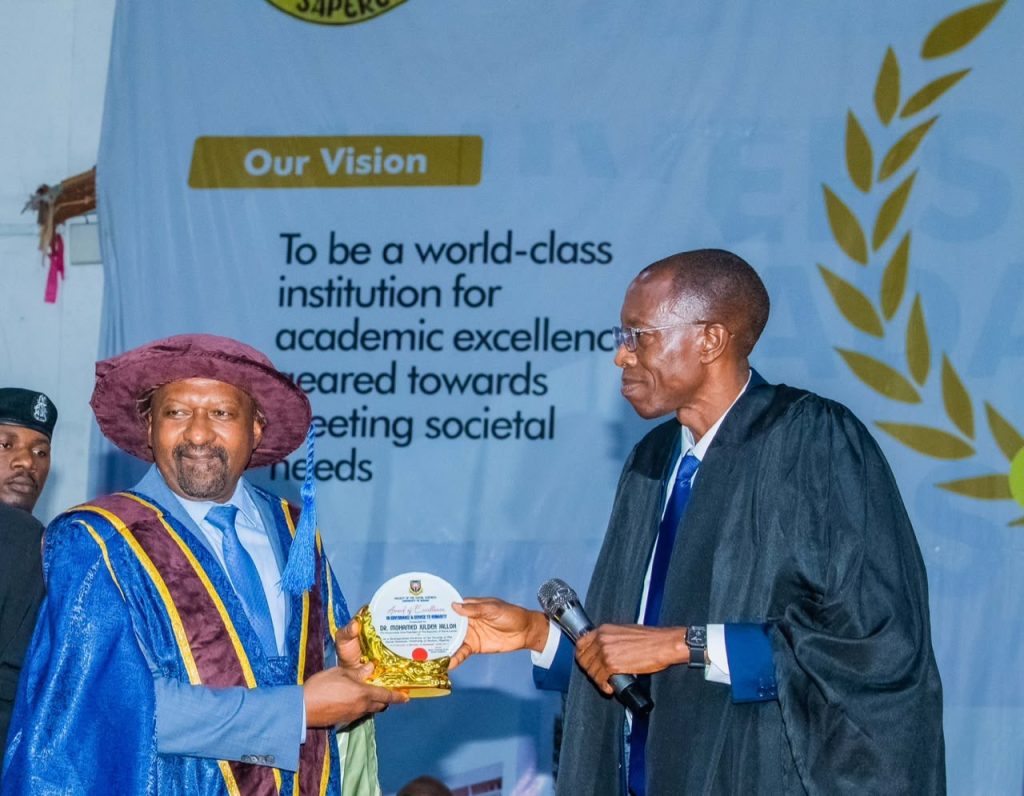
Sierra Leone’s Vice President, Dr. Mohamed Juldeh Jalloh, has proposed an ambitious Lagos–Freetown coastal transport corridor alongside seamless cross-border digital payment and telecom networks to dismantle trade barriers across West Africa.
Delivering the 78th Foundation Day and 2026 Convocation lecture at the University of Ibadan on Monday, 16 November 2026, titled “The Enduring Promise of Nigeria–Sierra Leone Relations: From Shared Origins to Shared Prosperity”, Dr. Jalloh challenged West African policymakers to move beyond diplomatic communiqués and focus on physical and digital infrastructure that lowers the cost of doing business.
Drawing direct inspiration from Nigeria’s ongoing Lagos–Calabar Coastal Highway project, the Vice President called for a comparable Lagos–Freetown coastal corridor supported by modernized ports, viable coastal shipping services, simplified customs procedures, and commercially viable regional rail networks.
“The success of regional economic integration should be measured by how easily businesses deliver goods, obtain approvals, process payments, and communicate with customers across national boundaries,” Dr. Juldeh Jalloh stated, emphasizing that infrastructure must make geographical distance irrelevant to West African enterprise.
Highlighting that intra-ECOWAS trade stands at roughly 11 per cent, lagging behind the East African Community (20 per cent) and the Southern African Development Community (19 per cent), Dr. Jalloh outlined a four-point commercial integration agenda: • Borderless Digital Commerce: Deeper alignment among telecom operators, regulators, and financial institutions to cut roaming fees, strengthen subsea fibre connectivity, and deploy interoperable cross-border payment systems. • Maritime & Coastal Logistics: Upgrading port efficiency, reviving regional coastal shipping lines, and streamlining customs clearance under the ECOWAS Trade Liberalisation Scheme (ETLS) and the African Continental Free Trade Area (AfCFTA). • Synchronized Regional Investment: Linking academic and business ecosystems directly to the West Africa Integration and Investment Summit (WAIIS), convening simultaneously in Freetown under President Julius Maada Bio (who succeeded Nigeria’s President Bola Tinubu as ECOWAS Chairman in June 2025), to mobilize capital across energy trade, strategic minerals, agribusiness, and digital transformation. • Democratic Stability & Private-Sector Leadership: Safeguarding regional investments through good governance while empowering businesses, universities, and young innovators to drive cross-border partnerships rather than relying solely on state actors.
Earlier, University of Ibadan Vice-Chancellor Professor Peter Olapegba and former Vice-Chancellor Professor Idowu Olayinka, representing Governing Council Chairman Chief Bisi Akande, welcomed Dr. Juldeh Jalloh, praising his visit as a bridge connecting the historic academic ties between Fourah Bay College and the University of Ibadan to modern West African economic transformation.
The Economic Sustainability Group (ESG) has strongly condemned the persistent importation of fake and blended petroleum products into Nigeria, accusing the Nigerian Midstream and Downstream Petroleum Regulatory Authority (NMDPRA) of failing to take decisive action against the menace.
In a statement signed by its President, Comrade Idoko Ainoko, the group said the regulatory agency has not done enough to halt the influx of substandard products since the new CEO Rabiu Umar assumed office at the Authority.
ESG noted that the continued entry of blended and adulterated fuel undermines genuine local producers who invest heavily in refining quality, certified products that meet national and regional standards.
Beyond the damage to domestic refining capacity, the group highlighted the severe economic and mechanical toll on ordinary Nigerians, whose vehicles and generators suffer accelerated wear, higher maintenance costs, and frequent breakdowns from poor-quality fuel.
“The regulatory agency has not done enough to stop the importation of blended products into the country since the new helmsman at NMDPRA resumed work,” Ainoko stated.
“Apart from the harm which it does to genuine producers who refine quality and certified products in the country, the economic damage to citizens and their cars are enormous.”
He added that motorists across the country continue to report engine knocking, clogged injectors, and reduced vehicle lifespan attributable to off-spec fuel that finds its way into retail outlets despite existing quality control frameworks.
Industry observers point to repeated concerns raised in recent months over the importation of blended products, particularly those originating from certain Middle Eastern markets, which are then mixed or sold in ways that dilute the quality of locally refined Euro-5 standard petrol.
While domestic refining capacity has expanded significantly, with local supply now accounting for a substantial share of national demand, critics argue that weak enforcement at the ports and discharge points continues to allow substandard cargoes to enter the market.
ESG insisted that the problem is not merely technical but also one of regulatory will.
The group said that until the NMDPRA prioritises rigorous, independent laboratory testing of every imported consignment and applies meaningful sanctions on erring marketers, the cycle of adulteration will persist to the detriment of both consumers and legitimate refiners.
“Nigerians are paying the price twice,” Ainoko said. “First through higher pump prices that already strain household budgets, and second through the hidden costs of repairing engines damaged by fuel that fails to meet approved specifications.
“This is unsustainable and unacceptable.” He further warned that the continued presence of fake and blended products creates an uneven playing field that discourages further investment in domestic refining and processing infrastructure.
The group recalled that previous public warnings by the regulator itself about possible sanctions against marketers dealing in substandard products have not translated into visible deterrence.
ESG argued that mere statements of concern are no longer sufficient at a time when local refiners are producing higher-quality products that could fully serve the domestic market if given fair regulatory protection.
Ainoko called on the NMDPRA leadership to immediately strengthen surveillance at import terminals, expand the use of accredited laboratories for comprehensive testing beyond routine parameters, and publish transparent enforcement actions against any operator found importing or distributing adulterated fuel.
“We demand that the Authority move beyond rhetoric and demonstrate clear, measurable action,” he said.
“The economic sustainability of Nigerian households and the long-term viability of local refining investments both depend on the integrity of the fuel that reaches our pumps.”
The Economic Sustainability Group urged other civil society organisations, consumer protection bodies, and genuine industry players to join in pressing for stricter quality assurance protocols.
It also appealed to the National Assembly committees overseeing petroleum resources to intensify oversight of the regulator’s performance on product quality enforcement.
ESG maintained that protecting consumers from fake fuel is not only a regulatory duty but a critical economic and public safety imperative that must be treated with the urgency it deserves.
2027: Coalition gives ADC, NDC, other presidential candidates 48 hours to rein in supporters over political violence
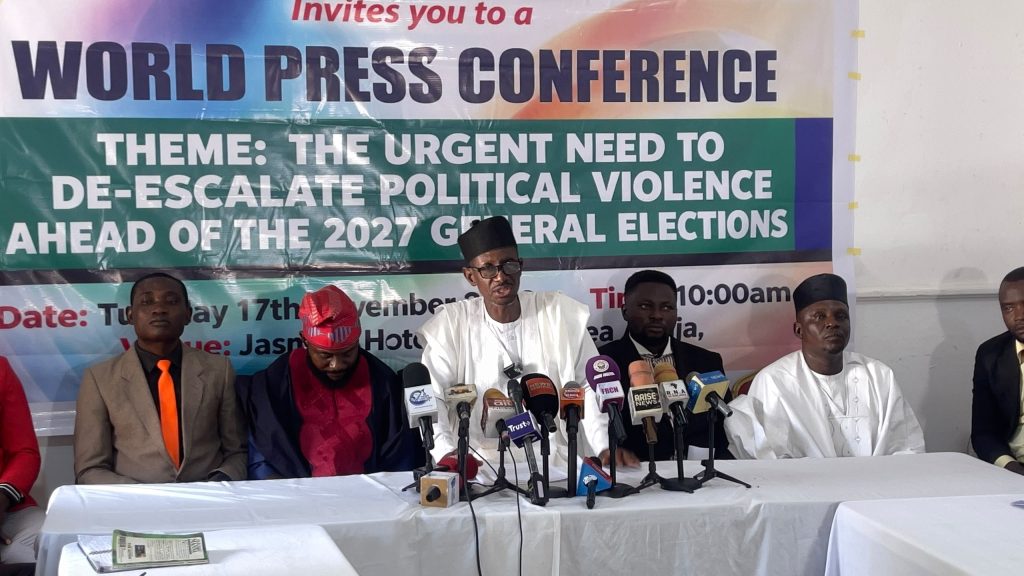
The Coalition Against Electoral Violence in Nigeria (CAEVN) has given the African Democratic Congress (ADC), Nigeria Democratic Congress (NDC) and other presidential candidates 48 hours to call supporters to order over violence ahead of the 2027 elections.
At a press conference on Tuesday in Abuja, the group also said attacks, clashes at political gatherings and the use of dangerous weapons were creating fear and threatening public safety as campaigning gathers momentum nationwide.
In his address, convener Dr Opialu Fabian Opialu said: “Nigeria is sliding back into the familiar pattern of election-season bloodshed, and the warning signs can no longer be ignored.
“If nothing is done, we may not be alive to witness another general elections.”
CAEVN cited an NDC town hall meeting in Oregun, Lagos, on Sunday, which it said degenerated into violence involving cutlasses, cudgels and stones, leaving people injured.
It also listed confrontations linked to NDC activities in Asaba, Calabar, Enugu, Ebonyi, Warri and Benue, and urged the party’s leadership to restrain its supporters.
“In Lagos two days ago, a town hall meeting of the Nigeria Democratic Congress in Oregun turned into a free-for-all. People were injured. Vehicles were damaged,” he said.
“The same pattern has followed NDC activities in Asaba, Calabar, Enugu, Ebonyi, Warri and Benue,” the coalition added, alleging repeated confrontations.
CAEVN said the APC should also be held accountable, citing reports of attacks on opposition processions, destroyed campaign materials and intimidation of opponents in some states.
It condemned clashes between rival PDP factions in Gombe State, saying disputes over candidates and party structures had spilled into public spaces and caused panic among residents.
“We do not exonerate the All Progressives Congress. There have been credible reports of APC-linked thugs attacking opposition processions,” it said.
“The APC must put its house in order,” the coalition added, urging PDP leaders in Gombe and nationally to restrain rival factions and prevent further clashes.
The coalition listed convoy attacks, disrupted meetings and use of dangerous weapons in Delta, Cross River, Ekiti, Kebbi, Enugu, Ebonyi and Oyo.
It criticised the lack of prosecutions and called on police chiefs to arrest and prosecute alleged sponsors and perpetrators, regardless of their party affiliation or status.
“What began as internal disagreements over candidates and control of structures spilled into the streets,” CAEVN said.
“Nigeria cannot afford intra-party wars on top of inter-party ones,” it added, calling on political leaders to prevent further confrontations among supporters.
CAEVN urged INEC and security agencies to treat every verified incident of political violence as a national security threat, rather than routine campaign activity.
It also asked traditional rulers, religious leaders and community elders to speak against recruiting young people for political violence and help calm tensions.
“All presidential candidates, especially those of the NDC, APC, PDP, ADC and AAC, must publicly instruct their supporters to stop all forms of thuggery within 48 hours,” it said.
“Silence is complicity,” the coalition added, urging community leaders to speak up and warning that further bloodshed would be an avoidable loss.
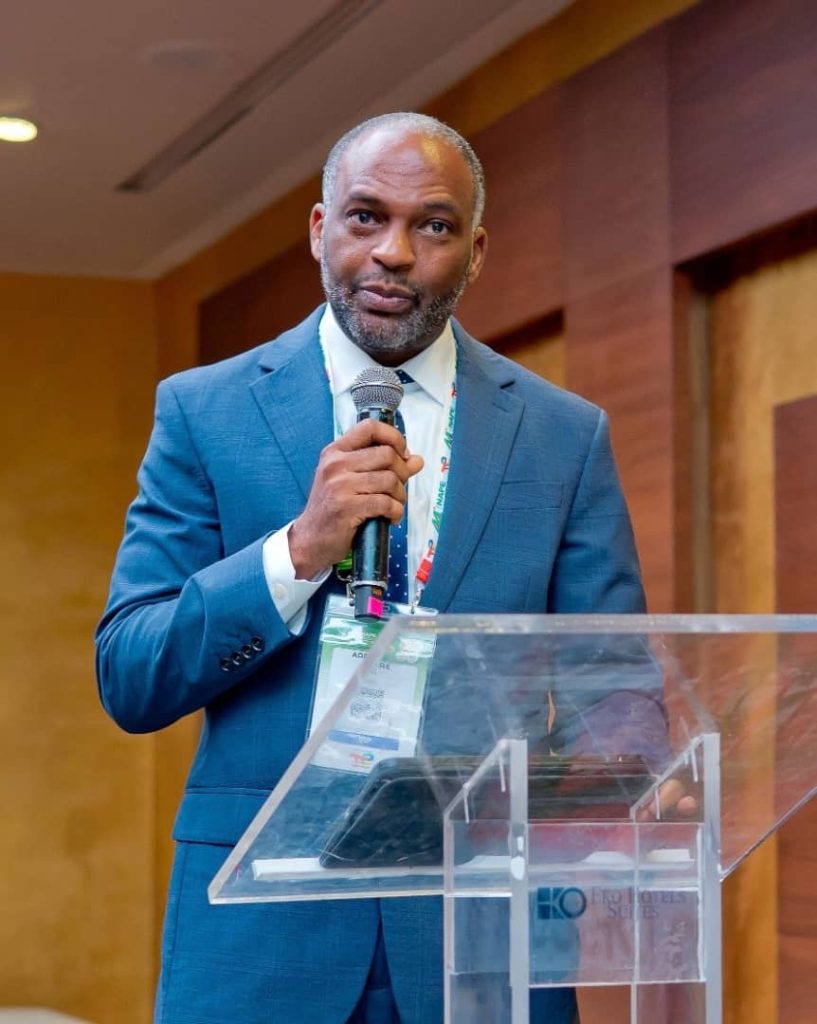
Heritage Energy Operational Services Limited (HEOSL), Operator of OML 30 on behalf of its Joint Venture Partners, NNPC Exploration and Production Limited (NEPL) and Shoreline Natural Resources Limited (SNRL), is advancing its drilling campaign to unlock the asset’s significant hydrocarbon potential, accelerate reserves growth and support increased production. The Company’s Assistant General Manager, Technology Portfolio Development, Adejare Oni, who represented the Chief Executive Officer, Ado Oseragbaje, at the recently concluded 44th Nigerian Association of Petroleum Explorationists (NAPE) Annual International Conference and Exhibition, highlighted the strategic importance of the campaign in advancing the Company’s asset development and production growth ambitions. He noted that the drilling campaign underscores Heritage Energy’s commitment to maximising the value of OML 30 through sustained investment, subsurface resource optimisation and disciplined operational execution. “Unlocking the full potential of our assets requires sustained investment, a deeper understanding of subsurface resources and disciplined execution,” Oni stated. Heritage Energy is targeting production of 100,000 barrels of oil per day (BOPD) by 2030, underpinned by a focused strategy encompassing sustained capital investment, disciplined reservoir management, technological advancement and operational excellence. “Achieving this ambition requires an integrated approach to asset development, combining strategic investment, effective reservoir management, operational excellence and a deeper understanding of our subsurface potential. Our focus remains on maximising asset value, replenishing reserves and delivering sustainable, long-term value for Nigeria’s energy industry,” he added. Oni further highlighted the importance of integrating drilling activities with effective reservoir management, technological innovation and operational discipline to sustain production growth and strengthen the asset’s long-term performance. He also emphasised the Company’s commitment to strengthening its technological capabilities through an accelerated digital transformation agenda and the implementation of its flagship Operating Management System (OMS). These initiatives are designed to standardise processes, enhance operational efficiency, strengthen performance management and improve the quality of business and operational decision-making. “The future competitiveness of Nigeria’s upstream industry will depend on our ability to translate resource potential into tangible value through technical innovation, strategic investment and operational discipline,” he said. Through these strategic interventions, Heritage Energy continues to advance its commitment to unlocking OML 30’s hydrocarbon potential, strengthening production capacity and contributing to the sustainable growth of Nigeria’s upstream oil and gas sector.
The National Drug Law Enforcement Agency (NDLEA) has dismantled a transnational cocaine trafficking syndicate operating between Lagos, Kano, Niger Republic, Libya and Europe, arresting eight suspected members.
The suspects, who were arrested in Lagos and Kano between October 30 and 31, 2026, were allegedly working as drug couriers, swallowing cocaine pellets to transport them across international borders through the Sahara Desert.
The agency said the eight suspects collectively excreted 634 wraps of cocaine weighing 13.795 kilogrammes while in custody.
In a statement issued on Tuesday, November 17, by its Director of Media and Advocacy, Femi Babafemi, NDLEA said the operation began on Friday, October 30, when operatives of its Special Operations Unit arrested 57-year-old Okwudiba Ifeanyichukwu Damian at Nice Touch Hotel, Ago Palace, Okota, Lagos.
The suspect subsequently excreted 74 wraps of cocaine weighing 1.650 kilogrammes.
On Saturday, October 31, four other members of the syndicate were intercepted at the MM2 Terminal of the Murtala Muhammed Airport in Lagos while preparing to board a flight to Kano.
They were identified as; 43-year-old Jackson Ahamefule, who excreted 90 wraps weighing 1.950 kilogrammes; 47-year-old Nwafor Osita Emmanuel, who excreted 85 wraps weighing 1.750 kilogrammes; 38-year-old Marcel Nnabuike, who excreted 75 wraps weighing 1.655 kilogrammes; and 44-year-old Onyenwuba Ignatius, who excreted 75 wraps weighing 1.650 kilogrammes.
The five suspects arrested in Lagos collectively excreted 399 wraps of cocaine weighing 8.655 kilogrammes.
The NDLEA said intelligence gathered from the Lagos operation revealed that other members of the cartel had already travelled to Kano, prompting the immediate mobilisation of officers at the Mallam Aminu Kano International Airport (MAKIA).
The officers subsequently intercepted three other suspects at the arrival hall of the domestic terminal of the airport.
The suspects were identified as 48-year-old Chinweike Ephraim Ifechukwu; 45-year-old Edezuno John Nwaorji, and 31-year-old Chukwudi Chinaka.
Babafemi said that a body scan conducted on the three men confirmed that they had swallowed illicit drugs, after which they were placed under observation to excrete the substances.
The agency said Ifechukwu subsequently excreted 85 pellets of cocaine weighing 1.853 kilogrammes, Nwaorji expelled 80 pellets weighing 1.752 kilogrammes, while Chinaka excreted 70 pellets weighing 1.535 kilogrammes.
Babafemi said that investigations revealed that the suspects planned to transport the cocaine by road from Kano through Niger Republic and Libya, with Europe as their final destination.
The Pharmaceutical Society of Nigeria (PSN) has warned that pharmaceutical insecurity poses a grave threat to national security, urging the Federal Government to retain control of critical aspects of the country’s drug distribution system and strengthen the fight against illicit drug activities.
The society proposed a special fund to tackle illicit financial flows in healthcare, recommending that one per cent of assets seized from drug trafficking be dedicated to strengthening the enforcement activities of the Pharmacy Council of Nigeria (PCN) and the National Agency for Food and Drug Administration and Control (NAFDAC).
The resolutions were contained in a communiqué signed by the PSN President, Tanko Ayuba, and National Secretary, Gafar Madeh, issued at the end of the Society’s 99th Annual National Conference, tagged IJELE 2026, held from November 2 to 7 at the International Convention Centre, Awka, Anambra State.
The conference, themed, “One Health, One Pharmacy: Bridging Knowledge, Practice and Policy for National Impact,” also called for the integration of over 10,000 community pharmacies into Nigeria’s national security architecture and the proposed NHIA Pharmacy First initiative to strengthen early detection and reporting of suspicious drug activities.
The pharmacists warned that transferring control of public sector drug distribution to private interests could weaken regulatory oversight and undermine collaboration among the PCN, NAFDAC and the National Drug Law Enforcement Agency (NDLEA).
While supporting private sector involvement in financing and technology, the conference insisted that government must retain control of medicine procurement, quality assurance, storage, dispensing and the handling of controlled drugs.
It also urged the Federal Government to support the proposed Drug Revolving Fund and Federal Drug Management Agency Bill, which has passed first reading at the House of Representatives, to establish a central platform for medicine procurement and supply.
The society further called for a review of the Federal Ministry of Health’s Memorandum of Understanding with Medipool, recommending that private operators serve only as competitively selected, non-exclusive price negotiators or framework suppliers in line with the Public Procurement Act.
To drive reforms, the conference proposed an independent presidential committee on the pharmaceutical sector, led by a registered pharmacist recommended by the PSN, with representatives of relevant regulatory and research institutions.
On workers’ welfare, the conference urged organised labour to conclude negotiations on the adjustment of the Consolidated Health Salary Structure (CONHESS), which it said had remained unresolved for about 13 years. It also called for fairness to health workers in ongoing collective bargaining negotiations.
The pharmacists further advocated a specialised humanitarian pharmacy workforce to ensure access to essential medicines and continuity of treatment for displaced populations during emergencies.
The conference also endorsed stronger collaboration between the PSN and the West African Society for Parenteral and Enteral Nutrition (WASPEN), including a standardised framework for integrating advanced pharmacists into multidisciplinary clinical teams.
It approved the speedy construction of the PSN Pharmacy House at Victoria Island and directed its leadership to regularise the society’s property documents and address outstanding debenture subscribers’ entitlements.
The conference also endorsed a one-off support contribution towards the PSN’s centenary celebration in March 2027.
Anambra State Governor, Prof. Chukwuma Charles Soludo, declared the conference open, while the Minister of Humanitarian Affairs and Poverty Reduction, Bernard Doro, delivered the keynote address.
At the conference, Tanko Ayuba emerged as PSN president for the 2026/2027 administrative year.
Says words can build confidence, restore dignity and inspire people to go beyond limitations
Miss World Nigeria 2026, Tamunosoye Karibi-George, urged public relations professionals and other communicators to use their words to inspire, encourage and uplift people rather than reinforce negative labels and stereotypes.
She said communication has the power to shape people’s perception of themselves, stressing that individuals made to feel unworthy or incapable by society need positive messages that restore their confidence and sense of worth.
Karibi-George made the appeal while addressing participants at the Global Alliance World Public Relations Forum (WPRF) 2026 in Abuja, where she expressed pride in being associated with the professional body and its commitment to communication and advocacy.
The beauty queen, who traced her journey from being the Face of Port Harcourt to Miss Africa and subsequently Miss World Nigeria, said her experience on the international stage in Vietnam gave her an opportunity to represent not only Nigeria and Africa but also the wider communication community.
Reflecting on the power of communication, she said: “In this very room, it has been established that communication is power and communication is responsibility.”
Speaking about her advocacy, she said she was committed to encouraging people labelled by society as unworthy, incapable and other derogatory names to look beyond such descriptions.
“What matters the most is what you say about yourself,” she said.
She challenged communicators to be more deliberate and responsible in their choice of words, urging them to tell people how worthy and capable they are of achieving great things.
“As communicators, we should use our words kindly. We should use words of worth. We should use them to uplift others, encourage them and tell them they are always beyond limits,” she said.
Karibi-George also expressed appreciation for the opportunity to address the gathering and acknowledged the support of her father, who served as the master of ceremonies at the event.
The 26-year-old beauty queen was crowned Miss World Nigeria 2026 after representing Bayelsa State at the national competition. She is also known for her advocacy through the Beyond Labels initiative, which promotes inclusion and empowerment for children with special needs.
Simon Ekpa, the self-proclaimed Prime Minister of the Biafra Government in Exile, has reacted following his release from prison in Finland.
Ekpa, who was arrested by Finnish authorities in November 2024 over alleged terrorism-related offences linked to Nigeria, regained his freedom on Tuesday.
He was convicted by a Finnish court in September 2025 for participating in the activities of a terrorist organisation and inciting crimes for terrorist purposes.
His release was announced by Ngozi Orabueze, Deputy Prime Minister of the Biafra Government in Exile, in a post on her official X handle on Tuesday.
She also shared a video showing herself alongside Ekpa as he emerged from prison, with some Nigerians gathered to celebrate his return.
In the video, Ekpa was heard making a brief statement, saying, “You can’t hide the truth forever; it will always come out.”