BY TAIWO OGUNMOLA -OMILANI
The National Pension Commission (PenCom) has disclosed that only 242,690 informal sector workers were enrolled in the Personal Pension Plan (PPP) as of July 2026, representing fewer than three in every 1,000 informal workers in Nigeria.
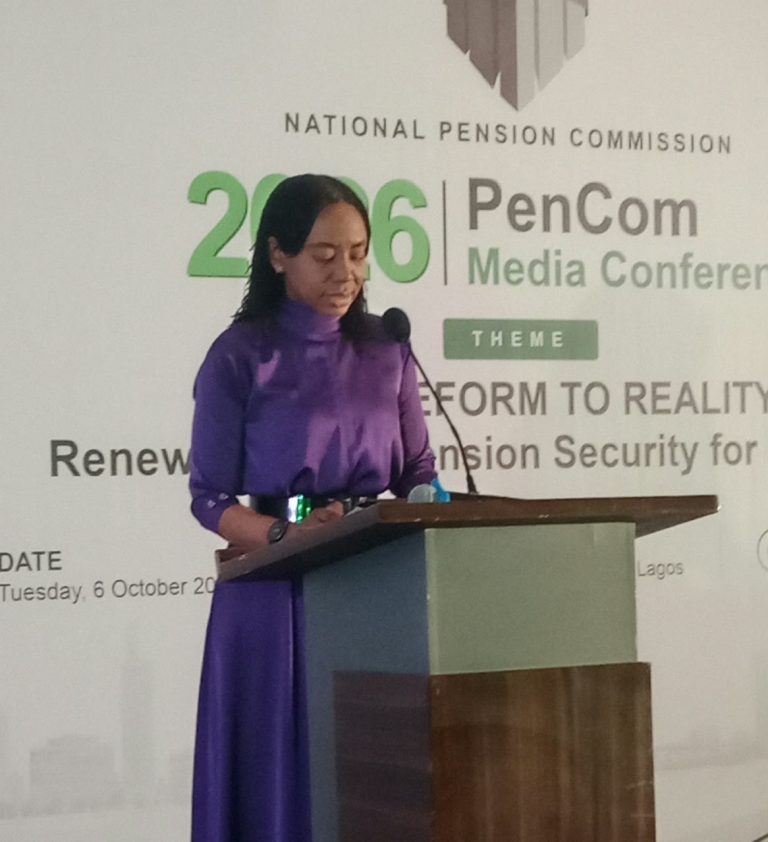
Head, Personal Pensions department, Dr. Babatunde Alayande delivered the Presentation at the 2026 Annual PenCom Media Conference held in Lagos.
According to PenCom, the informal sector accounts for 93 per cent of Nigeria’s workforce, representing about 84.92 million people, based on estimates from the National Bureau of Statistics’ second-quarter 2024 data.
The Commission disclosed this in its presentation at the 2026 Annual PenCom Media Conference, where it highlighted efforts to expand pension coverage to self-employed persons and informal sector workers.
The PPP was introduced pursuant to Section 2(3) of the Pension Reform Act 2014, with the National Pension Commission as the regulator and self-employed and informal sector workers as its major target.
PenCom noted that the informal sector is highly heterogeneous and largely unorganised, with workers typically earning low and irregular incomes and lacking coordinated national social security coverage.
The Commission said the pension gap remains significant, with 84.92 million informal workers without pension coverage as of July 2026. It added that although the informal sector contributes between 58 and 65 per cent of Nigeria’s Gross Domestic Product, it remains severely under-pensioned.
PenCom identified affordability, irregular income, limited awareness, distrust, preference for liquid savings, distance from pension institutions, digital-literacy gaps and weak incentives as major challenges affecting participation in the PPP.
It stressed that registration alone should not be regarded as the measure of success, noting that effective pension coverage must progress from access and enrolment to regular contributions, persistence and ultimately adequate retirement savings.
To bridge the gap, the Commission proposed increased awareness and financial literacy through local languages, community, market and faith leaders, as well as social media, television and radio.
It also proposed simplified digital enrolment through mobile applications, USSD and portals, alongside tailored products, gender-sensitive and seasonal contribution options, awareness of Sharia-compliant plans and partnerships with government agencies, NGOs and development partners.