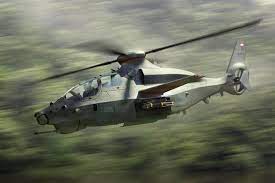
The $1bn AH-1Z cobra attack helicopters, 12 of them, being procured from the United States by the Federal Government will reduce response time and significantly help the Nigerian Armed Forces to defeat terrorist forces in the country, an official of the US Department of State, Andrew Strike, has said.
Strike, who is of the Office of Congressional and Public Affairs, Bureau of Political-Military Affairs under the Department of State, explained in his response to an email enquiry by our correspondent that the helicopters would complement the 12 A-29 Tucano aircraft Nigeria bought from the US earlier.
He added that the helicopters would also provide essential night operations capability to counter terrorists who previously operated after dark with impunity.
Boko Haram insurgents and bandits already declared as terrorists by the Federal Government have been waging a war against the Nigerian state, especially in the northern region, killing innocent persons, carrying out mass abductions for ransoms, destroying properties, disrupting public peace, all of which have taken their toll on the economy.
The Defence Security Cooperation Agency in a statement titled, ‘Nigeria – AH-1Z Attack Helicopter Related FMS (Foreign Military Sales) Acquisitions’, on April 14 said the Department of State had cleared the sale of the helicopters to Nigeria and that as required by law, Congress had been notified of the possible transaction.
In his email response on Tuesday to an enquiry on the expected time of delivery and the possible conditions that would be attached to the usage of the helicopters like they did the Tucano aircraft, Strike said only the military could speak on the timelines but that the US would always insist on the respect for human rights.
Speaking on the operational capabilities of the helicopters, Strike stated, “This potential sale fulfils the Nigerian Armed Forces requirement for a close air support and quick mobility capability to defeat terrorist forces, protect humanitarian convoys, secure vital roads, decrease troop losses, defend vulnerable communities, and reduce the risk of civilian casualties.