BY TAIWO OGUNMOLA -OMILANI
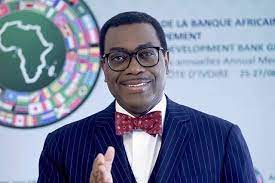
At the 90th birthday celebration of former Nigerian President General Yakubu Gowon, Akinwumi Adesina, President of the African Development Bank (AfDB), delivered an impassioned speech calling for Nigeria’s transformation into a global economic powerhouse.
Adesina dismissed the pessimism surrounding Nigeria’s future, insisting that the nation has the potential to thrive on the global stage if it addresses its core challenges. Drawing on the words of Martin Luther King Jr., Adesina declared, “Nigeria must become a global powerhouse. That is our responsibility. A global Nigeria must start with a poverty-free Nigeria.”
He underscored the severity of the poverty crisis, citing alarming data from the National Bureau of Statistics. According to Adesina, 63% of Nigerians—around 133 million people—are living in multidimensional poverty, with the worst-hit regions being rural areas and the northern part of the country, where 86 million people are affected.
Linking poverty to the rising crime rates, Adesina urged the Nigerian government to prioritize security, education, healthcare, and job creation, especially in the most affected regions, to restore order and rebuild the economy.
On food insecurity, Adesina referred to a World Food Programme report that revealed 26.5 million Nigerians face acute hunger.
He also lamented the rising cost of food imports and inflation, which has hit a 28-year high in 2024. To combat these challenges, he advocated for increased local food production and the revival of successful agricultural programs, such as the Growth Enhancement Scheme and the electronic wallet system, which he helped implement during his tenure as Minister of Agriculture.
Adesina also presented a vision for Nigeria’s economic future that goes beyond poverty alleviation. He called for industrialization, criticizing Nigeria’s current focus on import substitution. Instead, he pushed for a shift toward export-oriented manufacturing to drive innovation and position Nigeria as a global manufacturing hub.
He concluded by addressing the ongoing brain drain affecting the country’s youth, making it clear that while immigration is not inherently negative, the future of Nigeria’s youth lies in building a thriving nation. “I don’t believe that the future of Nigerian youth or that of Africa’s youth lies in Europe, America, China, or anywhere else. It lies in Nigeria growing very well with equitable growth and Africa doing the same,” Adesina said.
His speech served as a rallying call for Nigeria’s leaders and citizens to collectively strive for a future where the country is not only poverty-free and food-secure but also industrially competitive on the global stage.