BY TAIWO OGUNMOLA -OMILANI
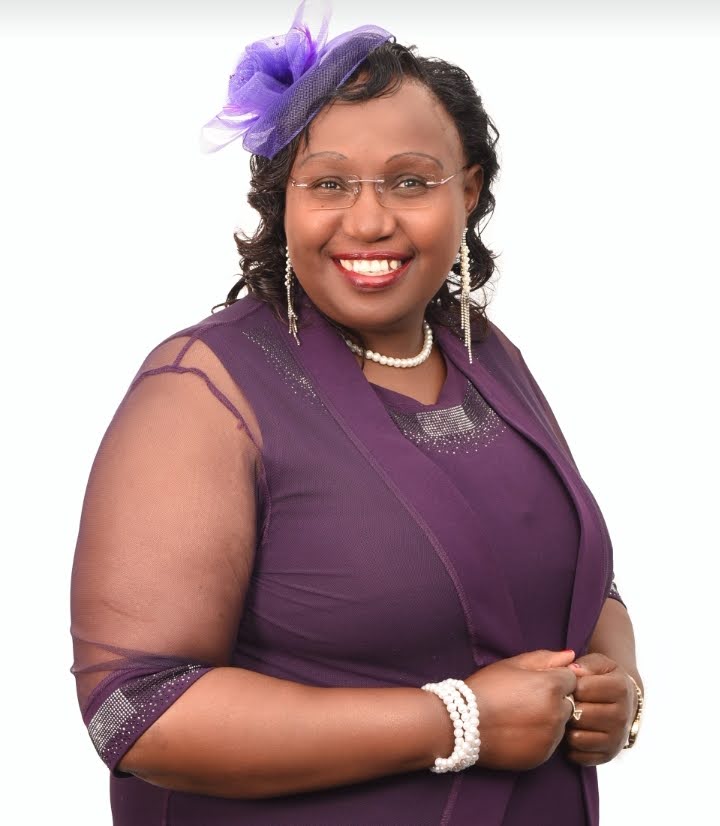
A Kenyan presidential candidate, Ambassador Esther Waringa, has called on the African Union (AU) and its member States to dismantle structural barriers preventing women from ascending to presidential office across Africa.
Waringa made the call on Friday at the Continental Summit on Structural Barriers to Women’s Presidential Leadership and What Must Change, convened by the LOANI Women in Geopolitics Desk under the African Summit on Inclusive Leadership and Governance.
Addressing delegates from Nairobi, the President of Public Service Governance International (PSGI) and presidential candidate in Kenya said Africa’s global rise would depend not only on its population and natural resources but on inclusive leadership at the highest levels.
“Africa stands not as a continent of potential alone, but as a continent of imminent global influence,” she said, adding that entrusting women with executive power would unlock a “leadership dividend” capable of strengthening stability, accelerating development and enhancing global credibility.
Only Six Female Heads of State
Waringa noted that since independence movements began across the continent, Africa has had only six female heads of state or government. They include:
Ellen Johnson Sirleaf of Liberia (2006–2018).
Joyce Banda of Malawi (2012–2014)
Catherine Samba-Panza of Central African Republic (2014–2016)
Ameenah Gurib-Fakim of Mauritius (2015–2018), Samia Suluhu Hassan of Tanzania** (2021–present), Netumbo Nandi-Ndaitwah of Namibia (2025–present).
She argued that the low number was not due to a lack of qualified women but rather systemic obstacles embedded in political structures.
“The question is not whether Africa has capable women. We are here as capable women. The question is whether our systems allow them to rise,” she said.
Structural and Institutional Barriers
Waringa identified patriarchal political systems, male-dominated party structures and financing mechanisms, electoral violence, and media bias as key structural barriers.
According to her, many African political systems evolved from traditional patriarchal structures, male-led liberation movements and military-influenced governance frameworks, where leadership has historically been framed as masculine.
She also highlighted limited access to party nomination processes, lack of financial backing, exclusion from inner political circles and male-dominated patronage networks as significant hurdles for women seeking presidential tickets. Campaign financing, she said, remains a major impediment.
Electoral violence and gender-based intimidation, including cyber harassment and cultural resistance to female leadership, further discourage capable women from contesting, she added.
Economic and Cultural Constraints
The Kenyan candidate linked political underrepresentation to broader economic inequality, noting that women in many African countries own fewer large businesses, have less control over land and capital, and earn lower incomes on average.
She also cited early marriage, unequal access to education, entrenched domestic role expectations and restrictive religious interpretations as long-term pipeline barriers limiting women’s rise through ministerial, military and party leadership tracks.
Waringa urged the African Union to move beyond policy declarations and enforce its gender equality commitments, including the Maputo Protocol and Agenda 2063.
She called on the AU to develop continental standards for party gender parity, promote public campaign financing frameworks that support women candidates, strengthen monitoring of gender-based electoral violence and establish protection mechanisms for female aspirants.
Among her recommendations was the creation of a Pan-African Women Presidential Leadership Forum to mentor future female heads of state and strengthen women’s capacity in governance, financing and diplomacy.
Despite the challenges, Waringa acknowledged progress in several countries, citing increased numbers of women speakers of parliament, greater cabinet representation and constitutional reforms. She pointed to countries such as Rwanda, Ethiopia and Tanzania as examples where structural reforms have improved women’s political representation, though she noted that presidential offices remain largely outside gender equity frameworks.
She concluded by urging African leaders to intentionally redesign political systems to make women’s presidential leadership the norm rather than the exception.
“Let this summit mark a turning point,” she said. “Within the next generation, it should no longer be remarkable to see a woman president in Africa. It should simply be normal.”