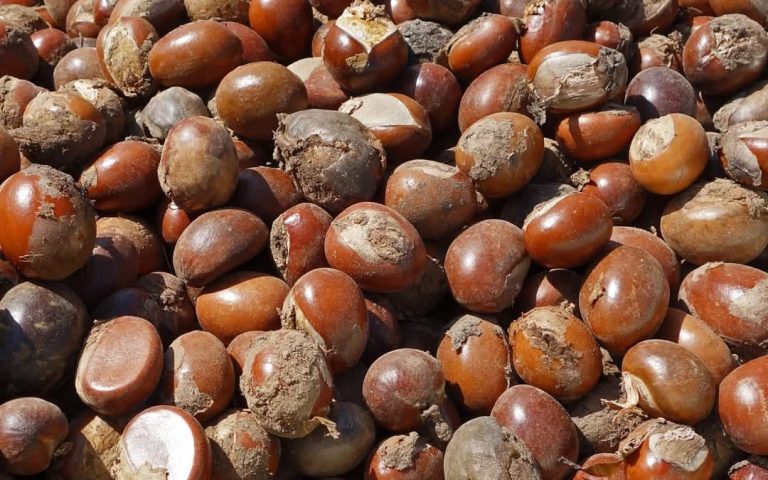
President Bola Ahmed Tinubu has approved a one-year extension of the ban on the export of raw shea nuts, effective from February 26, 2026, to February 25, 2027.
The statement was signed by Bayo Onanuga, Special Adviser to the President on Information and Strategy.
The move, announced as part of the administration’s economic policy direction, is aimed at accelerating industrial development, strengthening domestic value addition, and advancing the objectives of the Renewed Hope Agenda.
According to the presidency, the continued restriction is expected to deepen local processing capacity, improve livelihoods in shea-producing communities, and boost Nigerian exports built on value-added products rather than raw commodities.
To implement the policy, the President authorised the Federal Ministry of Industry, Trade and Investment and the Presidential Food Security Coordination Unit (PFSCU) to coordinate a unified, evidence-based national framework aligning industrialisation, trade, and investment priorities across the shea value chain.
He also approved the adoption of an export framework developed by the Nigerian Commodity Exchange and ordered the withdrawal of all waivers that previously allowed the direct export of raw shea nuts. Any surplus production must now be exported strictly through the NCX framework in line with approved guidelines.
In addition, the Federal Ministry of Finance has been directed to provide access to a dedicated NESS Support Window to enable the Ministry of Industry, Trade and Investment pilot a Livelihood Finance Mechanism designed to strengthen production and processing capacity.
Shea nuts — oil-rich fruits harvested from trees across Nigeria’s savanna belt — are processed into shea butter, widely used in cosmetics, hair products, and edible cooking oil. The Federal Government noted that processed shea butter can sell for between 10 and 20 times the price of raw nuts, making local processing economically beneficial.
The government reaffirmed its commitment to policies promoting inclusive growth, local manufacturing, and Nigeria’s competitiveness in global agricultural value chains.