The Presidency has moved to dispel what it described as widespread misinformation surrounding the migration partnership between Nigeria and the United Kingdom, insisting that the Memorandum of Understanding signed by both countries does not require Nigeria to accept foreign nationals other than its own citizens.
In a statement, Special Adviser to the President on Information and Strategy, Bayo Onanuga, said the agreement, signed on the sidelines of President Bola Ahmed Tinubu’s state visit to the UK, is aimed at strengthening immigration cooperation between both nations and promoting safe, orderly and regulated migration.
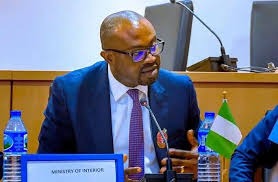
According to him, the Memorandum of Understanding on immigration cooperation was signed by Nigeria’s Minister of Interior and the UK Secretary of State for the Home Department.
Onanuga explained that the 12-page agreement provides a framework for enhanced bilateral cooperation in tackling irregular migration and related offences, in line with the immigration and citizenship laws of both countries, as well as existing international treaties, conventions, protocols and charters.
He stressed that nowhere in the memorandum is Nigeria obligated to receive non-Nigerian nationals.
“Nationals to be repatriated must have undergone multiple levels of identification and verification, and where errors occur, they are returned to the requesting country at the requesting country’s cost,” he stated.
He added that both Nigeria and the United Kingdom are expected to work together to ensure the dignified return of their nationals who do not, or no longer, have the legal right to enter or remain in the territory of the other country.
The presidential aide noted that a central condition of the agreement is that returnees must be bona fide nationals of the receiving country and must be treated with dignity and respect, with full regard for their human rights and fundamental freedoms.
He also said law enforcement authorities in both countries are required to take necessary steps to protect the interests and wellbeing of citizens of either party and prevent conflicts arising from migration-related issues.
Highlighting a key provision of the MoU, Onanuga said returnees are entitled to travel with their legally acquired personal belongings, unlike in the past when many deported migrants reportedly returned with nothing.
He cited Article 12 of the agreement, which provides that every returnee must be given adequate opportunity to arrange for the transfer or disposal of property in the territory of the requesting party, under the supervision of the mission of the requested party.
Onanuga further said the agreement protects the rights of persons facing return, especially where they have pending claims under domestic or international human rights laws. Such claims, he said, must be considered in accordance with the relevant laws of each country.
He noted that appeals may arise in cases where affected persons have lawfully lived most of their lives in the requesting country and are socially and culturally integrated there, or where they may face serious obstacles to reintegration in the country of return.
According to the statement, Article 9 of the MoU clearly outlines the conditions for the return of migrants, including identification checks before departure and upon arrival, coordination between both countries, and the use of valid travel documents.
The statement explained that returns may be carried out on scheduled or specially chartered flights, with the requesting country required to provide flight details and particulars of each returnee at least five working days before departure.
It added that return may be processed using an original valid passport or, in some cases, through an expedited process involving a UK Letter where biometric or other strong evidence confirms nationality.
Onanuga said that where Nigerian authorities are not satisfied with a returnee’s identity within five working days of submission of the UK Letter, they are expected to provide detailed reasons, in which case the removal would be deferred.
He also pointed to a safeguard in the agreement which states that if later evidence proves that a returned person is not a national of the requested country, the requesting country must take the individual back at its own cost.
The presidential aide maintained that Nigeria has not surrendered its sovereign right to document its citizens, noting that Article 9(3) makes it the sole responsibility of the Nigeria Immigration Service to issue and manage Nigerian travel documentation required under domestic law.
He said this responsibility remains entirely separate from the UK Letter process and includes handling travel documents and onward transmission from the issuing office to enable entry into Nigeria.
On reintegration, Onanuga said Article 11 of the MoU provides that every returnee will have access to basic arrival and reintegration support in the receiving country.
He said short-term support may include airport reception, accommodation, onward transportation, care packs and small cash assistance, while medium-term support could cover family reunification, access to documentation, referrals to local services, and mental health or counselling services where necessary.
He added that longer-term assistance may include access to a Returnee Education and Entrepreneurship Fund, support for entering the local job market, business start-up assistance, vocational training, further education, and legal migration pathways.
According to him, the agreement, like similar arrangements signed in 2012, 2017 and 2022, is valid for an initial five-year period and may be renewed for another five years by mutual consent.
Onanuga urged media organisations to seek clarification on sensitive issues before publication in order to avoid misleading the public.