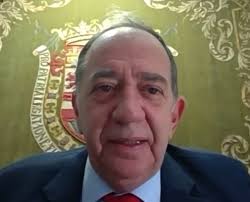
The Spanish Ambassador to Nigeria, Juan Ignacio Sell, has called for urgent action to address the intersection of climate change and public health in Nigeria.
He made the call during media training in Abuja with the theme “Telling the Human Health Story in Times of Planetary Crisis”, where he urged federal and state governments to prioritise coordinated health and climate responses.
It was reported that the training was organised by Nigeria Health Watch (NHW), in collaboration with the Embassy of Spain in Nigeria.
Applications were submitted, and two NAN journalists were selected among others whose applications demonstrated exceptional journalistic experience, dedication to health and climate change reporting, and a strong motivation to combat misinformation in these critical areas.
The training was to equip journalists with valuable skills and insights to enhance their reporting and contribute meaningfully to public discourse on health and climate change.
Ms Gloria Pallares, a United Nations Consultant on Global Health, Environment and Development, explained the urgent need for integrated policies and increased funding.
Pallares noted that “only a small fraction of climate-related funds were directed to health, in spite of growing evidence linking climate change with public health risks.”
According to her, less than one per cent of climate funding is allocated to health initiatives, while only six per cent of countries’ climate action plans directly address health.
She warned that the lack of investment hampers vital adaptations, such as building resilient healthcare infrastructure and training community health workers, leaving health systems ill-prepared for climate-driven challenges.
She highlighted the alarming rate of land degradation in regions such as Africa and Latin America, where over 60 per cent of land is compromised due to unsustainable practices.
“This degradation threatens food security, impacting public health by reducing access to nutrition. Without intervention, large areas of fertile land could become barren by 2050, leading to widespread hunger and malnutrition,” she said.
She stressed the need for policies that include soil health in climate adaptation efforts.
She advocated an “all-society approach,” urging collaboration across sectors to strengthen health systems, manage drought and enhance food security.
Drawing on Spain’s experience, where agriculture accounts for 80 per cent of water use, she called for policies that would integrate water and land management with health objectives.
“The climate crisis isn’t just environmental; it’s a public health emergency. Coordinated action is essential for a sustainable future,” she stated.
Ms Racheal Abujah, a Health Correspondent with NAN, urged agencies and state governments to prioritise health in climate policies, advocating reforms that align financial decisions with health benefits, noting that “the time for piecemeal approach is over.
“Climate change is not just an environmental issue; it is a human health crisis.”
Abujah added that robust policies and investments that would address both health and climate are essential to protect communities.
Mr Tzar Oluigbo, a Health Journalist with NHW, pointed out the irreplaceable nature of the soil, which can take hundreds of years to form but can be washed away in a single flood season.
He said that with 65 per cent of land in Africa already degraded, there is the urgent need to adopt land management practices to ensure future food security.
“This degradation is man-made, and urgent intervention is needed,” Oluigbo said.
Mr Chinonso Kenneth, Publisher of The Solutions Paper, reflected on the training, saying it expanded his understanding of how drought, rather than just floods,critically impact food security and public health.
During the workshop, Mr Abara Erim, the Programme Manager, NHW, addressed the problem of health information disorder.
He said “incomplete, misleading, and maliciously informed opinions hinder development and obstruct health solutions.”
Erim added that climate change misinformation can delay urgent climate action.
Ms Beloved John, a Health Journalist with Premium Times, said “the training opened my eyes to the risks of misinformation on health and climate issues.
“Learning to distinguish between misinformation, disinformation and misinformation is invaluable, enabling me to dig deeper and foster a clearer
understanding of climate-related health impacts.”