BY TAIWO OGUNMOLA -OMILANI
For years, the challenge of unpaid pension arrears, delayed gratuities and differences in pension administration across States has remained one of the difficult issues confronting Nigeria’s retirement system.
For retired public servants, particularly those in States where pension obligations have accumulated over the years, the debate is no longer only about payment. It is increasingly about whether the existing constitutional framework provides enough room for a uniform and effective pension system across the country.
According to Ibrahim Buwa, Head of Media and Corporate Communication at the National Pension Commission (PenCom), one of the major solutions to the challenges confronting state pensioners is to amend the Constitution and move pensions from the Concurrent Legislative List to the Exclusive Legislative List.
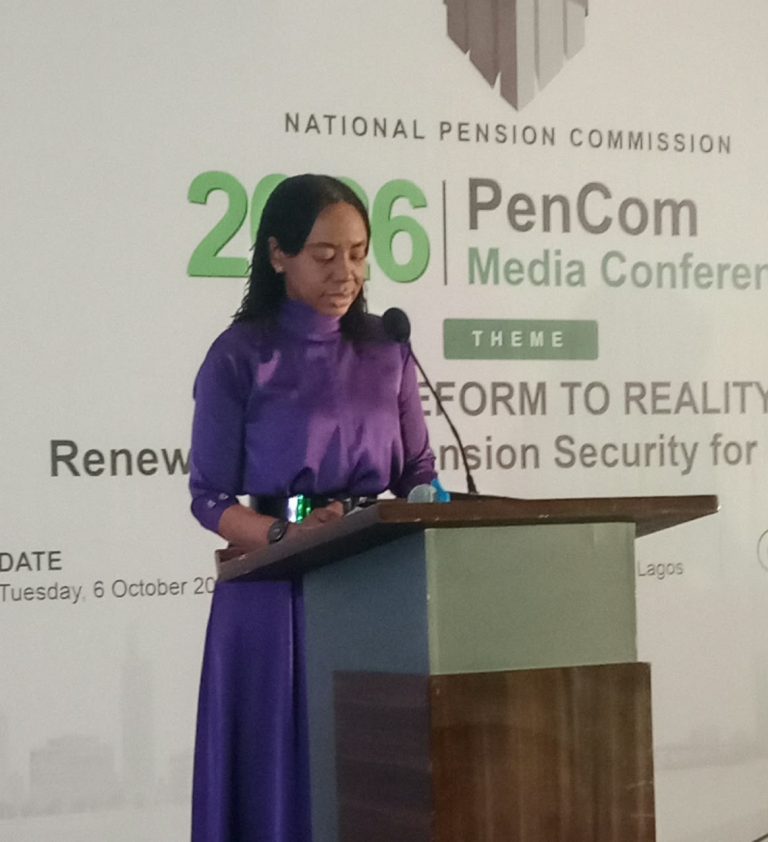
Buwa made the submission while responding to questions from journalists at PenCom’s 2026 media conference, themed, “From Reform to Reality: Renewed Hope, Pension Security for Nigerians,” held at the Lagos Marriott Hotel, Ikeja.
He explained that while there was no need to amend the Pension Reform Act itself, the constitutional position of pensions on the Concurrent Legislative List remained a major issue.
“The solution to that is to seek a constitutional amendment to remove pensions from the concurrent legislative list and take it to the exclusive legislative list,” he said.
He explained that moving pensions to the Exclusive Legislative List would require a constitutional amendment involving the National Assembly and the State Houses of Assembly.
According to him, the process would require the National Assembly to pass the amendment, followed by approval by two-thirds of the 36 state Houses of Assembly before it would return to the National Assembly and subsequently be presented to the President for assent.
The State Pension Question
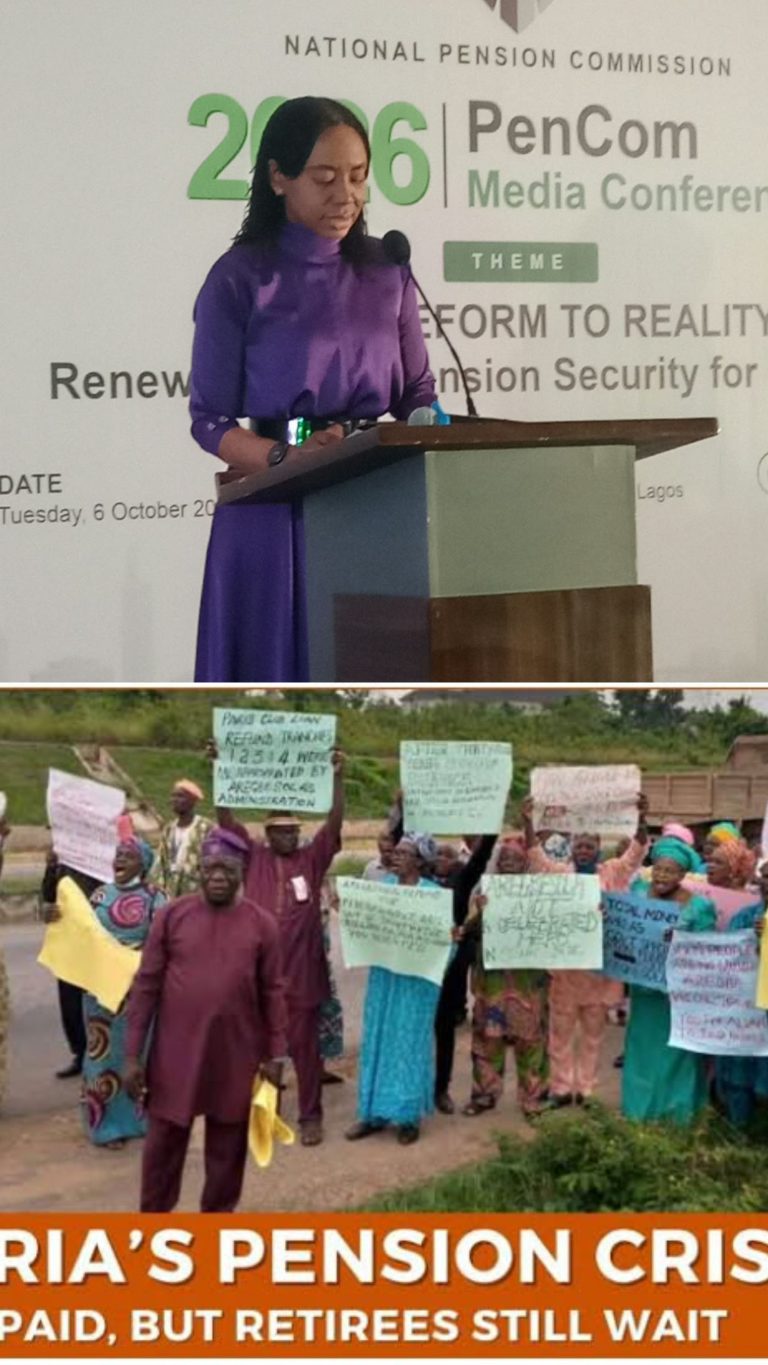
The debate over State pension administration has become particularly significant as pensioners across the country continue to demand payment of outstanding benefits.
In Lagos, pensioners on August 31, 2026, gathered at the Lagos State Government Secretariat and the House of Assembly complex to press for outstanding pension adjustments and wage awards.
The protest came amid a prolonged dispute between retired Lagos public servants and the state government over pension increases, consequential adjustments and wage awards which the retirees said remained unpaid.
While PenCom acknowledged the challenges surrounding State pension administration, Buwa said the commission continued to advocate for States to adopt the Contributory Pension Scheme.
He said PenCom had been scheduled to make a presentation to the National Economic Council, where State governors would be further enlightened on the benefits of joining the scheme.
The commission, he said, would continue its advocacy efforts, but lacked the authority to sanction state governors.
“Under the federal system that we run, not even the President is in a position to sanction the state governors,” he said, stressing that each tier of government operates as an independent authority.
Buwa, however, noted that pension administration had improved in several states under the current administration, with some governments settling long-standing arrears of pensions and gratuities.
The 25 Per Cent Question
Another issue that dominated discussions at the conference was access to 25 per cent of retirement savings for specific purposes, particularly mortgage financing and temporary loss of employment.
Buwa clarified that the provision allowing contributors to access 25 per cent of their Retirement Savings Account was not a general provision for withdrawing pension savings.
He said the provision for mortgage financing was specifically tied to the purchase of a property through a mortgage arrangement.
The 25 per cent, he explained, was designed to assist contributors with the equity contribution required by mortgage institutions before they could obtain a housing loan.
He also dismissed claims that contributors should be required to pay as much as 80 per cent to access the facility, saying such a demand should not arise under the existing framework.
According to him, PenCom had licensed primary mortgage institutions after discovering that some were being used as conduits for accessing pension funds without genuine mortgage transactions.
He said the commission was reviewing the guidelines to prevent such practices and ensure that pension funds were accessed only for purposes permitted by law.
On temporary loss of employment, Buwa explained that the Pension Reform Act 2014 allows a contributor who loses a job and is unable to secure another employment within four months to access 25 per cent of their Retirement Savings Account, subject to the required documentation.
Beyond Reform to Reality
The discussions at the conference reflected a broader question confronting Nigeria’s pension industry: how can years of regulatory reforms translate into tangible improvements for workers and retirees?
PenCom Director-General, Omolola Oloworaran, outlined plans for a Pension Transformation Agenda 2030, designed to provide a long-term framework for deepening reforms, improving operational efficiency and strengthening confidence in the pension industry.
Under the proposed agenda, the pension industry is also expected to play a greater role in financing infrastructure development through responsible long-term investments.
PenCom, however, stressed that such investments would be guided by appropriate safeguards to protect pension assets and ensure that contributors’ interests remain paramount.
The commission also urged employers to remit pension contributions promptly, stressing that the success of the pension system depended not only on regulatory reforms but also on employer compliance and active participation by workers.
Contributors were encouraged to monitor their pension accounts and hold relevant institutions accountable for the management of their retirement savings.
Preparing for Retirement
PenCom also highlighted the importance of preparing workers before they leave active service.
Buwa said the commission, alongside Pension Fund Administrators, conducts pre-retirement workshops to prepare workers for life after employment.
He said the guidelines require workers to approach their PFAs with the necessary documentation six months before retirement.
The commission also maintains engagement with the Nigeria Employers’ Consultative Association, which has been represented on PenCom’s board since the establishment of the commission in 2004.
A New Chapter for Pension Security
Beyond policies and regulations, PenCom is seeking to deepen public understanding of the pension system.
The commission is scheduled to hold its National Pension Week from October 26 to 30 as part of efforts to raise awareness about developments in the pension industry and engage stakeholders on the future of retirement security in Nigeria.
It has also launched Pension Chronicles, an initiative designed to document and communicate developments in the country’s pension sector.
The initiatives reflect PenCom’s broader objective of moving the industry beyond policy changes towards measurable improvements in pension payments, benefit processing, coverage and retirement security.
But for millions of Nigerians approaching retirement, the ultimate test of the reforms will remain the experience of pensioners themselves.
Whether reforms translate into timely payments, reduced arrears, easier access to legitimate benefits and greater protection for retirement savings will determine how far Nigeria has truly moved from “reform to reality.”
And for State pensioners caught between constitutional responsibilities and years of accumulated liabilities, the call for pension to be moved from the Concurrent Legislative List to the Exclusive Legislative List signals a much bigger conversation — one about who should ultimately bear responsibility for guaranteeing the retirement security of Nigerian workers.