Home Blog Page 94

Wike, Fubara, Chinda meet for four-hour reconciliation talks in Rivers

0

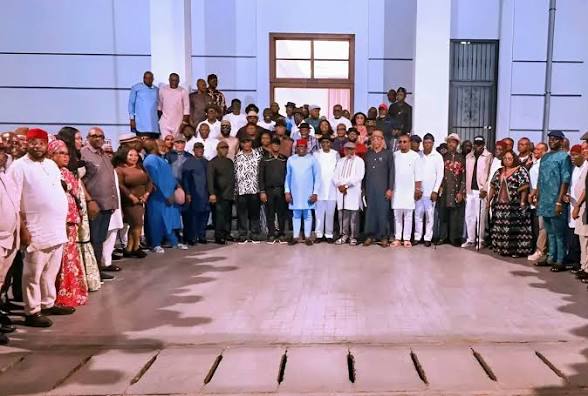
FCT Minister Nyesom Wike, Governor Siminalayi Fubara and APC governorship candidate Kingsley Chinda held a four-hour closed-door meeting in Port Harcourt on Tuesday as efforts to cement their emerging political rapprochement in Rivers State gather pace.

Wike and Chinda arrived at the governor’s residence in Port Harcourt at about 4pm on Tuesday alongside their supporters and met with Fubara and members of his political camp.

The meeting, which lasted until about 8pm, brought together political figures and supporters from both sides of the divide as efforts continue to consolidate the emerging rapprochement in the state.

It was also the first known occasion on which Fubara personally hosted or participated in a reconciliation meeting involving his supporters, marking another development in attempts to rebuild relations among the previously divided political camps.

The meeting comes after years of political disagreements that created significant divisions among political actors in Rivers State, including the prolonged dispute between Fubara and members of the state House of Assembly.

With tensions between the camps appearing to have eased, the latest engagement is being viewed as part of a broader effort to move beyond past disagreements and establish a more coordinated political relationship.

However, the participants declined to disclose what was discussed or the outcome of the meeting.

Wike, Chinda and their supporters did not speak to journalists after leaving the governor’s residence. Fubara and members of his team also did not issue any statement on the discussions.

The silence has left the specific issues considered during the four-hour meeting undisclosed.

Sun

World Bank sees Nigeria’s growth rising to 4.4% by 2027

0

•Reforms, stronger private investment to power recovery
The World Bank has raised its forecast for Nigeria’s economic growth in 2026 to 4.3 per cent, up from the 4.0 per cent expansion recorded in 2025, as improving macroeconomic stability and a gradual recovery in private investment strengthen the country’s outlook.

The projection was contained in the lender’s October 2026 Africa Economic Update, released on Tuesday. The World Bank also projected that Nigeria’s economy would grow by 4.4 per cent annually in 2027 and 2028.

The lender attributed the improved outlook to the impact of ongoing economic reforms, better macroeconomic management, strengthening investor confidence and a gradual revival in private-sector investment.

“Economic activity in Nigeria is projected to strengthen from 4.0 percent in 2025 to 4.3 percent in 2026, before edging up to 4.4 percent annually in 2027–28, supported by improving macroeconomic stability, strengthening investor confidence, and a gradual recovery in private investment,” the World Bank said.

Nigeria was listed alongside Angola, Ethiopia and Zambia among the Sub-Saharan African economies whose growth forecasts were upgraded in the latest assessment.

Andrew Dabalen, the World Bank’s chief economist for Africa, said the region continued to demonstrate resilience despite a difficult global environment, with growth forecasts revised upwards for nearly three-quarters of countries.

“These gains reflect years of reforms and improved economic management,” Dabalen said, while stressing that the next challenge would be to translate stronger growth into more jobs and better opportunities.

The World Bank raised its forecast for Sub-Saharan Africa’s economic growth in 2026 to 4.3 per cent, from 4.1 per cent in its April projection. The new outlook reflects stronger domestic demand, improved macroeconomic resilience and investments connected to the global energy transition and digital technologies.

However, the lender warned that the region continued to face risks from geopolitical tensions, higher energy prices, tighter global financial conditions, climate shocks, insecurity and elevated debt-servicing costs.

The revised outlook follows stronger-than-expected domestic economic activity in the second quarter of 2026.

According to the National Bureau of Statistics, Nigeria’s real gross domestic product grew by 4.43 per cent year-on-year in Q2 2026, compared with 4.23 per cent in the corresponding quarter of 2025 and 3.89 per cent in the first quarter of 2026.

The performance was supported by improvements in both the oil and non-oil sectors. The oil sector expanded by 7.31 per cent, while the non-oil economy grew by 4.31 per cent.

The services sector remained the largest contributor to output, accounting for 56.62 per cent of real GDP and growing by 4.60 per cent during the quarter. Agriculture also improved, expanding by 4.39 per cent, compared with 2.82 per cent a year earlier.

Average daily crude oil production rose to 1.72 million barrels per day in Q2, from 1.55 million barrels per day in the preceding quarter and 1.68 million barrels per day in Q2 2025.

Despite the stronger headline growth, the recovery remains uneven. Industrial growth slowed to 3.96 per cent from 7.46 per cent a year earlier, highlighting continued pressures from high operating costs, infrastructure gaps, energy shortages and limited access to affordable finance.

The World Bank also urged African governments to invest in artificial intelligence and build AI-ready economies to raise productivity, support innovation and create jobs. It identified Nigeria, Kenya and South Africa as among the countries where AI adoption is already gaining ground.

For Nigeria, the upgraded forecast suggests that reforms are beginning to improve confidence and economic activity. However, sustaining growth at the projected pace will depend on whether macroeconomic stability can translate into stronger private investment, higher productivity, job creation and improved living standards.

Sun

Lagos Deputy Governor, Obafemi Hamzat Celebrates Wife’s birthday

0


Happy Birthday to my baby girl, Oluremi. ❤️

I thank Allah (SWT) for the gift of you and for the love, strength and support you bring to our family.

May Allah bless you with sound health, peace, happiness and many more fulfilling years. May He continue to guide, protect and strengthen you in all that you do.

Happy Birthday, my love. May Allah keep you always. Ameen. ❤️

KOH Inspires.

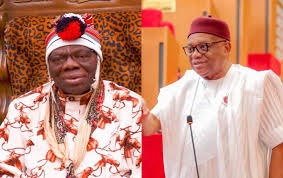
Kalu Mourns Igwe Ukoha

0

I received with sadness the news of the passing of HRH Ezie Ukoha Kalu Ukoha, JP, the Paramount Ruler of Ebem Ujuruezie Ancient Kingdom, at the age of 89.

Only a few months ago, we celebrated his 89th birthday and 35 remarkable years on the throne. Today, we mourn a respected royal father who devoted a greater part of his life to the service of his people.

Ezie Ukoha was a man of peace and wisdom. For decades, he remained committed to the unity and progress of Ebem Ohafia and to the preservation of the rich customs and traditions of our people. His passing is a painful loss not only to Ebem Ohafia but to the entire Ohafia community and Abia State.

I extend my heartfelt condolences to his family, the Council of Chiefs and Elders, the Ebem Ohafia Development Union and the entire people of Ebem Ohafia.

As we mourn, we should also take solace in his long and fulfilled life, his 35 years of service on the throne and the legacies he left behind.

May Almighty God grant his family and the entire Ebem community the strength to bear this great loss, and may the soul of Ezie Ukoha Kalu Ukoha rest in peace. Amen.

Senator Orji Uzor Kalu
Senator Representing Abia North Senatorial District
Former Governor of Abia State

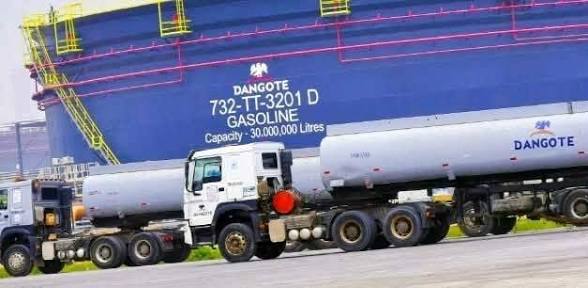
Marketers kick as Dangote halts petrol sales to fuel importers

0

•Warns against disruption in supply chain
A fresh crisis is brewing in Nigeria’s downstream petroleum sector following the decision by Dangote Petroleum Refinery to stop selling petrol to major oil marketers importing petroleum products into the country.

The refinery’s latest position is that it will no longer supply petrol to marketers found to be blending its products with imported petrol.

The development has, however, triggered a backlash from marketers, who dismissed the allegation of product blending as unfounded and warned that the move could disrupt petrol supply and distribution across the country.


National President of the Petroleum Products Retail Outlets Owners Association of Nigeria (PETROAN), Mr. Billy Gillis-Harry, told Daily Sun that there was no justification for accusing marketers of blending petrol sourced from Dangote Refinery with imported products.

Gillis-Harry said the industry should instead encourage multiple sources of petroleum products to guarantee supply security and healthy competition.

“There is no reason why anyone would want to blend Dangote fuel with imported products. It is an unfounded allegation.

“Let Dangote continue to refine petroleum products while those in the business of importing fuel also continue to do so. All we want in the industry are multiple sources of petroleum products. That is the way we should go.

“We hope that the latest decision by Dangote does not cause disruption in the sales and distribution of products in the downstream sector,” he warned.

A senior official of the Depot and Petroleum Products Marketers Association of Nigeria (DAPPMAN), who pleaded anonymity, also confirmed the development to Daily Sun, saying some of its members had received confirmation that the refinery had stopped selling petrol to importers.

“Yes, it is true that the Dangote Refinery has stopped sales of petrol to importers. Some of our members have confirmed the development,” the official said.

The latest development comes against the backdrop of the Federal Government’s continued approval of petrol importation by local marketers, despite sustained opposition from Dangote Refinery.

Two weeks ago, the Nigerian Midstream and Downstream Petroleum Regulatory Authority (NMDPRA) issued fresh licences for the importation of 830,000 metric tonnes, equivalent to about 1.1 billion litres of petrol, into Nigeria during the fourth quarter (Q4) of 2026.

According to an S&P report, the licences were issued as the government seeks to bolster domestic supply amid increasing pressure in the international fuel market.

“The Nigerian Midstream and Downstream Petroleum Regulatory Authority has issued 830,000 metric tons of gasoline import permits to six retail companies for Q4,” the report stated.

It said the companies and the licensed gasoline volumes matched the allocations made in June for the third quarter.

The beneficiaries were Matrix Energy, AA Rano, AYM Shafa, NIPCO, Pinnacle Oil and Bono Energy.

The approval has further intensified the disagreement between Dangote Refinery and the downstream regulator over the continued issuance of petrol import licences to local marketers.

On March 25, the NMDPRA eased petrol import restrictions by granting a new batch of licences to local marketers.

Two months later, Dangote Refinery instituted a fresh suit at the Federal High Court in Lagos challenging import licences issued or renewed by the NMDPRA for fuel marketers.

The dispute over petrol imports also suffered a setback for the regulator last month when a Federal High Court in Abuja ordered the NMDPRA to continue issuing and renewing petroleum products import licences to three major oil marketers.

Justice Inyang Ekwo, in a judgment delivered on September 28, 2026, ruled that the regulator’s refusal to grant or renew import licences for Matrix Energy, AA Rano and AYM Shafa was in “direct non-compliance” with the Petroleum Industry Act (PIA).

The judge specifically directed the NMDPRA to continue granting, issuing, extending, renewing or reissuing licences, permits and authorisations for midstream and downstream petroleum operations, particularly the importation of petroleum products, once the companies satisfy all statutory and regulatory requirements.

The judgment followed a suit filed in June by the three marketers challenging the NMDPRA’s refusal to regularly issue or renew their petroleum products import licences.

Sun

INEC moves to take action on Supreme Court ruling

0

• Studies CTC of apex court’s judgment . Lagos, Kano, Kaduna lead in voter register
• Explains immediate non-overhaul of election technology

The Independent National Electoral Commission (INEC) has begun studying the Certified True Copy (CTC) of the Supreme Court judgment on provisions governing political party membership registers and primaries to determine its next line of action ahead of the 2027 general elections.


INEC Chairman, Prof. Joash Amupitan, disclosed this at a world press conference and national stakeholders’ meeting in Abuja on Tuesday, saying the commission received the CTC that morning following complaints and enquiries about the implications of the ruling.

Amupitan said political parties, aggrieved aspirants and members of the National Assembly had drawn the commission’s attention to the September 24 judgment in INEC v. Zenith Labour Party, which affirmed the constitutionality of Section 77(5)–(7) of the Electoral Act 2026 and upheld its revised election timetable.

“We only received the certified true copy of this judgement this morning, and it is being reviewed,” he said.

The chairman said the commission would determine and announce the appropriate action after examining the judgment.

Amupitan also explained that his determination to overhaul election technology immediately had been constrained by the crowded electoral calendar. He identified the mode of results collation as a potential difference between the 2023 elections and the forthcoming polls, while pledging to leave INEC a stronger electoral umpire.

On party nominations, he said 18 of the country’s 22 registered political parties had submitted 36 presidential and vice-presidential candidates.

Accord, the All Progressives Grand Alliance (APGA) and Youth Party did not nominate presidential candidates, while the New Nigeria Peoples Party (NNPP) withdrew its presidential nomination during the substitution window.

He explained that parties submitted their candidate lists through the INEC Candidates Nomination Portal, supported by Form EC9 affidavits of constitutional compliance, in accordance with Section 29 of the Electoral Act 2026.

“To protect the integrity of party nominations and prevent unlawful exclusion or arbitrary candidate substitution, the commission implemented an administrative safeguard, which was the pre-uploading of candidate names onto the INEC Candidates Nomination Portal, strictly verified against INEC’s primary election monitoring reports and internal party appeal outcomes,” he said.

For the National Assembly elections, Amupitan said 21 parties sponsored 1,313 senatorial candidates and 3,547 House of Representatives candidates. Their personal particulars were published on August 1, while the final list was released on September 12, subject to court orders.

For the governorship and state assembly elections, 21 parties nominated 936 governorship and deputy governorship candidates and 9,692 state assembly candidates.

Their personal particulars were published on August 29, with the final list scheduled for publication on October 10.

Amupitan said INEC received 112 formal complaints over nominations, including allegations of unlawful withdrawal and substitution of candidates, typographical errors and other legal issues.

“All 112 formal complaints received from aspirants, candidates, and parties regarding the nomination process were investigated and resolved except those pending in the Court,” he said.

The chairman also appealed to the Federal Government to release the remaining tranche of the commission’s budgetary allocation to enable it to complete preparations for the elections.

He said funds already released had enabled INEC to meet obligations to international vendors, finance the production of critical election technology, upgrade infrastructure and sustain operational deployments nationwide.

“Executing a national election of this magnitude requires robust financial backing and fiscal discipline. The Federal Government has maintained its commitment to democratic governance through the timely release of statutory budgetary allocations to the Commission.

“Operating under a framework of transparent fiscal management, these funds have enabled us to meet international vendor obligations, finance the production of critical election technology, upgrade physical infrastructure and sustain multi-stakeholder operational deployments nationwide.
“However, we expect the prompt release of the remaining budget to ensure seamless execution of the remaining activities,” he said.

At the meeting, described by the commission as marking the 100-day countdown to the polls, Amupitan announced a national voter register of 103,428,715.

Lagos had the highest number of registered voters, with 7,488,633, followed by Kano with 6,570,276 and Kaduna with 4,662,640.

Ekiti had the lowest figure among the states, with 1,055,708, followed by Bayelsa with 1,200,691 and Yobe with 1,733,671.

The Federal Capital Territory had 1,732,043 registered voters, placing it below Yobe when the states and the FCT were considered together.

Other states with high voter populations included Katsina, 3,876,051; Rivers, 3,736,434; Oyo, 3,588,111; Delta, 3,525,988; Benue, 3,057,225; Ogun, 3,037,981; and Bauchi, 3,012,547. Gombe had 1,768,566 registered voters.

“Male voters account for 53,528,218, representing 51.75 per cent of the register, while female voters number 49,900,497, representing 48.25 per cent.

“The age profile shows that the register is dominated by voters aged 35 to 49 years, who account for 43,265,946 voters, or 41.83 per cent of the total,” he said.

Amupitan announced that the register would be displayed nationwide for public scrutiny from October 9 to 15, after which claims and objections would be addressed.

“In compliance with Section 19(1) of the Electoral Act 2026, the Register of Voters will be displayed for public scrutiny from October 9 to 15, this month, not later than 90 days before the general election. Claims and objections arising from the nationwide display at Registration Areas will be addressed thereafter,” he said.

Inspector General of Police, Olatunji Disu, represented by Francis Idu, assured foreign observers of their safety, saying the police had sufficient personnel and an election security plan to protect them.

“We have mapped out our strategy and we have more than enough manpower to protect all of them. Our election template will guarantee their security,” he said.

Disu disclosed that security conditions in Edo, Enugu, Taraba and Plateau, among other states, would be reviewed alongside areas described as ungoverned spaces to address concerns before the elections.

“Come December this year, we will do the review to ensure that any act of violence in the states will be curtailed and arrested. We will launch operation no electoral violence to discourage it in whatever form or shape during the election,” he said.

Amupitan said INEC would convene a meeting with security chiefs to review arrangements for the polls.

“We are planning to engage with the stakeholders so that all the stakeholders including the IGP, all the Service Chiefs and heads of other security agencies will be physically present so that we can sit down again and review our strategy concerning all these security concerns.”

He assured Nigerians that lessons from previous elections would guide the commission’s preparations.

“We have continued to improve our electoral management and we are determined to ensure that the 2027 elections meet the expectations of Nigerians.

“The lessons from the elections we have conducted will guide us as we prepare for the 2027 general elections. Our objective is to ensure that the process is credible, transparent and acceptable to Nigerians.

“Nigerians should be assured that INEC will do everything within its mandate to deliver free, fair, transparent and credible elections in 2027,” he said.

Sun
Diezani’s UK acquittal irrelevant, EFCC tells Abuja court

0


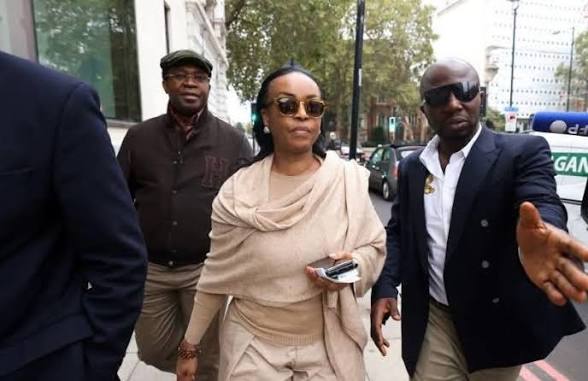
The Economic and Financial Crimes Commission (EFCC), has urged the Federal High Court in Abuja to disregard the acquittal of former Petroleum Resources Minister, Diezani Alison-Madueke, by a United Kingdom court, arguing that the judgment has no bearing on the ongoing Nigerian case over assets linked to her.

The commission made the submission in a further counter-affidavit filed against Diezani’s application to tender the June 17 judgment of the Southwark Crown Court in London, where she was discharged and acquitted of bribery allegations.

Diezani had sought to introduce the UK judgment as a subsequent development in her suit challenging the forfeiture and proposed sale of properties and personal effects she says affect her proprietary rights.


However, the EFCC argued that the UK proceedings were separate from the Nigerian case and had no bearing on the issues before Justice Inyang Ekwo.

The commission stated: “The proceedings before the Southwark Crown Court, London, United Kingdom, and the purported acquittal of the applicant therein, are in respect of a proceeding that is not being prosecuted before any Nigerian court and have nothing to do with the substantive suit before this honourable court.”

The EFCC further argued that the forfeiture orders underpinning the disposal of the assets remained valid and had not been set aside.

It maintained that the properties were disposed of pursuant to final forfeiture orders made by the Federal High Court, including orders issued by Justice C.A. Obiozor on July 9, 2019, and Justice I.N. Oweibo on September 10, 2019.

The commission also said notices had been published in newspapers inviting interested parties to show cause why the assets should not be forfeited before the final orders were made.

“The final forfeiture orders pursuant to which the sale of the properties was conducted are still in force and have not been set aside. The forfeited properties were disposed of in accordance with due process of law,” the EFCC stated.

The anti-graft agency also disputed the scope of Diezani’s claims, arguing that the relevant forfeiture order cited in its counter-affidavit related exclusively to jewellery and did not extend to other categories of assets or properties.

Diezani, through her counsel, Prof Mike Ozekhome, SAN, is asking the court to consider her UK acquittal in determining her challenge to the forfeiture proceedings.

She argued that the acquittal was a material development because it occurred after she filed her earlier court processes and was relevant to issues including the absence of a conviction, fair hearing, due process and the legality of depriving her of property.

Her legal team maintained that she was not asking the Nigerian court to overturn or sit on appeal over the UK judgment, but wanted the court to consider it as a subsequent fact in deciding the case.

Diezani has also argued that she was never convicted of any unlawful activity in Nigeria to justify the forfeiture of her properties and that some of the orders were obtained through misrepresentation, suppression and non-disclosure of material facts.

She further claimed that she had been outside Nigeria since 2015 for medical treatment and was not served with relevant court processes, while maintaining that some of the forfeiture orders were made without giving her an opportunity to be heard.

The former minister is also challenging the EFCC’s proposed sale of assets while related cases remain pending, insisting that the commission should retrieve properties allegedly sold to third parties.

The EFCC, however, maintained that criminal proceedings had been instituted against Diezani in Nigerian courts following investigations into her activities while she served as a public official.

Justice Ekwo has adjourned the case until November 11 for hearing of the pending applications, leaving the court to determine whether Diezani’s UK acquittal should be admitted and considered in the Nigerian asset-forfeiture dispute.

Sun

2027: Kano ​‌‌⁠‌​‌‍⁠⁠‍​​⁠​‌​‌‌‌​North APC warns members against anti-party activities

0


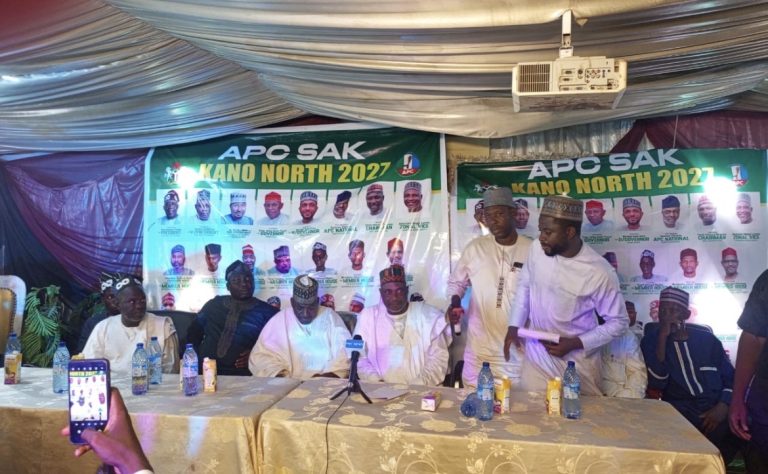
The All Progressives Congress (APC) leadership in Kano North Senatorial District has reaffirmed its commitment to the party and called on members to support all its candidates in the 2027 general elections.

The Zonal APC Chairman, Abdullahi Lamba-Bichi, made the call at a meeting with party stakeholders and members on Tuesday in Kano.

Lamba-Bichi urged party leaders, stakeholders and members across the senatorial district to remain united and loyal to the APC.

He said the party’s position was to support President Bola Tinubu, Gov. Abba Kabir-Yusuf, Sen. Barau Jibrin for Kano North Senatorial District and other APC candidates for the National and State Assemblies.

He urged members to uphold party discipline, unity, loyalty and respect for constituted authority.

The chairman warned that members found engaging in anti-party activities, factionalism or actions capable of undermining the party and its candidates would face disciplinary measures in accordance with the APC Constitution.

According to him, such measures may include suspension or expulsion where warranted.

Lamba-Bichi said that the commitment remained under the leadership of Sen. Barau Jibrin, Deputy President of the Senate and APC leader in Kano North Senatorial District.

He urged party members to work collectively to strengthen the APC and ensure its success at the 2027 elections.

He described the APC as one family and called on members to remain committed to the party’s objectives.

YINKA BABALOLA CONVENES ALL NIGERIA ROTARY PEACE SUMMIT IN LAGOS

0


*Rotary International President brings leaders and changemakers together around governance, justice, equity and sustainable peace*

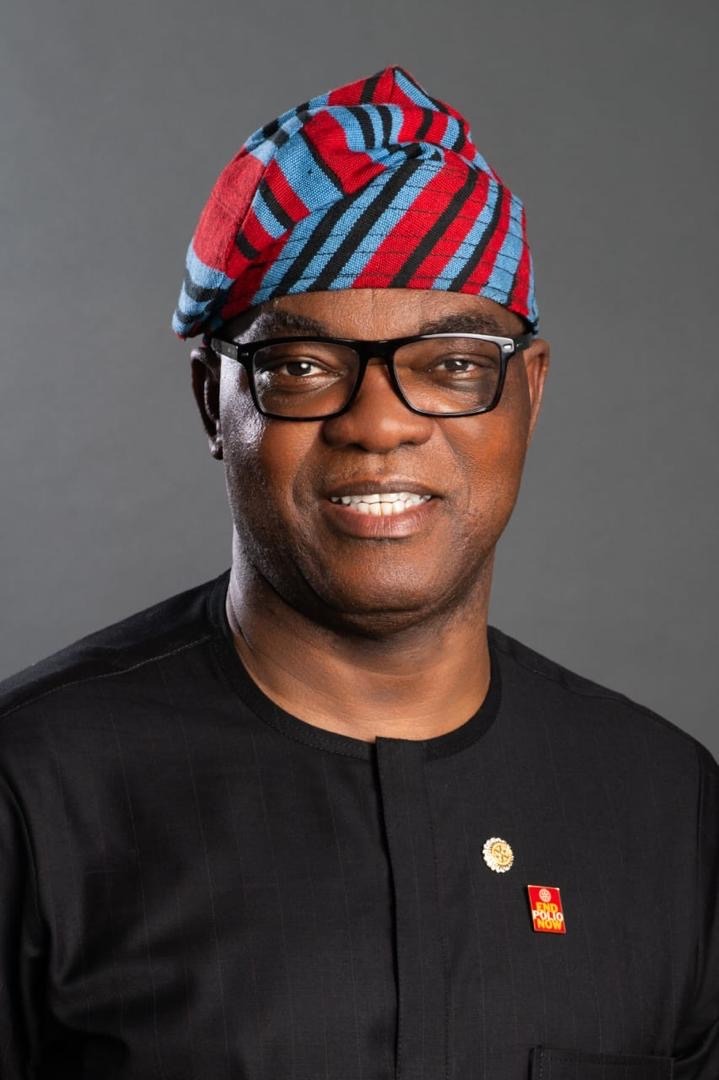
Rotary International President Olayinka Hakeem Babalola will convene the All Nigeria Rotary Peace Summit 2026 in Lagos on Saturday, 7 November 2026,
The Summit will bring together Rotarians, leaders, peace advocates and key stakeholders for what is expected to be an important national conversation on building sustainable peace in Nigeria.
With the theme, “Good Governance, Justice and Equity: Foundations for Sustainable Peace,” the Summit will hold at the Victoria Garden Event Centre, Alausa, Ikeja, Lagos, beginning at 9:00 a.m.
The message behind the gathering is simple but urgent: peace cannot be separated from the conditions in which people live.
For President Yinka Babalola, the Summit reflects Rotary’s conviction that peace is not merely the absence of conflict. It must be built deliberately; through dialogue, understanding, stronger communities and institutions that give people confidence in the future.
“Peace must become more than something we wish for.,” says President Yinka. “It must be something we deliberately build in our communities, through our institutions and in the way we treat one another.”
The Summit therefore moves beyond speeches to a deeper question: What must Nigeria do differently to create the conditions in which sustainable peace can flourish?
Participants will explore the relationship between good governance, justice, equity, economic opportunity and community development, while seeking practical pathways for collaboration and action.
Rotary’s involvement is significant. Across Nigeria and around the world, Rotarians work at community level in areas including peacebuilding, education, maternal and child health, disease prevention, economic empowerment, water and sanitation, and community development. The Peace Summit brings those experiences into a wider national conversation, and it is coming at a perfect time as Nigeria prepares to head to the polls.
Rotarians, professionals, traditional and community leaders, civil society actors, young people, policymakers, the private sector, development partners and other stakeholders are invited to be part of the conversation.

“This is more than a gathering,” the Summit organisers said. “It is a call to reflection, dialogue and action especially because building peace is everybody’s business.”

Signed
*Ibim Semenitari*
Co-Chair, Media & Communications Committee
All-Nigeria Rotary Peace Summit

Emefiele:  Finance Ministry Unaware of N124.86bn CBN Withdrawal,   Witness Tells Court

0

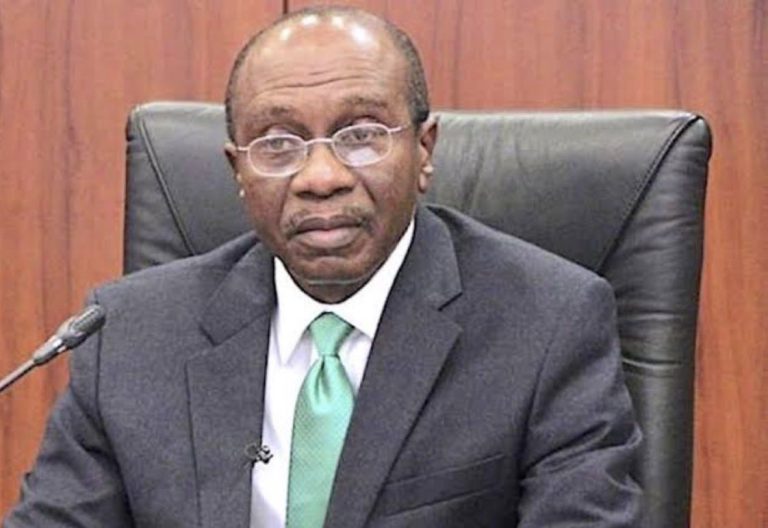
A Director in the Federal Ministry of Finance, Ali Mohammed, on Tuesday, October 6, 2026, told the Federal Capital Territory, FCT High Court sitting in Maitama, Abuja, that the Ministry was not aware of the withdrawal of N124.86 billion from the Central Bank of Nigeria, CBN.

Mohammed, who testified as the prosecution witness 10, PW10, in the ongoing trial of the former CBN Governor, Godwin Emefiele, disclosed this while being led in evidence by the prosecution counsel, Abbas Mohammed.

The witness said he appeared before the court because his Ministry received a letter from the investigation team concerning N154 billion said to have been withdrawn by the CBN.

Explaining his position and responsibilities in the Ministry, Mohammed said, “My Lord, the Department of Home Finance is made up of three functions based in three divisions, that is State and Public Finance, Trade Division and Banking and Other Financial Institutions. The three divisions are under me.”

He further explained that, upon receiving the letter from the investigator, he contacted the three divisions under his supervision to ascertain whether they were aware of the transaction.

According to him, none of the three divisions was privy to the transaction.

He said the State and Public Finance Investment Division was the relevant division because it oversees the CBN.

Asked what action he took after making the inquiries, Mohammed said, as a civil servant, the Minister of Finance does not pay money directly to individuals or organisations.

He said he was therefore required to write a letter through the Permanent Secretary of the Ministry of Finance to the Office of the Accountant-General of the Federation, OAGF, to ascertain whether the office was aware of the transaction, being the custodian of payments for the Federal Government.

The witness told the court that the OAGF responded in writing that it was not aware of the transaction and concluded that the money was a direct credit from the CBN.

Speaking on why he wrote the OAGF, Mohammed said it was the appropriate office to approach and that he relied on the response from the Accountant-General before responding to the Special Investigator.
“I responded via a memo of what has transpired between my office and that of the AGF and sought for clearance for such document to be forwarded to the Special Investigator. Subsequently, the letter was forwarded,” he said.

He said the documents forwarded to the Special Investigator included a letter bearing the logo of the Federal Ministry of Finance, which he signed, as well as an attached letter signed by the Accountant-General of the Federation.

The witness identified the documents when they were shown to him in court and the prosecution subsequently sought to tender them in evidence.

Asked about the whereabouts of the originals, Mohammed said they had been forwarded to the Special Investigator.

He therefore sought to tender certified true copies of the documents.

Defence counsel, Olalekan Ojo, SAN, said he had no objection.

Consequently, Justice Maryanne Anineh admitted and marked the documents as Exhibits AJ, AK and AL.

While examining the exhibits, the prosecution asked the witness to explain the purpose of Exhibit AJ.

Mohammed said the import of the document was that the withdrawal of N124.86 billion was not known to the Federal Ministry of Finance.
He explained that he relied on the letter forwarded to the Ministry by the Accountant-General before signing the document.

On Exhibit AL, the witness said it was a confirmation from the Office of the Accountant-General of the Federation that it was not aware of the transaction involving N124.86 billion.