Home Blog Page 82

Hardship: IMF advocates cash transfers to vulnerable Nigerians

0

Cuts global growth outlook to 3.1% as energy costs mount

The International Monetary Fund (IMF) has called on the federal government to provide targeted cash transfers and temporary income support to vulnerable households struggling with rising food and energy costs.

The Fund said the measures would help reduce poverty and improve food security, but stressed that they must be backed by a credible plan to strengthen government revenue and ensure public funds are spent effectively.

It also projected global economic growth of 3.1 per cent this year but warned that rising energy and commodity prices, mounting public debt and uncertainties surrounding artificial intelligence (AI) are putting the world economy under pressure.

The Fund said global growth was expected to rise to 3.4 per cent in 2027, but warned that risks remained tilted to the downside, with further disruptions capable of weakening economic activity and pushing inflation higher.

These come as the IMF noted that resilience of the global economy is reaching its limits as rising energy and commodity prices, mounting debt and uncertainty over artificial intelligence threaten growth, with developing economies such as Nigeria facing heightened risks.

Chief of the IMF Research Department’s World Economic Studies Division, Deniz Igan, made the call during a press briefing on the Fund’s October 2026 World Economic Outlook at the IMF/World Bank Annual Meetings in Bangkok, Thailand on Tuesday.

She said food and energy security were critical to addressing the rising cost of living in Nigeria and other developing economies.

“In this environment, we advocate cash transfers and targeted, temporary income support for the most vulnerable households in Nigeria,” Igan said.

She added: “Such transfers can help reduce poverty and improve food security. This should be accompanied by a credible medium-term fiscal framework. That framework should focus on improving the quality of public expenditure and strengthening revenue collection.”

Igan stressed that increased spending to support vulnerable households must go hand in hand with better revenue collection to ensure that government finances remained sustainable.

The IMF’s recommendation comes amid persistent pressure on Nigerian households from high food prices, energy costs and other essential expenses, despite the country’s position as a major oil producer.

Speaking on how monetary policy should respond to an oil price shock that is not driven by rising demand, the Fund’s Economic Counsellor and Director of Research, Silvana Tenreyro, said central banks faced a difficult balance between controlling inflation and protecting economic activity.

She explained that when oil prices rise without an increase in demand, inflation could worsen even as economic activity slows, making it more difficult for central banks to decide how aggressively to tighten monetary policy.

According to her, monetary authorities must keep inflation on a path towards their targets, usually within two to three years, while considering the damage higher interest rates could cause to economic activity.

She said the appropriate response would depend on each country’s circumstances, including its existing inflation rate, labour market conditions and exposure to higher energy prices.

Tenreyro further said the Nigerian government needed to address the rising cost of essential goods, particularly food and energy, while ensuring that vulnerable households did not bear a disproportionate share of the burden.

“These are essential items and their prices have risen significantly. The question is how to address these pressures while ensuring that the burden does not fall disproportionately on vulnerable households,” she said.

Tenreyro described Nigeria as a clear example of the difficulties facing energy-exporting countries, where higher oil earnings do not necessarily translate into affordable living costs for citizens.

Although economic growth had held up, she said many Nigerians continued to suffer from food insecurity and the high cost of essential goods.

The IMF’s position comes as the Fund warned in its latest global outlook that rising energy and commodity prices, mounting public debt and uncertainty surrounding artificial intelligence (AI) were putting the resilience of the global economy under pressure.

It projected global economic growth of 3.1 per cent in 2026, with risks tilted to the downside.

The Fund warned that further energy supply disruptions could weaken growth and push inflation higher, while a possible correction in AI-related investments could affect financial markets and economic activity beyond the technology sector.

For Nigeria, higher international oil prices could increase export earnings and government revenue but also raise domestic fuel, transport and production costs, putting additional pressure on households and businesses.

The Fund urged governments to strengthen public finances, improve the quality of spending and build financial buffers to withstand future economic shocks.

The IMF and World Bank Group Annual Meetings are holding in Bangkok from October 12 to 18, bringing together policymakers, central bank governors, financial institutions and business leaders to discuss global economic and development challenges.

Sun
Kalu: SEDC must operate from South-East, not Abuja

0


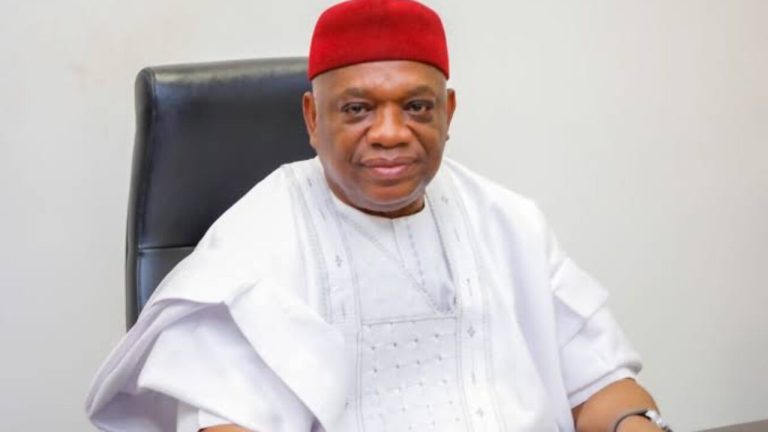
Senator Orji Uzor Kalu has insisted that the South East Development Commission (SEDC) must operate from the South-East and extend its activities to the grassroots so that people across the region feel its presence.

Kalu, chairman of the Senate Committee on SEDC, spoke on Monday during an oversight visit to Enugu, where he expressed satisfaction with the commission’s office facilities and said the committee would return in December to assess further progress.

“The only problem that I said before, and I repeat, is that they cannot operate from Abuja. They must operate from where they are set up. This is where they are located,” he said.

The Abia North senator said the inspection had addressed the committee’s earlier concern about the commission operating from Abuja, with lawmakers inspecting its current office and another building provided by the Enugu State Government, which was being completed for its use.

“Where we were before and now, we are making progress. We were quarrelling about our office being in Abuja. Today, we have seen two offices, one where they are staying and the one they are completing, which the government of Enugu State gave them.

“So, we are very impressed. Once they are back home to do what they are sent to do, nobody has problems with them,” he said.
Kalu, a former governor of Abia State, urged the management to sustain the progress observed by the committee and take the commission’s work beyond its administrative base to communities across the five South-East states.

“We also want them to go to the grassroots to show the South Eastern people that they are on the ground,” he said.

Commending the improvements since the committee’s earlier engagement with the commission, he added: “Well, so far, we are making very good progress, unlike when we started. I’m sure you, both me and my colleagues, are seeing very serious progress. I hope that the commission, especially the management team, sustains this progress.”

He said the committee’s December visit would provide another opportunity to review the commission’s operations and progress on its headquarters.

While acknowledging that the SEDC was still a new institution, Kalu urged its management to remain focused on its mandate.

“It’s a new commission, less than one year. We are making progress. We are impressed with what we have seen so far. So far, so good,” he said.

“Our quarrel before was about being in Abuja and not being in Enugu. So that quarrel is over now.”

Sun

Magodo Residents Urge Sanwo-Olu to Stop Wetland Encroachment

0


The Magodo Phase II Residents Association has called on Lagos State Governor Babajide Sanwo-Olu to stop an alleged attempt by developers to construct access roads through the estate to a protected wetland.

The association raised the alarm over the presence of articulated trucks and heavy-duty equipment outside the Shangisha Gate, expressing fears that they could be used to force entry into the estate.

In a statement issued on Monday and signed by its chairman, Niyi Odusi, the association urged the governor to order the immediate removal of the vehicles and secure the estate’s boundaries.

“The estate is currently under threat. A large number of articulated trucks and heavy-duty equipment are currently stationed outside the Shangisha Gate, ready to make a forceful entry,” the statement said.

The residents warned that the proposed development could compromise the Magodo wetland, disrupt natural drainage systems and increase the risk of flooding in surrounding communities.

They also urged the state government to honour assurances allegedly given to the association on November 26, 2023, by the Commissioner for Physical Planning and Urban Development, Oluyinka Olumide, that access routes would not be created through the estate to the undeveloped land.

The association said the alleged project would conflict with the state’s environmental policies on wetland protection, citing warnings attributed to the Commissioner for the Environment and Water Resources, Tokunbo Wahab, about the potential consequences of building on the wetland.

According to the residents, Wahab had warned that flooding resulting from construction on the wetland could make the Isheri-Oshun flooding disaster look like “child’s play”.

They also cited the position of a former Commissioner for Physical Planning and Urban Development, Francisco Abosede, who they said had described the soil as unsuitable for residential construction.

The association explained that, under the Lagos State Master Plan, the wetland served as a natural stormwater collection area for Agidingbi, Ikeja, Ogba and Alausa.

It warned that interfering with the wetland could obstruct drainage and expose Magodo and other parts of the state to severe flooding.

“If this wetland is compromised, the stormwater from Ikeja, Alausa, and surrounding areas will have nowhere to go, resulting in catastrophic flooding that will submerge Magodo and threaten the state’s seat of power,” the statement added.

The residents vowed to resist any development they believed threatened their lives, properties and environment, urging the state government to enforce its laws and act swiftly to secure the Shangisha Gate axis.

The statement did not identify the developers allegedly involved in the proposed project or provide details of any construction approval issued for it.

credit punch

Ekiti at 30: Memo to Ekiti Youth

0


By Rt. Hon. Hakeem A. Jamiu, PhD


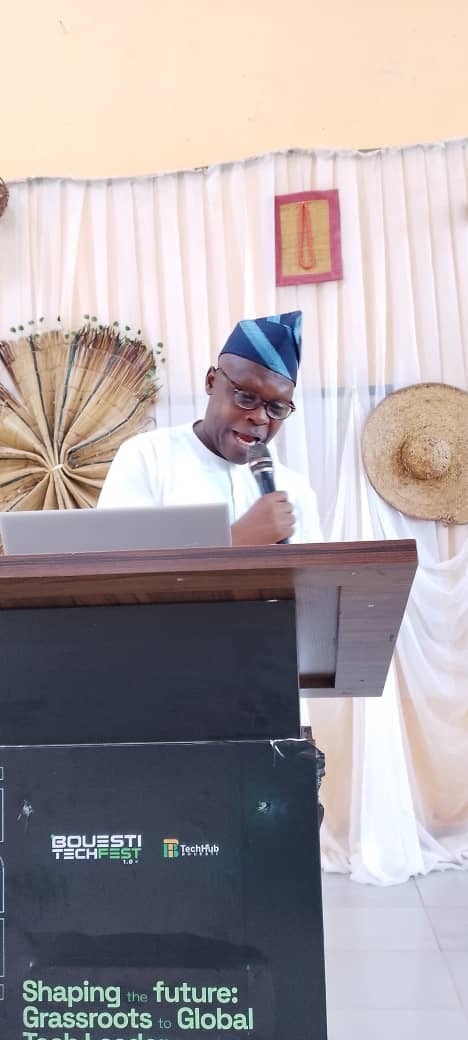
On Wednesday October 7, 2026, I delivered a lecture at the Bamidele Olumilua University of Education, Science and Technology, Ikere-Ekiti (BOUESTI), at the invitation of the Federation of Ekiti State Students Union. I am compelled to compress the 16-page lecture into an article for wider circulation.

I did not go to BOUESTI to give another motivational speech about youths being leaders of tomorrow. We have heard enough of that. I went to share a blueprint. For generations, Ekiti built its identity on a sacred contract: parents sacrificed for education, children acquired degrees, secured stable employment, and lived decent middle-class lives. That contract gave us our name as the Education State. But the economy around education has changed. Your certificate remains valuable. Your intellectual training remains indispensable. The certificate alone is no longer enough.

The modern labour market is asking harder questions: What can you do? What problem can you solve? Can you analyse data, design, write, build a website, market a product, use artificial intelligence responsibly, work with people you have never met physically? The World Economic Forum’s Future of Jobs Report 2025 estimates 170 million new jobs will be created globally by 2030 while 92 million will be displaced, and 39% of workers’ current skills will become outdated by 2030. Skill gaps are now the biggest barrier to business. This should be a source of worry for us. Twenty years ago the pathway was simple: degree, government or corporate job, pension. Today another pathway is visible: skill, internet, global market, multiple income streams, continuous learning. A designer in Ado can serve a client in Abuja, a graduate in Ikere can work remotely for a company in Toronto. Location no longer decides the size of your market.

The modern economy rests on three pillars. First, digitisation and digitalisation. Digitisation is converting analogue to digital – scanning a paper to PDF. Digitalisation is changing how work is done with digital tools. Banking, commerce, journalism, education, even customer relations are now digital. The World Bank’s Nigeria Digital Economy Diagnostic notes Nigeria is capturing only a fraction of its digital potential. The ITU’s 2023 assessment of Nigeria’s digital skills shows the gap between skills supply and demand . Second, demonstrable skills. Pitan and Adedeji’s work on skills mismatch among Nigerian graduates found that certificates do not automatically translate to labour-market competence. Employers want evidence. Third, entrepreneurship as value creation. Not simply starting a company, but seeing the world differently. Instead of asking “Who will employ me?”, you must start asking “What problem can I solve?”


Why Ekiti? Why now? Because as Ekiti-born development expert Sina Byron, who is reviewing the Ekiti 30-Year Development Plan, told me: “There is no talent you are looking for that you cannot find in Ekiti.” Our youths are intelligent. But we must convert reputation into productivity. Ekiti’s opportunities go beyond white-collar jobs. Modern agriculture is not just planting and harvesting; it is agritech, logistics, storage, processing, branding, digital marketplaces. Tourism is not just Ikogosi Warm Springs and Arinta Waterfalls existing; it is storytelling, hospitality, photography, videography, online booking. The Ekiti Knowledge Zone – that 208-hectare special economic zone and technology park between Ado and Ijan beside the cargo airport, started by former Governor Kayode Fayemi and expanded by Governor Biodun Oyebanji – is meant to be a cluster where educators, researchers, innovators and industries collaborate to catalyse 26,000 jobs. That vision can only work if we have competent young people to populate it. There are five capabilities our youths must build to be able to compete effectively in the modern labour market. First is Digital Literacy. This is not six hours of scrolling. Learn to use technology productively such as; Google Workspace, Canva, professional email, online research, collaboration, using AI as an assistant not a substitute for thinking. The World Economic Forum lists AI and big data, networks and cybersecurity, and technological literacy among the fastest-growing skills, alongside creative thinking and resilience. Second is a Monetisable Skill. Every graduate should answer; what can I do that someone will pay for? content creation, video editing, graphic design, UI/UX, web development, data analysis, copywriting, photography, fashion, solar installation, e-commerce. Pick one. Learn it. Practise it. Build a portfolio. A certificate from 3MTT, ALX, Coursera or YouTube does not make you competent, the ability to use and create value out of this does. Third is Money and Business Literacy. Skill without financial discipline produces a broke expert. If a client pays you N100,000, that is not N100,000 for consumption. What did data, transport, and labour cost? What is profit, what is reinvestment? Learn pricing, record-keeping and cash flow. Start small, explore SMEDAN, Bank of Industry, NDE, but do not wait for N10 million. The fourth is Personal Branding. Thousands of brilliant Ekiti youths are invisible. If nobody knows what you write or design, talent remains hidden. Your phone is your classroom, office, research centre and marketing platform. Create a LinkedIn profile, a portfolio, a simple website, use WhatsApp Business professionally. Document learning. If you are doing something and people don’t know, you are like a man blinking in the dark. Fifthly, you must have a Problem-Solving Mindset. Stop seeing problems only to complain. See them as markets. Transport issues in Ado? Could technology or logistics help? Farmers losing produce? Could storage or digital linkage help? Culture? Could a Yoruba digital channel documenting Ekiti food, music, and history become global content? In one sentence, learn technology; develop a skill you can sell; learn how to manage money; make your competence visible; and train yourself to solve problems.

However, this burden cannot be on youths alone. Government must invest in broadband and power, Universities must teach practical application and companies must offer internships. That is why I propose a policy agenda.


First, a Youth Digital and Future Skills Mission where success is measured not by attendance but by jobs and contracts. Recently in my constituency, Irepodun/Ifelodun II, with Media for Human Development Foundation and MacArthur Foundation, we trained 50 youths in bag making, graphic design, shoe making, barbing, modern farming. We gave start-up kits worth N30,000-N50,000 to 30. Many were disappointed it wasn’t cash. Some sold the clippers and shoe machines. Less than 10 were serious. We need monitoring, not just training. Second, a Youth Digital Work Export Programme to connect trained youths to Lagos, Abuja, London, Toronto without relocating. Third, an Ekiti Student Innovation Challenge to solve real problems in agriculture, tourism, waste, education. Fourth, turn farms and tourist sites into youth innovation labs. Fifth, finance combined with mentorship is needed, not just cash. Finally, an Ekiti Youth Skills Passport to document verified skills alongside certificates.


The larger goal is a new social contract: government creates ecosystem, institutions build competence, private sector provides markets, youth convert opportunities to enterprise. So what should you do in the next 30 days after listening to this lecture? Learn, build, connect. Choose one credible course – 3MTT, ALX, Google, Coursera – and finish it. Build something that shows what you learned – a design, a website, a tourism campaign, a market strategy for garri or palm oil. Then connect – join tech communities, find mentors. Do not leave inspired today and return to old habits tomorrow. Momentum dies in 72 hours. Register for one course. Build one portfolio. Talk to one mentor.

The main purpose of this lecture is to reorientate Ekiti youths such that we must move from certificates to skills, skills to competence, competence to value, value to enterprise, enterprise to employment. Do not despise your certificate. But do not worship it either. Your degree is a licence; your skill is the vehicle. Imagine an Ekiti in the next 10 years where a student in Oye builds a digital enterprise for Nigeria, where a farmer uses technology to reach markets, where our culture becomes creative enterprise. Imagine where the question changes from “Who will give me a job?” to “What problem can I solve?” We have the certificates. Now we need the skills. We have the consumers. Now we need the creators. We have the problems. Now we need the problem solvers. Ekiti must move from Education State to Innovation State where knowledge is commercialised, talent does not have to japa to be valuable, and youths become architects, not just beneficiaries, of the future.

Rt. Hon. Hakeem Jamiu, PhD,

former Deputy Speaker of Ekiti State House of Assembly,

delivered this as a lecture at BOUESTI, Ikere-Ekiti on October 7, 2026

Alleged N69.15m Fraud: Witness Tells Court He Paid for Property Not Owned by Blessing CEO

0


At the continuation of the trial of social media influencer Blessing Nkiruka, (a.k.aBlessing CEO), on Monday, October 12, 2026, a prosecution witness, PW1, Dr Onuoha Okeigwe, told Justice R. A. Oshodi of the Special Offences Court sitting in Ikeja, Lagos, how he paid N69,150,000 for a five-year lease of a property allegedly represented to him as belonging to the influencer.

Blessing CEO was arraigned by the Lagos Zonal Directorate 1 of the Economic and Financial Crimes Commission (EFCC) on June 9, 2026, on a two-count charge bordering on obtaining money by false pretence and stealing, involving N69,150,000.

Count one reads in part: “That you, OKORO BLESSING NKIRUKA, on or about March 21, 2025, in Lagos, within the jurisdiction of this Honourable Court, by false pretence and with intent to defraud, induced Hope Chiropractic Health Clinic Limited to confer a benefit of N69,150,000 (Sixty-Nine Million, One Hundred and Fifty Thousand Naira) on you under the representation that the property located at No. 1 Tunbosun Osobu Street, Lekki, belonged to you and was leased to the company for a period of five years, a representation you knew to be false.”

The alleged offence is contrary to Section 1(2) and punishable under Section 1(3) of the Advance Fee Fraud and Other Related Offences Act.

The defendant pleaded not guilty to the charges when they were read to her.

The witness told the court that he contacted the defendant, who allegedly dismissed his concerns. The following day, a man identified as Mr Tom reportedly arrived with police officers and arrested some of the workers.

“I informed the defendant, and she claimed she did not know Mr Tom. I paid N100,000 to secure the release of my workers. Blessing still maintained that she did not know Mr Tom and that she was the owner of the property,” he said.

He also identified WhatsApp messages in which the defendant allegedly sent photographs of the building as evidence of her ownership.

The witness further told the court that he paid the defendant additional charges, including agency, legal and caution fees.

However, he maintained that the alleged misrepresentation was that the defendant was not the actual owner of the property, despite collecting N69,150,000 from him. He also stated that the defendant collected money from him and another victim for the same property.

Justice Oshodi adjourned the case until October 26, 2026, for continuation of the trial.

Dangote Refinery Extends IPO to October 27 as African Investor Demand Surges

0


Dangote Petroleum Refinery and Petrochemicals has extended the closing date of its Initial Public Offering (IPO) to Tuesday, October 27, 2026, following approval by the Securities and Exchange Commission (SEC), to accommodate growing investor interest across Africa and facilitate wider participation in the landmark share offer.

The extension comes as President/Chief Executive of Dangote Industries Limited, Aliko Dangote, disclosed that subscriptions had already exceeded the company’s original fundraising target, emphasising that the priority was not merely to raise capital but to enable more Africans to become shareholders in one of the continent’s largest industrial enterprises.

Speaking on the performance of the IPO during a visit by a delegation of Kenyan parliamentarians to the Dangote Refinery in Lagos, Dangote disclosed that investor demand had already substantially exceeded the amount the company originally intended to raise.

“The IPO is going very well. We will extend the date because we want a lot of African brothers and sisters to participate,” he said.

“Talking about the amount of money we want to sell, we have done much more than three, four times that amount already. So, it’s not about the amount. It’s about the number of people that want to participate in this offer. It means quite a lot.”

Dangote explained that discussions with the Nairobi Securities Exchange had helped the Group identify a framework for facilitating wider investor participation, which it was seeking to replicate across other African capital markets.

The arrangement is expected to provide investors in other African countries with more accessible channels for subscribing to the offer, subject to applicable regulatory requirements.

Dangote has consistently maintained that the IPO is a deliberate strategy to broaden ownership and allow millions of Africans to participate in the future growth of a major industrial enterprise.
In a formal notice to the investing public, Dangote Petroleum Refinery and Petrochemicals FZE announced that the application period for its offering of 4.1 billion ordinary shares at ₦525 per share, which opened on September 14, would now close on October 27 instead of October 13.

The offer, valued at approximately ₦2.15 trillion, ranks among the largest equity offerings in Nigeria’s capital market and represents a significant step in Dangote’s ambition to broaden African ownership of major industrial assets.

According to the company, the extension follows strong interest from eligible investors across Africa and other jurisdictions, alongside ongoing efforts to make participation more accessible beyond Nigeria.

These include expanding distribution channels and introducing depositary receipt programmes to facilitate cross-border investment.

The additional two weeks will also give prospective investors more time to complete account opening, identity verification and other regulatory requirements necessary to participate in the offer.

Managing Director and Chief Executive Officer of Dangote Petroleum Refinery and Petrochemicals, David Bird, said the extension reinforced the company’s commitment to making the offer accessible to a wider pool of African investors.

“We welcome the SEC’s approval of the extension, which will give more investors across Africa the opportunity to participate in the Offer,” Bird said. “From the outset, our ambition has been to enable as many people as possible to participate in the IPO and share in DPRP’s future growth.

The additional time will help us extend that opportunity to more investors across Africa.”
The decision to extend the offer also coincides with growing support for Dangote’s industrial investments in East Africa, where the Group is pursuing major projects under its Africa Vision 2030 strategy. In a significant endorsement, Majority Leader of Kenya’s National Assembly, Kimani Ichung’wah, reaffirmed the support of a parliamentary delegation for the Group’s investments in Kenya and the wider East African region, describing the Dangote East Africa Petroleum Refinery and Petrochemicals project in Lamu as a transformative undertaking whose economic significance transcends political administrations.

Ichung’wah, who spoke alongside other Kenyan lawmakers, including representatives of the parliamentary minority leadership, said Dangote’s industrial ambition went beyond commercial returns to transforming economies and shaping the development trajectory of nations.

“The audacity of the Dangote Group goes beyond looking for profits, but impacting the entire economy of a nation, shaping the destiny of a nation,” he said.

“We are also looking at it as an opportunity to reshape the destiny not just of the Kenyan state, but the East African region at large, and the global oil industry.”
The Majority Leader spoke during a visit by the Kenyan parliamentary delegation to the Dangote industrial complex in Lagos, where the lawmakers toured the 700,000 barrels per day Dangote Petroleum Refinery, Dangote Fertiliser Limited and supporting infrastructure. The visit afforded the lawmakers an opportunity to assess the scale of Dangote’s industrial investments in Nigeria and gain firsthand insight into the model being replicated in Lamu.

Ichung’wah said the delegation had come to reaffirm its support for the Group’s investments in East Africa and its efforts to expand African participation in the refinery IPO.

“We are here to restate our support for the Dangote Group and their investment in Kenya, in the East African region, and also to support the IPO,” he declared.

He recalled Dangote’s recent engagement with the Nairobi Securities Exchange, during which the industrialist invited Kenyan and other East African investors to participate in the public offer.

Addressing concerns that a change of government in Kenya could affect the Lamu refinery project, Ichung’wah stressed that its economic importance and regional significance extended beyond the tenure of any administration.

“This is a project that transcends any administration,” he said. “It is a project that is going to be impactful, not just to Kenya but to the region.”

He pointed to the participation of regional leaders at the Lamu groundbreaking ceremony as evidence of the project’s strategic importance to East Africa and its potential to deepen regional economic integration.

The parliamentary delegation included representatives of both the majority and minority leadership of Kenya’s National Assembly, lawmakers from Turkana, the country’s oil-producing region, representatives of Lamu County and members of the National Assembly’s Energy Committee.

Sanwo-Olu to Lagosian on cybersecurity: be vigilant

0


* Lagos joins global community to celebrate Cybersecurity Awareness Month

Lagos State has challenged its citizens to take responsibility for cybersecurity. October is the global Cybersecurity Awareness Month,
“Cybersecurity is a shared responsibility. Citizens must remain vigilant, understand common cyber risks, and take proactive steps to protect themselves from cybercriminals, Governor Babajide Sanwo-Olu said on Monday.” “Most victims of cybercrime are those who are unaware of basic digital safety practices—making public education essential,” the Governor added.

In a statement in Lagos on Monday, Gbenga Omotoso,
HC, Information and Strategy
Lagos State is participating in the Cybersecurity Awareness Month, joining the global community in promoting safer digital practices and strengthening cyber resilience.

According to him, This aligns with the global campaign led by the Cybersecurity and Infrastructure Security Agency (CISA), which emphasizes securing digital systems, improving cyber hygiene, and empowering citizens with practical steps to stay safe online.

Over the last three years, under the Sanwo-Olu administration, Lagos State has continued to champion innovation-driven, first-of-its-kind cybersecurity initiatives. Through the Cybersecurity Advisory Board and the Ministry of Innovation, Science and Technology (MIST), the State has implemented strategic programmes that reinforce digital trust and strengthen the security posture of businesses, government institutions, and citizens.

Earlier this year, Lagos State launched the Lagos State Cybersecurity Guidelines, a comprehensive framework outlining best practices for small, medium, and large businesses. These guidelines provide practical, scalable security measures tailored to each business category—ensuring that organizations across the State have clear direction on how to protect their digital assets.

The State has also invested significantly in capacity building, expanding cybersecurity training, awareness, and professional development across public institutions. In addition, Lagos is progressing toward major milestones, such as ISO 27001 certification and other advanced capabilities designed to enhance digital trust and safeguard critical digital infrastructure.

Omotoso said, Throughout October, Lagos State—through MIST and the Cybersecurity Advisory Board led by Prof. Fene Osakwe—will roll out multilingual awareness campaigns across social media and traditional media. These campaigns will be delivered in English, Yoruba, and Pidgin English, ensuring inclusivity and broad reach across all communities.

The focus will be on practical, everyday guidance to help residents avoid phishing scams, use strong passwords, enable multifactor authentication, and update their devices regularly.
These efforts align with global best practices and reinforce Lagos State’s commitment to building a digitally secure, innovative, and resilient economy.

“Lagos State wishes all Lagosians a Happy Cybersecurity Awareness Month and encourages everyone to stay informed, stay alert, and stay secure.”

US Elementary School Teacher Breaks Down After Only One of 34 Students Passes

0


An American elementary school teacher has reportedly broken down in tears over the challenges of teaching, expressing frustration after only one out of 34 students in her class reportedly passed an assessment.

The teacher’s emotional reaction was shared in X-handle post by Wall Street Apes on Monday, highlighting concerns about students’ academic performance and the challenges facing educators in the United States.

In the account shared online, the teacher described how some pupils struggled to copy words correctly from the classroom board, despite being instructed to reproduce what was written.

“I literally put the word on the board. I write it on the board and I say copy it, and they’re copying it wrong,” she reportedly said, expressing disbelief at the situation.

The teacher added that the experience had left her questioning herself and struggling with exhaustion.

“I’m exhausted — like, there’s some days that I like doing it, but man, to do that every single day, it’s exhausting. Breaks my heart,” she said.

She also expressed concern about what she perceived as a lack of parental involvement in their children’s education, arguing that pupils’ classroom performance could reflect inadequate support at home.

The incident has reignited online discussions about the responsibilities of parents, the effectiveness of the education system and the challenges teachers face in helping pupils meet academic expectations.

Court Dismisses Aisha Achimugu’s Fundamental Rights Suit Against EFCC

0

Justice M.S. Liman of the Federal High Court sitting in Abuja has dismissed a fundamental human rights suit filed by Abuja-based businesswoman, Aisha Achimugu against the Economic and Financial Crimes Commission, EFCC.

In the originating suit no : FHC/ABJ/CS/466/2026, Achimugu approached the court for determination of whether the defendant, EFCC’s action of searching her house and seizing her cars and jewelries and other items was within the powers of the Commission.

Achimugu also asked the court to enforce her rights to privacy, including an order of the court restraining the defendant from threatening or harassing and invading her private residence.

Part of her claim was for the court to award a N10,000,000,000 (Ten Billion Naira) damage against the EFCC for what she described as invasion of her privacy.

Delivering judgment in the suit on Monday, October 10, 2026, Justice Liman dismissed the suit and held that the defendant has the power to search the plaintiff’s property after receiving intelligence on the alleged criminal activities of the plaintiff. “EFCC has the right to search the residence,” he said.

The judge said that Achimugu and her legal representatives failed to show reason to warrant the kind of damage she demanded from the EFCC and equally dismissed the request for N10 billion damages.

On the whole, Justice Liman agreed that there was nothing that should have stopped the EFCC from carrying out its statutory duties. The court therefore held that the matter lacked merit and was dismissed because “ it is frivolous and it was brought in bad faith”. The damage she sought was also denied.

Reacting to the judgment, counsel to the EFCC, Emenike Mgbemele said the judgment was in the interest of justice, adding that the suit was a ploy to waste the time of the court.

2027: I Will Coordinate FCT For Tinubu’s Reelection, Wike Assures APC, PDP Stakeholders

0

…As PDP NASS Candidates Declare Support For APC Candidates

Minister of the Federal Capital Territory (FCT), Nyesom Wike, on Monday declared that he would lead the campaign to secure President Bola Tinubu’s re-election in the FCT as well as Rivers State in 2027, unveiling a cross-party mobilisation strategy involving stakeholders of the All Progressives Congress (APC) and the Peoples Democratic Party (PDP).

Wike, who spoke at a stakeholders’ meeting of the Rainbow Coalition in Abuja, described himself as the coordinator of the president’s re-election campaign in both FCT and Rivers State, insisting that political differences would not prevent members of the two parties from working towards a common presidential objective.

The minister said in the FCT, the coalition had agreed to support Tinubu’s re-election as well as the APC Senatorial and House of Representatives candidates.

“For the presidency, all of us have agreed that it is Bola Ahmed Tinubu. I am going to coordinate the FCT and Rivers State. So you can imagine how important it is,” he said.

“I am in charge of the FCT election. I am the commander of field operations as far as the FCT election is concerned.”

The meeting, which saw the PDP National Assembly candidates openly declaring support for the APC candidates, brought together APC and PDP stakeholders, including party chairmen, serving and former senators, candidates for the National Assembly and leaders from the six area councils of the FCT.

Wike said the gathering was designed to establish a common political front ahead of the 2027 general election and ensure that stakeholders understood the coalition’s objectives, regardless of the parties they might belong to in the coming months.

“I want to let all of you know that we are going to work together. Nobody should say, ‘I am PDP’ or ‘I am APC.’ For the purpose of this election, we are together,” he said.

The former Rivers State governor cited the 2024 Edo State governorship election as evidence that political coalitions could determine electoral outcomes, claiming that cooperation between elements of the APC and PDP had helped prevent the incumbent governor from installing a successor.

He said the experience reinforced his belief that political alliances could succeed when stakeholders agreed on a common objective.

Wike, however, clarified that the arrangement was primarily focused on the presidential election, leaving participating parties to determine their positions on other contests.

Making a case for Tinubu’s re-election, Wike challenged political leaders to identify any of the six area councils of the FCT that had not benefited from the administration’s infrastructure projects and institutional reforms.

He cited the establishment of the FCT Civil Service Commission, the appointment of an FCT Head of the Civil Service from within the territory’s workforce and the creation of the Women Affairs and Youth Development Secretariats as evidence of changes under the Tinubu administration.

According to him, the reforms had created opportunities for career progression among FCT civil servants and expanded participation in governance.

On infrastructure, the minister listed road construction and rehabilitation, school renovations, police stations and other public facilities among the projects being executed across the territory.

He expressed confidence that the administration’s performance would provide a strong basis for mobilising residents behind the president in 2027.

Wike also defended Tinubu’s economic reforms, acknowledging that some decisions had imposed temporary hardship but arguing that difficult measures were necessary to address longstanding economic problems.

“Changing the economy of a country is not like a prayer,” he said, adding that the benefits of economic reforms might not be immediate.

He further expressed support for the proposed establishment of state police, describing it as an important measure for tackling Nigeria’s security challenges.