Home Blog Page 8010

Eid-el-Fitri: NSCDC deploys 1,585 personnel in Ondo State

0

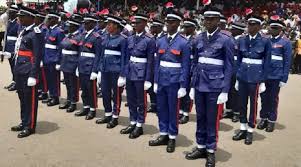
The Nigeria Security and Civil Defence Corps (NSCDC), Ondo State Command, has deployed no fewer than 1,585 personnel to ensure a hitch-free Eid-el-Fitri celebration in the state.

Mr Philip Ayuba, State Commandant of NSCDC, made this known in Akure on Sunday.

Ayuba said that the personnel had been strategically deployed for intelligence gathering, enforcement of interstate border restrictions, crime detection, safeguarding of critical national assets and infrastructure and maintenance of peace and order.

The commandant warned perpetrators of nefarious activities to desist from unscrupulous behaviour or face the wrath of the law.

He frowned at the attitude of commercial bus drivers and heavy duty vehicles hauling in travellers, thereby, violating government’s interstate movement restriction.

He charged the NSCDC officers and men deployed to the 18 local government areas to be civil and professional in their line of duty.

”The personnel should desist from any form of compromise or violation of human rights.

“You are fully aware that these are very crucial times; hence as disciplined and trained officers, you must be observant, tactful and courteous by your implicit adherence to the rules of engagement,” Ayuba said in a statement.

The commandant, however, wishes all Muslim faithful happy Eid-el-Fitri celebration.

He urged the faithful to embrace the tenets of Islam and continually pray for peace and extinction of COVID-19 pandemic.

Buhari, family members observe Eid prayer inside Aso Villa

0

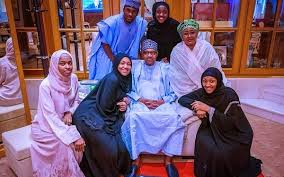
President Muhammadu Buhari and members of his family on Sunday observed the Eid-El-Fitr prayer at the presidential quarters in line with the protocol against mass gathering issued by the Presidential Task Force on COVID-19.

It was reported that the protocol of social distancing was also exhibited during the two-raka’at prayer.

President Buhari had on May 22 pledged to conduct his Eid prayers with his family at home as directed by the Sultan of Sokoto, Alhaji Sa’ad Abubakar III, who is also the President General of the Jama’atu Nasril Islam (JNI).

The President, in a statement released by his Senior Special Assistant on Media and Publicity, in Abuja on Friday, said his decision to observe the Eid prayer at home was also in observance of the lockdown measures in the Federal Capital Territory, Abuja, put in place “to save lives and protect people from all dangers.”

Shehu, in the statement, said the president had cancelled the annual traditional Sallah homage being embarked upon by residents of the FCT led by the FCT Minister, to the Presidential Villa, Abuja.

”Further to this, the President who has traditionally shared the joyous moment with top government officials, political leaders, community heads, Muslim and Christian religious leaders and children, will not be receiving these homages in a bid to stop the coronavirus from further spreading,” he added.

It would be recalled that President Buhari had in his this year’s Sallah message released on Friday urged Muslims to keep their spirits up in spite of the coronavirus pandemic.

According to him, the deadly virus which caught the world off guard, and has put a damper on what would otherwise have been ”a time of celebration for the Muslim faithful to mark the end of the Ramadan fasting period.”

The President said, “for the first time in recent years, the COVID-19 pandemic has taken a heavy toll on the people’s spiritual, social and economic lives.

”This year’s fasting period was particularly challenging for Muslims because they had to forgo many important aspects of their daily worship, including the routine congregations for prayer and the recitation and interpretation of the Holy Qur’an as well as traveling for the lesser pilgrimage to Makkah.

“It is not easy to give up many of these important duties and activities, but it became imperative to do so in order to control or limit the spread of this deadly disease.”

Muslims observed COVID-19 preventive measures at Borno Eid-el-Fitri grounds

0

Muslim faithful, in Maiduguri and environs, on Sunday conducted their Eid-El-Fitr prayers peacefully under strict security and COVID-19 preventive measures.

It was reported that the Borno Government had approved the conduct of Eid-el-Fitri prayers to mark the end of Ramadan fasting, but under certain preventive measures.

It was reported that security operatives were deployed at various designated prayer grounds in the metropolis to enforce social distancing, use of face mask, hand washing and the use of sanitisers.

It was gathered also that vehicular movements were restricted in the state capital for certain period, to avert any incident, especially during the congregational prayers.

Muslim faithful trekked long distances in some places to attend the annual prayers in the state capital.

The Commissioner of Police in the state, Mohammed Aliyu, said that about 1,800 policemen were deployed to man strategic areas to ensure a hitch-free Eid-el-Fitri celebration in the state.

Aliyu said the personnel deployed also enforced COVID-19 preventive protocols and keep vigil against unsuspected threats.

He said the personnel also conducted thorough checks and screenings of worshippers before they were allowed into any Eid ground.

Some worshippers, who spoke ,commended the Borno government for making it possible for the Eid-el-Fitri prayer to be conducted despite COVID-19 pandemic.

Bilyaminu Yusuf, a worshipper at Ramat Square ground, Maiduguri said that this would enable Muslims to collectively pray for an end to the pandemic and security challenges caused by the Boko Haram.

Yusuf also lauded security agents for ensuring absolute security during the Eid prayer.

Ibrahim Musa, another worshipper at the Polo prayer ground, also commended efforts of the security operatives at enforcing strict compliance to all measures the COVID-19 in most worship centres.

Musa said that it would go a long way to prevent the spread of the new coronavirus disease and instilled discipline among people.

In his sermon, the Chief Imam of Borno, Laisu Ibrahim, urged Muslims faithful to pray against COVID-19 pandemic and insecurity in the country.

U.S. urges action toward lasting peace in Afghanistan

0

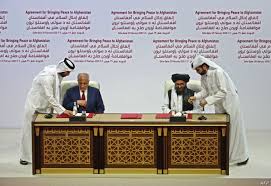
U.S. Secretary of State Michael Pompeo has called for additional steps by the Taliban and the Government of Afghanistan toward lasting peace in the country.

The call followed Saturday’s announcement of a three-day ceasefire by the Taliban in observance of the Eid-el-Fitr festival and the government’s pledge to reciprocate.

In a statement on Sunday, Pompeo welcomed the ceasefire announcement, which he said “we worked hard to achieve”.

“I hope that this respite from conflict gives Afghan people the space and security they deserve to celebrate Eid,” he said.

He urged both parties to use the opportunity to take “additional steps toward a peaceful future for their country”.

The Taliban’s announcement came through its spokesman, Zabihullah Mujahid, who directed its fighters to halt attacks against government forces.

“Do not carry out any offensive operations against the enemy anywhere.

“If any action is taken against you by the enemy, defend yourself,” the BBC quoted him as saying.

Afghan President Ashraf Ghani issued a statement welcoming the announcement, with a promise of compliance by security and defence forces.

Ghani later announced that the government would “take another step forward” as a demonstration of its commitment to peace.

“I announce that the release of the Taliban prisoners will be accelerated and serious measures will be taken,” he said in a televised address.

In February, the U.S. reached a deal with the Taliban agreeing prisoner exchange with the Afghan authorities, but implementation has been stalled.

While the militant group accuses the government of trying to delay the release, officials argue that its demands are unreasonable.

Pompeo said the U.S. remained committed to the implementation of the U.S.-Taliban agreement and the U.S.-Afghanistan Joint Declaration.

“I expect the Taliban to adhere to their commitment not to allow released prisoners to return to the battlefield.

“Finally, I expect both leaders of the Afghan government and the Taliban not to escalate violence after Eid.

“This violence is counterproductive, deepens grievances, and prolongs the suffering of the Afghan people.

“Peace is the consistent and overwhelming desire of the Afghan people. We hope this ceasefire can build trust.

“Next, all sides should work together to build on the momentum of this historic Eid ceasefire to move with urgency to intra-Afghan negotiations,” he said.

ODD NEWS: Dog set to begin third-term in office as Mayor of US town

0

Humans may be higher animals but humans in a town in America believed they should be governed by a lower one.

This mysterious metropolis is called Cormorant, a tiny Western Minnesota town with about 1,000 residents where a 9-year-old dog is Mayor.

Duke as he is called, is the first and only dog that’s ever been elected mayor in America and he even just got re-elected for a third term, WDAY 6 reports.

One must be thinking the people of this town need psychiatric evaluation but no, they seem perfectly normal and they have so much praises for their mayor.

Karen Nelson, a resident of the town told WDAY 6, Duke is doing well at discharging his executive duties and she doesn’t feel there is anyone who can run against him.

She was quoted as saying “I don’t know who would run against him, he’s done such great things for the community.”

Now wait for it.

According to Duke’s owner David Rick, the pooch was originally elected by accident via write-in votes in 2013 where people paid a dollar before they voted.

Firstly, what sort of electoral system is operated in this town? Secondly, when did electing a dog into a government seat become constitutional? Thirdly, so they paid a dollar each to elect a dog to govern them?

ODD NEWS: ‘Police officer steals marijuana from office for girlfriend’

0

A New Mexico police sergeant has reportedly landed himself in hot water after getting arrested for illegally taking marijuana from his office and giving it to his girlfriend.

According to KOB-TV in Albuquerque, USA, the officer Sgt. Roshern McKinne of Grants police department was allegedly caught through a lapel camera he himself had on.

The officer is said to be facing charges of ‘distribution of marijuana, conspiracy and felony embezzlement’ after he allegedly pilfered $785 and an 8-ounce brick of marijuana by not submitting it to the department’s evidence vault.

KOB-TV reports that McKinney was arrested on Wednesday, August 24, 2016 after an investigation was launched in July following the discovery of the video recording.

McKinne has however been released and sent on paid leave while authorities further investigate, according to KOB-TV.

NBS: Inflation jumps to 12.34 per cent

0

The National Bureau of Statistics  (NBS) yesterday said that in April 2020, inflation increased by 12.34 per cent.

According to the bureau’s report on its website,  “Consumer Price Index, the consumer price index, (CPI) which measures inflation, increased by 12.34 percent (year-on-year) in April 2020. This is 0.08 percent points higher than the rate recorded in March 2020 (12.26 percent).

“On month-on-month basis, the Headline index increased by 1.02 percent in April 2020. This is 0.18 percent rate higher than the rate recorded in March 2020 (0.84 percent).”

The report added that  increases were recorded in all COICOP divisions that yielded the Headline index.

NBS said the corresponding 12-month year-on-year average percentage change for the urban index is 12.26 percent in April 2020. This is higher than 12.15 percent reported in March 2020, while the corresponding rural inflation rate in April 2020 is 11.20 percent compared to 11.14 percent recorded in March 2020.

The report said “On a month-on-month basis, the urban index rose by 1.06 percent in April 2020, up by 0.18 from 0.88 percent recorded in March 2020, while the rural index also rose by 0.98 percent in April 2020, up by 0.18 from the rate recorded in March 2020 (0.80) percent.”

According to the report, the percentage change in the average composite CPI for the 12 months period ending April 2020 over the average of the CPI for the previous 12 months period was 11.71 percent, showing 0.09 percent point rise from 11.62 percent recorded in March 2020.

The urban inflation rate, said NBS, increased by 13.01 percent (year-on-year) in April 2020 from 12.93 percent recorded in March 2020, while the rural inflation rate increased by 11.73 percent in April 2020 from 11.64 percent in March 2020. 

The NBS explained that the  CPI measures the average change over time in prices of goods and services consumed by people for day-to-day living.

It noted that the “construction of the CPI combines economic theory, sampling and other statistical techniques using data from other surveys to produce a weighted measure of average price changes in the Nigerian economy.

” The weighting occurs to capture the importance of the selected commodities in the entire index. The production of the CPI requires skills of economists, statisticians, computer scientists, data collectors and others. 3.

“The Rural National index The first stage in the calculation of the CPI is the collection of prices on each item (740 goods and services) from outlets in each sector (rural or urban) for each state. Prices are then averaged for each item per sector across the state.

“The next step is to use the average price to calculate the basic index for each commodity: The current year price of each commodity is compared with a base year’s price to obtain a relative price. The survey methodology generates 3774 all items indices for all states and the FCT. “

BUA Cement Delights Shareholders with N61bn Profit, Dividend Payment

0

When Chairman of BUA Group, Alhaji Abdul Samad Rabiu, decided to merge the cement companies in the group late last year, one of the major reasons was to create value for shareholders and other stakeholders. BUA merged Cement Company of Northern Nigeria Plc and Obu Cement to become BUA Cement Plc. CCNN was delisted and BUA Cement Plc was listed in January.

Given the audited results of BUA Cement for the year ended December 31, 2019, the visionary leadership of Rabiu and his management acumen has been brought to bear. Despite the challenging environment that made many companies to post dismal performances, BUA Cement ended the year with N61 billion profit and the shareholders are going to smile home with a dividend of N1.75 per share.

Details of the financial performance showed that BUA Cement recorded revenue of N175.518 billion in 2019, up from N119.013 billion in 2018. Cost of sales jumped from N59.060 billion to N93.075 billion in 2019. Gross profit stood at N82.443 billion in 2019, compared with N59.952 billion in 2018.

The management strived to contain administrative expenses from N12.522 billion to N10.516 billion in 2019. However, distribution and selling expenses soared from N6.081 billion to N11.844 billion in 2019.

At N71.428 billion in 2019, operating profit moved up by N28.586 billion from N42.842 billion in 2018. Net financing cost increased from N3.675 billion to N5.192 billion.

But a tax payment of N5.625 billion in 2019 as against a tax credit of N24.905 billion in 2018, made BUA Cement to end the year with profit after tax of N60.610 billion compared with N64.072 billion in 2018. Based on the performance, the board has recommended a dividend of N1.75 per share.

Commenting on the results, Managing Director of BUA Cement, Yusuf Binji, said: ”Through the adoption of a focused and disciplined approach, we continue to record strong revenue growth, even as we derive revenue and cost synergies from the merger across: pricing, scale and operational efficiencies; all supported by a sustainable business model and a value-oriented strategy, which have translated to growing market acceptance and is reflective in our margins. This is despite the complexities and uncertainty that trailed the economic environment in 2019. We delivered on important strategic priorities, such as: the commissioning of our three mmtpa Line-2 at our Obu Plant in March, 2019; the merger completion between CCNN Plc and Obu Cement Company Limited and commenced the listing process of BUA Cement Plc, the resultant entity of the merger on the floor of the Nigeria Stock Exchange (NSE), with the eventual delisting of CCNN Plc.”

According to Binji, going forward, “our focus is to further harness the full benefits of the merger while making further in-roads to “new markets” both locally and outside Nigeria. We understand that the local and indeed the global economy would experience more uncertainties, yet we expect continued strong showing across the business, spurred-on by continued recovery across the global economy.”

Also commenting, Acting Chief Financial Officer (CFO), BUA Cement Plc, Mr. Chike Ajaero, said:“In 2019 we reported a decline in PAT from N64.07 billion in 2018 to N60.61 billion, which was due to income tax credit of N26.76 billion in 2018 from reversal of previous tax provision made on Obu Line 1 and deferred tax credit on securing approval for tax exemptions under pioneer status incentive in 2019. Net deferred tax charge ofN5.15 billion was provided for in the current year and actual tax payable of N475.29 million.”

“Obu Line-1 and Kalambaina Line -2 are both on pioneer status approved in February 2020 for two-years (extension) and three-years respectively. The computation of earnings per share (EPS) for 2018 has been re-stated, to reflect a business combination under common control, as at January 2018,” Ajaero noted.

BUA Cement Plc is Nigeria’s second largest cement producer and the largest producer in its North-west, South-south and South-east regions; with a combined installed capacity of 8 mmtpa and with plans underway to increase existing capacity to 11 mmtpa, through the commissioning of a new three mmtpa plant by the first half of 2021 in Sokoto State, Nigeria. BUA Cement operates strategically from Okpella, Edo State and Kalambaina, Sokoto State and is committed to quality – a differentiating attribute, driven by its people, innovation and technology; and positioned to solving Nigeria and Africa’s challenges while driving economic growth and development.

During the review period, Cement volume dispatched was up 53.2 per cent from 2,940kt in 2018 to 4,501kt, as at 2019; arising from increased capacity. The merger between CCNN Plc and Obu Cement Company Limited, yielding revenue and cost synergies and leading to return on asset (ROA) to rise from 16.7 per cent (2018) to 17.7 per cent (2019).

According to the company, it would complete Kalambaina Line-3 (3mmtpa) by second half of 2021. It will drive further cost and revenue synergies from merger and build on gains recorded from current footholds in new markets.

In his letter to shareholders of CCNN, last year, Rabiu said the decision to merge was primarily motivated by the board’s goal of ensuring that the company is well positioned to grow and expand in the Nigerian cement industry.

“The merger with Obu Cement will create an entity with increased production capacity. We are of the opinion that the proposed merger will create a platform where significant synergies can be obtained for the benefit of our shareholders, employees, customers, distributors, suppliers and the broader economy,” he said.

Rabiu explained that the merger will increase the production capacity of the enlarged company to 8.0 million mtpa.

“It is anticipated that in addition to meeting the demand from customers in our core regions in the country, the enlarged company would be positioned to distribute its products in new geographical markets, creating the potential for additional shareholder value creation,” he said.

In terms of operational efficiencies, Rabiu noted that the merger would provide opportunities for significant cost savings and improved operational efficiencies by streamlining operations and optimising the use of combined resources.

On economies of scale, Rabiu said: “The merger will provide a platform where the enlarged company benefits from economies of scale in procurement, distribution and manufacturing of the products offered to our customers.

We expect the benefits accruing from greater economies of scale to accrue to many stakeholders.”

According to him, CCNN shareholders will become shareholders of a larger and highly profitable entity, stressing that synergies created as a result of the merger would create additional value for shareholders.

“Besides, the enlarged company will create a platform for further investment that will have a positive impact on the communities where the operations of the companies are present as well as for the economy as a whole,” the foremost industrialist declared.

He said this consolidation would mark the culmination of the first phase of the BUA mid-term strategic plan for its cement businesses, which currently include four cement plants spread across Obu Cement Company and the CCNN.

“A new $450million Sokoto Kalambaina II Plant is scheduled to come on stream in the second half of 2020 alongside another 48MW power plant to complement the existing assets and take advantage of a growing cement market in Northern Nigeria and the West African region. This consolidation will cement BUA’s position as the second largest cement producer in Nigeria whilst also positioning it to take advantage of the combined synergies to effectively serve Northern and Southern Nigeria based on the strategic locations of these plants – as well as a sizeable export market,” he said.

Rabiu said the board and management intended to continue creating value for the benefit of shareholders of the consolidated company by maintaining their focus on outperforming the Nigerian cement industry across key indices through a laser-like commitment to excellent products and service delivery, operational efficiency as well as maintaining leadership position in their home markets.
Anxiety lingers over implementation of Oronsaye report

0

AFTER many years of procastination the much hyped civil service reforms which has been on hold, may have become inevitable with the decision of the federal government to finally implement the recommendation of the Stephen Oronsaye Committee report, almost eight years after.

It would be recalled that the Presidential Committee on the Restructuring and Rationalisation of Federal Government Parastatals, Commissions and Agencies, otherwise called the Oronsaye Committee, was set up by the President Jonathan-led administration, three months after it mounted the saddle on August 18, 2011.

According to 800-page Oronsaye Report, the whole essence is to reduce the cost of governance with the elimination of duplicated functions by several departments and agencies, the government should go ahead to revalidate recommendations.

For instance, in the executive summary of the committee’s report, it was discovered that 50 out of the 541 parastatals identified by the committee have no enabling laws, just as the committee reported the challenges of supervision in the monitoring of the parastatals/agencies, which was compounded by the fact that ministries were weakened by the excision of their departments and attendant applicable functions.

The report noted that the arbitrary increase in the number of parastatals and agencies is the main cause of identified overlaps and duplication of functions/roles and the fact that the splitting of the parastatals has not improved their performance and service delivery.

The planned implementation has become inevitable given the critical need to address the burgeoning cost of governance in the face of emerging economic crisis, occasioned by the global pandemic.

The Minister of Finance, Budget and National Planning, Zainab Ahmed attested to this fact recently when she revealed that  already the president’s approval has been forwarded to the Head of Civil Service and Secretary to the Government of the Federation.

Though the federal government has assured that the envisaged rationalisation would not affect personnel, some of the affected agencies would need enabling legislation to consummate the harmonisation, just as stakeholders continue to urge restraint in the hurry to shrink the establishments.

Agencies that fall within this bracket include the Fiscal Responsibility Commission; National Poverty Eradication Programme; Utilities Charges Commission (UCC); National Economic Intelligence Committee; Nigerian Christian Pilgrims Commission (NCPC); National Hajj Commission of Nigeria (NAHCON), and the Federal Road Safety Corps (FRSC).

Speaking in an interview with our correspondent, Joyce Odogwu, a public affairs analyst said the Oronsaye committee report though long overdue need to be implemented in phases.

This according to her would minimise the fallouts.

Investigation by our correspondent revealed that some of the MDAs may have begun to get their staff ready for the inevitable.

At the aviation industry for instance, the Minister, Hadi Sirika had requested the agencies within the ministry to relocate their corporate headquarters to the Federal Capital Territory ( FCT), Abuja in the next 45 days, a development, which came as a huge surprise.

With this directive, the Nigerian Civil Aviation Authority (NCAA), Federal Airports Authority of Nigeria (FAAN), Nigerian Airspace Management Agency (NAMA), Accident Investigation Bureau (AIB), Nigerian Meteorological Agency (NiMET) are expected to relocate within the given time frame.

In a letter dated 4th May 2020 from the Ministry FMA/PMD/7061/T/4 signed on behalf of the Minister of Aviation, the director, Human Resource Management Muhammad Shehu hinged the decision on the current global economic situation and the need to reduce the cost of governance.

The letter titled: Relocation of Aviation Agencies to Abuja read: “I am directed to remind you of a Presidential directive issued in 2012 requesting all agencies under the Ministry of Aviation to relocate their corporate headquarters to the Federal Capital Territory (Abuja ) for efficient and effective coordination and enhanced service delivery and note that eight years after the directive, the agencies are yet to comply.

“Accordingly, considering the current situation and the economic impact worldwide as well as the need to reduce the cost of governance and manage scarce resources in a sustainable way, it has become imperative and further to the Minister’s directive (Copy attached) to request that you facilitate and complete the relocation of your corporate headquarters within the next forty five (45) days in line with this earlier directive.”

An endorsed copy received by FAAN’s Laison Office in Abuja on May 06, 2020 directed all directors to coordinate effective mobilisation to achieve the directive on time on its meeting agenda for the week after.

In a related development, unions in the sector have written a petition to Sirika urging him to promptly intervene in the recommendations of the Oronsaye Report proposing the merger of NAMA, NCAA and NIMET into the Federal Civil Aviation Administration.

In a jointly signed letter, the National Association of Aircraft Pilots and Engineers (NAAPE), Air Transport Services Senior Staff Association ( ATSSSAN ) and Association of Nigerian Aviation Professionals ( ANAP), they appealed to the minster to prevent the destruction of the air transport industry with the execution of the Oronsaye Report portends for the industry.

In the petition dated 13th May 2020, they described as anachronistic the recommendations that dared to merge service provider agencies with their regulators.

The unions described as sickening any plans to merge NAMA and NIMET with NCAA.

Many states will struggle with salary payments – NESG

0

Many states in the country will find it difficult to pay salaries of workers this year as the Federal Government’s revenue projections will be unmet, the Nigerian Economic Summit Group has said.

The NESG, a private sector-led think-tank, said the fiscal effect of the fall in crude oil price would be enormous with severe sectoral implications for the country.

“Nigeria, being a major dependent player in the oil market, faces a dual challenge of dwindling windfall from oil and economic constriction as global lockdown continues on the back of COVID-19,” it said in a new report, titled ‘Sectoral Impact Assessment and Optimal Policy Response’.

The group noted that the 2020 budget of the Federal Government was based on an oil price of $57 per barrel, which was later revised to $25 per barrel.

It said falling crude prices, in addition to weak export demand, would significantly add pressure on federal and state governments’ finances.

The NESG said, “This means that the revenue projections in the revised 2020 budget will be unmet, thereby constraining government’s ability to meet its obligation such as payment of salaries and financing critical social and infrastructure projects in the year.

“Many states in Nigeria rely solely on allocations from the Federal Account Allocations Committee, which are predominantly oil-dependent. Falling oil price means that many states will have difficulty in paying salaries of workers.”

The group said this would have negative implications on aggregate demand and the performance of key sectors such as construction, cement and manufacturing.

It said limited economic activities arising from lockdown of some states and restriction of movement would result in poor performance of non-oil revenue.

The NESG noted that the shutdown of production facilities and lockdown of several states would have negative implications on investment, aggregate demand and overall economic growth.

“While the lockdown and restrictions were relaxed in some states on May 4, 2020, economic activities during the four-week lockdown were severely constrained, and this is expected to reflect on the GDP growth figures for the first to second quarters of 2020,” it said.

The group noted that the International Monetary Fund had estimated that the Nigerian economy would contract by 3.4 per cent in 2020.

It said, “Within the last three years, the major economic sectors in Nigeria have struggled to exert significant expansion in output.