Home Blog Page 7926

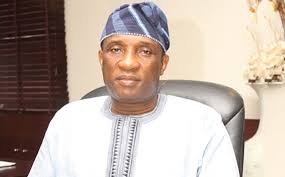
Sanwo-Olu Installs Gbolahan Lawal As 15th Oniru Charges Monarch On Development

0

Oniru: ‘Appointment A Call To Life-Long Service To Lagos’

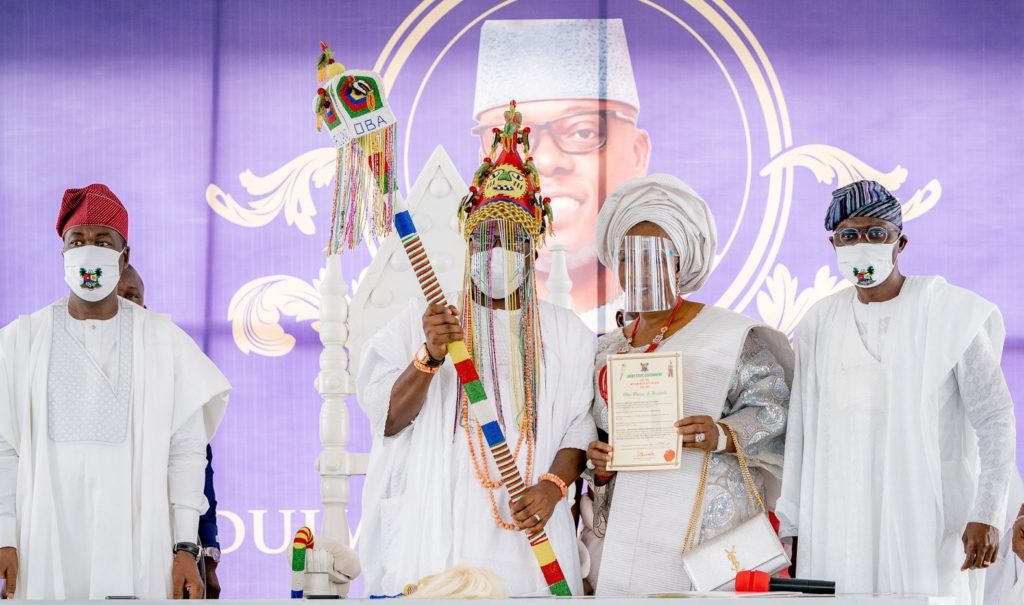
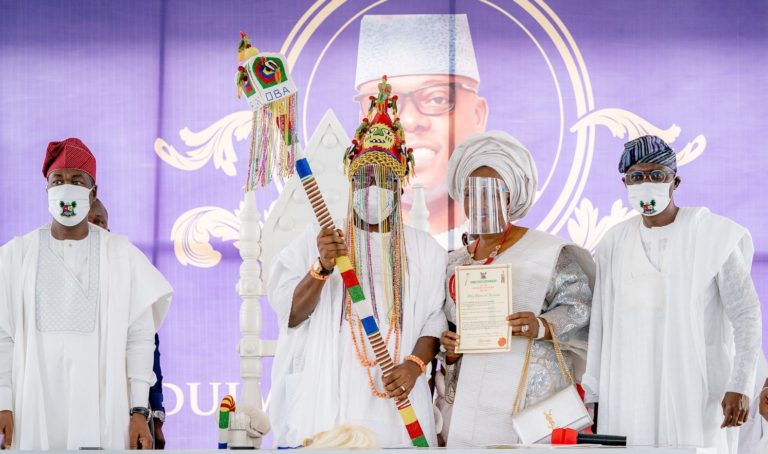
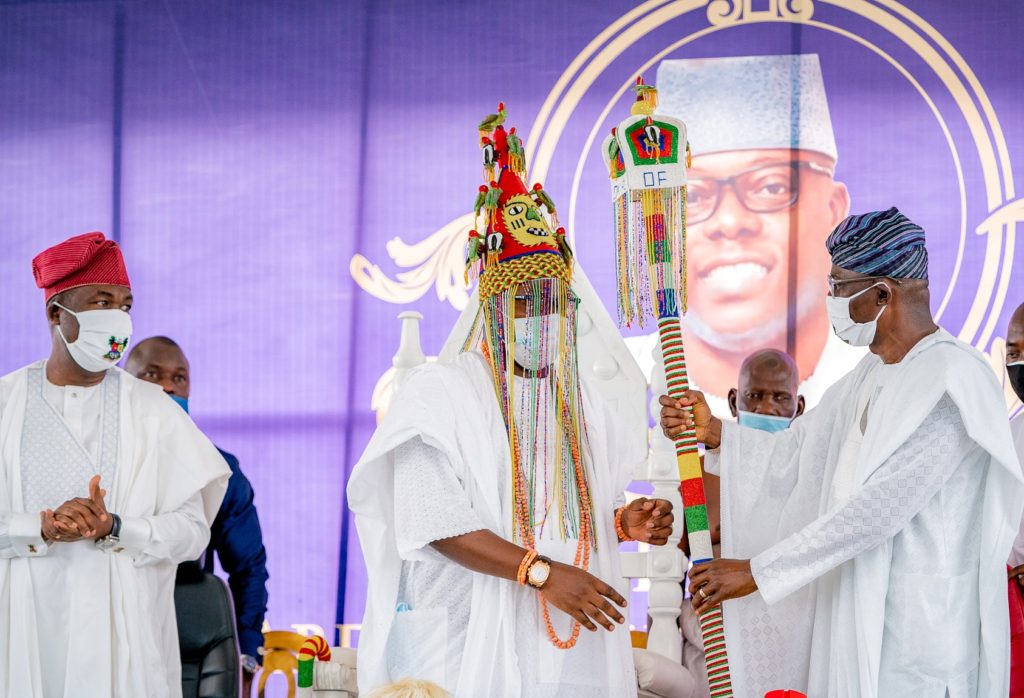
At exactly 1:05pm on Sunday, Prince Abdul-Wasiu Omogbolahan Lawal received the traditional staff and officially ascended the throne of Iru Kingdom as the 15th Oniru.

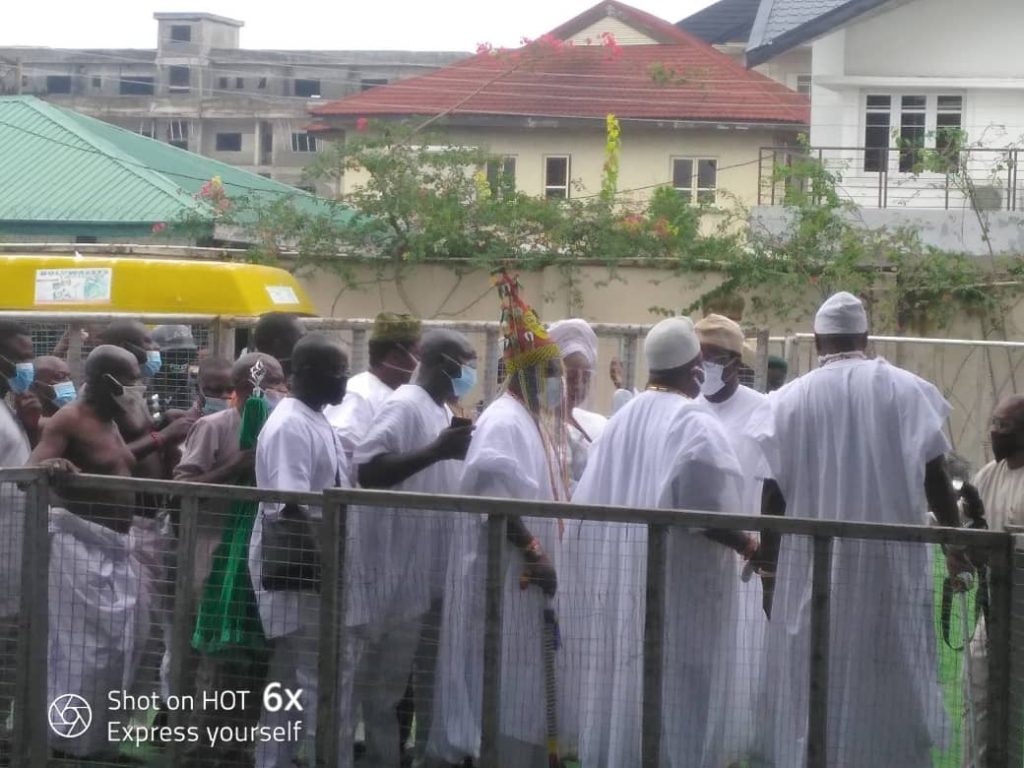
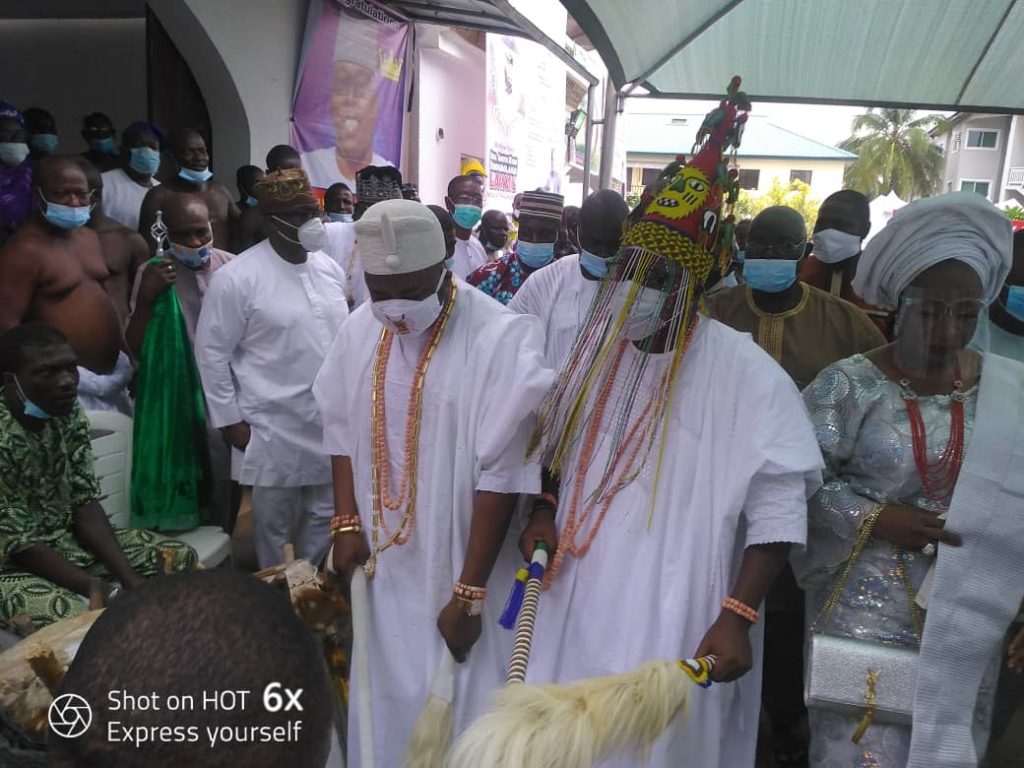
At a simple but colourful ceremony held at the Oniru Palace on Victoria Island, Lagos State Governor, Mr. Babajide Sanwo-Olu, installed the new traditional ruler, saying the event heralded a new dawn and era of prosperity in the kingdom.

The Oniru installation came two days after the State’s Executive Council approved the selection of Lawal, the immediate past Commissioner for Agriculture, who was nominated for the traditional stool by the Abisogun clan of the large Oniru dynasty.

Presenting the monarch to the Governor for formal installation, Commissioner for Local Government and Chieftaincy Affairs, Dr. Wale Ahmed, notes that the process of selecting the new Oniru was fair and open to all contestants. He said the choice of Lawal was well received by kingmakers and citizens of the kingdom.

Gov. Sanwo-Olu, who described the monarch as a seasoned technocrat and distinguished administrator of international repute, said Lawal’s ascension on the throne marked the next phase of Irú journey to the future.

The Governor admonished citizens and residents of the kingdom to rally behind the new king in order to move the city forward. He urged Lawal’s opponents and aggrieved individuals to put the event of Oniru’s selection behind them and join hand with the new king for progress.

He said: “Today is a historic day in the history of Iruland, as we gather to celebrate the installation of the 15th Oniru of Iruland. I heartily congratulate His Royal Majesty, Oba Abdul-Wasiu Omogbolahan Lawal, Abisogun II, the Oniru of Iruland on your ascension to the throne of your forefathers.

“I also rejoice with the sons and daughters of Iru kingdom on this auspicious occasion. It is my firm expectation that you all will rally round the new king and join hands with him for the growth and progress of Iruland, and Lagos State in general. Given the pedigree of the new Oniru, I have no doubt that his reign will be a progressive one.

“There is no doubt that the future of Iru Kingdom continues to be bright and promising, and that the ascension of His Royal Majesty, Oba Lawal, marks the start of the next phase of the journey into that future. I commend the kingmakers and elders of Iruland as well as the ruling houses for the peace and mutual understanding that have characterised the process that led to the installation of the new monarch within a period of less than one year after the demise of the former Oniru. This is a remarkable feat, worthy of commendation and emulation.”

Sanwo-Olu pointed out that Iru land had grown in leaps and bounds in the previous decades to become one of the economic nerve-centers in Lagos, assuring the monarch of the State Government’s support towards the realisation of his vision for the kingdom.

The Governor said the future of Iru Kingdom looked bright and promising, given the leadership credentials of its new monarch. He said Lawal’s performance as Commissioner under three administrations in the State and his legacy in the Ministries of Agriculture, and Housing stood him out as one who will bring further positive transformation to the kingdom.

Sanwo-Olu said: “My administration will continue to accord this part of the State, like all others, the attention it deserves, in terms of infrastructure, economic empowerment, human capital development, and security.

There is no doubt that the future of Iru Kingdom continues to be bright and promising as it begins the next phase under Oba Lawal.”

National Leader of the All Progressives Congress (APC) and former Governor of the State, Asiwaju Bola Ahmed Tinubu, who sent his greetings to the new king through Gov. Sanwo-Olu, eulogised Lawal for his leadership qualities, praying his reign would usher in peace and prosperity in the kingdom.

Chairman of Lagos State Council of Obas and Chiefs, the Oba of Lagos, Rilwan Akiolu, said the event that led to Lawal’s installation as the 15th Oniru was ordained by God and was done in fulfillment of the wishes of the kingdom’s founding fathers.

Akiolu, who went into the history of the kingdom, said the monarch was duly nominated and qualified for the position, having been a descendant of Aromire through Abisogun clan.

Having successfully ascended the Iru stool, Oba Akiolu advised the new Oniru to extend arm of fellowship to his opponents to move the kingdom forward. He urged Lawal to adopt open-door policy in directing the affairs of the kingdom, but admonished him not to tolerate advice that may promote division and cause friction among his subjects.

Akiolu said: “As you are ascending the throne of your fore fathers, I pray that your reign shall be long lasting. Now, you are the king, I urge all sons and daughters of this kingdom join hands with you to move this land forward.

“I advise you to personally make effort and gather all members of the ruling houses and citizens for the sake of unity. You must extend an open arm to everyone, so that you can leave Iru Kingdom better than you met it. However, you must be careful with those that will flock around you as advisers. Don’t tolerate advice that may cause division in your kingdom.”

In his acceptance remark, Oba Lawal, noted that his ascension to the throne was an icing on his public service career and came 85 years after any member of the Abisogun Ruling house ascended the throne.

The monarch praised Gov. Sanwo-Olu for approving his selection, while hailing Asiwaju Tinubu, for years of mentoring in leadership and administration. He waved olive branch to his opponents and promised to pursue an open-door policy in leading the kingdom.

He said: “Iruland is central to the commerce and economic development of Lagos. I want to assure all that Iruland will continue to accommodate business development on all fronts; and remain home for all tribes, and races.

“With my experience in public service, I will continue to work with others not only to bring more development to Iruland but the entire State. I promise to live the rest of my life for my people.”

Oba Lawal started his public service career as a police officer and retired as Assistant Superintendent of Police. He served three consecutive administrations in the State as a Commissioner in the Ministries of Housing, and Agriculture.
June 8: Exit Date of a Blood Thirsty Dictator By Tony Ademiluyi

0

How time flies! I vividly recall June 8, 1998 when I was still a starry-eyed student of Kings College Lagos. I was writing the West African Examinations Council exam for entry into the senior secondary school. I had finished writing the French exam and I recall that one of the comprehension passages was about Nobel Laureate, Professor Wole Soyinka who was in exile at the time.

The news was broken to me on radio by an illiterate Hausa shop attendant popularly known as mallams. He told me that he died of cardiac arrest and in his own interpretation meant that he was arrested by some dissenting soldiers. I had to clarify the meaning of cardiac arrest which I heard for the first time on that day from a medical doctor who explained to me that the dark goggled maximum dictator died of a heart failure.

General Sani Abacha came to the national limelight on December 31, 1983 when he announced the coup that brought to an abrupt end of the Shehu Shagari led civilian administration popularly known as the Second Republic. He was the voice that said that our hospitals were mere consulting clinics amongst other dysfunctions that bedeviled the Nigerian society.

He played a key role in the ill fated regime of General Ibrahim Badamosi Babangida as one of his key allies also known as the ‘IBB boys.’ The wily Maradona of Nigerian politics didn’t retire him when he stepped aside in August 1993 and the time bomb in the diminutive General reared its ugly head when he toppled the Interim National Government headed by Chief Ernest Shonekan who was a former United African Company Chairman.

November 1993 proved to be watershed in the history of Nigeria as he sought to manage the fall out of the June 12 annulment so that it wouldn’t threaten his secret ambitions of succeeding himself as a civilian president in the way and manner that Jerry John Rawlings had done in Ghana in 1992.

Abacha was socially withdrawn and rarely appeared in public and whenever he did, his eyes were invisible to his countrymen as he permanently wore dark goggles. The greatest challenge that he had was in effectively managing the aftermath of the June 12 presidential election which was presumably won by business mogul, Chief Moshood Kashimawo Olawale Abiola before its surprising annulment by Babangida.

The street smart general lured the likes of Ambassador Babagana Kingibe, Abiola’s running mate, Alhaji Lateef Kayode Jakande, the former action Governor of Lagos state, Chief Ebenezer Babatope, an erstwhile core Awoist, Chief Alex Ibru, the respected publisher of the Guardian newspapers into his cabinet. He also recruited the services of Chief Tony Anenih, the former national chairman of the defunct Social Democratic Party (SDP) and former Biafran leader, Dim Chukwuemeka Odumegwu-Ojukwu as his roving ambassadors to sell his candidacy to the international community.

After the Epetedo declaration of Abiola as President by the business mogul, he was locked up in detention with the option of renouncing his mandate as a price to pay for his freedom.

In 1995, his friend turned foe, Ken Saro-Wiwa and eight Ogoni chiefs were hanged till they met their respective makers. Nigeria was slammed with severe sanctions as a result of the murders but the dictator didn’t give a hoot as to what became of his country. The killings went unabated. Pa Alfred Rewane, one of the pillars of support for the defunct Action Group and a staunch financier of the National Democratic Coalition (NADECO) was shot to death by an agent of the murderous Abacha regime.

In 1996, Kudirat, the wife of Chief Abiola was killed in broad daylight. The likes of Chief Olusegun Obasanjo and the Late Shehu Musa Yar’adua were hounded into detention with the latter dying there in 1997 after being injected by a poisonous substance. Obasanjo escaped death by the whiskers. That same year his deputy, Lt-Gen Donaldson Oladipo Diya was arrested for allegedly plotting to topple his government. He was arrested alongside Generals Tajudeen Olarenwaju, the minister for communications and Abdulkareem Adisa, the minister for works and housing. Some pundits opine that they would have joined their ancestors if Abacha had lived longer.

The likes of Professor Wole Soyinka, Chief Anthony Enahoro who moved the motion for Nigeria’s independence in 1953, Senator Bola Ahmed Tinubu, Dele Momodu, Tokunbo Afikuyomi, General Alani Akinrinade, a former Chief of Army Staff and many others were on exile in the west for fear of being liquidated by the General’s killer squad.

Many journalists were detained and harassed with many newspapers like Guardian, Punch, Concord etc being banned in 1994/95. Guerilla magazines like Tell and The News were proscribed at various times with journalists like Babafemi Ojudu, Christy Anyanwu etc slammed behind bars. Dapo Olorunyomi, the Publisher of Premium Times and a then Director with The News had to flee to Uncle Sam in order to safeguard his life.

The General used his civilian stooges to float five political parties which the late Chief Bola Ige described as the five fingers of a leprous hand. These parties unanimously adopted him as their presidential candidate and the General was warming up to do what his former boss, IBB failed to do by succeeding himself without a popular mandate by Nigerians whom he mercilessly battered financially, psychologically and emotionally.

Then came his sudden demise on June 8, 1998 which coincided with the time that the Super Eagles of Nigeria were slugging it out in the France 1998 world cup.

A school of thought posited that he died of food poisoning in the hands of some Indian prostitutes while others debunked the claim and attributed it to natural causes.

As common with military dictators, he helped himself to the public till by embezzling huge sums of money which was stashed away in foreign bank accounts. His death revealed this fact as some of the loot has been recovered.

He was no respecter of army tradition as his chief security officer, Major Hamza El-Mustapha was more powerful than many of the Generals. General Diya was seen prostrating before El-Mustapha as he begged him to appeal to his former boss to ‘tamper justice with mercy.’

As today marks twenty-two years of the demise of the tyrant, we should be sober and realize that power is indeed transient and what matters at the end of the day is the legacies we leave behind.

What is Abacha really remembered for? What can we point out to as a positive gain the country had during his regime?

These questions should be posed to our political class as posterity the ultimate judge will be harsh to those who fail to learn from history.

Tony Ademiluyi wrote from Lagos and edits www.africanbard.com

ODD NEWS: Unexpectedly closed store leads man to $150,000 lottery jackpot

0

A North Carolina man said finding out his favored store had closed early on a recent day led to his winning a $150,000 lottery jackpot.

Holt Lunsford of Burlington told North Carolina Education Lottery officials he had to make a detour to Dave’s Mini Mart in Burlington when he discovered his usual lottery retailer had closed early for the day.

Lunsford said he was “having a feeling” while in the store so he decided to purchase five $5 Extra Play Cashword tickets.

He scratched the tickets off at home and discovered the fourth ticket was a $150,000 winner.

“It turns out that feeling was right,” the winner said.

“I got to about the eighth or ninth word and I just ran and showed my mom before I even finished the ticket,” he said. “I started crying because I realized how big the prize was going to be. I was just so overwhelmingly excited.”

Lunsford said he felt even luckier after doing some research on the tickets.

“I looked it up online and I saw that it was the last prize available,” Lunsford recalled. “I just sat there, jaw dropped in awe that out of all those chances, it was me.”

The winner said he already has plans for the money.

“The first thing I’m going to be doing is buying a car that I’ve been looking at for about a year now,” he said. “It’s a 2004 Mustang, 40th anniversary. I’ve been saving up money to buy it and this is going to make everything so much easier.”

ODD NEWS: World War II-era explosive found during yard work at Iceland home

0

The Icelandic Coast Guard said a team of explosives experts was dispatched to a home where a World War II era explosive was found by a person doing yard work.

The Coast Guard said a Bomb Squad team responded to a house in Hafnafjorour, where a person doing yard work discovered what appeared to be an explosive device.

Investigators said the object was determined to be an explosive bullet dating from World War II. The Bomb Squad took the object, which was rusted but still active, to a bomb range in Stapafell for safe detonation.

The Coast Guard said a team scanned the area with metal detectors to make sure there weren’t any other potential dangers underneath the yard.

Lagos commissioner seeks environment protection

0

The Commissioner for Environment and Water Resources, Lagos State, Mr Tunji Bello, has called for action to conserve biodiversity towards preserving and protecting the earth, as biodiversity represents a critical part of the natural environment.

He made the call at a virtual conference to mark the 2020 World Environment Day with the theme, “Biodiversity: Time for nature,” on Friday.

Bello said, “The environment must not be destroyed for development and survival, and biodiversity should be preserved because of its wildlife and natural attributes which would attract people to the location.”

He said the Lagos State Government through the Ministry of Environment and Water Resources was willing to collaborate with stakeholders in a meaningful engagement that would bring restoration to wetlands, coastal areas and other biodiversity.

Technical Director, Nigerian Conservation Foundation, Dr Joseph Onoja, in his presentation at the webinar on “Engagement of citizens, CBOs and private sectors in nature management and protection,” emphasised that plants and animals were an integral part of the existence of humans.

He stated that nature had created a balance for the enjoyment and overall wellbeing of humans.

However, he added, human beings through their activities had interrupted and disrupted the balance.

This disruption had come with its attendant negative consequences making life unbearable for humans, he said.

Generally, he said, nature provided citizens with the most essentials of life such as shelter, clothing and food.

He noted that nature provided protection to communities by preventing flooding, landslides, wind disasters and providing clean water.

He said, “For any meaningful engagement for the protection and proper management of nature to occur, there is need for citizens, Community Based Organisations and private sectors to understand the importance of nature.”

Onoja added that private sector players and business owners should join in the effort to restore the environment.

He said this was necessary because nature was the number one investment capital as it provided raw materials and stability for businesses.

Director, Centre for Environmental Studies and Sustainable Development, Lagos State University, Prof. Adeola Animashaun, said that COVID-19 had impacted negatively on the sustainable development goal.

She urged Nigerians to do everything possible to preserve nature and avoid the release of carbon monoxide that has continued to impact the climate negatively.

Marketers can’t fix petrol price, says FG

0

The Federal Government has said oil marketers are not free to fix the price of Premium Motor Spirit, popularly called petrol.

A statement in Abuja on Sunday by the Petroleum Products Pricing Regulatory Agency said the government had not conferred on marketers the power to fix petrol price.

The PPPRA stressed that the new market-based pricing regime was still in force.

The Executive Secretary, PPPRA, Abdulkadir Saidu, said the attention of the agency was drawn to the several media reports that claimed that the government had removed the price cap on PMS and had given marketers the freedom to fix the price of the commodity and sell above the stipulated price.

He described this as a misconception, adding that the implementation of a market-based pricing regime was first announced by the Minister of State for Petroleum Resources, Timipre Sylva, in March.

Saidu said, “This was followed by PPRA’s publication announcing the regulation on the market-based pricing regime, thus creating a legal framework for the policy.

“The published regulation does not confer on marketers the power to fix prices for the product as they deem fit, but rather guiding prices would be advised by the PPPRA according to market realities.”

He said the agency would monitor market trends and advise the Nigerian National Petroleum Corporation and oil marketing companies on the monthly market-based guiding price that includes the indicative retail price at which the product would be sold across the country.

Sylva had stated that the Federal Government would continue to monitor the price of petroleum products and advise on monthly guiding prices that would guarantee reasonable returns to operators.

He also stated that the government would ensure that consumers paid appropriate prices in line with market reality.

The minister had stressed that the government’s role in a deregulated economy was to provide, through the operation of the PPPRA, a pricing mechanism to create a market-driven price regime.

He noted that in a deregulated market, the role of a regulator in monitoring and regulating activities in the sector could not be over-emphasised.

Job losses loom in beverage companies as production drops

0

Massive job losses in food and beverage companies are expected in the coming weeks, operators and workers have said.

It was gathered that a myriad of factors such as access to foreign exchange, unavailability of raw materials and the need to observe social distancing in the factories were responsible for the decision of the management of some companies in the sector to lay off workers.

Findings showed that beverage companies, especially breweries, had a stockpile of products in their warehouses that they had not been able to sell during the lockdown.

This, according to stakeholders, is because their major customers – bars, hotels, clubs – have not been opened for business in the past two months.

The acting Director-General of the Manufacturers Association of Nigeria, Ambrose Oruche, told our correspondent that breweries were going through a hard time because most of their warehouses were loaded with goods they could not sell.

He explained that vendors that were dependent on the food and beverage companies had also been impacted by the poor state of business.

Oruche said, “Breweries are really going through a hard time because most of their warehouses are loaded with goods they cannot sell. Why will they produce when they cannot sell? Most of their customers come from bars, restaurants, hotels and hospitality companies.

“Now, hospitality businesses are shut down and the bars have not been allowed to reopen. They have a workforce they will pay and they also integrate backwards to the agricultural sector where they are sponsoring farmers in sorghum production.”

On March 20, the Lagos State Government directed bars and night clubs to stop operating in a bid to limit large gatherings and curb the spread of the novel coronavirus.

This was before the general lockdown which began on March 31 in Lagos, Ogun and Abuja, among others.

Even after the easing of lockdown, bars and clubs have not been reopened. Also, large social gatherings have not been allowed to open with only hotels allowed to start operating less than a week ago.

The Deputy General Secretary, National Union of Food, Beverage and Tobacco Employees, Mike Olanrewaju, explained that the union had received several letters from companies informing them of their intention to sack workers.

According to him, the only thing delaying the redundancy of the workers is a need to discuss terms and conditions with the labour union.

Already, Olanrewaju said contract workers who are not members of any labour union had already been laid off by the companies.

He said, “The effect is so devastating because virtually most of the companies cannot access raw materials and the cost of production due to foreign exchange has gone up.

“The possibility of getting raw materials has gone down. Because of social distancing, companies with about 20 lines of production cannot run more than seven, meaning that many people are now idle, which is not productive enough.

“Some of the companies are contemplating total shutdown while others are planning to reduce their workers by half.

“Some of them are considering redundancy and the situation is highly devastating on food and beverages companies. No company is exempted. Every company is affected badly.”

He added, “Alcoholic and soft drinks producers are affected because there is no massive celebration in the country. People can only do take away at restaurants and many are forced to stay at home. To sell them has become very difficult.

“The irony is that most of these products have short expiry dates because they are consumables. Some can’t last more than six months.”

Olanrewaju called on the government to give tax waivers or holiday to the affected companies until they stabilise and are able to return to normal production.

NSE, global exchanges to discuss COVID-19 impact

0

The Nigerian Stock Exchange is set to host a special webinar this week on the impact of COVID-19 on the global capital market and the resilience of securities exchanges in supporting economies.

Speakers at the webinar include the Chief Executive Officer of NSE, Oscar Onyema; the CEO, Luxembourg Stock Exchange, Robert Scharfe; the CEO, London Stock Exchange, Nikhil Rathi; and the CEO, World Federation of Exchanges, Nandini Sukumar.

According to a statement from the NSE, during the panel session, the speakers will discuss the expectations and future of securities exchanges as they transition to the new normal necessitated by the COVID-19 pandemic.

It said they would highlight key initiatives around business innovation and digital transformation of exchanges, investors’ protection strategies, and capital raising opportunities, among others.

Onyema noted that the COVID-19 pandemic had created unprecedented disruption in the global economy with varying degrees of volatility.

He said, “Regardless, financial markets, particularly capital markets around the world, have shown resilience in supporting their economies. The NSE, on its part, has been resolute in its commitment to ensure that there are no disruptions to its operations.

“With countries now gradually opening up and most economies resuming activity, it is important to sustain important dialogues around business innovation and partnership in order to capitalise on the opportunities presented in this challenging time.”

Onyema added, “We are, therefore, pleased to create a platform to highlight the activities of exchanges in maintaining an enabling environment for stakeholders to continue to save and access capital during any crisis.”

According to him, the event is part of the NSE’s thought leadership series designed to synthesise effective strategies that will enhance stakeholders’ experience in Nigeria and the world over.

 “Since the activation of its Business Continuity Plan on March 23, 2020, which saw the transition to remote trading and working, the NSE has remained fully functional, delivering on its mandates to deepen market activity with new listings; engage its various stakeholders through ongoing virtual sessions; and perform its regulatory functions by providing a plethora of relevant guidance documents,” he said.

May & Baker grows annual profit to N716m

0

May & Baker Nigeria Plc has said its profit for the 2019 financial year grew to N716.4m from N585.20m in 2018.

Its shareholders, at the Annual General Meeting held by proxy last week, approved a total dividend of N431.31m, translating to 25 kobo for every 50 kobo share compared to the 20 kobo paid in 2018, according to a statement.

The firm said the result was achieved despite a 5.5 per cent drop in revenue from N8.55bn in 2018 to N8.08bn in 2019. Its gross profit also fell from N3.16bn in 2018 to N2.91bn in 2019.

It attributed the revenue drop to the fall in consumer purchasing power, industry regulatory headwinds and unfavourable macroeconomic conditions.

The Managing Director/Chief Executive Officer, Mr Nnamdi Okafor, said the profit growth was driven by improved operating and cost efficiency as the firm made more profit per unit of sale in 2019 compared with 2018.

Its distribution expenses dropped from N1.43bn in 2018 to N1.19bn in 2019, while finance costs fell from N339.43m in 2018 to N119.14m in 2019.

Administrative expenses rose slightly to N784.29m in 2019 from N773.71m in 2018.

Speaking at the AGM, the Chairman of the Board of Directors, Senator Daisy Danjuma, expressed great hope in the future prospects of the company.

“I see a great future for our company. The attraction of May & Baker as an investment haven lies not only in her long track record of robust performance but more in her future prospects,” she said.

According to her, the healthcare space in sub-Saharan Africa is still largely untapped and an investment haven for operators.

Danjuma said, “Africa’s economic prospect sparks an enthusiasm about opportunities, especially in its healthcare sector. Capturing that promise is the task we must set out to accomplish.

“Our recipe for success lies in the burning ambition to dominate our defined markets: Nigeria and the sub-Saharan Africa. I have immense confidence in the ability of our board and management to deliver on this goal.”

Shareholders at the AGM lauded the performance of the healthcare company and requested for early payment of the approved dividend, according to the statement.

“May & Baker Nigeria Plc has shown consistent improvement in bottom line with the optimisation of her World Health Organisation standard manufacturing facility inaugurated in 2011,” it said.

Dare adds late Eagles coach to welfare scheme

0

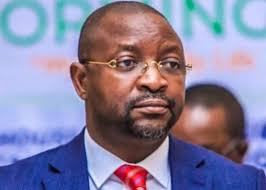
Minister of Youth and Sports Development, Sunday Dare, has said there are plans to include the family of the late Stephen Keshi, a former Super Eagles captain and coach, and other sports heroes in the ministry’s welfare scheme.

Dare made this known in a statement by the sports ministry on Sunday.

“We have compiled a list of not only ex-players and athletes, we included coaches who served their fatherland. They deserve to be part of what we are doing.

Their families as well as those with one form of ailment or the other.

“Someone like late Stephen Keshi, who won the Nations Cup 2013 in South Africa, we need to visit the family. The man served this country both as player and as a coach. it is four years today late Stephen Keshi passed away, we can’t pretend to forget so soon that he was truly a patriot and as well legend of the round leather game,” the statement read.

Others who the ministry intends adding to the list are the families of Shuaibu Amodu, late U-17 coach, Musa Abdullahi, and late Manga Muhammed, who was part of the Japan 1993 U-17 World Cup-winning squad.

Dare also said the ministry will liaise with the NFF and the Athletics Federation of Nigeria to provide monthly stipends for families of late and ailing athletes and ex-players.