Home Blog Page 7900

Kebbi awards N3bn school rehabilitation projects

0

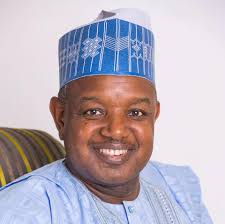
Gov. Atiku Bagudu of Kebbi State, says his administration has awarded about N3 billion contracts for rehabilitation and provision of additional facilities in primary and junior secondary schools in the state.

Bagudu made the disclosure in a broadcast to mark the 2020 Democracy Day, in Birnin Kebbi on Friday.

He said: “In education and health; we are increasing our investments, in the last few weeks we have awarded contracts close to N3 billion for the rehabilitation and additional facilities in primary and junior secondary schools.

“I urge all of us particularly the media and development organisations to obtain the list of all the contracts awarded in each Local Government Area (LGA), so that we will ensure participation in monitoring the performance of the contracts, to ensure that they are executed according to project specification, this is a joint responsibility.”

Bagudu said the state government had also rehabilitated about 140 Primary Healthcare Centres (PHC), in collaboration with UNICEF in different wards across the state.

“Sometimes, we do not celebrate our successes, we believe that our successes even in the COVID-19 pandemic is as a result of the painstaking work done by health workers in different health facilities that have been rehabilitated and others in the process of rehabilitation.

“In infrastructure, we have completed a number of projects we initiated and those we inherited, some are ongoing while others are Federal Government’s projects.

“We must appreciate the fact that development is work-in-progress, when we came in we inherited a lot of ongoing projects, some of them have been awarded with no advanced payment to contractors.

“We choose not to sensationalise the government we inherited, we faced the task head-on, consistent with the revenue drop we experienced, we reviewed our priority and continued to deliver on the projects we deemed to be of utmost public interest,” he said.

The governor disclosed that his administration had completed the Yauri Road project, hitherto, disturbed the residents of the area due dust emanating from the project site.

Bagudu noted that development was a gradual and painful process especially when it included everyone, because demands were numerous and resources inadequate and scarce.

He stressed the need for the state to pursue private sector driven economy to actualise thousands of companies across the state, assuring that such move would boost state revenue base, and providing job opportunities to unemployed youth.

The governor stated that the state government had deliberately initiated inclusive development programmes geared toward fast tracking rapid development of the state.

“Kebbi State Government prior to the pandemic, called the the attention of Nigerians and part of the world in its inclusive development programmes which saw a healthy expansion of economic opportunities for all.

“We deliberately and significantly mobilised our farming, the pastoral, fishery, agro-processing and mining sectors.

“These are sectors that employ the majority of our people and the inclusive programmes have generated attraction, providing employment and income. We are seeing daily increase in out put.

“In addition to significant increase in output across crops and legumes, we have witnessed significant expansion of processing capacity as both large and small scale mills are completed, and joined other millers while others are at various stages of completion.

“It is true that Kebbi State is the first state of call for those who are seeking to buy rice for distribution and consumption,” Bagudu added.

He said that the GB Foods had also completed one of the biggest tomato processing facilities in the state.

“In fact, if not for the pandemic, we would have commissioned the facility by now because it is ready as well as the pioneering ethanol programme that we are doing in conjunction with Nigerian National Petroleum Company (NNPC).

“The ethanol project is progressing according to plan.

“Equally, following the launch of the Presidential Artisans Gold Mining Initiative, we have registered a lot of Artisan miners, and a lot of activities are taking place, particularly in Ngaski and Yauri Local Government Areas.

“This will serve to incorporate and include our youth and women to formalise and support them so that they contribute to better livelihood, income generation, reduce criminality and achieve economic prosperity.

“We thank President Muhammadu Buhari for making Kebbi and Osun States the two pioneer states for artisan Gold Mining Scheme.

“Our strategy is to ensure consistency with our belief that private sector-led growth, and this will generate more employment and income as well as provide more revenue,” he said.

Bagudu said the state government was working in partnerships with the United State Agency for International Development (USAID), on a one million dollar rice, groundnut and other cash crops production.

He added that Kebbi state was equally collaborating with the World Fish Development and Research Agency, to develop fishery activities.

The governor noted that Kebbi in partnership with Lagos State had launched a brand of rice called “Lake Rice”, to boost local rice production.

“The National Bureau of Statistics (NBS) in 2020, published the results of nationwide poverty survey and it is encouraging that Kebbi state is improving and indeed above others.

“In the northwest, it ranked second after Kaduna meaning that in the whole of the region Kebbi is doing better than five other states but that is not our aspiration, our aspiration is for Kebbi state to be number one and I pray we will continue to pursue all inclusive crops.

“Other surveys on unemployment and inflation show similar trends, even though the survey indicated need to do more particularly in healthcare and we are poise to do more,” he added.

COVID-19: Why Parents Might Not Allow Their Children to Resume Schools

0

BY TAIWO OGUNMOLA-OMILANI

The effect of Coronavirus Pandemic on education system cannot be overemphasized as academic calendar has been disrupted and teachers will have to do a lot work in preparing pupils for another term to allow them catch up and make up for the lost periods.

In an effort to consider resumption of schools, the Federal Government is seriously strategising on things to do to ensure that the children do not contract the dreaded COVID-19, when schools eventually resume.

Recently, the Minister of State for Education, Emeka Nwajiuba, said that schools would remain closed until the Federal Government is sure that pupils could attend classes without the risk of contracting COVID-19.

Nwajiuba, who disclosed this at the daily briefing of the Presidential Task Force (PTF) on COVID-19, said: “Until we are sure that our children can go to school and return safely without taking COVID-19 home, we are not ready to take the risk of opening schools.”

Clarifying that an announcement suggesting schools would reopen in June did not emanate from the government, he said that the administration would work in tandem with experts and the World Health Organisation (WHO) before schools could resume.

The minister’s statement connoted that schools might not resume schools anytime soon until the coast is clear.

In another way, majority of parents were saying that anytime schools resume, they had to give extra one or two weeks to observe the situation before they would allow their children to return to school.

Some even suggested September as resumption period.
A school of thought believe that all these mixed feelings might lead to low attendance when schools eventually resume.

Concerned parents and stakeholders have different reactions on the reopening of schools in Nigeria, most especially those in Lagos State that, where cases of COVID-19 are increasing on a daily basis.

Yinka Bisi, in her comment said, “we all need to face reality on the resumption of schoola right now. Coronavirus has come to stay, which is the reason the federal government deemed it fit to allow some part of the economy functioning so that everything would not crumble. Who do we run to when things become confusing like this? My stand is that schools should resume as soon as possible, but there should be directives on the best safety measures to take so that the teachers and pupils would be safe

Another stakeholder, Tiwalola Ladipo said, “I will suggest September, third term remains just one month and it won’t speak well of us to expose all our children to danger of this deadly virus.

Taye Oladosu, on his part, said, “I will suggest next year January, we are enjoying online teaching for now till this Coronavirus reduce drastically” .

Mercy Johnson, in her view said “just like every other disease such as HIV/AIDS, Ebola etc, COVID-19 has come to stay. It is just that it will go down a little with time, therefore the government should put adequate measures in place to prevent it and the people should follow precautions and also teach children how to keep safe. By this schools and every business can re-open by first the week of August.”

Bada Adewale, who also spoke on the matter, said, “WHO has said that the pandemic has come to stay for long like HIV/AIDS. Since most schools wanted to start exams before the break-out of Coronavirus, I will advise that schools should open by the end of June, four weeks are enough to fumigate all the schools in the country.”

Paul Owojori, on his part, said that “schools can resume, when the cases reduce drastically to the extent that we have rest of mind and we should apply precautionary measures, when students go back to schools.”

Mimi Eyamba said, “Whenever there is a significant reduction in confirmed cases of COVID-19 and schools should be ready to comply with the guidelines of WHO. That should be in September or in a worst case scenario, January next year.”

Another respondent, Shakira Adeleke said, “probably September and they should ensure that anti COVID19 vaccine is discovered and give it to the children as soon as possible.”

Adebusola Isola, who also spoke, said, “For me, I would say June so as to start 3rd term then they should have break for a week or two, thereafter another session can starts in September.
On the other side, a new session starts in September, maybe the first term performance and the second term assessment tests can be used for promoting pupils/students.
Meanwhile, we have schools who have concluded their second term examinations before the closure of schools). The number of people with COVID-19 is so outrageous, alarming and scary, we have to be careful before students would be asked to resume.”

Omoteinse Iris said, “Thanks for asking for our opinions. If all necessary preventive and safety measures are put in place, I would suggest August so that the pupils and students can complete their second term examinations and if that would be waved aside, then September is good.”

It is certain that parents are looking forward to when governments will decide to open schools, but there are fears that children might not be allowed to resume schools if the number of cases of COVID-19 in the country continues to on increase.

Blocks of 113 classrooms in 7 schools, ready for commissioning – Sanwo-Olu

0

Gov. Babajide Sanwo-Olu of Lagos State on Friday said blocks of 113 classrooms in seven schools in the state were ready for commissioning.

Sanwo-Olu made this known in his Democracy Day speech tagged: ”Great Leap Towards A Greater Lagos.”

He said that education was the third pillar of his administration’s T.H.E.M.E.S Agenda, and investment in the education sector would continue toward a better learning experience.

”In the area of Education, our Third Pillar, our investment in revamping and upgrading infrastructure in the sector continues with these completed projects ready for commissioning, 18 Classroom Blocks at Muslim Junior College, Egbe and 18 Classroom Blocks at Maya Secondary School, Ikorodu.

”Also, 18 Classroom Blocks at Eva Adelaja Junior Secondary School, Bariga, Block of 20 Classrooms at Bashua Military School Primary School, Shomolu and 13 Classrooms at Saviour Primary School, Ifako-Ijaiye LGA.

”Ready for commissioning are also Block of 20 Classrooms at Ayanleye Memorial Primary School, Ifako-Ijaiye LGA and Block of 6 Classrooms at Ansar Ur Deen, Ibonwon, Epe,” he said.

Sanwo-Olu said that his administration had equally made remarkable inroad in the training of teachers for 21st century competence.

He said that through the EKO EXCEL training initiative, 3,000 primary school teachers had been trained on how to competently utilise technology in teaching, for better educational outcomes for the children.

”The results have been amazing. Enrolment rates into our public primary schools have risen, while attendance rates have also improved remarkably.

”I have visited some of our public schools to see EKO EXCEL at work, and I am happy to report that we are on a transformative journey in public education in Lagos State,” Sanwo-Olu said.

In the area of technology, he said that with the current trend in the globe, his government was also keen on making Lagos the fortress of digital enterprise.

Sanwo-Olu said that his administration was geared towards making Lagos State an urban hub of technology-driven creativity, innovation and commerce.

This, he said, would in turn become a magnet for domestic and foreign investment.

According to him, the government has set up the Lagos State Science Research and Innovation Council (LASRIC), with start-up funds in excess of $600,000.

”The fund is to drive investment in research and development of tech-focused solutions across the six pillars of our administration’s T.H.E.M.E.S agenda.

”With this structure in place, tech start-ups and young innovators in the state now have the opportunity and available funding to push their entrepreneurial skills to the next level,” he said.

June 12: Continue to support democracy – Tinubu tells Nigerians

0

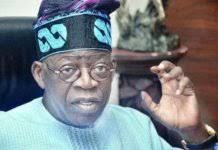
All Progressives Congress (APC) National Leader, Sen. Bola Tinubu, has advised Nigerians to continue working to improve on democracy for the growth of the country.

Tinubu gave the advice on Friday in his Democracy Day message with the theme, ‘June 12: A milestone for democracy’.

It was reported that June 12 is celebrated annually to commemorate the annulment of June 12 Presidential election.

According to the APC national leader, we must keep and nurture democracy, not for its own sake, but for ours.

He said that democracy day and its commemoration must not descend into empty ritual and that Nigerians must continue to work to entrench and improve on it.

“We must continue to be vigilant and keep watch over our democracy and ward off those who may want to draw us back toward a dimmer period.

“Nigerians deserve congratulations and commendation for their investment in democracy and for how far we have come.

“However, we equally must warn and remind ourselves how far we must go,” he said.

Tinubu noted that many people who fought for democracy and the June 12, 1993 elections changed the political climate in the country.

He commended the patriots who fought for democracy saying, planting the seedlings of democracy required much toil and sacrifice.

“Dr Beko Ransome Kuti, late Gani Fawehinmi, Baba Omojola, late Pa Rewane, late Pa Enahoro, Baba Ajasin, Pa Adesanya and Baba Adebanjo.

“Others are Prof. Wole Soyinka, Prof. Bolaji Akinyemi, Femi Falana, members of the civil society groups and student activists all fought hard and struggled mightily on everyone’s behalf.

“Many laid down their lives that we may have this brighter moment.

“Many people whom we do not know also lost their life or climb to bring this moment to pass.

“On this day, we duly honour such patriots. We remember them and commend their sacrifice,” the APC leader said.

Tinubu further said that marking democracy showed that the day or patriots are not taken for granted.

“We must keep and nurture democracy, not for its own sake, but for ours,” he said

Tinubu also hailed the President Muhammadu Buhari-led administration for its fight against corruption and tolerance of constructive criticism.

He commended Buhari for having the political courage to make June 12 Democracy Day.

“President Buhari, however, realised the import of June 12 and understood that this day more than any other best symbolized our national pursuit of democracy.

“In spite political opposition, Buhari helped set the record straight by making June 12, Democracy Day,” he said.

Tinubu noted that the nation now grappled with COVID-19 and its resultant public health and economic challenges.

“Only a democratic government would have been so informative and open.

“Only a democratic government would have initiated palliatives and worked in a cooperative manner with the states to devise the best possible policies to fit local circumstances,” he said.

Tinubu further stressed that democracy was the best avenue to harness collective abilities in the urgent resolution of these challenges.

He urged people to be thankful to God and remember those who sacrificed to enable the country advance far on democratic journey.

“Let us use democracy to win the present battle for national prosperity in all of its forms over poverty.

“The times we face are not the easiest but we have a destiny to reach and a democratic roadmap on how to get there.

“Hand in hand, let us get there together,” he said

Tinubu urged Nigerians to be safe and act with compassion toward one another.

“We must remain vigilant and do even more to elevate freedom of thought and expression.

“I wish all Nigerians a memorable Democracy Day and many more years of enduring democracy,” he said.

SDP, Ekiti senator, others task Nigerians on democratic values

0

The Social Democratic Party (SDP) in Ondo State has urged all tiers of government as well as other stakeholders to promote democratic values and good governance.

Mr Oladele Ogunbameru, the acting Chairman of SDP in Ondo State, made the plea in a statement issued on Friday in Akure to commemorate the 2020 Democracy Day.

Ogunbameru said the day “does not only bring Nigerians together to celebrate the nation’s gains in democratic experience, it also recognises and appreciates the sacrifices made by many Nigerians who fought for the enthronement of democracy in the country.”

” We again pay our tributes to the ultimate sacrifice made by the presumed winner of the June 12, 1993 Presidential Election, Chief Moshood Abiola of the Social Democratic Party (SDP).

“For us in the SDP and the country at large, June 12 reminds us of what we have passed through as a people bound by destiny, as well as what we can achieve as a nation if we continue to toe the path of righteousness, selflessness and unity that June 12 represents.

“The gains we have already made in our democratic experience must not count for nothing.

“All the tiers of our government and all the stakeholders in the Nigeria Project must continue to protect our common interest which is development driven by good governance,” he said.

Sen. Opeyemi Bamidele on his part, called for deep reflection on the ill-fated struggles for the actualisation of democratic rule in Nigeria through the June 12, 1993 presidential poll.

The lawmaker representing Ekiti Central, in a statement in Ado-Ekiti, described the acclaimed winner of the botched election, Chief MKO Abiola, and other Nigerians who died as the real pillars of the country’s democracy.

“The June 12, 1993 was so symbolic in Nigeria’s political history. It represented a day when all Nigerians eschewed ethnic and tribal considerations and voted a candidate of their choice in the most recognisable democratic fashion.

“The fact that the late Abiola of the Social Democratic Party and a Yoruba man of the Southwest extraction could win in Kano, where his chief opponent , Alhaji Bashir Tofa, hailed from, indicated that the poor masses cared less about ethnicity and tribalism.

“After the cancellation of the result by the then military junta, the people across South, West, East and Northwest, East and Central stood in unity to condemn the action and they all called for the revalidation of the poll results.

“The lesson from this was that our leaders should stop misleading the masses through divisive tribal and ethnic politics.

“An average Nigerian cares less about tribe, all they seek for is improved standard of living from any leader, wherever he may have come from,” Bamidele said.

In the same vein, the Ekiti House of Assembly has described June 12 as the day to commemorate the restoration of democracy in Nigeria.

The spokesperson of the House, Mrs Yemisi Ayokunle, said this in a statement issued in Ado-Ekiti on Friday.

Ayokunle, who commended President Muhammadu Buhari for declaring June 12 as Democracy Day, congratulated Nigerians for the entrenchment of democratic rule in the country.

Meanwhile, Mr Lanre Ogidan, the Coordinator of The Integrity Elite, a non-political group, has advised government at all levels to embrace good governance to ensure security and development in the country.

Ogidan made the appeal during a courtesy visit to the management of some media houses on Friday in Akure.

According to him, democracy, which is the government of the people, by the people and for the people, is a way of reaching out to the masses through dividends of the system.

He said the group was committed to correcting the wrongs in the society in order to promote development.

Ogidan commended the management and staff of the radio stations visited for their educative, informative and entertaining programmes, especially in the area of news reportage.

He expressed the readiness of the group to collaborate with the media in the area to provide necessary information and awareness that would enhance growth.

Mr Dele Fanimo, Executive Director, Crest FM, who welcomed the group, said the station was established to promote good governance by ensuring that government remained accountable to the people.

Other radio stations visited were Adaba FM and Ondo State Radiovision Corporation.

June 12, Reminder That A New Nigeria Is Possible, Says Fayemi

0

…..hails Buhari for recognising June 12 as Democracy Day

The Governor of Ekiti State, Dr. Kayode Fayemi, has advocated the commencement of a new conversation that will arouse the citizens’ confidence of a better life and a brighter future.
Dr. Fayemi said June 12 holds a significant lesson that a new and better Nigeria having a democracy that instils confidence of the citizenry is possible.


The Ekiti helmsman who is also the Chairman of the Nigeria Governors Forum (NGF) stated this in a commentary entitled: “Reminiscences on June 12 Struggle and its Imperatives” made available to journalists in Ado-Ekiti, on Friday in commemoration of the this year’s Democracy Day.
Fayemi paid glowing tributes to President Muhammadu Buhari for giving official recognition to June 12 as the nation’s Democracy Day describing it as a symbolic gesture which has provided a psychosocial healing for the people who sacrificed for the enthronement of Democracy.


The Governor noted that Buhari, by the gesture, would be fondly remembered after he might have left office for giving June 12 a significant place in the national diary and acknowledging the symbol of the struggle, Chief Moshood Abiola as the rightful winner of the election and taking a step further to give him the nation’s highest honour.
Buhari’s gesture, Fayemi said, was also made remarkable by the highest national honour of the Grand Commander of the Federal Republic (GCFR) he conferred on the late Abiola who all the previous administrations had refused to recognise as the winner of the June 12, 1993 presidential election.
Speaking on the significance of the date, Fayemi said: “The greatest take away from June 12 is that of the possibility of a new Nigeria where our so-called fault lines would no longer matter as our best lines.
“I therefore urge that we start a new conversation around a democracy that instils confidence in the citizenry, enables unrestrained breathing and holds a promise of a better life for all irrespective of whom they are or where they come from.
“This, for me, was the most significant lesson of June 12 and we must teach it, learn it and keep it etched in our sub-conscious in the certainty that a new Nigeria, a better Nigeria is possible.
“This symbolic gesture has provided a psycho-social healing for the people who sacrificed, including their lives, for the enthronement of democracy.
“Human life is generally ritualized and practised and that is the reason we talk of culture as an established conduct that has gained repeated and entrenched value for some time among a people.

“The declaration of June 12 as our National Democracy Day therefore, means for me, a significant and courageous move to further enculturate accountability even about knotty and unresolved historical issues of national importance.”
According to him, June 12 was a concept that aggregated the collective resolve of the nation to see the end of military rule in Nigeria without minding threats to their lives and unprecedented brutality unleashed on them by the then ruling junta in demanding its revalidation.
Fayemi also paid tributes to distinguished Nigerians who stood to be counted in the struggle for the revalidation of June 12 and restoration of democracy.


He added: “When we recall the many sacrifices of these individuals, we would appreciate that the journey to our democratic nationhood was not an easy one.
“We must therefore, not only consciously tell the story of the significance of having June 12 as a National Democracy Day, we must also continue to re-engage ourselves in the useful conversations about how to re-enact the spirit of the time at a time of fractured unity.
“One can only look back now and thank God for surviving one of the most horrendous eras in our national history. The return of democracy in 1999 therefore, was a direct consequence of the relentless agitation by a coalition of civil society groups, students, labour movement, politicians, rights activists, journalists, academics and a host of people in the diaspora and diplomatic circles.
“It is one important moment that should never be forgotten because the tree of our democracy was irrigated with the blood of many known and unknown people who died as martyrs of democratic struggle.” He added.

Netflix partners EbonyLife TV on Nigerian movie production for global audience

0

Global internet entertainment service provider, Netflix, has announced its partnership with leading Nigerian media and entertainment outfit, EbonyLife TV, to create two original television series and several other branded films.

Netflix announced this in a statement released on Netflix official twitter handle on Friday.

Dorothy Ghettuba, Netflix’s Lead for Original Series in Africa, said the partnership with EbonyLife and its founder, Ms Mo Abudu, an acclaimed Nigerian producer, would grow the company’s investment in Nigerian content.

“Under this partnership, Mo Abudu, through her production company, EbonyLife, will create two Netflix Original series as well as multiple Netflix branded films and a series that have been licensed to the service.

“A series based on contemporary author, Lola Shoneyin’s best-selling debut novel, The Secret Lives of Baba Segi’s Wives, and a film adaptation of Death And The King’s Horseman, a play by Nobel laureate, Prof. Wole Soyinka.

“Mo Abudu is at the forefront of creative storytelling in African television.

“Her passion for creating high-quality, riveting multi-genre films and TV shows that capture the imagination while showcasing the diversity and richness of Nigerian culture is evident in her impressive body of work.

“We are thrilled about this first-of-its-kind partnership in Africa that will bring some of Nigeria – and Africa’s most iconic storytelling to screen. We look forward to supporting EbonyLife as it brings all these diverse Nigerian stories to the world,” she said.

Meanwhile, Mo Abudu said that the partnership with Netflix would be most rewarding to Nigerian and African creative sector.

“As a Nigerian storyteller, my biggest motivator has always been to tell authentic and untold stories that resonate with every person, regardless of where they are from in the world while showcasing our culture, heritage and creativity.

“This unprecedented partnership is testament to Netflix’s investment in African storytelling and we at EbonyLife are grateful and excited about the opportunity to work with Netflix to deliver unique and riveting stories from Nigeria over the next few years for Netflix audiences around the world,” she said.

According to Ben Amadasun, Netflix Director of Licensing and Co-productions for Africa, the film adaptation of Death And The King’s Horseman will be among the newly-licensed Netflix branded films.

“One of the films will premiere on the service in 2020.

“We believe that more people deserve to see their lives reflected on screen and for that to happen, we need to make sure there is a wide variety of content that caters to our members’ diverse tastes.

“Our members around the world have been enjoying some of the licensed titles from EbonyLife like The Wedding Party, Chief Daddy, Castle and Castle and Fifty.

“ I am excited to continue our licensing partnership with the addition of Netflix branded film titles that will grow the variety of quality Nigerian stories on our service,” he said.

News Agency of Nigeria (NAN) reports that EbonyLife is a leading Nigerian media group, dedicated to telling a full range of African stories to a global audience co-production deals with leading Hollywood studios.

The company has produced over 5,000 hours of original television shows and six feature films, which included, high grossing, box office hits like The Wedding Party and Chief Daddy.

Netflix is the world’s leading internet entertainment service with 183 million paid memberships in over 190 countries viewing television series, documentaries and feature films across a wide variety of genres and languages.

Democracy day: Nigerians in U.S. advocate ideology based politics, seek reforms

0

Some Nigerians based in the United States have urged the nation to jettison tribalism, ethnicity and embrace ideology based politics to move the nation forward.

The Nigerians voiced mixed feelings as the nation marked her 21st Democracy Day anniversary.

Speaking with in New York, they said the country had made progress since the return of democracy in 1999.

According to them, Nigeria is not where it was 20 years ago in the areas of civil liberty, rule of law and socio-economic development.

However, they pointed out some shortcomings, especially “lack of ideology” in the nation’s politics with a call for reforms and change of mindset.

Dr Seun Sowemimo, a New Jersey-based bariatric surgeon, noted the stability in the system since 1999 as something worth celebrating.

“One of the positive things is that at least there has been stability in government.

“There has been one democratically elected government handing over to the other, and that is something we can point at,” he said.

Sowemimo, however, noted that the country had a lot of “maturing to do” in terms of building a strong ideological base for its politics.

“The politics in Nigeria has been very complex in terms of our mix of ethnicity.

“Our politics has been largely tribal, and we have not been able to base it on philosophies and ideas.

“It is more about affiliating ourselves with where we feel the next block of power will come from, and a lot of that has to do with ethnic origins.

“We have to continue to dialogue with ourselves, educate and orientate ourselves that for us to achieve great things we have to improve the level of our politics,” he said.

Speaking in the same vein, Mr Ugo Nwaokoro, former Deputy Mayor of the City of Newark in New Jersey, differed with the notion that Nigeria is complex.

“People often say Nigeria is complex. No! Nigeria is not complex. It is just the mind of our people to be sincere in governance.

“Another problem with us is our ethnic and religious differences, which should not be. Those things can actually be our strength.

“Diversity is a big source of national strength. But how you use it is what matters.

“If we keep seeing ourselves based on the ethnic groups we are from, then there is a problem,” he noted.

Nwaokoro, a writer and policy strategist, also called for attitudinal change among the political elite and the masses to advance the nation’s democracy.

For his part, Mr George Onuorah, a New York-based social justice activist and community leader, pointed out that the challenges in Nigeria’s democracy were not peculiar.

He noted that democracy is “an imperfect system of governance as evidenced from what we can see in so-called advanced democratic countries.”

However, Onuorah called for restructuring of the political and governance systems in the country to “reflect how we live, relate and interact”.

He also advocated investment in civic and voter education, and discouragement of politics based on ethnic, religious and selfish considerations.

Mr Obed Monago, Chairman of the Board of Trustees, Nigerians in Diaspora Organisation, Americas, said Nigeria had made great improvement in the area of freedom of expression.

“Nowadays, people are freer to express themselves with little or no fear of retribution as opposed to the days of Dele Giwa, the late Editor-in-Chief of Newswatch magazine.

“But we can do better if we are able to overcome the obstacles of ethnic, religious and tribal sentiments in our politics,” he said.

Monago also emphasised the need for national rebirth, with a call on Nigerians to sink selfish interests for the good of the country.

Also speaking, Mr Basil Njoku, a community leader, wished Nigerians would exhibit the same level of unity and patriotism in politics as they do in sports.

“The bane of Nigeria’s democracy is the problem of tribalism. We are balkanised into regions.

“We have not been able to come together to understand ourselves as an entity.

“I have not seen Nigerians profess their country except when the nation is in an international soccer competition.

“When there is a goal, a Yoruba does not care whether it is an Hausa man that is with him; they hug and you see the passion.

“I wish we can replicate that in the politics and governance of the day whereby we see ourselves as one and our destiny as one,” he said.

Njoku, who is the President of Mbano National Assembly, an association of U.S.-based Imo indigenes, called for inclusive governance at all levels to foster unity in the country.

Sales of school of nursing forms on internet fraudulent, FCTA warns

0

The Federal Capital Territorial Administration (FCTA) on Friday described as fraud, the ongoing 2020/2021 sales of School of Nursing, Gwagwalada, forms on the internet by some fraudsters.

Mrs Leo Musa, Acting Director of the Nursing Department, Health and Human Services Secretariat (HHSS) of the FCTA , stated this at a news conference on Friday in Abuja.

According to Musa, our attention has been drawn as a department of nursing, HHSS, to the ongoing advert and sale of forms in various media on the internet.

She said that reports had been coming to the department from many people about the sales of this form, stressing that school of nursing Gwagwalada have not started the sales of any form.

“We don’t have anything of such for now, we want to draw the attention of the public to this, anyone dealing with such fraudsters on the internet does so at their own risk.

“As a secretariat, we have not received any approval for such, with the COVID-19 on ground and with the rules of the Federal Government about the virus, we are not ready to go against it.

“We have written a disclaimer on the site, we know it belongs to the school, but yet, reports are still coming to us about the sales of this form,” Musa said.

She added that the forms would not be sold until the COVID-19 was over.

According to her, the school management attention has also been drawn to this, and that people have been going there to notify it of the form they have already bought.

She said that a letter to this effect has been forwarded to the Permanent Secretary, Federal Capital Territory through the acting Secretary of the HHSS, Mr Mohammed Kawu to see what could be done on the issue.

She added that suggestions had also be given on the issue, for it to be handed to the security department to help trace the fraudsters, who were already using different accounts on the internet to defraud people.

Democracy Day: Gov. Sule inagurates new presidential lodge, banquet hall

0

Gov. Abdullahi Sule of Nasarawa on Friday inaugurated the new presidential lodge and banquet hall at the Government House Lafia, as part of activities to mark the 2020 Democracy day celebration.

Sule, while inaugurating the edifices named them after two of his predecessors- Umaru Al-Makura and late Aliyu Akwe-Doma, for their contributions to the development of the state.

The governor explained that the new presidential lodge was initiated by Al-Makura, while the construction of the banquet hall began during Akwe-Doma’s administration.

Sule added that the decision to name the 1,000-capacity banquet hall after Akwe-Doma was to immortalise the late former governor who died on March 7, 2018.

He pointed out that with the inauguration of the banquet hall, most government functions would henceforth be held at hall.

Sule said that the completion of the two projects was in keeping with his administration’s committed to complete all pending projects from previous government’s.

According to him, governance is a continuum, hence his resolve to complete all the projects inherited from his predecessors.

“Government has committed a lot of resources to those projects. Therefore, it is better for us to complete them and put them into use for the benefit of the public.

“We will complete the old projects, in addition to initiating fresh ones to fulfill our campaign promises to the people,” he said.

It was reported that the governor was accompanied by Mohammed Abdullahi, Minister of State, Science and Technology, Senator Umaru Al-Makura, Senator Abdullahi Adamu, Senator Godiya Akwashiki and other members of the National Assembly from the state including those from Peoples Democratic Party (PDP), to inaugurate the projects.