Home Blog Page 79

If you fail to die by suicide, we’ll jail you – Akpabio

0

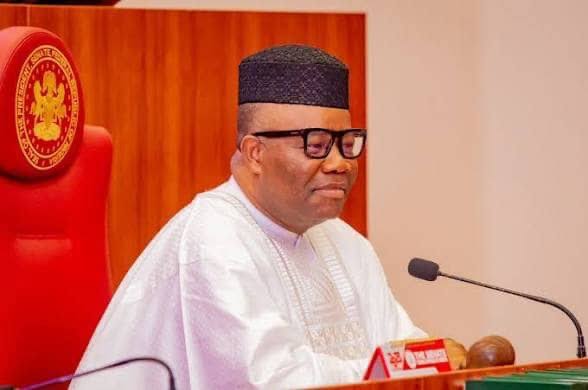
Senate President Godswill Akpabio has opposed a bill seeking to decriminalise attempted suicide in Nigeria, insisting that anyone who attempts suicide and survives should face imprisonment.

Akpabio made his position known on Tuesday during debate on the Suicide Prevention Bill 2026, sponsored by Senator Asuquo Ekpenyong, who represents Cross River South.

“As far as we are concerned, we are saying that suicide is a crime for now. Therefore, if you attempt it, you better succeed. If you don’t succeed, we will send you to prison,” Akpabio said.

He repeated the threat during the debate, declaring: “If you attempt it and don’t succeed, we will jail you. So, if you attempt it, you better succeed.”

The Senate President maintained his opposition even as the chamber passed the bill for second reading, allowing it to proceed to further legislative consideration.

He also noted that the Senate had yet to conduct a public hearing on the proposed legislation.

Presenting the bill, Ekpenyong argued that Nigeria’s legal framework was inconsistent because the National Mental Health Act recognises attempted suicide as a psychiatric emergency requiring immediate intervention, while the Criminal Code and Penal Code still prescribe criminal punishment.

“Our law presently speaks with two voices. The National Mental Health Act recognises attempted suicide as a psychiatric emergency requiring immediate intervention,” the senator said.

“Yet section 327 of the Criminal Code and section 231 of the Penal Code continue to expose the same person to criminal punishment.”

Ekpenyong warned that criminalising attempted suicide could discourage people experiencing suicidal thoughts from seeking help.

He said the fear of prosecution and stigma could also cause families to conceal suicide attempts and prevent health workers from reporting cases fully.

“Criminalisation can discourage people from disclosing suicidal thoughts or seeking help. It may cause families to conceal attempts, health workers to avoid complete reporting, and communities to treat a medical emergency as a source of shame,” he said.

He urged lawmakers to reconsider whether survivors should face prosecution or receive protection and medical care.

“At the heart of this bill is a simple question: When a Nigerian survives a suicide attempt, should the first response of the state be prosecution or protection?” he asked.

The senator said passing the bill would establish suicide prevention as a public health responsibility and ensure that people experiencing severe psychological distress received treatment rather than punishment.

“By supporting its second reading, this senate will affirm that suicide prevention is a national public health responsibility, and that a person in acute distress should be helped to recover rather than punished for surviving,” he said.

Ekpenyong stressed that decriminalising attempted suicide would neither encourage the act nor excuse anyone who assisted or persuaded another person to take their life.

“Decriminalising an attempt does not legalise or encourage suicide. Neither does it excuse anyone who procures, encourages, or assists any other person to take his or her life,” he said.

During the debate, Senator Ned Nwoko, representing Delta North, seconded the motion for the bill’s second reading but sought clarification on how the proposed legislation would prevent suicide and the practical measures it would introduce.

Senate Leader Opeyemi Bamidele raised concerns about the legal implications of amending the existing criminal justice framework, particularly whether the proposed changes would apply nationwide.

He noted that states must adopt the Administration of Criminal Justice Act for it to apply within their jurisdictions and urged the Senate to examine the implications carefully.

Senator Abdul Ningi, representing Bauchi Central, commended Ekpenyong for raising the issue, saying the proposed legislation would provide an opportunity for medical professionals, legal experts and other stakeholders to contribute to the debate.

He also argued that people who attempt suicide should not automatically be treated as criminals without considering the circumstances.

The bill proposes crisis helplines, medical assessments, referral services, rehabilitation and follow-up care for survivors.

It also seeks to promote public awareness, train police officers, teachers and healthcare workers, and establish a national data system to strengthen suicide prevention.

Under the proposed framework, people who survive suicide attempts would receive appropriate medical care and continuing support rather than face imprisonment.

The Senate subsequently referred the bill to the relevant committees on judiciary and health for further consideration, including a public hearing.

NAF recovers more components from crashed ATR 42-500 aircraft in Ondo

0

The Nigerian Air Force (NAF) has recovered additional components from its ATR 42-500 aircraft that crashed in Igbokoda, Ondo State, as search and recovery operations continue at the site.

The Air Force announced the development in a statement shared on its official X account on Wednesday, saying specialist divers from the Nigerian Navy and the Nigerian Safety Investigation Bureau (NSIB) were working with its recovery team to retrieve materials from underwater and other difficult-to-reach areas.

According to the NAF, the operation involves several technical methods, including hydrographic surveys, satellite-based search-and-rescue imagery, excavation of mud and the removal of excess water to gain access to targeted locations.

The service said the teams were conducting the exercise around the clock to recover materials that could be documented and preserved as part of the ongoing investigation into the crash.

“Additional aircraft components have been recovered as efforts continue to locate and retrieve relevant materials for documentation and preservation in support of the ongoing investigation,” the statement said.

The recovery exercise of the NAF crashed ATR 42-500 aircraft brings together personnel from the Air Force, Navy and NSIB, with specialist divers assisting in the underwater search while other teams work to access areas where relevant materials may be located.

INEC Chairman Declares: “Algorithms Will Not Decide the 2027 Vote”

0

“Says AI must remain servant, not master, of Nigerian democracy”

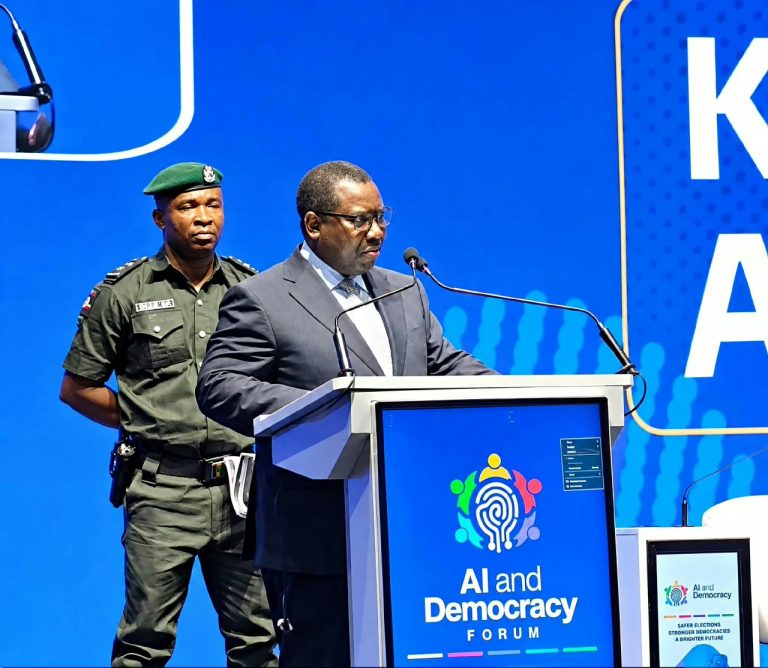
The Chairman of the Independent National Electoral Commission (INEC), Prof. Joash O. Amupitan, SAN, has declared unequivocally that algorithms will not decide the outcome of the 2027 General Elections, insisting that the sovereign will of the Nigerian people remains the sole determinant of who governs the country.

Speaking at the Artificial Intelligence and Democracy Forum 2026 in Abuja, themed “Safeguarding the 2027 General Elections in the Age of Artificial Intelligence,” Amupitan said technology, however sophisticated, must remain an instrument for serving human agency, institutional efficiency, and administrative transparency.

“Algorithms will not, and must never, decide the 2027 vote,” he said. “The choice of who leads Nigeria belongs exclusively to the Nigerian people. Algorithms may predict patterns; they may optimise routes, and they may even suggest preferences. But they do not have a conscience, they do not have a country, and they do not have a vote.”

The forum, co-convened by INEC and Yiaga Africa, brought together the Chairperson of the ECOWAS Network of Electoral Commissions and Chairman of Senegal’s Electoral Commission, Mr Abdoulaye Sylla; members of the diplomatic corps; National Commissioners and Resident Electoral Commissioners; heads of sister election management bodies across Africa; international development partners; political party leaders; civil society organisations; media executives; security agencies; technology companies; and members of the academic community.

With exactly 92 days to the 2027 General Elections, the INEC Chairman acknowledged that AI will undeniably shape the information environment, influence electoral logistics, and alter the tactics of both democratic actors and anti-democratic disruptors.

“While algorithms will not decide the vote, AI will undeniably shape the information environment in which citizens form their choices, influence the speed and security of electoral logistics, and alter the tactics of both democratic actors and anti-democratic disruptors,” he said.

Prof. Amupitan described the 2027 General Election as the largest democratic exercise on the African continent and one of the most complex administrative undertakings in the world, with over 103 million registered voters, 176,846 polling units across 774 Local Government Areas, and multi-tiered balloting spanning presidential, national assembly, governorship, and state assembly elections.

He noted that INEC has already executed ten of the fourteen major operational milestones stipulated by the Electoral Act 2026, procured additional BVAS units, digitised candidate nominations through the INEC Candidates Nomination Portal (ICNP), processing over 15,000 nominations across 22 political parties, and introduced online voter registration for the first time in Nigeria.

Rather than defaulting to alarmism, the INEC Chairman outlined opportunities for AI to optimise election administration, including predictive logistics and route optimisation, automated result audit assistance, biometric database hygiene, multilingual voter engagement through Natural Language Processing, and AI-driven cybersecurity defence.

He, however, affirmed the Commission’s commitment to the Human Oversight Principle, stressing that no critical electoral decision, result collation, voter accreditation, or candidate qualification will ever be fully automated or delegated to an autonomous system.

“Human accountability, statutory oversight, and judicial review will remain paramount at every stage of the electoral chain,” he said.

Prof. Amupitan identified generative AI, deepfakes, synthetic media, micro-targeting, dark ads, algorithmic bias, and automated cyber attacks as profound and asymmetric threats to electoral integrity.

“The greatest threat we face is not the hacking of a ballot box, but the hacking of the voter’s mind,” he warned. “If a voter cannot distinguish between truth and a synthetic lie, the foundation of informed consent crumbles.”

He announced that INEC has established a specialised AI Unit within its ICT Directorate, equipped with real-time digital monitoring tools, deepfake detection software, and data analytics expertise to track technical threats and information manipulation targeting the electoral process.

The INEC Chairman called for a synchronised, multi-stakeholder ecosystem to safeguard the 2027 elections, urging political parties to sign an Ethical AI Code of Conduct; civil society to audit algorithmic transparency and track digital campaign spending; security agencies and the judiciary to build specialised capacity in cybercrime investigation and digital forensics; and the media to establish internal digital forensic desks to verify user-generated content before broadcast.

He also proposed an Electoral Information Integrity Coalition comprising INEC, civil society organisations, the Nigerian Guild of Editors, the Nigeria Fact-Checking Coalition, media houses, and telecom operators as an early-warning network against viral AI-generated falsehoods.

Returning to the forum’s guiding question, Amupitan said the 2027 vote will be decided by “the young market woman in Aba, the farmer in Sokoto, the teacher in Ibadan, the tech innovator in Yaba, Lagos, the fisherman in Bayelsa, and the student in Maiduguri.”

“On election day in 2027, it will be the thumbprint of the Nigerian citizen, guided by their own will and their own hopes, that decides our future,” he said. “INEC’s job is to ensure that the voice of the people is heard clearly, above the noise of the machines.”

He concluded by affirming that the future of democracy must not be determined by what technology can do, but by what a free people, through their laws and institutions, decide technology ought to do.
Yiaga Africa

IGP Disu, NUC Board Chairman Call for Preventive Measures to Protect Schools

0

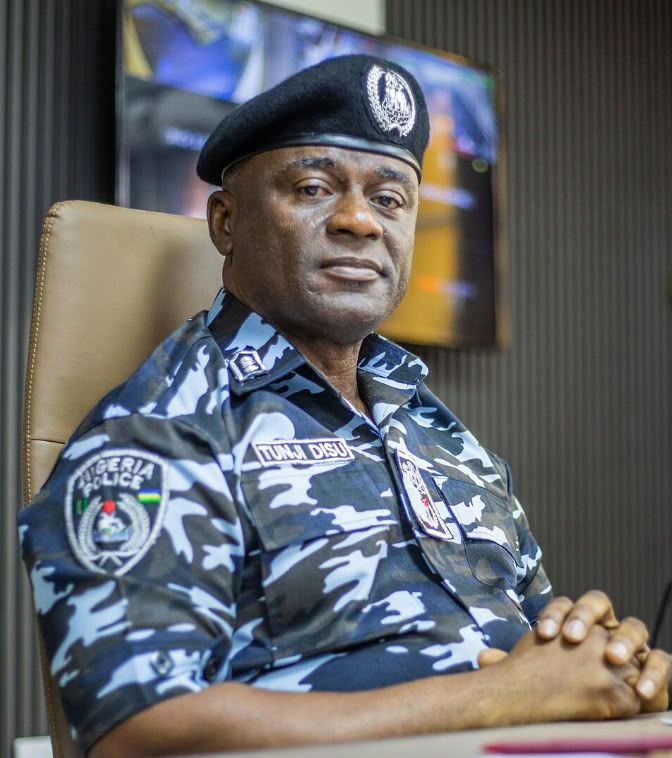
IGP Tunji Disu

BY TAIWO OGUNMOLA -OMILANI


The Inspector-General of Police, IGP Olatunji Disu, and the Chairman of the Governing Board of the National Universities Commission (NUC), Prof. Oluwatoyin Ogundipe, have called for a shift from reactive responses to preventive measures to address security threats facing schools across Nigeria.

They made the call at the 7th Annual Summit of the Education Writers’ Association of Nigeria (EWAN), themed “School Under Threat: From Reactive Responses to Sustainable Protection.”
Disu said school safety should be treated as a national security priority, stressing that protecting educational institutions requires effective government policies, intelligence gathering, community participation and collaboration among security agencies, school administrators and the media.

He noted that attacks on schools have consequences beyond their immediate victims, as they create anxiety among families, disrupt academic activities, undermine public confidence and threaten children’s access to education.

According to him, security agencies must move beyond responding to incidents after they occur by strengthening early-warning systems, improving intelligence gathering and encouraging the prompt reporting of credible threats.

The police chief identified intelligence-led policing, stronger police-community partnerships, emergency preparedness and respect for human rights as key components of sustainable school protection.

He said school administrators, teachers, parents, students and community members had important roles to play in identifying and reporting security concerns, adding that such information must be assessed professionally and acted upon where necessary.

Disu, who was represented by Lagos CP Tijani Fatai also urged education journalists to go beyond reporting attacks and investigate the factors that make schools vulnerable, assess the implementation of safety policies and hold relevant authorities accountable.

He cautioned journalists against publishing unverified information, sensational headlines and operational details that could compromise rescue efforts or endanger victims and security personnel.

The IGP further stressed the need to protect the identities and privacy of children affected by security incidents, noting that responsible reporting should distinguish between allegations and established facts.

He reaffirmed the Nigeria Police Force’s commitment to crime prevention, intelligence-led operations, professional conduct and collaboration with education stakeholders and other security agencies.

In his address, Ogundipe said the abduction of students and teachers, attacks on school premises and disruptions to learning had become serious threats to national development.

He argued that responses centred on deploying security personnel after attacks, issuing condemnations and providing temporary relief were insufficient to address the problem.
Ogundipe called for stronger early-warning systems, functional emergency preparedness plans, improved coordination among security agencies and education authorities, and sustained investment in school infrastructure.


He said every school should have appropriate emergency procedures, including evacuation arrangements, communication protocols, safe rooms and trained personnel capable of responding to crises.

Prof. Oluwatoyin Ogundipe, Chairman Governing Board, National Universities Commission

The NUC board chairman also advocated age-appropriate safety education for learners, training for teachers and school administrators, and psychosocial support for survivors of attacks.

He identified weak coordination and inconsistent policy implementation as major gaps in school protection, calling for a unified national framework that would align federal, state and local government efforts and clearly define responsibilities.

Ogundipe urged education journalists to consistently investigate school safety challenges, monitor policy implementation and expose gaps, rather than wait for tragedies before drawing public attention to vulnerable institutions.


He also called on governments at all levels to prioritise school safety in their budgets and planning, particularly for schools in rural and conflict-prone areas.

Similarly, the Registrar and Chief Executive of the National Examinations Council (NECO), Professor Dantani Wushishi, represented by Foyeku Idowu, described the experiences of students and teachers who witnessed kidnappings in northern Nigeria as tragic.

Similarly, the Head of the Security Printing Department at the West African Examinations Council (WAEC), Nigeria, Mr Suleiman Kum, who represented the council’s head of national office, recalled that three WAEC staff members lost their lives to the insurgency in 2013.

The speakers stressed the importance of collective action in ensuring that schools remain safe environments for teaching and learning.

They urged education journalists, government institutions, security agencies, school administrators, parents and communities to sustain efforts to protect students and teachers from security threats.

Tinubu to judges: Don’t let technicalities shield corruption

0


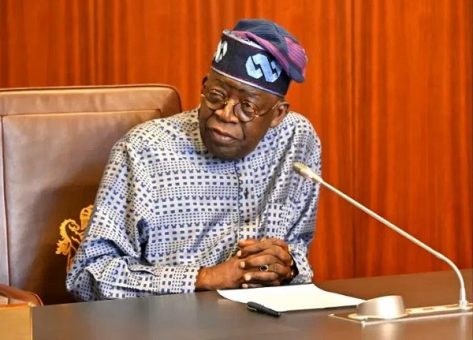
President Bola Tinubu has urged judges to stop allowing legal technicalities to shield corruption and close procedural loopholes exploited by politically exposed persons and organised crime suspects to delay or frustrate trials.

He warned that the anti-corruption campaign could not succeed without an independent, progressive and reform-minded judiciary, calling for a review of prosecution strategies and outdated precedents.

Tinubu, represented by Vice-President Kashim Shettima, spoke at the eighth annual capacity-building workshop for judges and justices organised by the Economic and Financial Crimes Commission (EFCC) and the National Judicial Institute (NJI) in Abuja yesterday.

“We must no longer permit legal pyrotechnics and procedural pedantry to shelter criminality. The Bench is not merely a mechanical arbiter of rules, but an active guardian of moral order and social equity.

“Probe prosecution strategies, dismantle outdated precedents, and seal procedural gaps that politically exposed persons and organised crime actors exploit to delay or frustrate trial.”

He said the law must serve the broader public interest, stressing: “Our courts must embody the spirit, and not just the arid letter, of the law.”

He warned that corruption threatened Nigeria’s survival and could not be treated as the exclusive responsibility of the executive, as its consequences affected all arms of government and ordinary citizens.

Addressing the workshop’s theme, “Investigation and Prosecution of Economic and Financial Crimes in a Digital Age,” Tinubu said artificial intelligence, blockchain technology and other digital innovations were increasing the reach and sophistication of financial crimes.

He urged investigators, prosecutors and judicial officers to continually update their knowledge and methods, particularly in cases involving cryptocurrency fraud, digital assets and complex digital evidence.

Citing the EFCC’s recoveries, Tinubu said the commission secured the forfeiture of Bitcoin worth $22,417.91, digital assets totalling 1,001,301.87 USDT and $5.6 million linked to the CBEX scheme in 2025.

He also said 192 foreign nationals arrested for cyberterrorism and cryptocurrency fraud had been prosecuted and deported.

Tinubu said the developments underscored the need for courts to strengthen their capacity to adjudicate cases involving emerging financial crimes and complement the commission’s enforcement efforts.

He pledged the executive’s support for equipping the judiciary to meet the demands of justice delivery in the digital age and acknowledged the reform initiatives of the Chief Justice of Nigeria, Justice Kudirat Kekere-Ekun.

Kekere-Ekun said technological developments had changed how digital evidence was obtained, preserved and presented, making disciplined case management increasingly important to criminal justice administration.

She said sustained judicial education was improving case management and justice delivery, adding that the EFCC-NJI partnership was designed to address evolving challenges confronting the justice system.

The Chief Justice urged judicial officers to develop the skills required to handle technology-driven cases and emerging forms of evidence.

Chairman of the Senate Committee on Anti-Corruption and Financial Crimes, Emmanuel Udende, described the workshop as timely, given the increasing sophistication of financial crimes, particularly cases involving politically exposed persons.

He said such cases posed challenges to timely case management and assured participants that the National Assembly would support the anti-corruption campaign through proactive legislation.

Attorney-General of the Federation and Minister of Justice, Lateef Fagbemi, represented by the Director of Public Prosecutions, Rotimi Oyedepo, called for stronger collaboration among institutions responsible for investigating and prosecuting corruption cases.

He urged judges and lawyers to use the workshop to strengthen their capacity, improve investigations and ensure diligent prosecutions, stressing that no single arm of government could tackle corruption alone.

In his welcome address, NJI Administrator, Babatunde Adejumo, said the collaboration with the EFCC was integral to strengthening the judiciary’s response to financial crimes in the digital era.

EFCC Chairman, Ola Olukoyede, described the workshop as a national imperative in the face of increasingly complex financial crimes.

He said the commission had recorded significant convictions and financial recoveries over the past three years and pledged transparent and judicious management of recovered assets.

Olukoyede warned, however, that technological innovation was advancing faster than existing legal instruments, making continuous reforms and closer cooperation among investigators, prosecutors and judicial officers essential.

Sun

American Varsity opens Ogbomoso Centre, offers residents up to 75% tuition scholarship

0

The American Open University (A-Global) has inaugurated a Skill and Liaison Centre in Ogbomoso, Oyo State, as part of efforts to expand access to technology training and flexible higher education, offering residents tuition scholarships of up to 75 per cent.

The centre, located in the High School Area of Ogbomoso, was inaugurated on Saturday, October 10, 2026, at an event themed, “Repositioning Ogbomoso for the Global Economy.”

The initiative, the university’s first community skill and liaison centre, is designed to provide admission information, learner support and technology skills training for residents of Ogbomoso and neighbouring communities.

The Soun of Ogbomosoland, Oba Ghandi Afolabi Olaoye, Orumogege III, was represented at the event by the Abese of Ogbomosoland, High Chief Kasali Oladipupo, who performed the symbolic cutting of the tape.

Oladipupo said the initiative aligned with the monarch’s 25-year development agenda for Ogbomoso, particularly its focus on education and economic development.

He noted that the Soun had encouraged the establishment of the centre to ensure that young people in the community were adequately prepared to participate in the emerging global economy.

According to him, the monarch had, at the recent Ogbomoso Education Summit, pledged to strengthen youth participation in the global economy, describing the new centre as a practical demonstration of that commitment.

Delivering the keynote address, Prof. Adeolu Afolabi of the Department of Cybersecurity at Ladoke Akintola University of Technology (LAUTECH) described the centre as a welcome development capable of advancing Ogbomoso’s educational and technological ambitions.

Afolabi said the initiative reflected the objectives of the Soun’s Ogbomoso Education Development Plan, particularly its emphasis on leveraging technology and global opportunities to improve access to tertiary education.

He identified Ogbomoso’s population, agricultural potential, trading activities, favourable climate and educational institutions as advantages that could enhance the town’s participation in the global economy.

He added that the establishment of A-Global in the community would improve access to technology-driven education, encourage collaboration and equip residents with skills relevant to local and international opportunities.

Speaking at the event, the university’s Chancellor, Prof. David Seyi Akanbi, said the institution’s journey began 11 years ago and culminated in the National Universities Commission granting it a provisional operating licence in 2025.

He explained that the Ogbomoso centre would serve as a contact point for prospective and existing students, providing admission guidance, learner support and technology skills training.

Akanbi said rapid technological advancement and automation had increased demand for workers with advanced technical skills and the ability to adapt to changing employment opportunities.

He noted that social media, e-commerce platforms and mobile applications were transforming economic activities, making it necessary for educational institutions to prepare learners for the digital economy.

“This is the reason American Open University exists. Our mission is to develop an employable, competitive and globally relevant workforce for the digital economy,” he said.

The chancellor added that the university collaborated with industry partners and promoted applied learning, competency assessment and professional development to equip students with practical and demonstrable skills.

As part of efforts to make its programmes more accessible, the university announced the Ogbomoso Scholarship Scheme, offering a 75 per cent tuition reduction for residents admitted into undergraduate programmes and a 60 per cent reduction for those admitted into postgraduate programmes.

Under the scheme, interested candidates are required to apply for admission through the university’s regular process. Successful applicants can subsequently apply for the scholarship, which will be reflected in their student portals to reduce tuition costs.

The university offers undergraduate programmes in Data Science, Cybersecurity, Software Engineering, Information Technology, Business Administration, Public Administration, Entrepreneurship and Business Information Technology.

Its postgraduate programmes include the Master of Business Administration (MBA), Master of Information Technology (MIT) and Master of Public Administration (MPA).

Through The EDGE Institute, its training arm, the institution also offers professional certificate programmes in Cybersecurity, Data Analytics and Business Intelligence, eLearning Development, Artificial Intelligence Development and Deployment, and Agile Project Management.

Headquartered in Abeokuta, Ogun State, with campuses in Ibadan and Abeokuta, American Open University provides flexible learning opportunities through online, on-campus and hybrid arrangements.

The university said the establishment of the Ogbomoso centre represented a strategic step towards expanding community-based technology training and preparing more residents to benefit from opportunities in the digital economy.

After governors’ pushback, APC embraces rainbow coalition

0


* Wike, Adeleke, Dankwambo get roles; Uzodimma retains council secretary

The All Progressives Congress (APC) has broadened President Bola Tinubu’s re-election machinery to accommodate prominent opposition figures in its revised Presidential Campaign Council (PCC), barely a month after its governors rejected alliances capable of weakening the party or undermining its candidates.

The revised list, signed by APC National Secretary, Senator Ajibola Basiru, names Minister of the Federal Capital Territory (FCT), Nyesom Wike, as campaign coordinator for Rivers State and the FCT, Osun State Governor Ademola Adeleke as Osun coordinator, and Peoples Democratic Party (PDP) Senator Ibrahim Dankwambo as a council adviser.

Imo State Governor and Chairman of the Progressive Governors’ Forum, Hope Uzodimma, retains his position as council secretary in the arrangement, which brings politicians from outside the APC into Tinubu’s campaign.

The expansion comes amid reports that the party’s National Working Committee (NWC) may have directed some candidates to submit the names of their proposed polling agents directly to the national secretariat, following concerns about possible internal sabotage in states affected by disputes over party tickets.

* No repeat of 2023 in Lagos, Tompolo urges

In Lagos, leader of the PBAT Door-to-Door Movement, Government Ekpemupolo, popularly known as Tompolo, urged residents to prevent a repeat of the state’s 2023 presidential election outcome, as the movement presented 57 campaign vehicles to state coordinators.

The widening mobilisation also received backing from the Coalition of Nigerian Artisan Associations (CONAA), which pledged at least 15 million votes for Tinubu and Vice President Kashim Shettima and announced a nationwide campaign beginning October 24.

•Opposition figures join campaign council

Under the revised list released by the APC NWC, Tinubu chairs the council, with Shettima and APC National Chairman, Nentawe Yilwatda, as vice chairmen.

Senator Abdul’Aziz Yari remains director-general, while Yobe State Governor Mai Mala Buni, Senate Leader Opeyemi Bamidele, Deputy Senate President Barau Jibrin and House of Representatives Deputy Speaker Benjamin Kalu occupy deputy director-general positions.

Senator Adams Oshiomhole oversees mobilisation, Femi Gbajabiamila heads administration, and James Faleke serves as deputy director-general for election planning, coordination and monitoring.

Minister of Works, David Umahi, is deputy director-general for infrastructure and sensitisation, while Rivers State House of Assembly Speaker, Martin Amaewhule, is South-South deputy coordinator for state assemblies mobilisation.

Delta State Governor Sheriff Oborevwori heads finance, while Ogun State Governor Dapo Abiodun and Nigeria Revenue Service Chairman, Zacch Adedeji, coordinate fundraising. Obafemi George joins Dankwambo among the advisers, with additional responsibility for media advice.

Festus Keyamo, Abdulmumin Jibrin, Wike’s media aide, Lere Olayinka, and Segun Sowunmi are on the media and communications team, while Dele Alake remains council spokesman.

Former Super Eagles captain Joseph Yobo is deputy director for sports sector mobilisation and Ayiri Emami heads special duties. Former Kano State Governor Abdullahi Umar Ganduje is director of stakeholder mobilisation, with former Lagos State Governor Babatunde Fashola as its South-West zonal coordinator. Basiru and Hadiza Bala-Usman serve as deputy secretary and assistant secretary, respectively.

In Osun, Adeleke will lead Tinubu’s campaign rather than Minister of Marine and Blue Economy, Gboyega Oyetola, a former governor and leading APC figure, underscoring the council’s reach beyond the ruling party.

•Coalition no threat to governors —Wike

Defending the rainbow coalition during his media chat, Wike said APC governors and other stakeholders had nothing to fear, insisting that Tinubu’s re-election required support beyond party lines. He also dismissed former Rivers State Governor Rotimi Amaechi’s prediction that former Vice President Atiku Abubakar was better positioned to win the 2027 presidential election.

“If you see that word, PBT/APC, it means those who are supporting the president who are not members of the party but are working together with the party to achieve that purpose.

“The major thing is Mr President. Whatever we are going to do, whoever has any idea or anything to contribute is to the success of Mr President. That is the whole thing.”

APC governors had, after a September meeting in Abuja, distanced themselves from alliances they considered capable of hurting the party’s electoral prospects, a position widely interpreted as a response to Wike’s initiative.

“The governors’ campaign commitment is exclusively to all APC candidates,” Uzodimma had declared.

The inclusion of opposition figures in Tinubu’s council, however, does not by itself establish that the governors have abandoned their opposition to supporting rival candidates in governorship and legislative elections.

Dismissing concerns about divisions, Wike said: “I don’t know what concerns there are. As far as I am concerned, there is no problem.”

He recalled urging FCT stakeholders to support Tinubu and APC National Assembly candidates while allowing supporters of other parties to retain their preferences in other contests.

The approach, he explained, accommodated local political interests while keeping Tinubu’s re-election as the common objective. Politicians outside the APC could therefore contribute to the presidential campaign without abandoning their parties.

That distinction was central to the earlier dispute, with Wike maintaining that support for Tinubu neither made his coalition part of the APC nor prevented the PDP from fielding candidates.

“Most importantly, the rainbow coalition has nothing to do with the APC. Rather, it is our own way of mobilising support across political parties for Mr President, who has done well to deserve a second term.”

Wike argued that such cooperation was not new, noting that politicians had previously backed presidential candidates outside their parties while retaining separate interests at state level.

•Dismisses Amaechi’s Atiku prediction

Responding to a question about whether the emerging opposition alliance involving Atiku and Amaechi posed a serious challenge to Tinubu’s supporters, Wike questioned Amaechi’s political influence and the regional calculations underlying his prediction.

The minister claimed that fewer than 200 people attended a town hall meeting in Cross River State where Amaechi reportedly argued that Atiku had an electoral advantage based on the regional origins of the leading contenders.

“I watched Amaechi. He had a town hall meeting in Cross River. I can tell you the numbers were not up to 200 people,” Wike said.

Recounting Amaechi’s argument, he said the former governor had highlighted the regional identities of Atiku, Tinubu, Labour Party’s 2023 presidential candidate Peter Obi and former Cross River State Governor Donald Duke before concluding that Atiku was better positioned to win.

Wike challenged the assumption that Atiku’s northern base would automatically translate into victory, citing the outcome of the 2023 presidential election.

“In 2023, Atiku ran, Obi ran, Tinubu ran. Who won?” he asked.

Tinubu won that election, with Atiku finishing second and Obi third. Wike nevertheless maintained that the political calculations and alliances ahead of the next presidential contest would differ from those of 2023.

“I have always told you people, 2027 will be totally different from 2023,” he said.

The minister also accused opposition politicians of misrepresenting Tinubu’s performance for electoral gain, insisting that rivalry should not prevent an honest assessment of the administration.

“Whether anybody likes it or not, Mr President has done well,” he said. “Politics must not be played as a do-or-die affair.”

He urged politicians to distinguish legitimate criticism from attempts to discredit opponents and called on Nigerians to scrutinise both the administration’s record and the past decisions and stewardship of those seeking higher office.

•Party moves against internal sabotage

The reported directive represents a departure from the party’s usual practice, under which state chapters compile and submit the names of party agents to the national secretariat in Abuja.

The development was attributed to internal wrangling in some state chapters, particularly where governors’ preferred candidates did not make the party’s list of candidates for the 2027 elections.

A source familiar with the arrangement said the NWC adopted the strategy to forestall attempts to undermine the party and its candidates during the elections.

According to the source, the arrangement was being applied mainly in states where the national leadership suspected that governors were sponsoring candidates on other political parties’ platforms against APC candidates.

The Oodua Progressive Youths League (OPYL) had alleged that some governors whose preferred candidates lost the APC National Assembly primaries directed them to obtain opposition tickets and contest against the ruling party’s candidates.

In a statement signed by its General Secretary, Wale Abdulwaheed, the group further alleged that the governors had reached agreements with some opposition parties over the selection of polling agents.

OPYL claimed that candidates allegedly sponsored on opposition platforms were directed to nominate the governors’ loyalists, who remained APC members, as agents for the ruling party.

The group alleged that those names would subsequently be submitted to the APC national secretariat as the party’s recognised agents in the affected states.

In Ondo State, some political leaders have accused Governor Lucky Aiyedatiwa of sponsoring National Assembly candidates on other political parties’ platforms.

Aiyedatiwa, however, denied directing any candidate to contest against APC candidates, describing those accusing him of anti-party activities as “naysayers, blackmailers and slanderers.”

“I have zero tolerance for anti-party activities. I have never engaged in anti-party activities in my life,” he said.

•No repeat of 2023 in Lagos —Tompolo

Meanwhile, Tompolo has urged Lagos residents to take advantage of the ongoing continuous voter registration exercise by the Independent National Electoral Commission (INEC), obtain their Permanent Voter Cards (PVCs) and vote massively for Tinubu in 2027.

According to a statement by the PBAT Door-to-Door Movement’s media unit, Tompolo, represented by Kestin Pondi, gave the charge at a campaign rally in Lagos on Tuesday, where 57 campaign vehicles were presented to state coordinators.

“What happened in 2023 must not repeat. He must win convincingly in 2027,” he said.

He described Tinubu as a selfless and courageous leader who pursued bold reforms despite their implications for his re-election prospects, maintaining that the measures were already yielding benefits for Nigerians.

Tompolo attributed Lagos’ development and appeal to Nigerians from different parts of the country to the foundation Tinubu laid as governor between 1999 and 2007, which successive administrations had built upon.

“Lagos is the city for all Nigerians because someone stood firm to restructure and reform it. From the time he came into office in 1999 up to 2007 that he left, Lagos was the envy of other states.

“Today, he has a higher responsibility, an opportunity to replicate the Lagos success story in Nigeria through reforms. There is massive development across the states today because reforms are working.”

He urged Lagos residents and other Nigerians to take the campaign to every household, arguing that Tinubu needed another term to sustain the reforms.

Governor Babajide Sanwo-Olu said Nigeria was attaining economic stability under the administration and urged residents to support the President’s re-election.

He accused opposition politicians of pursuing electoral victory without a plan for the country, saying their movement from one party to another demonstrated a lack of consistency.

Sanwo-Olu claimed that Tinubu had constructed more roads in three years than previous administrations, supported students, increased the minimum wage and made funds available for pension payments.

“Why won’t we vote for him? The entire Lagos is for Tinubu. All our votes are for Tinubu. You’ve done it before, you’ll do it again.

“We will touch every corner of Lagos with our message to re-elect Tinubu. Go out and convince everyone that Tinubu is the candidate to vote,” the governor said.

Earlier, the movement’s National Coordinator, Sunday Asuku, urged residents to obtain their PVCs, stressing that electoral mobilisation should be conducted without violence or intimidation.

“We must stand our ground and deliver Tinubu with PVCs, not with guns or intimidation. Lagos must not put their son, Tinubu, to shame.”

Asuku also urged Nigerians to use the 2027 presidential election to retire politicians he described as “serial contesters” and “enemies of Nigeria.”

•Artisans pledge 15m votes

CONAA said its endorsement of Tinubu and Shettima reflected confidence that the administration’s economic reforms, infrastructure investments, education financing and security measures would yield lasting benefits despite the hardship confronting Nigerians.

At a Lagos press conference, its Director-General, Chief Segun Ajibulu, announced that the October 24 mobilisation tour would sensitise artisans and rally support for the ticket.

The briefing, themed “2027 Elections: The Role of Artisans in Electoral Politics,” brought together artisan groups and other organisations from across Nigeria. CONAA comprises associations of mechanics, carpenters, welders, aluminium fabricators, iron benders, bricklayers and other skilled workers.

Acknowledging the country’s difficulties, the coalition said: “There is no doubt that Nigeria is passing through many challenges. Some of these obstacles are historical. They have been there for many years.”

It identified poverty, unemployment, corruption, inadequate housing, terrorism and the challenges of managing Nigeria’s diverse ethnic nationalities as longstanding problems that could not be resolved within a few years.

The coalition maintained that reforms introduced since May 2023 needed time to deliver their full benefits and described the 2027 election as consequential beyond Nigeria.

“As the largest democracy in Africa and being the host of the biggest single concentration of black people all over the world, with over 200 million people, the 2027 election is of significance not only to Africa but to the entire world.”

CONAA said it had established coordinating units in all six geopolitical zones to reach artisans across the 36 states. Its mobilisation strategy includes 10 million educational pamphlets, an internet radio station and social media campaigns explaining government policies and achievements.

It said government initiatives had opened opportunities for artisans to access loans through banks and other financial institutions, adding that improved economic conditions and security would help small businesses thrive.

The coalition cited the Nigerian Education Loan Fund (NELFUND) as a significant intervention in expanding access to higher education and backed moves towards state police, arguing that decentralised security could improve investment and business conditions.

It also cited what it described as improved Nigerian National Petroleum Company Limited (NNPCL) remittances to the Federation Account and growth in foreign reserves.

CONAA endorsed the Lagos-Calabar Coastal Highway and proposed road connections linking Lagos to Sokoto and Calabar to Enugu, saying improved transport would support commerce and artisans’ businesses.

The coalition said reported operations against terrorist groups had strengthened confidence in the government’s capacity to tackle insecurity, which remained a major threat to livelihoods, while sustained policy implementation would expand opportunities for artisans and other small-scale operators.

It maintained that its campaign would give artisans a coordinated role in electoral politics and urged members nationwide to participate.

Ajibulu was accompanied by Nigerian Automobile Technicians Association (NATA) General Secretary, Mr David Ajitumobi; the Vice President of the Arewa Youth Consultative Forum; and South East Artisan Coalition (SEACO) Chairman, Mr Fred Ojinika.

Sun
Sanwo-Olu Appoints Ogunbanwo, Five Others as Permanent Secretaries

0


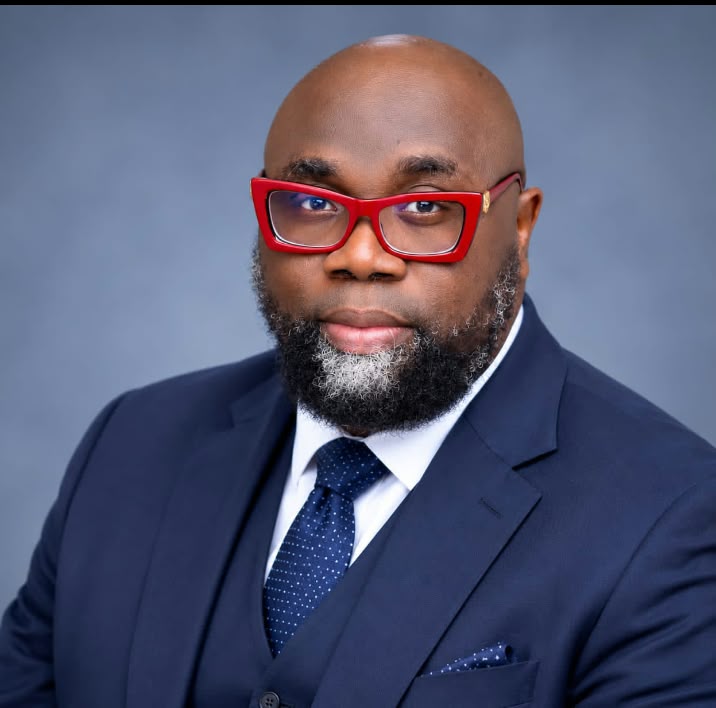
Lagos State Governor, Babajide Sanwo-Olu, has appointed Olatunbosun Ogunbanwo, Director of Public Affairs at the Lagos State Ministry of Health, and five other senior officers as Permanent Secretaries in the state public service.
The other appointees are Dr. Olawale Mahadiyu Adegbite, Director of Medical Services at the Health Service Commission; Folashade Aina Thomas-Orogan and Adebayo Mubashiru Haroun, both Directors of State Counsel at the Ministry of Justice; Olayinka Margret Oye-Bamgbose, Director of Administration and Human Resource at the Lagos State University Teaching Hospital; and Bilquees Toyin Adekoya, Principal/Director of Education at Education District VI.

The appointments were conveyed by the Head of Service, Bode Agoro, in Circular No. CIR/HOS/’26/071, dated October 13, 2026.
According to the circular, the appointments take effect from October 13, 2026, and are aimed at strengthening the state’s policy implementation and improving public service delivery.

Ogunbanwo brings nearly three decades of experience in public service, strategic communication, public relations and information management.
Before his appointment, he served as Director of Public Affairs at the Ministry of Health and previously held the same position at the Ministry of Agriculture.

He also played key communication roles in Lagos State’s responses to public health emergencies, including Ebola, COVID-19, Lassa fever and diphtheria.

Ondo crash: Senate seeks public probe, audit of military aircraft after death of 32

0


The Senate has called for a transparent and comprehensive investigation into the Nigerian Air Force aircraft crash in Igbokoda, Ondo State, which claimed 32 lives, while demanding a holistic audit of the serviceability and airworthiness of aircraft operated by the military.

It also urged the Federal Government to prioritise funding for regular aircraft maintenance and the replacement of ageing military aircraft to prevent further loss of lives among military personnel and other passengers.
The Senate further urged the Nigerian Air Force and the Nigerian Safety Investigation Bureau (NSIB) to investigate both the immediate and remote causes of the crash and make their findings public.

Furthermore, it mandated the Senate Committees on Air Force and Aviation to undertake an oversight visit to the crash site, engage with the relevant Air Force authorities and conduct a comprehensive audit of the serviceability and airworthiness of aircraft in the presidential and military fleet.

The proposed audit is expected to examine the condition of the aircraft and broader safety concerns surrounding military aviation operations.

These resolutions followed a motion sponsored by Osita Ngwu on the tragic crash of a Nigerian Air Force ATR-42 aircraft on Tuesday in plenary.

The aircraft with registration number NGR 931, which went down near the Naval Base in Igbokoda, headquarters of Ilaje Local Government Area of Ondo State, on Monday, October 5, 2026 while on a routine mission from Benin City to Lagos. It had 25 passengers and seven crew members when the crash occurred.

According to the motion, air traffic controllers lost contact with the aircraft at about 9:13 a.m., while attempts to re-establish radio communication proved abortive before the wreckage was located through a search and rescue operation involving the Nigerian Air Force and other relevant authorities.

The Senate described the incident as one of the deadliest military aviation accidents in Nigeria in recent years, noting that the loss of military personnel and civilian passengers had heightened concerns about flight safety and operational readiness.

It expressed concern that recurring military aircraft crashes had continued to claim the lives of officers, raising questions about maintenance practices, ageing aircraft fleets, operational safety protocols and airworthiness.

The lawmakers warned that without a transparent, thorough and independent investigation, critical lessons from the tragedy might not be learnt, thereby undermining efforts to prevent similar incidents.

The Senate observed a minute’s silence in honour of the 32 victims and extended its condolences to President Bola Tinubu, the Chief of Air Staff, the Nigerian Air Force, the Ondo State Government and the families of those who died in the crash.

The motion comes as concerns over military aviation safety place renewed attention on aircraft maintenance, operational preparedness and the need for investigations capable of establishing the circumstances surrounding fatal crashes and preventing their recurrence.

Sun

INEC: Parties That Failed to Submit Membership Registers Ineligible to Field Candidates

0


The Independent National Electoral Commission (INEC) has said political parties that failed to submit their membership registers as required by the Electoral Act, 2026, are ineligible to sponsor candidates for elections.

The commission said the position was based on the Supreme Court judgment in INEC v. Zenith Labour Party, Appeal No. SC/CV/495/2026, delivered on September 24, 2026.

The judgment followed INEC’s appeal against a Court of Appeal ruling that nullified Section 77(5)-(7) of the Electoral Act, 2026, which requires political parties to submit their membership registers as a prerequisite for valid party primaries.
According to INEC, the Supreme Court upheld the constitutionality of the provisions, declaring them mandatory for all political parties.

The commission added that the apex court also upheld Item 2 of its Timetable and Schedule of Activities, which required political parties to submit their membership registers between April 21 and May 10, 2026.

INEC said the court further ruled that political parties that failed to comply with the provisions were ineligible to sponsor candidates for elections.

The commission explained that, in accordance with Section 287(1) of the 1999 Constitution, as amended, it applied the Supreme Court’s judgment while finalising the list of candidates for the governorship election, excluding political parties that failed to meet the requirements.

However, INEC noted that the final lists of presidential and National Assembly candidates had been published on September 12, 2026, 13 days before the Supreme Court delivered its judgment.

Section 32(2) of the Electoral Act, 2026, allows political parties that believe their candidates were wrongly excluded from the lists to notify the commission within 14 days of publication.

According to INEC, the deadline for such notifications is October 24, 2026.
The commission reaffirmed its commitment to transparency, the rule of law and the credibility of the electoral process.

The statement was signed by Mohammed Kudu Haruna, National Commissioner and Chairman of INEC’s Information and Voter Education Committee.
Clarify the candidate-list distinction