Home Blog Page 78

2027: Why Tinubu’s re-election bid is unstoppable – APC chieftain

0


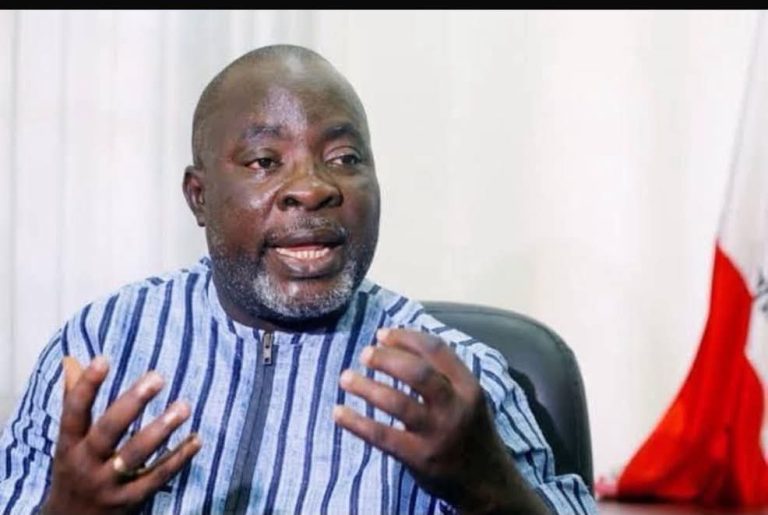
A staunch member of the All Progressives Congress (APC) in Rivers State, Princewill Dike, has declared that President Bola Tinubu’s chances of securing a second term in the 2027 presidential election will largely depend on political realignments, regional alliances and the ability of the ruling party to consolidate its influence across the country.

Dike argued that the political landscape ahead of the election appears favourable to Tinubu.

He cited developments across the South-West, South-South, South-East and northern regions as factors that could strengthen the president’s re-election bid.

According to him, the South-West remains a critical stronghold for Tinubu, who hails from the region.

He argued that the president could secure a landslide victory there, particularly in view of changing political alliances since the 2023 presidential election.

He cited Osun State, where former Vice President Atiku Abubakar won in 2023, noting that Governor Ademola Adeleke is now reportedly working towards Tinubu’s re-election and “has promised to deliver 1.5 million votes.”

Dike also expressed confidence that political developments in other South-West states could favour the president.

On the South-South, Dike maintained that Tinubu’s political fortunes had improved considerably since the last presidential election, pointing to the movement of governors in Akwa Ibom and Bayelsa States into the APC as developments that could strengthen the ruling party’s electoral prospects.

He also identified Delta, Edo and Cross River states as areas where Tinubu could consolidate support, while highlighting the political influence of the Minister of the Federal Capital Territory, Nyesom Wike, and his Rainbow Coalition in Rivers State and beyond.

Dike specifically referred to Wike’s political network in Rivers State and the activities of George Turnah in Bayelsa, arguing that the emerging alliances could weaken the electoral prospects of opposition figures, including Atiku Abubakar and Peter Obi.

In the South-East, the citizen journalist predicted that Tinubu could benefit from the calculations of some governors seeking to strengthen their political positions within the ruling party and improve their prospects in future national leadership contests.

He argued that “political ambitions among governors in the North could complicate Atiku’s efforts to secure overwhelming support in the region, particularly if influential political actors begin positioning themselves for the presidency after Tinubu’s tenure.”

Dike also highlighted Abuja as another political battleground, predicting that Wike’s influence as FCT Minister would pose a challenge to the opposition’s efforts to mobilise support in the nation’s capital.

The analysis, he said, rests on the assumption that political defections, alliances and the influence of state governors will translate into electoral support for Tinubu in 2027.

With the 2027 general election approaching, the major political parties are expected to intensify their mobilisation efforts, negotiate alliances and develop strategies to win support across the country’s six geopolitical zones.

For Dike, “the prevailing political alignments point to a strong possibility of Tinubu’s re-election.” Whether the President secures the landslide victory predicted, however, will depend on the electorate’s verdict when Nigerians go to the polls.

Sun

EFCC Begins Probe into Petition Seeking Reopening of Atiku Corruption Investigation

0


The Economic and Financial Crimes Commission (EFCC) has acknowledged a petition filed by Hon. E.J. Agbonayinma through his legal counsel, Hannibal Uwaifo, SAN, seeking the reopening of a corruption investigation involving former Vice President Atiku Abubakar.

In a letter of acknowledgement, the Commission confirmed receipt of the petition dated August 27, 2026, which it received on September 1, 2026, and stated that an investigation into the matter had commenced.

The EFCC also invited Agbonayinma to appear for an interview on October 12, 2026, at its headquarters in Jabi, Abuja, as part of the investigative process.
Agbonayinma arrived at the EFCC headquarters at approximately 9:58 a.m. on the scheduled date to adopt the petition he submitted to the Commission. He concluded the interview and left the premises at about 4:07 p.m.

The letter, referenced CR:3000/EFCC/HQ/SDC-2/VOL.3/398, was issued in connection with the Commission’s investigative activities.

The development marks a step in Agbonayinma’s call for accountability and his demand that the relevant authorities revisit the allegations surrounding the case.

Gospel Singer Toluwanisings Reportedly Dies

0


Popular Nigerian gospel singer Toluwanisings has reportedly died, according to reports emerging on Wednesday, October 14, 2026.

His reported death was announced by Pelumi Olajengbesi, a lawyer and convener of the Coalition of Public Interests Lawyers and Advocates (COPA), in a social media post.

Expressing grief over the development, Olajengbesi lamented the increasing reports of young Nigerians dying unexpectedly and called for God’s mercy.

“My God! What a life! No, Lord! We plead for Your mercy upon Toluwanisings,” he wrote.

He added that he was deeply troubled by the deaths of young people, saying, “This is not God’s plan for us. We say no to untimely death!”

The circumstances surrounding the singer’s reported death remain unclear as of the time of filing this report.

ADC-PCC Accuses APC of Plotting One-Party Dictatorship

0


The African Democratic Congress Presidential Campaign Council (ADC-PCC) has condemned the inauguration of the All Progressives Congress (APC) Presidential Campaign Council in Abuja, describing it as a calculated attempt to impose a one-party dictatorship on Nigeria.

The ADC-PCC Director of Media and Publicity, Kola Ologbondiyan, stated this on Wednesday while reacting to the inauguration ceremony.

Ologbondiyan accused the ruling party of undermining Nigeria’s multiparty democracy by allegedly coercing opposition governors into its fold or incorporating them into its presidential campaign council despite their refusal to defect from their respective parties.

“What we are witnessing is not politics but political abduction. You cannot claim to be a democrat while using state power to force opposition governors into your party and then drafting them into your campaign council. This is political banditry,” he said.

He further accused the APC of pursuing an agenda to concentrate power in the hands of one individual, alleging that key national institutions, security agencies and the judiciary were being deployed to weaken opposition forces.

The ADC-PCC spokesman urged Nigerians to resist what he described as an immoral political order driven by the desire to retain power at the expense of citizens’ welfare.

According to him, the ruling political establishment has shown little concern for the worsening of economic hardship, hunger and insecurity confronting ordinary Nigerians.

“These particular sets of leaders don’t care about the current conditions of the people but how best to remain in power at a time when average Nigerians find it difficult to eat and be secure,” he said.

“I appeal to Nigerians of conscience to stand up against this birth of immoral politics by those who care less about the suffering of the people.”
Ologbondiyan also alleged that Nigeria’s democracy was facing one of its most difficult periods, citing what he described as the suppression of dissenting voices, harassment of opposition figures and the weakening of democratic institutions for partisan interests.
“Never in our democratic journey have we witnessed this level of intolerance and desperation.

The APC government has weaponised poverty, hunger and insecurity to subjugate Nigerians and cripple the opposition. This is not the democracy for which Chief M.K.O. Abiola and other martyrs paid the supreme price,” he stated.

The ADC-PCC spokesman maintained that the presidential ticket of former Vice President Atiku Abubakar and former Rivers State Governor Rotimi Amaechi possessed the experience and democratic credentials required to restore democratic governance and reunite the country.

He described Atiku as a committed democrat with the national reach and political experience to address Nigeria’s challenges and rebuild public confidence in democratic institutions.

“Atiku Abubakar is a democrat to the core. He has the national spread, the capacity and the will to reunite Nigeria and restore our battered democracy, which the APC has destroyed.

“The fate of Nigeria’s democracy rests on him to save it from total collapse,” Ologbondiyan declared.

The ADC-PCC called on Nigerians, media organisations, civil society groups and the international community to oppose what it characterised as the APC’s anti-democratic agenda and support efforts to protect Nigeria’s multiparty democracy.

Lagos Earmarks N1bn Grants For Innovators – Hamzat

0


…Supports 80 Researchers, 75 Startups

…Says Africa Has Scaling Problem, Not Innovation

Lagos State Deputy Governor, Dr Kadri Obafemi Hamzat has disclosed that a total of N1billion in grants was earmarked by the state government to support innovators.

He said in recent times, the state government had supported 80 researchers and 75 startups, while as part of the State’s investments in digital infrastructure, about 3,000 kilometres of fibre ducts and networks had been laid, with a further $22 million invested towards developing a unified 6,000-kilometre network.

He called on governments and the private sector to bridge Africa’s technology scaling gap through sustained investment in digital infrastructure, predictable policies, local innovation and institutional reforms that translate technological breakthroughs into solutions capable of reaching millions of people.

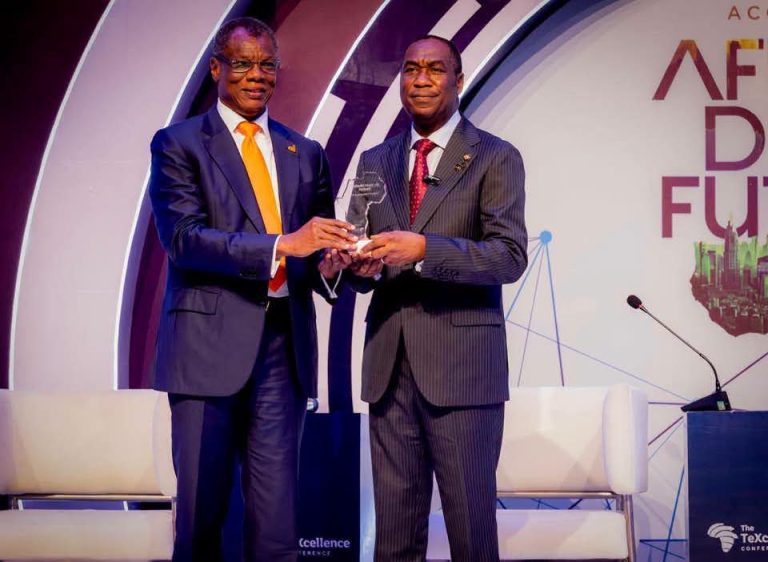
Hamzat made the call on Tuesday at the Fifth Edition of TeXcellence, with the theme, “Accelerating Africa’s Digital Future Lacks Direction and a Sustained Force,” held at Landmark Event Centre, Lagos, where he emphasised that Africa’s challenge is no longer a shortage of innovation but the inability to scale successful ideas into sustainable systems that deliver widespread economic and social benefits.

According to him, Africa must dismantle bureaucratic bottlenecks and build an enabling environment that allows technology innovations to scale into sustainable solutions capable of transforming economies and improving citizens’ lives.

“Africa does not have an innovation problem. We have a scaling problem. And scale is a systems question. The distance between a good idea and a system that works for millions is where the government lives. Across the continent, entrepreneurs, researchers and communities are already developing solutions to some of Africa’s most urgent challenges.

“The real challenge is creating the infrastructure, policies, financing and partnerships needed to move those solutions beyond isolated success stories and make them accessible to millions. The government must therefore do more than support innovation; it must build the systems that allow African ideas to grow, endure and deliver meaningful impact at scale”, said Hamzat.

In his address, themed “The Enabling State: What Government Must Become For Technology To Scale”, Hamzat said government must move beyond its traditional role as a regulator to become an enabler of innovation by providing shared digital infrastructure, ensuring predictable policies, supporting research and development, and building institutions capable of sustaining technological progress beyond individual administrations.

He added that more than 6.4 million residents of the state had been enrolled in the state’s resident identity system, while digital reforms had streamlined public services, including physical planning permits and mortgage consent processing.

Giving details, Hamzat disclosed that the Lagos State Science Research and Innovation Council (LASRIC) had “supported 80 researchers and more than 75 startups, with approximately ₦1 billion available in grants for innovators, while the state is considering an innovation law that would commit a fixed proportion of its annual budget to research, development and risk capital to ensure sustained support for local technology enterprises.”

The Deputy Governor further called for stronger collaboration between government and industry, proposing measurable commitments on both sides to accelerate digital transformation.

In his welcome address, the Group Managing Director/Chief Executive Officer of CWG Plc, Adewale Adeyipo, described TeXcellence as a platform that has evolved over five years into a strategic forum for shaping Africa’s digital future.

He urged African governments, technology companies and other stakeholders to prioritise digital sovereignty, local Artificial Intelligence infrastructure and sustainable deployment of technology to secure the continent’s future.

Adeyipo challenged stakeholders to move beyond experimenting with technology to building and deploying sustainable solutions that will strengthen Africa’s ownership of its technological destiny, stressing that the continent must take deliberate steps to own and shape its digital future rather than depend solely on innovations and infrastructure developed elsewhere.

According to him, Africa must deliberately invest in local computing infrastructure, expand access to affordable digital devices, improve digital literacy and ensure that AI solutions move beyond pilot stages into reliable, commercially viable systems. He emphasised that the continent’s digital transformation must be driven by clear direction, sustained investment and measurable outcomes, rather than speed alone.

IGP Disu Launches Book on Pioneering Women in Nigeria Police Force

0


The Inspector-General of Police, IGP Olatunji Rilwan Disu, on Tuesday, October 13, 2026, launched a book documenting the history and contributions of pioneer women officers in the Nigeria Police Force.

The book, titled The Origin of Police Women in Nigeria: The Story of the Pioneer Women Officers and My Journey in the Nigeria Police Force (1955–1996), was authored by retired Deputy Commissioner of Police Dame Stella O. Okuyiga. The public presentation took place at the Presidential Hotel, Port Harcourt, Rivers State.

Disu, who served as the chief launcher, described the publication as an important contribution to preserving the institutional history of the Nigeria Police Force and recognising the courage, resilience and service of the women who paved the way for subsequent generations.

He noted that Okuyiga was among the first 20 women to join the Force in 1955, adding that the dedication of the pioneer officers helped expand the role of women in policing.

The IGP said women had continued to distinguish themselves in criminal investigation, intelligence, tactical operations, specialist policing and strategic leadership.

He reaffirmed the Force’s commitment to merit-based advancement and equal professional opportunities, stressing the importance of preserving the legacy of pioneer officers to inspire future generations.
Disu also recalled his earlier engagement with Okuyiga when he served as Commissioner of Police in Rivers State. He said she had expressed her desire to update the book and formally present it.

He commended the retired officer for documenting the experiences and contributions of the pioneer generation of policewomen and urged serving and retired officers, institutions and members of the public to support the publication.

The IGP also encouraged the availability of the book in police formations, training institutions and libraries to ensure that its historical accounts remained accessible to future generations.
In her response, Okuyiga expressed appreciation to the IGP and the Nigeria Police Force for supporting the publication.

She said preserving the book in police libraries and training institutions would ensure that the experiences and sacrifices of pioneer women officers remained accessible to generations of personnel.
The retired officer expressed fulfilment that her story and legacy would endure beyond her lifetime and contribute to the institutional history of the Force.

The event was attended by the Rivers State Governor, Sir Siminalayi Fubara, represented by the Secretary to the State Government, Dr Dagogo Wokoma; and the Minister of Police Affairs, Senator Ibrahim Gaidam, represented by the Director of the Police Services Department, Ezekiel Audu.

Other dignitaries included Assistant Inspector-General of Police Aishatu Abubakar Baju; the Commissioner of Police, Rivers State Command, CP Olugbenga Adewole Adepoju; retired Deputy Inspector-General of Police Ivy Uche Okoronkwo; retired senior police officers; traditional rulers; representatives of sister security agencies; members of the Police Officers’ Wives Association; and other guests.

The Nigeria Police Force reiterated its commitment to preserving its institutional history and recognising officers whose contributions laid the foundation for the present-day Force, while ensuring that career advancement and leadership opportunities remained accessible to all personnel based on professionalism, competence and merit.

Africa Finance Corporation Appoints CBN Governor Yemi Cardoso as Chairman of the Board

0

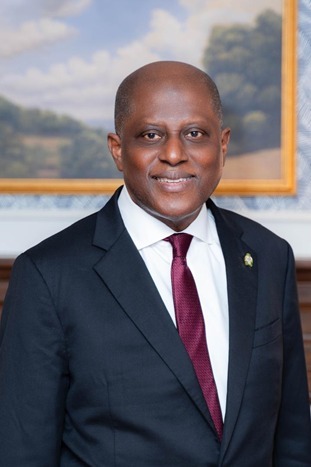
Lagos, 14 October 2026: Africa Finance Corporation (AFC), the continent’s leading infrastructure solutions provider, announces the appointment of Mr. Olayemi Cardoso, Governor of the Central Bank of Nigeria (CBN), as Chairman of its Board of Directors. He succeeds the immediate-past Chair, Ireti Samuel-Ogbu, who served the Corporation meritoriously during her tenure and continues to serve as a board member.

Mr Cardoso brings extensive experience spanning international banking, investment management, economic policy and public sector leadership. Since assuming office as Governor of the CBN in September 2023, he has led a far-reaching programme of monetary, financial-sector, and institutional reforms to restore macroeconomic stability, strengthen policy credibility, and rebuild investor confidence in Nigeria’s economy.


Under his leadership, the CBN has implemented significant reforms to Nigeria’s foreign exchange market, addressed longstanding foreign exchange obligations, strengthened monetary policy transmission, and enhanced institutional governance and transparency. The Bank has also concluded a recapitalisation programme for the banking sector, aimed at strengthening the resilience and capacity of Nigeria’s financial system to support sustainable economic growth.


Prior to his appointment as Governor, Mr Cardoso built a distinguished career in international banking and public service, including a 12-year tenure as Chairman of Citibank Nigeria and service as Commissioner for Economic Planning and Budget in Lagos State. In the latter role, he contributed to economic planning and fiscal management in one of Africa’s largest economies. He holds a degree from Aston University in the United Kingdom and a master’s in public administration from Harvard Kennedy School, where he also served on the Alumni Board.


Mr Cardoso’s appointment comes as AFC continues to expand its role in financing and developing strategic infrastructure assets that address Africa’s infrastructure gap, accelerate industrialisation and strengthen regional integration. His experience in financial sector reform, institutional governance and capital markets will provide valuable perspective on the Corporation’s strategic direction as it mobilises investment to unlock Africa’s economic potential.


Samaila Zubairu, President & CEO of AFC, said: “We are delighted to welcome Mr Cardoso as our Board Chairman. He shares our conviction that Africa’s lasting stability depends on its productive capacity. His leadership will strengthen AFC as we advance The Africa We Build 2050, mobilising African capital to build the infrastructure and industries that create jobs, prosperity and dignity for our people. We also sincerely thank Mrs Samuel-Ogbu for her dedication and contribution to AFC’s board during her tenure.”


Mr. Cardoso commented on his appointment, saying: “A more productive Africa is a more stable Africa. AFC has the credibility and track record to mobilise capital and build the infrastructure and industries that drive transformation. I look forward to working with the Board, management and member states to advance The Africa We Build 2050. Our measure of success must be the productive capacity we create, the industries we enable and the jobs we support.”


AFC continues to advance transformational infrastructure and industrial investments across Africa, with recent milestones including achieving financial close on the US$753 million Lobito Corridor Railway Project in Angola, to support the rehabilitation, upgrade, and long-term operation of the 1,300-kilometre brownfield rail corridor; supporting a US$600 million facility for Dangote Group’s US$7 billion fertiliser expansion programme to scale production in Nigeria; and committing to a combined US$300 million investment alongside Vision Invest in WIOCC Group to accelerate the expansion of critical digital infrastructure across the continent. These investments reflect AFC’s unique approach to developing strategic infrastructure platforms that connect markets, strengthen industrial value chains and mobilise capital at scale to drive Africa’s economic transformation.


About AFC

AFC was established in 2007 to be the catalyst for pragmatic infrastructure and industrial investments across Africa. AFC’s approach combines specialist industry expertise with a focus on financial and technical advisory, project structuring, project development, and risk capital to address Africa’s infrastructure development needs and drive sustainable economic growth.

Nineteen years on, AFC has developed a track record as the partner of choice in Africa for investing and delivering on instrumental, high-quality infrastructure assets that provide essential services in the core infrastructure sectors of power, natural resources, heavy industry, transport, and telecommunications. AFC has 49 member countries and has invested over US$20 billion in 36 African countries since its inception.

www.africafc.org


Media Enquiries:

Yewande Thorpe

Communications

Africa Finance Corporation

Mobile +234 1 279 9654

Email: yewande.thorpe@africafc.org


2027: APC steps up grassroots mobilisation in Lagos as Obanikoro unveils campaign HQ

0

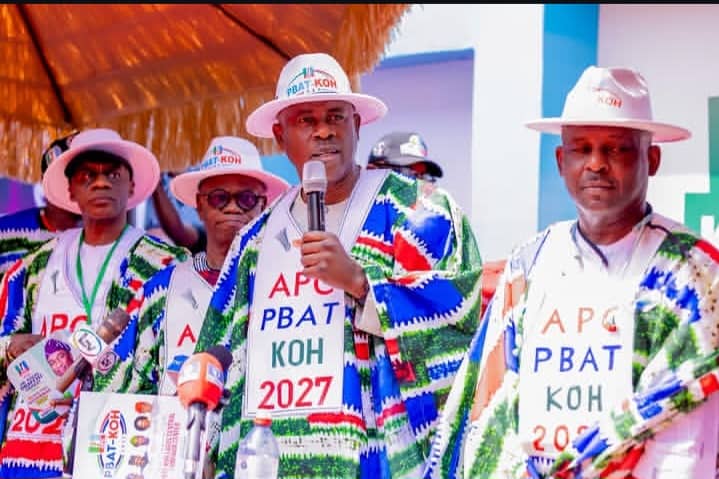
The All Progressives Congress (APC) has stepped up efforts to strengthen its grassroots political machinery in Lagos ahead of the 2027 general elections, with the commissioning of a dedicated campaign headquarters for the Kadri Obafemi Hamzat (KOH) governorship campaign in Lagos Central Senatorial District.

The Director-General of the campaign organisation, Senator Musiliu Obanikoro, said the facility would serve as a strategic coordination centre for political mobilisation, stakeholder engagement and collaboration among party members and supporters across the district.

The move underscores the campaign organisation’s focus on strengthening its grassroots structures and improving coordination among political leaders, community representatives and supporters as preparations for the 2027 elections gather momentum.
Obanikoro said the headquarters would provide an organised platform for bringing party leaders, youth groups, women, community representatives and other stakeholders together to discuss issues affecting their communities and promote participation in the democratic process.

“Beyond the commissioning ceremony, our priority is to ensure that this headquarters becomes a functional centre for coordination, engagement and grassroots mobilisation.
“We want a structure that brings party leaders, community representatives, youth groups, women and other stakeholders together to discuss issues affecting their communities and strengthen participation in the democratic process,” he said.

Located at 2 Joseph Harden Street, opposite Eleganza Building, off Broad Street, Lagos Island, the PBAT-KOH Lagos Central Campaign Headquarters is designed to coordinate political activities across five local government areas: Lagos Island, Lagos Mainland, Surulere, Apapa and Eti-Osa.

Obanikoro said sustained engagement with residents would be central to the campaign’s efforts to understand community concerns, communicate its programmes and priorities, and strengthen cooperation among party members and campaign organisers.

He added that the facility would provide a common base for coordinating activities across the five councils and facilitating engagement with grassroots political structures.

The headquarters has 16 offices, including one designated for the governorship candidate, a 500-seat auditorium and two conference rooms with capacities for 40 and 15 people, respectively.
It also has a clinic and an outdoor event space with seating for 150 people, according to the facility’s administrator and coordinator, Mr Bolaji Yusuf.

The project was facilitated and principally financed by Tayo Bamgbose-Martins, while Yusuf is responsible for the administration and coordination of the facility.

The headquarters is dedicated to the political support movement for President Bola Tinubu and Hamzat, the APC’s candidate for the 2027 Lagos State governorship election.

Artificial intelligence can improve how elections are conducted, but it must not determine electoral outcomes.

0

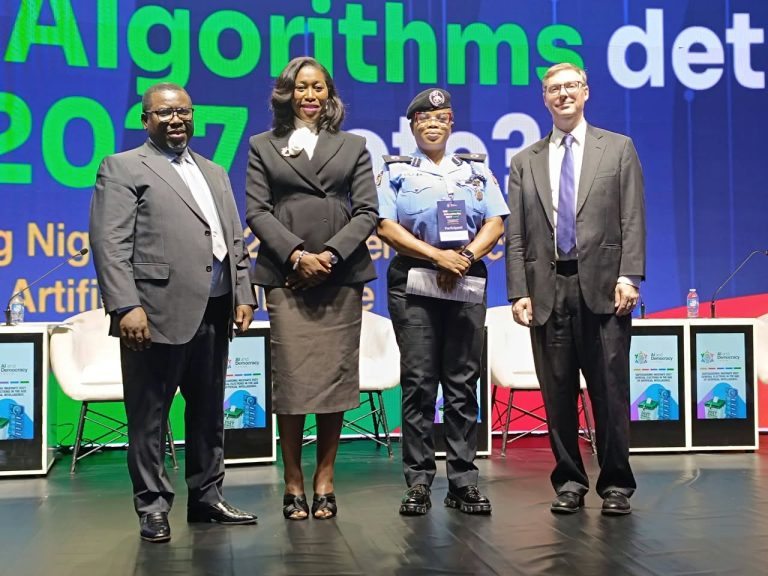
During the opening plenary, stakeholders addressed the opportunities and risks AI presents for the credibility of Nigeria’s 2027 General Elections.

Moderated by Vimbai Mutinhiri-Ekpeyong of Arise Television, the session featured Prof. Joash Amupitan, SAN, Chairman of INEC; Dave Liechtman, Senior Director of Global Elections at Microsoft; and ACP Oluseyi Olabisi Okuwobi of the Nigeria Police Force National Cybercrime Centre.

Discussions focused on the potential of AI to improve election administration, alongside growing concerns about deepfakes, cyber threats, manipulated electoral information, and the misuse of emerging technologies.

A key issue was the need to maximize the benefits of AI while establishing safeguards against its misuse, particularly where synthetic media and the impersonation of candidates or election officials could undermine public trust.

As Nigeria prepares for 2027, the priority remains ensuring that technological innovation serves electoral transparency, accountability, and the democratic choices of citizens.

#AIDF2026 #AIforDemocracyForum #NigeriaDecides2027

If you fail to die by suicide, we’ll jail you – Akpabio

0

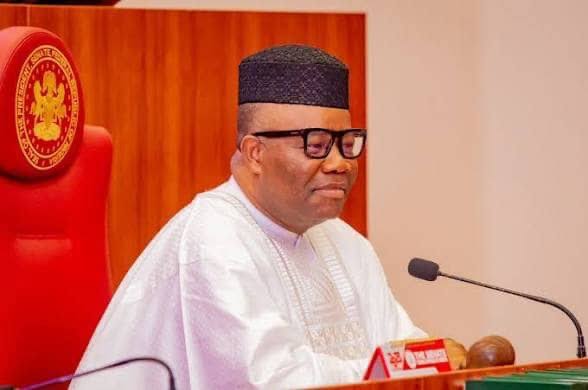
Senate President Godswill Akpabio has opposed a bill seeking to decriminalise attempted suicide in Nigeria, insisting that anyone who attempts suicide and survives should face imprisonment.

Akpabio made his position known on Tuesday during debate on the Suicide Prevention Bill 2026, sponsored by Senator Asuquo Ekpenyong, who represents Cross River South.

“As far as we are concerned, we are saying that suicide is a crime for now. Therefore, if you attempt it, you better succeed. If you don’t succeed, we will send you to prison,” Akpabio said.

He repeated the threat during the debate, declaring: “If you attempt it and don’t succeed, we will jail you. So, if you attempt it, you better succeed.”

The Senate President maintained his opposition even as the chamber passed the bill for second reading, allowing it to proceed to further legislative consideration.

He also noted that the Senate had yet to conduct a public hearing on the proposed legislation.

Presenting the bill, Ekpenyong argued that Nigeria’s legal framework was inconsistent because the National Mental Health Act recognises attempted suicide as a psychiatric emergency requiring immediate intervention, while the Criminal Code and Penal Code still prescribe criminal punishment.

“Our law presently speaks with two voices. The National Mental Health Act recognises attempted suicide as a psychiatric emergency requiring immediate intervention,” the senator said.

“Yet section 327 of the Criminal Code and section 231 of the Penal Code continue to expose the same person to criminal punishment.”

Ekpenyong warned that criminalising attempted suicide could discourage people experiencing suicidal thoughts from seeking help.

He said the fear of prosecution and stigma could also cause families to conceal suicide attempts and prevent health workers from reporting cases fully.

“Criminalisation can discourage people from disclosing suicidal thoughts or seeking help. It may cause families to conceal attempts, health workers to avoid complete reporting, and communities to treat a medical emergency as a source of shame,” he said.

He urged lawmakers to reconsider whether survivors should face prosecution or receive protection and medical care.

“At the heart of this bill is a simple question: When a Nigerian survives a suicide attempt, should the first response of the state be prosecution or protection?” he asked.

The senator said passing the bill would establish suicide prevention as a public health responsibility and ensure that people experiencing severe psychological distress received treatment rather than punishment.

“By supporting its second reading, this senate will affirm that suicide prevention is a national public health responsibility, and that a person in acute distress should be helped to recover rather than punished for surviving,” he said.

Ekpenyong stressed that decriminalising attempted suicide would neither encourage the act nor excuse anyone who assisted or persuaded another person to take their life.

“Decriminalising an attempt does not legalise or encourage suicide. Neither does it excuse anyone who procures, encourages, or assists any other person to take his or her life,” he said.

During the debate, Senator Ned Nwoko, representing Delta North, seconded the motion for the bill’s second reading but sought clarification on how the proposed legislation would prevent suicide and the practical measures it would introduce.

Senate Leader Opeyemi Bamidele raised concerns about the legal implications of amending the existing criminal justice framework, particularly whether the proposed changes would apply nationwide.

He noted that states must adopt the Administration of Criminal Justice Act for it to apply within their jurisdictions and urged the Senate to examine the implications carefully.

Senator Abdul Ningi, representing Bauchi Central, commended Ekpenyong for raising the issue, saying the proposed legislation would provide an opportunity for medical professionals, legal experts and other stakeholders to contribute to the debate.

He also argued that people who attempt suicide should not automatically be treated as criminals without considering the circumstances.

The bill proposes crisis helplines, medical assessments, referral services, rehabilitation and follow-up care for survivors.

It also seeks to promote public awareness, train police officers, teachers and healthcare workers, and establish a national data system to strengthen suicide prevention.

Under the proposed framework, people who survive suicide attempts would receive appropriate medical care and continuing support rather than face imprisonment.

The Senate subsequently referred the bill to the relevant committees on judiciary and health for further consideration, including a public hearing.