Home Blog Page 720

AFCON: Osimhen, Lookman benched as Chukwueze starts in Nigeria, Egypt’s third-place

0


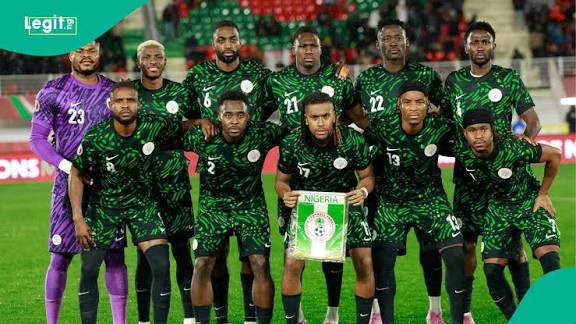
Victor Osimhen and Ademola Lookman will not start for the Super Eagles of Nigeria in their African Cup of Nations (AFCON) 2025 third-place match against Egypt on Saturday.

Alex Iwobi is also on the substitutes bench as Eric Chelle, Super Eagles head coach, makes five changes for Nigeria’s last AFCON match in Morocco.

Paul Onuachu will spearhead the attack, with Moses Simon taking over the captain’s armband on the wing.

Igoh Ogbu is the only change in defence, replacing the suspended Calvin Bassey, while Samuel Chukwueze, who failed to convert his penalty kick in Nigeria’s semi-final defeat, also gets a starting place. Fisayo Dele-Bashiru completes the team to face the Pharaohs.

credit: thecable

#AFCON2025

Why AFRIMA matters and why Africa must keep it alive

0


By Olumide Iyanda

The ninth edition of the Africa Music Awards( AFRIMA) is once again a reminder that Africa’s music industry has never lacked talent, energy or global relevance. What it has often lacked are strong continental platforms that can outlive their moment and resist the familiar cycle of early promise and quiet collapse.

Tagged Unstoppable Africa, the series of events held in Lagos over five days from January 7 to 11, 2026, reflected the creativity, resilience and steady growth that have sustained AFRIMA for more than a decade. Too many promising platforms have risen, shone briefly and disappeared. That reality makes what AFRIMA represents far more important than trophies and red carpets.
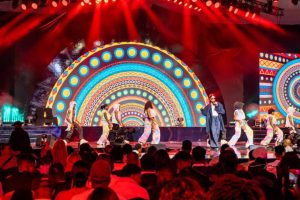
“AFRIMA is not just about giving awards. It is about bringing Africa together under one roof to celebrate our stories, culture and future through music,” AFRIMA President and Executive Producer, Mike Dada, said at the awards ceremony held at the Eko Convention Centre. “I am happy that we had delegates from at least 48 countries, including 1,216 artistes, delegates and production team members. Looking at the winners, all regions of Africa are represented, showing the growth of our music industry. Artistes from South Africa, Côte d’Ivoire, Algeria and Ethiopia were among those who led in the major categories.”
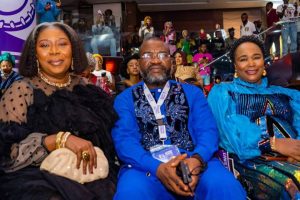
Of course, AFRIMA is more than a prizegiving night. It is a week-long convergence of networking, masterclasses, business summit, concert and recognition. The ninth edition, initially scheduled for November 2025, reinforced why the platform remains relevant years after it was conceived to reward African musical creativity while promoting the continent’s cultural heritage.

The week opened with a reception hosted at the British Deputy High Commission residence in Lagos before moving into more serious engagement at the Africa Music Business Summit. Those conversations mattered. The focus was not fame or flash, but ownership, investment, copyright and sustainability. Dada put it plainly: “African music is not only about the songs and vibes but about building the business aspect of the industry.” That statement captures the core of AFRIMA’s purpose. The awards are not just a celebration; they are an attempt to build structure around a fast-growing cultural force.
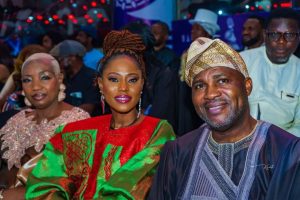
In her keynote address, Sweden’s Ambassador to Nigeria, Ms Anna Westerholm, described Africa, particularly Nigeria, as home to some of the world’s most exciting talents and urged African countries to deliberately leverage music for economic development. Speaking for the African Union Commission, Ms Angela Martins said music and the creative economy are vital tools for development, job creation and unity, stressing the importance of strong intellectual property frameworks and fair remuneration. On investment, Mr Mark Smithson of the British Deputy High Commission said Africa must look inward for funding, noting that over one trillion dollars in institutional capital exists on the continent and can be mobilised to attract further global partnerships.

The Lagos State Government, represented by the Commissioner for Tourism, Arts and Culture, Mrs Toke Benson-Awoyinka, reaffirmed its commitment to the sector, disclosing that the state invested N8.4 billion in creative industries in 2025.

There was also room for shared enjoyment ahead of the grand finale. The AFRIMA Music Village at Ikeja City Mall reminded everyone why music matters in the first place. Fans and artistes gathered without barriers as performers from across Africa took turns on stage. Hosted by Do2un, it was loud, communal and unmistakably African.

An eclectic crowd was treated to performances by 9ice, Terry Apala, Mr P, Skales, King Lex, Maxee, Shoday, Natureboii, Martinsfeelz, Syemca, Obesere, Femi Kuti, Yemi Alade, Wale Thompson and Adewale Ayuba under a friendly Lagos sky. The lineup also featured Sabrina from Cameroon, Hiro from Côte d’Ivoire and France, and Didi B from Côte d’Ivoire.

On the decks were Nigerian DJs YK Mule, Hatman DJ Nickii, DJ Bubu, DJ Primeau and DJ Coolest, joined by Ghana-Belgium-based DJ Brookebailey. Emerging talents Ella Centric, El Nayan, Dellfire, Black Astro, Blinkz Baba and Mayowa Afolabi, products of the AFRIMA Diamond Showcase project, also took to the stage, underlining the platform’s commitment to nurturing new talent.

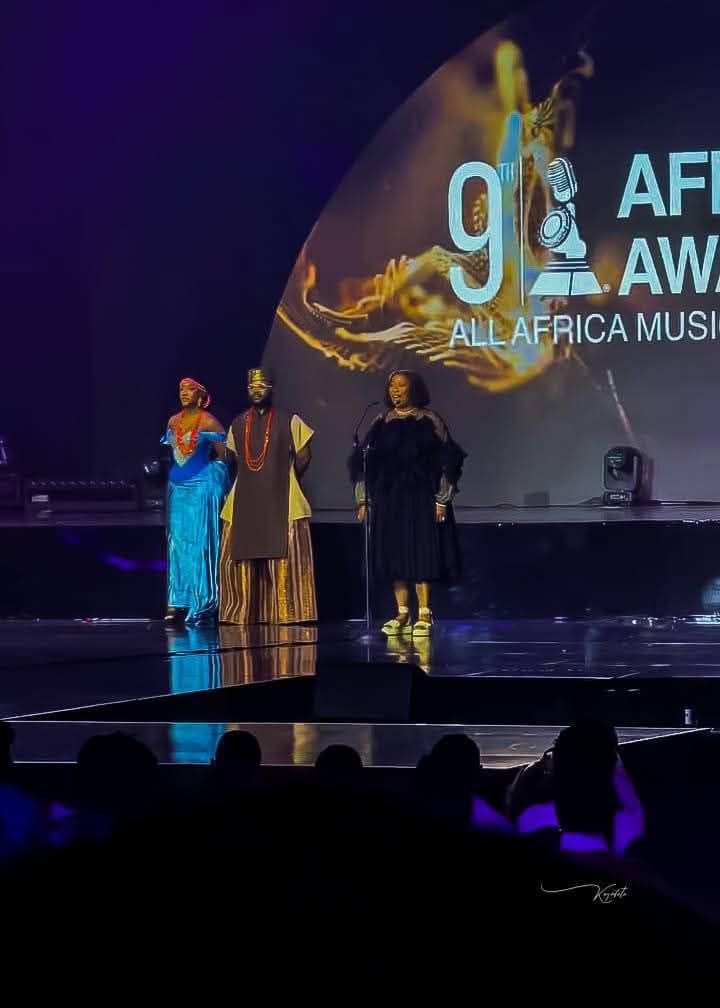
The awards night itself, hosted by Falz, Kenya’s Claudia Naisabwa and French-Senegalese Liliane Maroune, reflected both excellence and balance. Rema led the night with three major honours: Artiste of the Year, Best Male Artiste in Western Africa, and Best African Artiste in RnB and Soul. Other Nigerian winners included Burna Boy for Album of the Year, Yemi Alade for Best Soundtrack in a Movie, Series or Documentary and rapper Phyno, named Best African Artiste in African Hip Hop. Emerging talents were also recognised, with Qing Madi winning Most Promising Artiste of the Year and Chella named African Fans’ Favourite.

Beyond Nigeria, the ceremony celebrated talent from across the continent. Senegal’s Bakhaw Dioum won Song Writer of the Year, while Algeria’s DJ Moh Green claimed DJ of the Year. Ghana’s Wendy Shay won Best Female Artiste in West Africa, South Africa’s Nontokozo Mkhize emerged Best Female Artiste in Southern Africa, and Tanzania’s Juma Jux was named Best Male Artiste in Eastern Africa. Côte d’Ivoire recorded multiple wins, with Milo and Morijah taking the male and female African Inspirational categories, Didi B emerging Best African Lyricist or Rapper, and Team Paiya winning Best African Duo, Group or Band. Ethiopia featured prominently, with Haddinqo named Best African Jazz, Weeha winning Best African Dance or Choreography, and Veronica Adane taking Best African Traditional. Guinea celebrated Manamba Kanté as Best African Pop and Takana Zion as Best African Reggae, Ragga and Dancehall.

African music has travelled the world long before revisionist labels tried to compress it into Afrobeats or Amapiano. Fela Kuti, King Sunny Ade, Hugh Masekela, Miriam Makeba, Youssou N’Dour, Salif Keita, Zaiko Langa Langa, ET Mensah, Cesária Évora, Papa Wemba, Mbilia Bel and Angélique Kidjo have long stood as global images of the continent. Yet there have been few pan-African awards platforms truly owned by Africa and backed by its institutions.

With the African Union as partners, AFRIMA was conceived to recognise excellence across the continent while encouraging cooperation between artistes, policymakers and investors. After years of planning and stakeholder engagement, the first edition was held in Lagos in 2014. It has been held a total of seven times in Nigeria and once each in Ghana and Senegal. Build-up events have been held in The Gambia, South Africa, Cameroon, the Democratic Republic of Congo, Congo, Zimbabwe, London, Côte d’Ivoire, Benin Republic, Kenya, Uganda, Ethiopia, Morocco, Algeria, Comoros and about nine other African countries.

AFRIMA’s strength lies in its continental spirit, even when hosted by a single country.

The Lagos State Government once again provided financial and institutional support that made hosting an event of this scale possible. Corporate partners such as FirstBank, The Address Homes, Guinness, Utilita, Gobet247, LIRS and others also deserve recognition for standing behind the project and helping turn ideas into action. So do the British High Commission and the Embassy of Sweden as cultural exchange partners.

But appreciation must not end the conversation. AFRIMA has reached a point where goodwill alone is no longer enough. Africa’s cultural history is littered with award ceremonies that started well and faded due to weak funding, limited government backing, inconsistent corporate support and questionable organisational practices. Before AFRIMA, there were the KORA Awards, Channel O Africa Music Video Awards and the MTV Africa Music Awards among others.

Allowing AFRIMA to follow that path would be a serious loss.

Stronger and more deliberate support is needed from governments across the continent, not just from host cities. Corporate Africa must also do more. Many brands benefit from the global reach and cultural influence of African music. Supporting AFRIMA should be seen as a long-term investment in Africa’s creative economy, not a one-off sponsorship.

The social and economic impact of hosting an event like AFRIMA is far-reaching. It challenges the notion that Africa is underdeveloped or unsafe. Thousands of people gathered, both indoors and in open spaces, without fear of molestation or discrimination. If proof is needed, one only has to look at the crowd at Ikeja City Mall, where a large number of funseekers were drawn by a well-coordinated media campaign and the promise of a memorable evening.

Beyond the spectacle, AFRIMA delivers a tangible economic boost to the host city. Hotels, restaurants, transport services and local vendors all benefit from the influx of artistes, delegates, media professionals and fans. Lagos saw its tourism and hospitality sectors energised, with increased bookings, patronage and international visibility. Events of this scale create jobs, generate revenue and reinforce the city’s reputation as a safe and vibrant destination for business and leisure alike.

African music remains one of the continent’s strongest unifying forces. It speaks where politics often divides. AFRIMA represents that shared voice. If Africa truly values its culture, then AFRIMA must be sustained, protected and allowed to grow.

As the biggest pan-African music awards still standing, AFRIMA offers a level of continental integration that foreign platforms such as the Grammy, BET, MOBO and MTV Europe Music Awards make no claim to provide for Africa. That alone is reason enough to ensure it does not become another good idea that failed to survive its moment.

Olumide Iyanda is a veteran entertainment and culture journalist, Publisher of QEDNG and Convener of the QEDNG Creative Powerhouse Summit.
Why AFRIMA matters and why Africa must keep it alive

0

By Olumide Iyanda

The ninth edition of the Africa Music Awards( AFRIMA) is once again a reminder that Africa’s music industry has never lacked talent, energy or global relevance. What it has often lacked are strong continental platforms that can outlive their moment and resist the familiar cycle of early promise and quiet collapse.

Tagged Unstoppable Africa, the series of events held in Lagos over five days from January 7 to 11, 2026, reflected the creativity, resilience and steady growth that have sustained AFRIMA for more than a decade. Too many promising platforms have risen, shone briefly and disappeared. That reality makes what AFRIMA represents far more important than trophies and red carpets.

“AFRIMA is not just about giving awards. It is about bringing Africa together under one roof to celebrate our stories, culture and future through music,” AFRIMA President and Executive Producer, Mike Dada, said at the awards ceremony held at the Eko Convention Centre. “I am happy that we had delegates from at least 48 countries, including 1,216 artistes, delegates and production team members. Looking at the winners, all regions of Africa are represented, showing the growth of our music industry. Artistes from South Africa, Côte d’Ivoire, Algeria and Ethiopia were among those who led in the major categories.”

Of course, AFRIMA is more than a prizegiving night. It is a week-long convergence of networking, masterclasses, business summit, concert and recognition. The ninth edition, initially scheduled for November 2025, reinforced why the platform remains relevant years after it was conceived to reward African musical creativity while promoting the continent’s cultural heritage.

The week opened with a reception hosted at the British Deputy High Commission residence in Lagos before moving into more serious engagement at the Africa Music Business Summit. Those conversations mattered. The focus was not fame or flash, but ownership, investment, copyright and sustainability. Dada put it plainly: “African music is not only about the songs and vibes but about building the business aspect of the industry.” That statement captures the core of AFRIMA’s purpose. The awards are not just a celebration; they are an attempt to build structure around a fast-growing cultural force.

In her keynote address, Sweden’s Ambassador to Nigeria, Ms Anna Westerholm, described Africa, particularly Nigeria, as home to some of the world’s most exciting talents and urged African countries to deliberately leverage music for economic development. Speaking for the African Union Commission, Ms Angela Martins said music and the creative economy are vital tools for development, job creation and unity, stressing the importance of strong intellectual property frameworks and fair remuneration. On investment, Mr Mark Smithson of the British Deputy High Commission said Africa must look inward for funding, noting that over one trillion dollars in institutional capital exists on the continent and can be mobilised to attract further global partnerships.

The Lagos State Government, represented by the Commissioner for Tourism, Arts and Culture, Mrs Toke Benson-Awoyinka, reaffirmed its commitment to the sector, disclosing that the state invested N8.4 billion in creative industries in 2025.

There was also room for shared enjoyment ahead of the grand finale. The AFRIMA Music Village at Ikeja City Mall reminded everyone why music matters in the first place. Fans and artistes gathered without barriers as performers from across Africa took turns on stage. Hosted by Do2un, it was loud, communal and unmistakably African.

An eclectic crowd was treated to performances by 9ice, Terry Apala, Mr P, Skales, King Lex, Maxee, Shoday, Natureboii, Martinsfeelz, Syemca, Obesere, Femi Kuti, Yemi Alade, Wale Thompson and Adewale Ayuba under a friendly Lagos sky. The lineup also featured Sabrina from Cameroon, Hiro from Côte d’Ivoire and France, and Didi B from Côte d’Ivoire.

On the decks were Nigerian DJs YK Mule, Hatman DJ Nickii, DJ Bubu, DJ Primeau and DJ Coolest, joined by Ghana-Belgium-based DJ Brookebailey. Emerging talents Ella Centric, El Nayan, Dellfire, Black Astro, Blinkz Baba and Mayowa Afolabi, products of the AFRIMA Diamond Showcase project, also took to the stage, underlining the platform’s commitment to nurturing new talent.

The awards night itself, hosted by Falz, Kenya’s Claudia Naisabwa and French-Senegalese Liliane Maroune, reflected both excellence and balance. Rema led the night with three major honours: Artiste of the Year, Best Male Artiste in Western Africa, and Best African Artiste in RnB and Soul. Other Nigerian winners included Burna Boy for Album of the Year, Yemi Alade for Best Soundtrack in a Movie, Series or Documentary and rapper Phyno, named Best African Artiste in African Hip Hop. Emerging talents were also recognised, with Qing Madi winning Most Promising Artiste of the Year and Chella named African Fans’ Favourite.

Beyond Nigeria, the ceremony celebrated talent from across the continent. Senegal’s Bakhaw Dioum won Song Writer of the Year, while Algeria’s DJ Moh Green claimed DJ of the Year. Ghana’s Wendy Shay won Best Female Artiste in West Africa, South Africa’s Nontokozo Mkhize emerged Best Female Artiste in Southern Africa, and Tanzania’s Juma Jux was named Best Male Artiste in Eastern Africa. Côte d’Ivoire recorded multiple wins, with Milo and Morijah taking the male and female African Inspirational categories, Didi B emerging Best African Lyricist or Rapper, and Team Paiya winning Best African Duo, Group or Band. Ethiopia featured prominently, with Haddinqo named Best African Jazz, Weeha winning Best African Dance or Choreography, and Veronica Adane taking Best African Traditional. Guinea celebrated Manamba Kanté as Best African Pop and Takana Zion as Best African Reggae, Ragga and Dancehall.

African music has travelled the world long before revisionist labels tried to compress it into Afrobeats or Amapiano. Fela Kuti, King Sunny Ade, Hugh Masekela, Miriam Makeba, Youssou N’Dour, Salif Keita, Zaiko Langa Langa, ET Mensah, Cesária Évora, Papa Wemba, Mbilia Bel and Angélique Kidjo have long stood as global images of the continent. Yet there have been few pan-African awards platforms truly owned by Africa and backed by its institutions.

With the African Union as partners, AFRIMA was conceived to recognise excellence across the continent while encouraging cooperation between artistes, policymakers and investors. After years of planning and stakeholder engagement, the first edition was held in Lagos in 2014. It has been held a total of seven times in Nigeria and once each in Ghana and Senegal. Build-up events have been held in The Gambia, South Africa, Cameroon, the Democratic Republic of Congo, Congo, Zimbabwe, London, Côte d’Ivoire, Benin Republic, Kenya, Uganda, Ethiopia, Morocco, Algeria, Comoros and about nine other African countries.

AFRIMA’s strength lies in its continental spirit, even when hosted by a single country.

The Lagos State Government once again provided financial and institutional support that made hosting an event of this scale possible. Corporate partners such as FirstBank, The Address Homes, Guinness, Utilita, Gobet247, LIRS and others also deserve recognition for standing behind the project and helping turn ideas into action. So do the British High Commission and the Embassy of Sweden as cultural exchange partners.

But appreciation must not end the conversation. AFRIMA has reached a point where goodwill alone is no longer enough. Africa’s cultural history is littered with award ceremonies that started well and faded due to weak funding, limited government backing, inconsistent corporate support and questionable organisational practices. Before AFRIMA, there were the KORA Awards, Channel O Africa Music Video Awards and the MTV Africa Music Awards among others.

Allowing AFRIMA to follow that path would be a serious loss.

Stronger and more deliberate support is needed from governments across the continent, not just from host cities. Corporate Africa must also do more. Many brands benefit from the global reach and cultural influence of African music. Supporting AFRIMA should be seen as a long-term investment in Africa’s creative economy, not a one-off sponsorship.

The social and economic impact of hosting an event like AFRIMA is far-reaching. It challenges the notion that Africa is underdeveloped or unsafe. Thousands of people gathered, both indoors and in open spaces, without fear of molestation or discrimination. If proof is needed, one only has to look at the crowd at Ikeja City Mall, where a large number of funseekers were drawn by a well-coordinated media campaign and the promise of a memorable evening.

Beyond the spectacle, AFRIMA delivers a tangible economic boost to the host city. Hotels, restaurants, transport services and local vendors all benefit from the influx of artistes, delegates, media professionals and fans. Lagos saw its tourism and hospitality sectors energised, with increased bookings, patronage and international visibility. Events of this scale create jobs, generate revenue and reinforce the city’s reputation as a safe and vibrant destination for business and leisure alike.

African music remains one of the continent’s strongest unifying forces. It speaks where politics often divides. AFRIMA represents that shared voice. If Africa truly values its culture, then AFRIMA must be sustained, protected and allowed to grow.

As the biggest pan-African music awards still standing, AFRIMA offers a level of continental integration that foreign platforms such as the Grammy, BET, MOBO and MTV Europe Music Awards make no claim to provide for Africa. That alone is reason enough to ensure it does not become another good idea that failed to survive its moment.

Olumide Iyanda is a veteran entertainment and culture journalist, Publisher of QEDNG and Convener of the QEDNG Creative Powerhouse Summit.
Army confirms surrender of 80 militants in Cross River

0


The Nigerian Army has confirmed the voluntary surrender of 80 militants in Cross River State under the amnesty programme of the state government.

The Assistant Director, Army Public Relations, Headquarters 13 Brigade, Maj. Yemi Sokoya, disclosed this in a statement on Saturday.

Sokoya said that the militants surrendered in the early hours of Friday, at Atimbo Rear Area, following Operation OKWOK, in Akpabuyo Local Government Area, within the area of responsibility of the 13 Brigade.

According to him, the repentant militants emerged from two camps, with one group led by ThankGod Ebikontei, also known as Ayibanuagha, presenting 39 fighters.

He said that the second camp, headed by John Isaac, also known as Akpokolo, submitted 41 fighters.

Sokoya added that assorted arms, ammunition and other items, were also voluntarily surrendered during the exercise.

He said that these included: rifles, pump-action guns, single-barrel weapons, magazines, ammunition, speed boats, boat engines and other military-related equipment.

The Commander, 13 Brigade Nigerian Army, Brig.-Gen. Paul Alimikhena, described the development as a major confidence-building milestone.

He attributed it to sustained military operations, constructive engagement and effective collaboration with the Cross River State Government and other security agencies.

He said that the brigade would continue to provide a secure environment, while supporting lawful initiatives aimed at reintegrating repentant youths, and ensuring lasting peace across in the area.

The commander said that the surrendered militants had been handed over to the Cross River State Government’s Rapid Response Team and were undergoing profiling by the state’s Department of State Services (DSS).

He commended the State Government, under Gov. Bassey Otu, for its commitment to peace and security.

He also urged residents to continue supporting security agencies with timely and credible information.

Weekly Review: Equities investors gain N2.58trn

0

Equities investors on the Nigerian Exchange (NGX) recorded a gain of N2.578 trillion during the week, following a sustained rally in share prices.


The NGX All-Share Index rose by 2.36 per cent to close at 166,129.50, while market capitalisation increased by 2.48 per cent to N106.354 trillion, up from the previous week’s 162,298.08 and N103.776 trillion, respectively.


As a result, the stock market delivered a total gain of N2.578 trillion to investors within the review period.


Similarly, all other indices finished higher with the exception of NGX AFR Div Yield index which depreciated by 0.15 per cent.


A total turnover of 4.607 billion shares worth N130.636 billion in 263,439 deals was traded this week by investors on the floor of the Exchange.


This is in contrast to a total of 4.164 billion shares valued at N94.026 billion that exchanged hands last week in 248,254 deals.


The Financial Services Industry led the activity chart with 3.126 billion shares valued at N47.225 billion traded in 94,186 deals.


This contributed 67.84 per cent and 36.15 per cent to the total equity turnover volume and value respectively.


The Services Industry followed with 353.436 million shares worth N5.096 billion in 17,764 deals.


The third place was the ICT Industry, with a turnover of 277.263 million shares worth 18.009 billion in 28,525 deals.


Trading in the top three equities, namely Sovereign Trust Insurance Plc, Access Holdings Plc and Linkage Assurance Plc accounted for 1.406 billion shares worth N9.735 billion in 11,732 deals.


This contributed 30.52 per cent and 7.45 per cent to the total equity turnover volume and value respectively.


Meanwhile, eighty equities appreciated in price during the week, lower than 84 equities in the previous week.


Seventeen equities depreciated in price, lower than 22 equities in the previous week, while 50 equities remained unchanged, higher than 42 recorded in the previous week.


NCR Nigeria, SCOA, Deap Capital Management, Jaiz Bank and Omatek Ventures were the top five gainers for the week, and they gained N48.60, N5 55, N1.46, N2.57 and 49k respectively


The top five losers for the week were: Ikeja Hotel, Austinlaz, Eterna, Universal Insurance and Eunisell Interlinked.


The companies lost N4.95, 38k, N2.70, 10k and N12.85 respectively.


The NGX also notified Trading Licence Holders that additional 3,156,869,665 ordinary shares of 50 Kobo each of United Bank for Africa Plc (UBA) were listed on the Daily Official List of Nigerian Exchange Limited (NGX) on Monday, Jan. 12.


“The additional shares arose from the Bank’s Rights Issue of 3,156,869,665 ordinary shares of 50 Kobo each at N50.00 per share on the basis of one new ordinary share for every existing 13 ordinary shares held as at the close of business on Wednesday, July 16, 2025.


“With the listing of the additional 3,156,869,665 ordinary shares, the total issued and fully paid-up shares of United Bank for Africa Plc has now increased from 41,039,305,642 to 44,196,175,307 ordinary shares of 50 kobo each.


“Trading Licence Holders are hereby notified that trading in Eterna Plc’s Rights Issue of 978,108,485 ordinary shares of 50 Kobo each at N22.00 per share on the basis of three new ordinary share for every existing four ordinary shares held as at the close of business on Thursday, Nov. 27, 2025, opened on Monday, Jan. 12, 2026.


“Trading Licence Holders are hereby notified that additional 266,838,125 ordinary shares of 50 Kobo each of Morison Industries Plc were on Tuesday, Jan. 13, 2026, listed on the Daily Official List of Nigerian Exchange Limited (NGX).


“The additional shares listed on NGX arose from the Company’s Private Placement of

266,838,125 ordinary shares of 50 Kobo each at N1.50 per share.


“With the listing of the additional shares, the total issued and fully paid-up shares of Morison Industries Plc have now increased from 989,161,875 to 1,256,000,000 ordinary shares of 50 Kobo each.

NDLEA in Osun arrests 440 drug offenders, secures 43 convictions in 2025

0


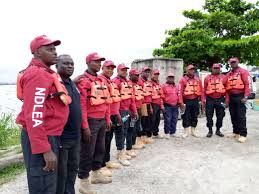
The National Drug Law Enforcement Agency (NDLEA) Osun Command, says it arrested 440 persons for illicit drug related offences and secured 43 convictions in 2025.

In its annual report obtained on Saturday, the NDLEA command also said that 156 drug users were counselled while four were rehabilitated in the year under review.

In the report breakdown, it said that 368 males were arrested while 72 females were also arrested for drug offences.

The report indicated that 71 out of the 368 arrested male, were charged to court, out of which 43 of them were convicted

The report also stated that 13,143.295kg of Cannabis Sativa, 0.029kg of Cocaine, 145.524kg of psychotropic substances, and 0.349kg of Methaphetamine, were also seized.

The command also carried out 120 sensitisation and drug awareness programmes in the State.

Court to deliver judgment in fresh suit challenging president’s emergency power

0


The Federal High Court in Abuja, on Friday, fixed March 9 for judgment in a fresh suit challenging the legal authority of President Bola Tinubu to remove elected state’s officials during a state of emergency.

Justice James Omotosho fixed the date after counsel for the plaintiff, Nnamdi Nwokocha-Ahaaiwe, and the defence lawyer adopted their processes and presented their arguments for and against the suit.

The case, filed by the plaintiff, Civil Society Observatory for Constitutional and Legal Compliance (CSOCLC), specifically contests the president’s actions following the declaration of a state of emergency in Rivers last year.

The NGO argued that while the President may declare an emergency under Section 305 of the Constitution, he lacked the power to suspend or remove elected executive and legislative officers and install an interim administrator.

Justice Omotosho, however, noted the similarity of the suit to previous cases he had dismissed, citing jurisdictional issues under the old Emergency Powers (Jurisdiction) Act of 1962.

The judge also referenced a Supreme Court decision from Dec. 15, 2025, which reportedly dismissed a related case on procedural grounds.

But Ahaaiwe, acknowledged these prevous rulings but insisted they were erroneous.

He argued that the 1962 Act was a “spent” law, deliberately omitted from statute books before the 1999 Constitution took effect.

Therefore, he contended that, a 2025 presidential order modifying this non-existent law is “unconstitutional, null, and void.”

“The constitution has fully covered the field on emergency powers,” Ahaaiwe submitted, adding that “no executive proclamation can alter the express provisions of Section 305.”

The counsel for the 1st to 5th defendants, which include the President and the Attorney-General of Federation, relied on the same 1962 Act and the modification order to assert that only the Supreme Court holds original jurisdiction over such disputes, urging the court to strike out the case.

It was reported that the plaintiffs had sought 26 reliefs, including a declaration that Rivers cannot be governed by an appointed administrator, retired Vice Admiral Ibok-Ete Ekwe Ibas, outside the provisions of the constitution.

The suit, which was heard, revived a critical constitutional debate previously thought settled.

Family, female attorneys demand justice for slain lawyer

0


The family of slain lawyer, Mediatrix Chigbo, and the Global Association of Female Attorneys (GAFA) have called for a thorough investigation into her murder.

The appeal came during a Night of Tribute organised in Chigbo’s honour by GAFA on Friday in Abuja.
Ms Maureen Chigbo, the deceased’s younger sister, described her death as tragic and devastating, urging authorities to ensure justice is served.
Maureen, a former President of the Guild of Corporate Online Publishers, said she interviewed the suspects while seeking justice as an investigative journalist.

She revealed discrepancies between suspects’ statements and actual facts, highlighting contradictions that must be resolved during the investigation.

“We are not dealing with suppositions. A homicide investigation must examine all loopholes to establish the truth.
“Why insist on this? My sister fought for justice, advocated for the poor, and we will not let her struggle be in vain.

“We want justice for her and for humanity, so the dead can rest and the living live in peace,” Maureen Chigbo said.
Maureen explained that the deceased attended evening Mass and spoke to her sister before a distress call, followed by threats from unidentified persons.

She urged legal professionals and stakeholders to support a thorough investigation and ensure perpetrators are prosecuted, to serve as a deterrent to others.
“Join us to uncover who kidnapped and murdered my sister. This is homicide.

The investigation cannot be sloppy or superficial.
“She dedicated her life to the poor and pro bono cases. Justice is the standard, and justice is what she must receive,” she said.

Mrs Chinelo Iriele, GAFA International President, described Chigbo as a devoted colleague and former International Secretary of the association.

Iriele urged authorities to investigate, apprehend, and prosecute the perpetrators fully, saying accountability is essential to deter future crimes.

“We demand perpetrators be exposed and face full consequences. Accountability is necessary to curb recurring violence in our society,” she added.
Mrs Chigozie Eruchalu, Principal Partner at Goziem Chambers, called the death “a chilling reminder of the risks citizens face daily.”

Prof. Uwakwe Abugu, Director-General of the Institute of Medical and Health Law, said Chigbo, inducted in 2022, deserves justice fully, transparently, and without delay.

It was reported that legal practitioners, media professionals, and notable personalities attended the tribute to honour the late lawyer.

LATE IMAM ABUBAKAR WAS A COURAGEOUS SERVANT OF GOD: PRESIDENT TINUBU

0


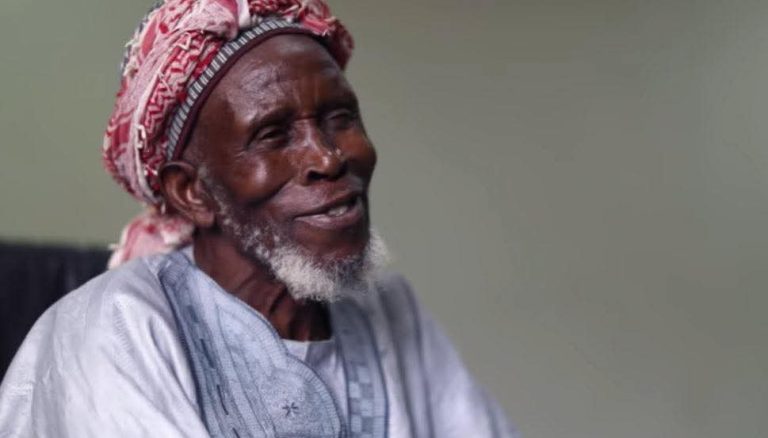
President Bola Ahmed Tinubu has expressed sorrow at the passing of Imam Abdullahi Abubakar, the Chief Imam of Nghar village in the Barkin Ladi Local Government Area of Plateau State, who passed away at 92.

The late Imam Abubakar shot into national and international prominence for hiding over 200 Christians in 2018, during the communal strife which ravaged Plateau State.

President Tinubu described the late Imam as an extraordinary religious leader, whose lifetime represented a striking testament to faith, courage and a staunch belief in the sacredness of human life.

“At such a time when tribal and religious tendencies seemed to overwhelm reason, Imam Abubakar stood firmly on the side of peace, benevolence and conscience,” President Tinubu remarked.

“Mindless of the enormous risk to his own life, the noble cleric chose humanity over division, love as opposed to hatred and embrace rather than rejection. His heroic feat underlines the essence of true faith, resonating louder than sermons in a salient message to the world at large. Imam Abubakar is a worthy example of a better human we should all aspire to be,” the President said.

“His act of uncommon bravery did not go unnoticed, as he received local and international honours that celebrated his commitment to coexistence among people with diverse orientations.

” I urge religious and community leaders to imbibe and preach the spirit of tolerance, mutual respect and peaceful togetherness as expounded in the life of Imam Abubakar.

“May the Almighty grant Imam Abubakar eternal rest and reward him for his good deeds and courage,” the President said.

14 ships laden with petrol, diesel, fresh fish arrive Lagos ports

0


The Nigerian Ports Authority (NPA) says a total of 14 ships have arrived in Apapa, Tincan and Lekki ports in Lagos, waiting to discharge various goods.

NPA stated this in its publication – ‘Shipping Position’, a copy available on Friday.

The document noted that 11 of the vessels were waiting to berth general cargoes, containers of different goods, bulk salt, empty containers, bulk wheat, bulk urea and fresh fish.

NPA explained that the remaining three tanker vessels were waiting to berth with Petrol, diesel and crude oil.