Home Blog Page 719

Lagos Gold Refinery Didn’t Violate Federal Character, FG Tells Northern Elders

0


…Says Project Is A Private Sector Initiative

…Refineries Coming Up In Other Parts Of The Country

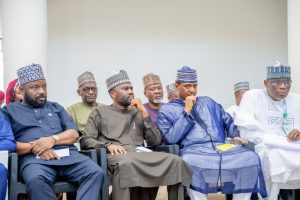
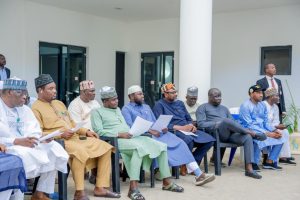
The Federal Government through the Ministry of Solid Minerals Development has denied claims by the Northern Elders Forum that the Federal Government violated the federal character principle by siting a gold refinery in Lagos.

The ministry made the clarification in a statement issued on Sunday in Abuja by Segun Tomori, Special Assistant on Media to the Minister of Solid Minerals Development, Dr Dele Alake.

The statement noted that the allegation misrepresented comments made by the Minister regarding the planned inauguration of a gold refinery project and ongoing reforms in the solid minerals sector.

The ministry stressed that the Federal Government neither owns nor established a gold refinery in Lagos or anywhere else in the country.

“There was nowhere in the Minister of Solid Minerals announcement that the Federal Government owned or established a gold refinery in Lagos or anywhere for that matter.

“Dr Dele Alake was clear that other gold refineries are in the works across the country and that they are all privately owned by different companies,” Tomori said.

Tomori explained that the refinery referenced by the NEF is a private initiative by Kian Smith, a wholly privately owned mining company, set up to support the development of Nigeria’s local gold industry.

He added that the Federal Government does not direct private companies on where to locate their businesses, noting that such decisions are based on individual companies’ operational and commercial considerations.

The ministry urged the public to distinguish between government projects and private sector investments, reiterating its commitment to creating an enabling environment for solid minerals development across all parts of the country.

He said the Federal Government acknowledged the doggedness of the company’s founder and Managing Director, Ms Nere Emiko, for delivering a flagship project after years of perseverance, enterprise and leadership.

According to him, the refinery reflects the solid minerals sector’s response to the value-addition policy introduced to discourage the export of raw minerals and to promote local processing and manufacturing

Why Regina’s friend Ann was arrested – Nwoko communication team

0


The Communication Team of Sen. Ned Nwoko (APC-Delta) has clarified that Ms Anthonet Izuegbu, also known as ”Ann”, was arrested for criminal defamation against the lawmaker among others.

The team in a statement made available to the News Agency Abuja, on Monday, said it was imperative to set the record straight.

The team said that contrary to the misleading and inflammatory narratives been circulated across social media platforms, Izuegbu was arrested in connection with criminal defamation against the lawmaker.

The team explained that Izuegbu was arrested in connection with criminally defamatory statements she publicly made alledging that the lawmaker physically assaulted his wife Mrs Laila Nwoko, which resulted in a miscarriage.

‘’These claims are entirely false as no such incident occurred, and no miscarriage resulted from any alleged violence.

‘’The statements were made without evidence and form part of a coordinated attempt to reinforce previously circulated and unsubstantiated domestic violence allegations,’’ the team said.

The team also said that Izuegbu was implicated in the procurement of an illegal abortion for the estranged wife of the senator, Ms Regina Daniels, during her lawful marriage to the Nwoko.

According to the team, the incident occurred after the marriage, notwithstanding subsequent attempts to reframe the timeline.

‘’The legality of the act does not change based on narrative adjustments. The matter is on record and has previously been publicly referenced by Regina herself.

The team added that a formal witness statement dated Oct. 29, 2025 submitted to the Area Commander, Maitama Police Station, detailed repeated ongoing activities involving Izuegbua and others.

According to the team, the statement noted that Izuegbu allegedly routinely sourced, handled, and administered controlled and illegal substance to Regina, and associated individuals.

The team further said that Izuegbu’s arrest was directly preceded by a public social media post in which she allegedly issued threats, made derogatory remarks, and repeated defamatory accusations against Mrs Laila Nwoko and the lawmaker.

‘’This post constituted provocation, intimidation, and criminal defamation under application law.

‘’It is important to emphasise that this matter is not a social media dispute but a law-enforcement issue grounded in evidence, witness testimonies, and due process.

‘’Any attempt to mischaracterize the arrest as suppression or victimisation is false and misleading,’’ the team added.

Why Regina’s friend Ann was arrested – Nwoko communication team

0

The Communication Team of Sen. Ned Nwoko (APC-Delta) has clarified that Ms Anthonet Izuegbu, also known as ”Ann”, was arrested for criminal defamation against the lawmaker among others.

The team in a statement made available to the News Agency Abuja, on Monday, said it was imperative to set the record straight.

The team said that contrary to the misleading and inflammatory narratives been circulated across social media platforms, Izuegbu was arrested in connection with criminal defamation against the lawmaker.

The team explained that Izuegbu was arrested in connection with criminally defamatory statements she publicly made alledging that the lawmaker physically assaulted his wife Mrs Laila Nwoko, which resulted in a miscarriage.

‘’These claims are entirely false as no such incident occurred, and no miscarriage resulted from any alleged violence.

‘’The statements were made without evidence and form part of a coordinated attempt to reinforce previously circulated and unsubstantiated domestic violence allegations,’’ the team said.

The team also said that Izuegbu was implicated in the procurement of an illegal abortion for the estranged wife of the senator, Ms Regina Daniels, during her lawful marriage to the Nwoko.

According to the team, the incident occurred after the marriage, notwithstanding subsequent attempts to reframe the timeline.

‘’The legality of the act does not change based on narrative adjustments. The matter is on record and has previously been publicly referenced by Regina herself.

The team added that a formal witness statement dated Oct. 29, 2025 submitted to the Area Commander, Maitama Police Station, detailed repeated ongoing activities involving Izuegbua and others.

According to the team, the statement noted that Izuegbu allegedly routinely sourced, handled, and administered controlled and illegal substance to Regina, and associated individuals.

The team further said that Izuegbu’s arrest was directly preceded by a public social media post in which she allegedly issued threats, made derogatory remarks, and repeated defamatory accusations against Mrs Laila Nwoko and the lawmaker.

‘’This post constituted provocation, intimidation, and criminal defamation under application law.

‘’It is important to emphasise that this matter is not a social media dispute but a law-enforcement issue grounded in evidence, witness testimonies, and due process.

‘’Any attempt to mischaracterize the arrest as suppression or victimisation is false and misleading,’’ the team added.

World Soil Day: Participants Call for Healthier Soils to Achieve Food Sovereignty and Climate Resilience

0

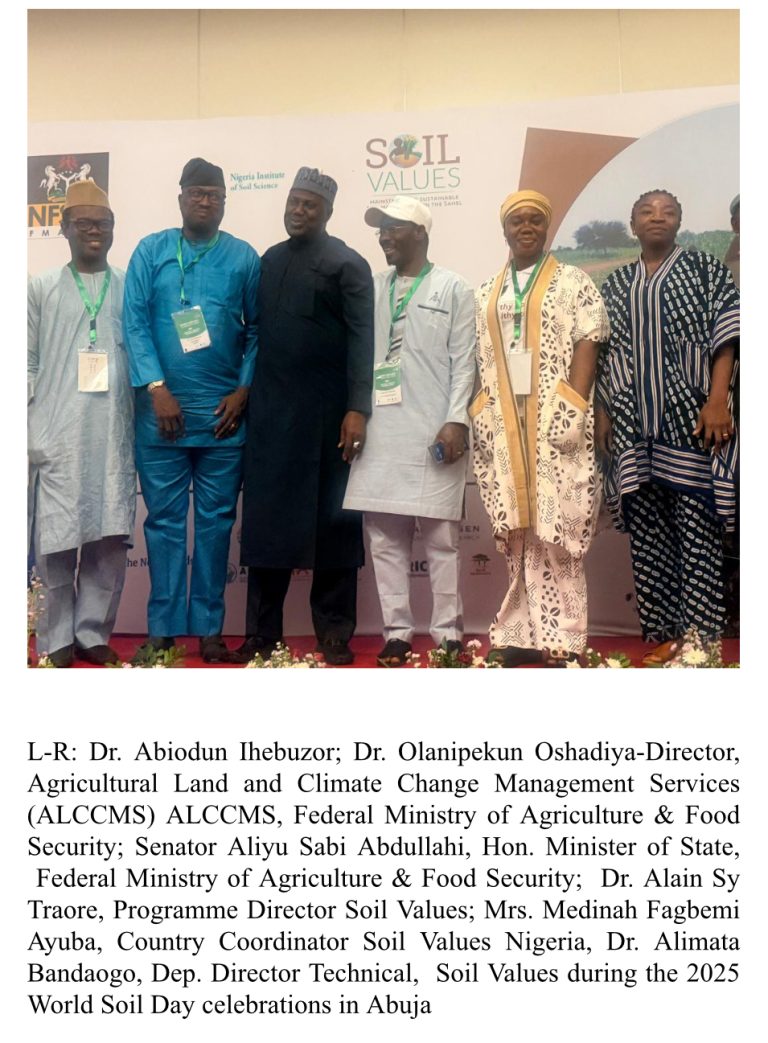
The International Fertilizer Development Center (IFDC), through its Soil Values program funded by the Kingdom of the Netherlands , and in collaboration with the Federal Ministry of Agriculture and Food Security and the Nigerian Institute of Soil Science , launched the activities marking World Soil Day 2025 in Nigeria.

The theme, “Healthy Soils for Healthy Cities” , was celebrated in the presence of the Minister of State for the Federal Ministry of Agriculture and Food Security, Senator Abdullahi Aliyu Sabi , as well as numerous other agricultural sector stakeholders.

In his opening address, titled “Soil as the Foundation for Food Sovereignty and Climate Resilience” , the Minister emphasized that soil health constitutes an essential basis for achieving food sovereignty and climate resilience in Nigeria. He recalled that World Soil Day is a global event that highlights the importance of soils in ensuring food sovereignty, climate resilience, and improving livelihoods.

The Minister stated that soil is the backbone of the agricultural sector , providing 95% of our food and 15 of the 18 essential elements required for plant growth (un.org; fao.org). Soil supports crop growth and livestock farming, purifies water, regulates climate, sequesters carbon, reduces greenhouse gas emissions, and provides a habitat for beneficial microorganisms, thereby contributing to ecosystem services and biodiversity.

However, “our soils face unprecedented threats: degradation, erosion, and pollution, which negatively affect yields, food quality, and ultimately, food security. It is regrettable to note that 33% of our soils are already degraded and that it takes up to 1,000 years to regenerate only 2 to 3 cm of soil,” he added.

The Minister stressed that the celebration of World Soil Day will help to raise public awareness, particularly among farmers, about soil conservation and its benefits , promote sustainable agricultural practices , support the ministry’s initiatives for soil health , encourage research , and advocate for soil protection policies.

According to him, the ministry launched the Nigerian Soil Health Program for Farmers (NFSHS) on October 13, 2025 , in the presence of approximately 600 farmers, dignitaries, and partners. This initiative constitutes a major advance in achieving the food security and sovereignty vision of President Asiwaju Bola Ahmed Tinubu GCFR.

The NFSHS aims to transform the Nigerian agricultural sector. This program provides fertilizer recommendations adapted to crops and areas , which discourages the indiscriminate application of fertilizers ,reduces waste , and lowers production costs for farmers. It also promotes organic amendments and sustainable land management practices , encouraging the adoption of technologies to improve soil health across the country’s different agroecological zones.

The Minister acknowledged that significant progress has been made thanks to the collaboration of partners such as GIZ, the Soil Values program, OCP, AGRA, the World Bank’s ACReSAL project, Sasakawa Africa, and the International Institute of Tropical Agriculture (IITA). Another important progress is the integration of the NFSHS into the federal budget and the organization of consultation workshops that led to the creation of the “Coalition of the Willing” (CoW) platform and the readiness assessment. The Minister called on all stakeholders to protect soils for future generations and to prioritize soil health to ensure food sovereignty and climate resilience in Nigeria.

In his message, the Director of the Soil Values program, Dr. Alain Sy Traoré, explained that the sub-theme of the 2025 edition – “Valuing our Soils, Foundation for Food Sovereignty and Climate Resilience” – was chosen to emphasize the crucial importance of healthy soils for the economies of countries.

For her part, the Deputy Director of the Soil Values technical program, Dr. Alimata Boundaogou, in her presentation titled “Scaling Up ISFM and SWC Practices” ,stressed the need to improve seeds, among other measures. She urged participants to strengthen farmer resilience and promote gender equality and social inclusion ,especially for women, youth, and people living with disabilities.

The second day of the celebration was marked by an awareness march/road show from the Ministry of Agriculture headquarters to the Abuja Continental Hotel. Students participated in debates focusing on restoring the value and health of soils.

ABOUT IFDC AND SOIL VALUES:

The Soil Values program intervenes in a context marked by climate and socio-economic challenges faced by Sahelian countries , particularly recurrent droughts, sociopolitical conflicts, desertification, and the effects of climate change. Aggravated by a lack of investment and insufficient financing mechanisms , these conditions exacerbate the degradation of soil fertility and health, compromising food security in the Sahelian countries.

Soil Values aims to improve the fertility and productivity of 2 million hectares of agricultural land in the Sahel , while strengthening the resilience and well-being of 1.5 million farmers , with a specific focus on women and youth. The program’s approach is based on Integrated Soil Fertility Management (ISFM) and participatory landscape management to promote the adoption of agricultural practices favorable to soil fertility. The initiative is structured around three intervention pathways (Agroecology, Inclusive Markets, and Enabling Environment) and five intervention axes (Clustering, Integration, Facilitation, Consultation, and Documentation & Learning).

Soil Values is implemented by a consortium led by IFDC , in collaboration with main partners SNV and Wageningen University and Research Center (WUR) , as well as knowledge partners such as AGRA, CIFOR-ICRAF, IITA, ISRIC – World Soil Information, and the International Water Management Institute (IWMI). IFDC is an international public organization present in 27 countries , which combines scientific research and interventions to help smallholder farmers in developing countries increase their productivity while promoting sustainable environmental management technologies.

Destiny Boy, Fuji star and ex-backup dancer for Pasuma, dies at 22

0


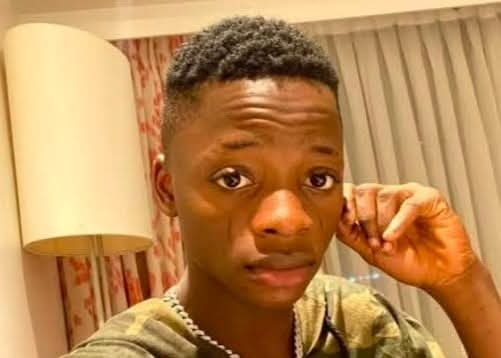
Destiny Boy, the Nigerian singer, has passed away at the age of 22.

News of his sudden passing broke on Sunday after distressing footage, showing his body being transported to a mortuary, circulated widely on social media. The clips sparked an outpouring of grief and speculation about the cause of his death.

credit: thecable

Passengers Injured as Accident happens on Lagos- Ibadan Expressway

0

An accident has occurred on the Lagos–Ibadan Expressway involving a container truck and an 18-seater bus. The incident happened just after Berger, outbound Lagos.

Passersby were seen assisting by removing injured passengers from the bus, as emergency responders had yet to arrive at the scene at the time of reporting.

The Federal Road Safety Corps (FRSC) and other emergency agencies are expected to carry out rescue operations. The number of fatalities has not yet been confirmed.

credit: tvcnews

Kaduna on Course for 2.5 Million APC Registrations — Gov. Uba Sani

0

Kaduna State Governor, Uba Sani, has commended the swift progress recorded in the All Progressives Congress (APC) e-registration exercise, expressing confidence that the state is on course to meet its target of 2.5 million registrations.

Governor Sani said that within fewer than five days of the exercise’s commencement, Kaduna had achieved significant numbers in both new and updated registrations.

He described the development as a clear indication of growing public confidence in the party and renewed enthusiasm for inclusive governance.

According to him, the momentum also reflects strong alignment with the Renewed Hope Agenda of President Bola Tinubu.

The governor made the remarks after receiving a briefing from the Kaduna State APC E-Registration Committee during a follow-up engagement. He noted that stakeholders had praised his administration’s commitment to fairness, equity and justice, as well as ongoing efforts to revitalise key sectors, strengthen peace and security, and rebuild public trust in governance.
Earlier, at a well-attended meeting with APC stakeholders from Kaduna Zone Two, Governor Sani led discussions focused on reflection, renewal and strategic realignment within the party.

He explained that the forum provided an opportunity to review the party’s journey, assess progress made so far, and identify areas requiring renewed attention.

Governor Sani stressed that unity and discipline remain critical to the APC’s sustained relevance and electoral success. He urged party members across the state to actively participate in the e-registration exercise to further strengthen party structures and deepen grassroots support.

Lagos Environmental Taskforce Arrests Six Suspected Hoodlums Along Ikorodu Road

0


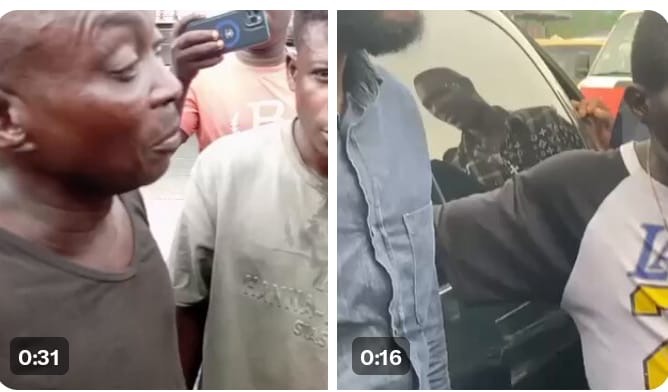
The Lagos State Environmental Taskforce on Tuesday intensified its clampdown on street hoodlums, arresting six suspects during an early morning operation along Ikorodu Road.

Commissioner for the Environment and Water Resources, Mr. Tokunbo Wahab, disclosed that the operation commenced at about 9:30 a.m. and was aimed at curbing the activities of hoodlums who reportedly terrorise motorists, especially those whose vehicles break down on major roads.

According to Wahab, the suspects were apprehended in the Maryland area and across the entire stretch of Ikorodu Road, where they allegedly attacked drivers and dispossessed them of their valuables as a means of livelihood.

He stated that the arrested individuals have been taken into custody and will be prosecuted in accordance with the law.

“All suspects will be arraigned as soon as possible,” the commissioner said, reaffirming the state government’s zero-tolerance stance on criminality and street violence.

The Lagos State Government has repeatedly warned that it will not relent in its efforts to ensure safety, orderliness, and the protection of lives and property across the metropolis.

Ooni, Alaafin and dynamic colour of reality

0


By Dare Babarinsa

Prince Lamidi Olayiwola Adeyemi and Prince Okunade Sijuwade were good friends in the 1960s and early 70s. Adeyemi, a prince of Oyo and direct descendant of Alaafin Atiba, was a boxer before he became an insurance broker. Sijuwade was a journalist briefly when he worked with the Nigerian Tribune and from there he moved into private business, becoming a millionaire when he was barely 30. Sijuwade was a prince from Ile-Ife, the source of Yoruba civilization and kingship system. Both of them were ambitious to ascend the thrones of their forefathers. Both were successful in realizing that ambition.

After three years of struggle with other princes, Adeyemi ascended the throne in 1970 at the age of 32. He succeeded his cousin, Oba Gbadegesin Ladigbolu, who died in 1968. Adeyemi was presented his official staff of office by then Colonel Adeyinka Adebayo, the military governor of the Western State and a bosom friend of Sijuwade. In rejoicing with his friend, Sijuwade bought the new Alaafin a new Peugeot car. He was happy.

Adeyemi’s father, was the Alaafin Adeniran Adeyemi II, who was removed from the throne in 1955 following his disagreement with the Western Region government headed by Chief Obafemi Awolowo, the Premier. He was succeeded in 1956 by Alaafin Ladigbolu II, whose reign was to prove an interregnum between father and son. Colonel Adebayo had sought the opinion of Awolowo, who was appointed the Federal Commissioner for Finance and Vice-Chairman of the Federal Executive Council in 1967 by General Yakubu Gowon, about the ambition of Adeyemi the son. Awolowo agreed that he can be made the Alaafin after his selection by the Council of Oyo Kingmakers, the Oyo Mesi. Thus, at a tender age of 32, Adeyemi joined the league of five obas regarded as foremost in Yorubaland; these are the Ooni, Owa of Ijeshaland, the Awujale of Ijebuland and the Alake of Egbaland. But the pre-eminence of the Alaafin had been set since Yoruba obas started meeting formally in1935. The first meeting was hosted by the illustrious Alaafin Onikepo Ladigbolu. Government protocols put the Alaafin next to the Ooni ahead of other obas including the Oba of Benin in the days of the old Western Region. The boat was steady and Alaafin Adeyemi accepted the status quo.

In pre-colonial times, the Alaafin was the most powerful oba in Yorubaland. So powerful was he that the Yoruba regards Olodumare, the Supreme Being, as the Alaafin Ode Orun (Alaafin of the heavenly abode). The Oyo Empire, which was at its zenith in the 15th to the 18th Century, was said to have occupied most of the present-day Oyo, Osun, Kwara and Kogi States. By the 19th Century, the empire had collapsed and Oyo stragglers, under the leadership of Atiba Atobatele, a resourceful and capable prince, moved south, and created a new capital in the settlement of Ago Oja. Ago Oja was supposed to be a staging post from where the new Alaafin would rally loyal troops for the recovery of his old capital. It was never to be. When the British imperial power created Nigeria in 1914, the Alaafin had accepted his lot that his capital was lost, perhaps forever, and he settled fully in Ago Oja which remained the new Oyo till this day. When Adeyemi was crowned the Alaafin in 1970, he became the 9th Alaafin to reign in the new capital. Though he was young, as the Alaafin, he was second only to the Ooni who was the chairman of the Western State Council of Obas.

In February 1976, the new government of General Murtala Ramat Muhammed, created additional states, splitting the old Western State into three; Oyo, Ogun and Ondo State. Some of the big traditional rulers have now moved to different states, but the new Oyo State remained the home of the most historically important ones. Thus, the new Oyo State had the Ooni, Alaafin, Owa Ilesa and Orangun of Ila. Alake and Awujale have now moved to the new Ogun State. Ondo State now had the likes of the Ewi of Ado Ekiti, the Elekole of Ikole, Oore of Otun, Deji of Akure, Osemawe of Ondo, Olowo of Owo and others who were all formerly members of the Western State House of Chiefs and later Council of Obas. So, the traditional rulers had to deal with the dynamics of the new states.

On October 1, 1979, Governor Bola Ige was sworn-in as the first elected Governor of Oyo State. He was a well-known politician having served as the National Publicity Secretary of the defunct Action Group party in the First Republic. He was also a commissioner in the cabinet of then Colonel Adeyinka Adebayo when Adeyemi emerged as the Alaafin. By the time Ige became governor, the Ooni Aderemi was old and feeble and could no longer come regularly to meetings in Ibadan. Therefore, his deputy, the Alaafin was made the acting chairman of the Oyo State Council of Obas. Ooni Aderemi died at 90 on July 3, 1980 after 50 remarkable years on the throne of Oduduwa.

Adeyemi saw the death of Oba Aderemi as a window of opportunity. He wrote to Governor Ige, beseeching the governor to proclaim him as the substantive chairman of the Oyo State Council of Obas. The Governor rejected the prayer. Barely five months after the passage of Aderemi, Prince Okunade Sijuwade was enthroned as the 50th Ooni on December 6, 1980. He took the throne name of Olubuse II.

Governor Ige, while presenting him the staff of office, proclaimed the new Ooni as the chairman of the Oyo State Council of Obas.
Having failed to impress the Governor that he should be made the chairman, Alaafin Adeyemi decided not to give up the battle. He was able to persuade four other leading traditional rulers; the Owa Obokun of Ijesaland, Oba Adekunle Aromolaran, the Orangun of Ila, Oba Phillip Ayeni, the Olubadan of Ibadan, Oba Yesufu Oloyede Asanke and the Soun of Ogbomosho, Oba Jimoh Oladunni Oyewumi to join his crusade. This time around, however, his objective shifted so that he can have the support of the other obas. He pleaded that Nigeria, with the coming of the Second Republic, has become a democracy and therefore traditional institutions too should be ready for democracy. It was time the government should allow rotation of the chairmanship among the five leading obas, including the Ooni. A petition to that effect was promptly submitted to the Governor who simply ignored it.

The Second Republic was a period of serious politicking, especially in Oyo State where the ruling Unity Party of Nigeria, UPN, was pitched in battle against the opposition National Party of Nigeria, NPN, which was in control of the centre under President Shehu Shagari. The five obas decided to gravitate towards the NPN to achieve their ambition of democratizing the traditional institution of kingship. Two of them had serious problems at home about this involvement. Governor Bola Ige was from Esa Oke, one of the many Ijesa towns where Owa Aromolaran claimed paramountcy. For him, campaigning against Bola Ige at home would be a difficult assignment. The Orangun of Ila, Oba Ayeni, had a similar problem. The Secretary to the State Government and later Deputy Governor under Bola Ige, Chief Adebisi Akande, was one of Ayeni’s leading chiefs as the Asiwaju of Ila.

Nonetheless, the 1983 election came and Ige was defeated in an election that was believed to be heavily rigged in favour of the NPN.
The Alaafin group quickly submitted its petition to the new governor, Dr Omololu Olunloyo, the famous mathematician and controversial politician. Olunloyo declined to act. He would not rock the boat. The rebel obas were thus compelled to continue to work with the Ooni as the permanent chairman of the Oyo State Council of Obas, a position he has held since the days of the old Western Region. The cat and mouse game continued under the military until Oyo State was split again in 1991 when the old Osun Province became Osun State. With the coming of Osun State, both the Owa Obokun and the Orangun decided to shield their swords. In the remaining part of Oyo State, the Alaafin has emerged triumphant as the new chairman of the Oyo State Council of Obas. It was a costly victory.
In the new Oyo State, both the Olubadan and the Soun were determined to hold the Alaafin to his words. They wanted rotation of the chairmanship position among the three. The Alaafin did not want it. When democracy came again in 1999, with the election of Governor Lam Adesina, the Soun and the Olubadan continued their agitation. But Alaafin Adeyemi had strong supporters who believed that democracy would not be good for the traditional institution of obaship. In the precolonial days, the Alaafin took precedence over every oba, except his father in Ile-Ife. In the traditional hierarchy, both the Soun and the Olubadan were very junior to him. Neither of them was listed among the princes of Oduduwa. They were only elevated to full obaship in 1978 by the military regime of then Brigadier David Medaiyese Jemibewon, the Governor of Oyo State. Therefore, Alaafin Adeyemi was able to enlist the support of leading Oyo State citizens, including the powerful duo of Alhaji Lamidi Ariyibi Adedibu and Alhaji Azeez Alao-Arisekola. Both Adedibu and Arisekola remained unmovable in their support for the old order. Both the Soun and the Olubadan were resolute in their campaign.

In January 2006, Christopher Alao Akala, a former policeman and former deputy to Governor Rashidi Ladoja, now the Olubadan, became the Governor of Oyo State in succession to his old boss who was impeached in a truly macabre circumstance. Akala, a native of Ogbomosho, was interested in looking at the obas petition. He made it known that he was interested in the prayer of both the Soun and the Olubadan. He believed that in this modern era, no traditional ruler should lord it over the others. Alaafin Adeyemi was said to have met President Olusegun Obasanjo to express his fears. Obasanjo, a known supporter of traditional institutions, was, however, said to be indifferent to the struggle going on in Oyo State. On May 3, 2011, Governor Akala announced the removal of the Alaafin as the permanent chairman of the Oyo State Council of Obas. He said that the Alaafin will now rotate that position with the Olubadan and the Soun.

Then death intervened. Most of the major players in Oyo State died one after the other. Lam Adesina died in 2012. Alao-Akala died in 2022. Arisekola died in 2014. Adedibu died 2008. Alaafin Adeyemi died in 2022. By 2025, new players have emerged in Oyo State. Engineer Seyi Makinde has now emerged the Governor. Ogbomosho has a new Soun, Oba Ghandi Afolabi Olaoye. Ibadan had installed the durable politician and former Governor of Oyo State, Rashidi Ladoja, as the Olubadan. It was time to look at the old petition calling for rotation of chairmanship signed by the Alaafin, Soun, Olubadan, Owa Obokun and the Orangun. The Oyo State House of Assembly, where Ogbomosho and Ibadan representatives were in clear and unambiguous majority, were corralled into the game. They were ready to give rotation a legal backing.

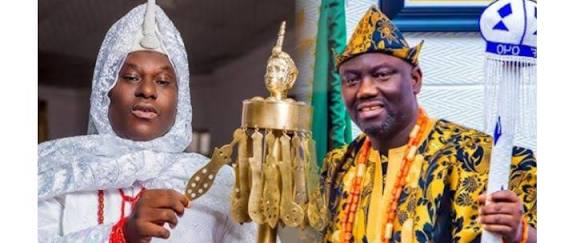
The new Alaafin, Oba Abimbola Owoade, was installed by Governor Seyi Makinde on April 5, 2025. The colourful ceremony was attended by guests from across the Nigerian Federation. The Ooni of Ife, Oba Adeyeye Enitan Ogunwusi, Ojaja II, led a retinue of obas from the Yorubaland to grace the occasion. He has emerged as the co-chairman of the National Council of Tradition Rulers and the chairman of the Southern Nigeria Council of Traditional Rulers. With his installation, Oba Owoade has now joined the league of first-class traditional rulers in Nigeria.

The new Alaafin used the occasion of his installation to make it known that he was ready to struggle for the continuation of the old order. He reminded his audience that he was not just the Alaafin of Oyo, but of Oyo Empire. He wanted it known that he was ready to demand for the ancient privileges of the Alaafin when he was in charge of an empire. Since coming to the throne, he has been struggling to grapple with the new dynamics of the traditional institution.

Museveni Wins Uganda Presidential Election, Extends Rule Into Fifth Decade

0


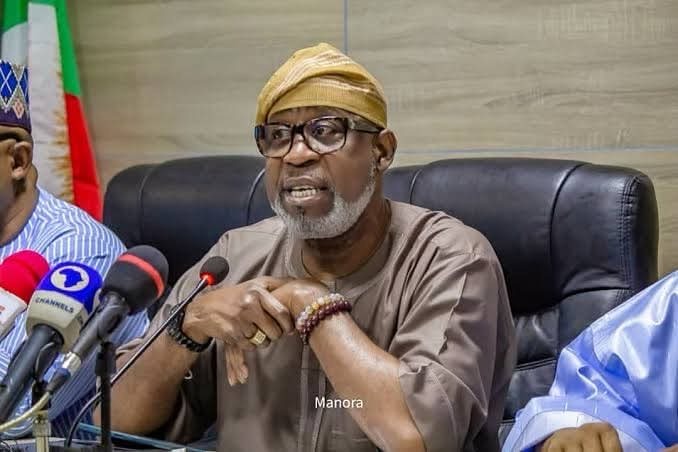
Veteran President Yoweri Museveni has been declared the winner of Uganda’s just-concluded presidential election, extending his grip on power into a fifth decade.
Uganda’s Electoral Commission announced the results at a ceremony held in the capital, Kampala, on Saturday, stating that Museveni secured just under 72 per cent of the total votes cast.


His closest challenger, popular musician-turned-politician Bobi Wine, garnered 24 per cent of the vote, according to the official results.
Museveni’s victory further consolidates his long-standing leadership of the East African nation, where he has remained in power since 1986.