The Police Command in Anambra says its operatives have detained a 19-year-old male suspect, Mustapha Sani, over an Infinix Android phone allegedly stolen in Adamawa.
The Police Public Relations Officer (PPRO) in the state, SP Tochukwu Ikenga, disclosed this in a statement on Thursday in Awka.
Ikenga said that detention and recovery were made on Oct. 19, by operatives of the State Intelligence Department (SID) following intelligence-led policing and proactive efforts to track down the suspect. Ikenga said the investigation revealed that the suspect allegedly dispossessed unsuspecting victims of their mobile phones in Adamawa before fleeing to Anambra.
He said that the stolen devices were reportedly intended for sale or use. According to him, the recovered phone is currently being investigated to establish the full circumstances surrounding the alleged offence.
He said that the command had commenced further investigations to determine the suspect’s involvement and facilitate the return of the recovered phone to its rightful owner.
The state’s Commissioner of Police, Mr Nnanna Ama, said that the command was committed to combating criminal activities and recovering stolen property.
Ama said that the command would ensure that criminal suspects are brought to justice in accordance with the law.
He reassured residents and visitors that the command would sustain intelligence-led operations and proactive policing efforts to protect lives and property.
A Kaduna Magistrate Court, on Thursday, sentenced a 54-year-old manager, Amos Ferdinand, to 18 months imprisonment for stealing N5.6 million belonging to his employer.
It was reported that Ferdinand, of Barnawa Kaduna, was sentenced to a count charge of stealing.
The Magistrate, Ibrahim Emmanuel, said that all the evidence presented in court proved beyond reasonable doubt that the convict was guilty of the offence as charged.
He sentenced the convict to 18 months after he pleaded guilty to the charge with an option of N200,000 fine.
Emmanuel however ordered the convict to restitute the sum of N 5.6m to the complainant. He said the sentence should serve as a deterrent to others and also warned the convict to be of good behaviour. Earlier, the Prosecutor, Insp. Chidi Leo, told the court that the convict committed the offence sometime between June and Oct. 10 at Bercor Global Services, located along Ahmadu Bello Way Kaduna.
Leo said that the convict stole the sum of N5.6 million, property of Bercor Global Service.
He further explained that the convict who was the manager of the company collected the said amount for sale of electronics but failed to remit it to the company’s account.
The prosecutor said the offence contravened the Kaduna State Penal Code, 2017.
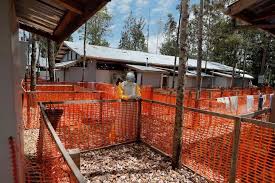
The National Orientation Agency (NOA), Kaduna State Directorate, has cautioned residents of Kaduna against self – medication following the confirmation of a case of Ebola Virus Disease (EVD) in Abuja.
Mr Danjuma Makama, NOA State Director gave the advice in a statement made available to the News Agency on Thursday by Linda Michael, Head of Communication and Media, NOA Kaduna State Directorate. Makama cautioned against concealing symptoms or resorting to self-medication, urging anyone who developed suspected symptoms to report immediately to the nearest health facility.
He also advised residents to contact the Kaduna State Emergency Disease Surveillance Lines 08036045755 and 07031992126 for guidance and cooperate fully with health workers during screening, surveillance and contact tracing.
“Public safety depends on accurate information and responsible action. By staying informed and cooperating with health authorities, we can protect ourselves, our families, and our communities,” Makama stated.
The agency urged residents to rely on verified information from relevant health authorities and avoid actions that could undermine efforts to prevent the spread of the disease.
The agency also advised residents to observe preventive measures, recognise possible symptoms and promptly report suspected cases to health authorities.
Ebola is a severe illness that can be fatal and spreads through direct contact with the blood, body fluids or tissues of infected persons or animals.
The disease can also spread through contact with contaminated surfaces and materials, making personal hygiene and avoidance of exposure essential preventive measures.
Its symptoms include sudden fever, severe headache, muscle and joint pain, weakness, fatigue and sore throat. Other symptoms include vomiting, diarrhoea, unexplained bleeding and bruising.
A 38-year-old Vincent Akerah on Thursday, pleaded guilty before an Iyaganku Magistrates’ Court, Ibadan, to being in unlawful possession of Cannabis Sativa a.k.a hemp.
Akerah is standing trial on a two -count charge of conspiracy and unlawful possession of Cannabis Sativa a.k.a hemp.
He pleaded guilty to the charge. The Magistrate, Mrs Adebola Adeola, consequently , ordered a remand of Akerah at the correctional facility and adjourned the case until Oct. 23, for review of facts.
In the charge, the prosecutor, ASP Femi Omilana said the defendant committed the offences on Oct.20, at about 6.30 a.m. at the Apata area of Ibadan.
He told the court that the defendant and others now at large, were selling and smoking substances suspected to be cannabis.
According to him, the defendant was also caught with 28 wraps of the substance.
The offences contravene the provisions of Sections 430 and 516 of the Criminal Law of Oyo State, 2000.
Dangote Industries Limited has acquired a 25 per cent stake in a petroleum pipeline network in Kenya as part of an ambitious $50 billion investment programme aimed at expanding its refining, energy distribution and industrial operations across Africa between 2026 and 2030.
The Group is also developing petroleum storage and distribution infrastructure in Djibouti, Cameroon and Namibia, while pursuing plans for a 700,000-barrel-per-day refinery in Lamu, Kenya, in a major push to establish an integrated petroleum supply network across East, Central and Southern Africa.
President and Chief Executive of Dangote Industries Limited, Aliko Dangote, disclosed the investments during an interview with Financial Times journalist David Pilling, saying the expansion would strengthen Africa’s energy security, improve access to refined petroleum products and reduce dependence on fragmented supply systems. Dangote said the Kenyan pipeline investment was concluded with the support of the country’s government, describing it as an important step towards establishing an efficient petroleum distribution network in East Africa.
“Just let me tell you, yesterday, with the support from the President of Kenya, we bought 25 per cent of the pipeline network for the distribution of petroleum products,” he said.
Although he did not disclose the value of the acquisition, Dangote said the Group was moving aggressively to establish the infrastructure required to transport and distribute petroleum products across African markets.
“We are very aggressive with that,” he said when asked about investments in petroleum depots, pipelines and other logistics facilities.
Under the expansion programme, the Group is developing a petroleum distribution corridor between Djibouti and Addis Ababa, Ethiopia, supported by storage terminals and tank farms to facilitate the movement of refined products.
Another project in Cameroon is nearing completion, while Namibia has been identified as a strategic entry point into Southern Africa because of its proximity to the Dangote Petroleum Refinery in Lagos.
“From our refinery to Namibia is just about four days of steaming,” Dangote said.
He explained that petroleum products shipped from Lagos to Namibia could subsequently be distributed to Botswana and South Africa, with additional supply corridors being considered for Zimbabwe and Zambia.
The investments are intended to connect major refining centres with markets that have historically depended on imported petroleum products and inefficient distribution arrangements.
Beyond the distribution network, Dangote disclosed plans to establish a refinery in Lamu, Kenya, with a projected processing capacity of approximately 700,000 barrels of crude oil daily.
He said the decision to locate the proposed refinery in Lamu followed technical assessments of the area’s deep-water access, marine infrastructure and availability of essential resources for large-scale refining operations.
According to him, the refinery would source crude oil from different international markets rather than depend exclusively on production from Kenya or neighbouring Uganda.
He said East Africa’s expanding economies, growing mining activities and rising demand for petroleum products made the region an attractive destination for investment in refining capacity.
Dangote disclosed that the investment decision was reached within four months, although he alleged that vested commercial interests attempted to frustrate the project through legal proceedings shortly before its announcement.
He maintained that the proposed refinery and distribution investments were part of a broader strategy to establish a more reliable African energy supply system, supported by strategically located pipelines, storage facilities and transportation corridors.
Turning to industrial policy, Dangote urged African governments to protect domestic manufacturers against unfair competition from imported products, warning that unrestricted imports could undermine industrial development and worsen unemployment across the continent.
“Allowing imports to displace local production means we are exporting our jobs out of the continent and importing poverty into the continent,” he said.
He argued that African countries should not be discouraged from adopting policies that support domestic production when advanced economies were increasingly protecting their own industries.
“If America is now saying, no, we are going to protect our industries, who are we in Africa not to protect our own industries?” he asked.
Dangote maintained that industrialisation would remain difficult without substantial investments in infrastructure, reliable electricity, manufacturing capacity and policies designed to encourage local production.
He said the Group’s planned $50 billion investment between 2026 and 2030 was intended to demonstrate that African businesses possessed the capacity to undertake large-scale industrial projects capable of transforming the continent’s economy.
“The legacy we are trying to set up is how do we industrialise our continent?” he said.
According to him, the investment programme goes beyond expanding the Group’s commercial interests, as it is also intended to encourage other African entrepreneurs to undertake ambitious industrial ventures.
He identified inadequate electricity supply, weak financial systems and poorly developed industrial policies as major obstacles to Africa’s economic transformation.
Dangote said reliable electricity remained indispensable to manufacturing, mining and mineral processing, particularly as African countries sought to move beyond exporting raw materials towards producing finished goods.
He expressed concern that an estimated 650 million Africans still lacked access to electricity despite the continent’s enormous energy resources and economic potential.
He argued that addressing the electricity deficit would create opportunities for industrial development, employment generation and economic diversification.
Dangote also questioned why Africa continued to struggle with poverty despite possessing abundant natural resources, extensive agricultural land and a large youthful population.
He maintained that the continent had the resources and human capacity required to become a major industrial centre if governments created an enabling environment for investment and domestic manufacturing.
“The journey has started,” he declared. “But now we’re awake, and we will make it happen.”
The Joint Admissions and Matriculation Board (JAMB) has introduced measures to end the uncertainty faced by candidates awaiting admission, including more detailed updates on their admission status and simplified procedures for correcting personal information.
The Board said the changes were part of efforts to reduce the anxiety and frustration experienced by candidates during registration, examinations and admission, while strengthening transparency and public confidence in its operations.
JAMB Registrar, Segun Aina, disclosed this on Wednesday during an interaction with Unified Tertiary Matriculation Examination (UTME) candidates as part of activities marking the Board’s 2026 Customer Week at its Abuja Zonal Office.
Aina said the reforms were designed to address longstanding complaints about unclear admission information, difficulties in correcting personal records and other challenges that had made the admission process unnecessarily stressful for candidates.
“All the policy optimisation that we are doing is centred around two things: building trust and reducing trauma,” he said.
He explained that candidates previously received vague admission notifications such as “not admitted” or “admission in progress”, without sufficient information to understand the status of their applications.
According to him, the improved system now provides more detailed information about admission progress, enabling candidates to understand their positions rather than remain uncertain while awaiting decisions.
The Registrar also disclosed that technological improvements had simplified procedures for updating telephone numbers and email addresses, particularly for candidates who had lost access to their registered contact details.
On corrections to names and other personal information, Aina said collaboration with the National Identity Management Commission (NIMC) had enabled JAMB to address legitimate discrepancies in candidates’ records without compromising the integrity of the admission process.
He explained that the Board had previously imposed restrictions on such changes because of concerns that unscrupulous candidates could manipulate their identities to gain admission fraudulently.
However, improved technology and stronger verification mechanisms had made it possible to accommodate genuine corrections while maintaining safeguards against abuse.
Aina warned candidates against exploiting the new flexibility to perpetrate fraud, insisting that anyone caught manipulating the system would face legal consequences.
“If you are trying to take advantage of the system, please get ready. You will be feeling the full weight of the law in due course,” he warned.
The Registrar also disclosed that JAMB was considering the introduction of critical thinking and life skills assessments into its examinations to evaluate candidates beyond conventional academic knowledge.
He said a committee headed by a psychometrician, Boniface Nwogu, had been inaugurated to examine the feasibility of the proposal and determine whether reasoning, decision-making and practical application of knowledge could provide a broader assessment of candidates’ abilities.
Aina, however, clarified that no final decision had been taken, stressing that the committee’s recommendations would be subjected to management consideration before any implementation framework was developed.
He explained that if the proposal received approval, JAMB would constitute a panel of experts to work out the modalities, with any additional assessment complementing rather than replacing existing academic requirements.
Speaking on examination scheduling, Aina defended the harmonisation of examination timetables, noting that although the arrangement could shorten JAMB’s preparation period, it would facilitate the timely release of results and improve coordination of admission exercises.
He maintained that the Board’s responsibilities extended beyond conducting the UTME to ensuring that admission processes were transparent, fair and accessible to qualified candidates.
“The people we serve don’t need to know anybody to get admission,” he said, stressing that candidates should secure their rightful places based on established admission requirements rather than personal connections or influence.
Describing his administration’s approach as consolidation rather than rebranding, Aina acknowledged the contributions of previous JAMB leaderships, particularly his predecessor, Ishaq Oloyede, in strengthening examination integrity and expanding the use of technology.
He reiterated that the Board would continue refining its policies, improving institutional collaboration and deploying technology to make registration, examinations and admissions more transparent, credible and less stressful for candidates.
No fewer than 10 persons are feared dead following the capsize of a community boat during a confrontation over the blockade of an offshore crude oil storage vessel in Kula Kingdom, Akuku-Toru Local Government Area of Rivers State.
The tragedy occurred during a protest by youths and community leaders over an unresolved oil spill in Kula River, alleged unpaid debts owed local contractors and vendors for 18 months, and what residents described as neglect by companies operating in the area. The protesters had barricaded the ANAMBRA BASIN Floating Storage and Offloading (FSO) vessel, linked to operations at Oil Mining Lease (OML) 55, to press their demands when the situation reportedly escalated following the arrival of armed military personnel in gunboats.
Community sources alleged that the security personnel were deployed to dismantle the blockade and facilitate the vessel’s departure. A confrontation reportedly ensued, during which a boat conveying community members capsized.
Community leaders, including Anabs Sara-Igbe, put the number of persons feared dead at 10. However, the casualty figure had yet to be independently confirmed as of the time of filing this report.
The Rivers State Police Command confirmed the incident and said an investigation had commenced to establish the circumstances surrounding the tragedy.
The incident has heightened concerns over the handling of disputes between oil companies and host communities in the Niger Delta, particularly the deployment of armed security personnel during protests over environmental pollution and alleged contractual obligations.
Reacting, the Youths and Environmental Advocacy Centre (YEAC-Nigeria) condemned the incident and called for an independent and transparent investigation into the circumstances surrounding the boat’s capsize.
In a statement signed by its Executive Director, Fyneface Dumnamene Fyneface, the organisation said it received reports of the incident with shock, expressing concern over the reported loss of lives.
While acknowledging the right of host communities to protest environmental pollution and demand corporate accountability, YEAC-Nigeria warned against the militarisation of civil disputes in the oil and gas sector.
The organisation urged the Nigeria Police Force and the Nigerian Navy to investigate the cause of the capsize, the circumstances surrounding the deployment of armed personnel and the events leading to the confrontation.
It also called on the Rivers State Government, the Nigerian Maritime Administration and Safety Agency (NIMASA), the National Inland Waterways Authority (NIWA) and the companies concerned to intensify search, rescue and recovery operations.
“No crude oil vessel is worth the blood of community people. The Niger Delta has seen too many avoidable deaths over oil,” the group stated.
YEAC-Nigeria appealed for restraint and dialogue, warning that further confrontation could worsen tensions in the community.
It also urged the Ibeto Group to address the grievances raised by Kula residents, including the alleged oil spill, environmental remediation and settlement of verified debts owed local contractors and vendors.
Meanwhile, Max Shipping Services Limited, owners of the ANAMBRA BASIN FSO, has distanced itself from responsibility for oilfield operations and the alleged environmental pollution, maintaining that it only leased the vessel to another company.
In a statement signed by its Legal Officer, Ikeh Sylvia, the company said the vessel was hired to Menal Technical Services Limited under a Marine Equipment Hire Agreement dated September 20, 2024.
Max Shipping maintained that its contractual relationship was with Menal and not the Kula community. It added that the hirer assumed responsibilities relating to operational requirements, community settlements, security arrangements and demobilisation.
According to the company, its decision to retrieve the vessel followed prolonged outstanding hire payments by Menal, prompting it to exercise its contractual rights as provided under the agreement.
The Federal Government has begun repositioning Nigeria’s education system to address the growing mismatch between graduates’ qualifications and labour market demands, with greater emphasis on artificial intelligence (AI), cybersecurity, cloud computing and other digital skills required for employment and entrepreneurship.
Minister of Education, Tunji Alausa, said the reforms were aimed at producing graduates who could compete in the modern workplace, solve practical problems and create jobs rather than depend solely on academic certificates for employment.
He said the government was moving away from an education model focused predominantly on classroom instruction and examination performance towards one that equipped learners with practical competencies, industry-relevant certifications and entrepreneurial skills.
Alausa disclosed this while delivering the keynote address at the Cisco Networking Academy Instructor Safari Conference for English West and Central Africa, themed “Navigating the Future of Skills Development for the Nigerian Economy.”
In a statement issued on Wednesday by his Special Adviser on Media and Communications, Ikharo Attah, the minister said the rapid transformation of the global economy had made it imperative for Nigeria to rethink how its young people were educated and prepared for work.
He identified software development, networking, cybersecurity, data analytics, cloud computing and artificial intelligence as critical areas in which Nigerian students must develop competence to remain relevant in an increasingly technology-driven economy.
Alausa, however, stressed that acquiring technical knowledge alone would not guarantee employment or entrepreneurial success, noting that employers also required critical thinking, communication, teamwork and problem-solving abilities.
According to him, the effectiveness of educational institutions and digital training programmes should no longer be judged solely by examination results but by the capacity of graduates to apply their knowledge to real-life challenges.
He said learners should be able to develop practical solutions, create useful products, improve existing services and establish sustainable businesses.
To bridge the gap between education and employment, the minister called for stronger collaboration among schools, tertiary institutions, technology companies, training providers and employers.
He urged institutions to integrate practical projects, mentorship, internships and industry-recognised certifications into their programmes to ensure that students acquired skills that matched workplace requirements. Alausa said students should also be encouraged to develop portfolios demonstrating their practical achievements, explaining that evidence of competence would strengthen their prospects for employment, entrepreneurship and further training.
The minister disclosed that the Federal Government was integrating digital technology into school curricula from the primary education level to establish a foundation for more advanced digital competencies.
He explained that the ministry’s reform agenda covered six priority areas: Science, Technology, Engineering, Mathematics and Medical Sciences (STEMM); Technical and Vocational Education and Training (TVET); reduction of out-of-school children; girl-child education; data and digitalisation; and quality assurance.
According to him, digital literacy and technological competence cut across the six priorities, supporting scientific education, practical training, improved teaching methods and evidence-based education planning.
Alausa also stressed the need to ensure that the digital transformation of education did not deepen existing inequalities between students in urban and rural communities or exclude those from disadvantaged backgrounds.
He called for wider access to affordable internet connectivity, digital devices and accessible learning resources, particularly for girls, persons with disabilities, rural learners and students facing financial difficulties.
The minister maintained that equitable access to digital education was essential if Nigeria was to develop a sufficiently skilled workforce capable of supporting economic growth and technological innovation.
In a related address, Director-General of the National Information Technology Development Agency (NITDA), Kashifu Inuwa Abdullahi, urged instructors to place greater emphasis on critical thinking, complex problem-solving and lifelong learning rather than examination success alone.
Inuwa, an alumnus of the Cisco Networking Academy, said digital skills training could transform career opportunities for young Nigerians and equip them to respond to changing workplace demands.
He highlighted ongoing collaboration between NITDA and the Federal Ministry of Education to integrate digital literacy into school curricula and tertiary education.
Alausa assured Nigerians that the ministry would sustain its education reforms, deepen partnerships with industry stakeholders and expand access to quality digital skills training under President Bola Tinubu’s Renewed Hope Agenda.
Offices, hotels, event centres reactivate hygiene measures as Nigerians shun handshakes, hugs Minister briefs Gbajabiamila, urges vigilance, dismisses panic • Patient develops multi-organ failure • NASS demands emergency funds, five states tighten surveillance
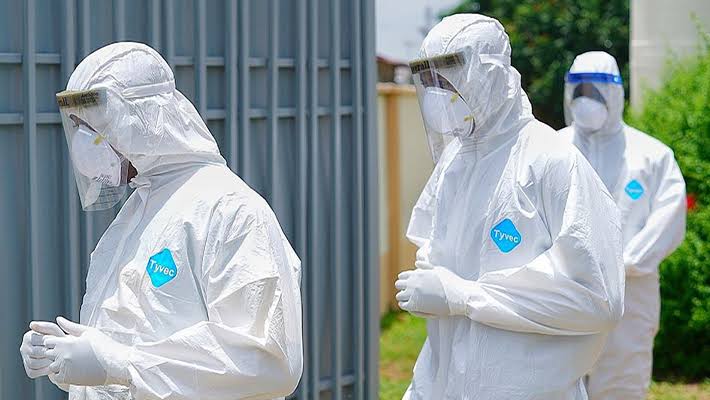
Growing public distrust of official information about Nigeria’s confirmed Ebola case is emerging as an additional challenge to the Federal Government’s containment efforts, even as offices, hotels, event centres and health facilities reactivate hygiene measures, Nigerians increasingly avoid handshakes and the National Assembly demands emergency funding to strengthen the response.
The concern comes amid demands for accountability over the N10 billion reportedly approved by President Bola Tinubu in June for Ebola preparedness, questions about the infected patient’s travel history and disclosures that her condition has deteriorated into multi-organ failure.
Against the backdrop of rising anxiety, Coordinating Minister of Health and Social Welfare, Ali Pate, yesterday briefed the Chief of Staff to the President, Femi Gbajabiamila, on containment efforts, assuring Nigerians that the government had activated its emergency response mechanisms and was working with Uganda to prevent the infection from spreading.
Pate appealed to Nigerians to remain vigilant without panicking and to rely on verified information rather than rumours that could undermine public cooperation with health authorities.
“Nigerians should be reassured. We must be vigilant, but not panic, and people should respect public health information from trusted sources, and not spread misinformation and false rumours,” he said.
Although health authorities have not announced evidence of widespread community transmission, the confirmation of the infection in Abuja has revived memories of the 2014 Ebola outbreak and heightened concerns about the country’s preparedness.
A visit to public facilities in the Federal Capital Territory (FCT) on Wednesday showed renewed attention to hand hygiene, with sanitisers returning to entrances of event centres, hospitality establishments and other locations.
At the Shehu Musa Yar’Adua Centre and Nigerian Army Conference Centre, where several events were held, hand sanitisers were provided at entrances. Other locations visited included Transcorp Hotel and Abuja Continental Hotel, while hospitals in the FCT were also reported to have reactivated handwashing and other infection prevention measures.
Shops selling hand sanitisers have witnessed increased patronage as residents seek additional protection for themselves and their families.
The renewed caution has extended to government offices, airports and other public places, where some Nigerians are becoming reluctant to exchange handshakes or embrace acquaintances. Even at the National Assembly, some lawmakers reportedly avoided handshakes and maintained distances from colleagues.
However, conversations with FCT residents and reactions on social media revealed suspicion about the government’s handling of the infection, with some questioning the timing and credibility of the announcement.
Others expressed unsubstantiated suspicions that the outbreak could provide opportunities for the diversion of public funds or financing of political activities, reflecting a trust deficit that some residents linked to controversies surrounding emergency spending and restrictions during the COVID-19 pandemic.
Although no evidence was presented to support the allegations, their circulation highlights the difficulty authorities could face in persuading a sceptical public to accept health advisories, report possible exposure and cooperate with contact-tracing teams.
Pate, speaking after his meeting with Gbajabiamila, sought to reassure the public that the government was working to prevent further transmission.
“All I can tell you is that we are collaborating with our sister African nation of Uganda. What is important is that we have found this one case. We are doing contact tracing, and we are putting containment measures to ensure that it doesn’t go into our population,” he said.
The minister disclosed that the Nigeria Centre for Disease Control and Prevention (NCDC) had activated its incident management system, with response teams working round the clock and the relevant task force coordinating containment efforts.
“They are working 24/7, and the task force is also active. So we have things in place that gives us confidence that Nigeria can weather through this public health crisis.”
He maintained that Nigeria possessed the institutions and expertise to respond effectively, drawing on its experience in managing previous health emergencies.
Pate assured Nigerians that the government would continue monitoring developments and provide updates as verified information became available. “If the situation changes, we’ll come out and inform Nigerians.”
The assurances came as fresh details emerged about the infected patient, identified by a health official as a diplomat.
During an emergency incident management meeting in Abuja, NCDC’s Director of Public Health Laboratory Service, Olajumoke Babatunde, disclosed that molecular investigations had identified the Bundibugyo strain of Ebola.
“We did three levels of tests, but all were molecular. The strain was Bundibugyo,” Babatunde said.
Another official disclosed that the patient’s condition had deteriorated into “multi-organ failure,” although no further details were provided about her diplomatic assignment.
The patient reportedly arrived in Nigeria on October 5, developed symptoms on October 7 and sought treatment at a private health facility in Abuja on October 11. The Federal Government publicly confirmed the infection on October 20.
Health authorities said she had been isolated and was receiving medical attention, while 44 close contacts had been identified for monitoring.
The Bundibugyo virus causes a severe form of Ebola virus disease for which there is currently no approved vaccine or specific antiviral treatment. Early detection, isolation, supportive clinical care and contact tracing remain essential to limiting transmission.
Meanwhile, Uganda’s Ministry of Health has challenged suggestions that the infection originated in the country simply because the patient travelled through it.
In a statement dated October 20, Uganda’s Director-General of Health Services, Charles Olaro, said preliminary investigations indicated that the woman was a Nigerian national who had travelled to eastern Democratic Republic of Congo (DRC) for business before transiting through Uganda.
According to the ministry, she passed through Uganda without symptoms and developed signs of illness after arriving in Nigeria.
“Travel through Uganda does not establish that infection occurred here. The location of exposure remains under investigation,” the ministry stated.
“We wish to clarify that, as at the time of this statement, Uganda has NO confirmed active Ebola cases.”
Ugandan authorities said Nigeria had yet to provide detailed information about the patient’s travel itinerary and clinical history to assist investigations.
The clarification raised questions about the patient’s movements before arriving in Abuja, although travelling through Uganda does not establish that she contracted the infection there.
The uncertainty has added to demands for greater transparency over the government’s handling of the outbreak and the reported n10 billion Ebola preparedness fund.
Former Vice-President and African Democratic Congress (ADC) presidential candidate, Atiku Abubakar, challenged Tinubu to account for the money reportedly approved in June to support the NCDC and other emergency preparedness measures.
In a statement issued by the Director of Strategic Communication of the ADC Presidential Campaign Council, Phrank Shaibu, Atiku demanded details of the amount disbursed, payment dates, contracts awarded, recipients and equipment or services delivered.
“Ebola is a grave public health threat. Nigerians deserve urgent action, competent leadership and the truth. Instead, the first confirmed case in Abuja has exposed unanswered questions about preparedness, surveillance and the protection of health workers. Tinubu must account for the N10 billion he said would be released immediately in June.
“Where is the money? Publish the amount actually disbursed, the dates of payment, every contract awarded, every recipient and every item delivered. If the money was not released, Tinubu must explain why he announced emergency funding that never reached the people responsible for protecting Nigerians. A press statement cannot replace an audit.”
Atiku also questioned the interval between the patient’s arrival, the onset of symptoms, her presentation at a private hospital and public confirmation of the infection.
“The timeline is damning. The patient arrived in Nigeria on October 5, developed symptoms on October 7 and sought care at a private hospital on October 11. The government did not confirm the case publicly until October 20, nine days after she sought care.”
He alleged that the 44 close contacts were left unmonitored during the period and that private health workers attended to the patient without adequate protective equipment.
The allegations have not been independently established, and the identification of 44 contacts does not indicate when monitoring commenced.
Atiku demanded disclosure of the screening procedures conducted when the patient entered Nigeria, when contact tracing began and what protective measures were provided for medical personnel.
He also questioned the structure of the Federal Government’s Ebola response, arguing that medical experts rather than political appointees should direct containment operations.
“Political titles cannot trace contacts, equip hospitals or save lives,” he declared.
The former vice-president further raised concerns that public health restrictions could be used to discourage campaign rallies or voter participation ahead of the 2027 elections, although he provided no independently verifiable evidence to substantiate the allegation.
His demand for accountability coincided with concerns raised by senators over whether the N10 billion reportedly approved for Ebola preparedness had been released.
During debate on an urgent motion, some lawmakers said the National Assembly had received no official confirmation of the approval or disbursement.
Ali Ndume argued that funds already approved should be released immediately, while Adamu Aliero insisted that Nigeria could not afford to wait for fresh budgetary provisions.
The Senate consequently urged the Federal Government to release emergency funds from the Service Wide Votes to strengthen surveillance, screening, isolation, treatment and other containment measures.
The resolution followed a motion sponsored by Francis Faduyile, who warned that weaknesses in health screening at international airports and other entry points could allow an imported infection to spread.
Lawmakers called for compulsory screening of international passengers arriving through airports, seaports and designated land borders, with enhanced surveillance for travellers who had visited or transited through affected areas within the preceding 21 days.
They also demanded adequate protective equipment, thermal scanners, trained Port Health personnel and functional isolation facilities at entry points and treatment centres across the 36 states and FCT.
Senate President ,Godswill Akpabio, expressed concern over reports that a traveller arriving from Kenya had passed through an airport without temperature checks or other screening procedures.
The Senate further called for the repeal and re-enactment of the Quarantine Act of 1926 to provide a modern legal framework consistent with the International Health Regulations of 2005.
However, lawmakers rejected a proposal for inspection visits to major entry points, preferring to mandate relevant committees to engage government agencies and report back within four weeks.
Similarly, the House of Representatives urged the Federal Government to activate emergency measures and mobilise federal, state and private health institutions to strengthen preparedness.
It also called on the Federal Ministry of Finance to release outstanding appropriated funds to relevant health agencies.
The resolutions followed a motion sponsored by Chairman of the House Committee on Infectious Diseases, Amobi Ogah, who warned that delays in identifying suspected cases, laboratory investigations, isolation and contact tracing could increase the risk of transmission.
“Any delay in identifying suspected cases, conducting appropriate laboratory investigations, isolating confirmed cases, tracing contacts, or providing timely medical care could increase the risk of transmission and place additional pressure on the country’s healthcare system,” Ogah warned.
Meanwhile, Enugu, Oyo, Niger, Gombe and Kano states have intensified surveillance and emergency preparedness to prevent the infection from spreading beyond Abuja.
In Enugu, Commissioner for Health, George Ugwu, said the government had strengthened its Public Health Emergency Operations Centre and intensified surveillance across the state’s 17 local government areas.
He disclosed that screening arrangements around Akanu Ibiam International Airport were being strengthened in collaboration with Port Health Services and other agencies.
“There is currently no confirmed case of Ebola in Enugu State, and the measures being taken are precautionary,” he said.
In Oyo, Commissioner for Health, Oluwaserimi Ajetunmobi, said no case had been recorded but surveillance had been activated across the state’s 33 local government areas.
She said the state began preparations in May following reports of Ebola cases in DR Congo and had strengthened its response through an integrated approach involving health institutions and other relevant agencies.
“Our people should not panic. They should not spread rumours, and they should not ignore signs and symptoms when they see one,” she said.
In Niger, Commissioner for Health, Murtala Muhammad-Bagana, said the state had activated its Public Health Emergency Operations Centre because of the frequent movement of people and goods between Niger and Abuja.
He said no case had been detected, but public and private health facilities had been directed to report suspected infections immediately.
In Gombe, Commissioner for Health, Adamu Danladi Bojude, said the state had activated its emergency response mechanisms and was receiving daily updates from the NCDC.
He said no person of interest had been identified, but the state was working with the Abuja emergency operations centre to identify anyone who might have visited health facilities attended by the patient from October 7.
Identified persons of interest would undergo 21 days of monitoring, while those developing symptoms would be isolated at the Federal Teaching Hospital, Gombe.
In Kano, the Kano Centre for Disease Control directed health facilities to strengthen infection prevention and control measures and maintain heightened vigilance.
Its Director-General, Muhammad Adamu Abubakar, demanded “zero-compromise compliance” with infection prevention protocols and urged clinicians to promptly report suspected cases.
The Nigerian Supreme Council for Islamic Affairs (NSCIA) has also mobilised religious leaders nationwide to support public enlightenment and disease prevention.
In an advisory signed by its Secretary-General, Is-haq Oloyede, the council urged Chief Imams, Islamic scholars and Muslim organisations to use Friday sermons and community engagements to educate Nigerians on Ebola prevention.
It warned against misinformation and stigmatisation, urging cooperation with contact-tracing teams and advising suspected patients to refrain from congregational prayers pending medical assessment.
The developments have revived memories of Nigeria’s 2014 Ebola outbreak, which began when an infected traveller from Liberia arrived in Lagos on July 20.
The outbreak spread to Port Harcourt, producing 19 laboratory-confirmed cases, one probable case and eight deaths.
Health authorities monitored 894 contacts before the World Health Organisation declared Nigeria free of Ebola transmission on October 20, 2014, following 42 days without a new case.
According to WHO, Ebola has an incubation period of two to 21 days and spreads through direct contact with infected blood, other bodily fluids or contaminated materials. Infected persons do not transmit the virus before developing symptoms.
While the renewed use of sanitisers and other precautions indicates that some residents and institutions are responding to the government’s announcement, the persistence of public suspicion presents a challenge to effective containment.
Pate’s assurances that response teams are working round the clock may help address public anxiety, but questions about the patient’s travel history, the timing of detection and the utilisation of emergency funds remain matters requiring clear official explanations.
For the Federal Government, the immediate task is not only to contain the infection through surveillance, contact tracing and clinical care, but also to sustain public confidence through transparent communication, regular updates and demonstrable accountability for resources committed to preparedness.
…Discloses 25% stake in Kenya’s pipeline network, projects in Djibouti, Cameroon, Namibia
President and Chief Executive of Dangote Industries Limited, Aliko Dangote, has unveiled plans to establish a pan-African petroleum distribution network through strategic investments in pipelines, storage facilities and supply corridors.
He also called on African governments to adopt policies that protect local industries, promote domestic manufacturing and accelerate industrialisation across the continent.
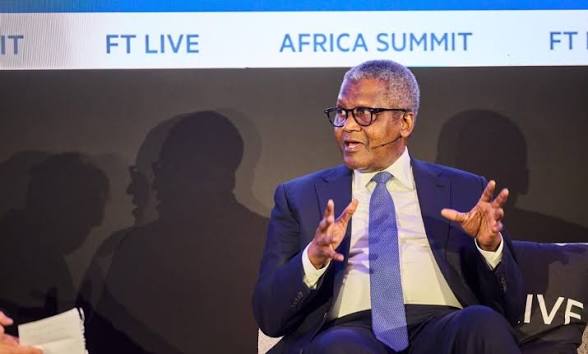
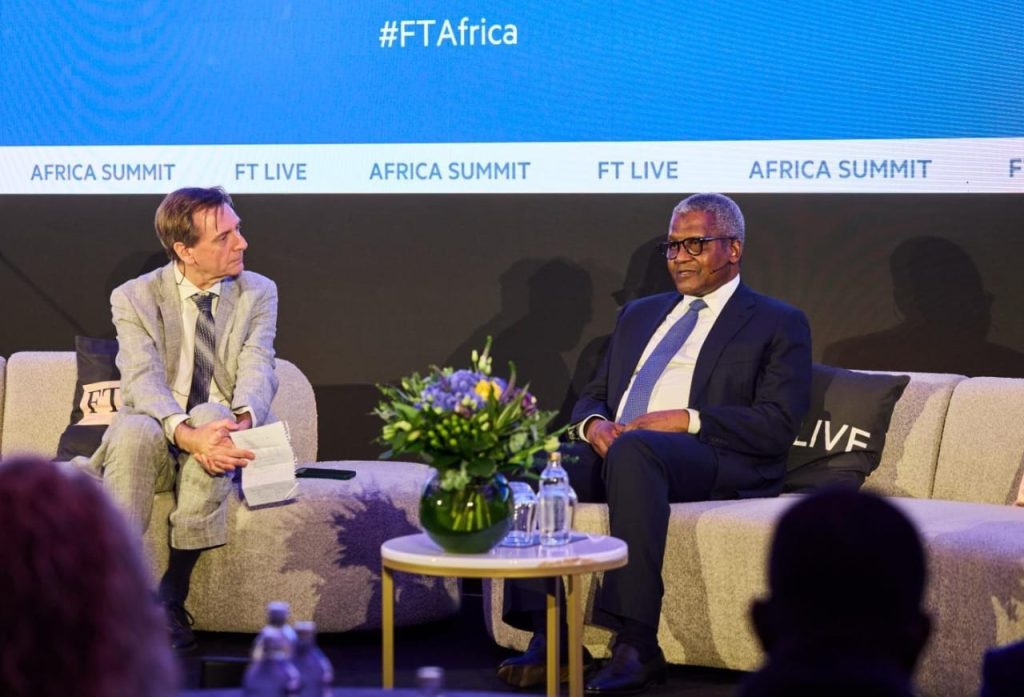
Speaking during an interview with Financial Times Africa Editor, David Pilling, at the FT Africa Summit in London, Dangote disclosed that the Group had acquired a 25 per cent stake in Kenya’s petroleum products pipeline network.
He said the Group was also pursuing projects in Djibouti, Ethiopia, Cameroon and Namibia as part of efforts to strengthen energy security, improve the distribution of refined petroleum products and address supply bottlenecks across Africa.
“Allowing imports to displace local production means we are exporting our jobs out of the continent and importing poverty into the continent,” Dangote said.
He explained that the investments were part of a broader strategy to develop an interconnected energy supply system linking major refining centres with markets that have historically depended on imported petroleum products and fragmented distribution networks.
Dangote said the acquisition of the stake in Kenya’s pipeline network was completed with the support of the Kenyan government, adding that the investment would improve the movement of refined petroleum products across East Africa.
The Group is also developing a petroleum distribution corridor linking Djibouti and Addis Ababa, Ethiopia, with storage terminals and tank farms to facilitate the transportation and storage of refined products.
According to him, another strategic project in Cameroon is nearing completion, while Namibia is being considered a key hub for expanding into Southern African markets.
Dangote said Namibia’s proximity to the Dangote Petroleum Refinery in Lagos made it an attractive destination for the Group’s distribution operations.
“From our refinery to Namibia is just about four days of steaming,” he said.
He added that petroleum products shipped from Lagos to Namibia could be distributed to other markets, including Botswana and South Africa, while the Group was examining additional supply corridors into Zimbabwe and Zambia.
The distribution expansion complements the Group’s plan to establish a refinery in Lamu, Kenya, with a proposed capacity of approximately 700,000 barrels per day.
Dangote said East Africa’s expanding economies, mining industry and growing energy demand made the region attractive for refinery investments.
He explained that the proposed refinery would source crude oil from multiple markets rather than depend exclusively on Kenya or Uganda, providing greater flexibility for long-term operations.
According to him, technical assessments identified Lamu as the preferred location because of its deep-water access, marine infrastructure and availability of resources required for large-scale refining.
He said the investment decision was reached within four months, alleging that commercial interests had attempted to delay the project through legal proceedings shortly before its public announcement.
Beyond energy infrastructure, Dangote advocated stronger industrial policies to protect African manufacturers from unfair competition, arguing that local industries would struggle to grow if exposed to unrestricted imports from more established economies.
He questioned why African countries should be discouraged from protecting domestic industries when major global economies were adopting similar measures to support local manufacturing and employment.
“If America is now saying, no, we are going to protect our industries, who are we in Africa not to protect our own industries?” he asked. Dangote also disclosed that the Group had earmarked approximately $50 billion for investments between 2026 and 2030, describing the programme as part of its commitment to advancing industrialisation across Africa.
“The legacy we are trying to set up is how do we industrialise our continent?” he said. He explained that the investment programme was intended not only to expand the Group’s operations but also to encourage other African entrepreneurs and investors to undertake large-scale industrial projects.
Dangote identified inadequate electricity supply, weak financial systems and underdeveloped industrial policies as major obstacles to Africa’s economic growth.
He described reliable electricity as essential to industrialisation, particularly in manufacturing, mining and mineral processing, where consistent power supply is necessary to support production and add value to raw materials.
Citing an estimated 650 million Africans without access to electricity, he said addressing the continent’s energy deficit would create opportunities for job creation, industrial development and economic diversification. Dangote questioned why Africa, despite its abundant natural resources, vast arable land and young population, continued to grapple with poverty.
He maintained that the continent had the resources needed to become a major industrial powerhouse, expressing optimism that its industrial transformation was already underway. “The journey has started,” he said. “But now we’re awake, and we will make it happen.”