Nollywood actor and director Stanley Amandi has been taken into custody alongside several military officers accused of planning a forceful overthrow of President Bola Tinubu’s government.
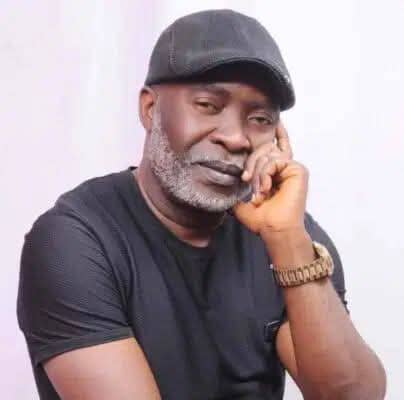
Nollywood actor and director Stanley Amandi has been taken into custody alongside several military officers accused of planning a forceful overthrow of President Bola Tinubu’s government.
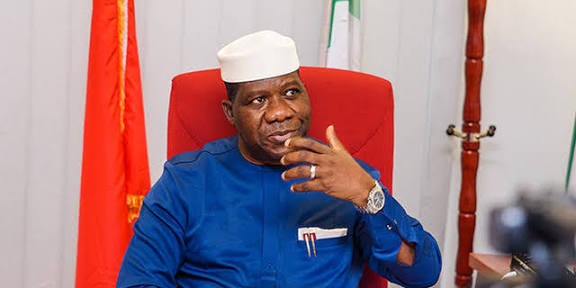
Ekiti State finds itself at a crossroads. While the people look to their leaders for unity, representation, and the protection of their political interests, disturbing reports from sources inside the government house reveal a troubling pattern of betrayal and self-interest centered on Senator Michael Opeyemi Bamidele, the Leader of the Senate and Caucus Leader of Ekiti’s National Assembly Members.
Senator Bamidele has reportedly waged a quiet, calculated campaign against former Governor Kayode Fayemi, deliberately sowing discord between him and Governor Biodun Oyebanji. His actions, according to insiders, are not driven by principle, ideology, or concern for the welfare of Ekiti, but by a relentless personal ambition.
He has systematically positioned himself to advance his political career at the expense of the collective good of the state, undermining both his colleagues and the people they represent.
As Senate Leader and Caucus Leader, Senator Bamidele’s role should have been to protect and advocate for the National Assembly Members from Ekiti. Instead, sources allege that he betrayed his colleagues, scheming to ensure that none of them would secure return tickets in the 2027 elections while consolidating his own advantage.
In a shocking display of political manipulation, he reportedly worked closely with the Governor and other influential leaders to orchestrate the withdrawal of support for sitting members, effectively placing their political futures in jeopardy. While his colleagues believed they had a champion fighting for their interests at the federal level, the reality, according to insiders, was the exact opposite: he was quietly working to eliminate competition and guarantee his own political survival.
Even more concerning, Senator Bamidele is reportedly using his personal relationship with Asiwaju Bola Tinubu, the national leader of their party, to monopolize access to the President. Sources claim that not even the Governor of Ekiti can meet with the President without Senator Bamidele’s knowledge or consent.
This monopolization of access is more than just a power grab; it is a direct attack on the democratic process and the ability of Ekiti’s leadership to secure federal support and resources for the state. By controlling who can and cannot access the highest office in the land, he has turned governance itself into a tool for his personal ambition.
Additionally, all Grade A federal appointments that should have been distributed to Ekiti, in recognition of the state’s contribution and loyalty to the party, have reportedly been blocked or diverted, ensuring that benefits meant for Ekiti are instead used to reinforce his personal influence.
Positions that could have strengthened Ekiti’s representation at the national level offices that could have brought development, employment, and influence back home were systematically withheld, depriving the state of its rightful share.
Senator Bamidele’s betrayal does not stop there. As caucus leader, he was expected to ensure fair representation, protect his colleagues’ political futures, and advocate for the collective interest of Ekiti.
Instead, he is alleged to have manipulated the system to prevent all other National Assembly Members from securing their return tickets for 2027. Sources indicate that he lobbied party leaders and collaborated with the Governor to withdraw support from his colleagues, ensuring that only he remains in a favorable position. This is not leadership; it is the abuse of power and the weaponization of political structures to serve self-interest.
Senator Opeyemi Bamidele, why are you betraying your own colleagues just to scheme them out for your selfish ambition? Why sabotage those who look up to you as their leader all for personal gain? The people of Ekiti deserve leaders who serve the collective good, not opportunists who exploit trust and positions to consolidate power for themselves.
Shockingly, many of his colleagues remain unaware of the betrayal. They continue to praise him as their champion, believing that he is working tirelessly to safeguard their interests at the national level. The truth, however, is that he has been quietly undermining them at every step. From lobbying against their return tickets to manipulating party structures and resources, Senator Bamidele has effectively traded the political futures of his colleagues for his personal advantage.
The timing of these actions also reveals his opportunism. During critical moments in the governorship race, when Governor Oyebanji’s chances of winning appeared uncertain, Senator Bamidele reportedly attempted to withdraw his support from the Governor and lobby for himself.
When it became clear that his ambitions could not be realized against the sitting Governor, he returned to the fold, resuming his role in manipulating positions and appointments to serve his personal goals. This pattern demonstrates a leader who is not guided by principle or loyalty, but by expedience and self-interest.
The consequences of his actions are far-reaching. By sabotaging his colleagues, monopolizing access to the President, and blocking key appointments, Senator Bamidele has weakened Ekiti’s voice at the national level. Instead of ensuring that the state benefits from its political contributions and loyalty, he has turned every opportunity into a tool to advance his own political career. The people of Ekiti, who rely on fair representation, development projects, and federal appointments, have effectively been sidelined by a leader who was entrusted to protect their interests.
Ekiti cannot afford to remain silent in the face of such betrayal. National Assembly Members representing the state must be made aware of these manipulations and act to safeguard their positions. The citizens of Ekiti must rise and demand accountability from leaders who place personal ambition above public service. The state’s political future and development cannot be held hostage by one man’s quest for power.
Senator Bamidele must be called out for his actions. Personal ambition cannot be allowed to destroy Ekiti’s political future, undermine its leadership, and compromise its access to national resources. As the 2027 elections approach, we demand that he desist from manipulating party structures, blocking federal appointments, and monopolizing access to leadership for his own gain. Ekiti deserves leaders who prioritize the collective interest above self-interest, not political opportunists who exploit their positions to consolidate power.
Ekiti has long prided itself on producing leaders who are principled, fair, and committed to the welfare of the people. The actions attributed to Senator Bamidele threaten that tradition. By betraying colleagues, sabotaging return tickets, and monopolizing access to federal power, he risks not only his own legacy but also the stability, unity, and progress of Ekiti as a whole.
It is time for citizens, party leaders, and National Assembly Members to demand accountability. Ekiti cannot allow personal ambition to dictate its political future. The betrayal of colleagues, the blocking of appointments, and the manipulation of access to leadership are not just political missteps, they are deliberate actions that compromise the interests of the state.
The 2027 elections present a critical moment. Ekiti must rise to ensure that no individual can use the machinery of government or party structures to further personal ambition at the expense of collective progress. Senator Michael Opeyemi Bamidele must be held accountable. The people of Ekiti deserve leaders who serve with integrity, protect their colleagues, and safeguard the state’s interests above personal gain. Anything less is unacceptable.
Ekiti cannot be held hostage by ambition. The time to expose betrayal, demand accountability, and reclaim the state’s political future is now.
•Says Makoko demolition is in overall public interest
•Governor to commission 35 schools in Ajegunle next month
The Governor of Lagos, Mr. Babajide Sanwo-Olu, on Friday appealed to individuals and organisations to support his government’s dream of sustaining security of lives and properties in the State through the Lagos State Security Trust Fund.
He spoke during a private breakfast meeting with select Managing Directors and Chief Executive Officers of various companies, organised by the Lagos State Security Trust Fund (LSSTF) in the Ikoyi area of Lagos to raise funds for critical security needs for 2026.
Some of the security needs are multipurpose security helicopters and drones, APCs and Water cannons, tactical training and infrastructural upgrade for the Police, digital communication equipment and Smart CCTV Cameras, vehicles and an ultra modern mechanical workshop, among others.
Speaking during the breakfast meeting, Governor Sanwo-Olu said past interventions were well utilised by the Lagos State Security Trust Fund to empower security agencies for a safe and secure environment, noting that the model has been adopted by other subnational and federal governments, while some are trying to copy and live with it.
He said: “On a year-on-year basis, the Lagos State Government has never taken a back seat on her responsibility. We still fund well over 50 per cent of whatever it is that happens year-on-year. But we wanted it to be something that the private sector can trust, and they can see that their support at all times is always judiciously used. There is accountability, and the funds are transparently deployed at all times.
“We are rebuilding the Command and Control Center with state-of-the-art equipment that will be put in there. We are installing CCTV cameras. We started with a safe city model. We thought we were going to be able to do between 5,000 to 10,000 cameras for Lagos alone. We have not gone far on that and we want to scale it up.
“We want to ensure that Lagos continues to remain secure. We want to improve the rescue ability, capacity, and capability of our first responders.”
Governor Sanwo-Olu, while commenting on the recent demonstrations by some protesters against demolition in parts of Makoko, said the action of the government is in public interest.
He said: “I have been accused of destroying Makoko. You will notice shanties sprawling by the Third Mainland Bridge. But the challenge is that it was now moving at an incredible speed, and it was also getting close to the bridge. And there are high-tension power lines right underneath there. I am not going to sit down, and something will drop off, and in one day, over 100 to 500 people will die.
“So what we have done is that we just pushed them back. For six years, a United Nations agency came forward to boast and said that if I brought money, they would put money for development. I have told them this is my own money. They have not come back till date. It was last week; they said that they didn’t have money.
“People will come and tell you stories. Of what benefit would it be for the government to dislocate the people. It can only be for their own safety. We will not sit back and just let things happen, and people now come and blame us and say that we are not even there.
“We have our responsibility. We know what we are meant to do. Sometimes you see some NGOs who are collecting thousands of dollars from donor countries, going around to make videos of two or three children, saying, ‘You miss school today, you miss school tomorrow, and the rest of it, just for their pecuniary rewards.’ It is a shame.
“I want people to be rest assured that we are not about taking anything away from anybody; we are just trying to make life better for our people.”
Governor Sanwo-Olu also disclosed his administration’s plan to commission 35 schools with about 22,000 students in the Tolu community, Ajegunle area of Lagos State. He also spoke on how his administration resolved the Okobaba sawmill problem.
He said: “Okobaba was one place that always had fire every month, every year. We were able to do it. It took us over 10 to 15 years, but we relocated them to a place called Agbowa. It cost us billions. We gave them over 500 houses that we built for them. And that is why you don’t have them there again.
“I am going to commission 35 junior and senior schools with over 22,000 students in Tolu, Ajegunle. We are going to commission it next month. We are dealing with a lot of things. And in all of that, we still need to keep our people safe.
“We still need to create an environment and ambience where investment will continue to come in. We need to have a space where the future will be secured. Several new investors are planning to come in; we need to be able to assure them that Lagos is the right place and environment.”
The Lagos State Government has reiterated that ongoing actions in Makoko are driven by the urgent need to protect lives, uphold the rule of law, and advance comprehensive urban renewal initiatives aimed at improving living conditions for residents.
Addressing recent concerns and public discourse surrounding Makoko on an AIT programme monitored in Lagos, the Lagos State Commissioner for Information & Strategy, Mr. Gbenga Omotoso, clarified that the current intervention is not a conflict between the rich and the poor, but a necessary step toward ensuring safety, legality, and humane living standards for all Lagosians.
The Commissioner confirmed that the government has been in continuous engagement with the United Nations (UN) regarding the future of Makoko.
The UN, he noted, has expressed interest in the renewal strategy for the area and has indicated its willingness to support the initiative. Both parties agree that certain sections of Makoko, particularly areas under high-tension power lines, are unsafe and unsuitable for habitation.
Omotoso revealed that the Government has committed counterpart funding toward the renewal plan and has held several meetings with international partners, including engagements as recent as this week, to ensure a sustainable and humane redevelopment process.
“This is about urban renewal. It is about better living conditions for our people. Government cannot and will not allow residents to remain in environments that pose imminent danger to their lives,” he noted. He added that no human being should reside under high-tension electricity wires due to severe health and safety risks.
Speaking further, the Commissioner stressed that experts have warned of potential long-term health hazards, including cancer risks, as well as the possibility of catastrophic consequences should any of the power lines collapse – particularly given the proximity to the Lagoon and the Third Mainland Bridge.
“This is an emergency waiting to happen. Should such a calamity occur, the same voices questioning government action would ask why preventive measures were not taken,” Omotoso noted. He further maintained that building under high-tension wires and within restricted zones violates established physical planning and environmental laws.
“In Lagos State, there are clear regulations governing setbacks from waterways and infrastructure corridors. These laws exist to protect lives and ensure orderly development”, he said.
The Commissioner added that Lagos, being the smallest state in Nigeria by landmass yet home to an estimated 25–30 million residents, must maintain strict adherence to planning regulations to ensure sustainability and livability.
He averred that compensating or legitimising illegal structures erected in clearly restricted zones would undermine the rule of law and set a dangerous precedent. “We cannot allow a situation where individuals build in unauthorised areas – under power lines, near critical infrastructure, or even on bridges – and expect validation after the fact. A city must be governed by laws”, Omotoso stated
He recalled previous relocation efforts, including the resettlement of timber operators from Okobaba Sawmill to Agbowa in Ikosi, where new facilities, roads, and housing were provided without controversy. The current intervention, he noted, however, specifically concerns emergency safety risks posed by high-tension installations.
The Makoko situation, he recalled, has been under review for several years, with ongoing discussions between the government, community representatives, and stakeholders.
He said, “Engagement with residents has spanned approximately five years, and government officials, including the Local Government Chairman, have maintained consistent dialogue and outreach”, he noted.
“We are not abandoning anyone. But first, we must save lives. Livelihood is important, but life itself is paramount”, Omotoso added.
On protests arising from the demotion exercise, he reaffirmed the government’s commitment to democratic principles, including the right to peaceful protest. “People have a constitutional right to protest, and this government will not suppress free speech,” he said.
He, however, stressed that protests must remain peaceful and must not infringe on the rights of others.
“Blocking major roads, preventing access to hospitals, workplaces, and other essential services, goes beyond the bounds of lawful protest.
“Where one person’s rights end, another’s begin. Citizens have the right to protest, but others equally have the right to free movement and access to essential services”, Omotoso stated.
He maintains that the Makoko intervention is a matter of legality, safety, and humane urban planning – not social or economic exclusion.
The objective, he noted, remains to transform vulnerable settlements into safer, properly planned communities that reflect the standards of a modern megacity.
He said, “This is not about displacement for the benefit of the wealthy. It is about what is right, what is legal, and what is safe for human habitation.”
While reaffirming the government’s resolve to pursue orderly urban development, Omotoso assured that efforts will always be made to ensure that interventions are carried out with responsibility, dialogue, and respect for human dignity.
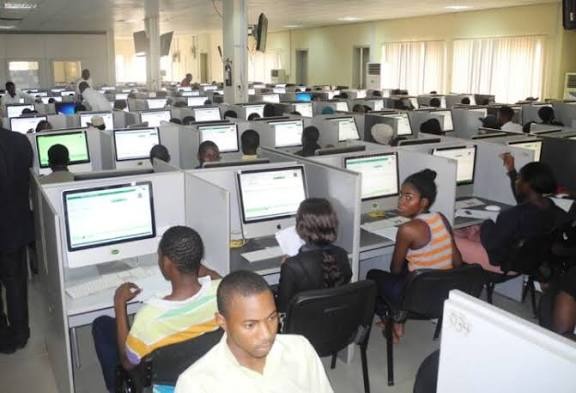
A total of 2,103 candidates have been duly registered for the 2026 Public Service Examination (PSE) conducted by the Administrative Staff College of Nigeria (ASCON), representing 20 client organisations nationwide.
The Director-General of ASCON, Dr. Funke Adepoju, disclosed this in a statement made available to the media, as the College commenced the nationwide examination in line with its statutory mandate to strengthen professionalism and merit in the Nigerian Public Service.
The 2026 Public Service Examination is being held across the country from Thursday, January 29, to Friday, January 30, 2026. According to Dr. Adepoju, the examination remains a critical gateway for ensuring quality entry, career progression, and competence within the public service.
She explained that the exercise is being conducted for candidates drawn from Federal and State Ministries, Departments and Agencies (MDAs), including State Civil Service Commissions, Local Government Service Commissions, parastatals, and other public institutions across the Federation.
Dr. Adepoju noted that participating organisations include the Oyo, Ondo, Enugu, Ekiti, Delta, and Anambra State Civil Service Commissions, among others.
She further stated that the Public Service Examination (PSE) is designed to assess the suitability of fresh graduates seeking appointment into the Administrative and Specialised Departmental Cadres of the Public Service. The examination also provides a credible and transparent platform for serving officers seeking conversion from the Executive Cadre to the Officer Cadre after acquiring relevant degree qualifications.
According to her, the examination supports the broader manpower planning and human capacity development objectives of client organisations across the country.
The ASCON Director-General also informed the public and client organisations that registration for the 2026 Public Service Examination remains ongoing, reaffirming the College’s commitment to openness and inclusivity.
She emphasized that ASCON remains steadfast in upholding the principles of professionalism, transparency, merit, and institutional integrity in the recruitment and development of human capacity for the Nigerian Public Service.

Troops of Sector 1, Operation HADIN KAI (OPHK), have recorded major operational successes following coordinated night and dawn surprise attacks on terrorist enclaves in Borno State.
The update was signed by Lieutenant Colonel Sani Uba, Media Information Officer, Headquarters Joint Task Force North East, Operation HADIN KAI.
In a well-executed dawn operation on January 28, 2026, troops stormed the terrorist hideout at Bula Dalo, neutralising over 12 terrorists and forcing the remaining fighters to flee in disarray. The operation led to the recovery of four AK-47 rifles, one PKT anti-aircraft gun, one Rocket-Propelled Grenade launcher, and one Multiple Grenade Launcher.
In a separate, deliberate clearance operation at the Garno terrorist camp, troops of Sector 1 further degraded terrorist capabilities by neutralising six terrorists, destroying their life-support structures, and recovering a large cache of PKT anti-aircraft ammunition.
Meanwhile, in a related development, troops of Sector 2 OPHK at Sabon Gari came under attack by ISWAP terrorists in the early hours of January 29, 2025.
The assault was supported by multiple armed drones. Although the terrorists temporarily breached a section of the defensive position, gallant troops swiftly repelled the attack, held their ground, and restored full control of the location with timely reinforcements from neighbouring units.
Sadly, some brave troops and members of the Civilian Joint Task Force paid the supreme price while defending the position. An excavator and a lowbed were also damaged during the armed drone attack.
Exploitation of the area is ongoing as troops continue operations to deny terrorists freedom of action and ensure lasting security in the region.

The Peoples Democratic Party (PDP) has reacted to the judgment of the Federal High Court sitting in Ibadan, delivered on Thursday, which declined to grant the order of mandamus sought by the party.
The statement was signed by the National Publicity Secretary of the PDP, Comrade Ini Ememobong.
In a statement issued shortly after the ruling, the PDP said the court based its decision on the view that granting the application would amount to sitting on appeal over judgments of courts of coordinate jurisdiction.
The party disclosed that it has already briefed its legal team to immediately file an appeal and take all necessary legal steps to advance its arguments and firmly protect its position on the matter.
Despite the judgment, the PDP maintained that the Kabiru Turaki–led party leadership that emerged from the Ibadan Convention remains legally intact and unshaken, pending an authoritative pronouncement by the appellate courts.
The party further urged its members nationwide to remain calm, resolute, and committed, stressing that there is no cause for alarm.
According to the statement, the party’s ongoing “REBIRTH” movement remains firmly on course.
By Tunde Rahman
I had long nursed the idea of visiting Kigali, Rwanda’s capital, given the exciting stories of infrastructure development, well-paved network of roads and other beautiful things I had heard about that country. When, therefore, I needed to travel to the United Kingdom in late last year, I decided to route my trip through Kigali aboard RwandAir. So November 28, 2025 was my first trip to Kigali and my first on RwandAir, as well.
The wonderful experience I had on RwandAir more or less offered a pleasant hint of the trip itself. Indeed, everything about the trip was flawless. The aircraft we flew in was new and clean. The check-in formality was faultless; the cabin crew were excellent. It was a five-and-a-half hour or so flight, but it didn’t feel like I spent up to five hours in the plane. Everything went smoothly that it seemed time simply rolled by.
Within minutes of arrival at Kigali International Airport, I had recovered my luggage and passed through immigration with the help of Oluwaseun Akande, a senior official from the Nigerian Embassy in Kigali, who was on hand to receive me and accompany me to the hotel.
Kigali International Airport is quite small, but what it lacks in size it offsets with an appealing design. A first-time visitor like me cannot help but notice the sheer beauty and cosiness of this airport. It’s also very functional and efficient. The services available at the airport were excellent. The internet wifi was smooth and fast.
Having effectively settled in 2000 Hotel in the heart of Kigali, described as a 4-star hotel, I now began to plan my itinerary.
I decided to pick a hotel in Downtown Kigali because I really wanted to explore the city, catch a full glimpse of Kigali, meet and interact with the locals. As I indicated, I was en route to London and planned to spend only three nights in Kigali.
The three nights must be well utilised, consistent with the trip’s objectives to know virtually everything about Kigali: the culture and tradition, the people, their history, and the tourist spots.
Oluwaseun proved very useful in that respect. Along with a few tourists I encountered at the hotel, I visited several places including the Fazenda Sengha, Mount Kigali, Kimironko Market and, of course, the Genocide Memorial. Chauffered by my Rwandan cabbie, who simply gave his name as Godwin, I also went round the city centre to glimpse some of the important places like Kigali Government House, President Paul Kagame’s residence, some embassies, big conference centres and major hotels.
Fazenda Sengha is an impressive recreational park. Its features include zip lines, archery, horse/donkey ride, train ride, paintball, and of course a restaurant and a bar. From this park erected on a mountain, one could get a bird’s eye view of Kigali. A river that snakes its way through the whole of Kigali can also be viewed. It was at this place that I saw donkeys again after a long time, and even rode on one.
At Mount Kigali, a prominent hill in the city, which is 1,853 metres high, one can also have a panoramic view of the entire Kigali. Standing at the summit of Mount Kigali, this awesome hill is easily the main attraction in Kigali.
Rwanda is a one-city country. Everything about the country revolves around the capital – Kigali. I was told there was no point visiting any of the other towns and villages, which are predominantly rural and far-flung places, because they featured virtually nothing remarkable. Notwithstanding this, President Kagame has made tremendous impact on Rwanda’s development. According to official documents in Kigali, the hallmarks of Kagame administration are peace and reconciliation, women empowerment, promotion of investment and entrepreneurship and access to information technology.
On the streets of Kigali, President Kagame is good news. The people visibly adore him and commend his impact in the country. His residence is a sprawling structure next to the Government House. The sheer majesty of his residence is understandably so, given his status as the president.
Reminded that Kagame has been in office since April 2000 and was recently sworn in for a new five-year term in August 2024, my cabman Godwin simply retorted: “That is not important to us. He is doing well and we love him. He treats all of us equally. Our country is okay. We don’t count how long he has been in power.”
The impressive sights nonetheless, this is an unsolicited advice to President Kagame: after 26 years in power and still counting, it’s time he started thinking seriously of grooming a suitable successor to continue with his progressive policies, and quitting the stage when his present term expires. Otherwise, he would be putting at risk the good legacies he has built in the country and the huge impact he has made on Rwandan people.
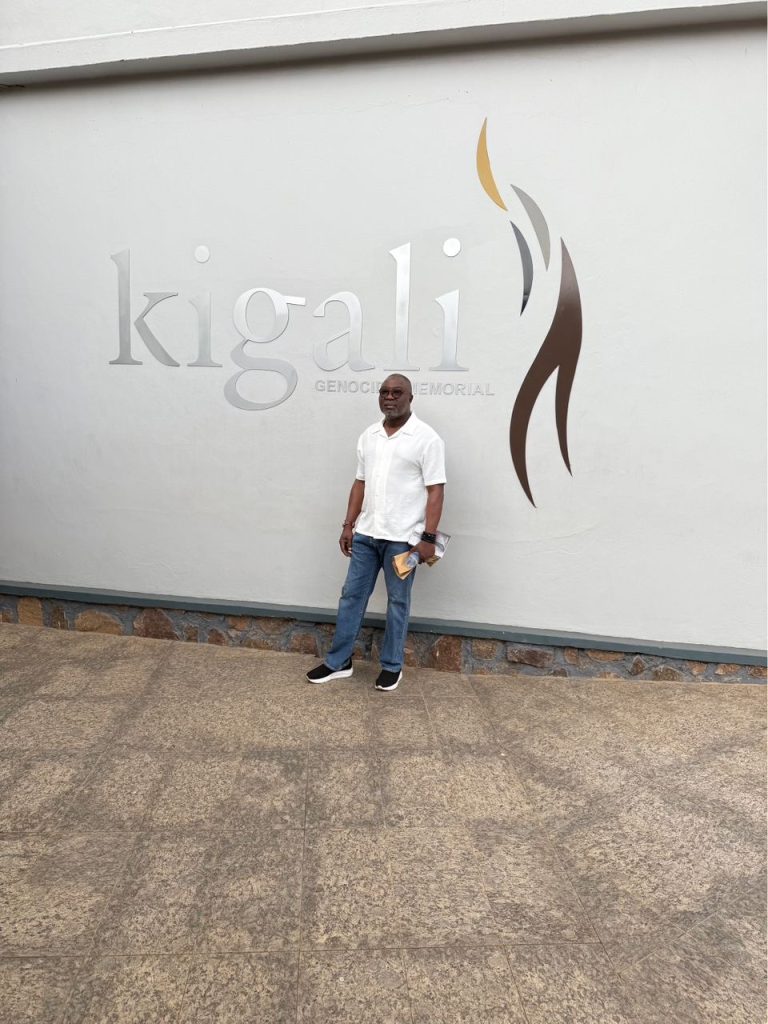
Like I said, that was unsolicited. The three-day trip to Kigali was generally eventful. It was exciting. There is so much to write about. Yet, there were also depressing and humbling moments during the trip. This was at the Kigali Genocide Memorial, built to commemorate the 1994 Rwandan genocide as a place of remembrance for the more than one million victims of the genocide against the Tutsi.
Inside this memorial, the remains of over 250,000 people, the bones of those massacred – mostly of Tutsis – are interred. In this place, one is confronted with grim stories and pictures of how the Hutu turned against Tutsi; how brothers turned against brothers, friends against friends, families who had all along related well and inter-married turned against one another. The graves were well arranged in this large and sombre ground, evoking the tears and blood that flowed from the Rwandan civil war.
Some accounts of those who survived the genocide were also pasted on the walls of the memorial centre.
In his book “Conspiracy To Murder: The Rwandan Genocide,” Linda Melvern gave a chilling account of the killing in Rwanda during the war, quoting a part of the report of the International Committee of the Red Cross (ICRC) issued on April 29, 1994: ”Whole families are exterminated, babies, children, old people, women are massacred in the most atrocious conditions, often cut with a machete or a knife, or blown apart by grenades, or burned or buried alive. The cruelty knows no limit.”
As I criss-crossed the memorial, moving from one room to another, from one point to another, reading the narratives and viewing the haunting and saddening pictures, tears welled in my eyes. I prayed silently that this should never happen anywhere again to any set of people or nation.
Those alleging genocide in Nigeria and spreading the narrative of genocide do not know what they are talking about. Yes, Nigeria is battling security issues. Yes, there are killings, very unfortunate and disturbing, but the government is confronting them headlong. However, there is no genocide in Nigeria, whether of Christians or Muslims, and we should not pray for one. Anyone who has seen the magnitude of the Rwandan massacre as documented in Kigali Memorial will perfectly understand this fact.
We must commend President Kagame for his post-war efforts on peace and reconciliation, and the people of Rwanda for how they have all embraced peace after the ruinous genocide. Speaking on his own personal efforts in maintaining peace after the war, Lydie Mutesi, a guide officer at the Kigali Genocide Memorial, wrote on the wall of the centre: “The memorial is a very important place. I feel responsible and humbled because I’m contributing to teaching the world and my community about building peace after genocide.”
*Rahman is a journalist and media aide of Nigeria’s President Bola Tinubu.
BY TAIWO OGUNMOLA -OMILANI
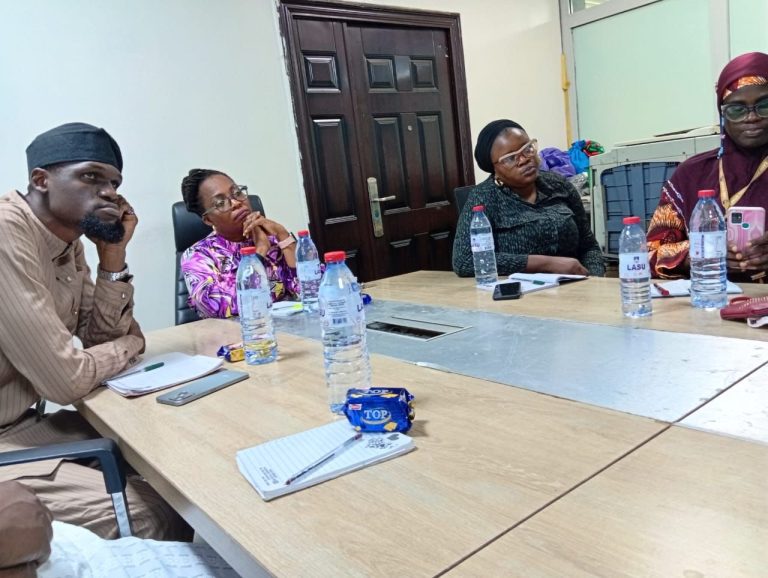
The Centre for Information and Public Relations (CIPR), Lagos State University (LASU), on Tuesday, January 27, 2026, organised an in-house training session on Event Anchoring for its members at the CIPR Media Room, Babatunde Raji Fashola Senate Building, LASU main campus, Ojo.
The training was designed to enhance participants’ confidence, delivery, and professionalism in anchoring public, academic, and corporate events, in line with the Centre’s commitment to continuous capacity building and skills development.
In her opening remarks, the Deputy Registrar and Coordinator of CIPR, Mrs. Oluwayemisi
Thomas-Onashile, highlighted the critical role of effective event anchoring in public relations practice. She encouraged members to fully utilise the opportunity to sharpen their communication skills and improve their on-stage presence.
Delivering the training, the Chief Public Relations Officer and Head, Media Relations Unit, Mr. Olaniyi Jeariogbe, described event anchoring as the backbone of any successful programme, noting that the anchor serves as the face, voice, and connective thread of an event. He stressed the importance of thorough preparation, proper scripting, rehearsal, time management, and confident stage presence.
Mr. Jeariogbe also emphasised the need for flexibility and emotional intelligence, especially in handling unexpected situations during events. He shared practical tips on audience engagement, smooth transitions, accuracy in names and titles, conducting technical checks, and ending events on a strong note.
Drawing from real-life experiences, he further guided participants on overcoming stage fright, maintaining composure, and projecting confidence while anchoring events of varying scales.
The session was highly interactive, with members making insightful contributions, sharing personal experiences, and seeking clarification on specific anchoring challenges.
The question-and-answer segment further enriched the training, providing participants with practical solutions and deeper insights into effective event anchoring.
The training forms part of LASU-CIPR’s ongoing efforts to equip its members with relevant skills aligned with contemporary public relations practice and to promote professional excellence across the university community.
BY TAIWO OGUNMOLA -OMILANI
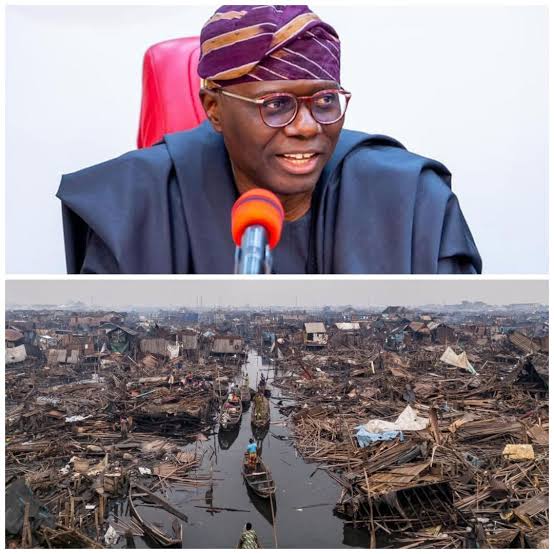
Change, as the saying goes, is the only constant in life. Yet, humanity often struggles to accept it, especially when change disrupts long-standing ways of living. In rapidly expanding cities like Lagos, shifting realities of urban growth, safety and infrastructure inevitably force difficult decisions—none more emotive than the ongoing demolition exercises in Makoko.
Makoko, a sprawling waterfront settlement, has long existed at the margins of Lagos’ urban plan. To many who have visited the area, the harsh living conditions raise serious concerns. Beyond environmental degradation, the settlement’s proximity to critical infrastructure such as the Third Mainland Bridge and high-tension power lines poses significant safety risks.
There are also fears that the area could serve as a hideout for criminal activities, while exposing residents—particularly children and unborn babies—to long-term health hazards.
Amid the controversy, several local and international non-governmental organisations (NGOs) have taken up the defence of Makoko residents, staging protests and criticising the Lagos State Government.
However, questions have been raised about the true basis of this advocacy, particularly following allegations by Governor Babajide Sanwo-Olu regarding grants received by some NGOs from international donors.
The governor’s comments have sparked debate over whether the NGOs are primarily defending the welfare of Makoko residents or protecting interests tied to donor funding.
Critics argue that if the NGOs were genuinely committed to the long-term wellbeing of the residents, they would prioritise collaboration with the state government to facilitate orderly relocation to safer and more habitable areas, rather than confrontational protests.
Observers also note that resisting government policy may only delay the inevitable. Even if the current administration exercises restraint, future governments may proceed with demolition in the interest of public safety and urban planning.
From this perspective, constructive engagement—rather than outright opposition—may offer residents a better chance of securing relocation support and social safeguards.
The issue took centre stage at the Lagos State House of Assembly on Thursday, January 28, 2026, when lawmakers reconvened to deliberate on the matter.
During plenary, the House called on Governor Sanwo-Olu to direct the Commissioner for Information to intensify public enlightenment on the ongoing demolition exercises across the state. The aim, lawmakers said, is to curb misinformation and ensure proper public understanding of government actions.
The resolution followed a motion raised under Matters of Urgent Public Importance by Hon. Ogundipe Stephen, representing Oshodi-Isolo Constituency I. In his remarks, the Speaker of the House, Rt. Hon. Mudashiru Obasa, urged affected residents to remain calm, assuring them that the Assembly had constituted a committee to address their concerns.
While commending protesters for approaching the Assembly to air their grievances, Obasa cautioned against allowing mischief-makers to hijack the protests and foment unrest. He warned that some individuals had infiltrated the protests with the intent to cause mayhem, advising genuine protesters to remain vigilant and law-abiding as the House works towards resolving the issues.
Earlier in the week, Governor Sanwo-Olu had robustly defended the demolition exercise. Speaking after signing the ₦4.4 trillion 2026 Appropriation Bill into law, he said the partial demolition in Makoko was carried out to avert a looming tragedy.
“The safety of lives and property is paramount and must be safeguarded,” the governor said. He cited recent incidents, including a tanker accident involving 33,000 litres of fuel, where residents reportedly rushed to scoop fuel, as evidence of the dangers posed by unsafe living conditions.
Sanwo-Olu stressed that the government was not demolishing the entire Makoko community but clearing specific areas encroaching on the Third Mainland Bridge and high-tension power lines.
He further alleged that some local and international NGOs had benefited significantly from donor funds meant for the area without delivering on promised interventions.
“We are studying it and will present evidence,” the governor said, adding that such organisations often “cry louder than the bereaved” to mask their own shortcomings. According to him, the government had engaged with these groups for over two years and could no longer ignore the risks to public safety.
The governor also announced that palliative measures had been approved to cushion the impact of the demolition on affected residents.
Ultimately, the Makoko situation underscores the difficult balance between compassion and necessity in urban governance. While displacement is painful and disruptive, many argue that continued habitation in unsafe environments is neither humane nor sustainable. As Lagos continues to evolve, the challenge for all stakeholders—government, NGOs and residents alike—is to manage change in a way that protects lives, preserves dignity and offers realistic pathways to a safer future.