Home Blog Page 697

Senate Eyes March Passage of 2026 Budget

0


The Senate Committee on Appropriations has indicated that the 2026 Appropriation Bill may be passed in the third week of March.

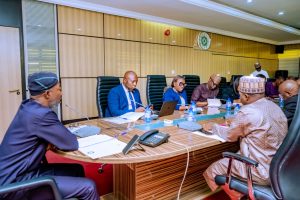
Chairman of the committee, Senator Adeola Solomon Olamilekan, disclosed this during a special meeting convened to outline the legislative timetable and procedures for consideration of the budget.

Senator Adeola said that to ensure thorough and meticulous scrutiny, hard copies of the 2026 budget have been printed and distributed to chairmen of the Senate standing committees.

He added that budget defence sessions with ministries, departments and agencies (MDAs) are scheduled to hold between February 2 and February 13, 2026.

As part of its engagement process, the committee also plans to convene an interactive session with key stakeholders on February 9, 2026.

The session will be held under the theme: “From Budget to Impact: Strengthening Macroeconomic Stability, Accelerating Infrastructure Delivery and Improving Security through Fiscal Discipline and Effective Implementation of the 2026 Budget.”

According to the committee, a final meeting with the Federal Government’s economic team is expected to take place on March 5, 2026, to review projections and make necessary adjustments.

The committee is expected to submit its report to the Senate plenary thereafter for consideration, adoption and eventual passage of the 2026 budget.

Faleye Inaugurates LOC for ISSSA West Africa Technical Seminar 2026

0

BY TAIWO OGUNMOLA -OMILANI


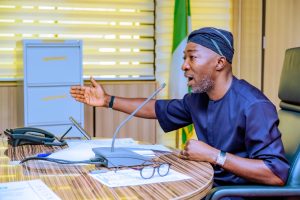
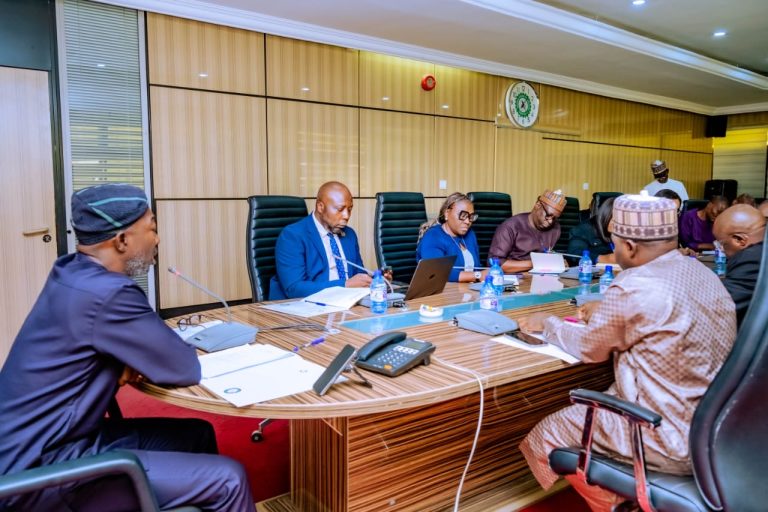
The Managing Director of the Nigeria Social Insurance Trust Fund (NSITF), Barrister Olúwaṣeun Faleye, has inaugurated the Local Organising Committee (LOC) for the International Social Security Services Association (ISSSA) West Africa Technical Seminar 2026.

The inauguration ceremony took place on Wednesday at the Board Room of the Fund’s headquarters in Abuja.
Speaking at the event, Barrister Faleye described the inauguration as a significant milestone in the preparations for a seminar of strategic importance, not only to the NSITF but also to the broader objective of strengthening social security systems across West Africa.

“This inauguration marks an important step in our collective preparations for a seminar of strategic significance, not only to the Nigeria Social Insurance Trust Fund, but to the broader agenda of strengthening social security systems across West Africa,” he said.

He charged members of the committee to approach their assignment with a strong sense of responsibility, noting that hosting such a high-profile regional event was both an honour and a serious obligation.

On the theme of the seminar, “Improving Inclusiveness and Accessibility of Social Security Services through Effective Communication in West Africa,” the NSITF Managing Director said it aptly reflects the realities of the sub-region.

“As social security institutions, our mandate goes beyond policy and administration; it extends to ensuring that our services are understood, accessible, and responsive to the needs of all segments of society, particularly the vulnerable and underserved,” Faleye stated.

He explained that the seminar is designed to advance this mandate through the use of digitalisation, innovative communication strategies, and digital and mobile technologies to expand social security coverage.

According to him, the forum will also serve as a platform for experience-sharing, peer learning, and the exchange of best practices among social security experts and institutions across West Africa.

Highlighting the expected outcomes, Faleye said deliberations at the seminar would deepen collective understanding of digital transformation in social security administration, strengthen regional collaboration, and produce practical, actionable recommendations for extending social security coverage in the region.

He further noted that the seminar would bring significant benefits to both the NSITF and Nigeria, including enhanced networking with regional and international partners, as well as the opportunity to showcase Nigeria’s leadership and commitment to social security development.

While stressing the importance of the assignment before the LOC, Faleye expressed confidence in the committee’s capacity to deliver, urging members to remain dedicated, committed, and guided by team spirit as he wished them success.

The ISSSA West Africa Technical Seminar 2026 is scheduled to hold on April 25 in Abuja and is expected to attract social security services experts from across the region and beyond.

Finishing Strong: Behold the Hour Cometh…

0


By Rt Hon Eseme Eyiboh, mnipr

There are moments in a nation’s life when institutions are reminded—quietly but unmistakably—that time does not negotiate with comfort. Nigeria’s Senate, returning from the conviviality of Christmas recess and New Year reflection to the discipline of plenary, has arrived at such a moment. The period of acclimatization has passed. The era of testing intentions is over. What remains is a phase in which time asserts itself, when the calendar ceases to be a backdrop and becomes an active force in governance.

When the President of the Senate, Godswill Obot Akpabio, rose to welcome colleagues back to the chamber in early 2026, he spoke with an ease that respected ceremony while remaining alert to consequence. The tone was cordial but unsentimental; reflective without wandering. Beneath the courtesy was a clear intimation that the Tenth Senate had crossed from the comfort of beginnings into the gravity of its defining phase.

He began where seriousness often takes root—not with policy, but with people. The recess, he reminded senators, was not an escape from accountability but an extension of it: time spent among constituents, re-engaging voices that do not echo within the chamber, absorbing frustrations that do not arrive neatly packaged as memoranda, and reconnecting with the human weight behind legislative abstractions. In doing so, Akpabio quietly reaffirmed representation as a lived obligation rather than a procedural formality.

The Senate, however, resumed its work under the shadow of loss. The death of Senator Godiya Akwashiki during the recess lent the chamber a gravity that could not be ignored. Akpabio’s tribute was spare, almost austere, and for that reason it carried weight. He spoke of diligence, humility, and responsibility—not as ornament, but as the unobtrusive virtues that prevent institutions from emptying themselves of meaning. The moment of silence that followed served as a reminder that democracy rests not only on arithmetic and procedure, but on the moral character of those entrusted to serve.

The address then widened its lens to the nation beyond the chamber. Nigeria, Akpabio observed, did not pause while the Senate recessed. Economic pressures persisted. Security challenges endured. Social demands intensified. Yet threaded through this catalogue of strain was a firm insistence on resilience. Nigerians, he argued, have continued to endure and adapt, expressing themselves not only through protest or complaint, but through work, enterprise, and a stubborn conviction that tomorrow need not be a repetition of today.

This framing mattered. It acknowledged hardship without normalizing it, and resilience without romanticizing suffering. More importantly, it returned responsibility to leadership. Public expectations, Akpabio cautioned, have not diminished with time; they have sharpened.

Security, inevitably, commanded attention. The Senate President welcomed ongoing military cooperation between Nigeria and the United States as part of a broader effort to confront terrorism and safeguard stability. Yet strategy did not eclipse humanity. His condolences to families bereaved by insecurity were measured but sincere, underscoring a truth often obscured by briefings and statistics: security is not an abstraction, but the difference between return and absence, between continuity and grief.

Equally sobering was the warning that as many as 35 million Nigerians may face hunger in the coming year. This was not treated as a distant projection to be acknowledged and deferred, but as an imperative demanding legislative urgency, rigorous oversight, and collaboration. Food security, in this context, is not charity; it is statecraft.

As the political season approaches with its familiar excesses, Akpabio’s appeal for civility and restraint was timely. Democracy, he implied, is not weakened by competition but by recklessness; not threatened by ambition but by the abandonment of responsibility. National unity, he warned, must never become collateral damage in the contest for power.

The address also made deliberate space for Nigerians whose lives remain suspended in captivity within their own country. Akpabio urged continued remembrance and prayer, resisting the political impulse to move on too quickly. Progress that ignores unresolved pain, he suggested, is progress in name only.

Threaded through the address was an endorsement of the Renewed Hope Programme of the Tinubu administration—not as a panacea, but as a collective undertaking requiring patience, discipline, and cooperation. Hope, in this telling, is not sentiment; it is work.

Then came the central fact. With less than one year and five months remaining, the Tenth Senate has entered its final stretch. Akpabio stated this plainly, without theatrics. The final stretch, he argued, is where participation yields to performance—where urgency must be embraced without panic, reform pursued without recklessness, and productivity demanded without compromising standards.

What followed was a concise legislative philosophy. The months ahead must be reform-driven. Laws passed now must strengthen institutions, secure lives and property, unlock growth, and restore confidence in the Nigerian state. There was a pointed warning against legislative clutter and symbolic excess. History, Akpabio reminded his colleagues, is unimpressed by volume; it is persuaded by value.

He described the task ahead as institutional housekeeping: clearing bottlenecks, completing what was begun, and leaving behind laws that function rather than frustrate. The imagery was modest, but the implication was serious. Governance, at its best, is stewardship rather than spectacle.

The vision outlined was ambitious yet restrained: a Nigeria more governable than it was met; more just than it was found; more hopeful than it was entrusted to this generation of lawmakers. Institutions stronger than individuals. Laws that serve rather than burden. It was nation-building language—and an invitation to judgment.

Practicalities were not ignored. The budget, Akpabio noted, requires rigorous scrutiny, responsible passage, and faithful implementation. Oversight should correct rather than merely criticize. Collaboration with the Executive remains essential, grounded in constitutional responsibility rather than convenience.

Perhaps the most demanding reminder was the simplest. Senators, he said, are the ears, the eyes, and the legislative voice of Nigerians. It was not grandiose. It was exacting.

As the address concluded, the themes of time and memory returned. The clock is moving. The nation is watching. History is recording. This, Akpabio insisted, is not a moment for anxiety but for purpose. When the Tenth Senate reaches the end of its tenure, let it be remembered not as a body that slowed near the finish, but one that accelerated.

In many respects, the address captured the tone Akpabio has sought to establish since assuming the Senate presidency: stability over spectacle, substance over noise, legacy over applause. Whether the Senate finishes strong will depend not on rhetoric, but on deeds. As a declaration of intent, however, this was a serious one.

The final stretch has begun! Behold the hour cometh! The work remains unfinished. The trust has been acknowledged; it now awaits to be honored. In the end, nations remember less what was promised at the threshold, and more what was delivered before the door finally closed.

Rt Hon Eseme Eyiboh, mnipr,
is Special Adviser on Media and Publicity and Official Spokesperson to the President of the Senate.

Adeleke, Brother Pay Condolence Visit to Saraki, Ojora Families

0


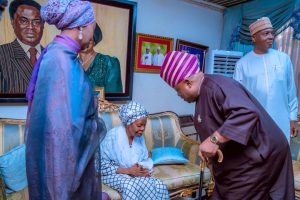
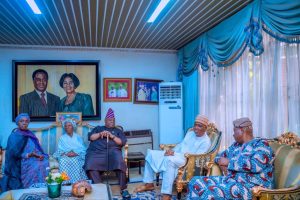
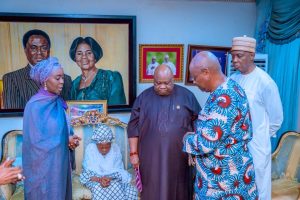
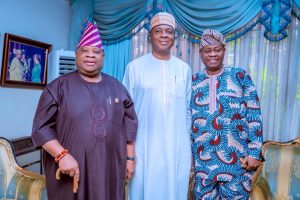
Osun State Governor, Senator Ademola Adeleke, alongside his elder brother, Dr. Adedeji Adeleke, has paid a condolence visit to the Saraki and Ojora families following the death of Otunba Adekunle Ojora, the Otunba of Lagos and Lisa of Ife.

Otunba Ojora, a revered statesman and traditional title holder, passed away at the age of 93.

During the visit, Governor Adeleke expressed deep sorrow over the loss, describing the late Otunba as a distinguished elder whose life was marked by service and dignity.

He prayed for the repose of the departed soul and asked God to grant the families the strength and fortitude to bear what he described as an irreparable loss.

EFCC Arraigns Man for Alleged N150m Fraud

0


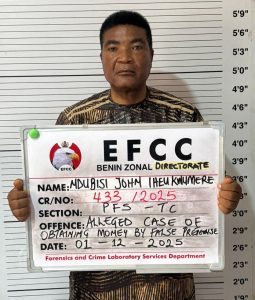
The Benin Zonal Directorate of the Economic and Financial Crimes Commission, EFCC, on Monday, January 26, 2026 arraigned one Ndubuisi Iheukwumere John before Justice Agbaje Olufunmilola Adetutu of the Federal High Court, sitting in Asaba, Delta State for fraud.


He was arraigned on a two-count charge, bordering on advance fee fraud and obtaining by false pretence to the tune of N150 million.


Count one of the charge reads: “That you Ndubisi Iheukwumere John (m), Emmanuel Emifoniye (m) (at large) and Salt Adaeze Udoka (f) (at large) sometime in November 2024 in Asaba, Delta State within the jurisdiction of this Honourable Court did conspire between yourselves to commit an offence to wit: obtaining by false pretence and thereby committed an offence contrary to Section 8(a) of the Advance Fee Fraud and Other Fraud Related Offences Act, 2006 and punishable under Section 1(3) of the same Act.”

Count two reads: “That you Ndubisi Iheukwumere John (m) and Salt Adaeze Udoka (f) (at large) sometime between 1st December to 7th December 2024 in Asaba, Delta State within the jurisdiction of this Honourable Court, by false pretence and with intent to defraud did obtain the total sum of N150,000,000.00 (one hundred and fifty million naira) from John Abike Ifejiofor under the false pretence that same was purchase price for a parcel of land located at Ewulu Community of Delta State and thereby committed an offence contrary to Section 1(1) (a) of the Advance Fee Fraud and Other Fraud Related Offences Act, 2006 and punishable under Section 1(3) of the same Act.”


He pleaded “not guilty,” prompting the prosecution counsel, Francis Jirbo to pray the court for a trial date and to remand him in a correctional centre, while the defence counsel pleaded with the court to grant the defendant bail, stating that the alleged offences were bailable.

Justice Adetutu granted the defendant bail in the sum of N5 million with two sureties in like sum. One of the sureties the judge held, should possess a landed property with title documents which is to be verified by the court registrar in conjunction with EFCC operatives. In addition, the defendant is to submit a certified statement of his bank account to the court.

The case was adjourned till March 16, 2026 for commencement of trial.

NSCDC Hands Over Fake Crypto Currency Investment Suspect to EFCC

0


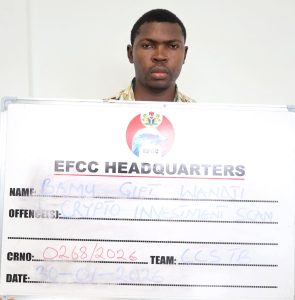
The Economic and Financial Crimes Commission, EFCC on Friday, 30 January 2026, received a suspected operator of a fake crypto-currency investment platform, Polyfarm.

The suspect, Bamu Gift Wandji was arrested by the Nigerian Security and Civil Defence Corps, NSCDC, in Gwagwalada on January 12, 2026, for running a fraudulent investment scheme and was handed to the Commission for investigation.

Investigation by the EFCC revealed that the suspect created a fraudulent crypto investment platform called Polyfarm, where he allegedly lured innocent Nigerians to invest in Polygon, a crypto token that attracts high returns.

Investigation further revealed that he also deceived the public that his project, Polyfarm has its native token called “polyfarm coin” which he sold to the public.

In his bid to promote the fraudulent scheme, the suspect had promoted the scheme on social media platforms including; WhatsApp, X (formally Twitter) and Telegram. He also conducted seminars in some major cities in Nigeria including Kaduna, Lagos, Port harcourt and Abuja where he described the scheme as a life -changing program.

Further investigation revealed that in October, 2025, subscribers who could not access their funds were informed by the suspect that the site was attacked by Lazarus group, a notorious cyber attacking group linked to North Korea.


Further investigations showed that the platform Polyfarm is not registered and not licenced with the Security and Exchange Commission, SEC, to carry out crypto transactions in Nigeria. Also, no investment happened with subscribers’ funds and that the suspect used funds paid by subscribers to pay others in the name of profit.

Investigation also revealed that native coin, polyfarm coin was never listed on coin market cap and that the suspect sold worthless coins to the general public.

Contrary to the claim of the suspect that his platform was attacked, EFCC’s investigations revealed that the platform was never attacked or hacked by anyone and that the suspect withdrew investors funds and utilized the same for his personal gains.

He will be charged to court upon conclusion of investigations.

PDP to Appeal Ibadan Court Judgment, Says NWC Remains Intact

0


The Peoples Democratic Party (PDP) has faulted the judgment of the Federal High Court, Ibadan, which declined to grant an order of mandamus compelling the Independent National Electoral Commission (INEC) to recognise the party’s Ibadan Convention, describing the ruling as conflicting with existing decisions of courts of coordinate jurisdiction.

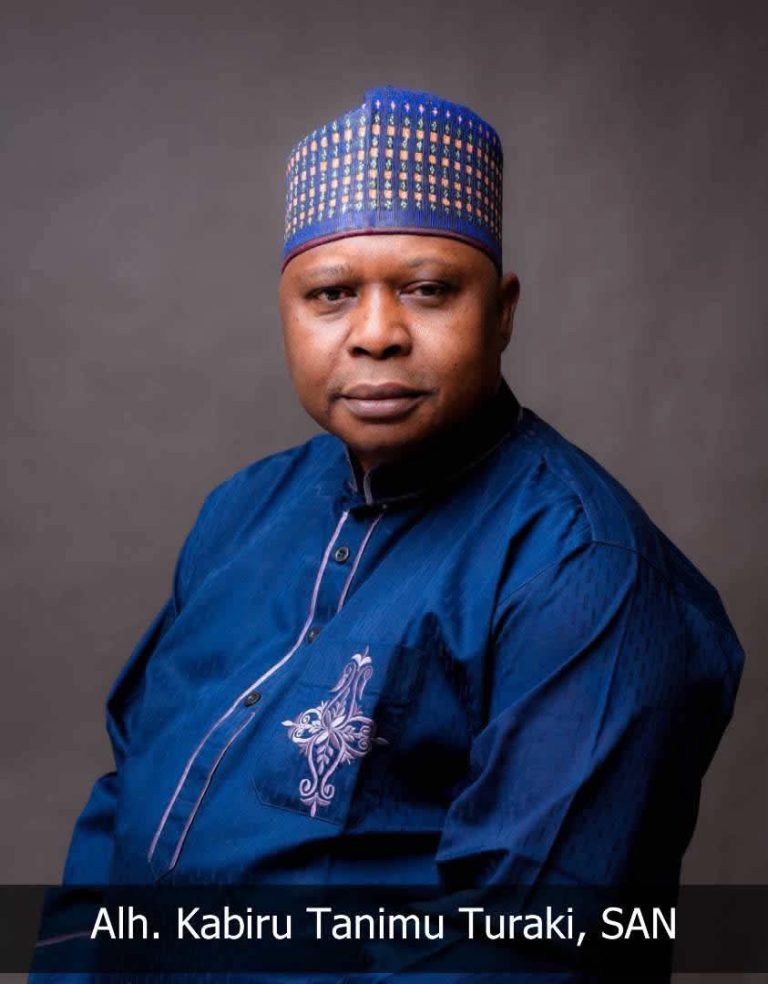
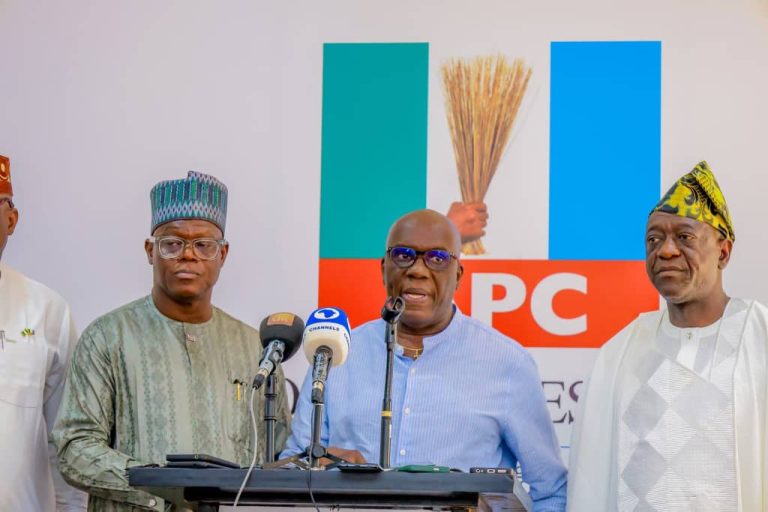
Addressing a press conference on the judgment, the National Chairman of the PDP, Kabiru Turaki SAN, said the party had approached the court to compel INEC to recognise the Ibadan Convention and to enable official communication between the party and the electoral body.

Turaki explained that during the proceedings, some former members of the party who had been expelled were joined in the suit and subsequently urged the court not to grant the PDP’s prayers. However, he alleged that the court went beyond the issues before it by granting reliefs that were neither sought nor argued by any of the parties.

According to him, the judgment is in material conflict with subsisting court orders and earlier judgments on the same subject matter delivered by courts of equal jurisdiction.

“In view of this, we have filed a Notice of Appeal as well as a Motion for Stay of Execution of the judgment, and we are determined to pursue this matter diligently to its logical conclusion in accordance with the law,” Turaki said.

He further noted that the Ibadan judgment is only one of several Federal High Court decisions on the matter, adding that the core issues are already before the Court of Appeal. He described the ruling as “technically academic,” pending a final and authoritative pronouncement by the appellate courts.

The PDP chairman assured party members nationwide that the National Working Committee (NWC) produced by the Ibadan Convention remains legally valid and fully in place.

“Notwithstanding this judgment, the NWC remains intact and firmly committed to the ongoing rebirth of the Peoples Democratic Party,” he said.

Turaki urged party members and supporters to remain calm and resolute, stressing that there was no cause for alarm, as the party’s “rebirth movement” remains on course.
He described the judgment as merely one of the challenges along the party’s journey, expressing confidence that the final outcome would favour the PDP.

EFCC Arraigns Serial Fraudster, Titilayo Eboh, Two Others for Alleged N247.5m Fraud in Lagos

0


The EFCC, Lagos Zonal Directorate 2, on Friday, January 30, 2026, arraigned an alleged serial fraudster, Titilayo Funmilayo Eboh, for an alleged N247, 500,000 (Two Hundred and Forty-seven Million Five Hundred Thousand Naira) fraud before Justice Ramon Oshodi of the State High Court sitting in Ikeja Lagos.


Eboh, alongside Uchenna Ejindu and Salami Eneojo Stephen, was arraigned on an amended four-count charge bordering on obtaining under false pretence, conspiracy, money laundering and stealing.

APC Extends E-Membership Registration to Feb 8, Reschedules Ward Congresses, National Convention

0


The All Progressives Congress (APC) has extended its electronic membership registration exercise to 8 February 2026, while rescheduling its Ward Congresses to 18 February 2026 and the National Convention to 27–28 March 2026. Osun, Ekiti, the Federal Capital Territory (FCT) and Rivers State have been excluded from the scheduled state congresses.

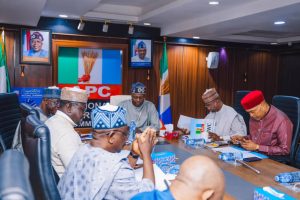
This was disclosed in a statement issued by the party’s National Publicity Secretary, Felix Morka, following the 183rd meeting of the National Working Committee (NWC) held on Friday, 30 January 2026, at the APC National Secretariat in Abuja.

According to the statement, the extension of the electronic membership registration from 31 January to 8 February 2026 was approved in response to requests from party stakeholders, to allow more supporters and members to register and validate their membership.

The NWC also resolved that Ward Congresses will now take place on Wednesday, 18 February 2026, while the National Convention has been fixed for 27–28 March 2026.
The statement noted that Osun State, Ekiti State and the FCT are excluded from the scheduled congresses due to impending elections, while Rivers State is excluded owing to the subsisting tenure of the current executive committees of the party in the State.

In addition, the NWC approved the constitution of the National Convention Planning Committee.
“Further details on the adjusted Congress and National Convention timetable and schedule of activities, as well as the composition of the National Convention Planning Committee, will be announced in due course,” the statement added.