Home Blog Page 671

Reps decry lack of research by teaching hospitals

0


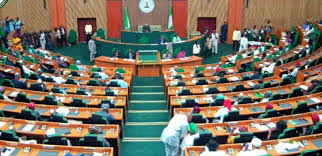
The House of Representatives has faulted tertiary health institutions, particularly university teaching hospitals, for allegedly abandoning their core mandate of medical research in favour of routine clinical services.

The Chairman of the House Committee on Health Institutions, Dr Patrick Umoh, raised the concern yesterday during the 2026 budget defence session of Federal University Teaching Hospitals, Federal Teaching Hospitals, and Federal Medical Centres.

Dr Umoh lamented that most teaching hospitals now operate like general hospitals, with little emphasis on research and innovation.

The lawmaker frowned at Chief Medical Directors (CMDs) for allocating less than one per cent of their yearly budgets to research and for failing to consistently push the issue during budget planning.

He recalled that the COVID-19 pandemic exposed the country’s lack of preparedness, adding that traditional medicine practitioners appeared more proactive than orthodox medical practitioners during the crisis.

Responding on behalf of the Committee of Chief Medical Directors, the Secretary of the Committee and Chief Medical Director of Jos University Teaching Hospital, Prof. Pokop Wushipba Bupwatda, explained that although about one per cent of hospital budgets is initially earmarked for research, the allocation is often removed during the final stages of the budgeting process.

He appealed for increased funding for the health sector to enable adequate recruitment of skilled personnel and improved staff welfare, warning that poor conditions continue to fuel the “japa syndrome.”

MEANWHILE, the Vice Chancellor, Caleb University, Imota, Prof. Olalekan Asikhia, has urged the Federal Government to release more funds to enhance research and innovations in Nigeria to help in nation-building.

Prof. Asikhia, who was speaking yesterday ahead of the 15th Convocation ceremony of the institution, disclosed that funding must be taken seriously and the country must move beyond merely reciting mission statements and demonstrate commitment by investing significantly in research.

“There must be a coherent national research policy. This policy should be integrated into university curricula and distilled through the National Universities Commission (NUC), with proper monitoring mechanisms to ensure compliance and impact.”

Guardian

Troops kill 16 ISWAP terrorists in Borno

0


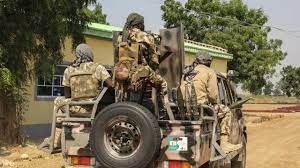
Troops of the Joint Task Force (North East) Operation HADIN KAI (OPHK) have killed no fewer than 16 ISWAP terrorists in Borno State.

In a statement on Tuesday, OPHK Media Information Officer, Lieutenant Colonel Sani Uba, said the troops once again demonstrated exceptional resolve and operational superiority by swiftly repelling the ISWAP attack, and launching a devastating follow-on counter-offensive.

This decisive action, Uba said, has significantly degraded terrorist capabilities, disrupted their logistics, and reaffirmed OPHK’s unwavering commitment to dismantling terrorist networks across the North East region.

“On 5 February 2026 at approximately some minutes to midnight, ISWAP terrorists conducted a failed attack on Forward Operating Base (FOB) Auno. Troops of Sector 1 thwarted the assault with disciplined firepower and tactical precision,” he said.

“Capitalising on this success, on 9 February 2026, troops, in synergy with the Civilian Joint Task Force,(CJTF) launched a bold counter-offensive along the Komala axis in Konduga LGA.

“The troops engaged the retreating terrorists up to the Gidan Kaji axis neutralising sixteen (16) terrorists, forcing scores to flee in disarray with severe injuries.”

Equally, troops recovered over 20 bicycles, a large cache of logistic items, weapons, and other supplies critical to terrorist operations.

In further blow to terrorist logistics nodes, troops arrested suspected ISWAP logistics suppliers conveying large quantity of drugs meant for terrorist around Bukarti axis same day.

Relatedly, on the same day, Uba said troops foiled a terrorists kidnap attempt along the Buratai-Kamuya road.

After detection of terrorist activities, troops swiftly pursued, compelling the terrorist to abandon their victims and withdraw into the bushes.

Two victims, Mallam Idris Adamu and Mallam Muhammadu Safiyanu, were rescued and safely reunited with families in Buratai.

Furthermore, in response to a distress call along Chibok-Damboa axis on 9 February 2026, troops rescued nine kidnapped victims successfully.

Uba said these actions underscore OPHK’s continued commitment in support of humanitarian efforts and protection of civilians.

Guardian

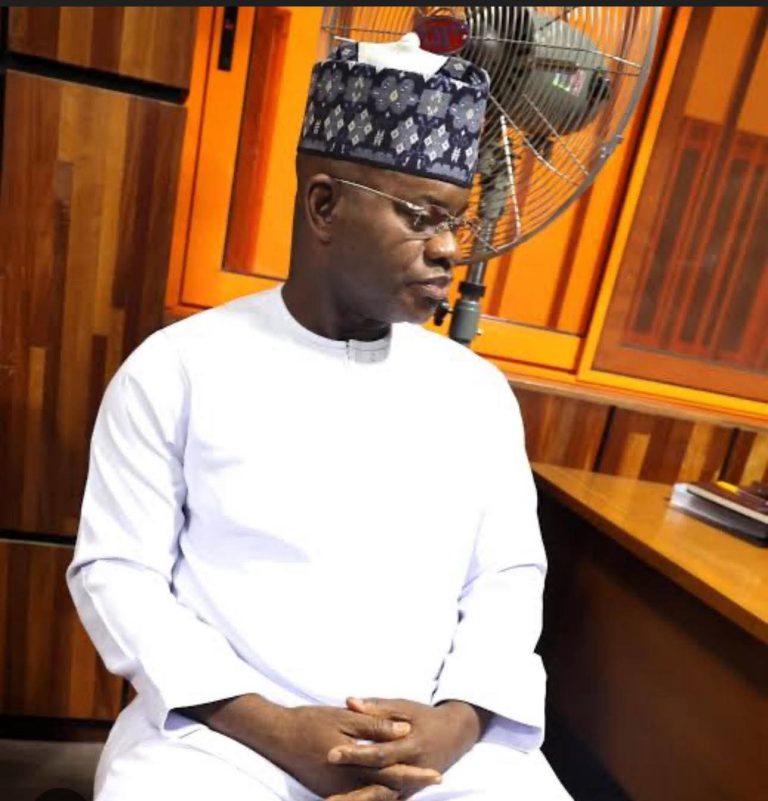
Subpoena Dispute Stalls Examination of Access Bank Witness in ₦110.4bn Kogi Fraud Trial

0


Arguments over the examination of a subpoenaed prosecution witness in the trial of former Kogi State Governor, Yahaya Adoza Bello, on Tuesday, February 10, 2026, stalled proceedings before Justice Maryanne Anineh of the Federal High Court, FCT, Abuja.

Bello is standing trial alongside Umar Shuaibu Oricha and Abdulsalami Hudu on a 16-count charge bordering on criminal breach of trust and money laundering to the tune of an alleged ₦110.4 billion.

At the resumed proceedings, lead prosecution counsel, Kemi Pinheiro, SAN, informed the court that the matter was for continuation of trial and that Prosecution Witness Ten (PW10), Olomotane Egoro, a Compliance Officer with Access Bank, who was under subpoena, was present in court. Pinheiro subsequently sought to tender the application for the issuance of the subpoena, which was admitted in evidence and marked as Exhibit AE, there being no objection from defence counsel, P.B. Daudu, SAN, and Z.E. Abbas.

However, when the prosecution moved to examine the witness, P.B. Daudu, SAN, and Z.E. Abbas objected, contending that the prosecution could not examine the witness on the basis of a mere application for subpoena, insisting that the subpoena itself ought to be produced and tendered before the witness could testify.

In response, Pinheiro argued that the subpoena formed part of the court’s record, having been issued pursuant to an order of court, and that the court was entitled to look at any process contained in its records. He further submitted that there was no statutory provision requiring the tendering of a subpoena before a witness subpoenaed by the court could give evidence, noting that there were a plethora of authorities supporting his position and describing the objection as “clearly untenable.”

Replying on points of law, Daudu maintained that it was the constitutional right of the defence to be fully carried along in the proceedings, stressing that the trial was a public one and not a secret trial, and that the defence was entitled to see and obtain a copy of the subpoena.

Counsel to the third defendant, Abbas, also argued that the subpoena formed the basis of the witness’s appearance in court and that the defence was entitled to examine it before the trial could proceed, adding that the authorities cited by the prosecution were not applicable to the circumstances of the case.

Pinheiro, in a further response, described the objection as an attempt to delay the trial, an assertion Daudu refuted, stating that the defence was not in court to frustrate proceedings.

In her ruling, Justice Anineh held that, having considered the arguments of counsel, the subpoena could always be produced before the court.

She consequently adjourned the matter to February 11 and 12, and March 11 and 12, 2026, for continuation of trial.

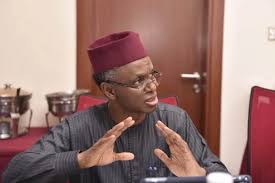
Tinubu and I are parallel lines that’ll never meet

0

Former Kaduna State Governor Nasir el-Rufai has stated that he never had any personal or political relationship with President Bola Tinubu, insisting that their paths were never destined to align.

El-Rufai, who is a chieftain of the coalition-led African Democratic Congress, ADC, who made the remarks in a television interview, dismissed claims that he and Tinubu were once friends or political allies.

“I think it’s important to make this clarification. There is an assumption that I was ever Tinubu’s friend. I was not. We never got along with Tinubu. We never had a personal relationship,” he said.

The former governor explained that his involvement in Tinubu’s 2023 presidential bid was not driven by personal loyalty but by political principle and party discipline within the All Progressives Congress, APC.

“For me, Tinubu was initially just an aspirant of the party. I was approached by certain Islamic stakeholders from the South-West and asked to support the emergence of a South-West Muslim presidential candidate,” he stated.

According to him, his support was anchored on an understanding within the party that power will shift to the South after eight years of the administration of former President Muhammadu Buhari.

He said: “As one of the founders of the APC, I knew that we had an understanding with the South, specifically the South-West, that after eight years of Buhari, power would go to the South. It was a matter of principle. It wasn’t about Tinubu.”

He added that once Tinubu emerged as the party’s candidate, he committed himself fully to ensuring APC’s victory at the polls.

“It is a principle of mine that I fight for the candidate of my party in every election to win, whether I like the candidate or not. Tinubu emerged as the candidate, and I gave everything to ensure that he won. And that’s what I did,” El-Rufai said.

He, however, noted that fundamental differences in values and governance philosophy eventually widened the gap between them.

“We didn’t fall out. We just could not find areas of agreement. There was no equilibrium. We couldn’t agree,” he explained.

El-Rufai was particularly critical of what he described as the governing philosophy of the Tinubu administration, stressing that it conflicted with his understanding of public service.

He said: “I am in government for delivery, for results and performance. Public service is not about making money for yourself, it’s not about stealing, it’s not about appointing your cronies or your tribesmen.”

He revealed further that even if his proposed appointment into Tinubu’s cabinet had materialised, it would not have lasted.

“Even if the offer that Tinubu made to me to be a minister had gone through, I would have left the government long ago. The philosophy of this government is contrary to everything I have been taught as a Muslim, as a northerner, and as a Nigerian,” El-Rufai declared,” he said.

He said the sharp contrast in values between himself and the President made any long-term alignment impossible.

“These guys didn’t come to govern, they came to enrich themselves, pure and simple. We are different people. So it should not surprise anybody that knows me and knows Tinubu to see that we are parallel lines that will never meet,” he said.

Vanguard

Nigeria drops 2 places, ranks 142nd out of 182 countries

0


Abuja—Transparency International, TI, a global coalition against corruption, has again ranked Nigeria as the 36th most corrupt country in the world, retrogressing from 140th in 2024 to 142nd in 2025.

While number one represents the cleanest country in the world, which is Denmark, 182 represents the most corrupt country in the world.

Despite the downward ranking, the country retained the same position as the 36th most corrupt country as in 2024.
Nigeria was joined by Cameroon, Guatemala, Guinea, Kyrgyzstan and Papua New Guinea, which shared the same position with a total score of 26 points.

The ranking, released via TI’s website yesterday, highlighted the 2025 Corruption Perceptions Index.
Denmark maintained its position as the least corrupt country with 89 points, followed by Finland with 88 points, Singapore with 84 points, and New Zealand with 81 points.

No African country made the top 10 list of the cleanest countries, as it was dominated largely by European nations.
Seychelles, Cabo Verde and Botswana topped the list of the least corrupt African countries, with scores of 68, 62 and 58 points, respectively.

South Sudan, Somalia and Venezuela emerged as the most corrupt countries in the world for the year under review.
Explaining the basis of the ranking, the Chief Executive Officer of Transparency International, Maíra Martini, said the 2025 Corruption Perceptions Index ranked 182 countries and territories worldwide by their perceived levels of public-sector corruption.

“The results are given on a scale of 0 (highly corrupt) to 100 (very clean). While 31 countries have significantly reduced their corruption levels since 2012, the rest are failing to tackle the problem — they have stayed stagnant or got worse during the same period.

“The global average has fallen to a new low of 42, while more than two-thirds of countries score below 50. And people are paying the price, as corruption leads to under-funded hospitals, unbuilt flood defences, and blights the hopes and dreams of young people,” Martini said.

She warned that corruption remained a serious threat in every part of the world, but noted that there were limited signs of progress.

She said: “We’re seeing a concerning picture of long-term decline in leadership to tackle corruption. Even established democracies, like the US, UK and New Zealand, are experiencing a drop in performance.

“The absence of bold leadership is leading to weaker standards and enforcement, lowering ambition on anti-corruption efforts around the world.

“At the same time, many states are increasing restrictions on civic space. By making it hard or dangerous for citizens, NGOs and journalists to challenge abuses of power, they are reducing transparency and accountability. This allows corruption to flourish.”

Martini urged that “leaders must act to tackle abuses of power and the wider factors driving this decline, such as the roll-back of democratic checks and balances, and attacks on independent civil society.

“Anti-government protests in many parts of the world show that people are fed up with unaccountable leadership and are demanding reform.’’

Vanguard

CBN approves weekly sale of $150,000 to BDCs

0

The Central Bank of Nigeria (CBN) says it has approved the participation of licensed Bureau De Change (BDC) operators in the Nigerian Foreign Exchange Market (NFEM).

According to a circular signed by the Director, Trade and Exchange Department, Dr Musa Nakorji,, the move is part of efforts to improve foreign exchange liquidity in the retail segment of the market.

The circular said that the CBN had also approved that weekly FX purchases by each BDC be capped at 150,000 dollars, and that utilisation comply with existing BDC operational guidelines.


“All BDCs duly licensed by the CBN are permitted to access foreign exchange through any Authorised Dealer Bank of their choice, at the prevailing market rates.

“The move aims to deepen market efficiency and ensure broader access to foreign exchange across the economy,”it said.

The CBN, however, imposed strict compliance and risk-management conditions on the transactions.

It said that authorised dealers were required to conduct full Know-Your-Customer (KYC) and due diligence checks on BDC clients before any FX sale.

To strengthen transparency and accountability, the apex bank directed that all licensed BDCs must submit timely and accurate electronic returns in line with extant regulations.

It added, “Any unutilised foreign exchange must be sold back to the market within 24 hours, as BDCs are prohibited from holding FX positions purchased from the NFEM.”

The circular further restricts settlement practices, mandating that all FX transactions be conducted through settlement accounts with licensed financial institutions.

It said that third-party transactions were prohibited, while cash settlement is limited to a maximum of 25 per cent of each transaction amount.
“Overall, the directive reflects the CBN’s broader strategy to balance market access with strong regulatory oversight, ensuring liquidity in the foreign exchange market while safeguarding financial system integrity.”

Vanguard

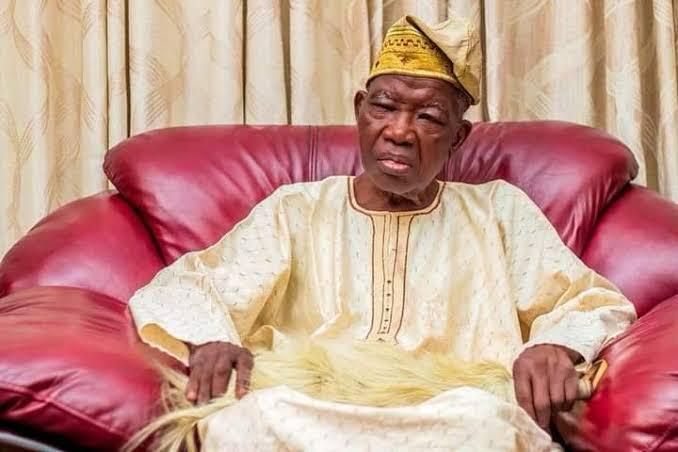
Alhaji Lateef Kayode Jakande

0

Researching a Great Man

By Seun Oloketuyi

Alhaji Lateef Kayode Jakande was not just a political figure; he was a movement in human form — a quiet revolutionary whose leadership reshaped Lagos State and set a standard for public service in Nigeria. Born on July 23, 1929, in the Epetedo area of Lagos Island, Jakande’s life journey reflected discipline, humility, and an unwavering commitment to societal progress.

Before politics, he built a distinguished career in journalism. Beginning in 1949, he rose through the ranks to become Editor-in-Chief of the Nigerian Tribune and later the first President of the Newspaper Proprietors Association of Nigeria. In the newsroom, he sharpened his belief that leadership must serve the people and that truth and accountability are foundations of national growth. Journalism did not just give him a profession; it gave him purpose.
In 1979, that purpose found a larger platform when he became the first civilian Governor of Lagos State during Nigeria’s Second Republic. His administration, though lasting only four years before the 1983 military interruption, delivered results that decades later remain visible across Lagos.

Jakande governed with clarity of vision. He believed education was not a privilege but a right. Under his leadership, Lagos introduced free primary and secondary education, abolished the shift system, and built over 22,000 classrooms within four years. He established Lagos State University and strengthened teacher training institutions, expanding access to learning for thousands of young people. For many families, his policies opened doors that had long been closed.

Housing was another pillar of his mission. Recognising the urgent need for affordable homes, his administration constructed tens of thousands of low-cost housing units across estates such as Abesan, Amuwo-Odofin, Dolphin, Ijaiye, and other parts of the state. These were not symbolic projects; they were practical solutions that gave ordinary families stability and dignity.
In healthcare, Jakande expanded and upgraded general hospitals and health centres across Lagos, making medical services more accessible to communities that had previously been underserved. His belief was simple: governance must improve the daily lives of citizens.

His impact extended beyond social programmes. He oversaw the construction of the Lagos State Secretariat at Alausa, the House of Assembly complex, Lagos Television, Radio Lagos, expanded road networks, improved water supply systems, and initiated the ambitious metroline project — a forward-thinking mass transit plan ahead of its time. Even though the metroline was halted after the military takeover, it demonstrated his visionary approach to urban development.

Perhaps even more powerful than the structures he built was the example he set. Jakande lived modestly, maintained personal discipline, and was widely regarded as a leader who placed service above self. He was affectionately called “Baba Kekere,” not because of political theatrics, but because people felt his leadership at the grassroots level.

His legacy is not merely historical; it is instructional.
As a filmmaker and storyteller, I am compelled to bring this legacy to life through “Baba Kekere the Biopic.” Today’s young generation deserves to encounter models of leadership rooted in integrity, discipline, and genuine service. At a time when cynicism often surrounds public office, Jakande’s life reminds us that governance can be compassionate, visionary, and transformative.
This film is not just about revisiting the past. It is about equipping young people with an example of what purposeful leadership looks like. Jakande’s story teaches that one individual, guided by principle and courage, can reshape systems and impact generations.

Alhaji Lateef Kayode Jakande did not simply govern Lagos; he left behind a blueprint — one that challenges leaders and inspires youth to pursue service with honesty, humility, and unwavering commitment.

That is why his story must be told.

Seun Oloketuyi is the Producer of “Baba Kekere the Biopic”

Why Eric Chelle will remain as Super Eagles coach – NFF

0


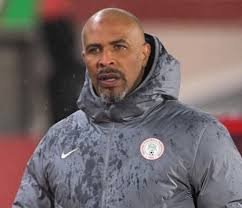
The Nigeria Football Federation (NFF) has dismissed speculation surrounding the future of Super Eagles head coach Eric Chelle, insisting the Franco-Malian tactician remains committed to the national team and is not planning to leave.

Amid reports linking Chelle with interest from other national teams, NFF President Ibrahim Gusau stressed that the coach is still under contract and central to Nigeria’s football plans.

Chelle, who guided the Super Eagles to a third-place finish at the last Africa Cup of Nations in Morocco, has reportedly attracted attention from countries such as Tunisia and Angola.

“We still have a one-year contract with Eric, and therefore whatever interest anybody will show on him, he has to wait until his contract expires,” Mr Gusau said in an interview shared by the Super Eagles’ media team.

The NFF president added that the federation is keen to avoid distractions and protect the progress made under Chelle’s leadership.

“And basically, you know, we don’t want to bring some distraction on him, because we quite well understand that he enjoys working with Nigeria.”

Gusau dismissed suggestions that Chelle’s future should be influenced by financial incentives or short-term success elsewhere.

“Because it’s not about a team is interested in you, and it’s not about because he has gotten the results with the Super Eagles. So if you go to the other team, despite the fact that they are going to give him

more money, he’s going to get the results. That’s not the issue.”

He explained that the key factor for any coach is having the right environment to succeed.

“The issue is that do they have the materials for him to work with, to achieve what he wants to achieve. The dream of every single coach is to make sure that he achieves success, especially on higher tournaments.”


“So when you are saying that I want the coach, we are going to look for the coach to come and we are going to pay him a certain amount of money, it’s not the issue of the money, but will he achieve what he wants to achieve in his career? Or is he just going there for the money?”

According to Gusau, Chelle remains deeply committed to the Super Eagles project.

“So, but the key thing is that I know Coach Eric believes in Super Eagles, and he believes that he can achieve whatever he wants to achieve in his career, when it comes to coaching, preparation, especially with the national team within the African continent.”

He also revealed that the federation has discussed Chelle’s future with him several times.

“So he has so much belief in the Super Eagles, and he has every confidence that he can achieve all his dreams with the Super Eagles. So that’s the key thing that I believe in, and I know we discussed it several times with Tim. And to all of you.

Vanguard

Security experts urge FG to criminalise ransom payment to terrorists

0

Insecurity-in-Nigeria-1-1
Security experts and stakeholders have called on the Federal Government to criminalise ransom payments to terrorists, describing it as the biggest betrayal in the war against insurgency in Nigeria.

Experts who condemned the menace, especially when the government secretly paid terrorists’ ransom, said that such practice only further encouraged and deepened insecurity in the country.

They, however, urged the FG to create state police to combat terrorism, in order to put a stop to the payment of ransom to criminals, and stressed that necessary structures must be put in place before embarking on such policing reform.

The experts made the disclosure while appearing on Boiling Point, a popular media platform transmitted by six radio stations, powered by the National Association of Seadogs, Ash Montana Deck.

Speaking, a US Army veteran and retired Major, Yinka Ogunsanya, opposed ransom payments to terrorists, saying such activities encourage the menace in communities in Nigeria.

Ogunsanya, who supported the creation of state police in Nigeria, cautioned the FG against blindly adopting the American state policing system, citing the complexity of crimes and societal differences.

He explained that the system comprises multiple layers, including state police, county police, rangers, and sheriffs, which work together in synergy to achieve their goals.

Ogunsanya urged the Federal Government and the states to sit down with the communities to evolve the best model centred on intelligence from the grassroots.

He said, “Government ransom payment is what is empowering the terrorists and further deepening insecurity. The practice of paying ransom to these criminals is a betrayal of the anti-insurgency war”.

“Nigeria must adopt the global standard for intelligence-led, localised operations while maintaining federal oversight of cross-border crimes. One of the primary ‘pros’ of local police is proximity.”

“State policing allows for quicker response times to distress calls, as the chain of command is localised and less hindered by the bureaucratic bottlenecks of the Force Headquarters in Abuja.

“Local officers speak the language, know the families, and understand the historical grievances of their communities. This creates a ‘home-court advantage’ in intelligence gathering that a centrally deployed officer from a distant region simply cannot match,” he noted.

Another speaker, a retired Deputy Inspector-General of Police, Mr Leye Oyebade, also supported the creation of state police but listed several issues to address, including community involvement, building patriotism, intelligence sharing, and trust and confidence.

DIG Oyebade traced the challenges of the Nigerian policing system to a faulty foundation, tribalism, inadequate manpower and training, and the dynamism of crime in the face of evolving technology.

Oyebade stated that the fears of critics regarding possible politicisation and the use of the State Police for persecution were possible, particularly when a State fell into the wrong hands as governor.

He said, “The architecture to be put in place must consider interstate synergy and sharing of roles. The prevalence of crime types varies from one state to another. Without this synergy, a suspect can run from one state to hide in another”.

“When we didn’t have digital technology and mobile phones, cybercrimes were not in our laws. With the evolution of technology, the demand for training officers and men is not only imperative but calls for very high funding of policing”, he added.

While delivering the keynote on the topic: “Decentralised Security Architecture: Redefining Federal and States Roles in State Policing as Nigeria Battles Escalating Insecurity”, the Olowu of Owu, Oba Prof. Saka Matemilola, said that the issues of delay in response, inadequate manpower, fear of governors abusing state police for private use, political persecution and funding were discussed.

Guardian