Home Blog Page 670

10% of Nigerians live with chronic kidney disease – Nephrologists

0


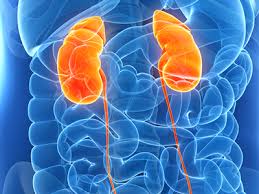
The Nigerian Association of Nephrology (NIAN) has warned that no less than 10 per cent of Nigerians (approximately 24 million) are currently living with chronic kidney disease, raising great concerns over a rapidly growing public health burden to the country.

The President of NIAN, Prof. Olugbenga Awobusuyi, raised the alarm on Tuesday at the 38th Annual General Meeting and Scientific Conference (AGMSC) of the Association held in Maiduguri, Borno State.

He lamented that the rising prevalence of kidney disease has become “a matter of serious national concern,” stating that kidney-related conditions require urgent and sustained attention at all three tiers of government across the entire federation.

Prof. Awobusuyi further revealed: “During our discussion at today’s conference, it was confirmed that chronic kidney disease affects about 10 per cent of Nigeria’s adult population, a figure that reflects the scale of the emerging healthcare crisis in the country.”

He added that when detected early, a lot can be done to manage the rising cases of kidney diseases.

“The real problem arises when it is not identified on time. Treatment then becomes extremely expensive, often pushing families into catastrophic situations and worsening the condition,” the professor warned.

The nephrologist called on the 36 State governments to establish more dialysis centres, arguing that the Federal health facilities alone are not enough to meet the current demands of kidney patients in Nigeria.

He lamented that, while Nigeria has over 200 functional dialysis units, only about 800 dialysis machines are operational nationwide—far short of the number needed to address the growing caseload.

He, however, commended States that have already established dialysis centres to support patients battling kidney disease.

Awobusuyi said the conference has served as a platform to bring together key stakeholders—government officials, health workers, civil society groups, traditional rulers, and journalists—to improve public awareness and discuss strategies to strengthen kidney care across various hospitals in Nigeria.

He added that tackling the chronic kidney situation would require confronting long-standing gaps in the health system, strengthening early detection mechanisms and building a more coordinated national response.

The participants at the conference also reviewed new trends in kidney care, recent research, particularly in the Nigerian context, and wider public health challenges associated with what he described as managing kidney disease across the country.

Guardian

Regina Daniels reacts to son’s school day video amidst custody battle

0


Nollywood actress Regina Daniels has reacted after her son, Munir Neji Nwoko, was featured in a “day in the life” video shared by his school, Lincoln American Academy, spotlighting his daily routine and activities on campus.

The video, posted on the school’s official Instagram page, followed Munir through a typical school day, capturing moments of learning, play, curiosity, and interaction with classmates.

The caption described the feature as an inside look into the life of a kindergartener, highlighting “morning smiles, playful learning, curious questions, and lots of little wins.”

Reacting in the comment section, Regina expressed pride and affection for her son, while acknowledging her physical distance from him.

“Ooh my moonnn!!! Blessed fruit of my womb! Mama is so proud. Grow in good health, my child! I will always watch and pray over you from afar,” she wrote. Addressing the school, she added, “@lincolnamericanacademy I trust you to look after my babies well.”

The comment comes amidst Regina’s ongoing legal and personal dispute with her estranged husband, Senator Ned Nwoko, over custody and access to their children.

Munir is one of two children shared by Regina Daniels and her husband, Ned Nwoko. Their second child, Khalifa, was born in 2022.

Regina and Nwoko got married in 2019, their relationship attracted public interest from its inception, due to their age differences.

In recent months, Regina has repeatedly claimed that she has been separated from her children and excluded from their daily lives.

She has criticised the continued public exposure of the children, arguing that it contradicts claims that their privacy is being protected.

Nwoko has denied these accusations, insisting that all decisions concerning the children are guided by their welfare and backed by court orders.

Through statements issued by his communication team, he has said the court granted him custody and outlined conditions Regina must meet before access can be restored.

The senator has also accused Regina of presenting an inconsistent public narrative and of turning private family matters into social media campaigns.

In one recent post, he released a private message he said was sent during the marriage, arguing that it showed earlier efforts to address household issues before the dispute became public.

The disagreement has since widened. Regina recently alleged that a warrant had been placed on her and her family following the arrest of her brother, Samuel Daniels, over an alleged $40,000 theft.

She denied the claim, describing it as baseless, while her sister threatened legal action if evidence is not provided.

Guardian

US Republicans push to label Fulani militias as terrorists in new bill

0


Some Republican legislators in the United States House of Representatives have introduced bill that seeks to designate Fulani ethnic militias as a Foreign Terrorist Organization (FTO) over “religious violence” in Nigeria.

Riley Moore introduced the ‘Nigeria Religious Freedom and Accountability Act of 2026’, which was co-sponsored by Chris Smith and other Republican lawmakers.

The bill calls on the US secretary of state to consider whether Fulani militias should be formally designated as a terrorist organisation and to submit annual reports to congress on efforts to address alleged religious persecution in Nigeria.

It also urges a review of US assistance to Nigeria to ensure that American support does not inadvertently enable religious persecution or systemic violence.

Moore, a Republican representative from West Virginia, revealed the proposed legislation in a post on X on Tuesday.

“Today, I am proud to introduce the Nigeria Religious Freedom and Accountability Act of 2026 with Rep. Chris Smith,” he wrote.

“The U.S. is a Christian nation. As such, we must stand with persecuted Christians around the world.

“Our legislation will build upon the momentum of President Trump designating Nigeria as a Country of Particular Concern and the recent US-Nigeria security framework agreement.”

The measure, HR 7457, directs the US secretary of state to submit an annual report to the foreign affairs committees of the House of Representatives and the Senate describing actions to combat what it defines as Christian persecution in Nigeria.

Smith, chairman of the House Foreign Affairs Africa Subcommittee, stated that the US has a responsibility to pressure Nigeria to address chronic violence.

“The Nigerian government’s blatant denial of the religious persecution occurring within its borders has only enabled the religious-based violence in the country to fester, with Christian deaths and church attacks reaching unprecedented numbers,” Smith said.

Sun

Doctors seek availability of snake antivenom at PHC level

0


The Association of Resident Doctors, University of Ilorin Teaching Hospital (ARD-UITH), has recommended that snake antivenom be made readily available at the Primary Healthcare (PHC) level.

President of the association, Dr. Ezekiel Adeshina made the call on Wednesday in Ilorin while speaking with the News Agency.

He spoke against the backdrop of the recent snake attack involving prominent Nigerian artist, Ifunanya Nwangene, who died from a snakebite.

The ARD-UITH president noted that making snake antivenom available at the primary healthcare level in Nigeria would facilitate faster treatment.

According to him, this would reduce the treatment time, thereby increasing the chances of survival and minimising complications.

He emphasised that early response and prompt treatment with antivenom can significantly reduce snakebite-related deaths and reduce mortality rate.

Adeshina, a Senior Registrar in General Surgery at UITH, pointed out that most snakebites occur in rural areas, where the majority of primary healthcare facilities are located.

“These facilities should be harnessed with a lot of antivenom and other medications with trained staff who can manage snake bite.

“Snake venom is a saliva consisting of a complex mixture of proteins, enzymes, and toxins used by snakes to immobilise their prey, initiate digestion, and provide defense.

“When bitten by snake, the first thing to do is to avoid panic as that may worsen the venom in the blood.

“Remove the victim from the danger point, identify the site of bite and clean with antiseptic; identify the type of snake, and transport the person with a vehicle to the hospital with anti-venom facility,” he said.

The expert also warned against tying the bitten area, saying “when you tie, you concentrate the toxin in that part and it becomes more dangerous. It also spread faster to the heart after tying and untying.”

Adeshina advised people to always use anti-snake spray around the compound and also block all nooks and crannies on the wall to avoid a hide out for the reptiles.

In his reaction, Dr. Abdulfatai Abdulazeez, the President of Resident Doctors at the Kwara State University Teaching Hospital (KWASUTH) described snake venom as a toxic secretion produced by specialised glands in snakes, which is injected into a victim through fangs during a bite.

“It is a complex mixture of biologically active substances including enzymes, proteins, and peptides designed mainly to immobilise, kill, and begin digestion of prey, and for defense,” he said.

He added that snake venom damages the nerves (neurotoxic), destroys tissues (cytotoxic), and interferes with blood clotting (hemotoxic).

“In humans, snake venom can cause anything from local pain and swelling to paralysis, bleeding disorders, organ failure, or death, if not treated promptly,” he said.

Abdulazeez also observed that PHC facilities play a crucial role in early recognition, first aid, stabilisation, and referral of snakebite victims.

He however pointed out that definitive management including antivenom administration should be done at well-equipped secondary or tertiary health facilities.

He disclosed that KWASUTH stocks the Polyvenom, which is the anti-venom treatment of bites from venomous snakes, particularly those from the Elapidae family including cobras, kraits, and mambas.

3 children among 4 killed in Russian drone strike on Kharkiv region

0


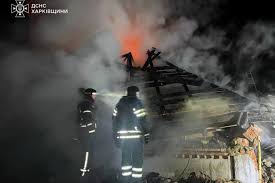
Four people killed, among them are three children, in a Russian drone strike on Ukraine’s northeastern Kharkiv region, local authorities said on Wednesday.

Kharkiv regional governor, Oleh Syniehubov, said on Telegram that the victims; three children and a 34-year-old man were pulled from the rubble of a house destroyed in the attack.

A 35-year-old pregnant woman and a 73-year-old woman were also injured, he added.

The strike targeted the small town of Bohodukhiv, northwest of the regional capital Kharkiv.

In southern Ukraine, Russian drones struck parts of the power grid in the city of Zaporizhzhia, according to the regional administration.

The attack left around 11,000 households without electricity.

Ukraine’s Air Force said it detected 120 Russian drones launched overnight, of which 112 were shot down.

Meanwhile, Ukrainian forces carried out long-range drone strikes on a refinery in the Russian city of Volgograd overnight, sparking a fire.

The governor of the Volgograd region, Andrei Bocharov, confirmed there had been attacks on “energy and civilian infrastructure.”

Russia has been waging a full-scale invasion of neighbouring Ukraine for nearly four years, with drone and missile attacks continuing to target infrastructure and residential areas on both sides of the border.

Tropical cyclone Gezani hits Madagascar, kills 9

0


Authorities on Wednesday reported that tropical cyclone Gezani hits Madagascar’s eastern coastline, killing nine people as walls of wind and rain left a trail of devastation.

Madagascar’s disaster management office said that 19 people had been injured and nearly 1,500 residents were evacuated as a precaution in a district around the port city of Toamasina after Gezani pummelled coastal communities before sweeping inland.

Harimanga Ranaivo said “I have never experienced winds this violent. The doors and windows are made of metal, but they are being violently shaken.’’

The UN’s humanitarian office said this was the second cyclone to hit Madagascar this year, 10 days after tropical cyclone Fytia killed 14 and displaced over 31,000 people.

At its peak, Gezani unleashed sustained winds of about 185 km (115 miles) per hour, with gusts surging to nearly 270 km per hour powerful enough to rip metal sheeting from rooftops and uproot large trees.

Ahead of the cyclone’s arrival, officials shuttered schools and rushed to prepare emergency shelters.

Madagascar’s National Bureau for Risk and Disaster Management had warned earlier that rising sea levels in Toamasina were already flooding streets.

Homes collapsed under the pressure of the winds, roofs were torn away, walls crumbled and neighbourhoods were plunged into darkness as power lines snapped.

Madagascar’s meteorological service said Gezani had weakened to a moderate tropical storm and had moved westward inland, about 100 km north of the capital, Antananarivo.

“Gezani will cross the central highlands from east to west today, before moving out to sea into the Mozambique Channel this evening or tonight,” the service said.

In the coastal Tunisian town of Le Kram, workers carefully lower a galvanized steel basket into a rainwater drainage channel.

Woman begs court to grant her custody of 5-year-old daughter

0


A mother of two, Fatima Usman on Wednesday prayed a Shari’a court II sitting in Magajin Gari, Kaduna to grant her custody of her five-year-old daughter.

The complainant told the court that her former husband took the daughter from her with the excuse that he wanted to spend some time with her.

”He refused to allow me see my girl,” she said.
The defendant who came to the court with the child, told the court that he took her for medical reasons, saying the girl had undergone several tests and the doctors confirmed that she had a psychological problem.
He prayed the court to allow him take care of his daughter since he has remarried.

The Judge Malam Abdullahi Yakubu, asked the defendant who would be in better position to take care of the girl between his wife and her own mother and he said he can’t say.
The Judge adjourned the matter until Feb. 16 for ruling while ordering the defendant to bring the girl on that day.

𝗔𝗿𝗶𝗸 𝗔𝗶𝗿 𝗽𝗹𝗮𝗻𝗲 𝗺𝗮𝗸𝗲𝘀 𝗲𝗺𝗲𝗿𝗴𝗲𝗻𝗰𝘆 𝗹𝗮𝗻𝗱𝗶𝗻𝗴 𝗶𝗻 𝗕𝗲𝗻𝗶𝗻, 80 𝗲𝘀𝗰𝗮𝗽𝗲 𝘂𝗻𝗵𝘂𝗿𝘁

0


An Arik Air Boeing 737 made an emergency landing at Benin Airport after a loud bang from an engine. All 80 passengers and crew were evacuated safely.

Sokoto Court Convicts Two for Impersonation, Cheating

0


The Sokoto Zonal Directorate of the EFCC has secured the conviction of Abdulrahman Abdullahi (alias A.A Sabo) and Bashir Muhammad before the Sokoto State High Court for offences bordering on obtaining by false pretence and cheating.

The convicts Abdulrahman Abdullahi and Bashir Muhammad were prosecuted by EFCC’s Aliyu Bokani Usman Phd, and Yusuf Kolapo Saidu, on a one count each before Justices Abubakar Adamu and Muhammad Bargaja respectively.

Both convicts were transferred to the EFCC for further investigations by the Department of State Services, DSS, Sokoto State Command, for allegedly being members of the infamous “Sai Mallam” Cult Group known for its involvement in Advance Fee Fraud within Sokoto environs and defrauded several unsuspecting victims within Nigeria, Niger Republic, Cote d’ Ivoire, Benin Republic and Burkina Faso.

GBAJABIAMILA: THE MAN WHOSE LEGISLATIVE WORK IS CHANGING NIGERIA’S EDUCATIONAL LANDSCAPE

0


By Toby Prince

In the very words of Nelson Mandela, “Education is the most powerful weapon which you can use to change the world.”

This same view was echoed by Malcolm X, who asserted that “Education is the passport to the future, for tomorrow belongs to those who prepare for it today.”

While these quotes capture the essence of education as a tool for personal growth, societal change, and empowerment, they perhaps informed Rt. Hon. Femi Gbajabiamila’s drive towards leveraging legislative representation as a viable tool for societal reconfiguration and educational reformation.

Today, the facts, as they say, speak for themselves.
Indeed, Rt. Hon. Gbajabiamila is no stranger to lawmaking. He has been making positive impact and driving national development for several years through effective legislation.

Fundamentally, Chief Femi has been instrumental in the sponsorship of numerous and wide-ranging Bills, with many already passed into law. During the 9th Assembly, as an astute and patriotic legislator, he sponsored a number of people-oriented Bills within his first year.

Notable among those Bills were the Legislative Houses (Powers and Privileges) Act (Amendment) Bill 2019, the Emergency Economic Stimulus Bill 2020 (Quarantine Act (Repeal and Re-enactment) Bill 2020), and the Nigeria Local Content Development and Enforcement Bill, 2020.

Instrumentally, he also sponsored a number of Constitution alteration Bills, such as the Electric Power Sector Reform Act (Amendment) Bill 2019, the Physically-Challenged (Empowerment) Bill 2019, and the Presidential (Transition) Bill 2019.
Others include the Labour Act (Amendment) Bill 2019, the Employees (Unpaid Wages Prohibition) Bill 2019, and the Federal Highways Act (Amendment) Bill 2019.

Although it did not see the light of day at the time, Rt. Hon. Gbajabiamila in 2016 first introduced what is known as the Students Loans (Access to Higher Education) Bill, later adding security-focused legislation such as the Armed Forces Act (Amendment) Bill 2021 and the Police Act (Amendment) Bill 2021.

Very few Nigerians, especially those outside certain circles, are aware that Rt. Hon. Femi was instrumental in the establishment of the Nigeria Security and Civil Defence Corps through his sponsorship of the Nigeria Security and Civil Defence Corps Act (Amendment) Bills 2021.

An ardent anti-corruption fighter, he introduced the EFCC Act (Amendment) Bill 2021, the ICPC Act (Amendment) Bill 2021, along with the Customs and Excise Management Act (Amendment) Bill 2021, the ECOWAS Small Arms Convention (Ratification and Enforcement) Bill 2021, and the National Security Agencies Act (Amendment) Bill 2021.

A committed social justice and security advocate, he pushed for the empowerment and reinvigoration of the Armed Forces through the Armed Forces of Nigeria Trust Fund Bill 2021.

Irked by the funding deficit in the agricultural value chain, Rt. Hon. Femi sponsored the National Agricultural Development Fund Bill 2021.
An objective patriot, Rt. Hon. Gbajabiamila sponsored the South West, North Central, North West, and South East Development Commission Bills 2021. He was also the first to design a technologically driven archive and study centre for the National Assembly, through the establishment of a National Assembly Library by sponsoring the National Assembly Library Trust Fund Bill 2021.

Rt. Hon. Femi’s diverse legislative inputs, with solid impacts, also include contributions to the reformation of the health sector, sponsoring legislations such as the National Electronic Health Record System Bill, and strong advocacy for the amendment of the NAFDAC Act to include provisions for a Nigeria Food Safety and Hygiene Surveillance Corps, as well as an amendment to the National Health Act of 2014—laws he believed were obsolete.

Rt. Hon. Gbajabiamila’s legislative impact is made even more profound by his flagship sponsorship of the Student Loan Scheme.
The bill, first introduced in 2016 and signed into law in June 2023, created the Nigerian Education Loan Fund, offering interest-free loans to indigent students in public tertiary institutions.

It covers tuition, textbooks, and other essential fees, with repayment starting two years after employment, thereby easing the financial burden on families across the country. It has greatly mitigated the difficulties faced by both students and parents in the pursuit of higher education in the country.

Through the introduction of the Student Loan Fund, the pursuit of education has become accessible and inclusive for all citizens, without discrimination of any kind and the elimination of socioeconomic barriers.

Weaving an intricate tapestry of national governance and influencing rapid catalytic social change, Rt. Hon. Gbajabiamila, through a confluence of insightful and visionary leadership, has, by his initiative and resilience, eliminated the harsh financial conditions that precariously remained a stumbling block to the pursuit of education by millions of Nigerians.

He has also brought enduring substantial leverage, solace, and a sustainable financial lifeline to millions of families, resonating renewed hope.
His visionary reform initiative through the Students Loan Fund implicates all conversations surrounding the entire educational sector, changing narratives from ‘whether’ a child should go to school to ‘how’ the country can consistently fund an all-inclusive higher education, making Rt. Hon.

Femi a beacon and cornerstone of definitive equity, a reason for assured skills for future generations of Nigeria, and a vanguard for predictable development for a prosperous Nigeria.
His paradigm shift in educational funding—where the burden of payment is on the government—underscores the socialist posture of the All Progressives Congress and aligns with the Renewed Hope Agenda of the President Tinubu administration, as it also makes way for more citizens to pursue higher-quality education, devoid of the constraints of inordinate financial demands, ensuring that education, in the context of the President Tinubu-led government, becomes instead of a privilege a fundamental right accessible to all, thereby emboldening the concept of free higher education.

His dedication and strong commitment resonate with the imperatives of education as a cornerstone of national development, the empowerment of future generations, and a necessary tool for fostering accountability, responsibility, and patriotism, while ensuring the elimination of vices and insecurity.

The involvement of university authorities in the entire process is not just industrious and innovative but reawakens a stronger sense of responsibility, while students become direct stakeholders in the education project, demystifying any hidden agenda in the training of Nigerian children and promoting adaptive synergy.

To mitigate the risk of default in a high-unemployment environment such as ours, the law has introduced inbuilt, workable, time-tested safeguards, recovery mechanisms, and phased repayment schedules, implementable only after the graduand is employed.

Presently, Rt. Hon. Gbajabiamila has become a defining force in Nigeria’s education reform, and his Student Loan Act is the flagship of that legacy.
The impact is not just visible but far-reaching, with the consensus that the Nigerian Education Loan Fund (NELFUND) is successful, given the disbursement of over ₦161 billion to more than 864,000 students, with over 1.3 million applications recorded, showing massive demand and a growing sense of hope for access to higher education.

The 2024 amendment removed the stringent family income cap and guarantor requirements, expanded the scope to include living expenses (upkeep allowances), and introduced loan forgiveness in cases of death or misfortune, making the scheme more inclusive and humane.
Regionally, the Nigerian Education Loan Fund (NELFUND) has recorded unbiased impact, with disbursements reaching institutions nationwide.

The North has been among the biggest beneficiaries, while the South East has lagged in some cases due to verification delays in certain institutions. The South West and South South have seen appreciable disbursements, with leading universities recording substantial allocations for thousands of students.

Aside from NELFUND, Rt. Hon. Gbajabiamila has been a consistent advocate for girl-child education and higher academic standards for public officers. His aim is to eliminate mediocrity from public offices and entrench standardization capable of leading to holistic development.

Consequently, he has promoted the Back to School JumpStart, a digital learning initiative that provides laptops, tablets, and sanitation tools to various schools in Surulere and other zones.

Certainly, Rt. Hon. Gbajabiamila is a beacon of educational renaissance, whose advocacy goes far beyond granting just loans to students but creating a desirable ambience for learning—such as improving educational infrastructure, enhancing teacher training and retraining, and increasing sustained funding for the sector—all leading to a robust and more holistic transformation that aligns with 21st-century global benchmarks.

Rt. Hon. Femi Gbajabiamila’s leadership inspires confidence that our nation, in all areas of national development, is capable of navigating the complexities of implementing any ambitious program successfully, thereby redefining the future prospects of the country and our perspectives.

*Prince writes from Abuja