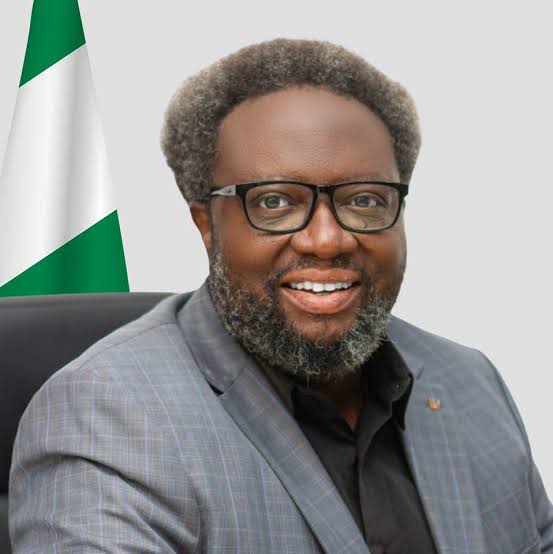
The Director-General of Raw Materials Research and Development Council (RMRDC), Nnanyelugo Ike-Muonso, has called for stronger collaboration between research institutions, polytechnics and organised private sector to translate Nigeria’s research outputs into jobs, wealth creation and industrial growth.
The RMRDC DG stated that Nigeria could accelerate industrialisation, strengthen local manufacturing and reduce dependence on imported products by building effective partnerships that connect research, technical education, technology transfer and private-sector investment.
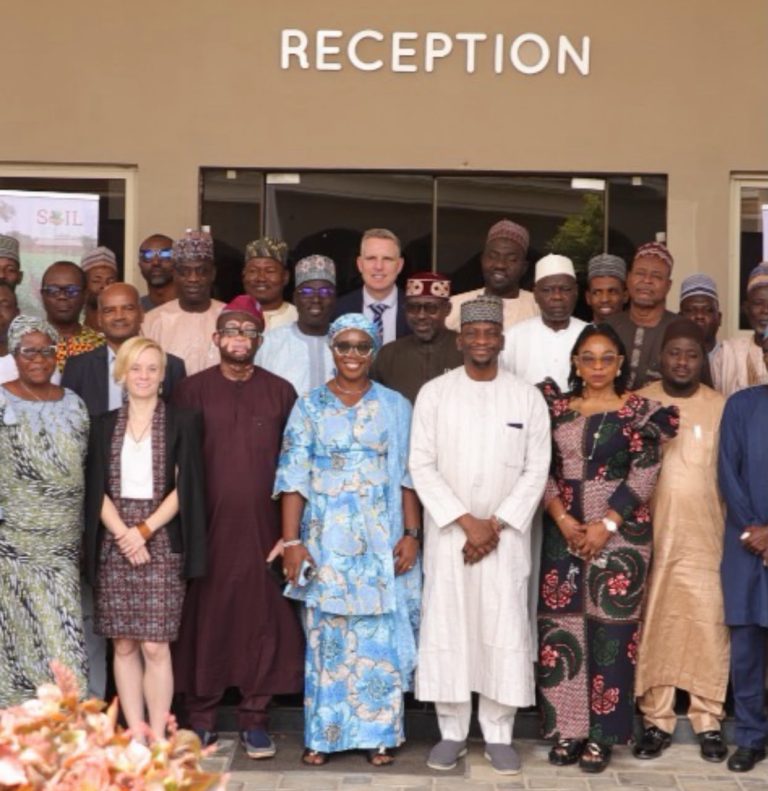
He made the appeal in Abuja at a strategic session organised by RMRDC with officials of the World Association of Industrial and Technological Research Organizations (WAITRO), representatives of Nigerian tertiary institutions and members of the organised private sector.
Ike-Muonso further noted that Nigeria’s economic prosperity depends, increasingly, on the effective utilisation of its abundant natural resources, indigenous technologies and human capital to develop competitive industries and expand domestic production.
“The country has considerable natural resources, skilled professionals, vibrant entrepreneurs and tertiary institutions with significant research capabilities, but the challenge remains how to connect these assets to deliver tangible economic benefits.
“For too long, the gap between research and industrial application has limited the economic benefits that Nigeria derives from its investments in research and development,” he said.
The RMRDC chief executive equally argued that research findings must go beyond academic publications to produce commercially viable products, industrial processes and technologies capable of addressing practical economic needs.
He said stronger relationships between universities, polytechnics, research organisations and businesses would allow industries to identify their technological needs while enabling researchers to develop solutions that could be commercialised.
Ike-Muonso described the engagement with WAITRO as an opportunity to deepen international cooperation, establish sustainable institutional partnerships and strengthen Nigeria’s capacity to develop, adapt and apply technologies for industrial advancement.
He added that RMRDC, as an active member of WAITRO, is seeking opportunities for Nigerian institutions to access international technical expertise, establish joint research programmes, develop innovative products and improve industrial processes.
The council, he stressed, was particularly interested in partnerships that would translate into measurable benefits for Nigerian businesses and the wider economy.
Ike-Muonso also highlighted RMRDC’s strategic partnership with Chinese innovation institutions, including the Shanghai Yangtze Delta Innovation Institute, Jiangsu Industrial Technology Research Institute and Anhui Yangtze Delta Innovation Institute, operating under the umbrella of the National Innovation Center par Excellence.
He said the quadripartite memorandum of understanding with the institutions provided a framework for cooperation in research and development, technology transfer, innovation, capacity building and commercialisation of research outputs.
The partnership, according to him, could help Nigerian institutions adapt foreign technologies to local industrial conditions, improve the processing of indigenous raw materials and develop products capable of competing in domestic and international markets.
He, however, stressed that technology transfer should not be limited to importing equipment or finished technologies, but must involve developing local skills, transferring technical knowledge and building the capacity to maintain, adapt and improve technologies.
“Our aspiration is not simply to access technology, but to strengthen Nigeria’s capacity to understand, adapt, develop and apply technology for its own industrial advancement,” he said.
Meanwhile,in a related development, Ike-Muonso, has paid a condolence visit to the Deputy National Chairman (North) of the All Progressives Congress (APC), Ali Bukar Dalori, over the death of his beloved daughter.
Speaking during the visit, Ike-Muonso described the loss as; “deeply painful and irreparable,” expressing sympathy with the bereaved family during the difficult period.
“I want the family to draw strength and comfort from the exemplary life of humility, devotion and service to God and humanity your departed daughter lived.
“Although her death left a painful void, the values she upheld and the positive impact she made on the lives of others would remain a lasting legacy.
“I pray that Almighty God will forgive the deceased her shortcomings, grant her eternal rest and give the family the strength and fortitude to bear the irreparable loss,” the RMRDC DG noted.
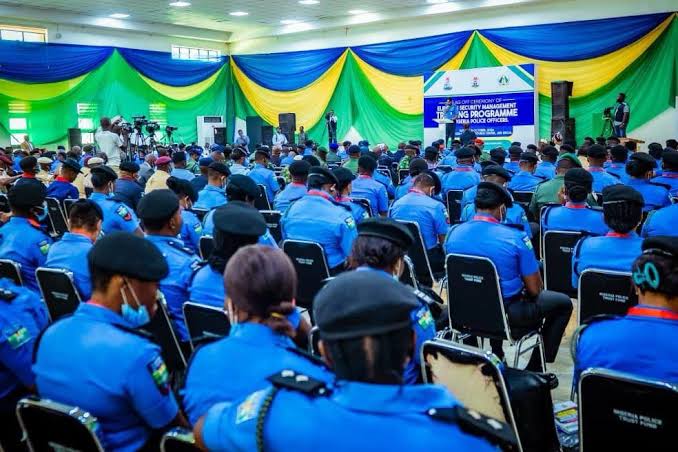
The Nigeria Police Force has commenced the training of 10,000 officers nationwide on election security management ahead of the 2027 general elections.
The five-day programme, organised in collaboration with the Nigeria Police Trust Fund (NPTF), was formally declared open on Thursday, October 22, at the Nigeria Police Resource Centre, Jabi, Abuja.
Declaring the training open, the Inspector-General of Police, IGP Olatunji Disu, charged personnel to remain neutral, professional and accountable throughout the electoral process.
The training, which is being implemented across designated centres, focuses on election security management, crowd control, conflict prevention, rules of engagement, human rights, intelligence gathering and lawful response to election-related incidents.
According to the force, the first phase covers officers across 18 states and the Federal Capital Territory and is designed to ensure uniform operational standards ahead of nationwide deployment.
Addressing participants, the IGP said security is the foundation of a credible election and that officers deployed for election duties must protect voters, electoral officials and the process without fear or favour.
He warned that any officer who compromises the neutrality of the force would be held accountable, and directed commands to strengthen intelligence gathering, operational planning and inter-agency coordination, particularly in areas affected by terrorism, banditry, kidnapping and communal violence.
The IGP also warned against political violence, voter intimidation, ballot-box snatching, vote-buying and other electoral offences, stressing that offenders would be arrested and prosecuted in accordance with the law.
He announced that a dedicated 24-hour complaints line would be made available for members of the public to report misconduct by personnel on election duty, and urged political parties, candidates and supporters to campaign peacefully, while encouraging the media and civil society to verify information before dissemination.
Speaking at the event, the Executive Secretary of the Nigeria Police Trust Fund, Alhaji Mohammed Sheidu, reaffirmed the NPTF’s commitment to supporting police preparedness through training, operational equipment and mobility, noting that the initiative is aimed at producing officers who are disciplined, impartial and responsive throughout the electoral process.
The ceremony was attended by Rear Admiral Sadiq Malaja (rtd), representing the Chairman of the Independent National Electoral Commission; Mr. Afam O. Okeke, General Secretary of the Nigerian Bar Association; Brigadier General J.A. Ifeanyi, representing the Chief of Army Staff; Group Captain Yakubu Yusuf, representing the Chief of Air Staff; DCG Zakari Ibrahim, representing the Commandant-General of the Nigeria Security and Civil Defence Corps; as well as members of the Force Management Team and other senior police officers.
The NPF said it remains committed to sustained training, intelligence-led planning, inter-agency collaboration and professional, neutral policing to provide a safe and secure environment for Nigerians to exercise their electoral rights during the 2027 general elections.
Poland striker Robert Lewandowski has tipped Lamine Yamal and Harry Kane as the leading contenders for the 2026 Ballon d’Or.
The winner of this year’s award is scheduled to be announced at a ceremony in London, United Kingdom, on Monday.
Lewandowski also suggested that Bayern Munich winger Michael Olise could have been among the favourites if he had scored more goals at the World Cup.
“If Olise had scored one or two goals at the World Cup, perhaps he would also have been one of the strongest Ballon d’Or candidates alongside Lamine and Harry Kane,” Lewandowski said.
He is, however, backing former Barcelona teammate, Yamal to take the prize home.
Yamal is one of the leading candidates for the award after winning the LaLiga title with Barcelona and the World Cup with Spain.
“Of course I support Lamine Yamal to win the Ballon d’Or. He’s amazing, especially for his age,” Lewandowski said.
A Lagos State High Court, last Thursday, granted interim preservative orders of Mareva Injunction against Vitol SA – a Switzerland based Energy Trading company, and four other shipping companies in favour of United Bank for Africa Plc.
The bank alleged Vitol of wrongful release of cargoes of petroleum products which were consigned to the order of United Bank for Africa Plc in the Bills of Lading. Addressing the Court, Bode Olanipekun, SAN, lead counsel for the United Bank for Africa, urged the Court to grant the interim preservative orders against Vitol and the other shippers.
In a ruling on the application, the presiding judge, Honourable Justice K. A. Jose (Mrs.) granted three prayers in UBA’s application, including requests to restrain the dissipation of assets and dealings with funds up to the disputed amount by Vitol S.A. “Prayers 1–3 are granted as prayed against the 2nd Respondent only,” the judge ruled.
The application was brought pursuant to Order 43 Rule 1 of the High Court of Lagos State (Civil Procedure) Rules 2019 and the Lagos State High Court Practice Direction No. 2 of 2019.
UBA is seeking to contend in the substantive proceedings that Vitol SA and the owners of the vessels, are liable for alleged conversion, misrepresentation and negligence arising from the non-delivery of the petroleum products.
UBA also cited 34 financial institutions and public agencies, including commercial banks, merchant banks, microfinance banks, the Nigerian Ports Authority and the Nigeria Customs Service, in connection with the application.
In an affidavit supporting the application, UBA’s Group Head of Recoveries and Remedial Management, Anthony Chilaka, stated that the bank issued a letter of credit for the benefit of Vitol SA to facilitate petroleum products transactions.
UBA alleged that the cargo was transported to Nigeria and that the vessels’ masters issued several bills of lading. The bank further alleged that Vitol subsequently endorsed the bills of lading “to the order of” UBA and handed over the original copies to it. UBA maintained that the endorsement entitled it to take possession of the cargo upon completion of the voyage.
However, Chilaka stated that the bank had not received the gasoil despite the completion of the voyage.
“The applicant has not been given possession of the gasoil despite completion of the voyage,” the affidavit stated.
UBA alleged that the cargo was instead, applied to the use of another party, contending that the respondents’ failure to deliver it amounted to conversion and negligence.
The bank argued that the respondents had obligations arising from the transaction and the endorsement of the shipping documents, which it claimed were not fulfilled.
The bank alleged that the cargoes associated with those transactions were also diverted to the use of other parties after their voyages, rather than delivered to UBA.
The Soil Values Program has organized a two-day workshop to strengthen collaboration among agricultural stakeholders towards improving soil health and agricultural productivity in Nigeria.
The workshop, organized by the Soil Values Program, implemented by the International Fertilizer Development Centre (IFDC) brought together government officials, researchers, development partners, farmers’ organizations and private-sector on the 21 and 22 of October, 2026 in Kano.
Medinah Ayuba-Fagbemi, Country Coordinator of the Soil Values program and IFDC Nigeria, said the initiative aimed to promote healthier soils, higher productivity and climate-resilient farming systems across the Sahel.
Medinah said the workshop provided a structured multi-stakeholder platform for identifying challenges and developing joint actions to address persistent soil fertility problems.
She noted that although Nigeria had several institutions and investments in agricultural development, inadequate coordination often resulted in overlapping program and missed opportunities to leverage available resources and expertise.
According to her, farmers need integrated support, including soil information, appropriate agricultural inputs, advisory services, financing, market access and supportive public institutions to improve soil fertility.
She said discussions at the workshop would focus on soil intelligence and advisory services, agricultural inputs and last-mile delivery, financing soil health, markets, and landscape and institutional scaling.
Medinah urged participants to identify practical areas of collaboration, make realistic commitments and agree on concrete actions that would benefit small holder farmers.
“Our measure of success is not the quality of our discussions. It is a pipeline of partnerships that move into pilots, technical cooperation and co-investment that our smallholder farmers can feel on their land,” she said.
She said the Soil Values Program, which runs from 2024 to 2033, was funded by the Dutch Directorate-General for International Cooperation (DGIS).
The program is led by IFDC in consortium with SNV and Wageningen University and Research, alongside knowledge partners, including IITA, AGRA, ICRAF, IWMI and ISRIC.
On his part, Dr Kingsley Uzoma, Senior Special Assistant to the President on Agribusiness and Productivity Enhancement, represented by Dr Tahir Lawan Dalorima, said healthy soils were essential to food security, agricultural competitiveness and sustainable rural development.
He said the Federal Government’s Nigerian Farmers Soil Health Scheme represented an important step towards evidence-based soil management.
Uzoma noted that plans announced by the Federal Ministry of Agriculture and Food Security in May 2026 included a readiness assessment supporting 774 soil-testing laboratories, one in each Local Government Area, with the capacity to test two million farms annually.
He, however, stressed that the success of soil health initiatives should be measured by farmers’ adoption of recommendations, improved yields, reduced production costs and more resilient agricultural livelihoods.
He called for accessible soil testing, locally appropriate fertiliser recommendations, integrated nutrient management and climate-smart farming practices.
Similarly, Dr Oshadiya Olanipekun, Director of Land and Climate Change Management Services at the Federal Ministry of Agriculture and Food Security, represented by Mrs Iyabo Lawal Mustafa, said soil health was fundamental to agricultural productivity, food security and environmental sustainability.
He called for stronger coordination among government institutions, research organisations, development partners and farmers to improve access to soil testing, agricultural extension, financing and appropriate fertiliser recommendations.
During a panel discussion titled “Beyond Institutional Silos: What Will It Take to Transform Soil Health and Agricultural Services in Nigeria?”, participants emphasised the need for stronger collaboration, private-sector engagement, capacity building and advocacy.
They said coordinated interventions would help improve soil management and ensure that research, agricultural investments and policy commitments translated into tangible benefits for farmers.
Participants included representatives of the Federal and Kano State Governments, the Centre for Dryland Agriculture at Bayero University, Kano, the All Farmers Association of Nigeria, the Small-Scale Women Farmers Organisation in Nigeria, ACReSAL, NIRSAL, research institutions and other agricultural stakeholders.
2027: Workers 13th-month pay should earn APC votes – Oborevwori
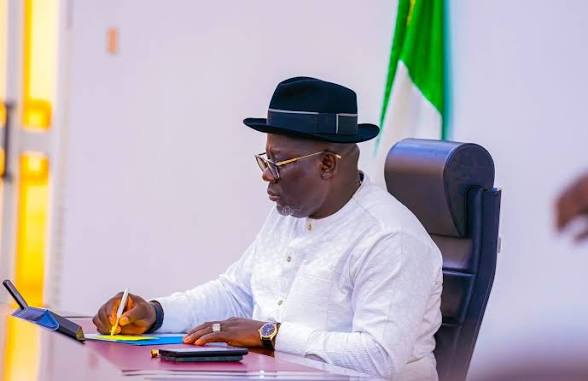
Delta State Governor, Sheriff Oborevwori, has urged workers to support the All Progressives Congress (APC) in the 2027 general elections, citing his administration’s 13th-month salary package as a major benefit for civil servants.
Oborevwori spoke yesterday in Asaba during the inauguration of the Delta State APC Campaign Council for the 2027 elections, where he unveiled “MORE Plus” as the theme of his re-election campaign.
The governor, who chairs the campaign council, said the additional salary payment had strengthened the relationship between workers’ welfare and the continuation of his administration. “Today civil servants have no choice not to vote us. They have no choice. 13th month (salary) is huge, times two. Some people don’t understand what 13th month,” he said.
Explaining the package, Oborevwori said workers would receive double their regular salary in December, adding that political appointees and public servants were also covered.
“What you’re receiving now is times two in December. That is the meaning of 13th month. Whether you’re an appointee, whether a public servant, whether a civil servant, you’re receiving your 13th month,” he said.
He charged members of the campaign council to take President Bola Tinubu’s message to the grassroots and mobilise voters across wards and polling units.
Describing their appointment as a call to service, Oborevwori urged members to work with unity, discipline and dedication to secure victory for Tinubu, himself and other APC candidates.
“Our achievements must speak for us, but we must also be prepared to explain them convincingly,” he said.
The governor listed infrastructure, education, healthcare, workers’ welfare, youth empowerment and security among the priorities of his administration’s M.O.R.E Agenda.
Deputy Governor Monday Onyeme commended Oborevwori for aligning Delta State with the Federal Government and urged party members to consolidate the gains.
Onyeme called on the campaign team to publicise the Tinubu administration’s policies and achievements in local government autonomy, education funding, grassroots development, security, electricity and road infrastructure.
Minister of Aviation and Aerospace Development, Festus Keyamo, defended the Federal Government’s economic reforms, saying difficult decisions were necessary to address the country’s economic challenges.
He acknowledged that the reforms had caused temporary hardship but said they were intended to tackle underlying problems, including the cost of fuel subsidies.
Delta APC Chairman, Chief Solomon Arenyeka, said the campaign council’s inauguration demonstrated the party’s readiness to contest and win elections at all levels in 2027.
Former Governor Ifeanyi Okowa, speaking for Delta North, said expectations were high following the state’s mass defection from the Peoples Democratic Party (PDP) to the APC in April 2025.
He urged the council to demonstrate its strength through strong electoral performance, stressing the need for direct engagement with voters rather than relying solely on rallies.
Representing Delta Central, Olorogun O’tega Emerhor welcomed the APC’s emergence as the ruling party in the state and pledged support for the re-election of Tinubu and Oborevwori.
For Delta South, former Secretary to the State Government, Comrade Ovuozourie Macaulay, said the administration’s achievements would strengthen the campaign, assuring that the district would work towards delivering substantial votes.
Director-General of the campaign council, Senator James Manager, pledged to work with party leaders and members to secure victory, describing the assignment as demanding and requiring collective effort and sustained grassroots mobilisation.
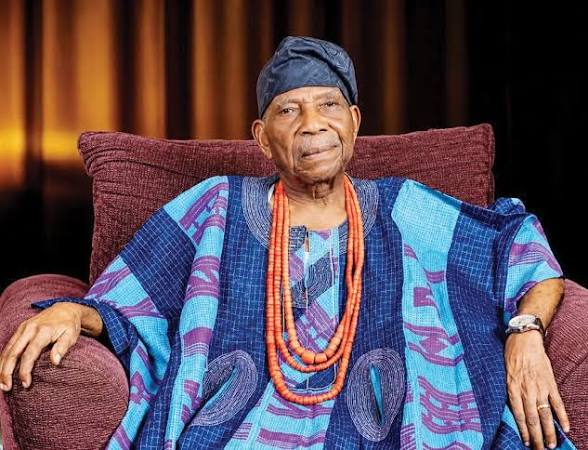
Fasoranti’s family announces burial arrangements for late Afenifere leader
The family of the late leader of Afenifere, Pa Reuben Fasoranti, has announced the funeral programme for the elder statesman, who died at the age of 100.
Fasoranti, a prominent Yoruba leader and nationalist, died at his residence in Akure, the Ondo State capital, on Tuesday.
In a statement issued on behalf of the family by Dr Taiwo Fasoranti, the family said a Christian wake-keeping service would hold on Wednesday, December 16, 2026, at the late elder statesman’s residence within the Omolere Nursery and Primary School compound in Akure. The statement said the funeral service and interment would take place on Thursday, December 17, 2026, at St David’s Cathedral, Ijomu, Akure.
His interment would follow immediately after the service at the church cemetery, while guests would be entertained at his residence afterwards.
The family also scheduled an outing and thanksgiving service for Sunday, December 20, 2026, at St David’s Cathedral, Ijomu, Akure.
“The family of Late Pa Reuben Famuyide Fasoranti, CFR, is pleased to announce the burial arrangements of our beloved patriarch, leader of Afenifere and foremost nationalist, who passed away at the age of 100 years,” the statement said.
The family called for prayers and support as it prepares to honour the late statesman’s memory.
Meanwhile, the Secretary to the Ondo State Government, Dr Taiwo Fasoranti, has described his late father as a great man whose legacy of firmness, resilience, hard work and love would be difficult to match.
He spoke while receiving Ondo State Governor Lucky Aiyedatiwa, who visited the family to offer his condolences.
According to a statement issued by the governor’s Chief Press Secretary, Ebenezer Adeniyan, and published on the state government’s X account, Taiwo said the family had chosen to celebrate their father’s life and achievements rather than focus solely on mourning his death.
He added that the centenarian had lived a fulfilled life and prepared his family for his eventual departure.
The death of the Afenifere leader has also drawn condolences from political groups and lawmakers across the country.
The Southern Senators’ Forum expressed sympathy with Fasoranti’s family, Afenifere, the Ondo State Government and people, the Yoruba nation and Nigerians mourning his death.
Similarly, the South-West Caucus of the House of Representatives described the late elder statesman as a selfless leader who worked for the progress of the Yoruba people and Nigeria.
In a statement by the caucus leader, James Faleke, the lawmakers said Fasoranti’s death had created a vacuum in the country’s political landscape.
Faleke added that the late Afenifere leader would be remembered for his commitment to unity, justice and fair play during his leadership of the socio-political organisation.
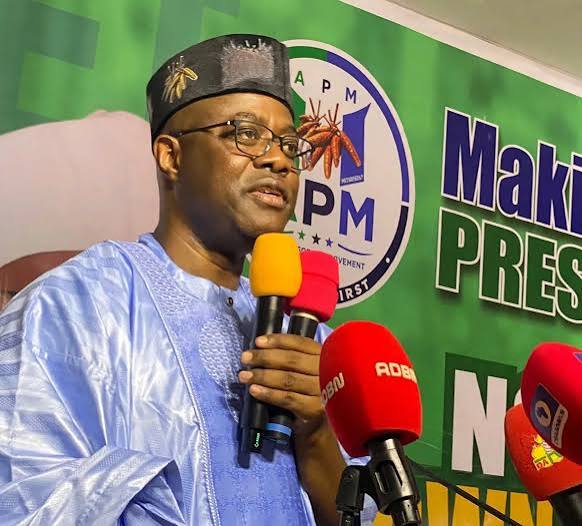
Oyo State Governor and Allied Peoples Movement (APM) presidential candidate, Seyi Makinde, has criticised President Bola Tinubu’s “Emi Lokan” slogan, insisting that the choice of Nigeria’s next president should be determined collectively by Nigerians.
Makinde argued that no individual or region should treat the presidency as an entitlement, warning against what he described as “turn-by-turn nepotism” ahead of the 2027 general election.
The governor made the remarks on Thursday during the APM town hall meeting in Akure, Ondo State, where he presented his position on leadership, national unity and the party’s proposed agenda for the country.
Questioning the idea behind Tinubu’s slogan, Makinde recalled the 1999 presidential election, when voters in the Southwest largely supported Olu Falae while voters across other parts of the country backed Olusegun Obasanjo.
“How can someone say, ‘Eemi lokan’, in a country like Nigeria? You were given the opportunity.
“If you recall the 1999 presidential election, the South-West voted massively for Baba Olu Falae, but the rest of Nigerians voted for Baba Obasanjo,” he said.
Makinde maintained that decisions about the country’s leadership should not be left to one geopolitical zone, stressing that all Nigerians should have a say in determining who leads the country.
“So, this is not an issue that only the South-West can resolve; it is an issue we must address collectively as Nigerians,” he added.
The governor also warned that allowing political power to revolve around the idea of whose turn it is could undermine development and prevent the country from getting value for public resources.
“We do not want ‘turn-by-turn nepotism’, nor do we want a situation where people say, ‘I will vote for projects because it is my turn’.
“You will not finish those projects, and when it becomes someone else’s turn, they will do the same thing,” Makinde said.
He argued that such an approach could leave the country with unfinished projects and limit the effective use of resources meant to improve the lives of citizens.
Presenting his Reset Nigeria agenda, Makinde said his vision was to build a country where infrastructure development supports economic growth and responds to the needs of young people and women.
He added that addressing Nigeria’s economic challenges would help ensure that development reaches all regions and population groups.
“Once we fix our economy, no zone will be left behind, and no demographic group will be left behind,” the governor said.
Sea incursion: Senate urges FG to save coastal communities
The Senate has called for urgent Federal Government intervention to protect coastal communities from destructive ocean surges, warning that continued sea incursion threatens lives, livelihoods, public infrastructure and cultural heritage.
Lawmakers cited reports that about 80 per cent of buildings in Aiyetoro, a historic coastal settlement in Ilaje Local Government Area of Ondo State, had been lost to the advancing Atlantic Ocean.
They noted that the destruction had affected homes, schools, healthcare facilities, places of worship and traditional institutions, leaving residents increasingly vulnerable to displacement and loss of livelihoods.
The resolutions followed a motion sponsored by Dayo Faduyile on the urgent need for immediate and comprehensive shoreline protection to save Aiyetoro from further destruction.
The Senate urged the Federal Ministry of Environment, Niger Delta Development Commission (NDDC) and other relevant agencies to collaborate with the Ondo State Government and the Ondo State Oil Producing Areas Development Commission (OSOPADEC) on a comprehensive and adequately funded shoreline protection programme.
It also demanded a transparent review of previous and ongoing shoreline protection contracts in Aiyetoro, including their funding, implementation status, outstanding obligations and completion timelines, to address reported delays and ensure results.
Amending the prayers of the motion, Samson Ekong sought the inclusion of affected communities in Akwa Ibom South in the Federal Government’s intervention.
Senate President Godswill Akpabio supported the proposal, stressing the need to extend protection to vulnerable shorelines generally.
“Some of these things are above the resources of the state, and that is why these issues are being brought here to the Senate,” he said.
The Senate also urged the government to explore appropriate budgetary provisions and international climate adaptation financing to support sustainable coastal protection, land reclamation where technically appropriate, and the restoration of essential community infrastructure.
It called on the National Emergency Management Agency (NEMA) and relevant state authorities to provide immediate humanitarian assistance, including safe water, healthcare support and temporary shelter for affected residents.
Lawmakers warned that further delay could result in additional losses and worsen humanitarian and environmental conditions, particularly for children, women and elderly residents.
To ensure implementation, the Senate mandated its Committees on Environment, Niger Delta Development Commission and Special Duties to liaise with relevant ministries, agencies and stakeholders, monitor progress and report back within four weeks.
The Committee on Legislative Compliance was also directed to monitor compliance with the resolutions and report to the chamber.
The Federal Government has ruled out an immediate ban on conferences and other large public gatherings following Nigeria’s confirmed Ebola case, saying there was no evidence of community transmission.
The patient, who arrived in Nigeria without symptoms and developed illness several days later, was improving, while health authorities monitored 44 contacts identified through investigations at hospitals, domestic settings and other locations she had visited.
The government also directed a reduction in visiting foreign delegations, particularly those arriving from or travelling through affected countries, while intensifying contact tracing, border surveillance and public sensitisation.
Coordinating Minister of Health and Social Welfare, Muhammad Ali Pate, said at a briefing in Abuja on Thursday that the patient’s improving condition did not lessen the need for vigilance. He warned that misinformation, public distrust and non-compliance could undermine containment efforts.
At a separate briefing to the National Economic Council (NEC), Pate said 21 states had updated their preparedness and response plans, leaving 15 yet to do so. The All Progressives Congress (APC) Presidential Campaign Council, in a separate statement, challenged former vice president Atiku Abubakar over his criticism of the government’s response and said the N10 billion approved by President Bola Tinubu for the Ebola emergency remained untouched.
Meanwhile, conflicting accounts of the patient’s movements before she arrived in Nigeria have left investigators seeking further information about where she might have contracted the virus.
The World Health Organisation (WHO) said the travel information supplied to it covered Uganda, while Ugandan authorities maintained that the woman had also visited eastern Democratic Republic of Congo.
Addressing concerns about restrictions on public activities, Pate said decisions would be guided by scientific evidence and expert advice.
“At this moment, there is no indication that requires us to alter the course of large gatherings that have been planned,” he said.
He said that position could change if new evidence emerged, adding that the immediate task was to contain the confirmed case and prevent transmission beyond those already identified as potentially exposed.
Pate said clinicians had reported encouraging laboratory results, raising hopes of recovery.
“Today, I spoke to the clinicians and I understand that her lab results are showing great improvement and there’s a possibility that she would recover from this,” he said.
He stressed that the improvement did not diminish the need for close monitoring, enforcement of public health measures and sustained preparedness.
Against growing scepticism about the case, Pate said the patient had tested positive on three occasions and warned that dismissing the infection as fabricated could lead people to disregard quarantine or isolation directives.
“The alternative to trusting the experts is a tragedy,” he said, urging Nigerians to rely on credible sources and demand evidence from those circulating unverified claims.
He cited misinformation about polio vaccination as an example of how false narratives could frustrate life-saving interventions and appealed to political leaders not to turn the health emergency into a partisan dispute. “Health has no political party, has no citizenship, has no nationality, has no tribe, no religion. It is a great unifier.”
He urged journalists to report responsibly and avoid amplifying rumours, assuring Nigerians that the government would provide regular updates on established facts, uncertainties and measures being taken to protect the public.
APC tackles Atiku over N10bn fund
The appeal came amid a political dispute over emergency funding and the government’s handling of the case.
In a statement signed by its spokesperson, Dele Alake, the APC Presidential Campaign Council accused Atiku of using the health situation to ridicule Tinubu and cast doubt on the response without sufficient evidence.
The council took exception to a statement it attributed to the former vice president, which linked the President’s name to Ebola and questioned the handling of the N10 billion emergency allocation.
The council said the allocation, approved in June, had not been spent.
“On accountability, the Atiku camp should note that the N10 billion the President approved for the Ebola emergency in June remains untouched, as the NCDC, FAAN, and other agencies involved in surveillance have been spending other available resources,” it said.
The council defended the surveillance and response arrangements, citing the identification of the patient and tracing of her 44 contacts.
It also rejected an allegation attributed to Atiku that a ministerial briefing was intended to discourage attendance at campaign rallies or voting, describing the allegation as speculative and challenging him to produce verifiable evidence.
“A time like this demands that all Nigerians, including the opposition, rally around the health authorities and professionals, communicate responsibly, avoid rumour-mongering, and follow the protocols advised by the Task Force to ensure Ebola does not become a national epidemic,” the council said.
FG cuts foreign delegations
Daily Sun reported that the government had asked ministries, departments and agencies to reduce visiting delegations as a precaution against further imported infections.
According to the report, the directive covered official visits, exchange programmes and study tours involving the Ministry of Foreign Affairs, military institutions and security agencies, particularly where participants had travelled through affected countries.
Pate was reported to have contacted his Foreign Affairs counterpart on Wednesday to urge compliance with relevant protocols and a reduction in visiting delegations. Similar messages were reportedly conveyed to other agencies that regularly receive groups from outside Nigeria.
A source familiar with the directive said the precautions extended to visitors whose professional activities or travel history might have taken them through affected areas.
“The Ministry of Foreign Affairs has been directed to reduce the volume of delegations they receive,” the source said.
“Aside Foreign Affairs, you know that the military, particularly the National Defence College, and the security agencies have exchange programmes, including study tours or visits. Nigeria is not ready to receive such tours or visits at the moment.”
The source said the directive also affected Wednesday’s visit to the Ministry of Foreign Affairs by the Director-General of the National Centre for the Control of Small Arms and Light Weapons, Johnson Babatunde Kokumo. Pate reportedly sought a reduction in Kokumo’s 16-member delegation.
Pate said surveillance had been strengthened at Nigeria’s points of entry, with Port Health Services directed to ensure that thermal imaging equipment was functional and travellers were assessed under risk-based protocols consistent with international health regulations. He said the Nigeria Centre for Disease Control and Prevention (NCDC) was coordinating the response with the ministry, the Federal Capital Territory Administration, state governments and international partners, including WHO.
The Presidential Task Force, Nigeria Governors’ Forum and NEC had also been briefed to strengthen coordination.
Pate confirmed that additional resources had been made available to support the NCDC and that genomics expert Christian Happi of Redeemer’s University, Ede, had been invited to assist, including with sequencing the virus.
15 states yet to update response plans
At the NEC briefing, Pate said Nigeria had the institutional capacity to contain the case but needed coordinated preparedness across the states.
He identified surveillance, laboratory testing, essential supplies, personal protective equipment, public communication and inter-agency cooperation as critical to the response.
With 21 states having updated their plans, he urged the remaining 15 to complete the process promptly and strengthen their capacity to respond if the situation deteriorated.
In Kaduna, Health Commissioner Umma Ahmed said the state was strengthening surveillance, early detection and preparedness through its Rapid Response Team, working with the NCDC and other stakeholders.
She directed public and private health facilities, healthcare workers and disease surveillance officers to intensify monitoring and maintain a high index of suspicion.
Ahmed urged residents to remain calm, continue their normal activities and cooperate with officials conducting contact tracing and monitoring.
“Seek immediate medical attention at a recognised health facility if symptoms develop, particularly following possible exposure or travel to an affected area,” she said.
Conflicting accounts trail patient’s travel
The patient’s travel history remained a focus of international investigations after her illness was confirmed in Nigeria.
WHO representative in Nigeria, Pavel Ursu, said the organisation had not received information indicating that she travelled to the Democratic Republic of Congo.
“The information supplied to WHO did not include travel to another country (other than Uganda),” he said.
WHO said the source of infection remained unknown as investigators reconstructed her movements and possible exposure.
Ugandan health authorities, however, maintained that the patient had visited eastern Congo on business before transiting through Uganda. They said passage through Uganda did not establish where she contracted the virus.
Director-General of the Africa Centres for Disease Control and Prevention, Jean Kaseya, called for fuller disclosure to establish the source of exposure.
He said investigators needed to determine whether she visited Congo, travelled outside Kampala or had contact with anyone from Congo, while urging countries to cooperate and avoid politicising the case.
FG orders nationwide sensitisation
Minister of Information and National Orientation, Mohammed Idris, directed agencies under his ministry to intensify sensitisation and provide verified information in languages communities understood.
The directive covers the National Orientation Agency (NOA), Nigerian Television Authority, Federal Radio Corporation of Nigeria, Voice of Nigeria and News Agency of Nigeria.
“The Federal Government is taking every necessary step to contain this case and protect Nigerians. Accurate and timely information is one of our strongest defences,” Idris said in a statement issued by his media aide, Rabiu Ibrahim.
“Our agencies must reach every community, in every language, with clear facts on how Ebola spreads, how to protect ourselves and where to report suspected cases.”
He directed the agencies to work with the health ministry and NCDC, while tasking NOA with mobilising its nationwide offices for grassroots sensitisation involving traditional and religious leaders, community groups and the media.
ACCI warns of business disruptions
The Abuja Chamber of Commerce and Industry (ACCI) called for stronger workplace precautions and public awareness.
Its Director-General, Agabaidu Jideani, warned that disease outbreaks could disrupt trade, supply chains, productivity and livelihoods, urging employers to reinforce hygiene, educate workers and follow official guidance.
He advised anyone who suspected Ebola to contact the NCDC through its official channels before visiting a health facility, allowing appropriate arrangements to be made and reducing transmission risks.
Jideani said protecting public health was essential to sustaining business operations and economic stability, and urged employers and community leaders to support containment efforts.
The Coalition for Renewed Hope, in a statement signed by its National Coordinator, James Okoronkwo, commended the NCDC and Pate for isolating the patient, tracing contacts and activating emergency measures.
It also called on the Senate to expedite approval of emergency funding to strengthen screening nationwide.
Hospitals urged to strengthen precautions
Pate urged hospitals, particularly private facilities, to reinforce infection prevention and control, prepare isolation facilities and ensure health workers used appropriate protective equipment when attending to suspected cases.
He advised Nigerians to wash their hands regularly, avoid contact with the blood and other body fluids of suspected patients and promptly report symptoms, particularly where there was a possible exposure history.
Despite the absence of evidence of community transmission, the minister said the government was maintaining containment measures and would adjust its response as new information became available.