Home Blog Page 664

INEC Fixes February 20, March 6, 2027 for General Elections

0


The Independent National Electoral Commission (INEC) has officially released the notice of election and the Timetable and Schedule of activities for the 2027 General Elections, setting February 20 and March 6, 2027, as the dates for the nationwide polls.

INEC Chairman, Prof. Joash Ojo Amupitan, announced the dates on Friday in Abuja during a press conference, describing the release as a constitutional milestone and a demonstration of the Commission’s commitment to democratic consolidation.

According to him, the Presidential and National Assembly elections will hold on February 20, 2027, while the Governorship and State Houses of Assembly elections are scheduled for March 6, 2027.

Amupitan said the action was in compliance with the provisions of the 1999 Constitution (as amended) and Section 28(1) of the Electoral Act, 2022, which require the Commission to publish the Notice of Election not later than 360 days before the date fixed for the polls.
He noted that the tenure of the President, Vice President, Governors and Deputy Governors—except in Anambra, Bayelsa, Edo, Ekiti, Imo, Kogi, Ondo and Osun States—will expire on May 28, 2027, while members of the National and State Assemblies will stand dissolved on June 8, 2027. By constitutional provision, elections must hold not earlier than 150 days and not later than 30 days before the expiration of the tenure of the last holder of the offices.

The 2027 General Elections will cover the offices of President and Vice President, Governors and Deputy Governors (excluding the listed states), members of the Senate, House of Representatives, and State Houses of Assembly.
Amupitan said the detailed timetable has been uploaded on INEC’s official website and circulated to all registered political parties and stakeholders, while Resident Electoral Commissioners across the 36 states and the Federal Capital Territory have been directed to publish the notice in their respective constituencies.

He clarified that party primaries, submission of nomination forms, and campaigns would be conducted strictly within the timelines provided by law, adding that campaigns must end 24 hours before Election Day.
The INEC Chairman also addressed ongoing amendments to the Electoral Act currently before the National Assembly, stating that while the Commission supports reforms that strengthen the electoral framework, it remains bound by the existing law until any amendments are enacted.

“As an independent electoral body, we are guided solely by the Constitution, the Electoral Act, and our Regulations and Guidelines,” he said, warning political parties to strictly adhere to the approved schedule, as the Commission would enforce compliance without hesitation.
Amupitan reaffirmed INEC’s commitment to deepening the deployment of technology to enhance transparency, continuous cleaning and updating of the National Register of Voters, strengthening collaboration with security agencies, and expanding voter education and stakeholder engagement.

He called on political parties to conduct peaceful and credible primaries, shun violence and inflammatory rhetoric, and uphold internal democracy, while urging candidates, supporters, and voters to maintain peace throughout the electoral cycle.

Describing the success of the 2027 polls as a collective responsibility, the INEC Chairman assured Nigerians that the Commission is fully prepared to deliver elections that reflect the sovereign will of the people.

He formally declared the Notice of Election and the Timetable and Schedule of Activities for the 2027 General Elections released.

Agenda Nigeria Marks Muritala Mohammed’s 50th Anniversary

0


..Describes Him As One Of Nigeria’s Most Visionary Leaders

…Says He Provided Africa With Authentic Leadership Based On Dignity Of Black Race

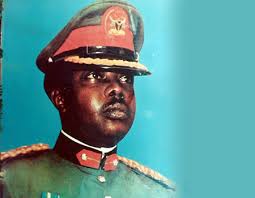
A group known as Agenda Nigeria has described late General Murtala Ramat Mohammed as unarguably one of Nigeria’s most visionary leaders, who upheld the integrity of the military institution and left behind a giant footprint of transformative leadership.

The group made this known in a statement issued on Friday to mark the 50th anniversary of the assassination of former Head of State, General Murtala Ramat Muhammed.

Recall that Muhammed, Nigeria’s Head of State from July 1975 until his 1976 death, was known for sweeping reforms, state creation, anti-corruption measures, and advancing the transition to civilian rule.

The group also said that Mohammed’s courage, discipline, and clarity of vision, despite his brief 201-day administration, secured his place among Nigeria’s most distinguished leaders, and he continues to inspire Africa 50 years after his assassination.

They highlighted Muhammed’s commitment to Africa’s emancipation, recalling Nigeria’s frontline role in liberation movements across Angola, Namibia, Mozambique, Zimbabwe, Guinea-Bissau, and in the dismantling of apartheid in South Africa.

The statement further reads: “We, the undersigned citizens of the Federal Republic of Nigeria, wish to join other compatriots in marking the 50th commemorative Anniversary of the assassination of General Murtala Ramat Mohammed, which falls on February 13th, 2026.

“The late Head of State, uncompromising nationalist, incorruptable statesman and brave soldier was murdered along with his Aide de Camp(ADC), Lt. Col. Akinfenwa, and his driver on that fateful Friday as he was been driven to his office in Dodan Barracks, Ikoyi, Lagos.

“It could be remembered that the General’s car had slowed down at a pedestrian zebra crossing out of respect for civil servant trooping to the former Federal Secretariat for work when his sponsored assailants struck. General Murtala Ramat Mohammed was unarguably one of Nigeria’s most visionary leaders in the mould of General Gamal Abdel Nasser of Egypt who both upheld the integrity of the military institution in their respective countries and left behind giant footprints of transformative leadership.

“The legacies of General Murtala in his short but memorable tenure was indeed legendary. He bequeathed unpresidented and examplary leadership courage by purging the Nigerian civil service system of corruption and corrupt public officers, created new states, initiated the process that gave Nigeria its first indigenous and enduring Federal constitution, and founded the new Federal Capital Rerritory, Abuja.

“He provided Africa with authentic leadership based on the dignity of the black race, spearheaded a vigorous struggle for the independence of the rest of Africa from the stranglehold of oppressive colonial rule while inspiring African youth to take their destiny into their hands.

“No wonder, he was killed barely one month after his famous speech,”Africa Has Come of Age” at the African Union Headquarters Adis Ababa, Ethiopia, on 11th January,1976 The list of impactful achievements of the General brief leadership is endless. Sadly, we hasten to observe that there has been a steady nose-dive in the quality of governance and a deficit in leadership integrity since the progressive leadership of General Mohammed.

“The consequences in the aftermath of the backward trend in the evolution of Nigeria’s leadership trajectory include a dangerous revert to heightened tribal and sectional politics, disunity and fragmentation, unconscionable and shameful elite-driven corruption, Lawlessness, insecurity and threats of disintegration among other vulnerabilities.

“Tragically, Nigeria’s successive governments have continued to mortigaged the country’s honour and glory for which we stood tall and respected among the comity of nations. Presently, in a fast-changing world order where Might is Right, the peace and stabilising responsibilities of the United Nation’s System,

“Continental and Regional Organisations have been deliberately undermined by powerful nations, we are afraid that Nigeria’s sovereignty and independence are been diluted and rendered meaningless.

“On the occasion of the 50th anniversary since the conspiratorial and cowardly murder of this Africa’s uncommon hero and Nigeria’s patriots therefore, Nigerians have no option but to rekindle and deepened the search for selfless purposeful leadership capable of pulling Nigeria back from the brink of doom and collective regret.

“The Ramat ideology is the answer to our diversity and nationhood challenges in the face of the new scramble for our resources by the powers that be. ”

It was signed by Malam Mahmud Othman, Hajiya Azumi Bebeji, Hajiya Aisha Ismail, Hajiya Naja’atu Mohammed, Muhammed Sani Zorro, Salisu Nuhu Mohammed, Najeem Jimoh, Naseer Kura Jafar, Abdulkadir Ibrahim Ahmad, Prof. Muhammadu Mustafa Gwadabe, Malam Isa Ahmed,Mni, Ado Yahuza, Mohammed Tsaibu, Bello Dantata, PhD, Balarabe Garba, Ali Maje, Senator Shehu Sani, Salihu Lukman, Prof. Hamza Abba, Abdulkadir Bala Madigawa, Hon. (Barr.) Nasiru Ibrahim Junju Esq., Ado Yusuf Dawakiji, PhD, Nasir Abbas, Auwal Ibrahim Musa (Rafsanjani), Hussaini Abdu,PhD, Chris Igene, PhD, Bala Baba Shu’aibu, Bashir Umar, and Maikudi Abubakar Zukogi.

INEC Schedule Presidential Election for February 20, 2027

0

BREAKING: The Independent National Electoral Commission has announced that the upcoming Presidential election is scheduled for February 20, 2027.

Court of Appeal Reserves Judgment in PDP Leadership Dispute

0


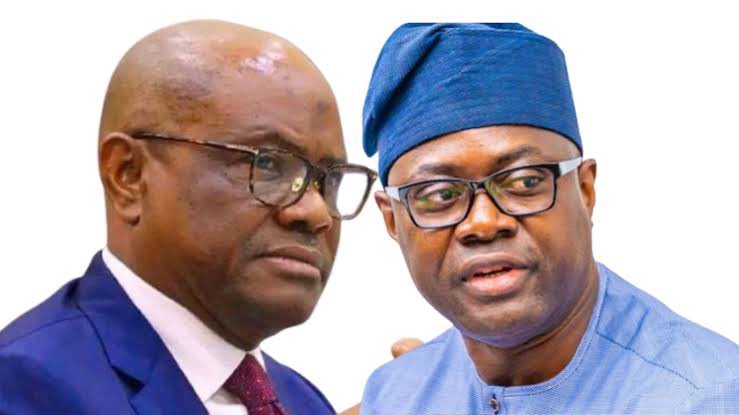
The Abuja Division of the Court of Appeal has reserved judgment in nine appeals filed by factions loyal to the Minister of the Federal Capital Territory, Nyesom Wike, and former Ekiti State Governor, Ayo Fayose, over the leadership crisis rocking the Peoples Democratic Party (PDP).

The appeals challenge earlier rulings of the Federal High Court which halted the party’s national convention scheduled for November 15 and 16 in Ibadan, Oyo State.

Despite the legal tussle, the convention proceeded and produced former Minister of Special Duties, Tanimu Turaki, SAN, as the National Chairman of the party, alongside other national officers.

The appellate court’s decision is expected to determine the validity of the convention and the leadership that emerged from it, as the party continues to grapple with internal divisions.

N’Assembly tightens grip on public finances amid 2027 election funding debate

0


NASS-Senate-National Assembly
National Assembly

* INEC seeks N873.78b for 2027 polls, defends early appropriation
* Senate threatens ‘zero’ allocation for Accountant-General over fund delays
* Reps move to bar 22 MDAs from 2026 budget over audit breaches
* Protesters accuse finance officials of sabotaging 2025 implementation
* Oshiomhole cautions INEC against mandate drift, hospital plan

Tensions over public finance deepened yesterday as lawmakers scrutinised INEC’s N873.78 billion proposal for 2027, recommended sanctions against non-compliant agencies and questioned delays in Treasury fund releases.

The Chairman of the Independent National Electoral Commission (INEC), Prof Joash Amupitan, who presented the proposal before a joint committee of the Senate and House of Representatives on Electoral Matters, clarified that the N873.78 billion required for the 2027 polls is separate from the Commission’s 2026 budget proposal.

For 2026, INEC plans to spend N171 billion on its operations, including the conduct of by-elections and off-cycle elections.

Amupitan said preparations for the 2027 general elections had commenced in line with statutory provisions requiring that election funds be appropriated at least 360 days before the date fixed for the exercise.

According to him, early appropriation would guarantee proper planning and seamless nationwide conduct of the elections.

Although details of specific line items were not exhaustively presented at the session, he explained that the election budget is structured across five major components: N379.748 billion for operational costs; N92.317 billion for administrative costs; N209.206 billion for technological costs; N154.905 billion for election capital costs; and N42.608 billion for miscellaneous expenses.

The INEC chairman noted that the capital component was higher than in previous budgets because several capital items not adequately captured in earlier appropriations had now been consolidated into the 2027 election budget.

He said detailed budget codes for each category had been provided and that further explanations of the proposed expenditure were contained in documents submitted to the committee.

The joint session was chaired by Senator Simon Bako Lalong and Adebayo Balogun.

Amupitan stated that the projected election budget does not include a fresh proposal by the National Youth Service Corps (NYSC), which is seeking an increase in allowances for corps members engaged as ad hoc staff during elections.

He added that the budget was prepared in line with Section 3(3) of the Electoral Act 2022, which mandates the Commission to prepare its election budget at least one year before a general election.

On the 2026 fiscal year, Amupitan said the Ministry of Finance provided the Commission with a budget envelope of N140 billion.

However, INEC is proposing a total expenditure of N171 billion for that year. The breakdown includes N109 billion for personnel costs; N18.7 billion for overheads; N42.63 billion for election-related activities; and N1.4 billion for capital expenditure.

He argued that the envelope budgeting system is not suitable for the Commission’s operations, noting that INEC’s activities often require urgent and flexible funding.

Amupitan also identified the lack of a dedicated communications network as a major operational challenge. He said if the Commission developed its own network infrastructure, Nigerians would be in a better position to hold it accountable for any technical failures.

In his remarks, Senator Adams Oshiomhole (Edo North) said external agencies should not dictate the budgeting framework for INEC, given the unique and sensitive nature of its mandate. He urged that the envelope system be set aside for the Commission and that Parliament should work with INEC’s actual requirements to avoid future complaints of underfunding.

A member of the House of Representatives from Edo State, Billy Osawaru, called for INEC’s budget to be placed on first-line charge as provided in the Constitution, with funds released in full and on time to enable proper planning and execution of its responsibilities.

The joint committee approved a motion recommending the one-time release of the Commission’s annual budget.

It also said it would consider the NYSC’s request for about N32 billion to increase allowances for corps members to N125,000 each when engaged for election duties.

Chairman of the Senate Committee on INEC, Simon Lalong, assured that the National Assembly would work closely with the Commission to ensure it receives the necessary support for the successful conduct of the 2027 general elections.

Chairman of the House Committee on Electoral Matters, Bayo Balogun, also pledged legislative backing but cautioned the Commission against making promises it may not be able to fulfil.

“Meanwhile, the IREV was not even in the Electoral Act; it was only in INEC regulations. So, be careful how you make promises,” Balogun warned, recalling assurances given during the last general election about uploading results to the INEC Result Viewing (IREV) portal.

Senate threatens to withhold Accountant-General’s 2026 budget over fund release delays
Meanwhile, the Senate has threatened to withhold the 2026 budget allocation of the Office of the Accountant-General of the Federation over persistent delays in the release of funds to ministries, departments and agencies (MDAs) and the failure to clear outstanding contractor liabilities.

The warning was issued yesterday by the Senate Committee on Finance when the Accountant-General of the Federation, Mr Shamseldeen Ogunjimi, appeared before it to defend his office’s proposed 2026 budget.

Chairman of the committee, Senator Sani Musa, led members in declining consideration of the proposal, citing what they described as systemic inefficiencies in the Treasury and the failure to ensure timely disbursement of appropriated funds.

Lawmakers expressed concern that poor fund releases had left several agencies struggling to meet their obligations, including the Nigerian Bulk Electricity Trading Company (NBET) and the Fiscal Responsibility Commission.

Senator Danjuma Goje drew attention to the Federal Government’s inability to clear more than N2.2 trillion owed to contractors, questioning how revenues generated from fuel subsidy removal and government-owned enterprises were being managed.

“Where is the money?” Goje asked the Accountant-General on what he described as the disconnect between revenue inflows and the continued non-payment of contractors and agencies.

Other senators argued that inadequate and delayed funding had hampered statutory transfers and affected the operations of security agencies and the Independent National Electoral Commission (INEC). They criticised the continued reliance on the envelope system of fund disbursement, describing it as outdated and opaque.

The committee recommended a transition to a performance-based disbursement system that would link fund releases to measurable outputs in order to enhance accountability and reduce delays.

In his defence, Ogunjimi maintained that the Treasury could only disburse funds formally released to it. He said the office currently operates without the flexibility of a Ways and Means facility, which allows temporary bridging of funding gaps.

He also acknowledged challenges associated with the existing payment platform, noting that it was undergoing expansion to improve its capacity and efficiency.

The Accountant-General further attributed part of the problem to MDAs, stating that many agencies fail to remit collected revenues and taxes promptly and sometimes award contracts not fully backed by cash.

According to him, these practices limit the Treasury’s ability to meet obligations even when funds are available.

Despite the explanations, senators repeatedly demanded clarity on why critical agencies continued to operate under financial constraints despite revenue inflows. Specific reference was made to line items in the budgets of security agencies, statutory transfers and INEC, where members said inadequate funding had led to operational difficulties.

Goje and other members warned that continued inefficiencies would not be tolerated. They indicated that failure to improve fund releases and accountability mechanisms could result in what they described as a symbolic “zero” allocation for the Office of the Accountant-General in the 2026 budget.

Following the exchanges, the committee resolved to hold an executive session with the Accountant-General to address unresolved queries and clarify modalities for fund management in the coming fiscal year.

The session is expected to review processes relating to revenue remittances, contract funding and the proposed shift to a performance-based disbursement framework.

The Senate’s stance reflects growing concern within the legislature over fiscal management, particularly amid mounting economic pressures, outstanding contractor liabilities and the need to fund essential services.

Lawmakers insisted that the Treasury must operate with greater transparency, efficiency and accountability, stressing that continued lapses in fund disbursement could attract firm legislative action as the 2026 fiscal year approaches.

Reps panel recommends budget exclusion for 22 MDAs over accountability breaches
This came as the House of Representatives Public Accounts Committee (PAC) recommended that 22 federal Ministries, Departments and Agencies (MDAs) be denied budgetary allocations in the 2026 Appropriation over alleged accountability breaches.

The lawmakers accused the affected MDAs of persistent violations and refusal to submit to legislative oversight.

The decision followed a public hearing yesterday, where the committee considered audit queries contained in the Auditor-General for the Federation’s annual reports for 2020, 2021 and 2022.

According to the committee, the agencies failed to honour repeated invitations, declined to submit critical financial records and refused to appear before lawmakers to explain issues bordering on non-compliance with financial regulations, due process violations and weak internal control systems.

Those recommended for budget exclusion include the Nigerian Meteorological Agency (NiMet), Federal Housing Authority (FHA), Standards Organisation of Nigeria (SON), National Insurance Commission (NAICOM), National Business and Technical Examinations Board (NABTEB), Corporate Affairs Commission (CAC), the Federal Ministry of Housing and Urban Development, and the Federal Ministry of Women Affairs and Social Development.

Also affected are the Federal University of Gashua; Federal Polytechnics in Ede and Offa; Federal Medical Centres in Owerri, Makurdi, Bida, Birnin Kebbi and Katsina; Federal Government College, Kwali; Federal Government Boys’ College, Garki, Abuja; Federal Government College, Rubochi; Federal College of Land Resources Technology, Owerri; Council for the Regulation of Freight Forwarding in Nigeria; and the FCT Secondary Education Board.

Chairman of the committee, Mr Bamidele Salam, said the National Assembly could not continue to appropriate funds to institutions that had failed to account for previous allocations and ignored lawful summons.

“Public funds are held in trust for the Nigerian people. Any agency that fails to account for previous allocations, refuses to submit audited accounts, or ignores legislative summons cannot expect fresh budgetary provisions. Accountability is not optional; it is a constitutional obligation,” Salam said.

He added that the recommendation was aimed at restoring fiscal discipline and strengthening transparency across federal institutions, noting that several of the agencies had not submitted audited financial statements for between three and five years, in violation of statutory requirements.

The committee maintained that the proposed action was in line with the Financial Regulations 2009 and the constitutional oversight powers of the National Assembly.

Protesters storm N’Assembly, accuse finance officials of sabotaging 2025 budget
Angry protesters under the umbrella of the National Vanguard for Accountable and Transparent Democracy (NVATD) yesterday stormed the National Assembly in Abuja, accusing top finance officials of allegedly sabotaging the implementation of the 2025 budget.

The group accused the Minister of Finance, Wale Edun; the Minister of State for Finance, Doris Uzoka-Anite; and the Accountant-General of the Federation, Shamsedeen Babatunde Ogunjimi, of frustrating budget implementation and crippling key sectors, including health, education and infrastructure.

The protesters linked their action to a recent disclosure by the Minister of Health and Social Welfare, Prof Ali Pate, who said only N36 million had been released to the ministry out of more than N200 billion appropriated for public health in the 2025 budget.

Pate, while appearing before the House of Representatives Committee on Healthcare Services on Monday, attributed the poor performance of the 2025 health budget to cash flow constraints and systemic bottlenecks in the Federal Government’s budget execution process, particularly within the Office of the Accountant-General of the Federation.

Addressing journalists during the protest, Secretary-General of NVATD, Harry Linus, said the refusal to release funds for capital projects captured in the 2024 Appropriation Act had stalled government activities and contributed to the non-performance of the 2025 budget.

“They have grounded Nigeria. Contractors executed projects under the 2024 budget, many of them using bank loans, and those projects were commissioned by the government. Yet the contractors have not been paid. As a result, nothing moved in 2025,” Linus said.

According to him, the situation has left hospitals without drugs, forced medical personnel into industrial action and weakened public institutions across the country.

He added that the failure to fund capital projects had stalled new contracts under the 2025 appropriation, slowed economic activities and deepened hardship for Nigerians.

The protesters warned that unless the issues were urgently addressed, confidence in the 2026 Appropriation Bill currently before the National Assembly would remain low.

NVATD called on lawmakers to intensify oversight of budget implementation and to withhold approvals for agencies that failed to perform in the 2024 and 2025 fiscal years, except in critical sectors such as health, education and security.

Oshiomhole questions plan for dedicated INEC hospital
Senator Adams Oshiomhole has questioned the necessity of establishing a dedicated hospital for the Independent National Electoral Commission (INEC), describing the proposal as a distraction from the commission’s core mandate.

Speaking during a recent session, Oshiomhole asked: “Do you have an INEC special disease?” as he challenged the rationale behind plans for the commission to operate its own medical facility in Abuja.

He pointed out that INEC maintains offices in all 36 states of the federation and argued that it would be impractical for staff in states such as Edo or Lagos to travel to the Federal Capital Territory for medical treatment.

According to him, the commission’s focus should remain on the conduct of free, fair and credible elections rather than venturing into healthcare provision.

Oshiomhole noted that healthcare falls under the purview of the Ministry of Health and said INEC should not attempt to provide specialised medical services for its employees.

He also expressed concern over the potential implications for resource allocation, questioning whether the commission would recruit medical specialists for a wide range of health conditions, including prostate-related ailments or paediatric care.

“This is goal displacement,” he said, urging the commission to concentrate on its constitutional responsibilities.

The former Edo State governor emphasised that the financial and logistical demands of establishing and running a hospital could undermine INEC’s primary function of electoral management.

He suggested that instead of building its own facility, the commission should liaise with the Ministry of Health to address the medical needs of its personnel.

Guardian

Atiku Visits El-Rufai after Failed Arrest

0

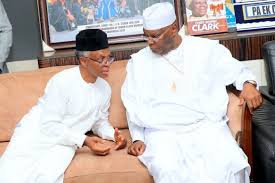
Last night, Alhaji Atiku Abubakah paid a solidarity visit to the former Governor of Kaduna State and stalwart of the African Democratic Congress, Mallam Nasir El-Rufai, following the failed attempt to arrest him at the airport upon his arrival in the country. According to him, he was unfazed by the incident and remains committed to the battle to enthrone a better Nigeria. –

Senate: Real-time results transmission does not translate to e-voting

0


* Says INEC currently lacks capacity to conduct e-voting
* Faults claims it declined use of IReV for 2027 polls
* PFN warns against early 2027 politicking, urges focus on insecurity, governance

The Senate has clarified that the electronic transmission of election results in real time does not translate to e-voting as being peddled in some quarters, adding that the Independent National Electoral Commission (INEC) currently lacks the capacity to conduct e-voting.

The upper chamber further clarified that the INEC Result Viewing Portal (IReV) “is not an e-voting platform, but a platform for when the election results that have been manually counted and declared at the polling units are uploaded and publicised.”

Chairman, Senate Ad-hoc Panel to Review the 2026 Electoral Bill, Adeniyi Adegbonmire, made the clarifications on Arise News Channel yesterday, explaining the difference between the electronic transmission of election results in real time and the e-voting system.

The Senate had constituted the ad hoc panel to review the report of its Committee on Electoral Matters, harmonise divergent views and address grey areas identified during the exercise. It also appointed Adegbonmire to lead the seven-man panel.

Speaking on the decision of the Senate, Adegbonmire explained that Nigeria had not transitioned to an e-voting system, contrary to what some people had insinuated or what some media platforms had reported.

He said, “People need to understand what real-time means. Real-time transmission can only happen if the INEC adopts an e-voting system. For now, INEC does not have the capability for e-voting. Maybe in two or three years, we can adopt e-voting. But as of today, INEC has not put an e-voting system in place.”

“This is the misconception that the media has brought into play. The provision you keep emphasising says the presiding officer will first fill in the result manually in Form EC8A. It is the Form EC8A that has been filled manually and will be transmitted to IReV. If we change ‘transmit’ to ‘upload’ in the Electoral Bill, 2026, will it change anything? The answer is No.

Adegbonmire, a Senior Advocate of Nigeria and Chairman, Senate Committee on Judiciary, Human Rights and Legal Matters, further explained the misconception about IReV, which, according to him, should be corrected considering its implications for the country’s peaceful co-existence.

The lawmaker, therefore, pointed out that IReV “is not a voting platform. Rather, it is a platform meant to publicise election results already declared by the presiding officers at polling units across the federation.

“It is important, first of all, to understand what IReV does because there is a lot of misconception about it or deliberate misrepresentation of what it stands for. The Senate never said INEC should not use IReV for the 2027 elections. So, what is IReV? It is software developed by INEC to publicise the results.

“This is not an emotional argument. I heard people say the version of the House of Representatives should be adopted. It is a sheer misconception. What does the version say? It simply says the presiding officer shall electronically transmit the result from each polling unit to the IReV portal in real time and such transmission shall be done after Form EC8A has been signed by the presiding officer and countersigned by the candidate or polling agent at the polling unit…”

He also explained that IReV, as an electronic platform to display election results, had “a pattern of working, and the National Assembly cannot change the software by mere legislation. It was a sheer misconception to conclude that the Senate declined the use of IReV for the transmission of election results.”

“Whether we call it ‘upload, transfer, or transmission,’ as far as it says IReV must be used, it will be used in the manner it was configured. That is the point I am making. You must first manually write out the figure. After you have written out the figure at the polling unit, you can upload, transfer or transmit, depending on the nomenclature we want to use.

“When you have not complied with the proper filling of Form EC8A, you cannot transfer, transmit or upload it. That is what people must understand. When you talk about transmission, it has nothing to do with the sanctity of the voting process. If you are given a ballot paper to thumbprint, it is counted manually after the election. It is not IReV or BVAS that counts ballots. The vote count is manually done.

“In my own case, for instance, I come from Akure. I vote in Akure. All the electoral materials are brought into Akure two to three days before the election. They are kept in the Central Bank of Nigeria (CBN). The night before, they start transporting them to different locations across the state. In Ondo State, there are places where one has to travel for eight hours to get there. In some cases, they have to use boats to get to the riverine areas.

“This means voting cannot start at the same time nationwide. In Akure, voting can start at 10:00 a.m. In other parts of the state, voting may not start until 2:00 p.m., or even some at 4:00 p.m. in some cases. Most likely, they will finish the vote count by 10:00 p.m.

“In Akure, for instance, the presiding officers will upload election results at polling units at 4:00 p.m. because voting is concluded as scheduled. In Arugbo Ijaw, however, voting kicks off at 4:00 p.m. This is the reality in the country, and we must consider it in our reforms. The truth of the matter is that you are not going to see how you voted on the IReV because it is not an e-voting platform.”

E-transmission: Lawmaker reveals difference between Senate, Reps’ versions
Also, the Chairman, House of Representatives Committee on Electoral Matters, Adebayo Balogun, says the only difference in the electoral reform bill between the House of Representatives and the Senate is the real-time clause.

Balogun made this known on Arise Television’s ‘Morning Show’ yesterday.

He stated that none of the versions of the Senate or House backs IREV for election results collation.

According to him, it is still the Form EC-8A that would be used at the collation centre, adding that electronic transmission was agreed to by both chambers of the National Assembly.

“The only difference in the electoral reform bill between the House and the Senate is the real-time clause. From the two versions, neither said that the results of the iReV will be the one to be used.

“The Presiding Officer shall, after counting the vote at the polling unit, enter the vote scored by each candidate on the form to be prescribed by the Commission. The form shall be signed and stamped by the presiding officer and countersigned by the agent available at the polling unit.

“The Commission shall electronically transmit the results from each polling unit to the iReV portal in real time. That’s the difference between ours and theirs,” he said.

Balogun said INEC cannot use real-time election results transmitted to its IReV portal for collation under the Electoral Act Bill.

He noted that none of the bill versions passed by both the upper and lower legislative chambers allows INEC to collate from results uploaded on the IReV portal.

Balogun maintained that the INEC’s Form EC8A, also known as the manual statement of the poll results from polling units, would remain the only means to collate from, a clause that could render results uploaded to IReV unusable in case of discrepancies if passed into law.

“From the two versions, there is none of it that says that the results of the IReV would be one to be used. It is still the form EC8A,” Balogun said.

He added that the difference between the versions of the bill passed by the Senate and the House of Representatives would be rectified by “a committee made up of all the parties and not just the ruling party.”

Clause 60(3) of the version passed by the House of Representatives stated that “The Commission shall electronically transmit the results from each polling unit to the IReV portal in real-time and such transmission shall be done simultaneously with the physical collation of results.”

The Senate also okayed mandatory transmission of election results electronically in its version, but made room for Form EC8A use to collate election results in cases where electronic transmission fails due to network glitches.

PFN warns against early 2027 politicking, urges focus on insecurity, governance
Meanwhile, the Pentecostal Fellowship of Nigeria (PFN) has warned political actors against what it described as premature politicking ahead of the 2027 general elections, saying governance is being sidelined at a time Nigerians are grappling with insecurity and economic hardship.

Speaking at a press briefing yesterday in Lagos, the PFN President, Bishop Wale Oke, said attention appears to have shifted from governance to electioneering across various levels of government, even though the Independent National Electoral Commission (INEC) has not officially signalled the commencement of campaigns.

“For goodness’ sake, let’s govern. Let INEC blow the whistle. When INEC says it is time to campaign, go ahead and campaign. But to use the time we should be providing basic support for Nigerians who are suffering from politicking is not fair to the people,” Oke said.

The fellowship stressed that leaders should prioritise tackling insecurity and delivering basic services rather than engaging in early political contests.

On electoral matters, PFN said it does not support calls for the removal of the INEC Chairman over his views on national issues, maintaining that he has the right, as a citizen, to contribute to national discourse.

The body also backed real-time electronic transmission of election results, insisting that credible elections are essential to strengthening Nigeria’s democracy.

“Nigeria has developed to a point where we must trust our electoral system. One of the ways to do that is to make sure that the votes of Nigerians count,” the fellowship said.

PFN urged the Federal Government to ensure that the 2027 elections are free and fair and conducted on a level playing ground for all political parties, noting that democracy thrives on healthy opposition.

“It should not be seen that opposition is being withdrawn. In a competition, somebody will win and somebody will lose. But where there is only one contender, that is no longer democracy,” the body stated.

Reaffirming its non-partisan stance, the fellowship said it would not allow church pulpits to be used as campaign platforms or for endorsing any political party.

“We are not going to allow our pulpits to be used for campaigns or to give support to any political party. Our members are in all parties,” it said.

Beyond electoral concerns, PFN highlighted the need to urgently address insecurity across the country. It disclosed that it has provided relief materials, including food supplies, to internally displaced persons and supported orphans affected by insurgency through its national office and member churches.

The fellowship also condemned any attempt to change the government through unconstitutional means, describing coup plotting as unacceptable in a democratic society.

“In Nigeria today, a coup is not acceptable at all. The people of the nation will decide who governs them,” PFN said, urging that anyone found guilty of plotting a coup should face the full weight of the law.

While offering prayers for the President, governors, lawmakers, the judiciary and security agencies, the body urged leaders not to take Nigerians for granted but to ensure that the dividends of democracy reach ordinary citizens. It called for policies that are more people-friendly, improved infrastructure such as roads and electricity, and measures to address hunger and strengthen security.

“We want to jubilate when elections are credible and the right people emerge as leaders. We will not jubilate for coup plotting,” Oke said.

PFN also weighed in on the ongoing constitutional review, calling for a new constitution that reflects the will of the people. The body described the current constitution as a “patch up and unbalanced” document and urged the National Assembly to initiate a process that would produce a people-driven constitution beginning with the phrase, “we the people of Nigeria have given ourselves this constitution,” rather than one handed over by the military.

“So, we cannot say we, the people of Nigeria, have given ourselves that constitution. Our faith is not mentioned, and the other faith dominates the page as though Nigeria is an Islamic nation,” Oke said.

He added: “Give us a constitution that does not play religious game, where no religion is mentioned and it is fair to all, or give us a constitution where the religions that we practice are equally emphasised, not that one is overemphasised and the other is ignored as though the church is a minority.

“We make bold to say that the church is not a minority at all. The church is approximately 50 per cent plus of the population of Nigeria and the constitution that does not take into consideration our feelings, our passion, our faith, it’s not fair… We, the church in Nigeria, reject it totally. We want a neutral constitution that does not even play the game of religion at all. Or a constitution that emphasises all religions equally.”

Guardian

U.S. moves to revoke citizenship of naturalized Americans

0


The Trump administration is significantly expanding efforts to strip U.S. citizenship from naturalized Americans as part of its broader crackdown on immigration, according to people familiar with the plans.

U.S. Citizenship and Immigration Services (USCIS) has been redeploying experts and reassigning staff across its field offices to identify potential denaturalisation cases.

The aim is to generate between 100 and 200 cases per month for immigration litigation, a sharp increase from previous years. During Trump’s first term, only 102 cases were filed over four years.

Denaturalisation cases have historically focused on individuals who concealed criminal histories or human rights violations during their application process. The push is part of wider Department of Homeland Security (DHS) measures that include large-scale deportation missions, expanded detention facilities, visa revocations, and attempts to deport green card holders.

USCIS spokesman Matthew Tragesser said the agency investigates when there is credible evidence of fraud or misrepresentation.

“We maintain a zero-tolerance policy towards fraud in the naturalisation process and will pursue denaturalisation proceedings for any individual who lied or misrepresented themselves,” he said as quoted by NBC News.

“We will continue to relentlessly pursue those undermining the integrity of America’s immigration system and work alongside the Department of Justice to ensure that only those who meet citizenship standards retain the privilege of U.S. citizenship.”

Officials are also seeking ways to speed up the process by embedding trained staff across more than 80 field offices. The Justice Department has directed attorneys to prioritise denaturalization cases, including those involving national security risks, war crimes, torture, or government fraud, with a broad category for other significant cases.

Trump has long focused on redefining citizenship and has challenged birthright citizenship, an issue now before the Supreme Court.

In a Truth Social post, he vowed to remove anyone who was not a “net asset” to the U.S. and pledged to “denaturalize migrants who undermine domestic tranquility.”

Around 800,000 people become naturalised citizens each year, meeting requirements such as legal permanent residency, English proficiency, knowledge of U.S. civics, and “good moral character.” Experts stress that stripping citizenship remains rare and legally complex.

“It’s so important for current and future naturalised U.S. citizens to know that no president can unilaterally strip people of the citizenship they’ve worked so hard to earn,” said Doug Rand, a former USCIS official.

Guardian

Murtala at 50: African leaders trade blames over continent’s woes, gerontocracy

0


* Africa needs not old leaders who spend half of tenure in hospital, says GEJ
* Leadership not about age but ideas, FG replies

African past leaders have bemoaned the socio-economic and political challenges confronting the continent several years after independence.

Speaking yesterday at the Murtala Muhammed International Lecture and Leadership Conference, attended mostly by past Presidents of the Economic Community of West African States (ECOWAS) member states and diplomats, the forum underscored the consequences of bad governance on the region.

With the lecture theme, ‘Has Africa Come of Age?’ speakers took turns to give individual explanations of the context of the question, admitting that though the continent had made some progress over time, expected developmental stride was elusive, not due to lack of natural and human resources, but as a result of leadership failure and over-dependence on foreign aids, which necessitated the question posed by the late General Murtala Mohammed, shortly before his assignation in 1975.

In his remarks, Chairman, Board of Trustees, Murtala Muhammed Foundation, organisers of the Lecture, former President Olusegun Obasanjo, blamed the developmental challenges in Africa and Nigeria, particularly, on the lack of credible successors.

He noted that the greatest achievement of the late Mohammed was the ability to leave behind a successor, who could continue his ideas, ideals, legacy and development plans.

According to him, that was a feat no other leader in Nigeria, including himself, has achieved.

He said: “We cannot make progress if we take two steps forward, one step sideways and three steps back, which is what we have been doing. The failure of all leaders after Murtala, including myself, is that we have not been able to create successors who could go on after us.

“I handed over (in 1979) to civilians and their ideas were completely different from the ideas we handed over to them. I will give you just one example. By the time we left in July 1979, we wanted to be self-sufficient in rice production. The report showed that we would be self-sufficient in rice production that year. Based on that, we banned the importation of rice before we left the government. In October 1979, when the civilian administration came in, one of the first things they did was to lift the ban on rice importation, so they could allocate import licences to their supporters and political associates.”

According to the Ota farmer, one of the barons, who obtained a rice import licence from America, ordered rice and then asked the suppliers to add $5 million to the cost.

“They did. He then went back to New York and demanded $2.5 million out of the $5 million. They refused and gave him only $1 million. He wanted $2.5 million but had taken no risk. So, they gave him $1 million.

“Since the lifting of the rice import ban in 1979, we have not recovered from it. That is why we are still importing rice today. These are the kinds of things that go wrong.”

To move forward, he called for reform and the capacity to produce for both local consumption and export.

Former President Goodluck Jonathan, in his remarks, noted that Muhammed’s administration was driven by clarity of purpose as he led with decisiveness and an unshakable sense of national duty based on a clear vision, noting that leadership is not measured by how long one governs but the courage to act decisively when the nation needs direction and impacts a leader makes in society.

Jonathan held that Africa’s greatest governance challenge is not the absence of regular elections but the absence of a lasting democratic culture built on credible and transparent elections.

Addressing Nigerian youths, who listened with enthusiasm to different speakers, Jonathan urged them to see leadership as service, not entitlement and governance as stewardship, not a right.

“The President we are celebrating today was Head of State at the age of 38. If we are looking for people who can run nations in Africa, we should look at the age within 30 and 40 years. That is the way you can be very vibrant, physically strong and mentally sound. If they need to stay awake for 24 hours, they can, but if you subject an older person to that kind of stress, the person will spend 50 per cent of the time in the hospital.”

If Africa has come of age, Jonathan wondered why leaders spend 50 per cent of their time outside the country, stressing that in countries such as America, some governors do not leave the country throughout their tenure in office.

In sharp response to the issue of old leaders, President Bola Tinubu, represented by the Secretary to the Government of the Federation (SGF), Senator George Akume, said leadership is not about physical age but about the implementation of ideas.

He commended the late Muhammed for putting in place a meticulous programme to return the country to democracy before his assassination.

The Keynote Speaker, former Vice President Yemi Osinbajo, eulogised Muhammad for capturing the imagination of the nation through the sheer clarity of his reforms, adding that he purged the civil service to confront corruption and inertia, probed military governors and seized illicitly acquired properties.

Also speaking on whether Africa has come of age, former President of Ghana, John Kufuor, said the real question should be whether Africa today stands in the world with a settled sense of identity, responsibility and purpose, not only as a political space but as a moral presence within humanity.

According to him, Mohammed stood before African leaders and declared with conviction that Africa has come of age.

Guardian

EFCC Arraigns Two for Alleged N600m NNPC Job Fraud

0


The Economic and Financial Crimes Commission, EFCC on Monday, February 9, 2026 arraigned Gidado Ibrahim and Halimat Adenike Tejusho(at large) before Justice H. Muazu of the Federal Capital Territory, FCT High Court, Maitama, Abuja for an alleged N600m job scam

They were arraigned on an amended six count charge bordering on fraud, obtaining under false pretence and forgery to the tune to N603, 400,000.00. (Six Hundred and Three Million, Four Hundred Thousand Naira).

At Monday’s proceedings, prosecution counsel Y. Tarfa drew the attention of the court to an amended six count charge, urging the court to allow the defendant to take his plea.

Count one of the charge reads: That you GIDADO IBRAHIM and HALIMAT ADENIKE TEJUSHO O (now at large) between August 2024 to October 2024 within the jurisdiction of this Honourable court obtained the sum of N603, 400,000.00. (Six Hundred and Three Million, Four Hundred Thousand Naira) from OLUSEYE YOMI – SHOLOYE under the false pretence that you will facilitate her appointment as the Group Managing Director (GMD) of the Nigerian National Petroleum Corporation (NNPC), which pretence you knew to be false and thereby committed an offence contrary to Section 1(a) of the Advance Fee Fraud and Other Fraud Related Offences Act, 2006 and punishable under Section 1(3) of the same Act.

Count two of the charge also reads “That you, GIDADO IBRAHIM sometime in August, 2024 at Abuja within the jurisdiction of this Honorable court did use as genuine a forged document titled “Presidential Villa State House, OFFICE OF THE NATIONAL SECURITY ADVISER” when you knew or had reason to believe it to be forged and you thereby committed an offence contrary to Section 366 of the Penal Code Law and Punishable under Section 364 of the same Law.

The defendant pleaded not guilty to all the six-count charges when they were read to him.

In view of his not guilty plea, counsel to the prosecution, Tarfa asked the court for a trial date and remand of the defendant in a Correctional Center.

However, counsel to the defendant, B. B Alhaji informed the court of his application for bail, adding that although the application was not ripe for hearing, the defendant should be remanded in EFCC custody considering his health status pending the date for hearing and ruling on the bail application.

Justice Muazu adjourned the matter to February 17, 2026 for hearing of application while ordering the defendant to be remanded in Kuje Correctional Facility.