Home Blog Page 662

El-Rufai Admitted to Criminal Offence Over Alleged Illegal Wiretapping, Says Reno Omokri

0


A former presidential aide, Reno Omokri, has accused former Kaduna State Governor, Nasir El-Rufai, of admitting to a criminal offence over an alleged illegal wiretapping incident.

In a statement made public on Friday, Omokri dismissed what he described as attempts by associates of El-Rufai to “spin” the matter, insisting that the former governor had made a direct admission during a television interview.

According to Omokri, El-Rufai, while speaking on Arise TV, said: “He made the call because we listen to calls,” which Omokri interpreted as an acknowledgment of involvement in unauthorized surveillance.
Omokri further quoted El-Rufai as saying, “Someone tapped his phone and told me,” arguing that the remark amounted to an admission of being an accessory after the fact in an alleged illegal wiretapping operation carried out without a court order.

He explained that under Nigeria’s Criminal Code and other common law jurisdictions, an accessory after the fact is defined as a person who, knowing that a crime has been committed, assists or comforts the offender in order to help them evade apprehension or punishment.

Omokri maintained that El-Rufai acknowledged during the interview that hacking a phone without judicial authorization is unlawful, yet admitted to participating in the matter after the act had occurred.

“That is a crime. His own words have indicted him. There should be no revisionism or damage control,” Omokri said.
As of the time of filing this report, El-Rufai had not issued any fresh response to the allegations.

Adesina, African leaders launch Global Africa Investment Summit in Dubai

0


The Global Africa Investment Summit (GAIS), a groundbreaking platform aimed at connecting Africa’s untapped sovereign assets with global private capital, has been officially launched in Dubai.

Co-founded by Dr Akinwumi Adesina, former president of the African Development Bank Group, and Margery Kraus, founder and executive chairman of APCO, the platform seeks to transform Africa’s economic landscape from aid dependency to investment-driven growth.

During the launch, Adesina emphasised that the summit will connect Africa’s immense potential with global private capital, creating opportunities for mega deals and transformative growth across the continent.

He added that the summit will position Africa as a premier global investment destination by converting public assets into de-risked, investment-ready portfolios, addressing barriers like fragmented markets and limited transparency.

“In the years ahead, Africa will need to unlock its vast sovereign assets to empower global economic growth. The Global Africa Investment Summit platform provides the trusted, structured entity needed to connect Africa’s immense potential with global private capital.
“Through this platform, we are creating the conditions for mega deals that will turn opportunities into bankable investments at scale and drive transformative growth across and beyond the continent”, he said.

Margery Kraus, co-founder and vice chairman of GAIS, said the Global Africa Investment Summit would connect governments, investors and private sector entities to create transformative partnerships.

The first summit will take place in Luanda, Angola in 2027, bringing together heads of state, global investors, and CEOs to explore partnership opportunities.

Attendees of the launching ceremony included; the Mozambique Prime Minister, Maria Benvinda Levy, Ghana President John Dramani Mahama, Angola President João Lourenço and Tanzania President Samia Suluhu Hassan.

The African heads of state and leaders have expressed support for the initiative, citing its potential to unlock Africa’s full potential and drive sustainable development.

Guardian

Nine countries where Valentine’s Day is banned or restricted

0


Valentine’s Day, observed every February 14, began as a Christian feast honouring Saint Valentine.

Over time, it evolved into a global celebration of romance, gifts and grand gestures.

Historical records, such as the eighth-century Gelasian Sacramentary, mention the Feast of Saint Valentine. By the 14th and 15th centuries, the day became closely linked with romantic love as ideas of courtly affection gained popularity.

Although February 14 is not a public holiday, it’s widely celebrated.
However, not every country embraces the celebration. In some nations, religious beliefs and cultural values have limited or even banned Valentine’s activities.

Here are nine countries where Valentine’s Day faces restrictions or is not formally recognised.

Russia
Russia does not formally observe February 14 in the same way as Western countries.
Instead, March 8 is marked as International Women’s Day. On that day, men commonly give flowers and chocolates, and women are celebrated and appreciated.

Rather than focusing on Saint Valentine, the occasion centres on honouring women and recognising gender equality.
While Valentine’s Day remains popular in many parts of the world, these examples show how culture, religion and history continue to shape how different societies respond to global traditions.

Iran
Iranian authorities have repeatedly criticised Valentine’s Day, describing it as a Western cultural import. Businesses have faced warnings against selling Valentine’s gifts.

Still, reports indicate that restaurants in Tehran often fill up on February 14, and some shops discreetly sell teddy bears and chocolates. According to Wedded Wonderland, some establishments reportedly take precautions to avoid inspections during the period.

Indonesia
Indonesia is officially a secular state, meaning the government does not promote or oppose religion, according to BBC reports.

However, in Aceh, the only province governed by Islamic law, Valentine’s celebrations and the sale of related gifts are banned. Religious leaders have criticised the day, arguing that it promotes behaviour that goes against Islamic values.

Despite this, the celebration remains visible in major cities like Jakarta, where businesses continue to promote Valentine-themed offers.

Malaysia
In Malaysia, religious authorities have ruled that Valentine’s Day conflicts with Islamic teachings. Muslims make up about 61 per cent of the population.

Since 2005, a fatwa has discouraged Muslims from marking the day. In 2011, religious enforcement officers reportedly detained 80 Muslim couples during anti-Valentine operations in Selangor and Kuala Lumpur, according to Wedded Wonderland.

Pakistan
Valentine’s Day has sparked tension in parts of Pakistan over the years. In 2014, clashes reportedly broke out between university students in Peshawar over differing views on the celebration, resulting in injuries.
On February 7, 2018, the Islamabad High Court banned public celebrations of Valentine’s Day, describing it as a Western tradition that contradicts Islamic teachings.

India
India gained independence from British rule in 1947, and certain political and cultural groups have opposed what they view as Western influence.

In 2015, Chandra Prakash Kaushik told The Times of India, “We are not against love, but if a couple is in love then they must get married … if they are not certain, they should not belittle love by openly going around together.”
While Valentine’s Day is widely observed in urban areas, it continues to attract criticism from conservative groups.

Qatar
In Qatar, Valentine’s Day is not openly celebrated in the way it is in many Western countries. Public displays linked to the holiday are generally uncommon, largely because of cultural traditions and religious values that shape social life. While individuals may choose to mark the day privately, large-scale promotions, public themed events or visible commercial campaigns are typically limited.

Somalia
In Somalia, Valentine’s Day is also not widely observed. The country’s cultural norms and strong religious beliefs influence how relationships and public celebrations are approached. As a result, February 14 does not hold the same social or commercial significance seen in many other parts of the world, and the day often passes without notable public attention.

Saudi Arabia
Public celebration of Valentine’s Day is heavily restricted in Saudi Arabia. In the past, authorities have discouraged the sale of red roses and Valentine-themed items on February 14.

A Wedded Wonderland report stated that in 2014, five Saudi citizens were sentenced to prison terms and lashes after being found dancing with women they were not married to on Valentine’s Day.

Although love-themed gifts may be sold at other times, they are reportedly restricted during the Valentine period.

Guardian

Ex Edo Deputy Governor Urges Nigerians to Embrace Love, Unity on Valentine’s Day

0

Former Edo State Deputy Governor, Philip Shaibu, has called on Nigerians to embrace love, unity and compassion as the world marks this year’s Valentine’s Day celebration.

In a goodwill message released on Friday, Shaibu said love remains the strongest force binding families, strengthening friendships and sustaining communities, especially in challenging times.

He noted that beyond romance, Valentine’s Day serves as a reminder of the patience, kindness and forgiveness individuals must extend to one another to foster peaceful coexistence.

Reflecting on how he marked the occasion, the former deputy governor said he spent quiet time with his wife on the golf course, describing the moment as a reminder that love is nurtured through presence, understanding and companionship.

“I remain grateful for her support, patience and the steady encouragement she offers each day,” he stated.

Shaibu stressed that as Nigeria continues to seek unity, healing and renewed hope, citizens must see love not merely as a feeling but as a daily commitment to one another and to the shared values that strengthen the nation.

He encouraged Nigerians to use the occasion to check on neighbours, appreciate friends and speak kindly to those around them, noting that simple acts of love can restore faith and build a more compassionate society.

Shaibu wished Nigerians a Valentine’s Day filled with warmth, joy and genuine human connection, expressing hope that love would find expression in homes, workplaces and across the country.

Five years after, Lagosians remember the action governor, Alhaji Lateef Jakande’s legacy

0


THE memories of impactful leadership of Alhaji Lateef Kayode Jakande, who ruled as the first Executive Governor of Lagos State from October 1, 1979, to December 31, 1983, were reflected upon by eminent personalities who once again, gathered to mark his 5th anniversary since his passing.

Fondly referred to as Baba Kekere, Alhaji Lateef Jakande answered the call of his maker in 2021 at the age of 91. Among those who have ruled the state, he remained a critical figure who made extensive development in education, health, and housing in his four year rule.

On February 11, 2026, family members, political figures, religious leaders and citizens gathered at his residence on Bishop Street, Ilupeju, Lagos, to commemorate the fifth anniversary of his demise. The event celebrated the life and work of the first civilian governor of Lagos State, whose four-year tenure left a lasting impact on education, housing, infrastructure and governance.

Attendees reflected on his commitment to service, fairness, and ethical leadership, which continues to influence Lagos and its people today.

Notable figures at the ceremony included the former speaker of the Lagos State House of Assembly, Adeyemi Ikuforiji; Senior Special Adviser on Civic Engagement, Dr Tajideen Afolabi; Lagos State Commissioner for Information, Mr. Gbenga Omotoso and the Commissioner for Home Affairs, Hon. Olanrewaju Ibrahim Layode, who also represented the Governor of Lagos State.

Also present were former political office holders such as Alhaja Sinatu Aderoju Ojikutu, former Deputy Governor of Lagos State, and Mrs Olufunso Amosun, former First Lady of Ogun State. Religious leaders, including Imam Ilupeju and the Chief Imam of Nawair-ud-deen Society of Nigeria, Sheikh Abdulmajeed Ayinla, who led prayers following the recitations from the Holy Qur’an.

Family members, including his wife, Alhaja Abimbola Jakande, were in attendance alongside community leaders and prominent citizens.

Associate Professor Muhammad Saheed Timeyin of the Lagos State University, while delivering the sermon, noted that life is finite and legacy is what endures. Quoting from Suratul L Mulk, he reminded the audience that everyone will taste death and that intentional service, rather than wealth or title, defines a life well lived. He described Jakande as a phenomenon, noting that his commitment to education, housing, and infrastructure remains unmatched decades later.

Sheikh Abdulhakeem Muhammad Awwal, founder of Ikhwaan Muslim, reinforced these lessons in a lecture he delivered in Yoruba. Drawing from Suratul L Kahf, he encouraged current leaders to focus on leaving a meaningful legacy and reminded attendees that governance is a trust that demands ethical service. The spiritual reflections set the tone for a day devoted to remembrance, reflection, and the reaffirmation of values that Jakande embodied.
He urged current and future leaders to follow Jakande’s example. Leadership, which is more of policies that brought relief to the people.

Jakande’s life illustrates that principled governance can transform a city and inspire generations. His approach proves that even a single term can deliver results that endure when guided by integrity, humility, and focus on public welfare.

Part of the legacies many people at the event attested to was his commitment to putting citizens at the centre of governance. This is echoed by the Governor of Lagos State, Babajide Sanwo-Olu, who was represented by the Commissioner for Home Affairs, Olanrewaju Ibrahim Layode.

“What we understand in the legacy of Alhaji Lateef Jakande is the principle he championed which is that leadership is a sacred trust and governance is about serving with fairness, integrity and a long term vision,“ he stated.

Describing him a visionary leader, Sanwo-Olu said the late Jakande enhanced institutional peace, economic growth and improve the quality of life for the people of Lagos.

While commending him for policies that distinguished his administration, setting Lagos as an example that other states look up to, the governor said these policies expanded access to free education, creating pathways for social mobility. He also added that in the housing sector, the reform brought shelter stability, dignity, and a sense of belonging to thousands of families.

Sanwo-Olu noted that Jakande’s tenure also laid the foundation for institutional systems that outlasted his administration through policies that encouraged accountability, transparency, and citizen participation in governance.

Ordinary Lagosians remember the ease with which they could access public services, a stark contrast to bureaucratic delays and elitism that had previously dominated governance in the state. His work demonstrated that leadership is not measured by appearances, but by tangible benefits to society.

In his remarks, a retired Professor of Sociology, University of Lagos, Lai Olurode, emphasised that Jakande’s philosophy continues to inspire Nigerians, showing that progress is achieved through deliberate, principled action rather than convenience or personal gain. According to him, “His writings and speeches remain a guide for public officers seeking to leave meaningful impact.”

Olurode, who was represented at the event by the Weekend Editor of the Guardian Newspaper, Dr. Kabir Garba, recalled that Jakande’s accessibility was equally remarkable.

He noted that he often visited project sites at unconventional hours without ceremony, and he used his personal vehicle for official duties.

“Jakande visited the contract sites at odd hours and without pomp and pageantry. He spent public money the way he would his own. He drastically cut down on the cost of governance. He served the people with so much passion and at great inconveniences to himself. He used his own old Toyota Crown for official purposes during the governorship years. He didn’t have the time to search for the latest cars in town. He didn’t travel out throughout his years as the governor. Who can truly match these records? He settled for far higher values in governance,” he said.

“No wonder that today, Jakande remains evergreen in our memories though he served only one-term in office. Of course, he was never a perfect man. He has his weaknesses as a human being but, an overall assessment will place him well above his peers and above the average score in a country with many psychologically wrecked minds where materialism is all that defines the essence of human beings.”

Olurode said that for Jakande, flamboyance and the trappings that many leaders used to surround themselves were not his priority but critical governance based on ethical resources, inclusivity, and achieving the core mandate, which was the fulfilment of the social contract with the people.

“Indeed, Jakande personified the wise saying of Prophet Muhammad (SAW) that Saahidu li qaomi Khaadimuhum ‘leader of the people, is, actually, their servant.’

“The correlation of this in the Bible is Mathew, 23:11, where it is said that “the greatest among you shall be their servants.” For the living, there are lessons to draw from the life of the man who built ‘cowsheds’ (apologies to Cardinal Olubunmi Okogie).”

The family members and community leaders marked the anniversary with charitable contributions in his honour, reflecting the values Jakande championed.

The five-year remembrance reinforced his enduring legacy, offering lessons for both leaders and citizens. Ethical governance, intentional action, and placing the public at the heart of policy remain principles that define Jakande’s life and continue to inspire Lagosians today.

The event re-emphasised calls for leaders to follow in his footsteps, a recognition that a commitment to public service, fairness, and ethical governance is not merely an ideal, but a practical path to sustainable development and societal trust. Jakande’s legacy endures not only in the physical infrastructure he left behind but also in the mindset of accountability, inclusivity, and purposeful service that he instilled in the hearts of Lagosians. These gestures symbolised the lasting influence of his policies and ideals. By investing in education, healthcare, housing, and infrastructure, he left a blueprint for public service that prioritises the community above personal gain.

Jakande was born in the Epetedo area of Lagos Island, Lagos State on July 29, 1929. Both parents were from Omu-Aran, Kwara State. He studied at the Lagos public school at Enu-Owa, Lagos Island, then at Bunham Memorial Methodist School, Port Harcourt (1934–43). He studied at King’s College, Lagos in 1943, and then enrolled at Ilesha Grammar School in 1945, where he edited a literary paper called The Quarterly Mirror.

In 1949, Jakande began a career in journalism first with the Daily Service and then in 1953 joining the Nigerian Tribune. In 1956, he was appointed editor-in-chief of the Tribune by the owner Chief Obafemi Awolowo.
Encouraged by Awolowo, he ran for election as executive governor of Lagos State in 1979, on the Unity Party of Nigeria platform. He defeated his opponents, Adeniran Ogunsanya of Nigerian People’s Party (NPP) and Sultan Ladega Adeniji Adele of National Party of Nigeria with a total of 559,070 votes and was subsequently sworn in as governor. His administration was effective and open and implemented the cardinal policies of his party.

He introduced housing and educational programmes targeting the poor, building new neighbourhood primary and secondary schools and providing free primary and secondary education.

He gave poor people’s children education and many of them are now very prominent in the society today. He established the Lagos State University and the Nigerian Institute of Journalism, Lagos’ house is named after the former governor. Jakande’s government constructed over 30,000 housing units. The schools and housing units were built.

Some of the housing units include low cost estates at Amuwo-Odofin, Ijaiye, Dolphin, Oke-Afa, Ije, Abesan, Iponri, Ipaja, Abule Nla, Epe, Anikantamo, Surulere, Iba, Ikorodu, Badagry.

To fund some of the projects, Jakande increased the tenement rates and price of plots of land in affluent areas of Victoria Island and Lekki Peninsula and the processing fees for lottery, pools and gaming licenses. He also completed the construction of the General Hospital in Gbagada and Ikorodu and built about 20 health centres within the state. As a governor, he established 23 local government councils, which were later disbanded by the military.
He also started a metroline project to facilitate mass transit. The project was halted and his tenure as Governor ended when the military seized power on December 31, 1983, and later Minister of Works under the Sani Abacha military regime (1993–98). He died on February 11, 2021 aged 91 years.

Guardian
Nigeria pushes health security sovereignty at AU Summit

0


.African countries can build a continent capable of ‘healing itself – Shettima

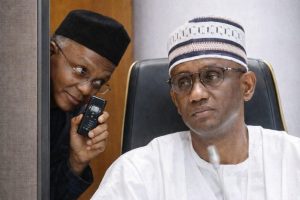
NIGERIA has called for a decisive continental shift towards health security sovereignty, urging African nations to move from dependence on foreign aid to resilient, self-sufficient and home-grown health systems capable of responding to emergencies without external uncertainty.

Vice President Kashim Shettima made the call on Friday at a high-level event themed, ‘Building Africa’s Health Security Sovereignty,’ held on the margins of the 39th Ordinary Session of the Assembly of Heads of State and Government of the African Union (AU) in Addis Ababa, Ethiopia.

Representing President Bola Tinubu at the summit, Shettima said the push for sovereignty in health systems has become imperative to shield the continent from the vulnerabilities of distant supply chains and shifting global priorities during crises.

He reaffirmed Nigeria’s readiness to collaborate with other African countries to build a continent capable of “healing itself,” stressing that true sovereignty would be measured not merely by declarations but by tangible outcomes such as functional laboratories, trained health workers, expanded insurance coverage and dismantled counterfeit drug markets.

“When history reflects on this generation of African leadership, may it record that when confronted with vulnerability, we chose capacity; when confronted with dependence, we chose dignity; and when confronted with uncertainty, we chose cooperation,” the vice president declared.

Shettima warned against the dangers of prolonged vulnerability, recalling Africa’s experience during global health emergencies such as the COVID-19 pandemic when nations struggled to access vaccines and medical oxygen amid global competition and export restrictions.

While acknowledging the continent’s resilience, he emphasised that endurance alone is not a sustainable strategy for the future.
Describing health security as inseparable from national and continental security, the vice president noted that diseases and substandard medicines do not recognise borders, making collective preparedness and cooperation indispensable.

Highlighting Nigeria’s domestic efforts, Shettima said the Tinubu administration is prioritising local pharmaceutical manufacturing, expanding domestic health financing and strengthening regulatory oversight through initiatives such as the Nigeria Health Sector Renewal Investment Initiative and the Presidential Initiative to Unlock the Healthcare Value Chain.
He disclosed that Nigeria had secured over $2.2 billion in health-sector commitments anchored on measurable outcomes, including plans to revitalise more than 17,000 primary healthcare centres, train 120,000 frontline health workers and expand insurance coverage within three years through reforms led by the National Health Insurance Authority (NHIA).

According to him, the country is also enhancing epidemic intelligence and emergency preparedness by expanding laboratory networks, strengthening genomic surveillance and reinforcing coordination through the Nigeria Centre for Disease Control and Prevention, while tightening regulatory enforcement against counterfeit and substandard medicines through the National Agency for Food and Drug Administration and Control (NAFDAC).

The vice president further underscored the role of the private sector, insisting that governments alone cannot deliver health sovereignty without strong partnerships with investors, innovators and healthcare manufacturers.

Earlier, the Coordinating Minister of Health and Social Welfare, Prof. Muhammad Ali Pate, commended the collaboration between Nigeria, the Africa Centres for Disease Control and the African Union Commission, noting that the partnership is designed to build long-term resilience across the continent and strengthen the health workforce.

Director-General of the Africa CDC, Dr Jean Kaseya, also praised Nigeria’s leadership in health sector reforms, particularly in immunisation and system resilience, while urging African countries to consolidate resources and reverse the trend of fragmented investments in healthcare delivery.

Health ministers from Senegal, Malawi and Ethiopia, alongside representatives of development partners, including the African Union Commission, GAVI and UNICEF, pledged support for coordinated continental action to strengthen workforce databases and community-level health systems.

In a communiqué issued at the end of the forum, African Ministers of Health and Finance called on AU Heads of State and Government to intensify political commitment and sustained investment in human resources for health and community health systems.

They specifically urged leaders to accelerate progress towards the continental target of deploying two million community health workers by 2030, elevate community health as a strategic pillar of primary healthcare and universal health coverage, and increase domestic financing to build durable and self-reliant health systems across Africa.

Guardian

Valentine’s History: Seven Things People Miss

0


Valentine’s Day is February 14.

So while people plan dates and gifts, it is worth knowing the holiday did not start as a cute romance thing.

Its backstory is a mix of religion, old Roman culture, and later marketing.

Here are seven facts many people miss.

1. St Valentine was not one clear person
Most people talk about St Valentine like he was one clear figure.

But history points to more than one early Christian martyr named Valentine. That is why different versions of the story exist, and why it is hard to pin the day to one single life.

One popular account says a priest in third-century Rome secretly married couples when Emperor Claudius II discouraged marriage for young soldiers. Another story says a Valentine figure helped imprisoned Christians and later ended up jailed himself.

2. The famous “from your Valentine” line comes from legend
The idea of a Valentine sending a love note from prison is one of the biggest stories linked to the holiday.

The story usually says he wrote a letter before his death and signed it “from your Valentine.”

It is a powerful story, but it sits more in tradition than in confirmed documentation, which is why historians often describe it as legend.

3. Valentine’s season has ties to a pagan festival
Some historians connect February 14 and the Valentine season to Lupercalia, a Roman festival held around mid-February.

It was a fertility-related celebration, not a romance date night.

The rituals were intense and physical, including animal sacrifice and practices people believed encouraged fertility.

This is one reason Valentine’s history can feel darker than the modern version we know today.

4. It was not a romantic holiday until much later
Even after the church placed St Valentine’s feast day on the calendar, the holiday did not immediately become about romantic love.

The strong association with romance grew later in medieval Europe.

People in England and France also believed birds began their mating season around mid-February, and that belief helped tie February 14 to love and pairing.

5. The first Valentins were more like letters than cards
Long before printed cards and store-bought designs, people expressed love through handwritten notes, poems, and personal letters.

That is why Valentine’s Day still works best when it feels personal.

A simple note with real emotion can beat an expensive gift that has no meaning behind it.

6. Roses became popular because of old love symbolism
Red roses did not start with Instagram or modern gifting culture.

They carry ancient symbolism associated with love and desire, including myths from ancient times that linked roses to the goddess of love.

Later periods, including the Victorian era, helped push flowers into mainstream romance culture, making it feel like the “standard” Valentine’s gift.

7. Chocolate boxes became a Valentine’s tradition through marketing
Heart-shaped boxes of chocolate became a big Valentine symbol because brands found a smart way to package romance.

Cadbury is often linked to early heart-shaped chocolate boxes, and that marketing move helped lock chocolate into Valentine’s culture.

It turned gifting into a seasonal industry, and it helped shape the Valentine’s Day routine people follow today.

Valentine’s Day is one of the biggest days for flower sales, especially red roses.

That is why prices often jump around this period, and why florists prepare heavily for February 14.

Guardian

Lagos flags off free eye screening, eyeglasses for 1000 police officers

0


As part of efforts to boost the morale of officers of the Nigeria Police Force (NPF), Lagos Command, Lagos State Governor, BabajideSanwo-Olu, has flagged off a free eye screening and eyeglass initiative for 1000 police officers.

The programme dubbed Sanwo-Olu Police Care Initiative was held at the Lagos State Police Command Headquarters on Friday.

Speaking at the event, Senior Special Assistant to Sanwo-Olu on Transport and Logistics, Hassan Adekoya, stated that in the last five days, about 10,000 drivers were targeted for free health services and safety talks, but the governor felt that the police should also be captured reason he asked that 1000 police officers should be targeted for free eye screening and eyeglasses.

He added that the governor approved the gestures because he understands the important role the police play in the security architecture of the state.

“So the goal is to reach 1000 police officers with free eye screening and eyeglasses to complement what the IGP and CP Lagos have been doing,” Adekoya stated.

One of the beneficiaries, Inspector Uchenna Gloria, who thanked the governor for the outreach, described it as a worthy cause.

“It is a highly beneficial initiative especially for those who work with the screen daily in the office, which often strain our eyes a lot. With this, it will help to correct whatever sight challenges while reading or typing on the computer.

“When I am reading, at a point it becomes blurred, but that is history now with the eyeglass that was recommended for me. I want to thank the IGP and the Commissioner of Police, Lagos, as well as Governor Sanwo-Olu for giving us this opportunity, it is really a good idea and please they should make it yearly,” Gloria said.

Also speaking, Bello Adewale said he was asked to read some letters but had challenges reading some of the tiny ones, which was why an eyeglass was prescribed for him and it helped him to read the tiny letters thereafter.

Guardian

LUXE 35 Hosts Exclusive Valentine Evening Experience in Lagos

0


LUXE 35, the exquisite new bar and lounge located at 35 Oyemekun Street, Ogba, Lagos will host a Special Valentine Evening on February14, promising guests an unforgettable celebration of love, ambience, and premium hospitality.

The newest lifestyle destinations,  LUXE 35 sets a new benchmark for leisure and relaxation. The facility features a state-of-the-art relaxation environment, thoughtfully designed interiors, and a refined bar and lounge experience curated for comfort and sophistication.

Guests will enjoy luxurious, ultra-modern rooms tailored to deliver both style and serenity. The culinary experience will be equally exceptional, with an array of well-prepared meals and expertly crafted drinks served throughout the evening.
The Grill Station will offer an assortment of finger-licking chops and premium selections, freshly prepared to delight every palate, elevate the atmosphere, live music performances and a resident DJ will provide vibrant entertainment at the poolside, creating the perfect blend of romance and celebration.

LUXE 35 invites couples, friends, and fun-seekers to experience a Valentine’s celebration defined by elegance, flavour, and rhythm.

For reservations and enquiries, guests are encouraged to visit the venue directly at 35 Oyemekun Street, Ogba, Lagos.

FCTA Signs Agreements For Development of Jabi Lake As Recreation Hub

0

The Federal Capital Territory Administration (FCTA) has signed Development Agreements with Suburban Broadband Limited and Akida Hills Limited for the development of a recreational hub in the heart of Abuja.

Speaking at the signing ceremony, the FCT Minister, Nyesom Wike described Abuja as a fast-developing city, and a perfect location for recreation, but lamented that the pace of development had been slowed down by land speculators who held on to land without developing them.

The Minister, who stressed that, it was no longer business as usual for those “hoarding and speculating government land”, warned that “for those that have applied for land for development, they must have to develop the land within the next six months, and we will revoke it if it is not done. ”

Speaking at the brief ceremony in the FCT Minister’s conference room, the representative of Suburban Broadband Limited, Mr. Pankaj Khandelwal, said the Development Agreement marked an important landmark for their organization, and that the project was a significant investment which will bring about socioeconomic growth and create jobs in the FCT.

On his part, the representative of Akida Hills Limited, Mr Bamisile Olukayode, appreciated the courage of the FCT Minister in carrying out major developmental tasks in the FCT.

He described the task of developing the Jabi Lake as “exciting” and promised that the project will be comparable to Times Square in New York and the Dubai Fountain Water Show and would turn Abuja to a destination city.

He assured that the development will place Abuja among world class cities all over the globe, adding that the project will be completed before the end of the year.