Home Blog Page 637

Mexico’s most wanted drug lord, ‘El Mencho’, killed in military operation

0

Soldiers, on Sunday, killed a powerful Mexican drug cartel leader, who was one of the most wanted men here and in the United States, several media outlets reported.

There was no immediate confirmation from the government of the death of Nemesio Oseguera, leader of the Jalisco New Generation Cartel. He had a $15 million bounty on his head.

Oseguera is one of the biggest drug suspects to be taken down since the capture of the founders of the Sinaloa cartel, Joaquin Guzman ‘El Chapo’ and Ismael Zambada. Both are serving time in the United States.
Oseguera, whose nickname was “El Mencho,” was reported killed by the Mexican newspapers El Universal and Reforma, and by the Televisa network.


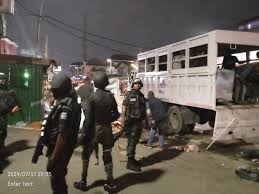
Earlier, people with guns set cars and trucks on fire in the western state of Jalisco, blocking several roads in response to a security operation taking place in the region.

This technique is used to thwart police trying to move in on a high-value target.

The violence spread to the neighboring state of Michoacan, where Oseguera’s cartel also has a presence.
His cartel was formed in 2009 and became one of Mexico’s most violent drug trafficking organizations, according to the US Justice Department.

US officials formally classified it as a terrorist organization and accuse the cartel of sending cocaine, heroin, methamphetamine and fentanyl from Mexico across the border into the United States.

Vanguard

EFCC Arrests 20 for Suspected Electoral Fraud in FCT Council Polls

0


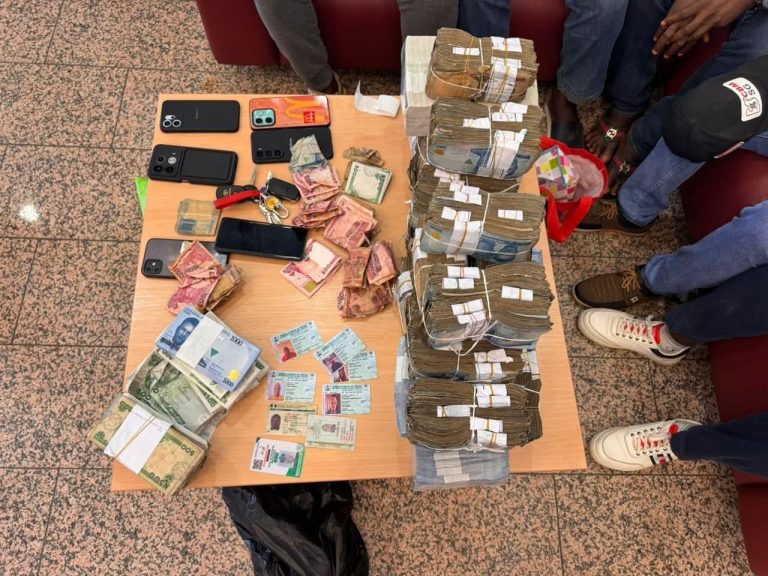
Operatives of the Economic and Financial Crimes Commission, EFCC, on Saturday, February 21, 2026 arrested 20 suspects for sundry electoral offences in the just- concluded Federal Capital Territory, FCT, local government elections.


The suspects were arrested across the FCT, for offences ranging from vote buying, vote selling to obstruction of officers to the tune of N17, 218, 700. 00k( Seventeen Million, Two Hundred and Eighteen Thousand, Seven Hundred Naira only). One of the suspects was arrested with a sum of N13,500,000( Thirteen Million, Five Hundred Thousand Naira) in a car parked beside a polling booth in the Kwali local government area. Two of the suspects were arrested in Abaji; nine in Gwagwalada; four in Kuje and the remaining four in Kwali.

The suspects will be charged to court upon conclusion of investigations.

Nigeria Defeats European Contractor in $6.2m Arbitration Dispute

0


…AGF Fagbemi: “No longer business as usual”
…BPP DG: Victory sends strong signal to contractors


Nigeria has recorded another legal victory in an international arbitration after successfully defending claims worth over $6.2 million (about ₦9.3 billion) filed by European Dynamics UK Ltd over a national e-Procurement project.

The dispute, handled through the Bureau of Public Procurement (BPP), ended with the tribunal dismissing all claims against the country in a final ruling not subject to appeal.

The case arose during the administration of President Bola Ahmed Tinubu.

Background to the Dispute
Upon assuming office, BPP Director-General Adebowale Adedokun inherited a stalled technology project alongside ongoing arbitration proceedings.
The contractor had claimed:

$2.4 million for alleged milestone completion,
$3 million general damages, and
$800,000 settlement costs.

The contract involved the design, customisation, installation and maintenance of a national electronic Government Procurement (e-GP) system supported by the World Bank to improve transparency and efficiency in federal procurement.

Although earlier discussions considered an out-of-court settlement, the BPP insisted payment must be tied to verified delivery and continued arbitration.

Nigeria’s legal team, led by Johnson & Wilner LLP with Basil Udotai as lead counsel, reviewed the technical and contractual issues.

Tribunal Findings
Central to the dispute was the User Acceptance Test (UAT), which revealed major system deficiencies and omissions.

Nigeria argued that software delivery is validated only after successful performance testing — not mere installation.

The tribunal agreed, ruling that:
The contractor was responsible for correcting defects at no additional cost.
Approved documents did not waive compliance obligations.
There was no contractual basis for merging project phases.

The contractual framework had been distorted.
All claims were therefore dismissed.

“Nigeria Cannot Be Taken for Granted” — BPP
Adedokun described the ruling as a landmark decision in public sector technology contracting.

“This vendor has sued several African countries and won every case. Nigeria is the first to defeat them. We trusted Nigerian professionals and stood our ground.”

He thanked the Attorney-General for approving the proceedings, noting that billions of naira had been saved for national development.
AGF: A New Era
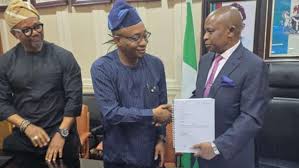
Responding, Attorney-General of the Federation Lateef Fagbemi praised the legal team and said the judgment sends a global message.

“Nigeria is no longer business as usual. By standing up in this case, we have encouraged other African nations to protect their resources.”

He also credited institutional strengthening efforts under the Tinubu administration.
Implications
The ruling highlights key lessons for government technology projects:
Strict user acceptance testing
Clear milestone definitions
Performance-based payments
Strong contract oversight
Legal advisers urged integration of these lessons into ongoing e-procurement reforms to prevent future disputes.
Statement issued by Kamarudeen Ogundele, SA to the President (Communication & Publicity), Office of the Attorney-General of the Federation.

Lagos Dislodges Illegal Traders, Arrests 11 in Late-Night Clean-Up Raid

0


The Lagos State Government has dislodged illegal street traders and arrested 11 suspects during an overnight clean-up and anti-crime enforcement operation across parts of Ikeja.

Commissioner for the Environment and Water Resources, Tokunbo Wahab, disclosed that enforcement teams carried out the operation between 9:30 p.m. and midnight around Balogun Street by Allen Roundabout, the Ikeja Underbridge near the General Hospital, and the Ikeja Bridge along Awolowo Way.

According to him, the exercise targeted illegal trading and criminal activities in public spaces.
During the operation, makeshift stalls erected by traders were removed, goods displayed in violation of environmental regulations were confiscated, and suspected miscreants occupying the areas were arrested.
“A total of 11 suspects were apprehended and will be charged accordingly,” the commissioner said.

Wahab explained that the enforcement drive was necessary to restore order, improve public safety, and ensure free movement, noting that public infrastructure must not be converted into markets or criminal hideouts.
He added that similar operations would be sustained across the State.

“Public spaces are not markets and will not be allowed to degenerate into unsafe environments,” he stated.

Wike says outcome of FCT, Rivers elections reflects growing support for President Tinubu

0


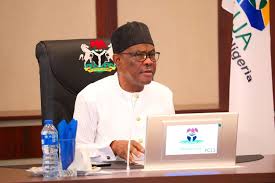
The Minister of the Federal Capital Territory, Nyesom Wike, has reacted to the outcome of the just-concluded Area Council elections in Abuja, where the All Progressives Congress recorded significant victories.

The FCT Minister, Nyesom Wike, said the performance of the All Progressives Congress at the polls reflected growing public confidence in the policies and programmes of President Bola Tinubu.

According to him, the party’s success, particularly in remote communities within the Federal Capital Territory, signaled that government initiatives are beginning to impact lives at the grassroots.

Wike noted that this marks the first time the APC is securing councillorship seats in some of the hinterland areas, alongside what he describes as an overwhelming majority in the local council chairmanship positions.

The Minister also weighed in on the outcome of the recent by-election in Rivers State, describing the APC’s performance as a victory for what he calls a “rainbow coalition” of political stakeholders.

He said the alliance reflects a broader alignment of interests in support of President Tinubu’s Renewed Hope agenda.

The results, he added, underscored shifting political dynamics and growing cross-party collaboration ahead of future electoral contests.

THE RESULTS OF THE BY-ELECTIONS AS A REFERENDUM ON TINUBU PRESIDENCY – APC

0


The Lagos State Chapter of the All Progressives Congress (APC) wishes to express profound appreciation to the good people of Rivers and Kano States, the Federal Capital Territory (FCT), and Nigerians at large for their overwhelming support for our great Party in the just concluded by-elections.

The outcome of the by-elections across the affected constituencies stands as a clear and unmistakable referendum on the leadership of President Bola Ahmed Tinubu and the progressive ideals that continue to guide governance in our nation. The resounding victories recorded by our candidates reaffirm the confidence of the electorate in the Renewed Hope Agenda and the transformative policies being implemented at both the federal and state levels.

At a time when detractors and opposition elements have sought to misrepresent the direction of the country, the people have spoken decisively through the ballot. These results demonstrate that Nigerians recognize bold leadership, economic reforms, infrastructural expansion, and institutional strengthening when they see them. They also reflect an understanding that nation-building requires patience, courage, and continuity.

Indeed, the results of these elections serve as the final straw on the back of an opposition that has remained largely uninspiring and unworthy of serious consideration by informed and discerning voters. Rather than offering credible alternatives, the opposition has resorted to rhetoric, sensationalism, and obstruction. The electorate has now delivered a firm and democratic verdict.

Furthermore, the events surrounding these elections have once again shown that social media dominance as a vehicle for political activism may, after all, be over-rated. The amplified noise of the opposition across digital platforms did not translate into real electoral penetration or public acceptance when it mattered most – at the ballot box. Democracy is ultimately decided by voters, not virtual trends. It will take far more than day-dreaming, online theatrics, or manufactured outrage to unseat a well-grounded and performance-driven ruling party.

If morning truly shows the day, then the forthcoming 2027 national elections may well be a walk in the park for the ruling APC, on the strength of its performance and the implicit confidence reposed in it by the Nigerian people. The momentum demonstrated in these by-elections is not accidental; it is a reflection of trust earned through decisive leadership and courageous reforms.

We commend the Independent National Electoral Commission (INEC) for its efforts in conducting the elections. We also particularly commend the security agencies for their professionalism, vigilance, and commitment to maintaining peace and orderliness throughout the electoral process. Their conduct ensured that citizens exercised their civic responsibilities in a safe and secure environment.

We salute our party faithful, campaign teams, and volunteers whose dedication, discipline, and grassroots engagement ensured this remarkable outcome.

As a Party, we remain committed to deepening democracy, strengthening internal cohesion, and delivering tangible dividends of democracy to all citizens. The by-election victories are not merely political wins; they constitute a renewed mandate to work harder in service of the people.

The Lagos APC reiterates its unwavering support for President Bola Ahmed Tinubu and the Renewed Hope Agenda. We call on all Nigerians, including members of the opposition, to join hands in the collective task of building a stronger, more prosperous, and united nation.

Mogaji (Hon) Seye Oladejo
Lagos APC Spokesman
22/02/26

Party leaders push for new 2027 election timetable

0


Leaders of political parties have intensified calls for a fresh timetable for the 2027 general elections, insisting that a review has become unavoidable following the enactment of the new Electoral Act.

They argue that a revised schedule is crucial to give parties adequate time to conduct primaries and other internal processes ahead of the polls. The Independent National Electoral Commission (INEC) had earlier announced that the presidential and National Assembly elections would be held on February 20, 2027, while governorship and state Houses of Assembly elections were slated for March 6, 2027.

However, INEC has confirmed that it will review the Electoral Act 2026 to ensure full compliance with the law as it relates to election timelines. Mr Adedayo Oketola, Chief Press Secretary and Media Adviser to the INEC Chairman, Prof. Joash Amupitan, said the commission would soon issue a “revised timetable.”

Although he did not specify when the new timetable would be released, Oketola stressed that INEC remains committed to upholding the law.

The initial schedule sparked criticism from sections of the public, particularly Muslim groups, who said the proposed dates clashed with the holy month of Ramadan.

Amid the controversy, the National Assembly passed the Electoral Act 2026, reducing the mandatory notice period for elections from 360 days to 300 days. Under the revised Clause 28, INEC is required to publish notice of elections not later than 300 days before polling day, stating the election date and venues for the submission of nomination papers across the federation and the Federal Capital Territory.

The amendment is widely seen as giving INEC greater flexibility to schedule the 2027 presidential and National Assembly elections between late December 2026 and January 2027.

Reacting to the development, the Peoples Democratic Party (PDP) urged INEC to immediately align its timetable with the provisions of the new law to allow both the commission and political parties prepare adequately.

A factional National Publicity Secretary of the party, Ini Ememobong, said INEC must adjust its schedule in line with the amended law.

“INEC released a timetable, and now the legislature has passed a new law. It is only proper that the timetable is realigned with the law so that all stakeholders can prepare for the elections,” he said.

Ememobong also expressed the party’s lack of confidence in INEC’s ability to conduct a free and fair election, citing concerns over key provisions of the electoral framework.

“INEC has not shown enough intentionality towards ensuring a free and fair election. Our concerns are centred on Section 84 and Section 60(3),” he added.

Responding, Oketola said the commission was already addressing the issue.

“The recently released timetable was issued in line with the Constitution of the Federal Republic of Nigeria 1999 (as amended) and Section 28(1) of the Electoral Act 2022. However, INEC will review the new Electoral Act 2026, after which a revised timetable will be released,” he said.

Legal experts have also cautioned that INEC cannot continue preparations for the 2027 elections under the Electoral Act 2022, which has now been amended to reflect new provisions introduced by the 2026 law.

Guardian

NDLEA Busts Kano Based Businesswoman, Rabi Muhammad With Drugs in Fake Pregnancy

0


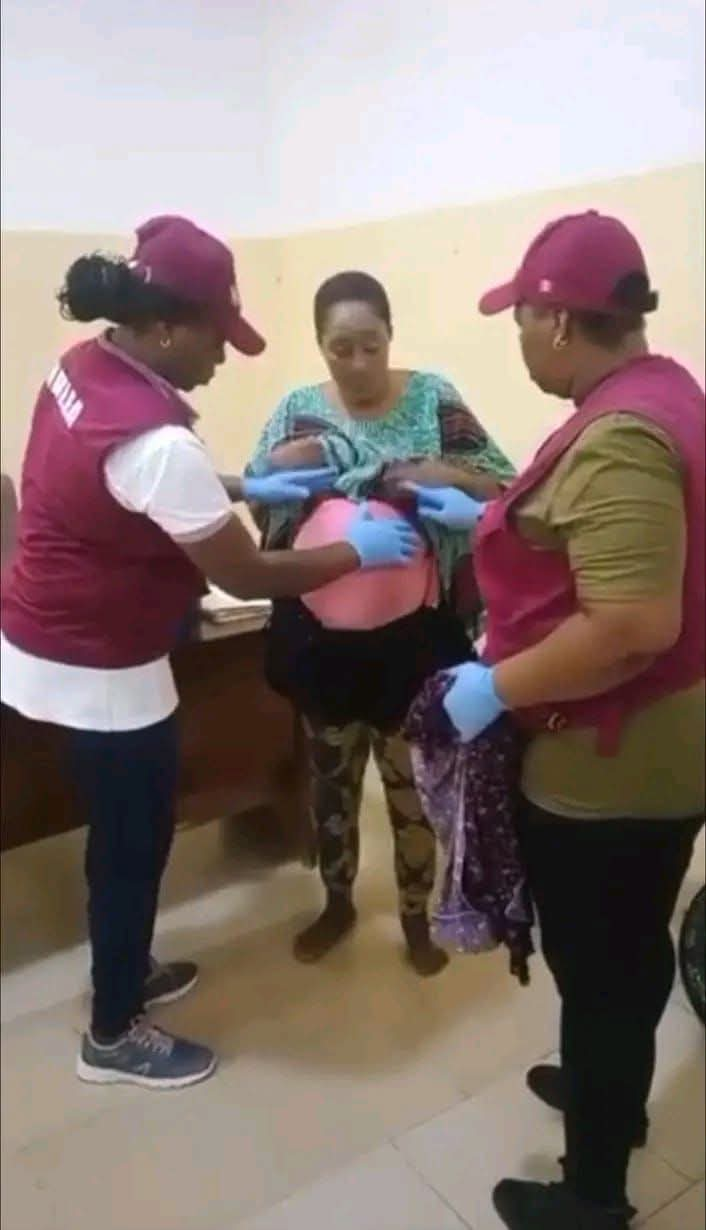
Operatives of the National Drug Law Enforcement Agency (NDLEA) have foiled bizarre plots by two drug traffickers to move consignments of cocaine and opioids hidden in their stomach and fake baby bump through the Mallam Aminu Kano International Airport (MAKIA) Kano and the Seme land border in Lagos to Europe and other destinations.

A Kano based businesswoman, 35-year-old Rabi Muhammad was intercepted by NDLEA officers at the departure tarmac of Seme land border with a protruding tummy on Monday 16th February 2026 while attempting to cross to Cotonou in Benin Republic. A full body search however revealed the absurd: her pregnancy was fake and her baby bump was designed with a pink coloured calabash used to conceal 3,200 capsules of tramadol, which she tied around her stomach and was taking to Cotonou to sell.

WHEN TRUTH IS ON TRIAL: RAPE, FALSE ALLEGATIONS, AND THE GAPS IN OUR JUSTICE SYSTEM

0


By Oluwatoyin Omotayo Esq

Rape is not just a legal term. It is a life-altering violation. It is the forceful or non-consensual penetration of another person’s body, an act that strips away dignity, autonomy and safety. Under the Sexual Offences Act 2003 in the United Kingdom, rape occurs where a person intentionally penetrates another with their penis without consent and without a reasonable belief in consent. It carries a maximum sentence of life imprisonment. In Nigeria, rape is criminalised under the Criminal Code Act and strengthened in many states by the Violence Against Persons (Prohibition) Act 2015. The law recognises rape as one of the gravest crimes because it wounds in places that are not always visible. It shatters trust. It rewrites a person’s sense of safety. It lingers long after the physical bruises, if any, have healed.
At the heart of rape law is one word – consent. Consent is not silence. It is not fear. It is not submission. It is not compliance because someone is intimidated, threatened, intoxicated or manipulated. Consent is a free, voluntary, informed “yes.” It is active and ongoing. It can be withdrawn at any time. Where there is no freedom to choose, there is no consent. This is why the law in both the UK and Nigeria is clear that coercion, deception, incapacity, or abuse of power destroys any claim of agreement. A body without choice is not consenting.
The law is even more uncompromising when it comes to children or anyone below the legal age of consent. This is called statutory rape; it has no defence. In the UK, sexual activity with someone under 16 is a criminal offence, and sexual penetration of a child under 13 is automatically treated as rape. In Nigeria, sexual intercourse with a child is rape regardless of what anyone claims about “agreement.” Children cannot legally consent to sex because the law recognises what society must never forget: vulnerability cannot negotiate. Protection of children is not optional, it is absolute.
And yet, while rape devastates lives, there is another painful and uncomfortable truth that must be confronted – false rape allegations which also destroy lives. When an allegation is deliberately fabricated, the consequences can be catastrophic. Reputations collapse overnight. Families fracture. Careers evaporate. Mental health deteriorates under the crushing weight of stigma. Even when a person is cleared, suspicion can linger like a permanent stain.
Unfortunately, in both the UK and Nigeria, there is no distinct, stand-alone legislation specifically labelled “false rape allegation.” Instead, the law relies on general offences such as perjury, making false statements, wasting police time, or perverting the course of justice. These provisions can and do apply where someone knowingly lies. But there is no clear, direct statutory framework that addresses the unique gravity of falsely accusing someone of rape. The absence of a distinct legislative response leaves a gap and in matters this serious, gaps can be dangerous.
One of the harsh realities is that, in many cases, a person who has been deliberately and maliciously falsely accused of rape is often left with one primary option after acquittal or dismissal of charges: to pursue a civil claim for defamation. In the UK, this falls under the Defamation Act 2013. In Nigeria, defamation is addressed under both the Criminal Code Act and civil tort law principles.
But here is the problem, defamation is not justice in the true sense for someone whose life has been shattered by a false rape allegation.
Defamation proceedings are expensive. They are lengthy. They require the falsely accused to once again go into court, relive the trauma, fund legal representation, and prove reputational damage. In many cases, the accuser may have no financial means to satisfy any judgment even if liability is established. So what happens? The innocent person carries the emotional scars, the social stigma, the financial loss and walks away with nothing but legal bills and exhaustion.
Worse still, criminal prosecutions for perverting the course of justice or making false statements are relatively rare and difficult to pursue. The burden of proof is high, and authorities are often cautious, rightly so because they do not want to discourage genuine victims from reporting rape. But in trying to protect reporting, the system sometimes leaves those maliciously accused feeling abandoned.
It creates a painful imbalance.
A rape survivor is entitled to state protection, victim support services, safeguarding structures and public sympathy and rightly so. But a person who is provably and maliciously falsely accused often finds themselves socially condemned first and legally rehabilitated much later, if at all. Even when acquitted, the headline rarely says “innocent.” It says “cleared”  and doubt lingers.
The emotional toll is severe. Imagine waking up to find your name associated with one of the most serious crimes imaginable. Imagine your employer suspending you. Your family questioned. Your children bullied. Your community whispering. And then imagine being told that your remedy is to privately sue for defamation, if you can afford it.
Justice should not depend on who can fund a civil claim.
This is why the conversation about reform is so necessary. It is not about creating fear for genuine complainants. It is about recognising that deliberate, malicious false allegations of rape are not minor infractions, they are potentially life-destroying acts. The legal framework should reflect that gravity in a way that is balanced, careful, and protective of truth.
A justice system must walk a delicate line: never silencing victims of sexual violence, but also never abandoning those demonstrably and maliciously falsely accused. Both deserve protection. Both deserve dignity.
Because when the innocents are left to defend themselves alone in civil courts after their lives have been publicly dismantled, something fundamental is broken.
If we believe rape is serious and it is then we must also believe that falsely accusing someone of rape is serious. Justice cannot be selective. It must be courageous enough to defend truth wherever it stands. This conversation is often polarised in ways that help no one. Some fear that speaking about false allegations undermines real victims. It does not. It must not. Real victims of rape already struggle against disbelief, shame, fear of retaliation and a justice system that can feel retraumatising. False allegations, when they occur, make that struggle harder. They feed scepticism. They arm those who are eager to dismiss genuine survivors. They poison the well of credibility. Every fabricated claim becomes ammunition used against someone telling the truth.
At the same time, a false accusation is not a minor inconvenience. It is not gossip. It is not drama. It is an allegation of one of the most heinous crimes known to law. It can mean arrest, public exposure, imprisonment, social exile. For the innocent, it can feel like a slow suffocation, screaming the truth while the world looks at you with suspicion. Justice must be as outraged by deliberate falsehood as it is by sexual violence.
This is not a competition of pain. It is not about ranking suffering. It is about integrity. A justice system must protect the vulnerable and protect the innocent. It must have the courage to say that rape is evil and so is weaponising an accusation of rape. Both realities can exist at the same time. Both demand moral clarity.
Unfortunately, the absence of specific legislation directly addressing false rape allegations signals a reluctance to confront the full complexity of this issue. The law must step up. It must carefully craft provisions that deter malicious falsehood without silencing genuine victims. It must send a clear message: truth matters. Due process matters. Human dignity matters on both sides of the courtroom.
Because this is, truly, a matter of life and death. Survivors of rape carry invisible scars that can lead to depression, self-harm, even suicide. Those falsely accused can experience the same spiral of despair. Families on both sides suffer. Children grow up in the shadow of scandal or trauma. Communities fracture.
If we are against rape and we must be, then we must also be against false rape allegations. Not to diminish survivors. Not to create doubt where there should be belief. But to protect the integrity of justice itself. When truth is compromised, everyone loses. When justice is selective, trust collapses.
Standing against rape means standing for consent, accountability, and compassion. Standing against false allegations means standing for truth, fairness, and responsibility. We cannot afford to choose one and ignore the other. A society that truly values life must defend both the violated and the wrongly accused because justice that is incomplete is justice denied.

Oluwatoyin Omotayo Esq is the
Founder of TOOF
NUPENG asks Tinubu to clarify new executive order on oil and gas industry

0


The Nigeria Union of Petroleum and Natural Gas Workers, NUPENG, has called on President Bola Ahmed Tinubu to urgently convene a broad-based stakeholders’ meeting to clarify the details of the Executive Order he signed on Wednesday concerning the nation’s oil and gas industry.
The union said the directive has generated tension and uncertainty across the sector, with workers in upstream, midstream and downstream operations expressing concern over how the new policy may affect job security, labour agreements and the implementation of the Petroleum Industry Act, PIA.
In a statement by its President, Prince Williams Akporeha, the union said: “NUPENG wishes to call on His Excellency, President Bola Tinubu, to urgently convene a broad-based stakeholders’ meeting to provide comprehensive clarification on the Executive Order he signed on Wednesday concerning the oil and gas industry.
“As critical stakeholders in Nigeria’s oil and gas value chain, petroleum workers across upstream, midstream and downstream operations have expressed deep concern and anxiety over the content, intent and implications of the said Executive Order.
“The absence of detailed public engagement has naturally generated tension within the sector and heightened restiveness among workers who are eager to understand how the new directive may affect their employment, welfare, and job security, especially as it affects NNPCL and other major operations in the oil and gas industry.
“The industry remains the backbone of Nigeria’s economy, contributing significantly to national revenue, foreign exchange earnings and employment. Any policy shift, particularly one introduced through an Executive Order, has far-reaching consequences for regulatory frameworks, investment decisions, operational standards, and labour relations within the sector.
“Specifically, there is an urgent need for clarity on: The scope and objectives of the Executive Order – What precise reforms or adjustments does it introduce?
Its implications for the Petroleum Industry Act (PIA) – Does the Order amend, reinterpret, or expand existing provisions under the PIA? Impact on workers and existing labour agreements – Will it affect job security, conditions of service, collective bargaining agreements, or ongoing restructuring processes within the industry?
Effects on indigenous participation and local content development – How will it influence Nigerian companies and employment opportunities for citizens?
“NUPENG is particularly concerned that, without proper consultation and explanation, misinterpretations of the Executive Order may spread across the industry, potentially destabilising operations and undermining the industrial harmony that stakeholders have worked hard to sustain.
“We firmly believe that a timely stakeholders’ meeting—bringing together organised labour, regulatory agencies, operators, host community representatives, and other critical actors—will help douse rising tension, address misconceptions, and foster transparency and trust in government policy.
“Though our Union remains committed to constructive engagement, national development, and the stability of the oil and gas sector, we are duty-bound and constitutionally bound to protect the rights, welfare and job security of our members whose livelihoods depend on clear, fair and predictable policy frameworks.
“We therefore respectfully urge President Bola Ahmed Tinubu to take immediate steps to engage stakeholders and provide the necessary clarifications in the interest of industrial peace, economic stability, and national progress.”

Vanguard